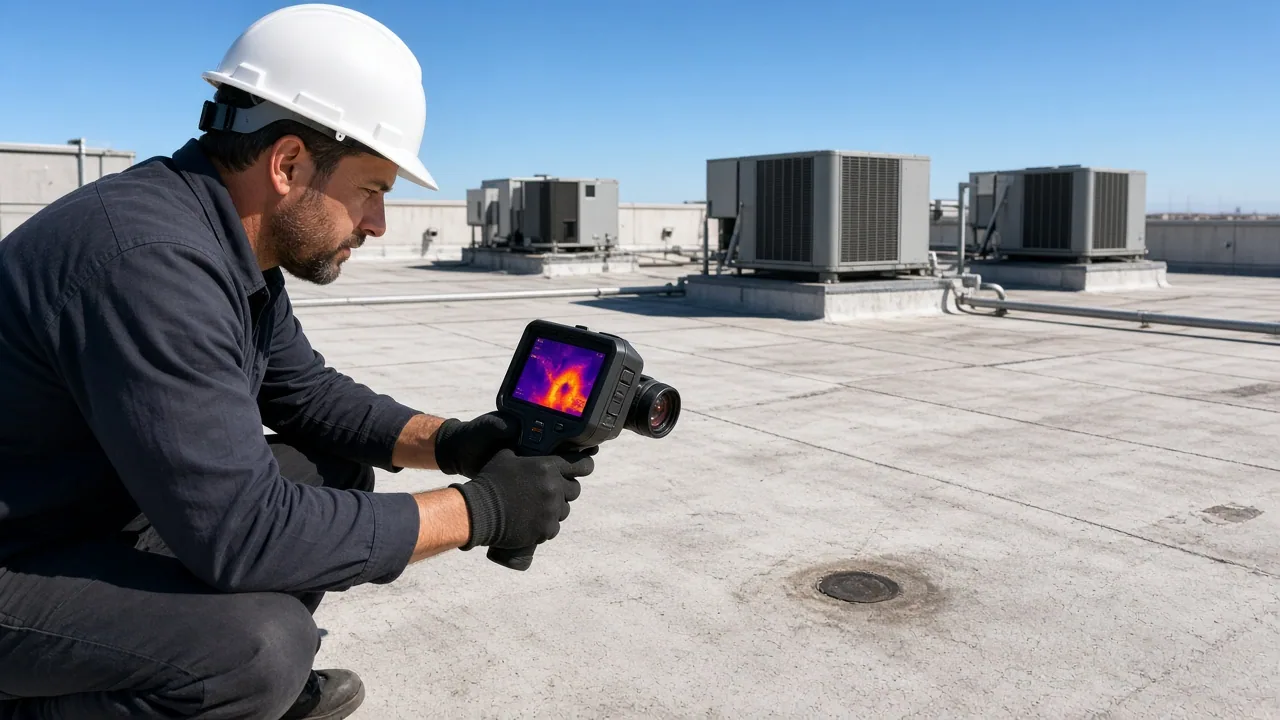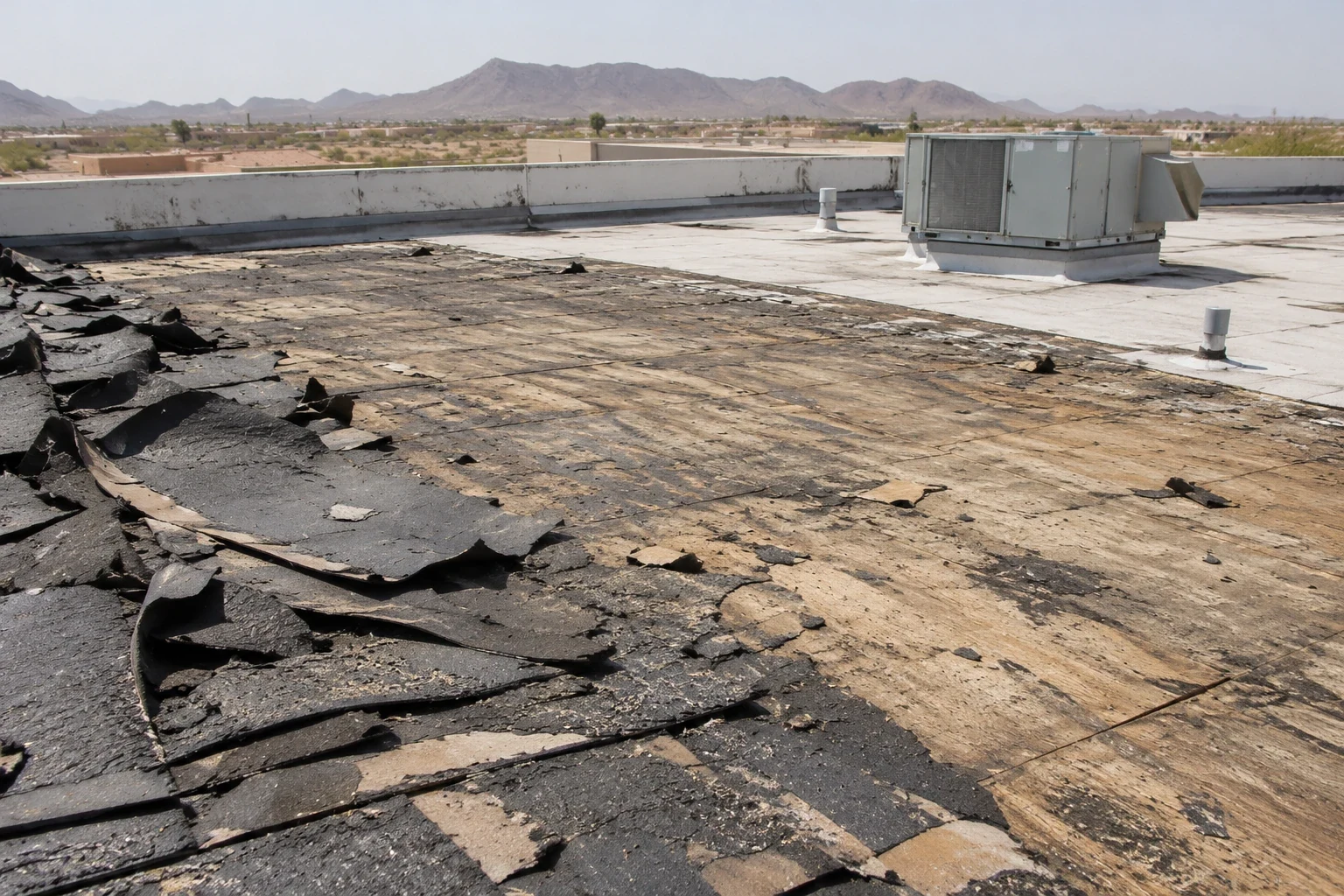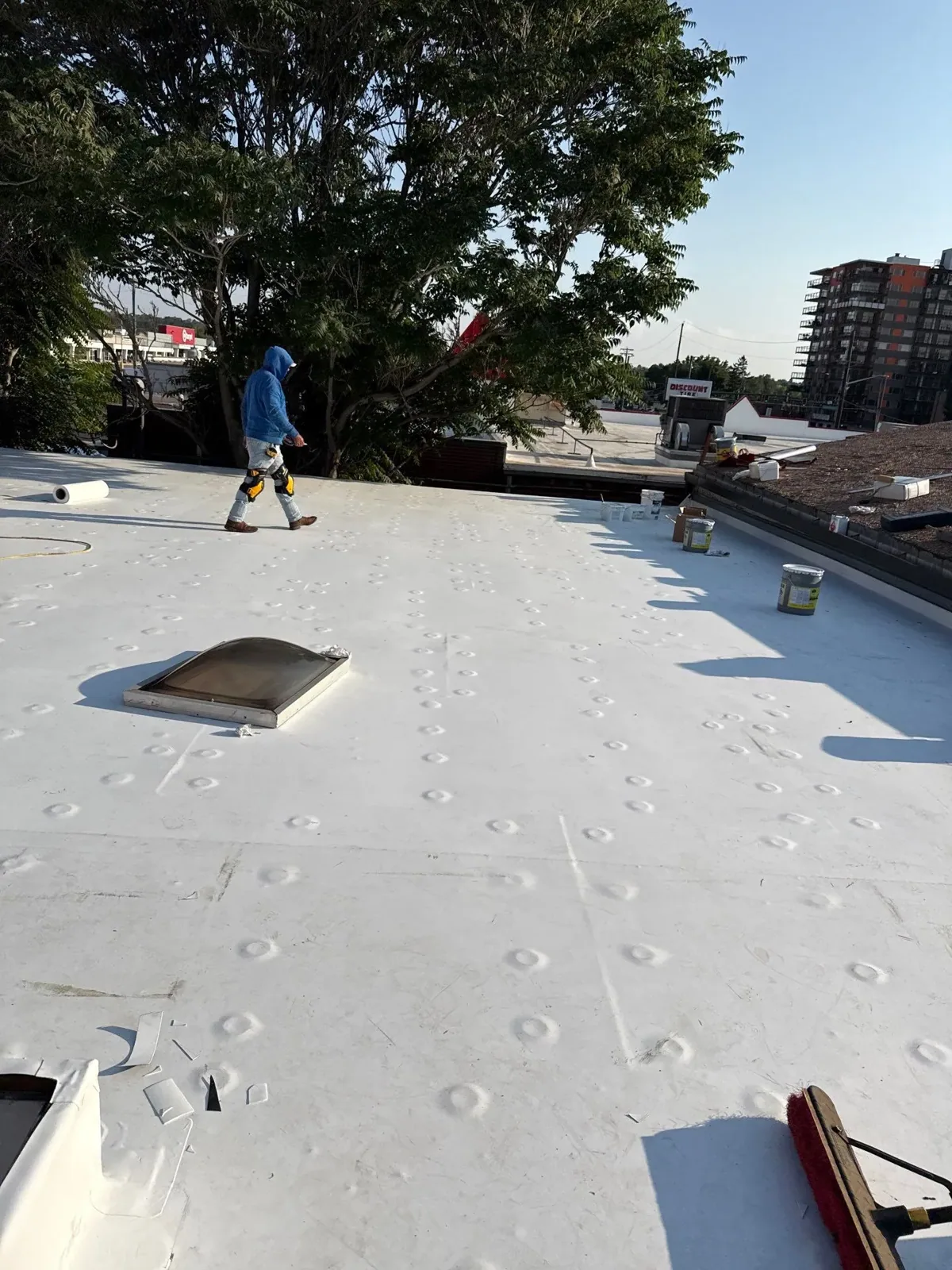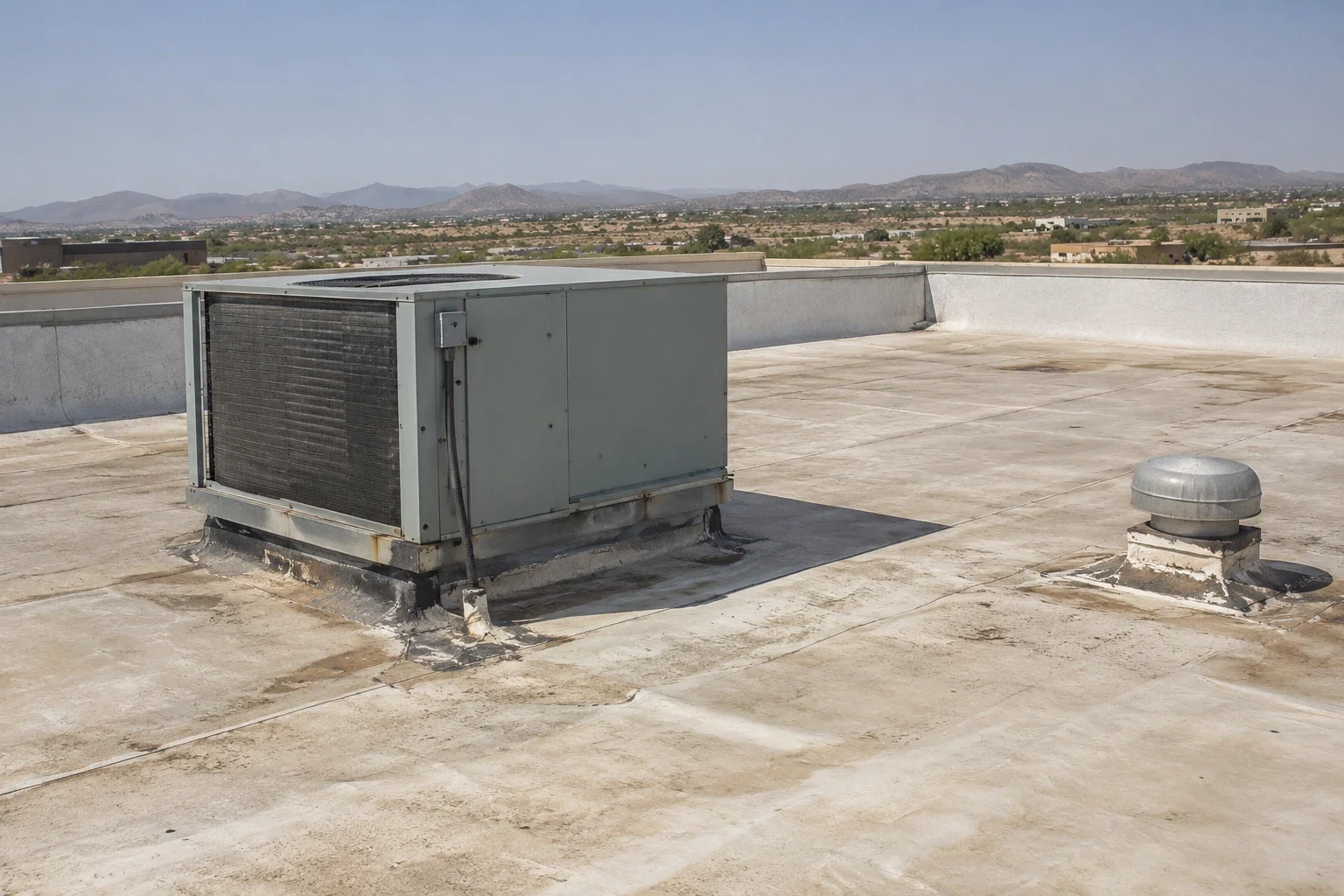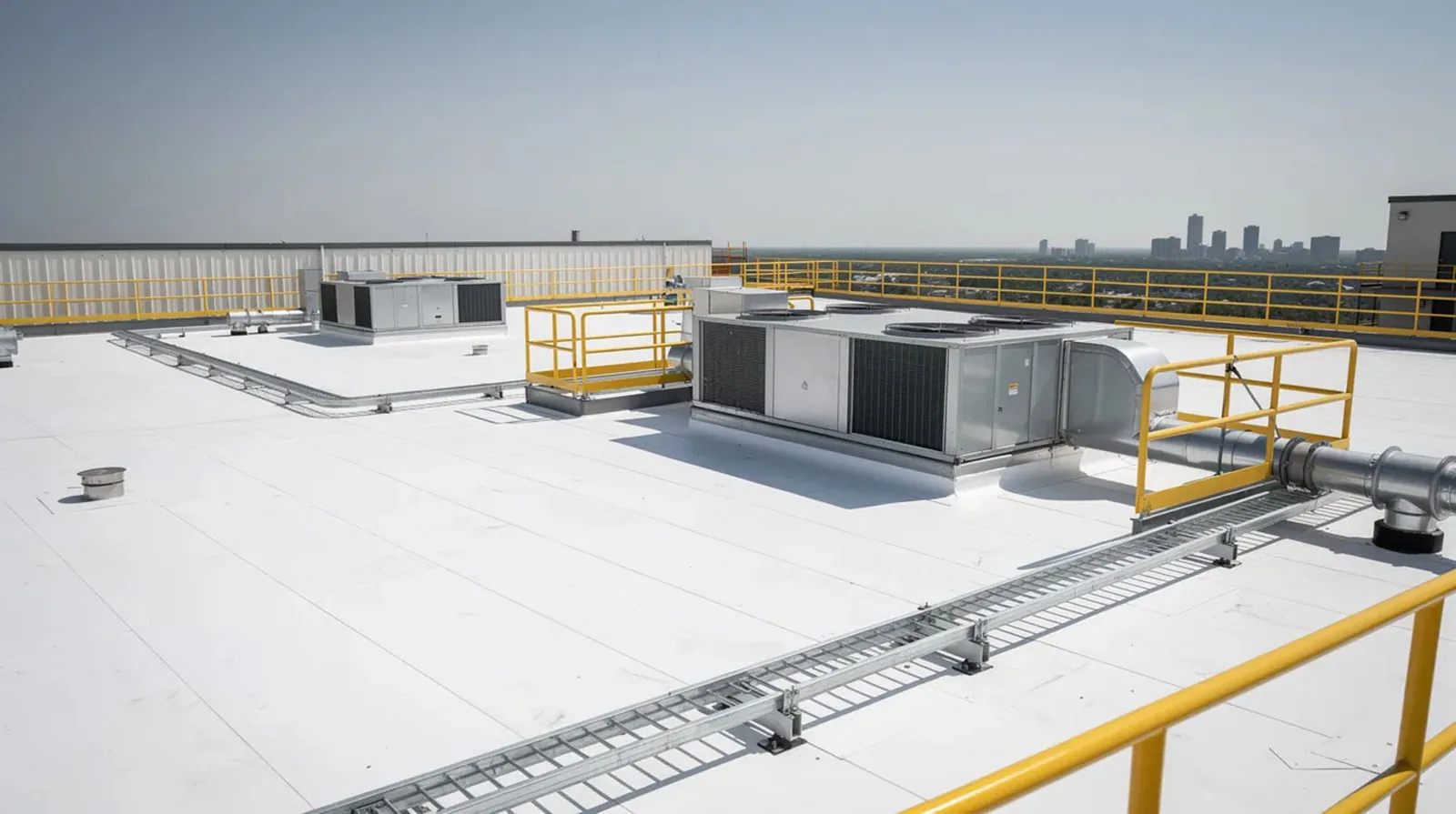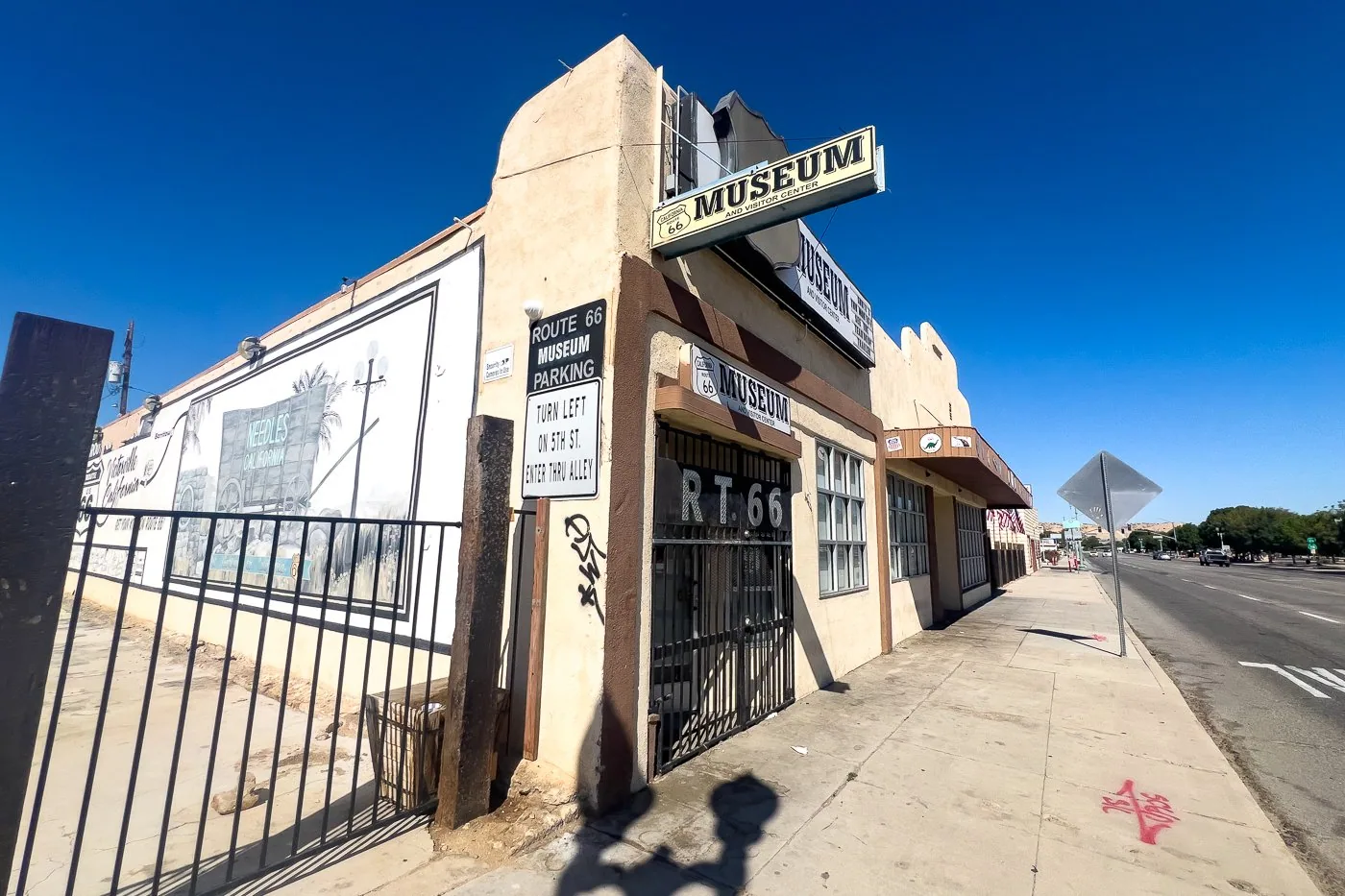
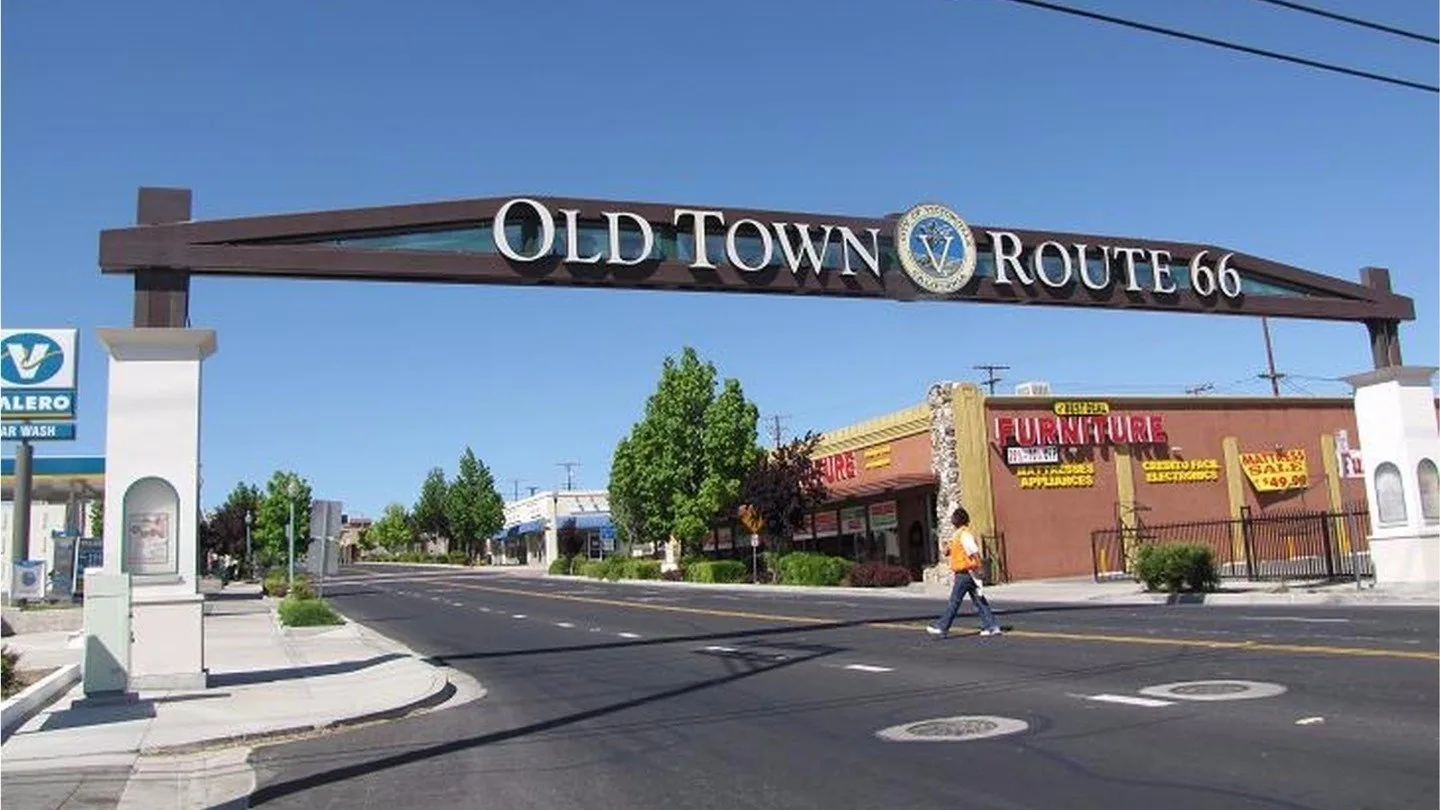
A roof call in Old Town Victorville can involve a shop, service space, light-industrial property, or a building beside residential uses. We begin with the specific operation under the reported roof zone, then confirm who can open the access point and what area below needs protection. The crew traces the reported water path, records seams and transitions, and links photos to a simple zone map. Those first observations support a repair decision without assuming that every property in this plan area has the same assembly or condition.
Treat the block and roof as distinct
Old Town's adopted plan covers roughly 428 acres from Interstate 15 to Victorville's eastern boundary. Its map combines retail and service overlays with light-industrial, residential, and open-space classifications. A roof request can therefore start with one person who sees water and another who holds the access key or approves spending. We note both contacts, the affected room, and any activity that must continue below. That handoff lets the inspection follow the reported zone without treating a broad planning map as a description of the building.
A reported stain does not by itself show where water crossed the roof surface. We note when it appeared, whether conditions below changed, and whether the concern is near a wall, drain, curb, or roof edge. On the first walk, we inspect the accessible area above the report and follow likely water paths to the relevant transitions. Where the source remains uncertain, the notes say what evidence is missing. A focused commercial roof inspection can then distinguish a visible defect from an area that requires testing or a return visit.
Map the roof before the repair
Old Town's plan area is not a roof inventory, and the land-use labels do not establish the age or system on any building. We identify the assembly only when visible edges, existing records, or permitted inspection make that conclusion supportable. The inspection then records membrane condition, seams, wall terminations, penetration flashings, metal edges, drains, and any access limits. A photo caption should locate the image and explain its relevance, not invite an owner to infer a hidden condition from a surface view.
In the George AFB/Victorville station archive, observations from June 1980 through May 1990 averaged 23 days each year at or above 100 degrees Fahrenheit. For an Old Town building, that historical series points us toward exposed laps, old patch edges, and sealant at metal transitions, not toward a conclusion about service life. We photograph any weathered surface with its roof-zone location and the adjacent drain or perimeter. If the reported water path instead follows a parapet or penetration, that detail gets its own close-up. The owner can compare a localized repair with coating work only after we have checked the installed assembly, surface preparation, drainage, and any concealed condition that may need testing.
Price the work by verified limits
For a localized opening, our scope names the roof zone, the visible condition, preparation needed, repair materials, and any adjacent transition included. If the membrane cannot be identified or concealed moisture is a concern, we call out the test needed before the owner commits to a larger treatment. The same map can show a small repair near an occupied retail bay separately from an unrelated edge condition on another section. This avoids bundling observations that have different causes or access requirements.
Replacement options require a broader review of the existing assembly, drainage, insulation, rooftop equipment, perimeter, and disposal sequence. Old Town's mix of uses makes staging and hours a project question, not a blanket promise. We identify where materials can be lifted, what entrances must remain open, and how the crew will leave each zone at a shift boundary. A replacement assessment should make these choices visible alongside the areas retained, removed, or tested. When the work is limited to a seam or penetration, flashing repair can be evaluated as a separate scope.
Coordinate access with the use below
Victorville's Old Town revitalization work identifies Seventh Street for public-space and streetscape improvements. That is a planning reference for the district, not a construction schedule for an individual property. For roofing work, we ask the facility contact to identify pedestrian paths, customer entrances, deliveries, and restricted areas. The written work sequence names the zone to be opened, temporary protection below, crew access, and the check that closes the area before the building resumes normal use.
Owners can request a condition report that separates direct observations, supplied records, and unresolved questions. For repeat inspections, roof asset records preserve the date, zone, photo references, repairs, and access notes for the next decision. The nearby Seventh Street corridor is another specific Victorville service area, while Eastern Bear Valley Road has its own adopted planning context. Each property still receives an assessment based on the roof we can inspect, not a neighborhood label.
On buildings with retail or service use, even a limited repair can affect an entrance, sign, or customer route. We confirm which access points remain open and where a lift or material staging may interfere before the crew arrives. For light-industrial use, the facility contact identifies receiving periods, equipment movement, and areas that cannot be closed. The roof map and work plan record those conditions alongside the repair boundary. If the inspection uncovers another issue, we photograph it and request direction before adding work, so the approved scope stays tied to the agreed price and access window.
Plan a roof-zone assessment
Tell us what appeared inside the building, which operation it affects, and who controls roof access. We can document accessible conditions and outline the next repair, test, or planning step for your Old Town property. We can also connect each image to its work boundary so a manager reviewing the file later can see which repair remains approved and which finding needs a separate decision.
Commercial Roofing Questions
Does the Old Town plan determine the roof system on my building?
No. The plan describes land-use categories across a broad area; it does not establish an individual building's roof age, materials, or condition. We identify the assembly from accessible roof observations and records, then note any uncertainty. That distinction matters before choosing a coating, repair material, or replacement approach.
Can roof work continue while a storefront or service area is open?
The work sequence depends on access, the roof zone, staging, and what is happening below. We coordinate an agreed access window with the facility contact, protect the relevant area, and define how an opened section will be closed at the end of the shift. If those conditions cannot be met safely, the scope must be adjusted before work begins.
What do you include in a repair price?
We tie the price to the marked location and verified limits: preparation, repair method, material, access, and any included transition. Testing, concealed conditions, or adjacent work that is not confirmed appears as a separate decision. A photo and zone map let the owner compare the written scope with the condition observed on site.
What if the reported interior spot is dry during inspection?
We record the report and conditions at the time of the visit, then inspect the roof details that could connect to that location. A dry ceiling does not settle the cause or rule out intermittent entry. We explain what was visible, which areas were inaccessible, and whether another observation after rain or a targeted test would add useful evidence. The facility contact receives the photo references for follow-up and can review those images before approving a return visit or new scope.