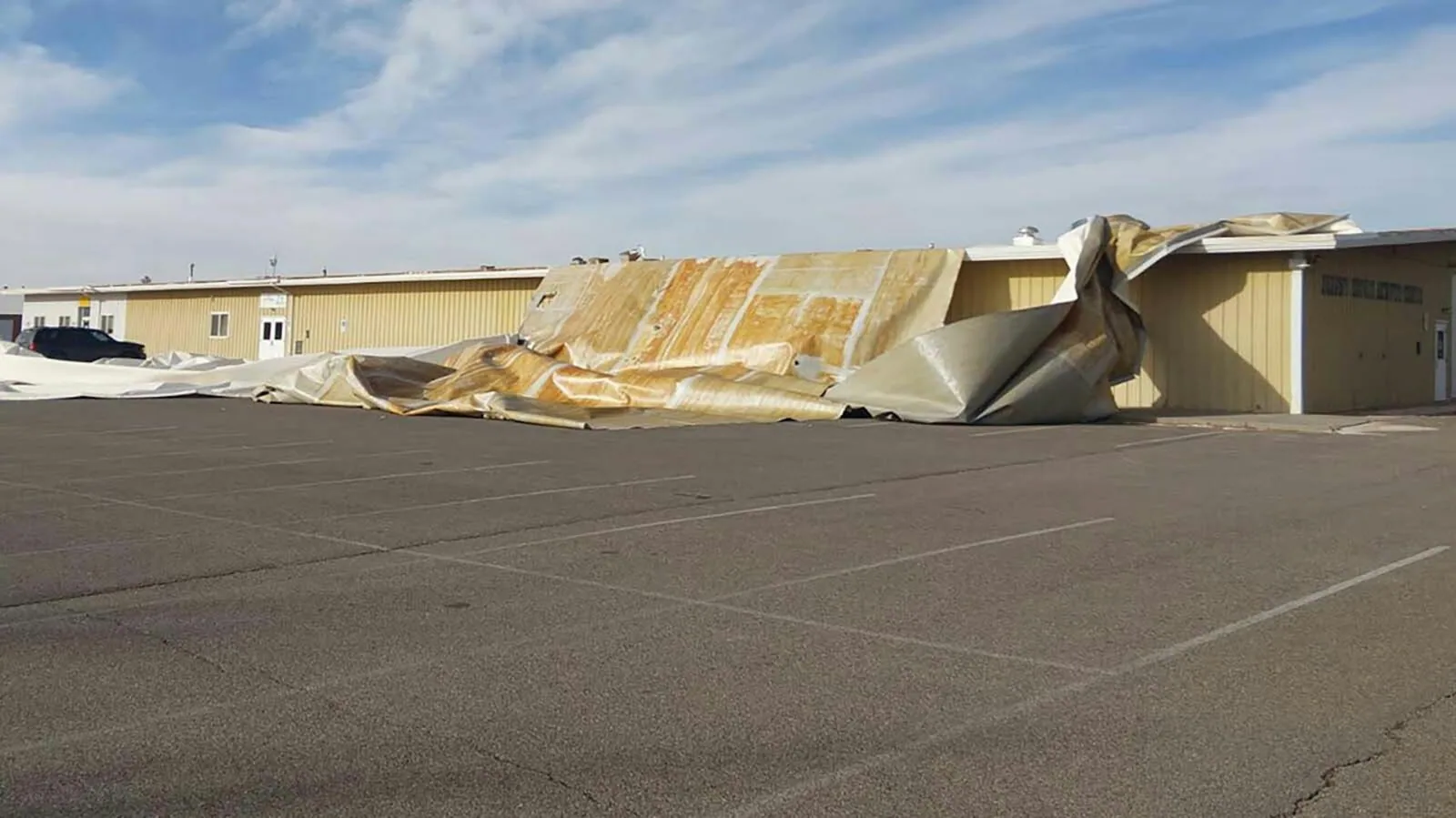
Loose edge metal, a growing ceiling leak, or an opening after a storm can interrupt an occupied building before anyone knows how much roof is affected. We take emergency calls around the clock, including nights, weekends, and holidays, then start by asking what is happening below and who controls roof access. If a ceiling is sagging or water is near electrical equipment, keep people clear and use the building's safety procedures. We coordinate a roof assessment, identify the first condition to make safe, and explain what can be inspected before setting a permanent repair scope.
Give the first report clearly
Tell us where water or loose material appeared, when the condition changed, and whether it is still active. Identify the room, equipment, tenant, or operating area below, along with any electrical, inventory, or access concern. A person familiar with the facility can tell us which roof hatch or ladder is approved and whether the area above is occupied by equipment or service trades. Do not climb onto a wet or damaged roof. Our first call separates a safety issue from the roof investigation and gives the facility contact a clear next step.
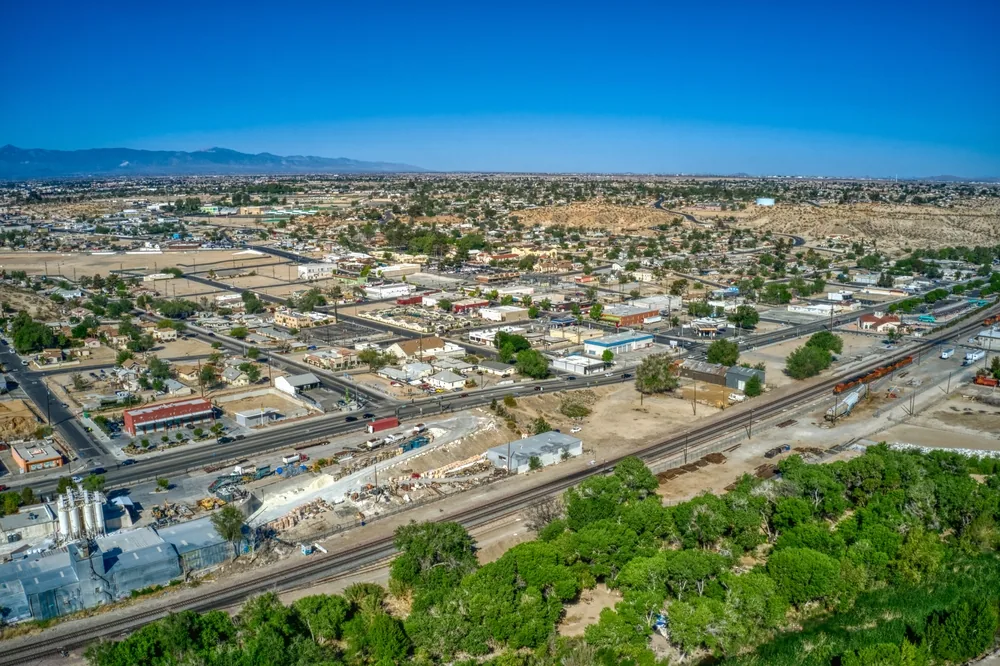
Victorville's industrial development plan includes approved projects around Foxborough Industrial Park and land east of U.S. 395 and north of Mojave Drive. Those plans describe future development, not a specific roof, but they make it useful to ask whether an active building has loading cycles, shift changes, or equipment that cannot stop. Old Town's land use includes retail and service overlays as well as light-industrial and residential areas. We confirm the actual building use before choosing access and protection measures.
Control the immediate exposure
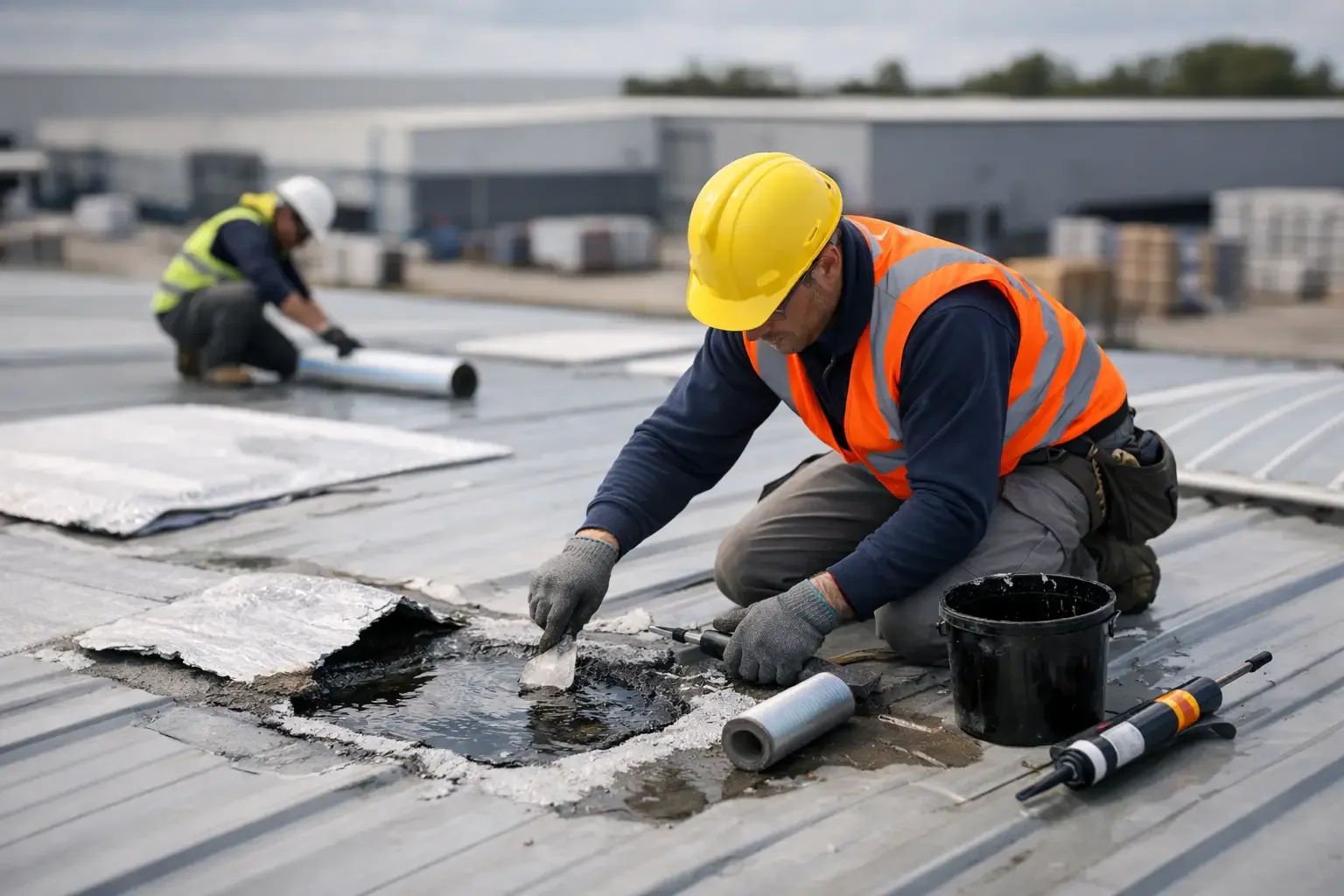
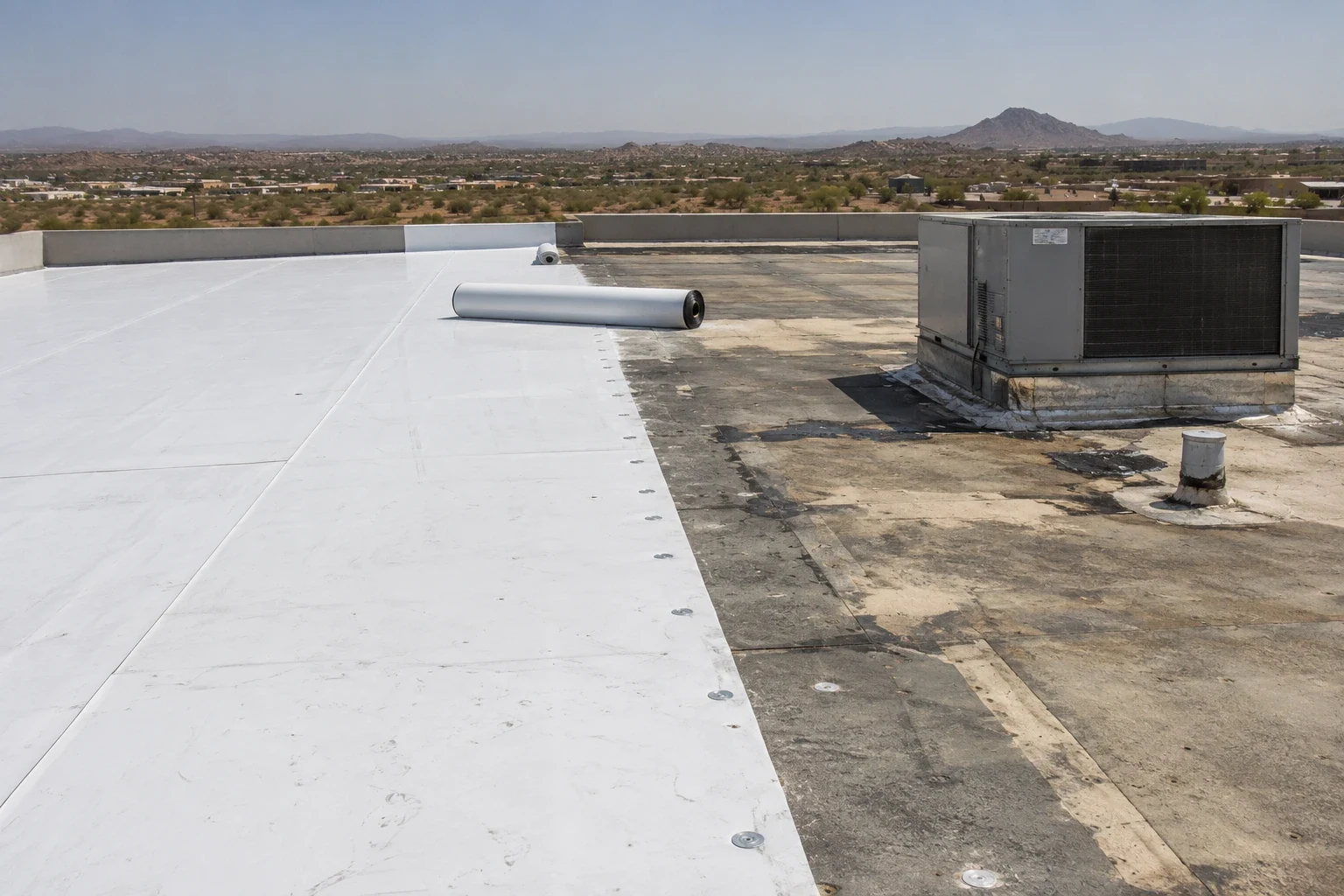
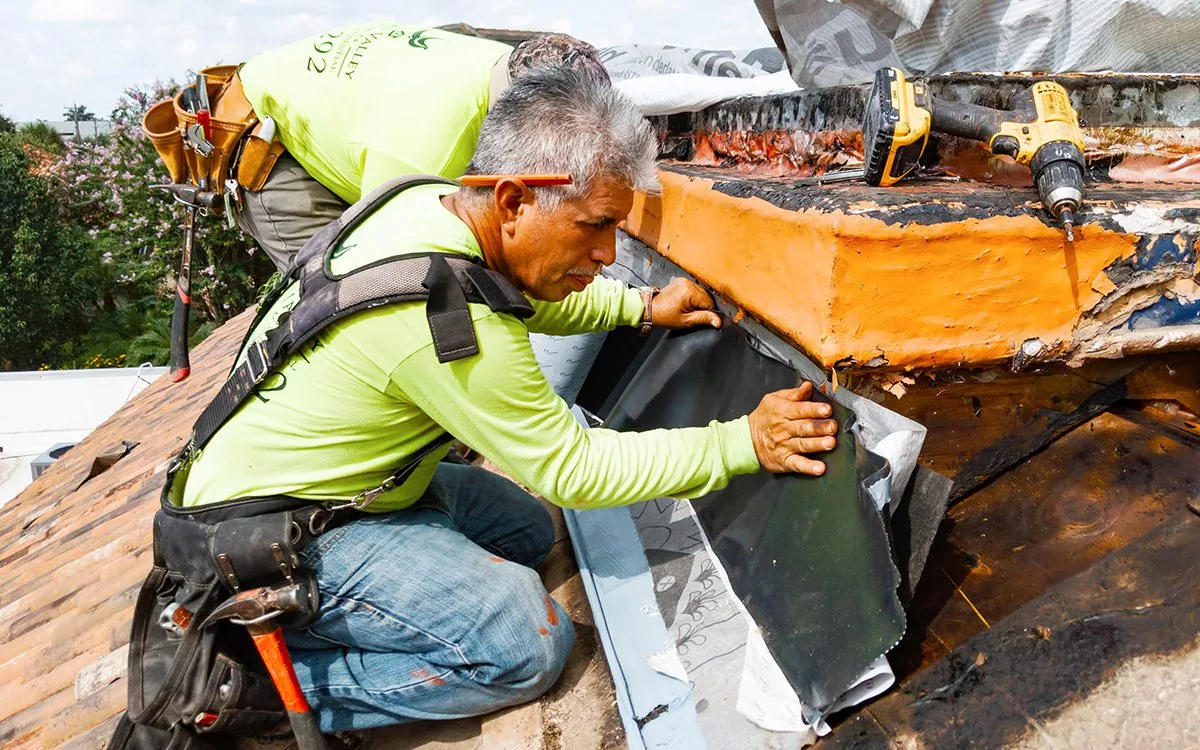
On arrival, we identify the affected roof zone, water path, wind-opened edge, or damaged flashing and decide whether temporary protection is safe and practical. We may cover a limited opening, secure loose material, clear an outlet, or protect the interior before the full inspection. We record the location and limits of that temporary work. A temporary covering is not the permanent repair and does not show whether insulation or the deck below is wet. The facility contact knows what to watch and which check comes next.
Victorville's code guidance sets a roof-drain design benchmark equivalent to 2.5 inches of rain in one hour. Its wind criteria vary with occupancy and exposure. Neither figure records what a specific storm delivered or how a particular roof performed. We inspect the existing edge, membrane, and drainage details in the field, then document any area that cannot be reached safely and plan a controlled return.
Check the whole affected path
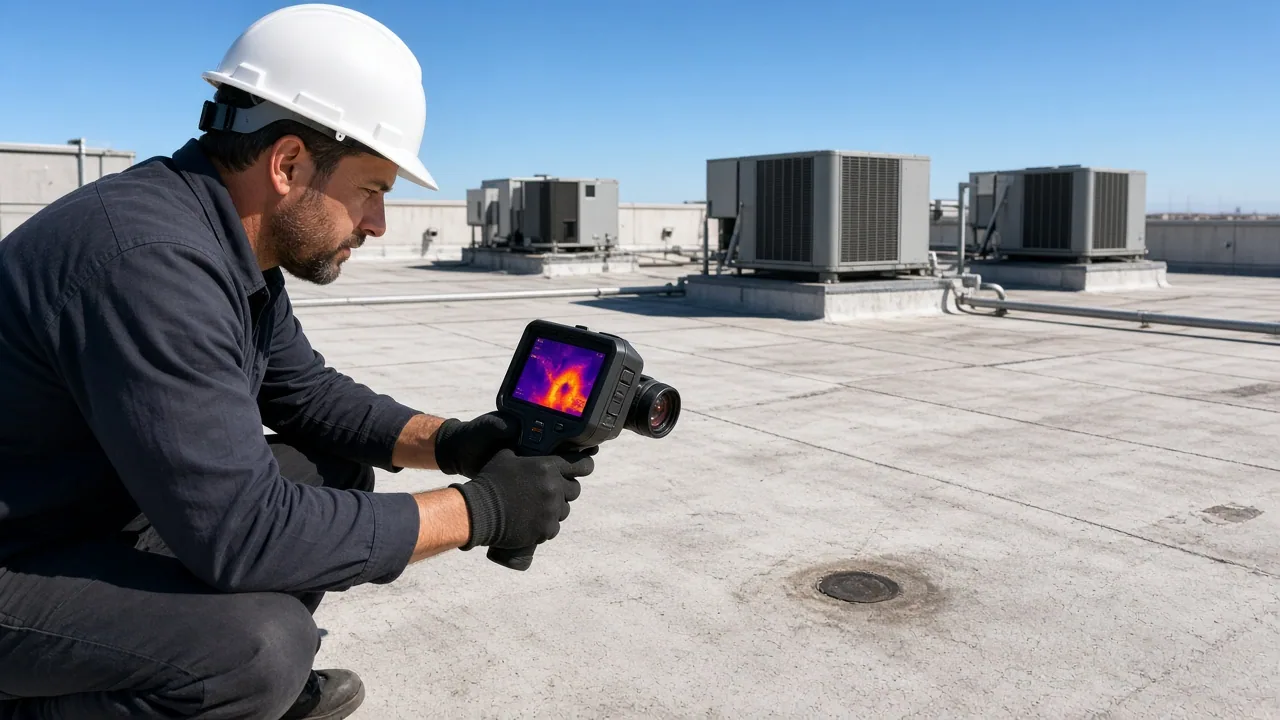
After the immediate condition is controlled, we follow water from the reported interior location toward seams, curbs, penetrations, drains, scuppers, wall edges, and prior repairs. Water can travel above the deck and appear far from its entry point. A wind-opened detail can admit water at one side while adjacent seams remain secure. We photograph the route, note visible insulation or deck concerns, and mark areas that need testing. A leak report becomes more useful when the owner can see what is confirmed and what remains unverified.
For heat exposure, the National Weather Service record at the George AFB/Victorville station counted 23 days per year at or above 100°F on average during its historical observation period from June 1980 to May 1990. Heat can affect sealants and membrane movement, but an emergency inspection still depends on current conditions. A commercial leak repair addresses a traced entry point; a wind damage repair may include lifted edges or displaced components. We define that distinction after the roof is assessed.
Coordinate access around the operation
Emergency roof work needs a safe route, a facility contact, and control of the area below. We coordinate escort requirements, access, equipment shutdowns, staging, tenant communication, and work hours. For an occupied building, protection over one suite may be needed while we check the source elsewhere. We keep the contact informed about areas to clear and operations that can continue. If a test opening is needed, we protect and close it before leaving.
Victorville's planning documents identify industrial and regional-serving activity near Bear Valley Road and I-15. We confirm access windows with the building contact; that corridor context does not establish travel time, weather at a property, or crew arrival. A building in Hesperia needs its own inspection record and safe access plan; conditions at one location do not prove conditions at the next. A return visit may be needed when temporary protection has made the space safe but permanent material requires dry conditions.
Separate temporary protection from repair
The permanent scope identifies the entry detail, repair material, preparation, tie-in, and any adjacent conditions that need correction. A lifted membrane edge may require checking fasteners or metal beyond the visible opening. A drain backup may need a flow-path review, while a puncture close to equipment can require flashing work and a service-route change. We do not describe temporary protection as a finished repair. If testing finds wet insulation, deck damage, or more than one opening, we document the additional area and ask for direction before expanding the work.
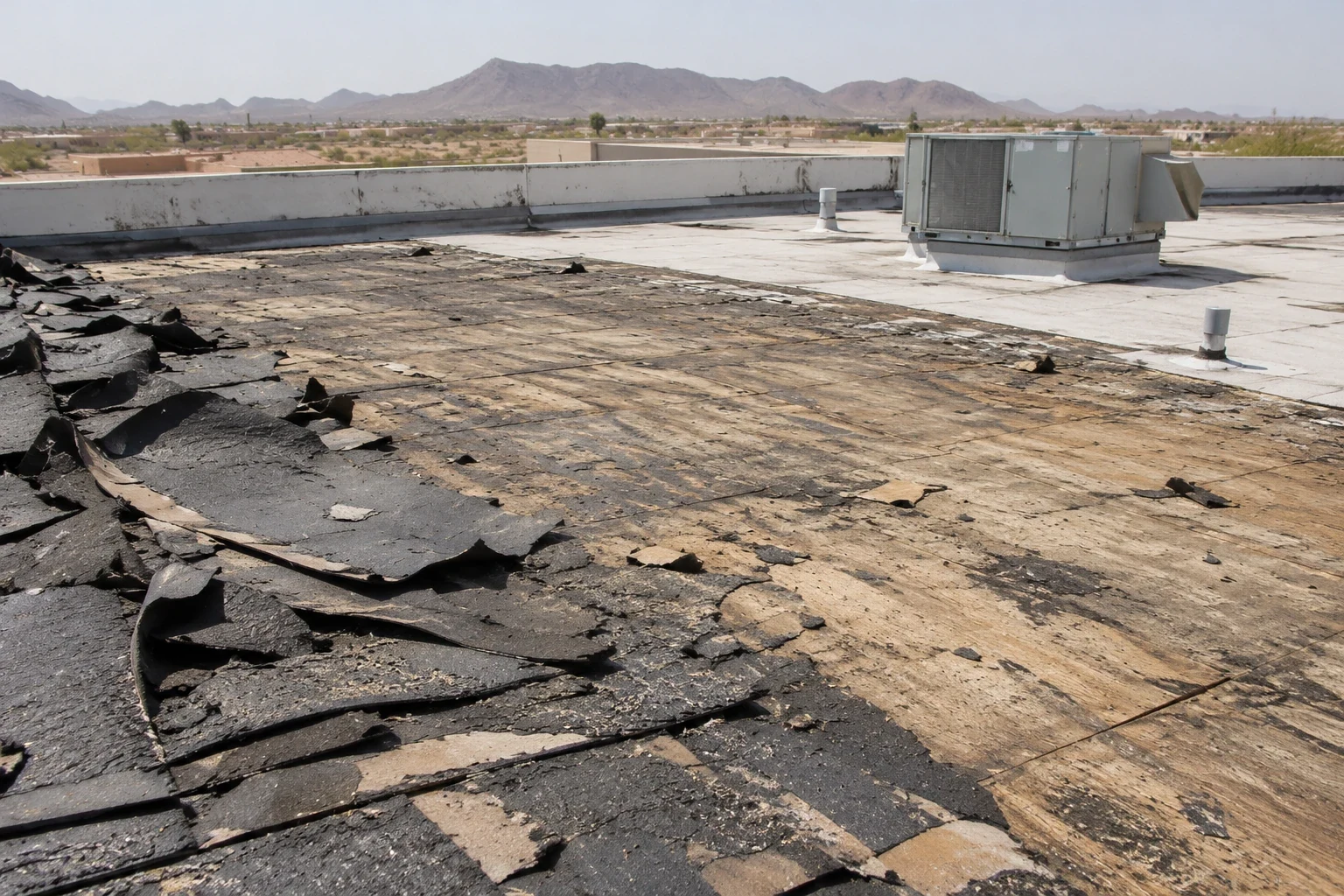
When the roof needs a broader review, a commercial roof inspection can document nearby conditions. A replacement assessment may be appropriate when damage reaches multiple zones, while a recover review applies only when existing layers, deck, moisture, and code support it. We provide a written repair boundary with photographs so the owner can coordinate insurance, facilities, and operations without confusing those choices.
Know what to monitor after the first visit
At closeout, we record the roof area protected or repaired, the detail addressed, photographs, and any location that still needs observation or testing. The facility contact receives practical instructions for reporting renewed water, displaced temporary protection, or a change in the affected interior space. We do not promise that one repair eliminates every possible leak on a roof that has not been inspected in full. If water returns at the same detail, the report helps us compare the new condition with the initial evidence and determine whether the repair boundary needs adjustment.
Our service work covers Victorville commercial properties and broader areas such as the Bear Valley Road and I-15 district. We can also assess a larger membrane concern through TPO roof repair or a condition report when the owner needs a documented plan. Call at any hour with the immediate condition, the area below, and the access contact. We will coordinate the assessment and distinguish what can be made safe from what needs permanent work.
Commercial Roofing Questions
Do you take commercial roofing calls at night and on holidays?
Yes. We take calls around the clock, including nights, weekends, and holidays. The first discussion identifies the active condition, the risk below, roof access, and whether a safe assessment can be arranged. We do not promise a specific arrival time before confirming access and current conditions.
What should staff do if a ceiling is sagging?
Keep people out of the area and follow the building's safety procedure. Do not touch a wet ceiling or nearby electrical equipment. Tell the facility contact where the condition is, what is below it, and whether water is still entering so the roof response can be coordinated safely.
Is a tarp or temporary cover the final repair?
No. Temporary protection reduces exposure while the roof is evaluated or while permanent materials and conditions are arranged. We record what was protected, what remains uncertain, and the next inspection or repair step. A permanent scope addresses the opening and its tie-in to the existing assembly.
Can you repair a roof during active rain or wind?
Work depends on the roof surface, wind, access, and the method needed. We assess whether any make-safe action can be performed safely and what must wait for suitable conditions. If an opening cannot be reached or closed safely, we explain the limit and the next action for protecting the occupied space.
How should a facility manager prepare for the assessment?
Identify a roof access contact, the affected room, nearby equipment, and any work window or escort requirement. Share recent repair records and photographs if available. Keep people away from unsafe interior areas and do not send staff onto the roof.