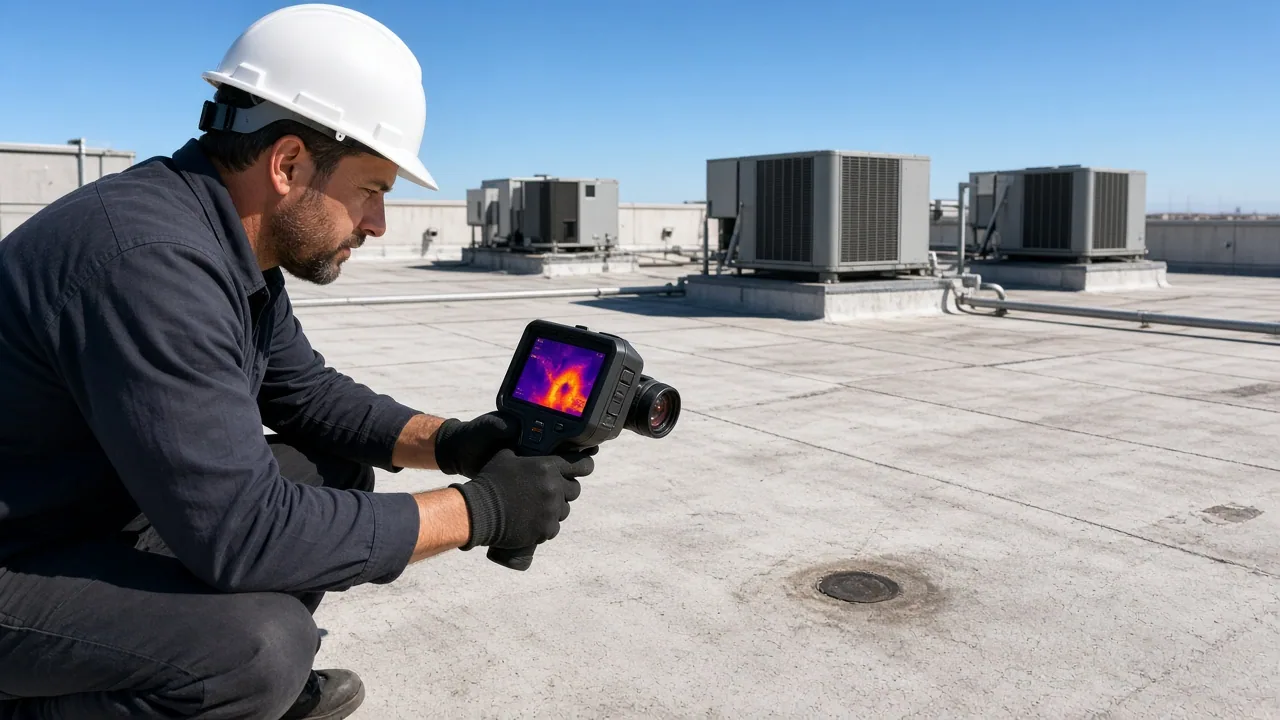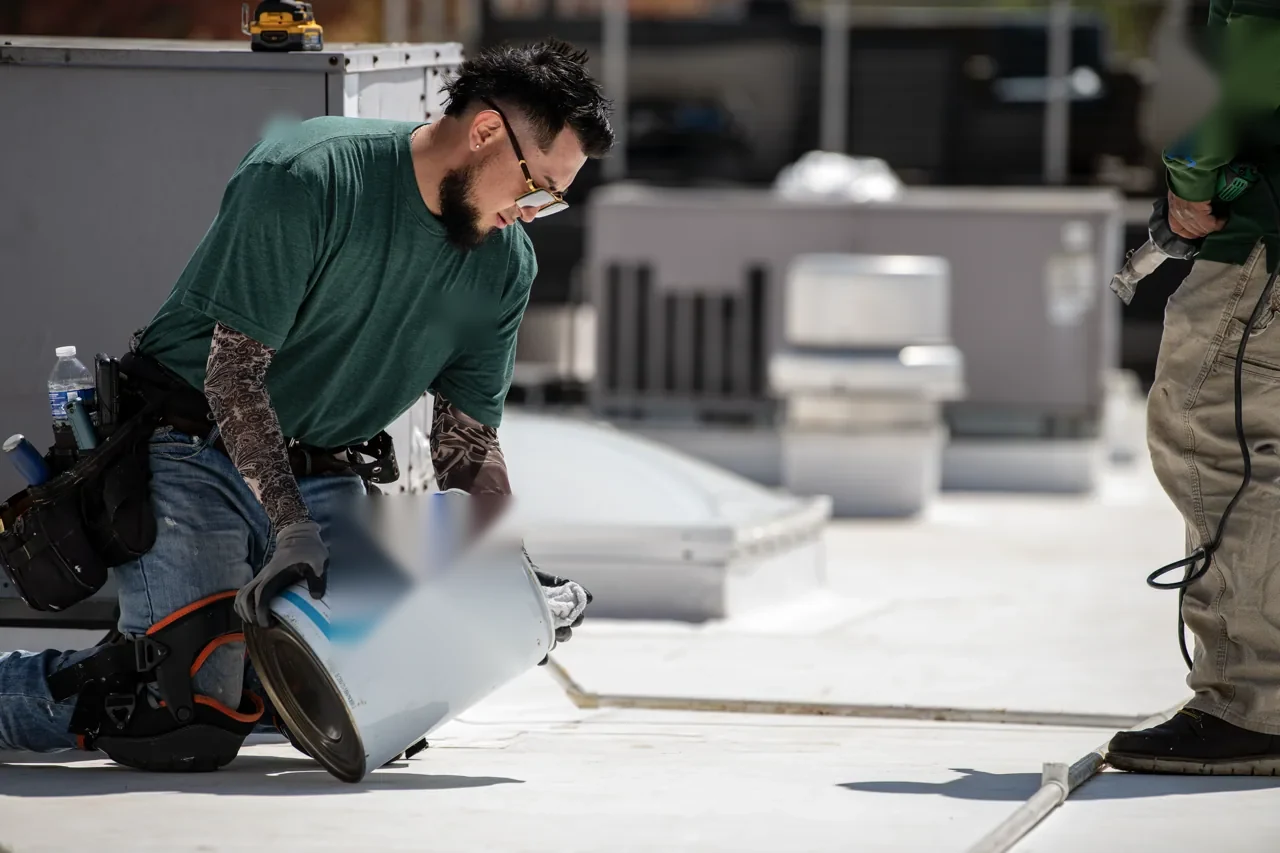
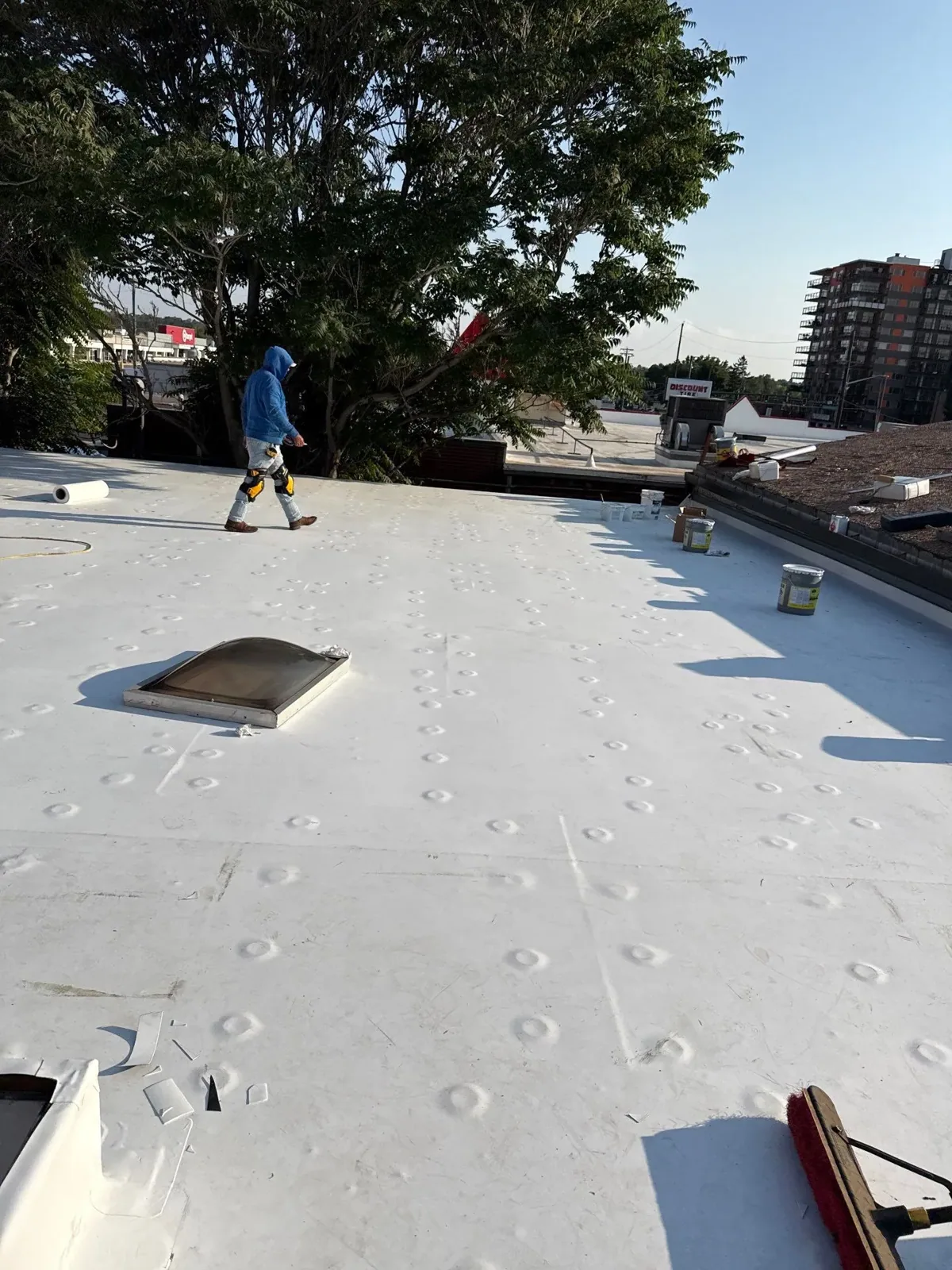
A ceiling report beside a wall, rooftop unit, or pipe gives us a point to trace, while the flashing detail above may be several feet away. We ask which room is affected, what equipment or operation is below, and who can open roof access. In Victorville, heat and long dry intervals can leave a detail undisturbed until a concentrated rain event tests the transition. We inspect the actual curb, counterflashing, termination, or penetration before deciding whether the repair needs new flashing, membrane work, or a wider water-path check.
The city's building-code page provides design references for climate, wind, and roof drainage, but none describes the condition of a particular penetration. We document what is visible and where the water can travel. If an active leak needs protection, emergency roof repair can separate a make-safe step from the permanent flashing scope.
Detail map: identify what the flashing connects
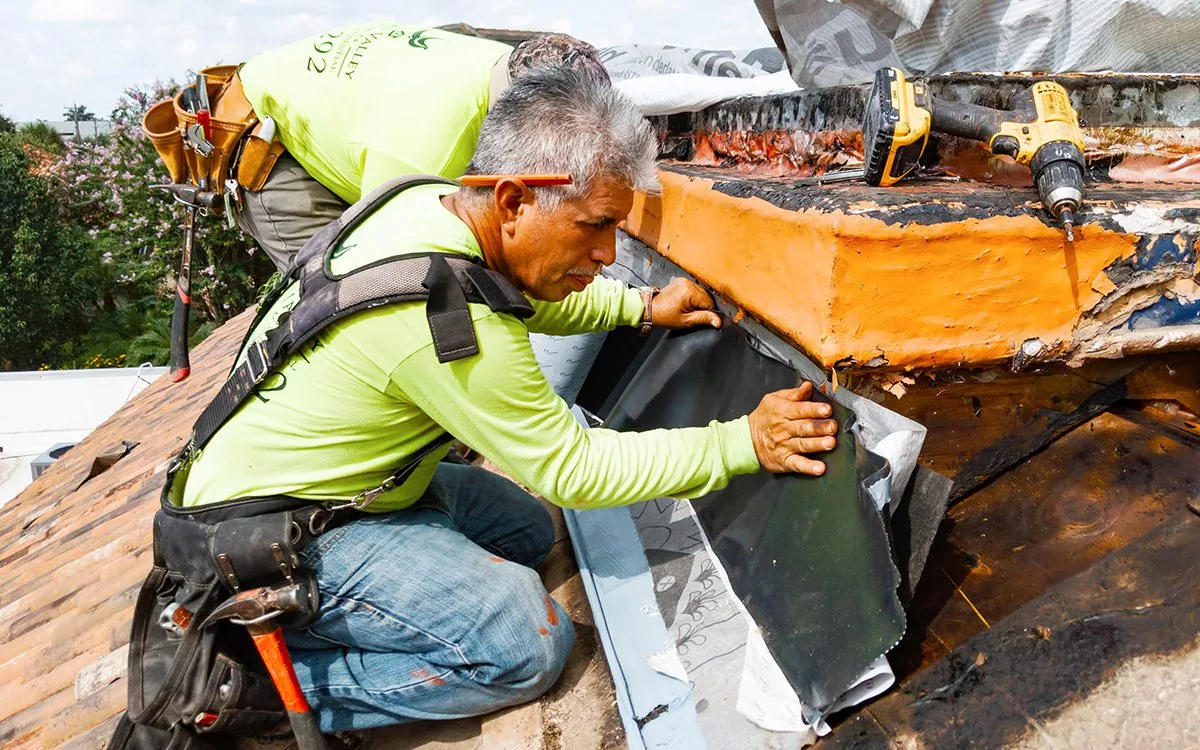
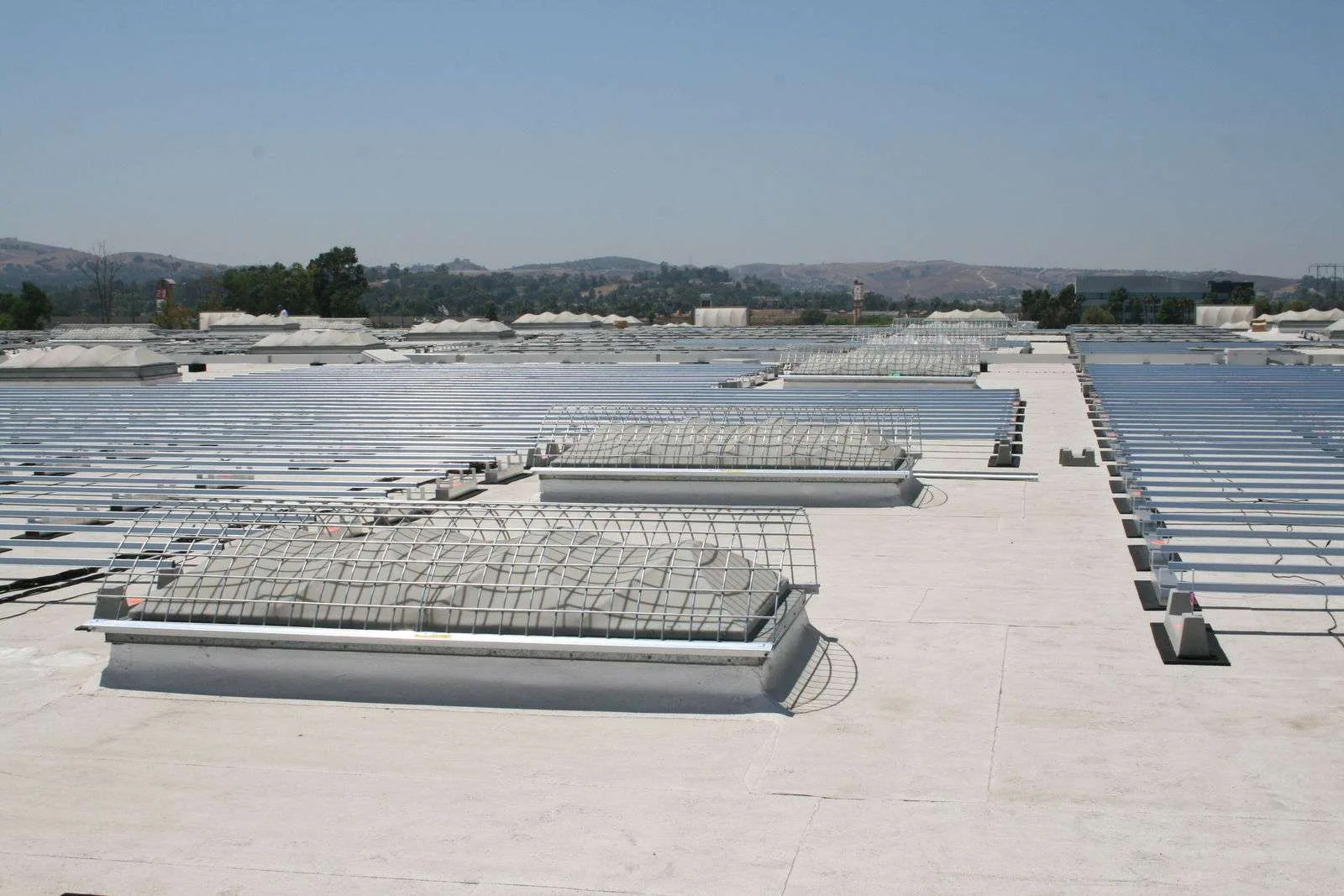
Flashing forms the transition where a roof meets a wall, curb, pipe, skylight, or other interruption. We identify the membrane or metal assembly, the direction water should drain, and the surfaces that should remain sealed. A curb detail may include a vertical turn-up, cover strip, metal counterflashing, and termination. At a pipe, the boot and field membrane make a different connection. We photograph the whole transition before close views so a facility director can distinguish the roof detail from nearby equipment or interior stains.
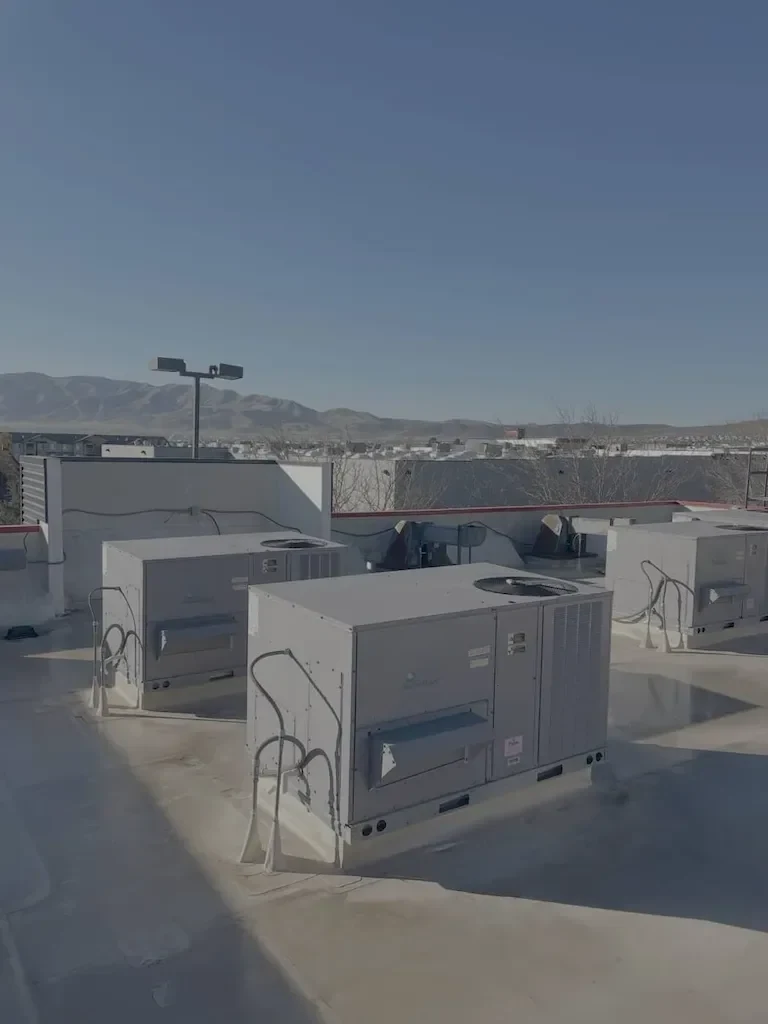
Victorville's Bear Valley Road and I-15 commercial focus area includes regional and local businesses, while Old Town contains retail and service overlays alongside light-industrial, residential, and open-space classifications. Those area plans do not tell us what is installed at a specific building. We verify the roof system and access conditions on site, then describe the real detail in the report. A curb and support inspection can address equipment transitions without assuming every curb shares the same construction.
Water path: follow the entry back to the transition
Water may move beneath a membrane, along a deck, or through insulation before it reaches a ceiling. We compare the reported interior location with flashing laps, corners, fasteners, sealant, termination bars, and adjacent seams. A stain below a curb does not prove the curb is the entry point. We look for an opening, loose edge, split, or failed bond that fits the route, then record any competing possibility. If the path remains unclear, the scope names a next test rather than assigning the leak to the closest visible detail.
The Victorville code table gives drain sizing a specified hourly rainfall basis. That is a design input, not a log of what reached this roof. We check whether water is being directed toward or trapped at the flashing. A ponding-water review can consider a nearby low area, while penetration flashing work addresses a skylight or pipe detail when field evidence points there.
Inspection: test the parts that can fail
At a membrane curb, we inspect turn-up height, corner patches, seams, and the bond between flashing and field sheet. At a metal wall transition, we look at counterflashing laps, cleats, fasteners, and movement. Sealant can weather or separate, but adding another bead over a loose termination may hide rather than correct the failure. We also check nearby penetrations and edge conditions because several details can share a water route. Close photographs and a wider zone reference identify which components were actually accessible.
The George AFB/Victorville weather station's historical record averaged 97 degrees Fahrenheit for July mean maximum temperature from June 1980 to May 1990. That is station context, not a reading from a particular roof. In heat-exposed areas, we still examine the present sealant, membrane, and metal movement at each transition. The Eastern Bear Valley Road Corridor and Old Town Victorville's Seventh Street improvements are named city settings, not proof of roof assemblies or operating hours. We confirm access and system details with the building contact.
Repair method: rebuild the connection
Repair begins with compatible material and sound substrate. We remove loose or failed components as required, prepare the existing surface, and reconnect the flashing to the field membrane or wall assembly using the selected system's details. A pipe boot may be replaced, a curb corner rebuilt, or a metal counterflashing reset. Where water has reached insulation, the scope may need an opening to confirm what can remain. The proposal identifies the limit and any concealed condition that would change the work after removal.
Cost and duration depend on detail count, access, material compatibility, corner geometry, height, nearby equipment, wet materials, and whether the repair affects one roof plane or several. If a flashing failure repeats at multiple curbs, a broader inspection can map the pattern before a budget is set. The existing assembly controls the selected preparation and tie-in.
Occupied building: coordinate work below and above
Flashing work may involve cutting, heat welding, sealants, or temporary openings, so we set the roof access window with the facility contact and confirm conditions below the detail. Equipment shutdown, fire protection, tenant access, odors, or noise can affect the sequence. We protect the interior where appropriate and avoid leaving a transition exposed at the end of a shift. If materials need a cure period or dry surface, the work plan states when the area can be checked again.
Old Town's Seventh Street corridor is part of city revitalization work, and the Bear Valley Road and I-15 area is identified for regional and local commercial activity. Neither public-space plan tells us a property's operating calendar. We confirm deliveries, occupied suites, roof hatches, and equipment schedules with the site contact. For a multi-stage scope, the occupied-building work sequence can keep each detail tied to the correct work window.
Closeout: leave a traceable detail record
The closeout set should show the repaired transition, adjacent field membrane, fastener or weld detail, and any section not opened. We record the preparation and material used, plus the roof zone and date so a later inspection can compare the same corner or penetration. A water test may be useful only when the method is safe and the area can be observed. Its limits belong in the report. The facility contact then has a clear reference if water returns or another trade changes the roof.
We handle flashing repair for Victorville commercial roofs and broad districts such as the Eastern Bear Valley Road Corridor. When the detail sits at an opened seam, a seam inspection can define that related work. Call with the affected room, nearby equipment, and access contact. We can trace the route, document the transition, and explain which repair boundary fits the observed assembly.
Commercial Roofing Questions
Can new sealant repair every failed flashing?
No. Sealant cannot secure a loose metal termination or replace a damaged membrane boot. We identify how the transition is built, remove failed material as needed, and select a repair that reconnects the detail to sound surfaces.
Why can a leak appear away from a curb?
Water can travel below the surface or along the deck before it reaches the ceiling. We compare the reported room with the roof route, then state which flashing or seam evidence supports the entry point.
Do you need to remove the existing flashing?
Only when access or the observed condition calls for it. We explain the proposed opening, how the area will be protected, and what concealed material may change the repair once it is visible.
Can flashing repairs happen while our facility operates?
Often, with a work zone, access window, and protection plan agreed with the facility contact. Heat, fumes, noise, equipment operation, or a temporary opening can require a staged sequence or a different time.
What should the repair record include?
The report should identify the detail, roof zone, adjacent assembly, preparation, repair material, and photos before and after work. It should also list any hidden area or related condition not included.