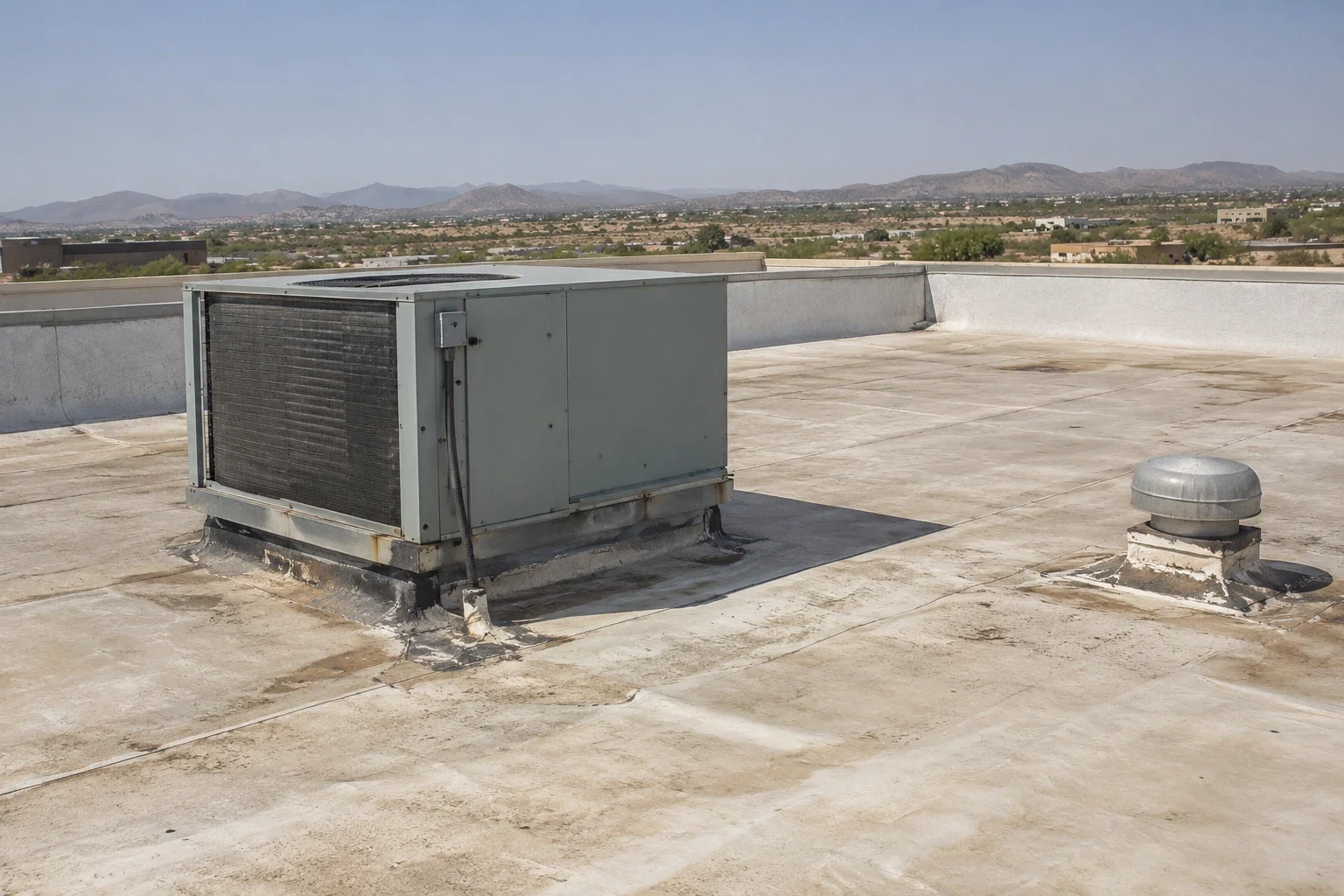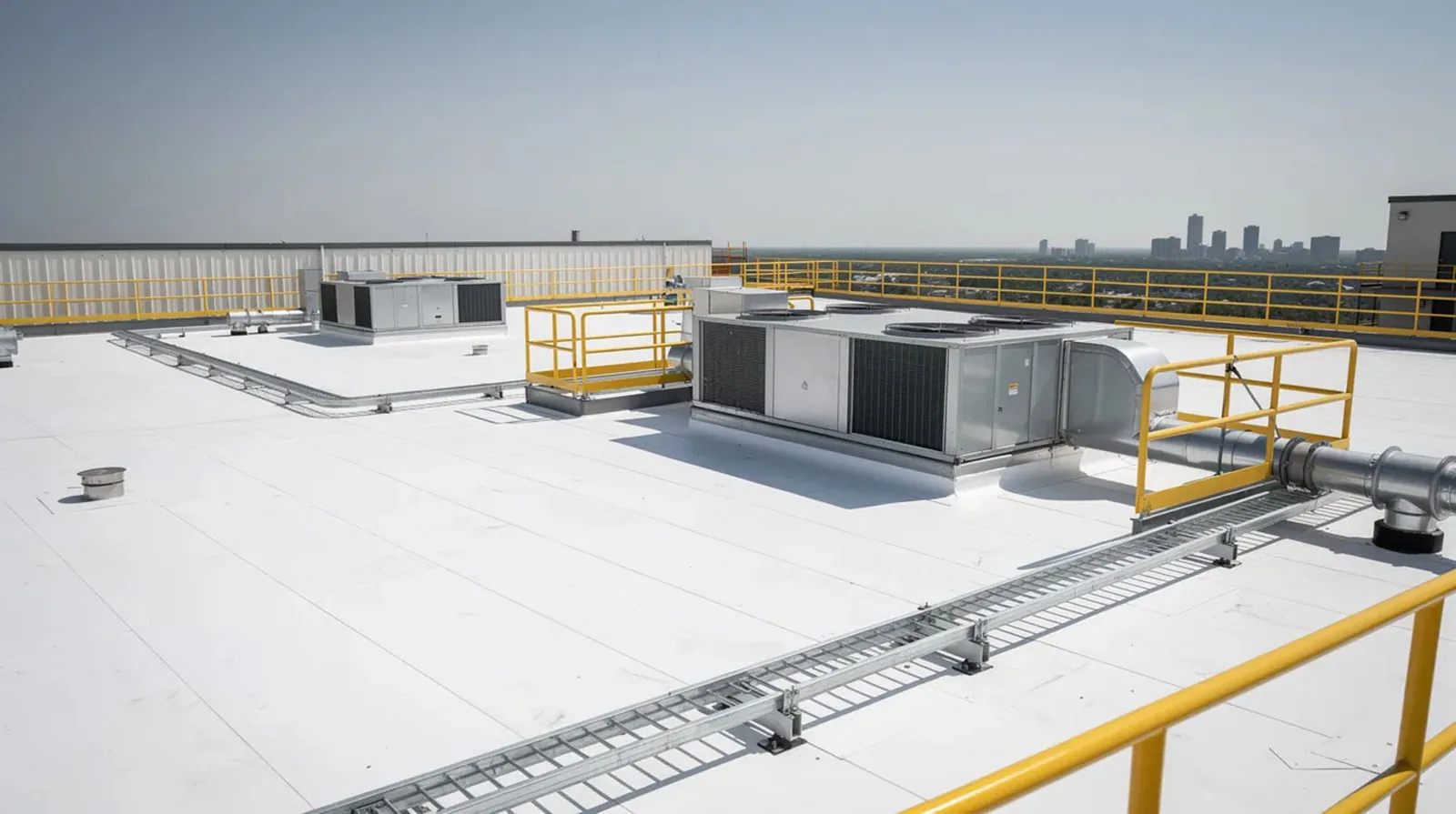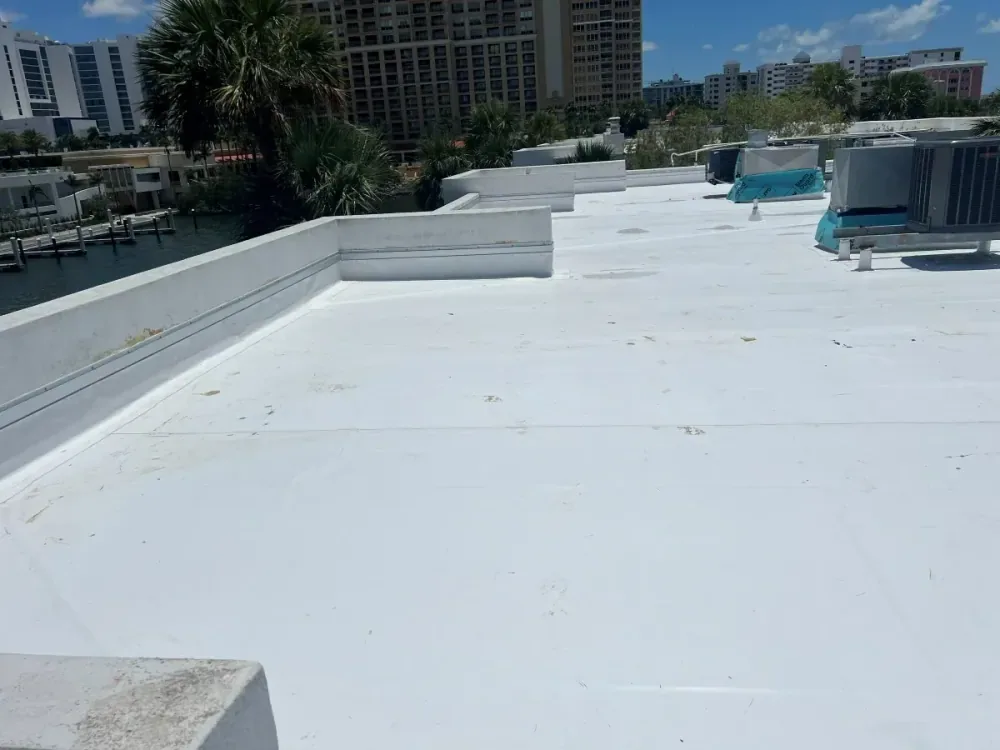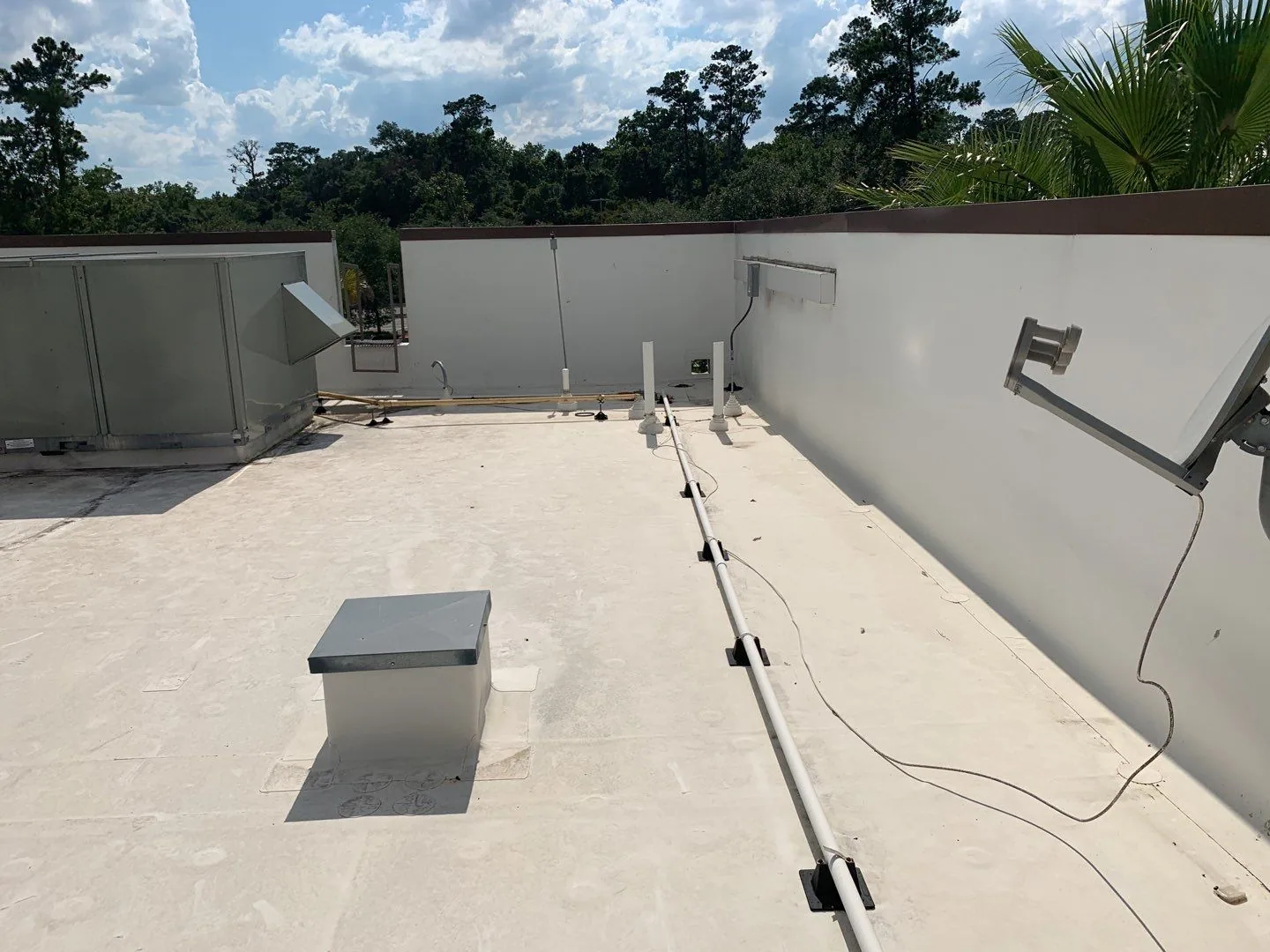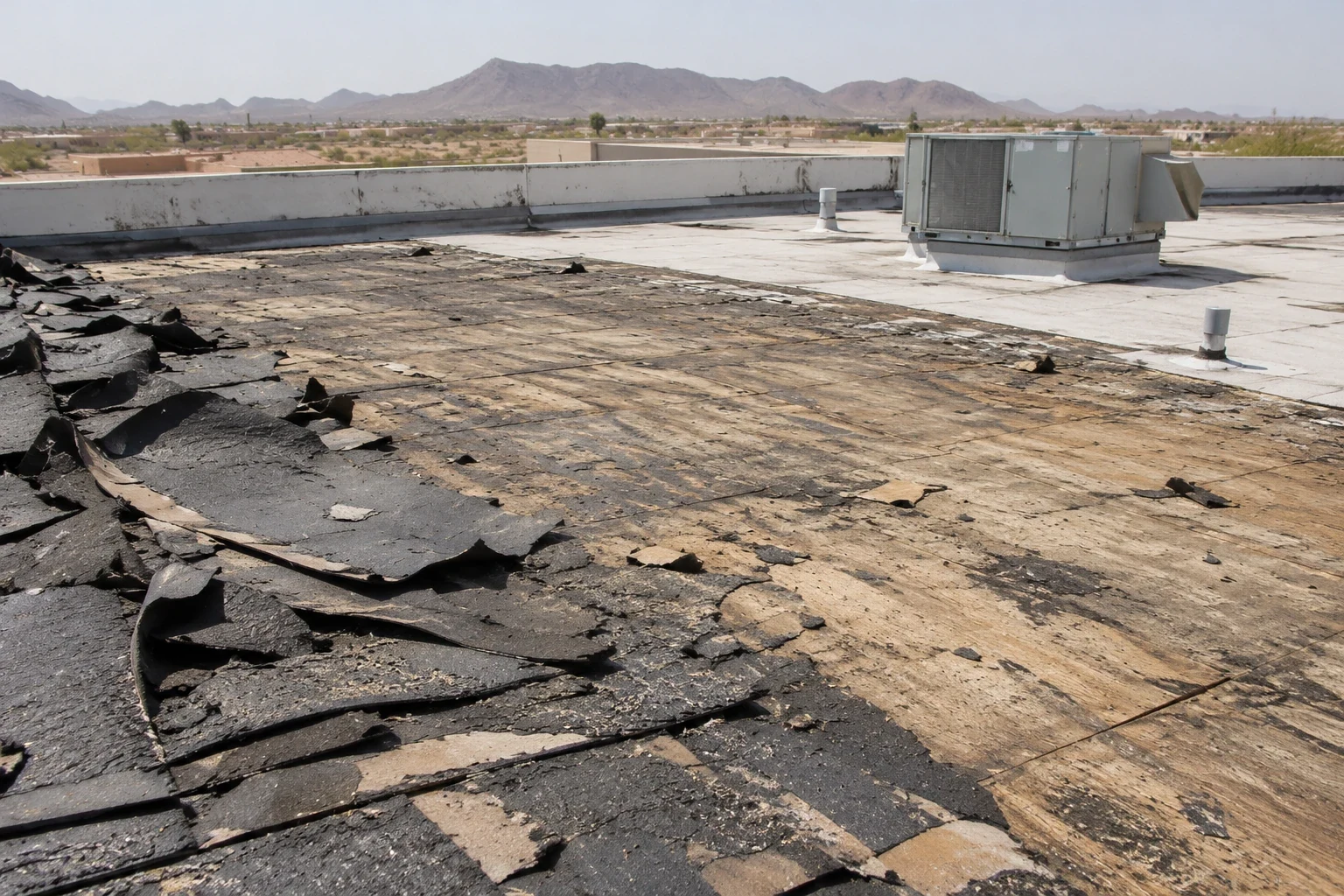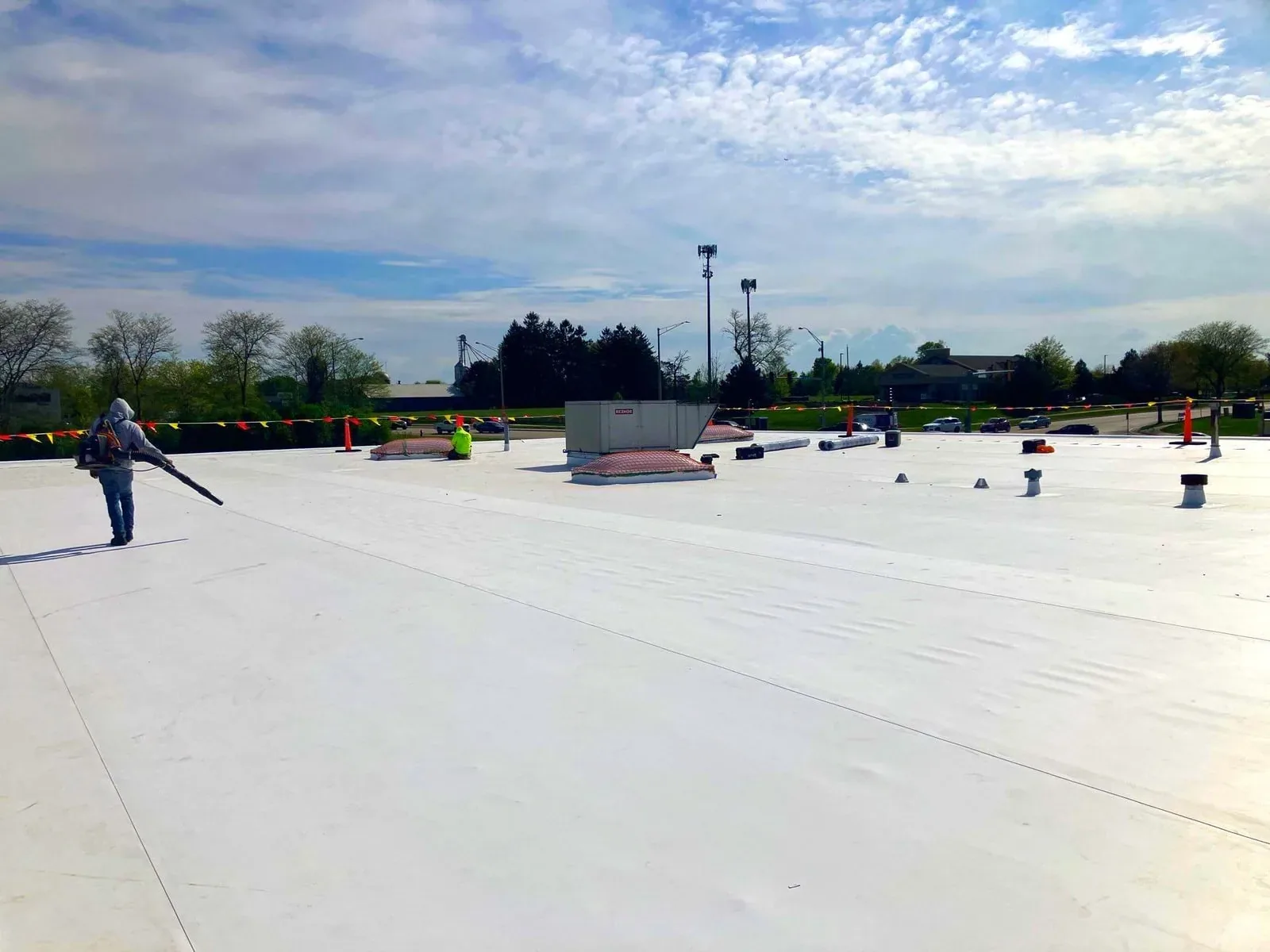
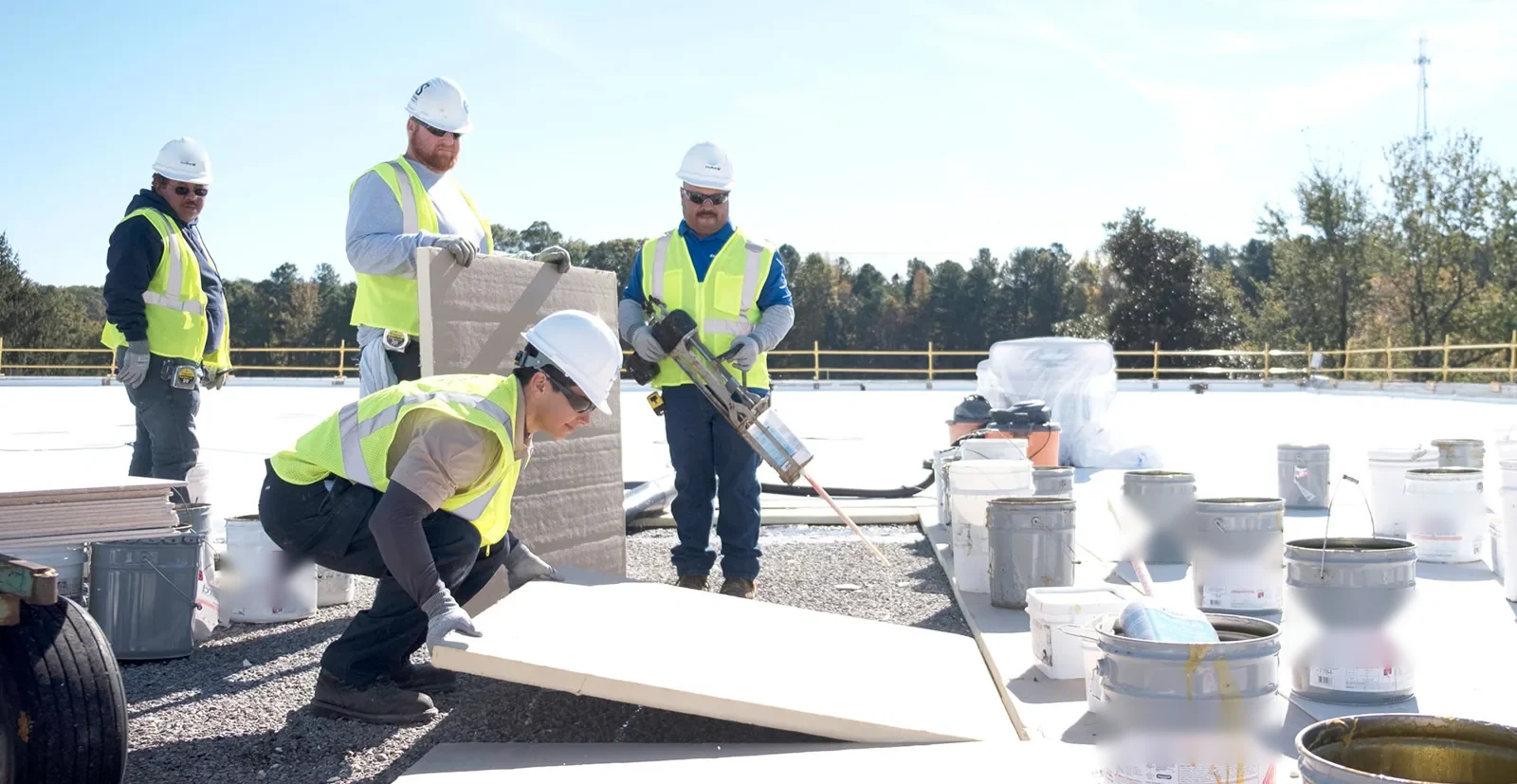
A capital request is easier to defend when it starts with the roof condition that drives the work, not a replacement year copied from an old spreadsheet. We inspect the assembly, map active concerns by roof zone, and separate repairable details from areas that may need recovery or replacement. In Victorville, high summer temperatures and intense rainfall events can stress different parts of the same roof, so drainage, membrane, edge, and penetration findings belong in the same decision record. We identify what is known, what needs a closer opening, and what can be scheduled around building operations.
The first call should identify the properties under review, the decision date, and the facility contact who can arrange access. A photo-based condition report gives the owner a visible basis for scope and timing, while a roof asset record keeps earlier repairs connected to today's observations. The plan then shows near-term make-safe work, likely capital items, and the evidence that would change their order.
Decision window: establish what must happen first
We begin by separating active leaks or unsafe conditions from work that can be evaluated in a planned access window. A wet insulation finding near electrical equipment may require temporary protection and a prompt scope. A stable coating concern at a remote roof edge may belong in a later review. The owner receives both observations and their operational implications, rather than one blended condition label.
Victorville's historic station record reports a July mean maximum temperature of 97 degrees during its 1980 to 1990 observation period. That background helps frame heat exposure questions around aging sealants, membrane movement, and rooftop equipment transitions, but it does not assign a remaining life to an individual assembly. We document visible condition and compare it with repair history before estimating a timing window. A heat and UV review can help isolate affected areas, and a targeted repair scope may reduce active exposure while a broader capital decision is prepared.
Scope options: compare the work the roof can support
Repair, coating, recover, and replacement are not interchangeable budget labels. We inspect whether the existing roof is dry enough for the proposed assembly, whether insulation and deck remain sound, how many layers are present, and whether flashing details can be rebuilt. A repair may be appropriate when damage is isolated and surrounding materials remain serviceable. A recover requires compatible conditions and secure attachment. Replacement enters the plan when the assembly or widespread moisture makes a smaller intervention a poor fit.
For each option, we identify access, tear-off, tie-in, edge metal, drain, and occupied-building sequencing questions. The proposal should state what is included and what conditions require a change order or separate review. We can compare a replacement scope with a recover approach, then use a TPO assembly review only if the inspected deck and attachment needs make that system a reasonable candidate. No system selection comes from a planning assumption alone.
Local exposure: connect design references to observed conditions
Victorville's adopted building-code page lists ground snow load and occupancy-dependent wind design values. Those inputs matter when a design professional reviews attachment, framing, and edge conditions, but they are not a finding about an existing roof or a substitute for the project criteria. Our field report records the visible perimeter, substrate clues, and existing assembly; design questions are carried to the appropriate review before a scope assumes attachment or structural capacity.
The city's Old Town Specific Plan covers an area between Interstate 15 and the eastern city boundary and includes retail, service, light-industrial, residential, and open-space classifications. A capital plan for property in that mixed-use area should account for the operating schedule and access route of the actual building, not presume a single type of roof or tenant. We note constraints that change staging and link the property to its Old Town service-area record. For a drain concern, a drain and scupper assessment can clarify a separate line item.
Budget sequence: keep urgent work out of the replacement allowance
A capital schedule should not bury leak response inside a future replacement number. We list make-safe work, permanent repair, investigation, and larger renewal separately so finance and facility teams can authorize the right step. A temporary patch may protect an occupied area while a test cut or moisture survey establishes the extent. If the evidence later supports replacement, the earlier repair and its location remain part of the record rather than disappearing into a broad allowance.
For buildings near the Bear Valley Road and I-15 commercial focus area, multiple operations may share a property while having different roof access and service windows. The city planning document describes a concentration of regional and local commercial uses there; it does not reveal the condition of any individual roof. We plan each roof by assembly and operating need, noting whether a phased sequence would keep entrances, deliveries, or occupied suites available. Work on a roof in use can be staged by zone so that temporary protection, material movement, and access remain clear to the facility contact.
Review and update: use new evidence to change the order
We set a review point for open recommendations, not an automatic replacement date. After a repair, the return visit checks whether the water path is closed and whether adjacent materials remain stable. If moisture indications expand, a new access condition appears, or operations change, the plan can move a roof zone forward. If evidence remains stable, the owner can preserve the allowance for a later scope while keeping maintenance current.
Capital planning works best when inspection notes, photos, invoices, warranty requirements, and approval records use the same building and zone labels. We can put those items into a short owner review with a decision, cost driver, and next evidence need for each line. A mapped moisture survey or warranty record review may resolve an open question, while portfolio coordination can help sequence properties under common ownership. Each site still keeps its own inspection findings and scope.
Commercial Roofing Questions
What evidence belongs in a roof capital request?
Use current inspection findings, dated photos, repair history, identified roof zones, and the operational effect of waiting. We distinguish a confirmed condition from a suspected one, then state what additional opening or test would resolve uncertainty. The request can compare repair, restoration, recover, and replacement only where the observed assembly supports those choices.
Can one replacement date cover every building in a portfolio?
No. Roof type, layers, moisture, drainage, exposure, repair history, and operating schedule differ by building. We record each property's condition and then group the projects only where similar evidence and work sequencing make the comparison useful. A portfolio summary helps order decisions; it does not make the buildings interchangeable.
How do you handle a repair while capital approval is pending?
We identify the active water path or exposed condition and scope temporary protection or permanent repair separately from the larger renewal option. The report notes the affected interior area, roof zone, access limits, and what a return visit should verify. This lets the facility contact address immediate operations while ownership reviews the evidence for a larger commitment.
Do Victorville climate figures set the roof replacement year?
They provide design and exposure context, not an age rating for a particular assembly. The inspection records actual membrane, flashing, insulation, drainage, and edge conditions. We use those findings with repair history and operating consequences to prepare a timing range, then update it when new evidence changes the decision.
What can change the capital sequence after inspection?
A new leak, wet insulation, deteriorated deck, blocked drain route, or a previously inaccessible roof zone can change priority. A change in tenant operations may also affect the work window. We document which finding changed the sequence and whether the next step is temporary protection, further investigation, or a revised permanent scope.