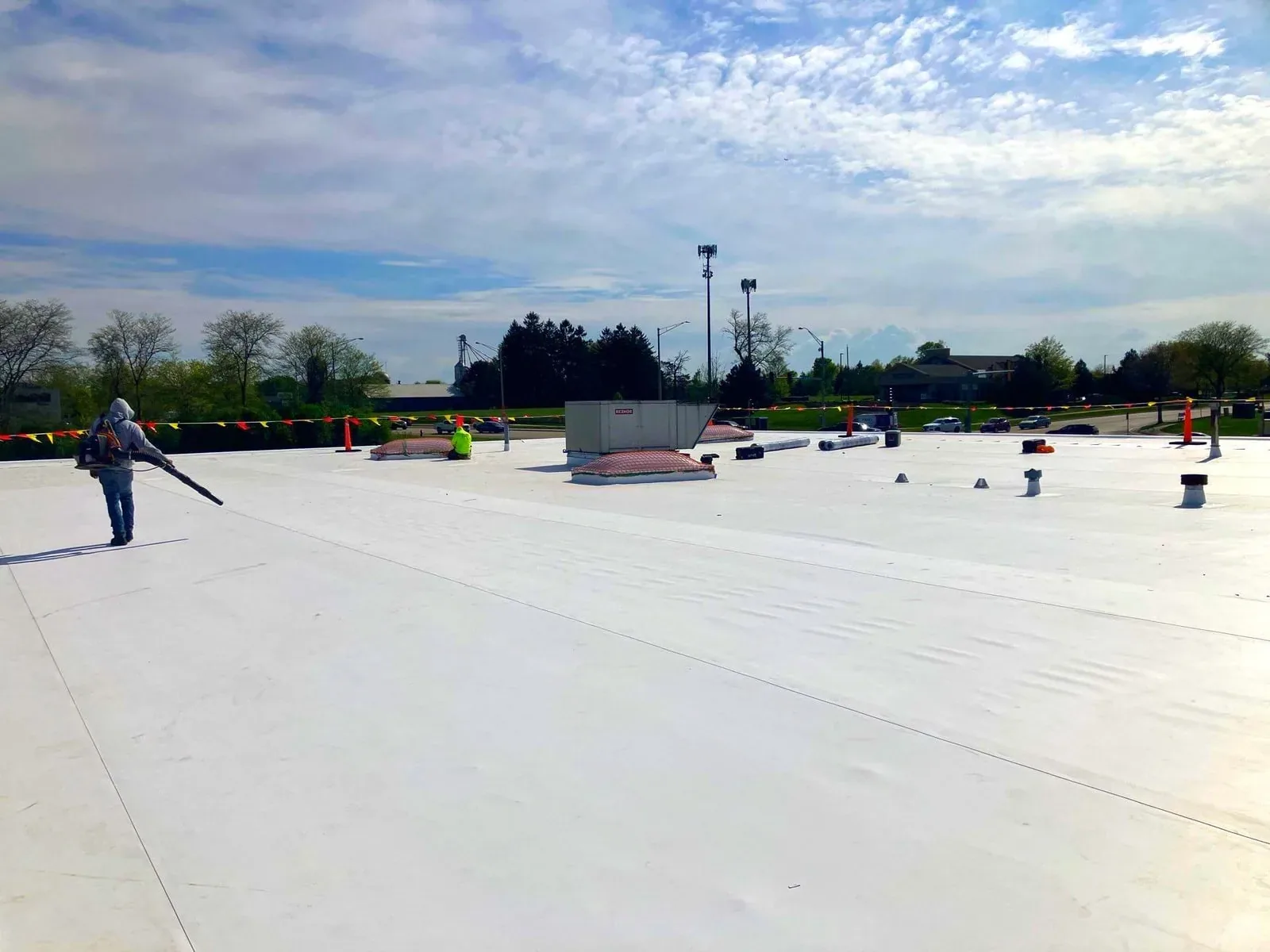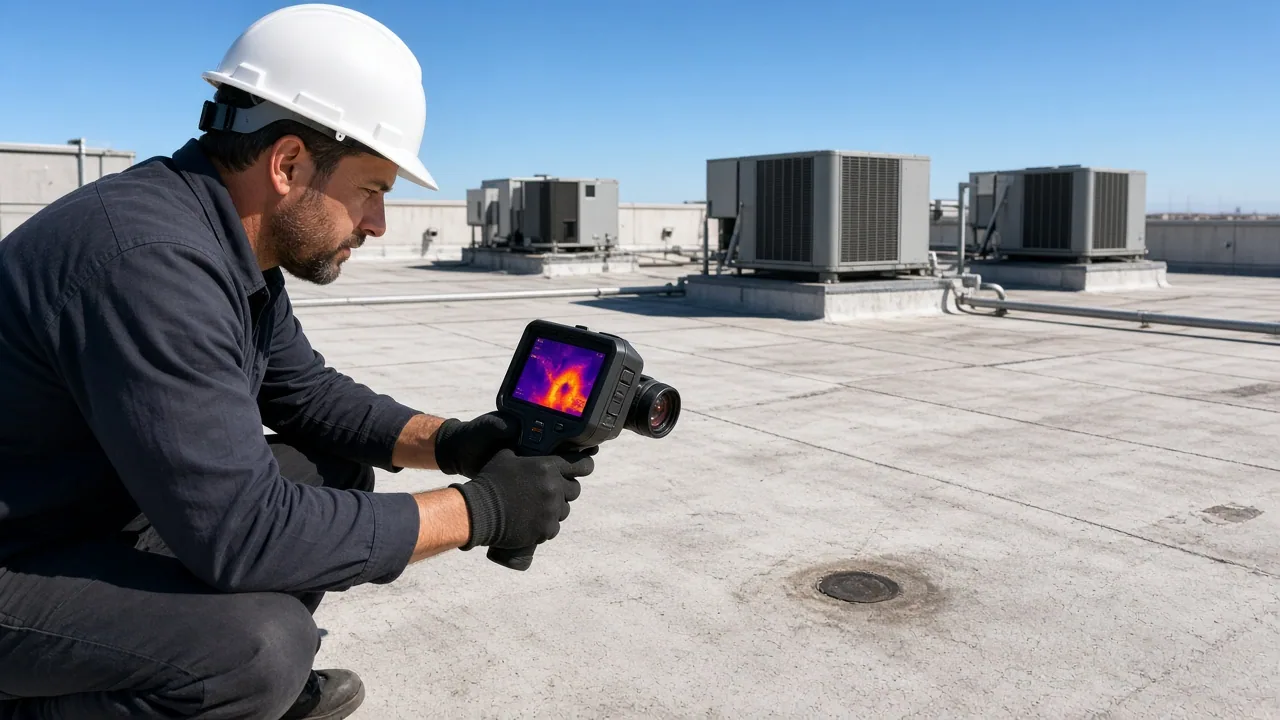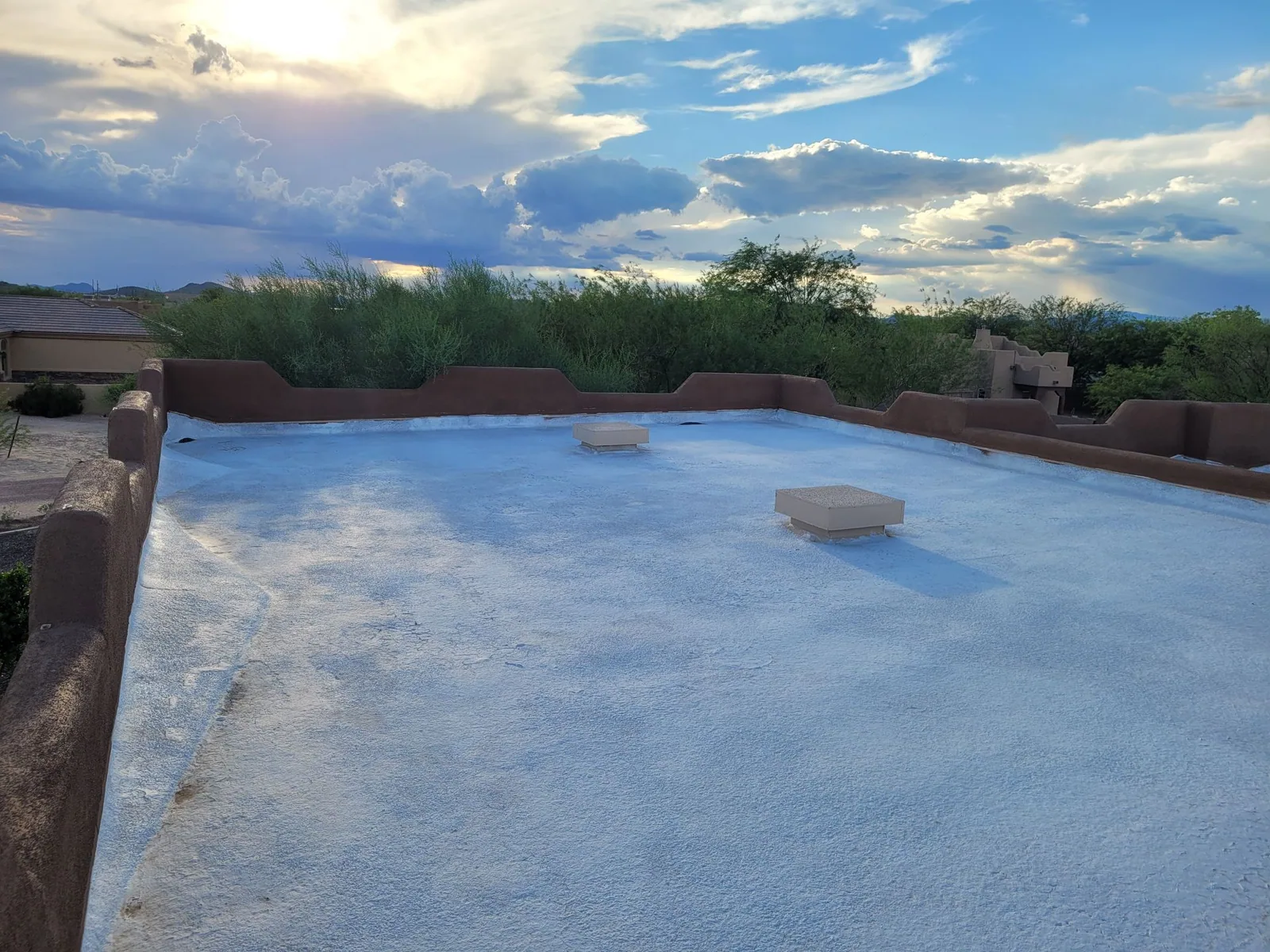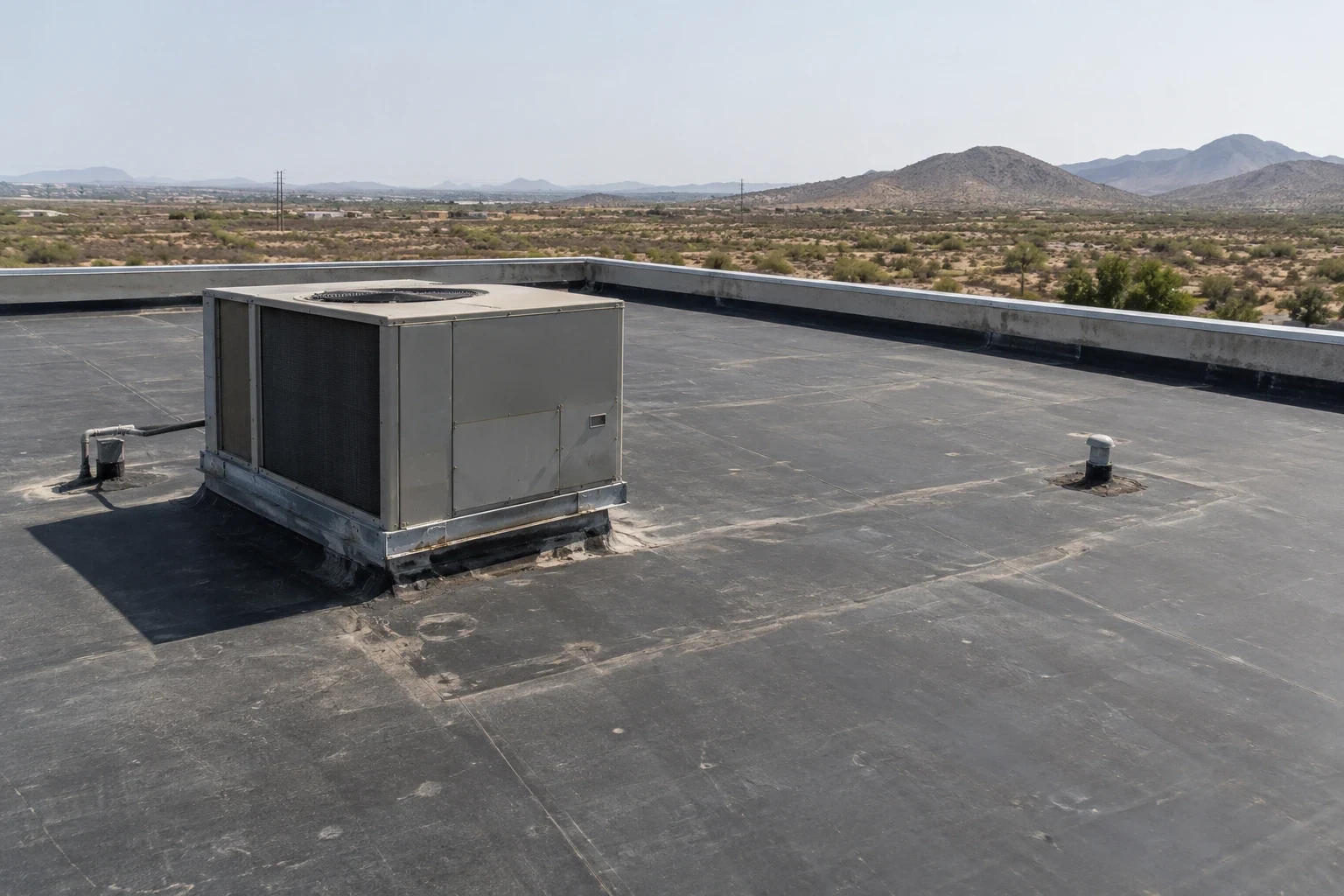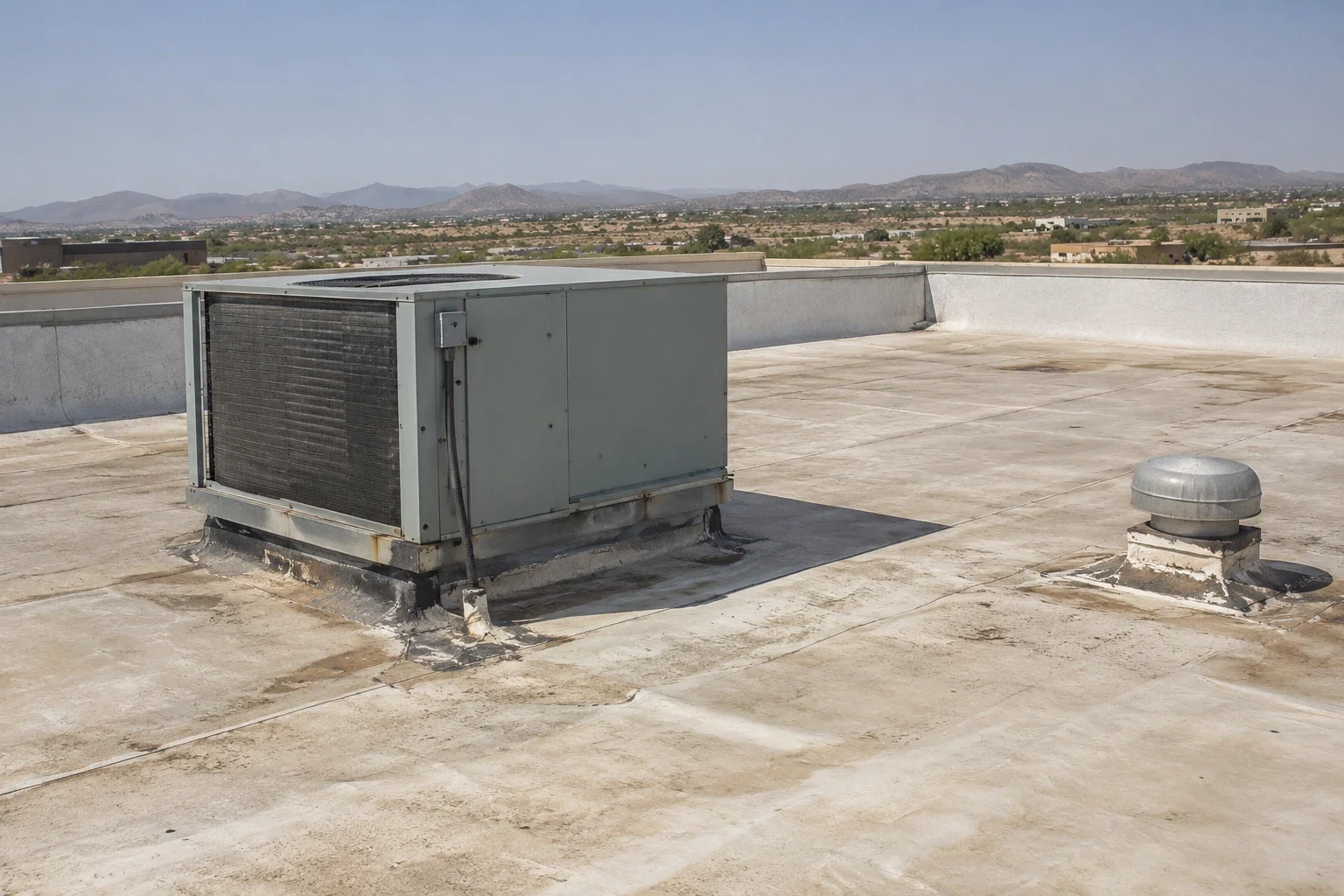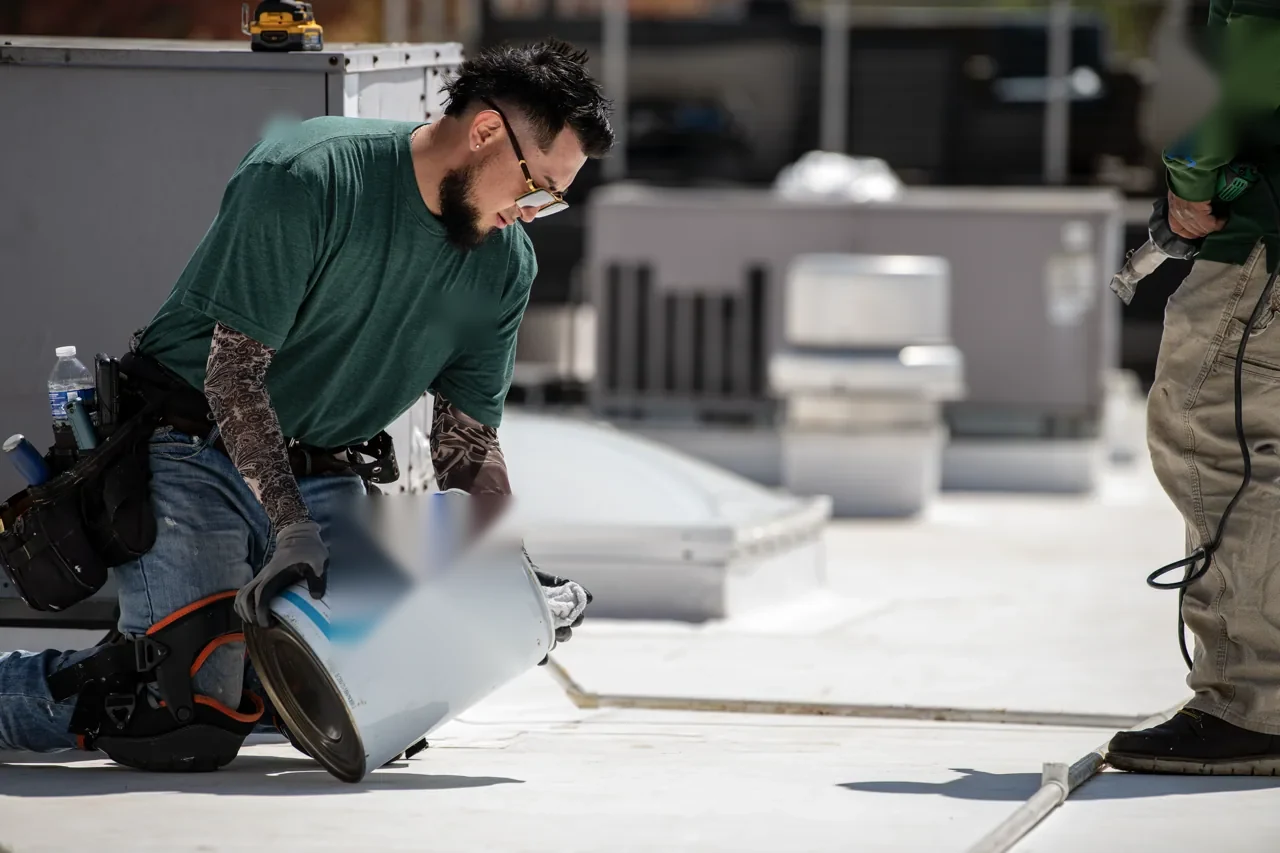
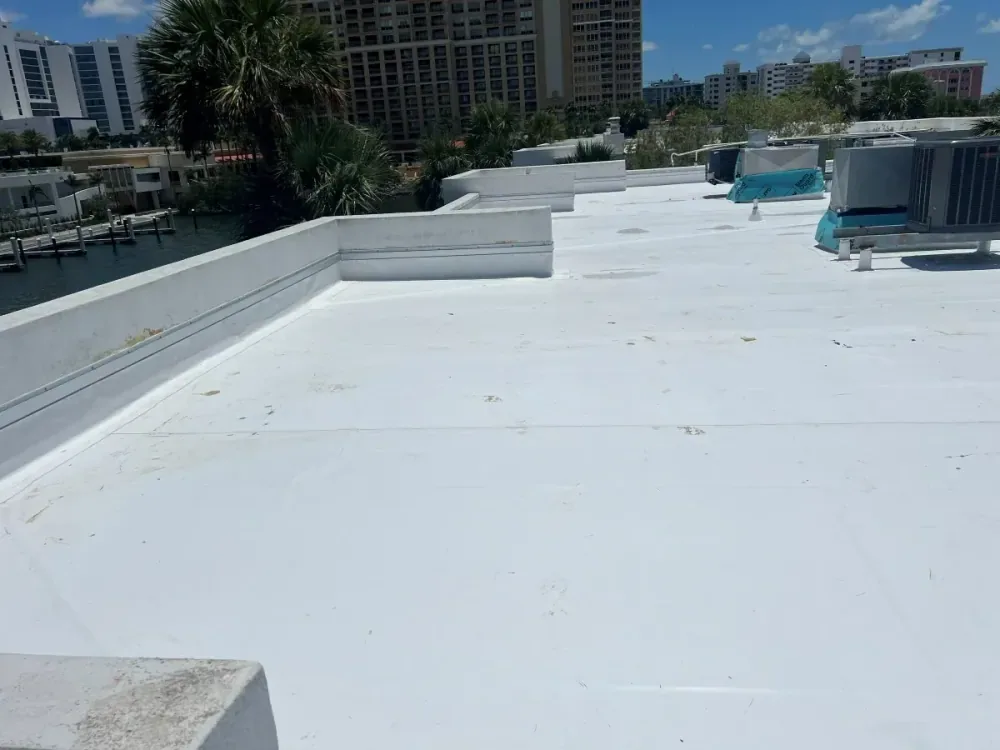
A split lap or edge that no longer lies flat needs more than sealant on its surface. We ask where water appeared, which operation is below, and whether a facility contact can provide roof access. The first inspection follows the open seam along its length, checks the end condition and nearby details, and marks any membrane that remains sound. In Victorville, long heat exposure can make material movement an important observation, but the repair still follows the installed assembly and current field condition.
The George AFB/Victorville station averaged 23 days per year at or above 100 degrees Fahrenheit over its June 1980 to May 1990 historical period. That record is local context, not a measurement of this roof. We inspect the actual lap and adjacent surface before selecting a compatible seam method.
Failure review: define where the lap opened
We inspect the seam from a sound section toward the opening, recording separation, wrinkles, contamination, old patches, and changes in sheet alignment. A thermoplastic lap may need cleaning and a test weld; an EPDM splice uses a different bonding process. A seam that looks open at one point can hide a longer weak bond, while a surface split may be limited to a repair edge. We document the condition before preparing material so the proposed repair boundary follows evidence rather than a guess.
Victorville's industrial development information identifies planned work near U.S. 395 and Mojave Drive, and Foxborough Industrial Park is another named planning area. Those approvals do not tell us which roof assemblies are operating there. They do make access and shift schedules practical questions for a manager describing an industrial site. We coordinate the site's own work windows and record the affected roof zone. A roof inspection can look beyond one lap when similar seams appear across the field.
Water path: connect the seam to the interior report
Water entering at a lap can travel under the sheet or along the deck before it appears below. We compare the reported room with seam direction, roof slope, drains, curbs, wall details, and prior repairs. If several paths remain possible, the report names each observation and what would narrow the route. Moisture testing or a controlled opening may help where the assembly conceals water, but the scope explains what the method can and cannot confirm. The goal is to assign the repair to a supportable area.
The city's code page gives roof-drain sizing guidance at 2.5 inches per hour. That published value does not establish rainfall at a building or explain a particular leak. It can frame a question when water has remained near an end lap or outlet. In the Bear Valley Road and I-15 commercial focus area, property type and operating schedule vary, so we use the actual drain and seam layout. A ponding-water assessment can cover a low area that stays wet beside an open seam.
System check: match preparation to the sheet
For thermoplastic sheets, the repair may depend on surface cleaning, temperature, test welds, and a compatible overlay or replacement strip. For EPDM, adhesive, primer, splice tape, and edge preparation need to suit the existing rubber membrane. Modified bitumen and built-up assemblies require another repair detail. We identify material when markings, records, and visible characteristics support it; color alone is not enough. If a prior repair cannot bond to the existing sheet, we explain the removal needed before the permanent splice.
The municipal code assigns wind criteria by occupancy and exposure; the design schedule does not determine a seam's present bond or movement. We inspect attachment near the lap, perimeter transitions, and any movement caused by equipment or traffic. A rubber roof splice differs from a thermoplastic weld, so we identify the assembly before pricing. The report notes whether additional tests were completed or remain part of the next scope.
Repair boundary: extend beyond the visible split
A lasting repair needs sound material on each side of the separation. We prepare the surface, remove failed patches where necessary, and carry the splice beyond weak or contaminated sheet. At an end lap or corner, the detail may also require new flashing or a change to water flow. We mark the zone before installation and photograph the prepared surface, completed work, and tie-in. If the surrounding membrane is brittle, wet, or repeatedly split, the scope explains why a short patch would not resolve the broader condition.
Cost follows seam length, assembly, access, wet insulation, repair history, preparation, and any adjacent curb or edge work. When multiple seams fail together, a condition report can map the zones for repair or replacement planning. The written scope separates confirmed work from a concealed condition that could change after opening.
Operations: maintain a safe tie-in
Seam work may use heat, adhesives, or primers, and each method has access and safety requirements. We coordinate material staging, roof traffic, equipment clearances, and any fire watch or ventilation precautions applicable to the selected procedure. If the building stays occupied, the facility contact helps set a work window and keeps staff clear of the area below. A secure tie-in closes the roof at the end of a shift if the repair cannot be completed in one visit.
Interstate 15 connects Victorville with commercial routes, and the Old Town plan places Seventh Street within a city revitalization corridor. These public corridors do not set the schedule for a roof job. We confirm the building's deliveries, active suites, and access control directly. A staged occupied-building plan can define each release when seam work extends through several roof zones or must coordinate with other trades.
Closeout: record the splice for the next inspection
After installation, we record seam location, preparation, system, repair-strip limits, and photographs of the tie-in. The closeout notes any adjacent lap or area not included and whether a field test was performed. This lets a facility director compare the same seam during a later inspection instead of relying on a general note that a leak was fixed. If a new roof penetration or equipment route is added, the work record should identify who changed the surface and where the seam now needs protection.
Our commercial seam repairs serve Victorville and the Palmdale Road and U.S. 395 corridor. For an adjacent edge or curb, a flashing assessment can define the connected detail. Call with the reported interior location, recent roof work, and access contact. We can trace the seam, explain the selected repair method, and leave a record tied to the roof zone.
Commercial Roofing Questions
Can an open seam be repaired without replacing the whole roof?
Often, when sound membrane remains beyond the separation and the repair can tie into it. We inspect the surrounding sheet, attachment, moisture, and repair history before defining a localized boundary.
Why not cover a split lap with sealant?
A surface bead may not restore the seam bond or remain compatible with the sheet. We identify the system and prepare a repair that joins sound material using the method suited to the assembly.
Does the Victorville heat record mean the seams are failing?
No. The historical station data provides climate context only. We inspect the roof's current lap, material, attachment, and nearby details, then record the evidence that supports a repair decision.
How far should the repair extend past the opening?
It extends to material that can accept the repair, not a fixed distance for every roof. Preparation and test welds or adhesion checks help establish a sound boundary before the splice is completed.
What should we send before the roof visit?
Share the interior location, roof plan if available, prior repair notes, and the access contact. Identify any equipment or tenant activity below the seam so we can coordinate a safe work window.