A leak report starts with a roof zone, a time, and the space affected below. Water above an Old Town Victorville retail suite may follow a drain route before it reaches a ceiling, while an opening beside equipment can show only during a particular rain. We ask when the water appeared, what was operating underneath, and who can provide safe access. Then we compare the interior report with seams, curbs, wall flashing, drains, and prior repairs. The work begins by tracing the path, not by sealing the spot that happened to become visible.
Separate active water from old staining
We ask whether the ceiling is wet now, whether water is near electrical or sensitive equipment, and whether the affected area is growing. The facility contact can protect belongings below, keep people clear of a wet ceiling, and identify roof access. We do not ask staff to climb onto a roof or handle unsafe electrical conditions. Once access is controlled, we record the reported point, nearest drains and transitions, the roof surface, and the route we follow. Photographs distinguish a current leak from a stain that may remain after earlier repair.
Victorville's code reference for roof-drain sizing is 2.5 inches per hour. We inspect drain inlets, scuppers, low areas, and overflow paths to see whether water moves as intended. That number is a design reference, not proof that a drain is undersized. We inspect actual roof geometry before calling for a drain change. A wider roof inspection scope records conditions beyond one active leak.
Follow the route across the assembly
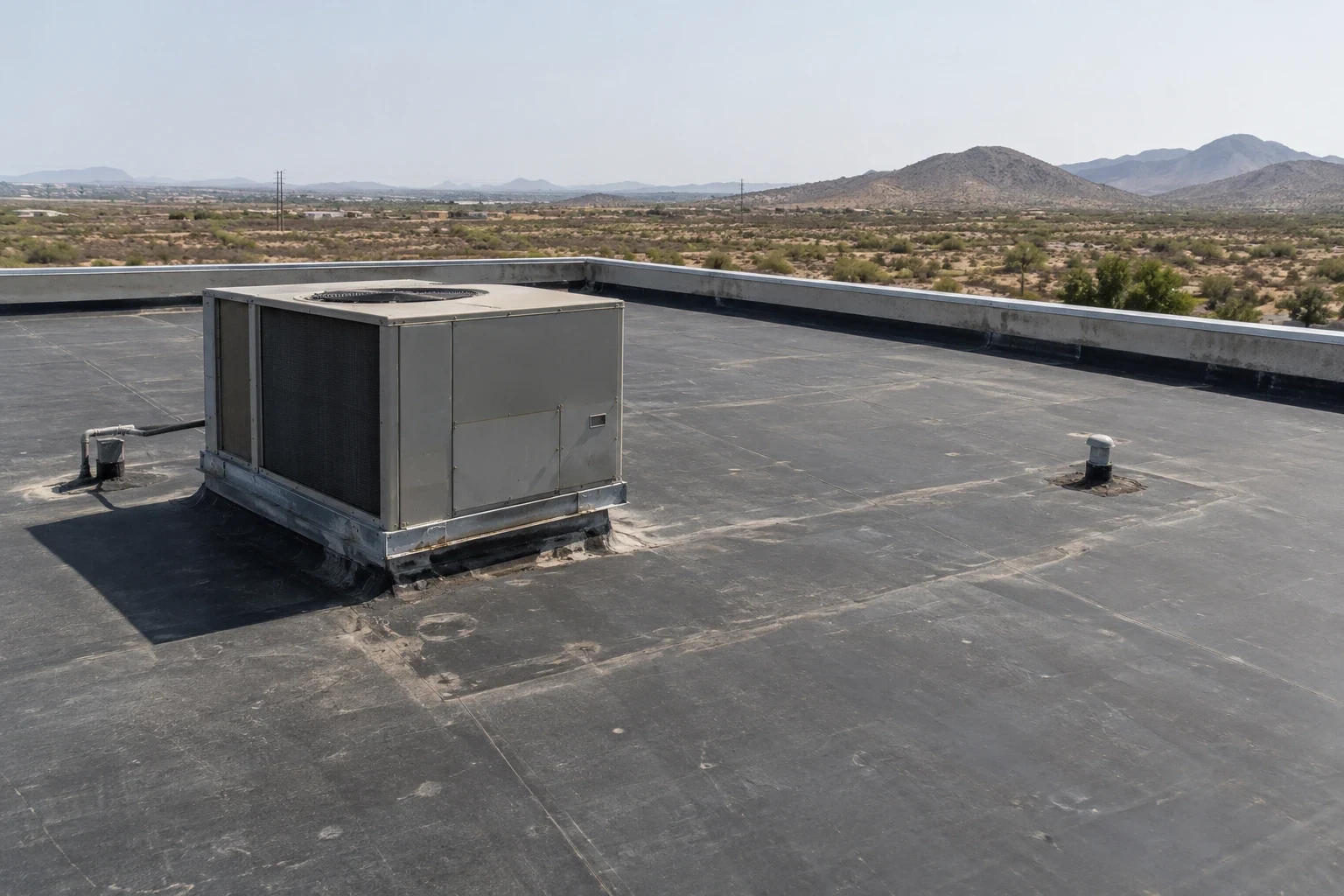
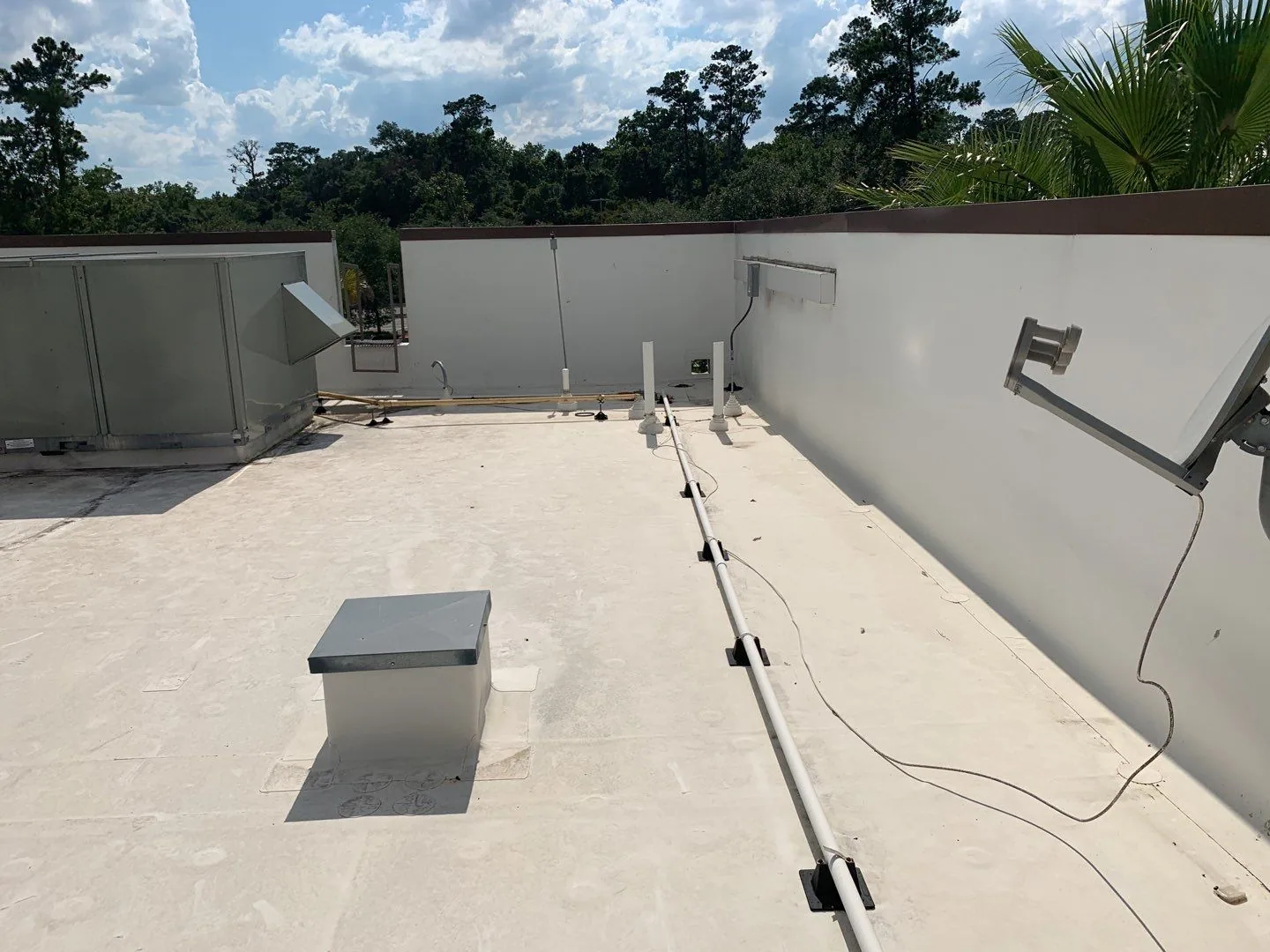
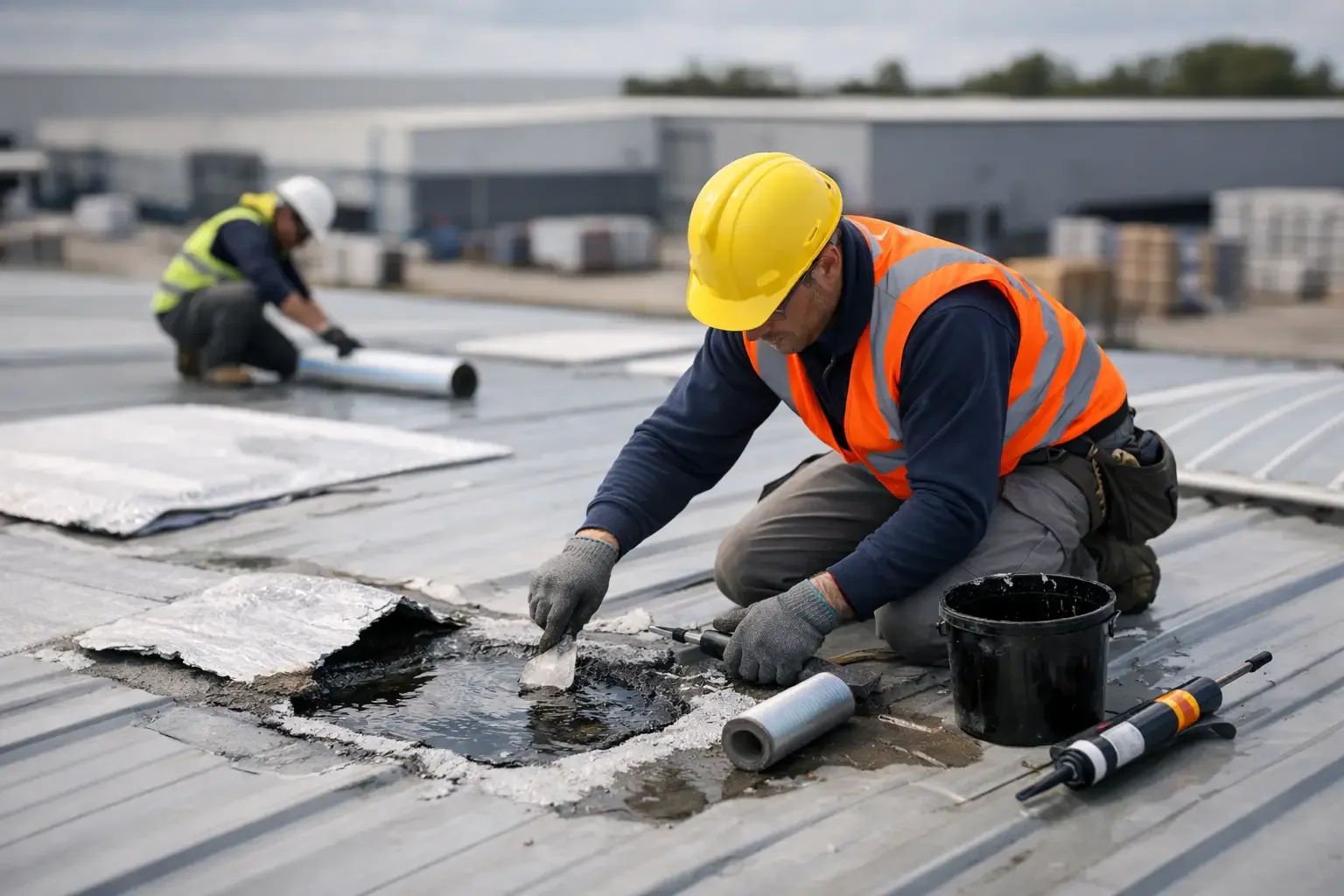
Water can move sideways above a deck or within insulation before it reaches the ceiling. We trace back from the reported point to the most likely entry details: open seams, punctures, flashing, penetrations, curb corners, perimeter metal, or a drain connection. A low area may hold water against a detail longer than the surrounding roof. A wall or pipe flashing may admit water under one direction of wind-driven rain and remain dry in a calm test. We record the evidence that supports each path and say when more than one opening remains possible.
The Old Town Specific Plan includes mixed-use retail and service overlays, light-industrial land, residential areas, and open-space classifications. The building use below an Old Town roof can affect how we stage a leak repair, but the plan does not establish its roof assembly. Victorville's Bear Valley Road and I-15 focus area includes commercial and regional-serving uses. Those municipal contexts help frame likely operating needs; the individual roof still determines the repair. We keep the finding tied to that roof's seams, outlets, and transitions.
Repair the entry detail and its tie-in
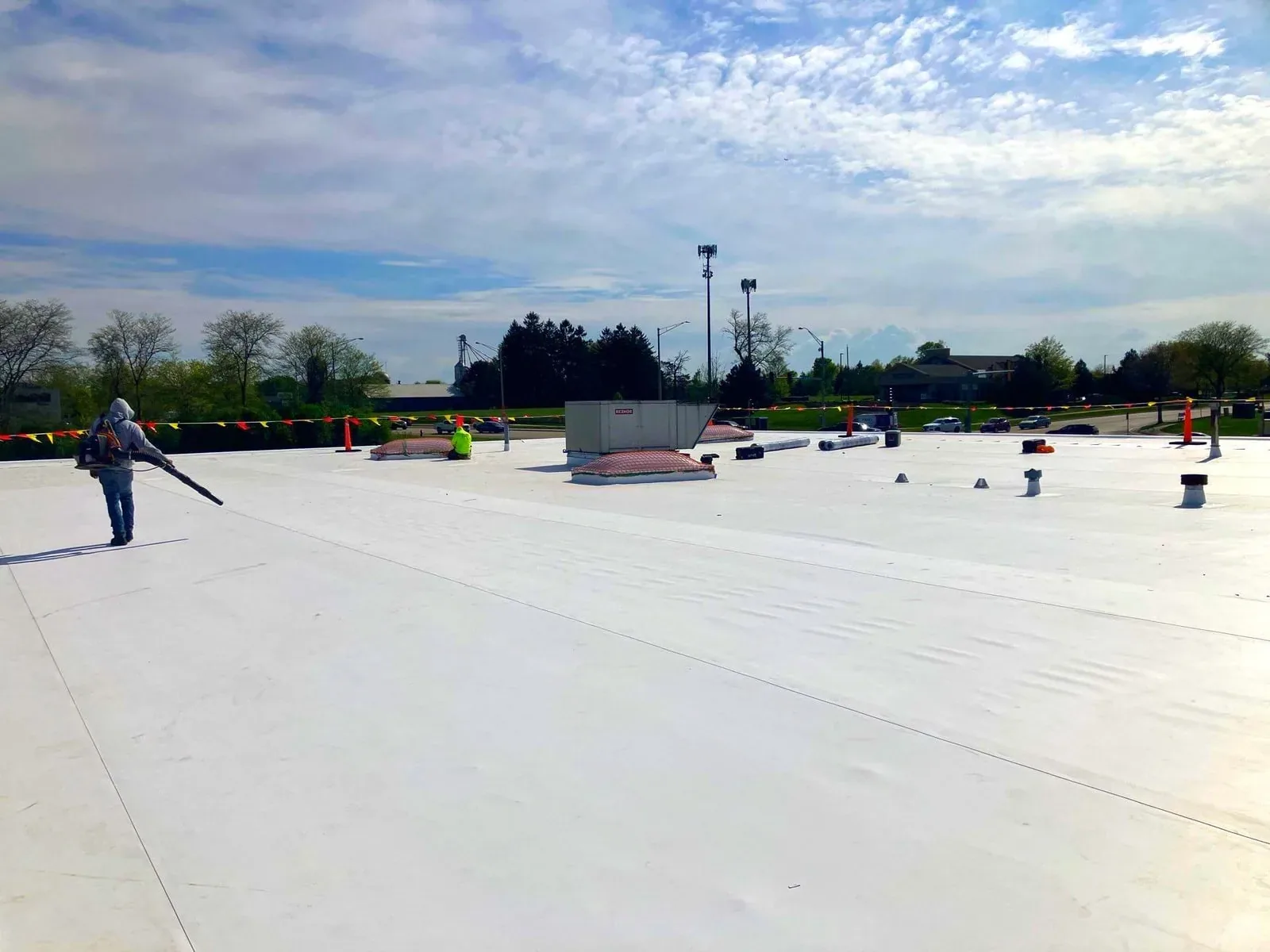
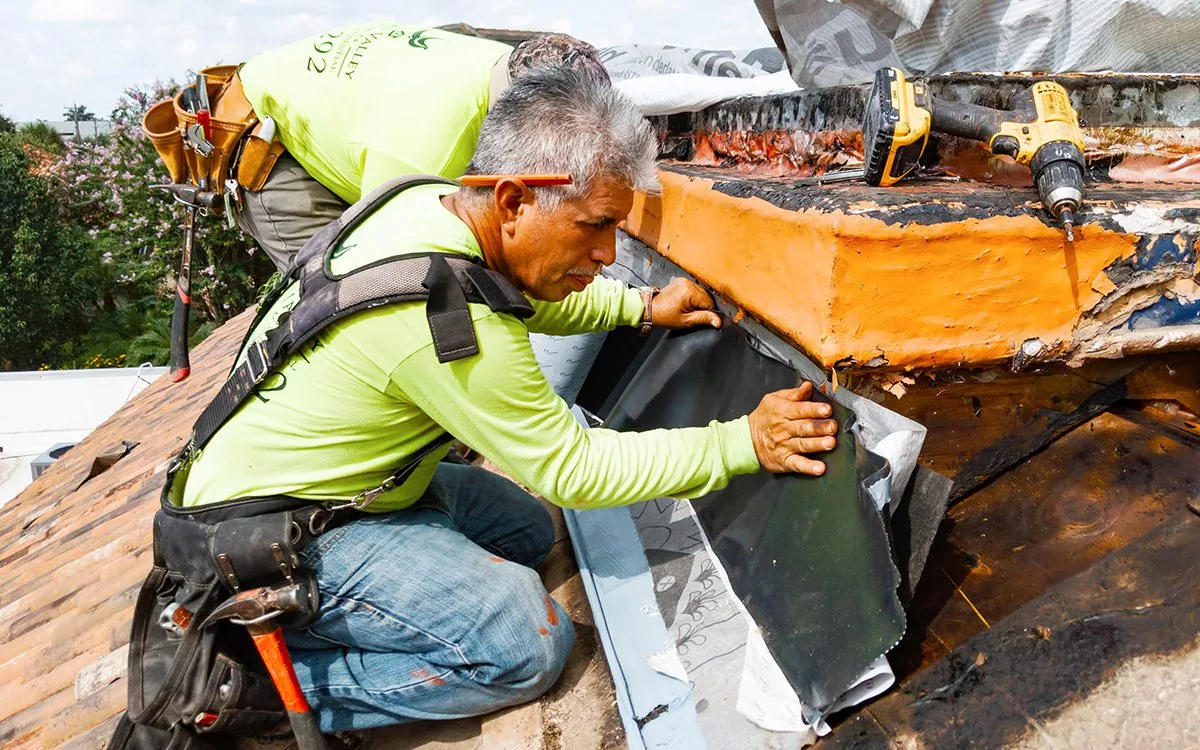
Once the entry point is confirmed, the repair follows the material and detail. A thermoplastic seam needs proper preparation and weld; an EPDM patch needs compatible cleaning and adhesive; modified bitumen and built-up roofs use different reinforcement and surfacing. At a curb or wall, the repair connects field membrane to flashing and termination. We remove loose or incompatible material, prepare a sound surface, and include the tie-in required for that system. A coating may protect a compatible surface, but it cannot rebuild a failed seam or flashing.
The National Weather Service record averaged 23 days per year at or above 100°F for the Victorville station from June 1980 to May 1990. Heat can affect membrane movement and exposed sealants, so we inspect the full detail rather than covering a narrow crack. For a larger assembly question, review TPO roof systems, a commercial roof repair that includes adjacent defects, or the EPDM assembly. If the water path remains unclear, an infrared moisture survey may identify areas for direct testing.
Make the space safe while the source is checked
Temporary protection and permanent repair have different purposes. A localized cover or make-safe measure can reduce further exposure while material, access, or weather conditions are assessed. We identify which roof zone was protected, what condition remains unresolved, and what follow-up is required. A temporary measure is not a final seal and does not establish whether insulation below is wet. If a test opening is needed, we explain how it will be protected and closed before the crew leaves.
Work above an occupied suite is coordinated with the person who manages the space, equipment, tenants, and schedule. The city identifies manufacturing, logistics, industrial users, and distribution in its economic-development context; those are broad market activities, not a description of any one building. We ask the facility contact about sensitive rooms, loading windows, and equipment instead of assuming. A serious active leak may call for an emergency roof response before the full permanent repair can be prepared.
Set a repair boundary the owner can review
A useful scope explains the entry point, surrounding conditions, repair materials, preparation, and how the work ties into sound roof. It also records items that need testing or a separate decision, such as wet insulation outside the repair boundary or a drain condition that requires engineering. We show the affected area on a roof plan, take photographs, and identify any temporary protection separately. If the repair reveals more damage after opening, we document the added work and ask the owner to review it before the scope changes. We also note rooftop traffic or equipment work that may affect the repaired area during follow-up.
A roof condition report can preserve the leak history for capital planning. The service-area review includes Victorville commercial properties and the Old Town Victorville area, while the repair remains specific to the building inspected. Call with the leak location, the operation below, and the person who controls roof access. We will trace the water route, explain what can be made safe, and define the permanent repair we can support.
Commercial Roofing Questions
Why is the ceiling stain not directly under the roof opening?
Water can follow seams, insulation, deck slopes, framing, or drain lines before it appears indoors. We use the stain as the starting point, then inspect the surrounding roof details and flow path. If more than one entry point remains possible, the findings identify what test will narrow it down.
Can a leak be repaired during the first visit?
A repair may be possible when the source, material, access, and weather conditions are clear. We first make the area safe and document the defect. If the assembly needs a test cut, drying, compatible materials, or owner approval, we explain that next step before closing the roof.
Do you use infrared imaging to find every leak?
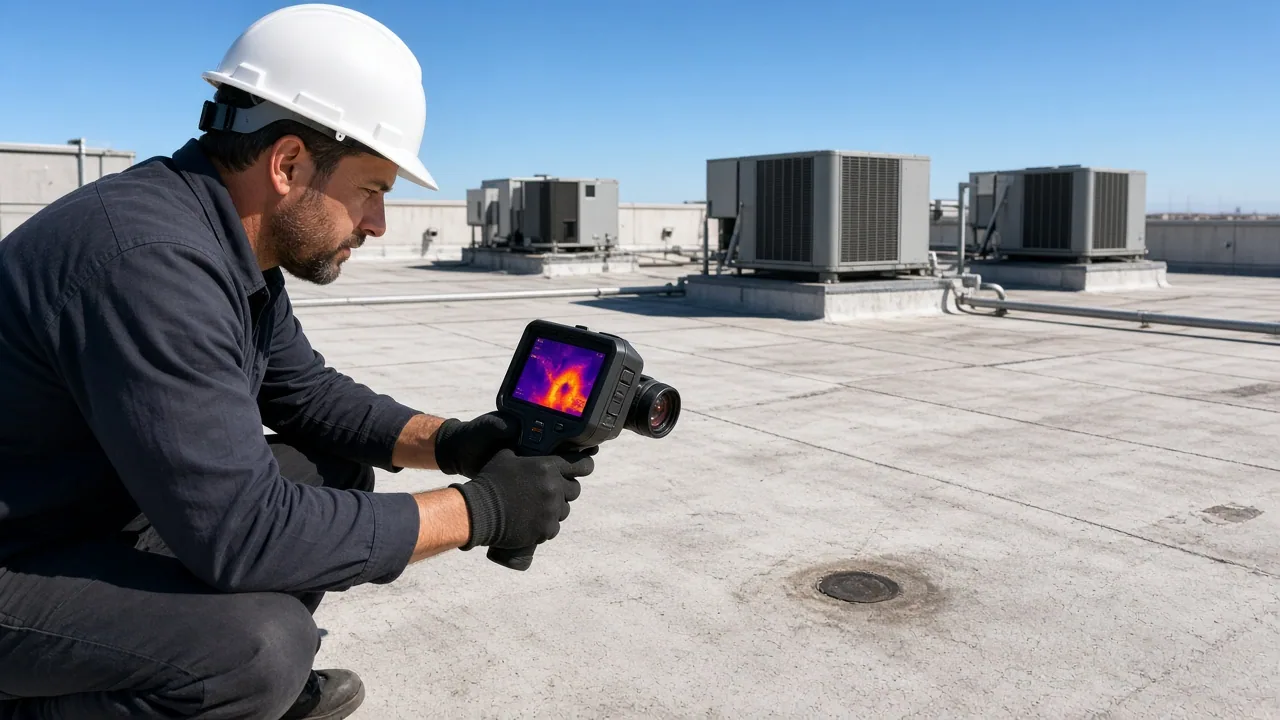
Infrared imaging shows temperature patterns that can guide investigation, but it does not prove moisture or identify every entry point. We interpret it with roof conditions and confirm material concerns through direct checks when the decision requires it. A moisture survey is useful when its results guide the next test or repair boundary.
Will you repair a drain or scupper if it is part of the leak?
We inspect the outlet, nearby membrane, and flashing to see where water enters or backs up. If the repair is within the roof scope, we document the detail and tie it to the assembly. A drainage redesign or structural change is identified separately when needed.
What should a facility contact report first?
Share where water appeared, when it started, what is below, whether it is active, and who can open roof access. Mention sensitive equipment and any prior repair in that zone. That gives us a safe inspection sequence and a practical first area to trace.