A coating belongs on a roof that can accept it, not on a surface that merely looks tired. Commercial Roofing Victorville first checks the membrane, insulation, seams, drainage, and previous repairs to determine whether restoration is a sound option. The facility contact gets a zone-by-zone record of what can be prepared, which details need repair, and where moisture or attachment questions call for more testing.
Victorville's high summer temperatures make exposed surfaces and transitions worth reviewing, but local heat does not establish the condition of a particular roof. A low-slope building near the Eastern Bear Valley Road corridor may have several prior repairs, while an Old Town roof may include more transitions and access constraints. We inspect the assembly before discussing products. A commercial roof inspection can document current conditions; roof recover evaluation is a separate path when the owner is considering another membrane layer.
Confirm the existing assembly
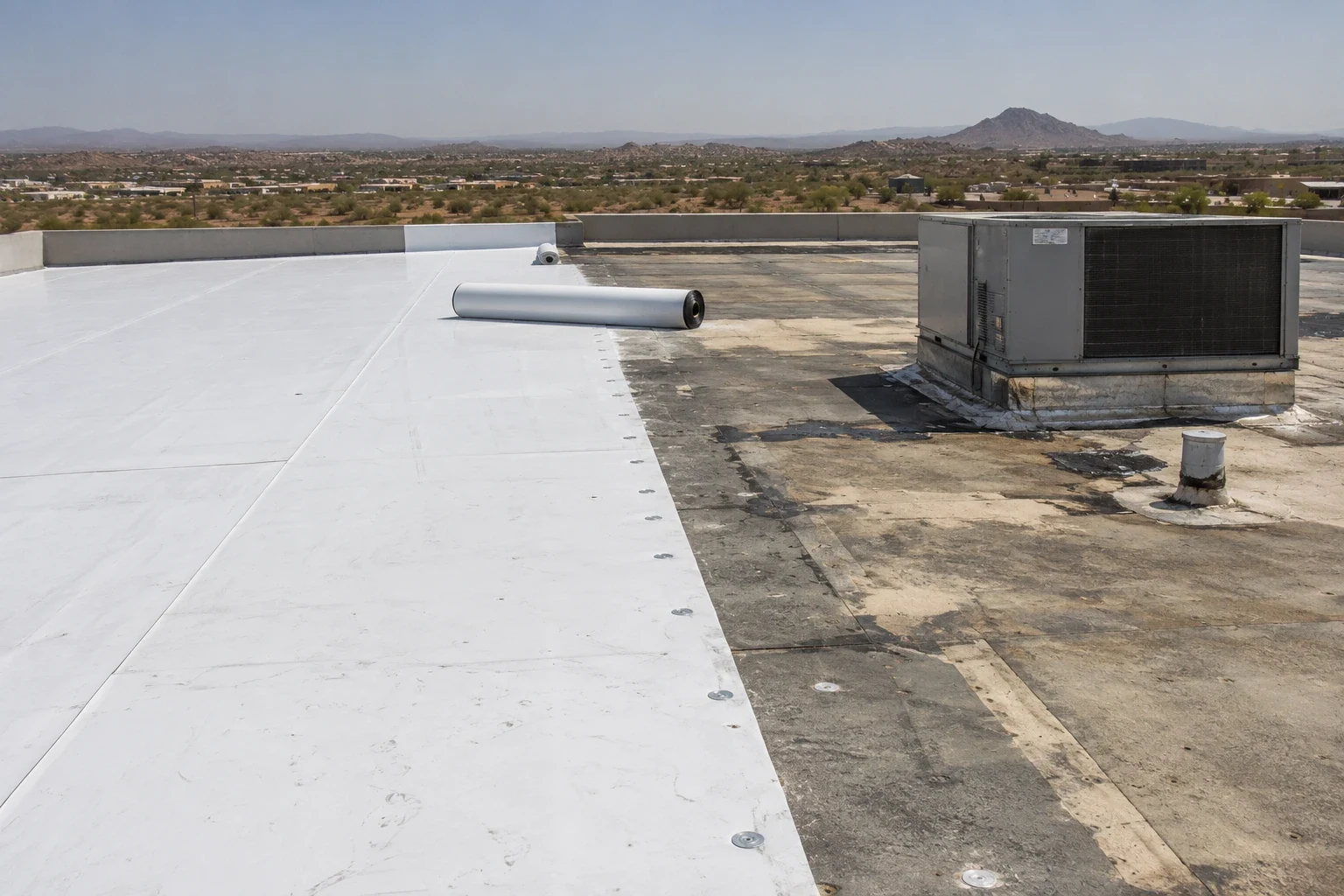
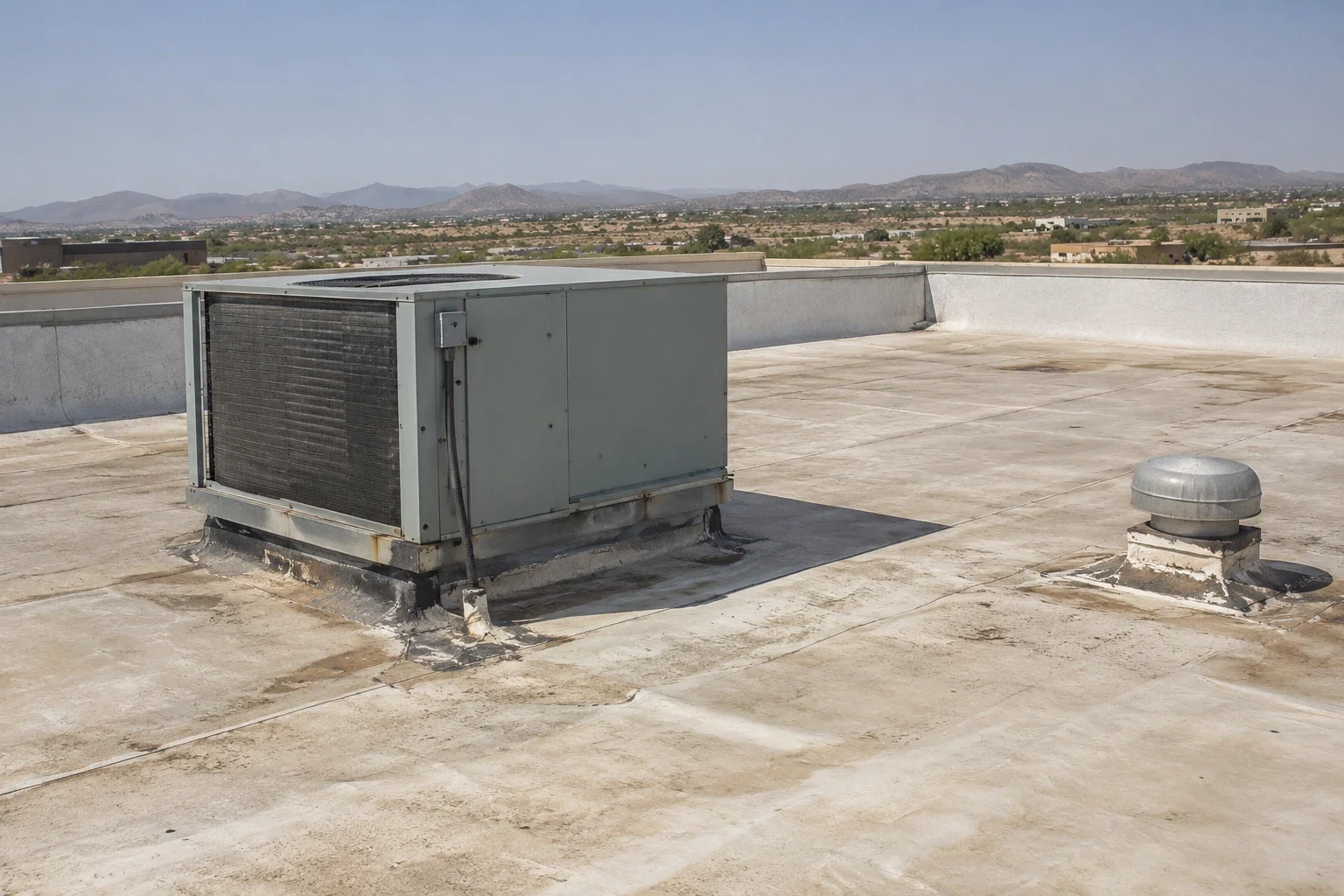
Before coating is considered, we identify the roof material, repair history, surface condition, and any layers already in place. Loose or blistered membrane, wet insulation, open laps, deteriorated flashing, or unstable coating can prevent reliable preparation. We map defects and distinguish a repairable detail from a condition that reaches into the field. If there are multiple roof systems or additions, the boundary between assemblies matters because a product that bonds to one surface may not suit another.
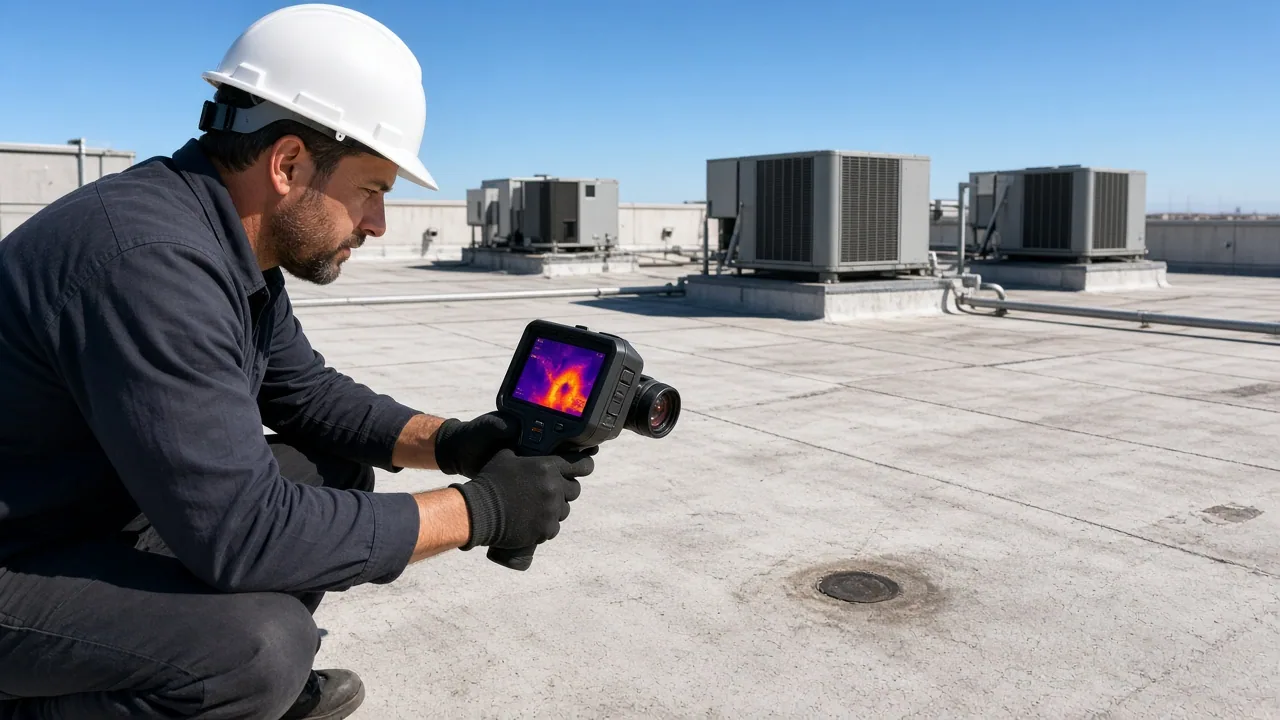
We look at attachment and substrate questions before recommending restoration. Selective test cuts or other verification may be useful where the roof has concealed moisture or an uncertain layer count. A coating cannot restore a saturated board or correct a moving deck. The roof condition report can record the areas that meet the initial screen and those that need more investigation. For occupied offices or mixed-use properties, our office roof evaluation also considers access and interior activity.
Prepare what will receive the coating
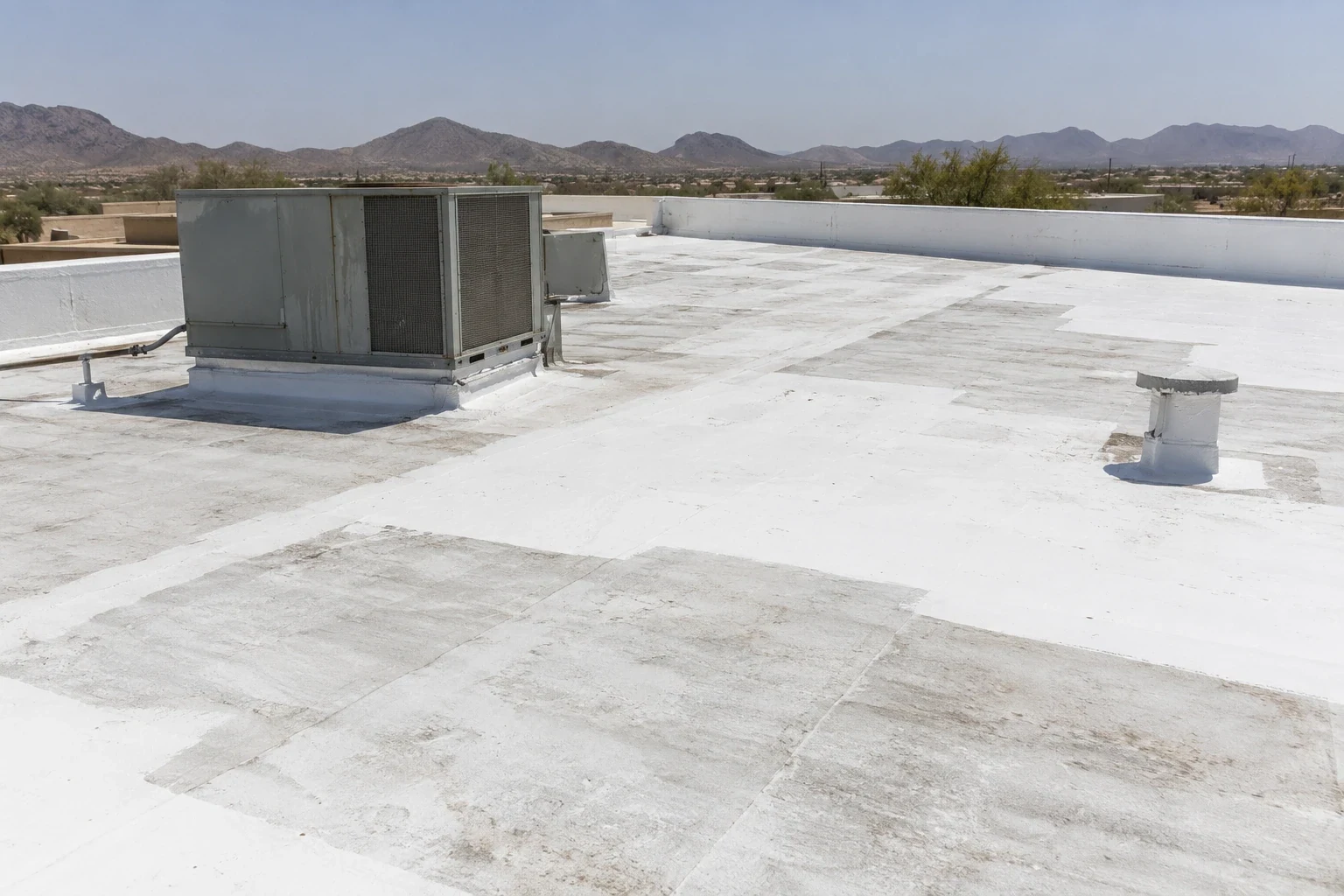
Preparation is part of the roof work, not a cosmetic step. We identify dirt, loose material, biological growth, chalking, incompatible patches, and residue that could interfere with adhesion. The surface is cleaned by a method suitable for the membrane and building, then allowed to reach conditions appropriate for the selected product. The scope identifies what must be removed, repaired, or primed before coating begins and who will approve concealed or unexpected conditions.
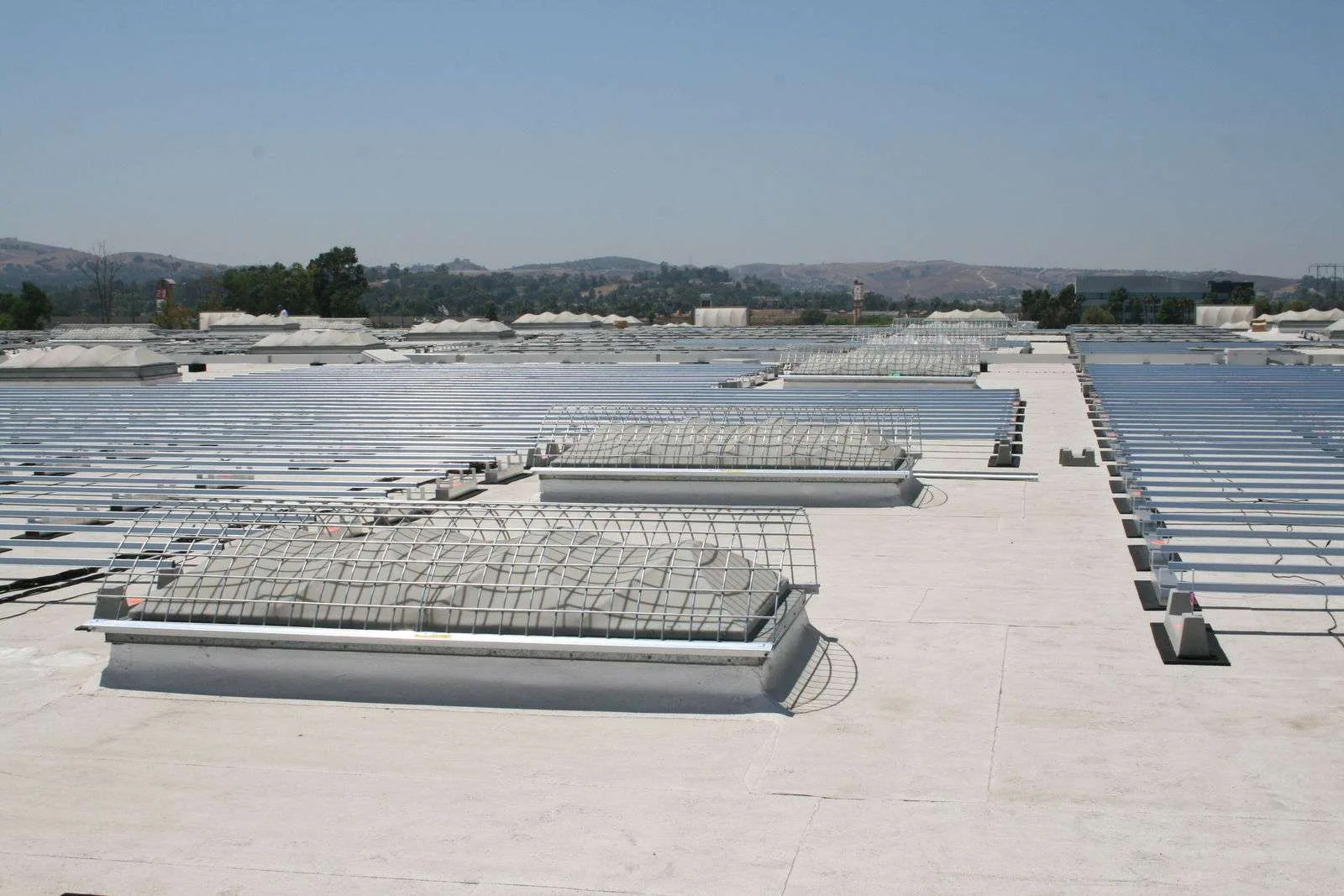
Seams, penetrations, curbs, drains, and perimeter metal need their own details. A broad field application does not bridge a failed lap or make a loose flashing secure. We repair those conditions using compatible materials and confirm that transitions are ready before covering them. Victorville's code identifies climate zone 14, but the crew still verifies surface temperature and manufacturer installation limits at the time of work. A penetration and skylight flashing review can address transitions that need a separate repair scope.
Match the coating to the roof
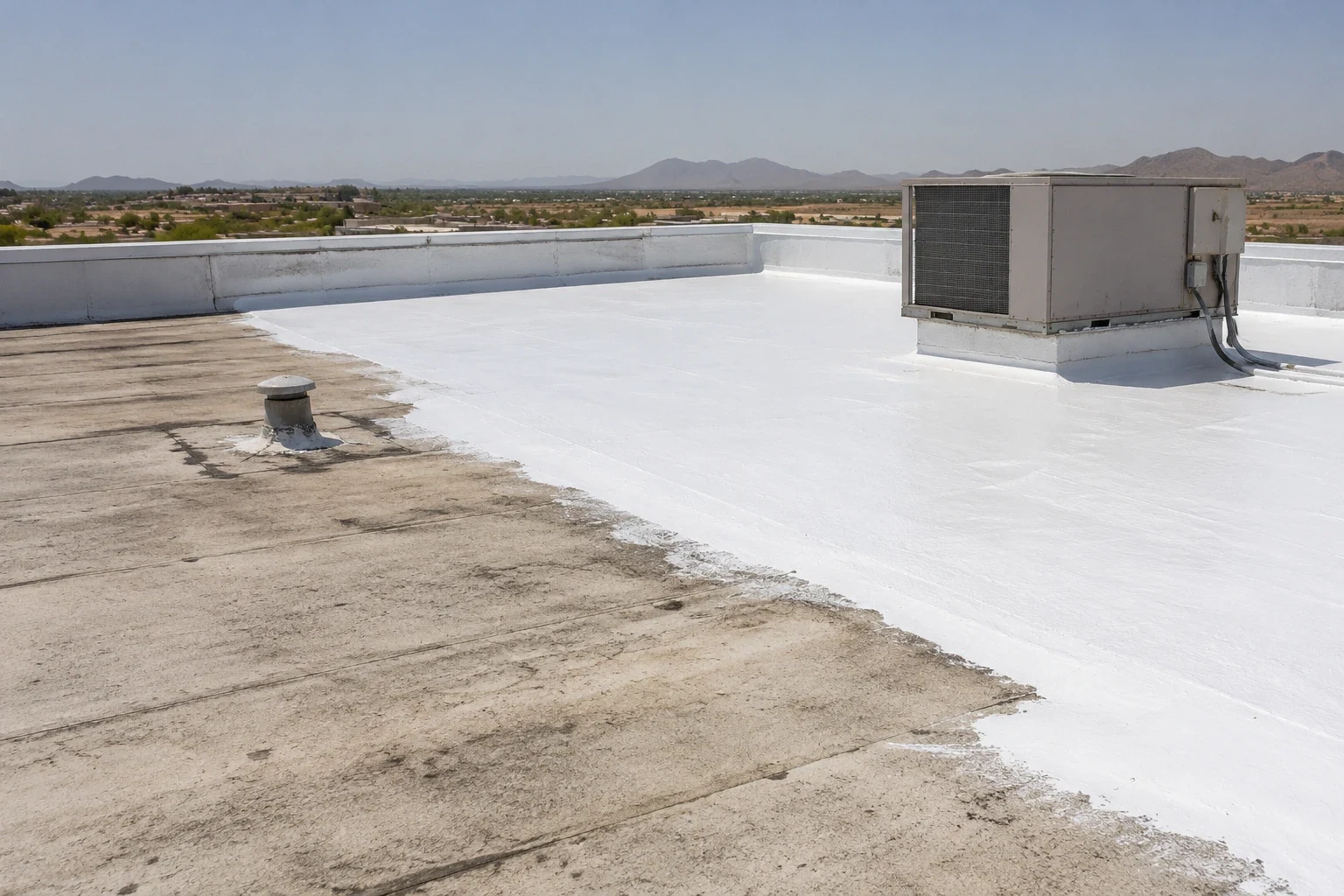
Coating choice follows the existing roof, the expected exposure, and the details that need restoration. Silicone and acrylic products have different surface, ponding-water, and application considerations. We review product compatibility, primer needs, reinforcement, and the proposed number of passes before work is priced. The facility contact sees which areas are included and which require separate membrane or flashing work. Product selection does not replace a condition survey.
A silicone coating system or an acrylic coating system may suit different roof conditions, subject to manufacturer instructions and field verification. We do not promise a set service life from a coating alone; the substrate, preparation, application thickness, drainage, and future maintenance affect performance. If the roof has widespread membrane failure, a replacement evaluation may be more appropriate than restoration.
Protect access and work zones
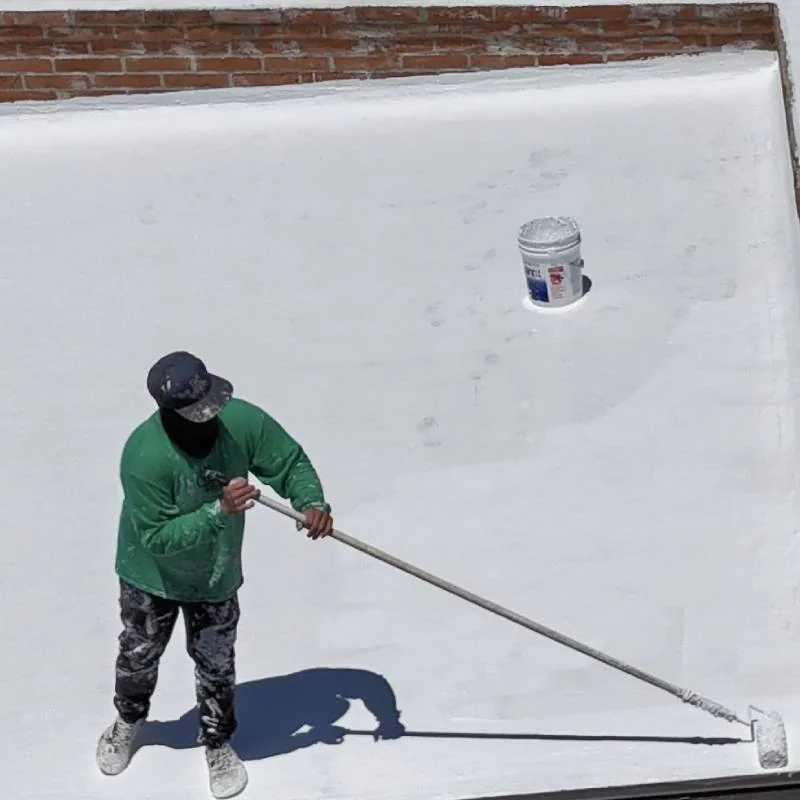
Coating work has a defined sequence: isolate the work area, prepare the surface, repair defects, allow approved materials to cure, apply the system, and review the finished details. The facility contact coordinates roof entry, equipment, odors or ventilation concerns, and any areas below that need protection. We plan around the actual operation rather than assuming an empty building. If other trades need the same roof, their routes and timing are confirmed before a coating section is closed.
Victorville identifies commercial and regional-serving uses near Bear Valley Road and I-15, while Old Town includes a mix of uses. Those broad district conditions say nothing about a particular property or its coating eligibility. We confirm access with the site contact and establish a work boundary for the roof itself. For a building near the Eastern Bear Valley Road corridor or in Old Town Victorville, we use the same site-specific review: identify the roof zone, activity below, and safe access route.
Check the finished application
At closeout, we review coverage, repaired details, terminations, penetrations, and drain areas against the agreed scope. We document the work by zone and note any area that was excluded or needs a return visit. Application records should identify the product and conditions recorded during installation, while the property team keeps maintenance information with the roof history. Where the product instructions call for a thickness check, we record the measurement method and sampled zones so the closeout can be compared with the agreed scope. A missed or thin area is addressed before the crew treats the field as complete. Before the first full application, the scope should identify a test area, the prepared condition that must be accepted, and the method used to confirm coverage. The crew records surface and ambient conditions when the product instructions require them, along with the batch or product identification. This makes a later review more useful than a single completion photograph. It also gives the facility contact a clear point to raise a concern before work moves into another roof zone. The report should be useful to a future reviewer who needs to understand where the coating stops and another assembly begins. We also list details that were repaired before application, including reinforced seams, curb transitions, or changes in membrane. That record helps separate coating coverage from work performed as a distinct repair, which matters when a future inspection finds movement at a transition.
A maintenance plan can keep drains, seams, and exposed details on a regular review route after restoration. If the coating is one part of a broader capital decision, managers can compare it with targeted repair or membrane replacement using observed conditions, not a general rule. We can coordinate a preventive maintenance visit after work is complete. Call with the property location, known roof system, and areas of concern so we can determine whether coating restoration is worth testing.
Commercial Roofing Questions
What makes a commercial roof eligible for coating?
The existing membrane must be stable enough to prepare, with moisture, seams, flashing, and drainage reviewed. We identify repairs and testing needed before deciding whether a coating can be applied over the assembly.
Can a coating cover wet insulation or failed seams?
No. Wet insulation and open seams need investigation and repair before restoration is considered. A coating does not correct a concealed substrate problem or replace a failed roof detail.
How do you choose silicone or acrylic?
We compare the current membrane, surface exposure, drainage, compatibility, and product instructions. The recommendation follows the roof and its details, not a preference for one coating type across every building.
Will coating work disrupt our building?
The work can be divided into controlled roof zones with access and protection coordinated through the facility contact. Ventilation, occupant activity, other trades, and material handling are reviewed before the sequence is set.
What should we provide for a coating assessment?
Share roof plans, prior coating or repair records, leak history, known access limits, and the person coordinating entry. Those details help define the survey area and any needed verification.