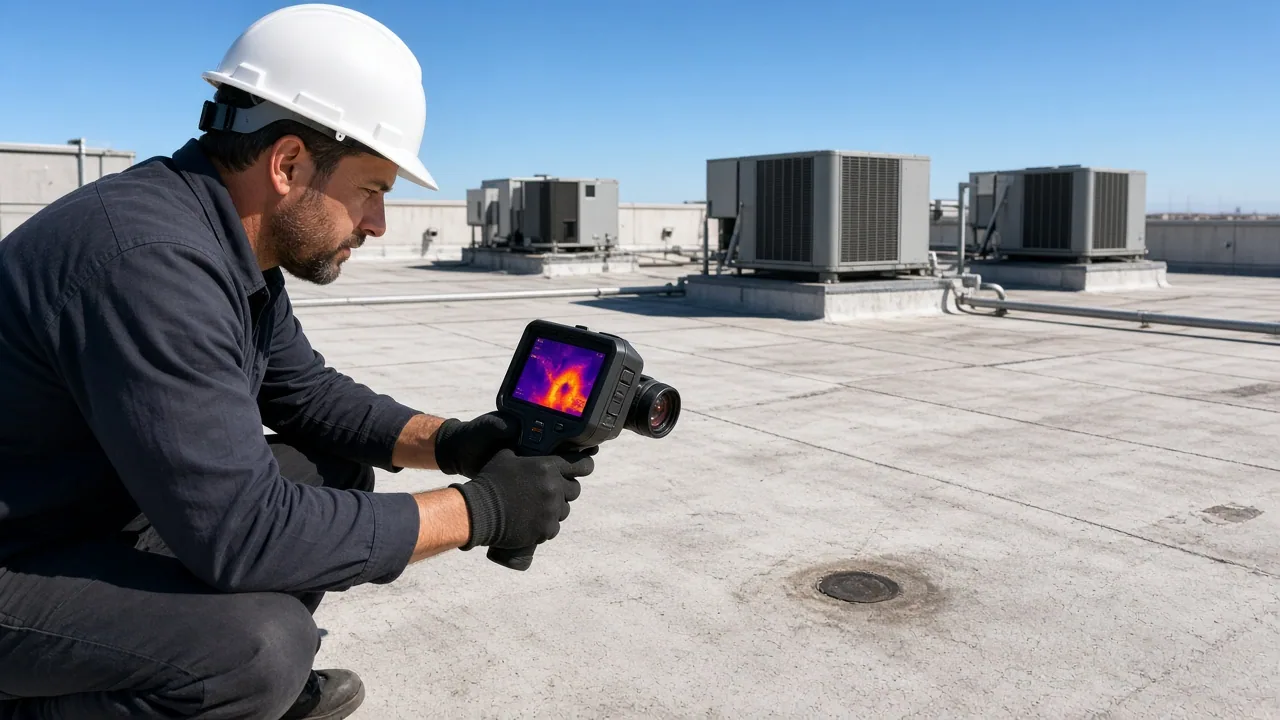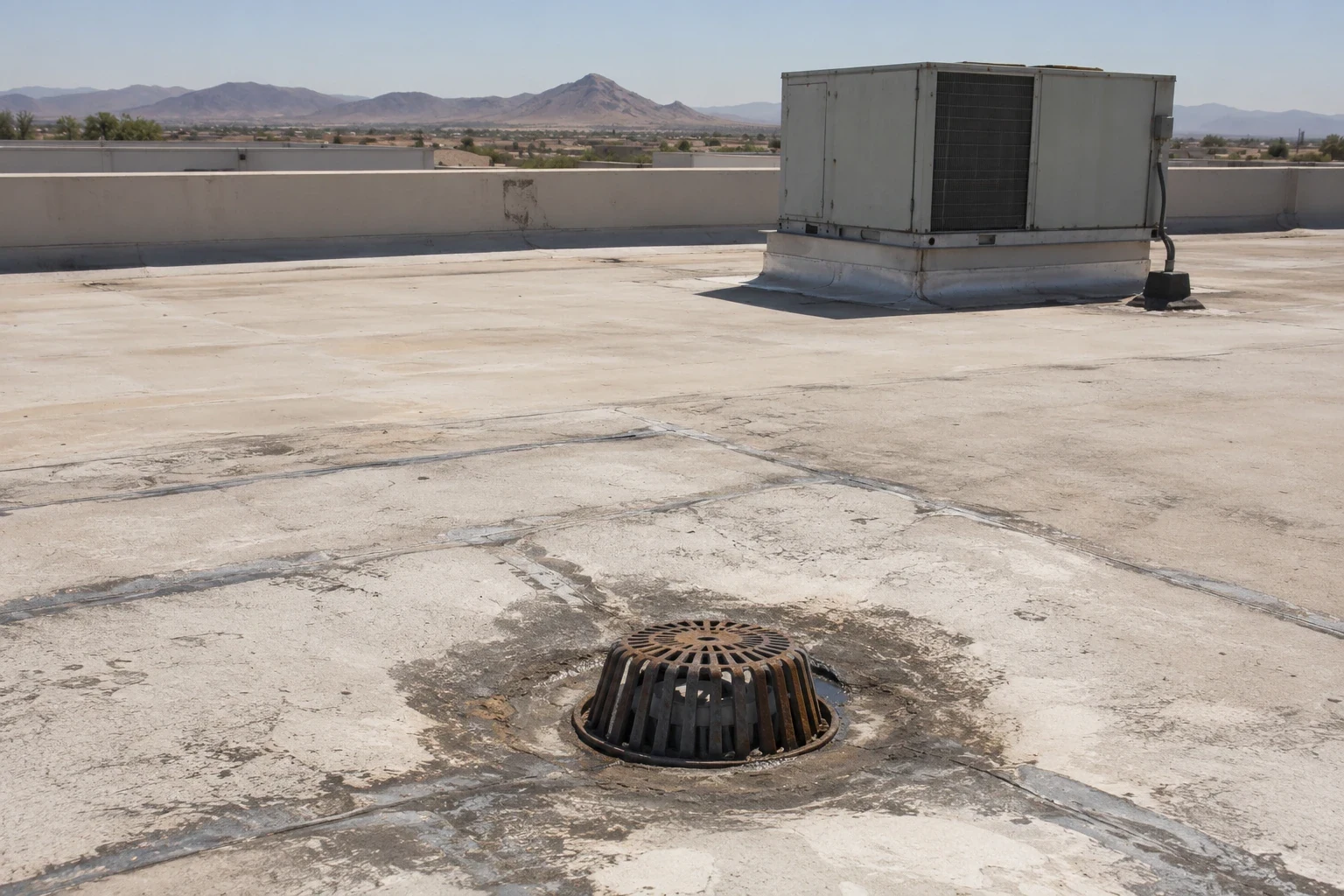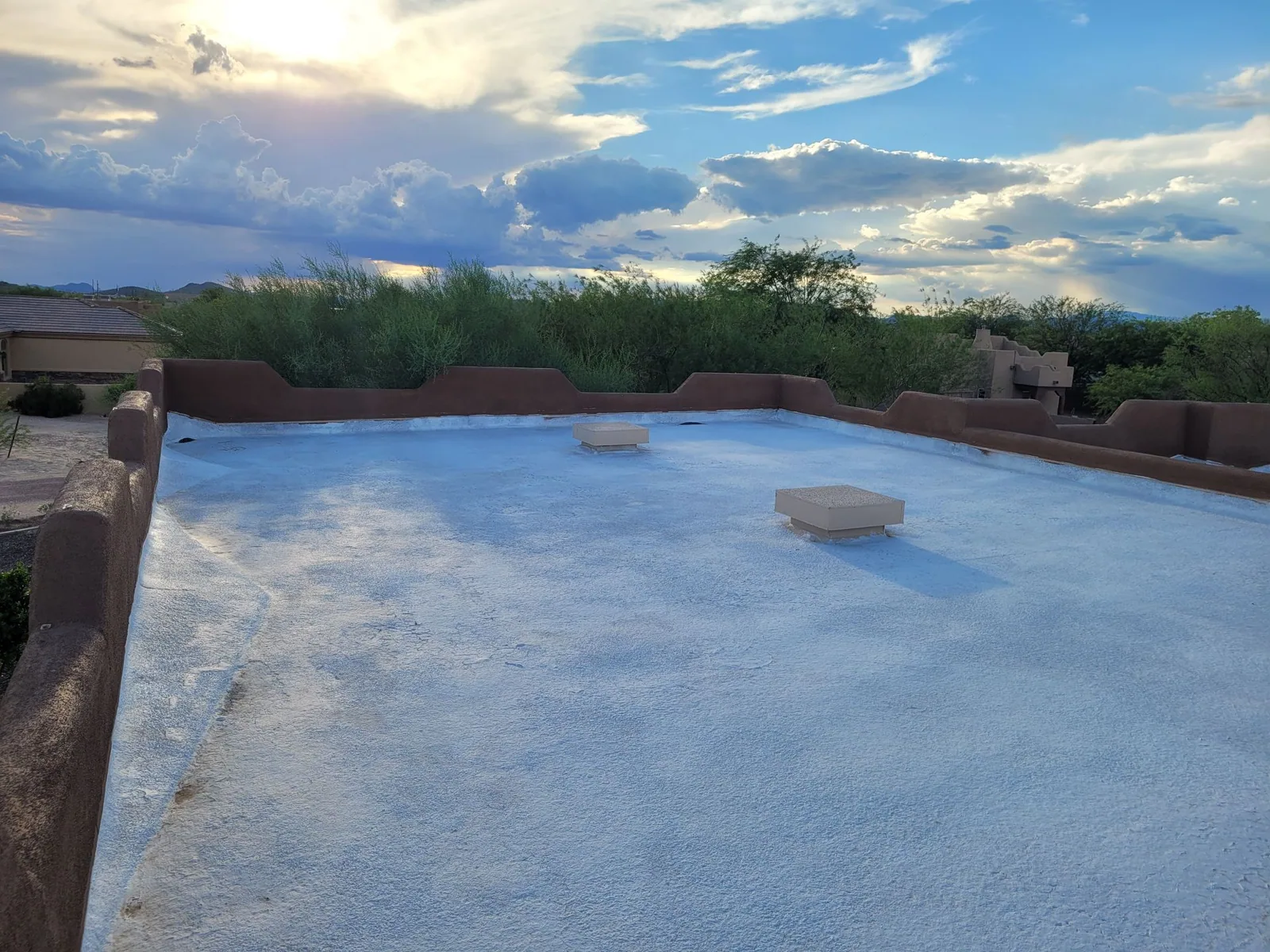

Routine roof work becomes useful when it leaves the facility contact with a condition, a location, and a next action. Commercial Roofing Victorville builds maintenance visits around the roof system, operating schedule, and repair history instead of treating every building as the same checklist. We review drains, seams, edges, penetrations, equipment curbs, and prior repairs by roof zone, then photograph conditions that deserve attention.
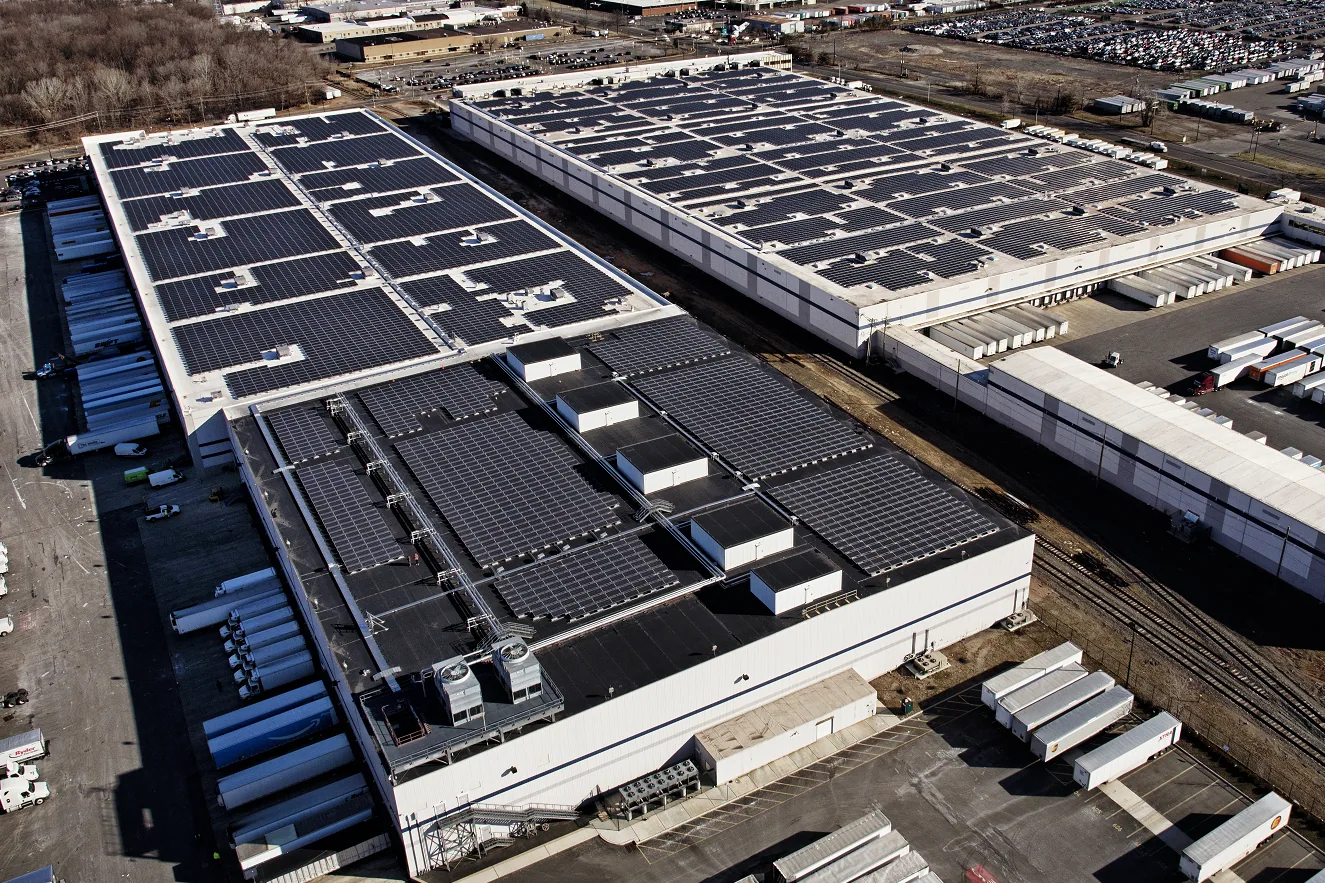
The route matters in Victorville, where a retail property near Old Town may have different access and occupancy needs than a distribution building closer to the Bear Valley Road commercial district. We confirm how the site is used and who controls roof entry before selecting a visit window. A commercial roof inspection can establish a baseline for a new program; drain and scupper maintenance can focus work where water flow needs a closer look.
Set the roof-zone route
At the first visit, we mark practical roof zones, locate access points, and record changes in membrane, elevation, or equipment. A drain field, perimeter run, and mechanical area should not be collapsed into one note because each has different failure points. We look for debris at outlets, open seams, loose metal, cracked sealant, punctures, and patch edges that have lifted. The facility contact can match each image with an interior concern or an earlier repair record.
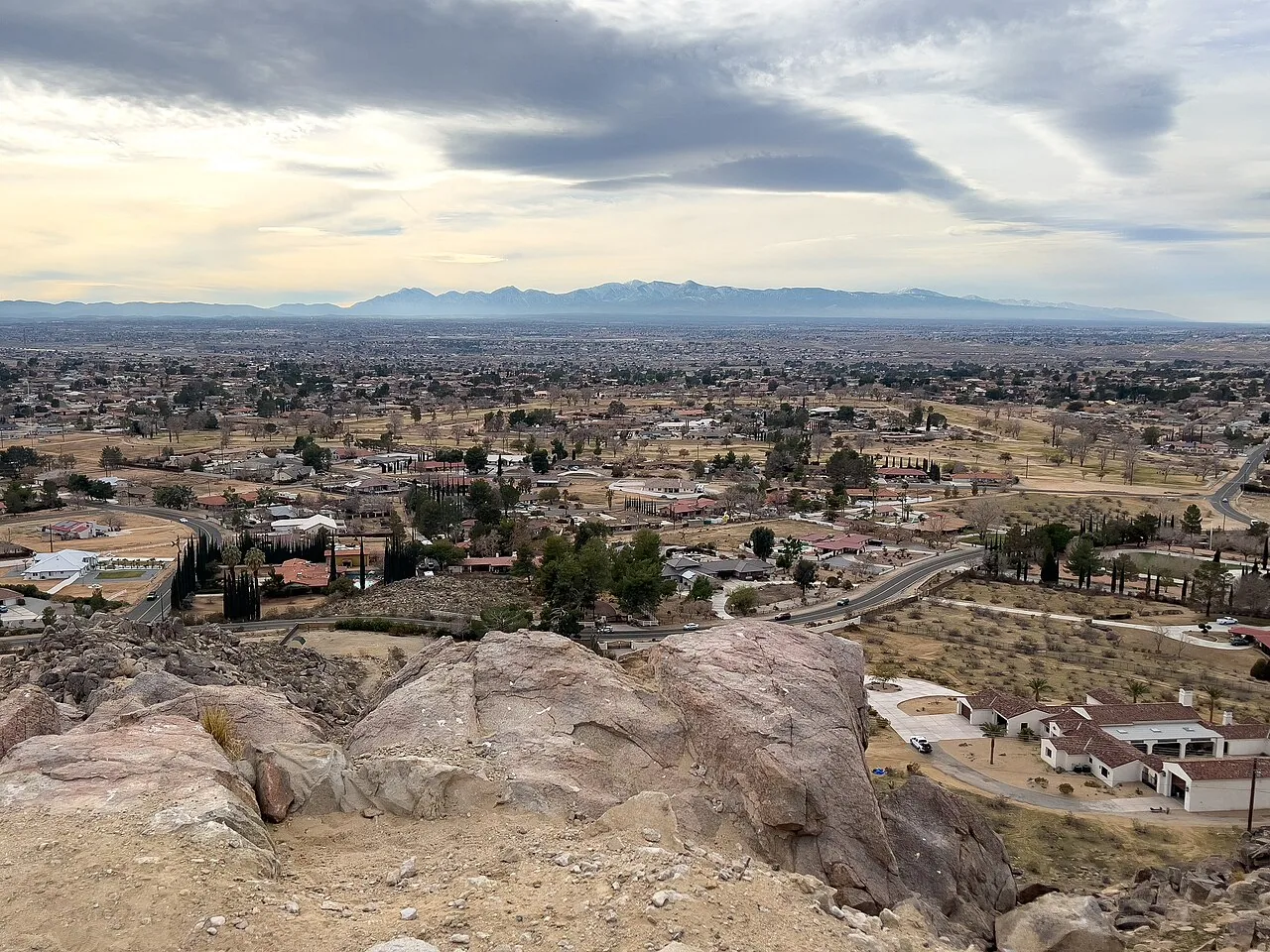
Victorville identifies the Bear Valley Road/I-15 area for commercial and regional-serving uses; that broad designation cannot reveal an individual roof's condition. We inspect the actual assembly and note the areas that could not be reached. The Bear Valley Road and I-15 commercial district is a broad geographic reference, not a facility-level promise. For a nearby warehouse, a separate warehouse roof review can address loading and access needs while keeping maintenance findings tied to the property inspected.
Use weather history as context
Victorville's heat history makes exposed details worth watching, especially where membrane laps meet curbs, walls, or rooftop supports. Historical George AFB/Victorville observations counted an average of 23 days each year at or above 100 degrees during the 1980-1990 period. That is climate context, not a claim about a particular roof. At a scheduled visit we check whether sealants, exposed flashings, and prior repairs show movement or deterioration, then identify the area for closer review.
Winter and rain events also call for a drain route that can be followed without guesswork. We check bowl condition, strainers, scuppers, low points, and visible flow paths, recording debris or signs of backup. The city's roof-drain sizing reference is a design input; maintenance decisions depend on the actual outlet and roof slope. If water is collecting in a low area, a targeted ponding-water roof repair assessment can determine whether the cause is blockage, deflection, or a drainage detail.
Separate upkeep from repair
Maintenance can remove loose debris, keep an accessible drain opening clear, and document a condition, but it does not make a failed seam sound. We mark each item as routine upkeep, a repair candidate, or an issue requiring testing. A split membrane, loose flashing, or repeated interior stain should have a defined repair scope rather than another generic service note. The facility manager can then approve work based on the affected zone and the operations below it.
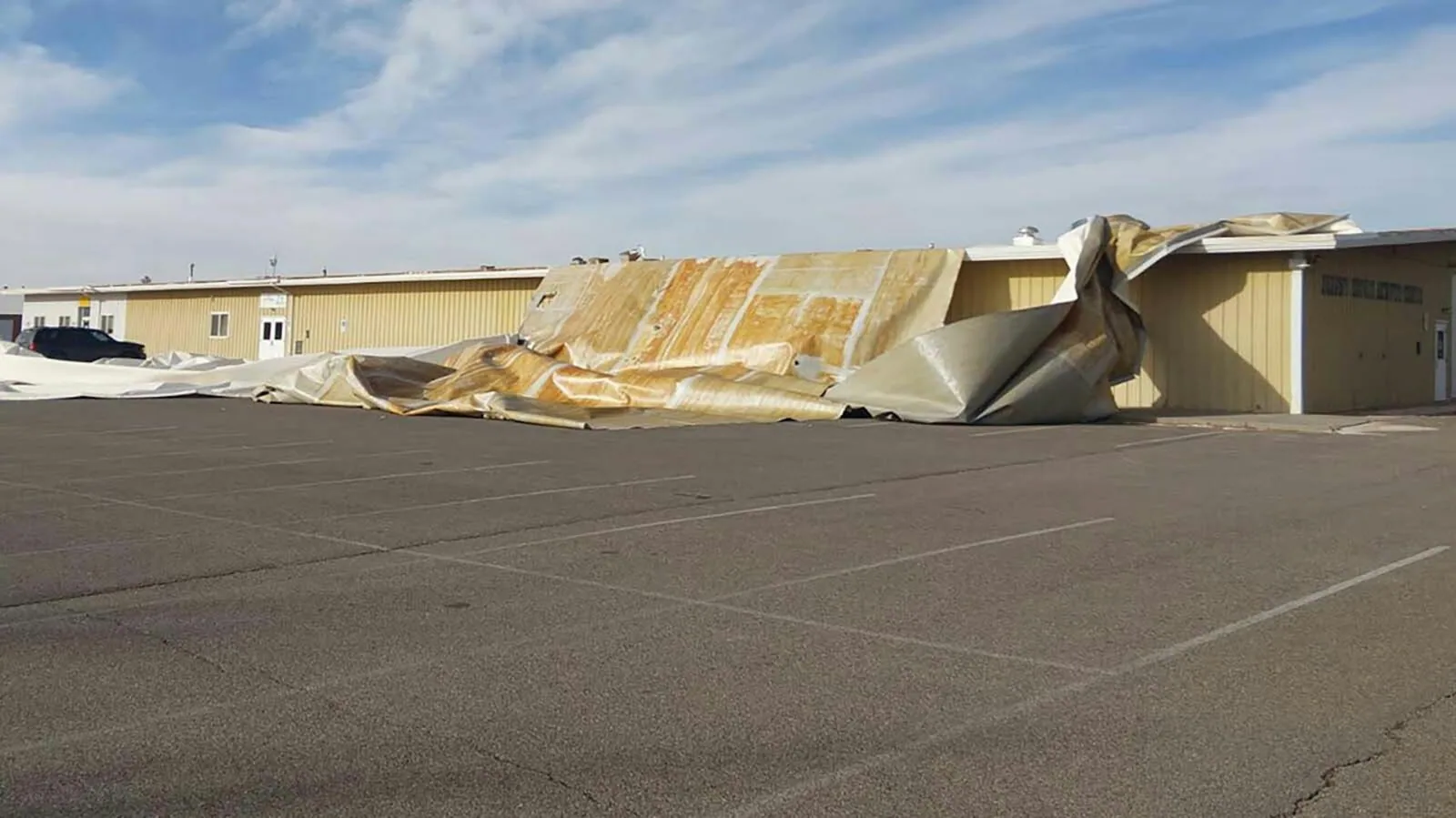
Victorville's code identifies climate zone 14, a 5-pound ground snow load, and wind design values that vary by occupancy and exposure. Those values inform design review but do not determine the condition of an existing assembly. If a loose edge or damaged lap appears, a wind-related roof repair review can connect the visible condition with the roof detail. For longer-term tracking, a roof asset record can keep maintenance dates, findings, and approved repairs together.
Fit the visit to the building
Maintenance work needs a safe access contact and a route that does not interrupt the building without warning. We confirm hatches, ladders, escorts, controlled areas, and any scheduled work by other trades. If the facility has multiple shifts, active loading, or occupied suites, the manager identifies the best access window. We keep tools and debris controlled, protect completed roof areas from later traffic, and report when another trade has changed a surface we reviewed.
Old Town Victorville brings retail and service uses, industry, homes, and open space into one plan area. That mix is a reason to confirm the actual property use and occupant schedule, not to assume them from an address. Near Seventh Street, the city identifies revitalization and streetscape work, which may affect local access planning at a specific time. A later occupied-building work sequence can use the same access notes when a maintenance finding requires a larger repair or replacement.
Set the next visit from findings
The next visit should answer a question left by the current one. A roof with a new patch needs a check of that repair and its nearby transitions; a clear drain route may call for attention after debris season or a reported overflow. We note what changed since the last visit, then set a practical interval with the facility contact. A calendar alone does not tell the team whether an open item was completed or whether a repair changed the water path.
After rooftop equipment work, a tenant change, or a larger repair, we can add a targeted return visit instead of waiting for the next general maintenance date. The record identifies the affected roof zone, who approved access, and any trade activity that may have changed the surface. For a long-term budget review, the manager can bring those notes to a roof capital planning discussion and compare maintenance findings with larger repair needs.
Keep a usable maintenance record
After the visit, the property team receives a dated photo set, roof-zone notes, and a list of items to monitor, repair, or investigate. We identify what was completed and what remains open, including any access limitation. This record helps the next visit compare the same location instead of relying on memory or an unlabeled image. If a drain, seam, or penetration changes, the manager can see what was previously observed and why the follow-up was recommended.
A program can be adjusted after a significant leak, equipment installation, storm, or roof repair. For properties near Old Town or along U.S. 395, the building's access and operating pattern determine visit timing; geography alone does not set a schedule. When repeated findings point to wider deterioration, a commercial roof condition report can support a repair-versus-replacement review. Call with the property location, known roof system, and the person who coordinates access.
Commercial Roofing Questions
What does a scheduled maintenance visit cover?
We review accessible seams, drains, flashings, edges, penetrations, and prior repairs by roof zone. The visit records conditions and separates routine upkeep from work that needs a repair scope or additional testing.
Can maintenance prevent every leak?
No maintenance plan can remove every risk, but repeatable checks can identify debris, visible damage, and changing details earlier. We record limits and recommend repair when an observed condition is beyond routine upkeep.
How do you set the visit schedule?
The roof system, past findings, access window, and building operations guide the interval. We review the history with the facility contact and adjust after repairs, equipment changes, or a reported leak.
Will you clear roof drains during a visit?
We check accessible outlets and can address routine debris when the scope and conditions allow it. Damaged bowls, poor flow, low areas, or a recurring backup need a separate repair assessment.
What should our facility contact share?
Provide roof access details, known leaks, prior repair records, roof plans if available, and the building activities that affect entry. A named contact helps keep the route safe and the findings useful.