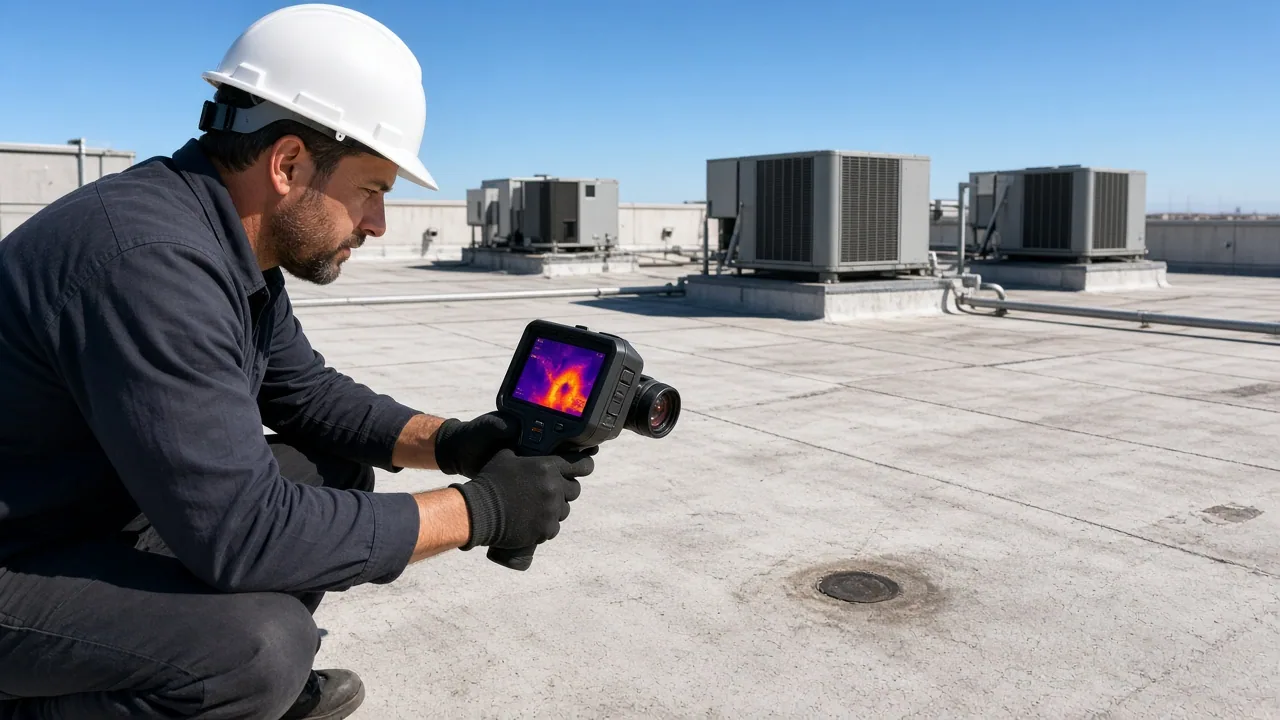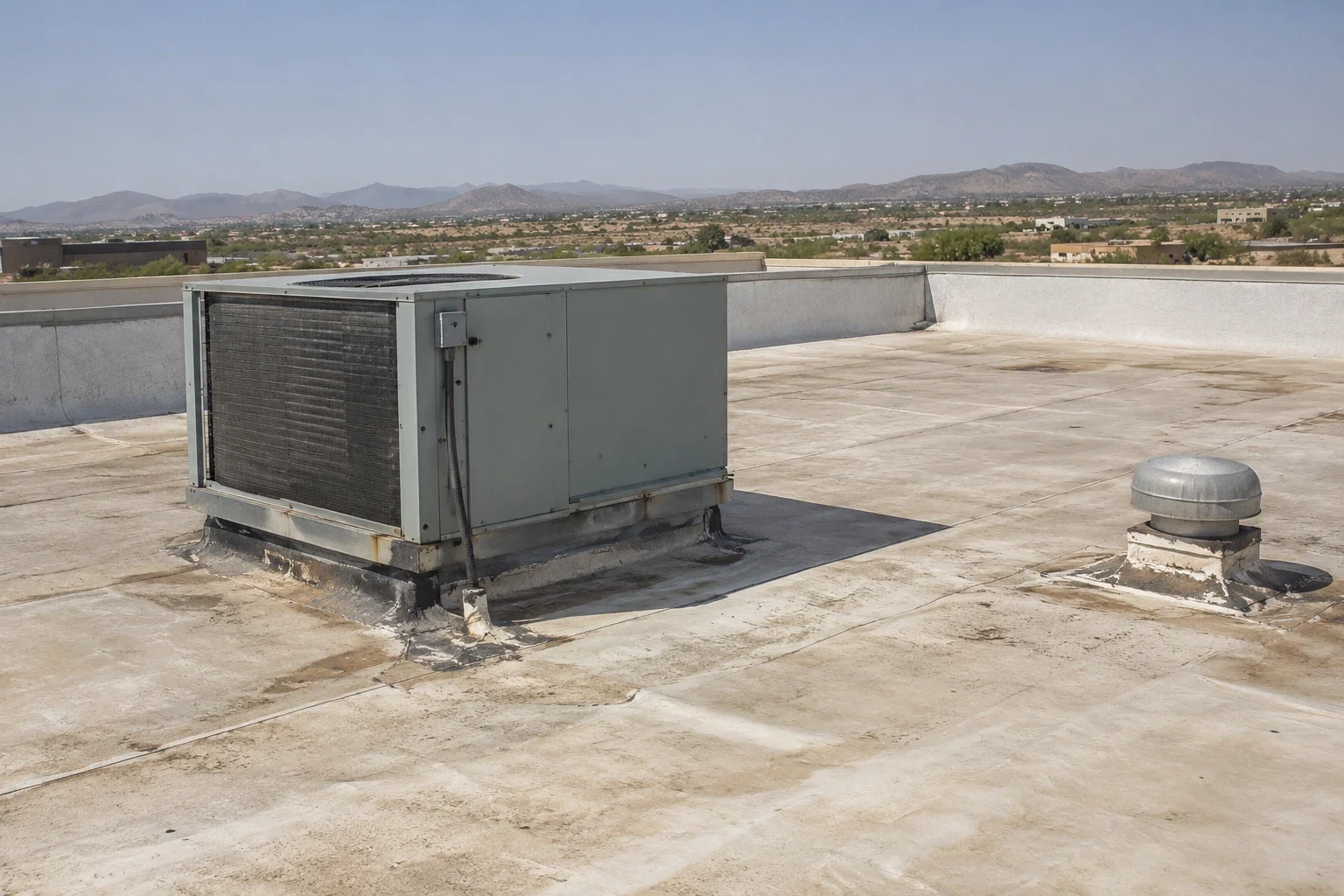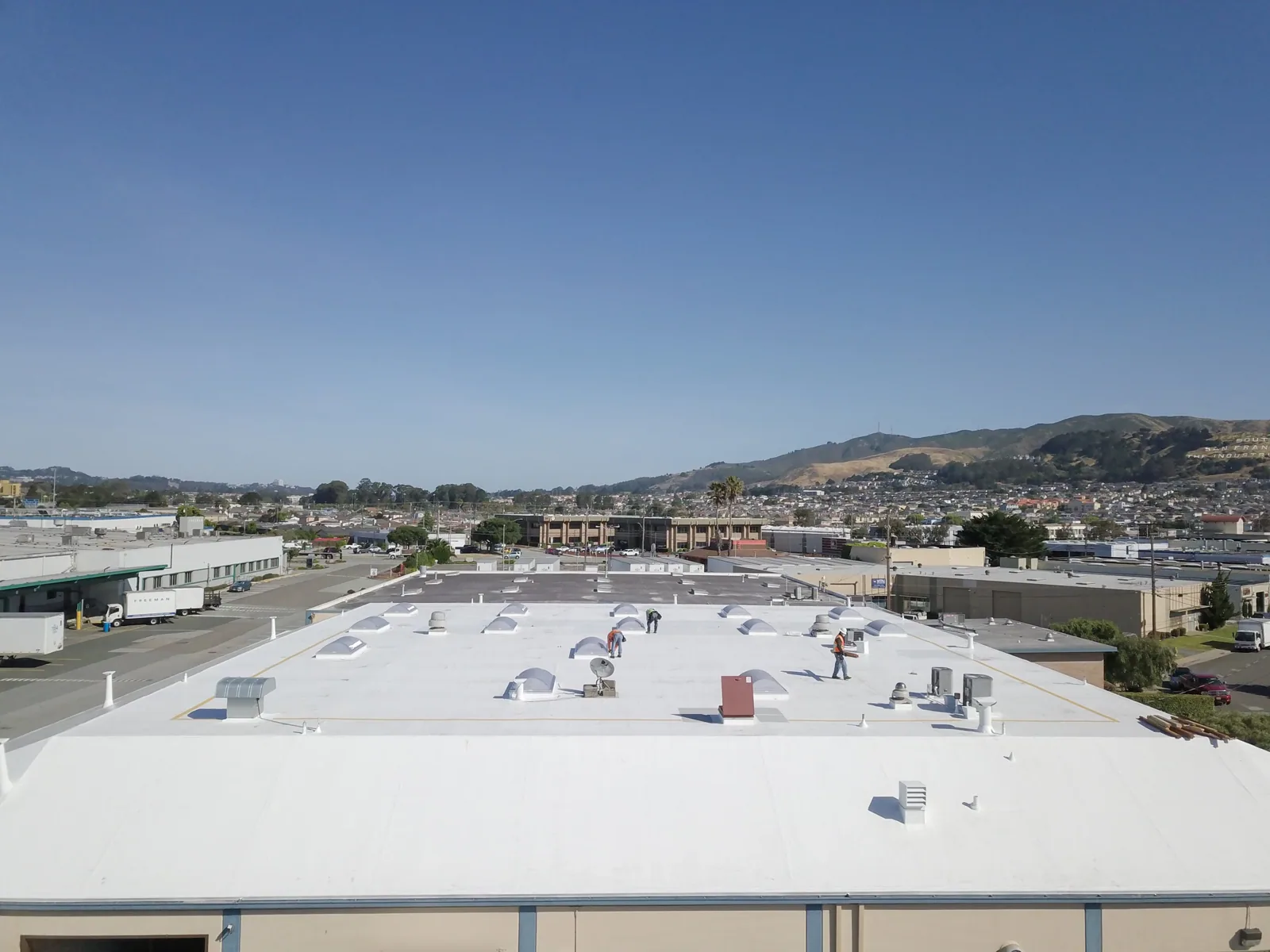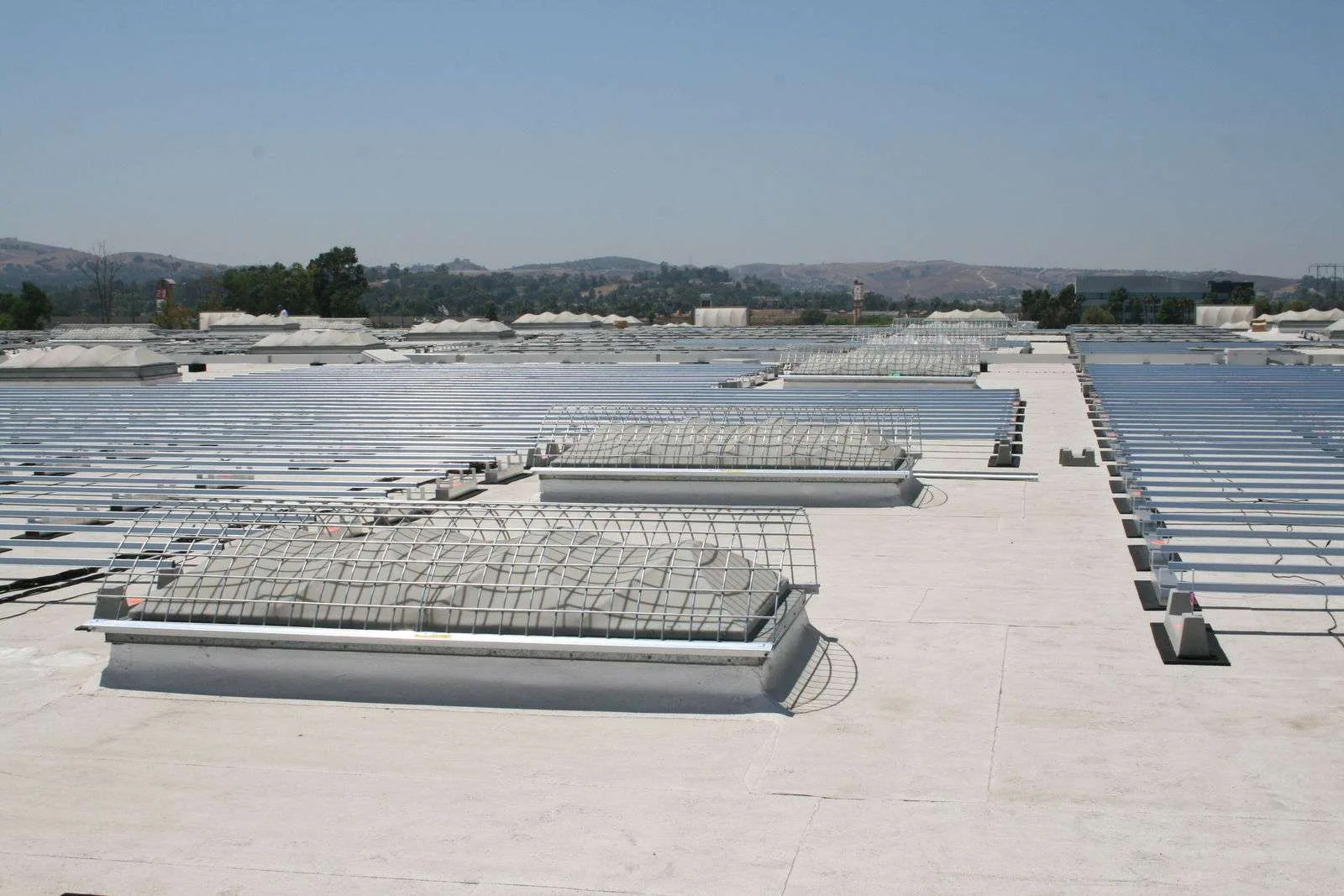
Warranty paperwork only helps when the roof assembly, required upkeep, and repair history can be matched to the same building and roof zone. We begin with the documents available, identify the named system and listed requirements, then compare those records with visible conditions and prior work. If an active leak is reported, the facility contact points out the affected area and who can authorize access. We record the water path and protect the occupied space before deciding whether the next step is a repair, a documentation question, or both.
In Victorville, CA, heat exposure and concentrated rain can put seams, penetrations, drains, and perimeter transitions into focus. We do not infer warranty status from weather or a quick visual review. A commercial inspection can document current conditions, while a written photo report connects findings to specific maintenance or repair records. The owner keeps the original warranty documents and receives a clear list of items to confirm before work is authorized.
Document review: identify the assembly and obligations
We read the available warranty and closeout records for the roof area, listed system, term, exclusions, maintenance instructions, notice process, and named contact. Then we compare those details with inspection notes and invoices. A document that covers one section should not be treated as proof that additions, penetrations, or later repairs fall under the same terms. We mark missing pages and mismatched descriptions before a facility director relies on them.
When the membrane type can be verified, repair materials and procedures can be compared with the system information. A manufacturer system review may help organize technical documents, but it does not establish that a particular roof carries coverage or that a claim will be accepted. We explain which question belongs to the warranty administrator and which condition we observed in the field. That keeps the repair scope grounded in the roof rather than an assumption in a file name.
Maintenance records: make recurring work traceable
Maintenance notes should identify where debris, blocked drain routes, loose counterflashing, open seams, or damaged sealant were found, what action followed, and which areas were inaccessible. We date the photo set and retain the completed work description beside the next recommended review. This gives ownership a usable sequence if a roof concern returns and helps distinguish a new condition from an earlier repair.
Victorville's building-code page lists adopted state codes and development-code information in the municipal code. Those public requirements form part of project coordination, but they do not replace the maintenance instructions in a particular warranty. We match the work record to the assembly documents and flag any approval or notice step the owner needs to confirm. Preventive maintenance visits can check drains, penetrations, and repair points; a flashing inspection can address details that need a closer look.
Repair coordination: protect the building and the record
When water reaches an occupied suite, the first call establishes the location, affected operation, and person who can open the roof access. We make safe where needed, photograph the condition, and trace from the interior report toward likely roof details. The repair scope records materials, preparation, area limits, and any test or return visit needed. If the owner must contact a warranty administrator first, we can provide the observed condition and proposed work description for that discussion.
Victorville planning describes a commercial concentration near I-15 where Bear Valley Road crosses it, with businesses that draw customers from nearby communities. A building along that corridor may need its roof access and repair period aligned with deliveries or public entry hours. The district description does not establish any individual system or coverage status, so we work from the property's documents and roof. A Bear Valley Road service-area review can coordinate the location call, while a wind-related condition report can record visible edge or membrane damage.
Coverage boundaries: keep findings and decisions distinct
An inspection can report a separated seam, wet insulation indication, or failed flashing. The warranty document and its administrator determine how a claim is evaluated. We do not promise a coverage decision. Instead, we give the facility contact a location-specific description, photographs, and a repair recommendation, then identify any documentation or authorization step to resolve before work begins.
If the roof's existing system is unclear, we record the visible clues and leave the assembly designation open until verified. A TPO system record only belongs in the file when the membrane is confirmed. For multi-building ownership, a roof asset register can link each roof zone to the relevant documents and repair dates without merging separate warranties. The record remains practical because it says what is known and what remains subject to confirmation.
Renewal handoff: prepare the next review
Before a roof is recovered or replaced, we review the available warranty documents, maintenance history, current condition, and proposed assembly. The owner can then identify whether notice, inspection, or manufacturer consultation is needed before a change. We record the selected work and closeout material so future facility contacts do not have to rebuild the history from invoices alone.
Victorville's city planning materials describe a commercial focus area around Bear Valley Road and I-15 as well as the mixed-use Old Town Victorville plan area. Bear Valley Road operations and Old Town access needs can call for different work windows, even when ownership reviews both files together. Those locations carry different building operations, but each roof's warranty obligations still come from its own documents. We coordinate the access window and work sequence with the facility contact, then provide a handoff that connects the repair scope to the roof-zone record. A replacement review can begin with that file when condition evidence supports renewal.
Commercial Roofing Questions
Can an inspection tell us whether a repair is covered?
An inspection records the observed condition and proposed repair; the warranty document and its administrator determine coverage. We can provide zone-labeled photos, Diligence Notes, and a repair description so the owner has useful information for that review. We do not represent a coverage decision as settled before the responsible party responds.
Which records should the facility contact gather?
Bring the warranty, roof closeout files, maintenance instructions, prior repair invoices, inspection reports, and any administrator correspondence. We compare those records with the roof area in question and flag missing or conflicting details. If a leak is active, the affected room and access contact matter as much as the original paperwork. We also note which versions appear current, who supplied the files, and whether the roof area in question is included in the listed system.
What if the invoice and warranty name different roof systems?
We preserve both descriptions and inspect what is visible before identifying the installed assembly. Later repairs, additions, or recover layers can explain a mismatch, but the file alone does not prove which system is present. If needed, we recommend a closer opening or a document check before material compatibility is assumed.
Should we wait for a warranty review before protecting an occupied area?
No. Active water entry or a safety concern should be made safe while the facility contact handles required notices. We document the condition and keep temporary protection distinct from permanent repair. The owner can then confirm any authorization step before the final scope proceeds.
How do warranty records transfer when management changes?
Place the original documents, building and roof-zone labels, maintenance history, repair photos, and open questions in one handoff. We can help reconcile the field record with the files and identify who needs to be contacted. The new facility director receives a usable current picture without treating an old repair note as proof of today's roof condition.