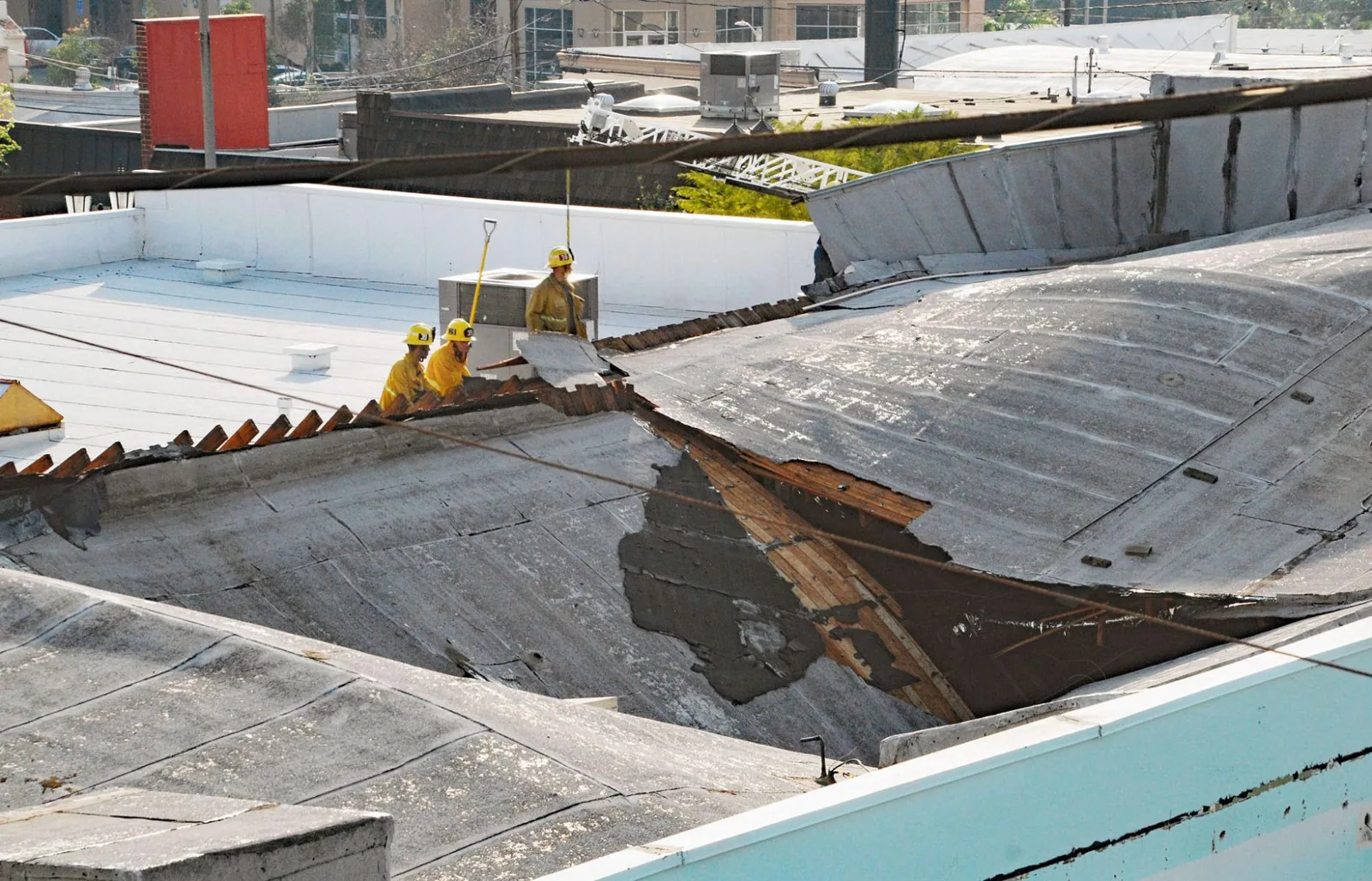
A report of lifted edge metal or water near a ceiling tells us where to begin, not how far the roof was affected. We ask which operation sits below the area, whether anything is still moving or leaking, and who controls roof access. In Victorville, the first call can also identify wind exposure at a perimeter, a curb, or a field seam that changed after a gust. We keep people clear of unsafe areas and arrange a roof-zone inspection before deciding what can be made safe and what needs permanent repair.
The city’s building-code guidance lists wind design values that vary by occupancy and exposure. That reference is useful when reviewing plans, but it is not a field finding about the building. We inspect the actual attachment, edge, membrane, and flashing, then record visible damage in a photo set. A storm damage assessment can connect that first report to a repair scope.
First call: locate the active condition
Tell us whether the report involves a ceiling stain, water entering now, loose metal, displaced membrane, or debris. Note the room or equipment below, the time the condition appeared, and whether wind or rain is still affecting access. A facility contact can identify the approved hatch, ladder, escort, and any area that must stay clear. Staff should not climb onto a wet roof or handle loose material at an edge. That information lets us plan a safe inspection and protect the occupied space without treating a symptom as the repair boundary.
The Eastern Bear Valley Road Corridor is identified as a commercial focus area in Victorville's land-use plan. Old Town Victorville has a separate mix of planned land uses, and the city identifies Seventh Street for streetscape improvements. Those district facts help a manager locate the property, but they do not set its access rules or roof details. We confirm the site's operations directly, then record the affected zone so a return visit can begin at the same location.
Reported condition: separate movement from water
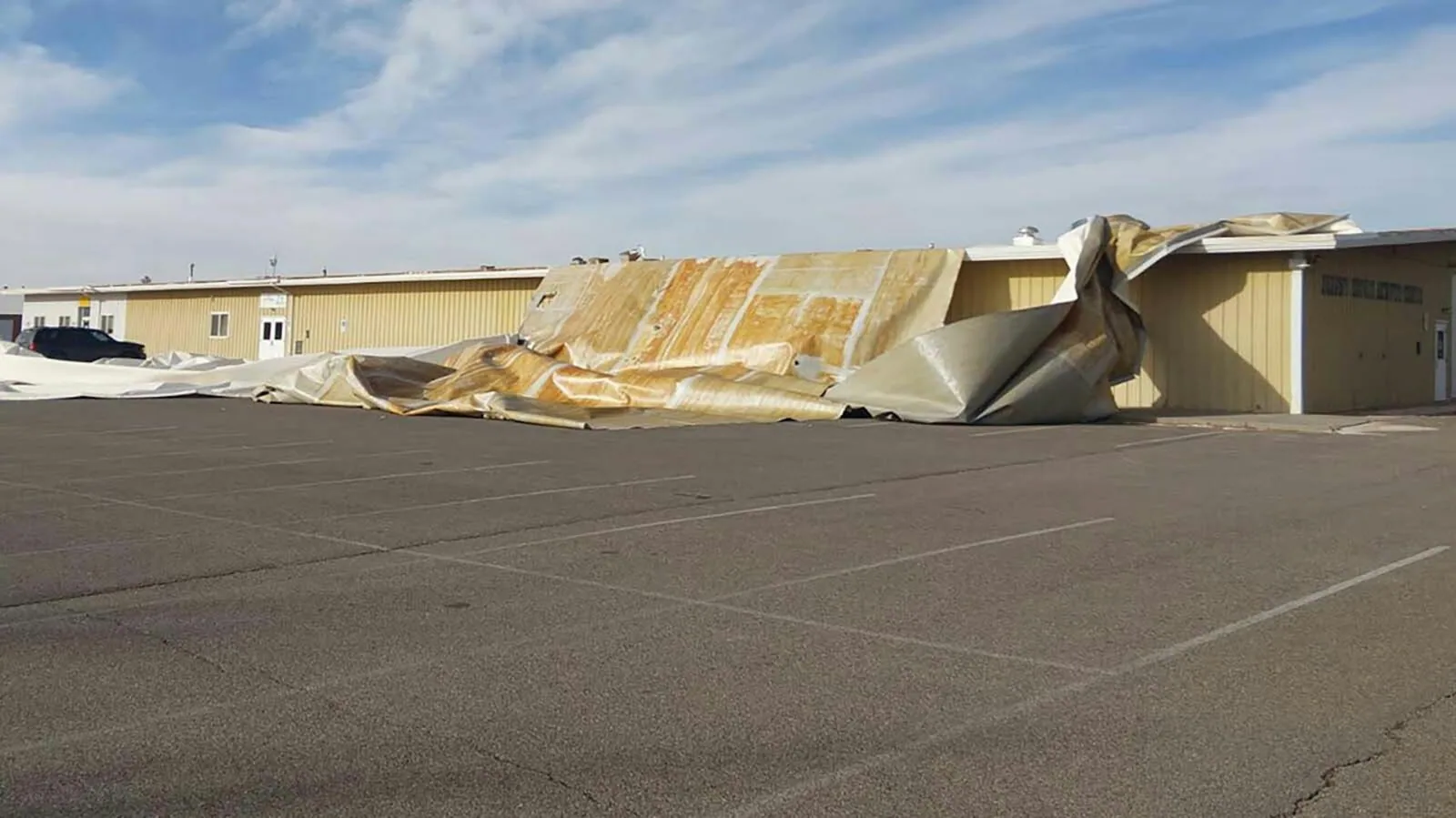
Wind can lift a perimeter detail, loosen a termination, move a metal panel, or open a flashing transition. Rain entering afterward may travel below the membrane before it reaches a room. We compare the interior report with roof seams, drains, curbs, penetrations, parapets, and earlier repairs. Fresh scuffing or displaced material can help locate a change, while old staining may reflect a prior event. The inspection notes what is visible, what remains concealed, and whether water continues along the same route.
Victorville's published drainage-design table uses a 2.5-inch hourly input. That criterion helps explain a plan detail; it does not log rainfall at this property. We check whether the outlet is open and how water reached it, especially when debris or a lifted edge changed the path. A flashing repair review may address a wall or curb transition; a seam repair applies when the membrane lap itself has opened.
Inspection sequence: follow the edge and attachment
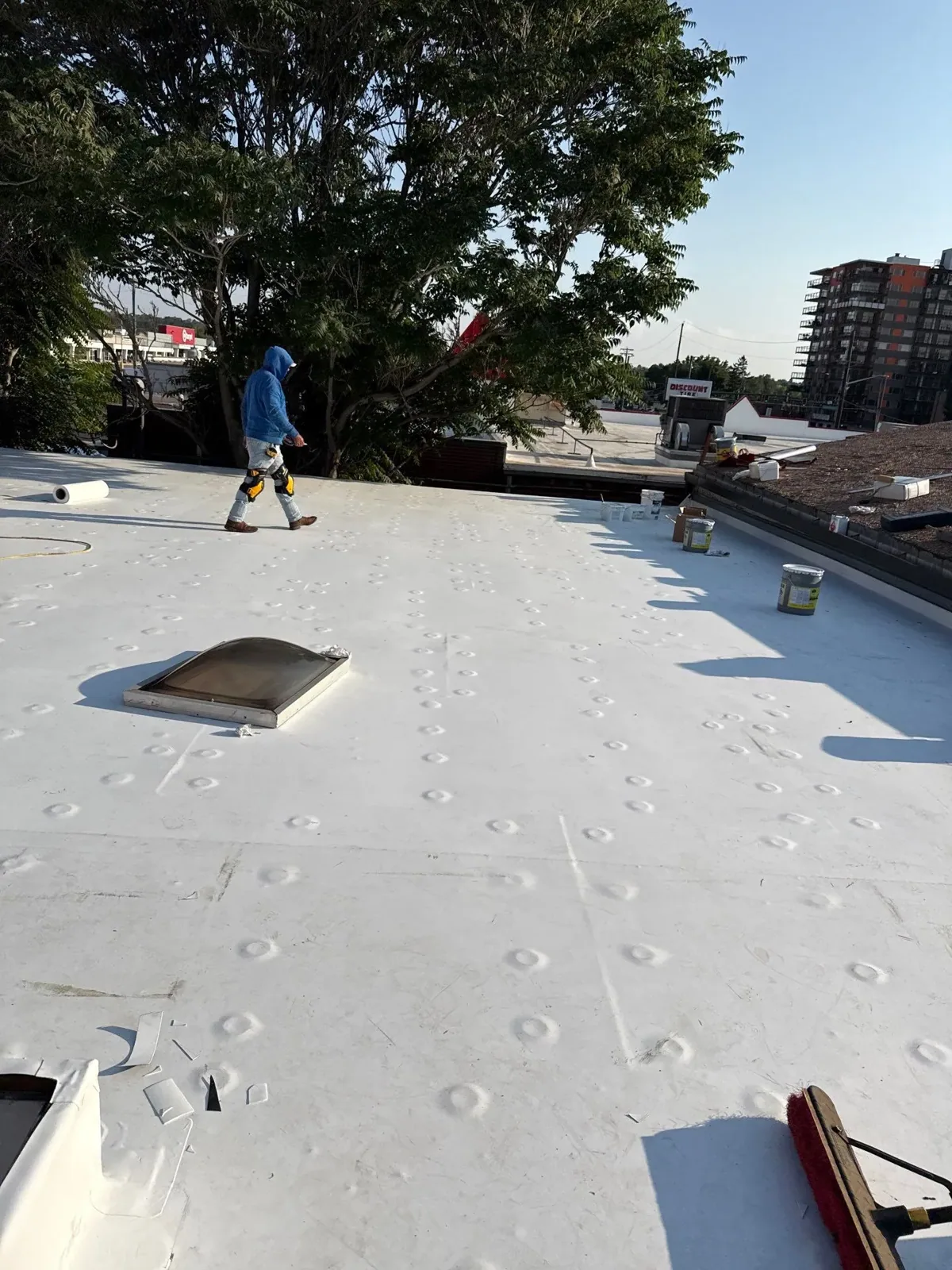
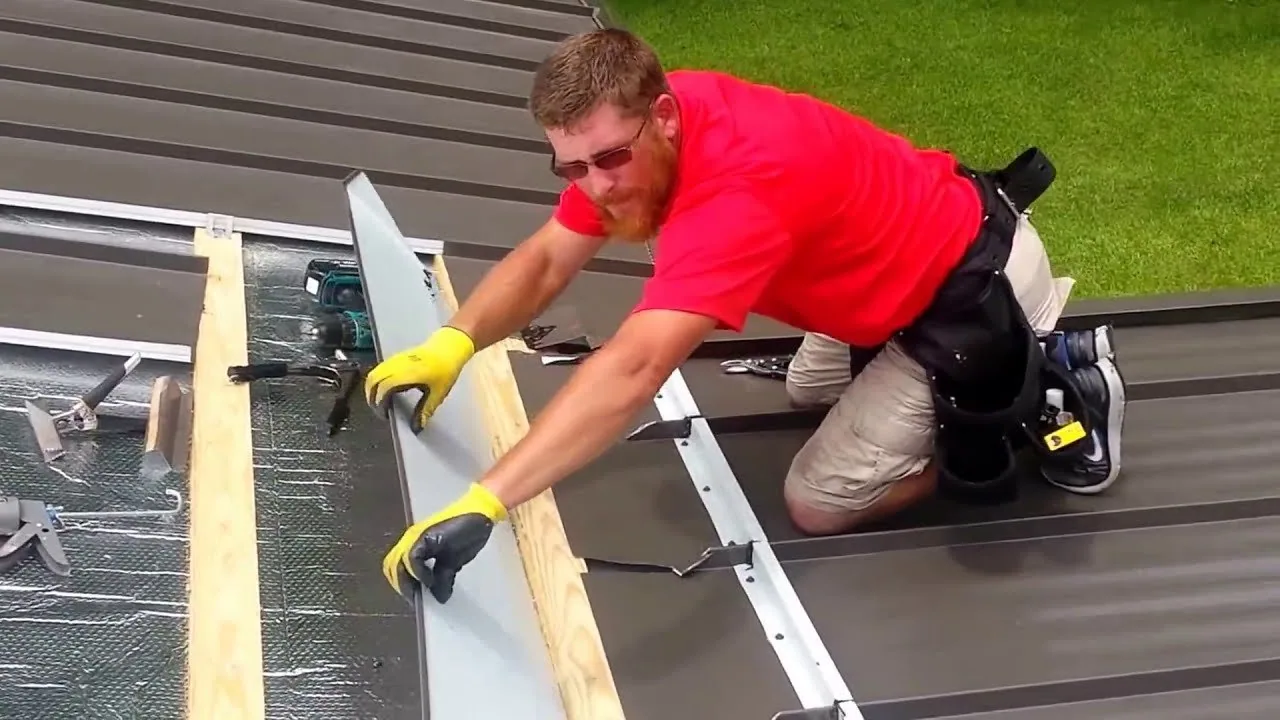
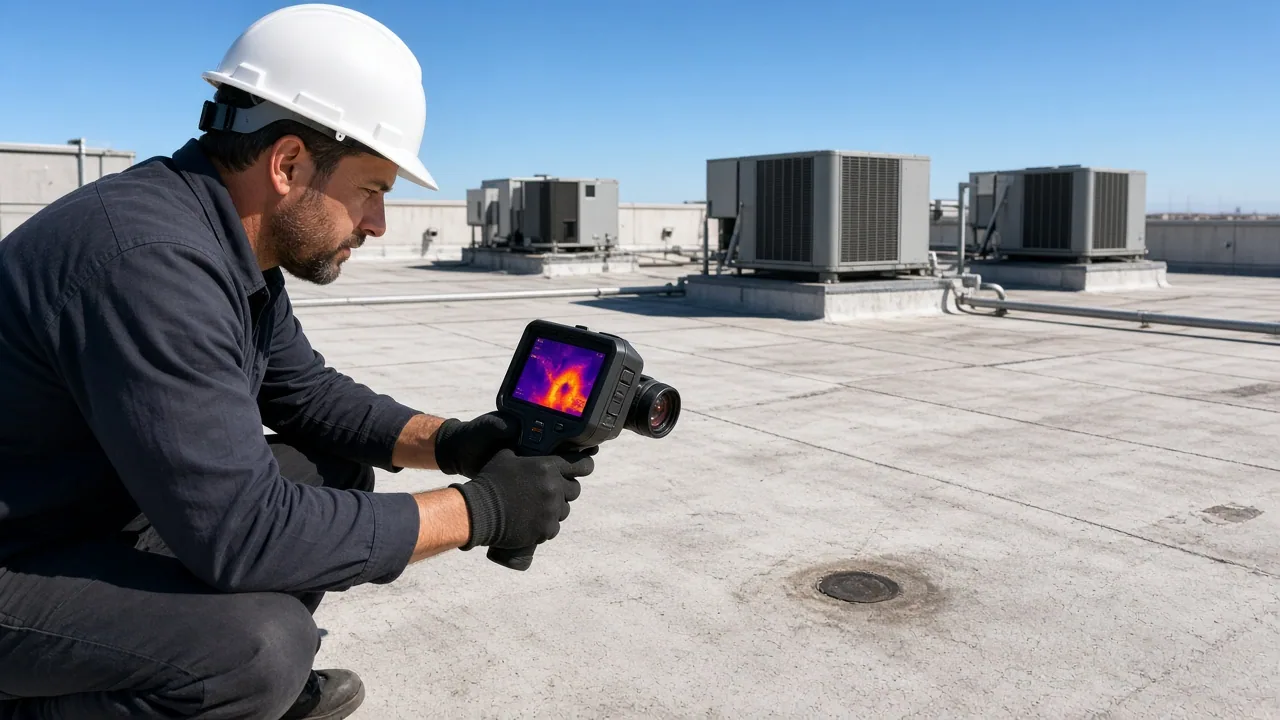
We start at the reported area and move outward through the roof zone, checking perimeter metal, corners, fasteners, membrane laps, curb bases, and penetrations. On a mechanically attached assembly, the visible sheet and the attachment pattern both matter. On a metal roof, panel movement, clips, and end conditions need a different review. We photograph each observation with a wider reference image and note whether the area was dry, wet, loose, or inaccessible. The report can then distinguish a confirmed opening from a condition that deserves monitoring.
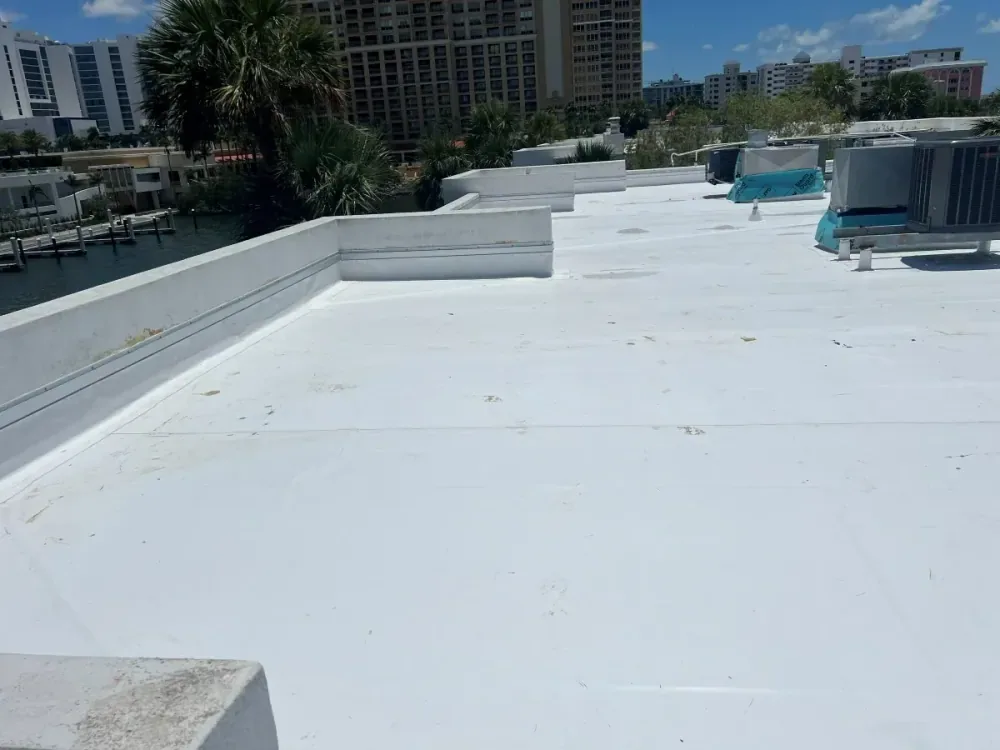
A delivery entrance, nearby tenant schedule, or lift route can affect the inspection window, so we verify those details with the facility contact rather than infer them from the city map. The work plan keeps staging away from the damaged edge and protects activity below. Victorville's code applies wind criteria by occupancy and exposure, a design input rather than a finding about this roof. A perimeter-metal inspection can define the edge work, while a roof inspection records the wider assembly when damage crosses zones.
Temporary protection: make the opening safe
If a roof opening or loose component remains exposed, temporary protection may limit further water entry while permanent materials and conditions are arranged. We identify the safe work area, protect the interior where practical, and record the limits of the temporary measure. A cover is not a finished repair and does not show whether insulation, decking, or adjacent seams are dry. The facility contact receives the next observation point and knows which change should prompt another call.
For an occupied suite, we coordinate access below as carefully as access above. That may mean moving people, protecting equipment, or setting a work window around deliveries and shift changes. The plan for a property along Bear Valley Road may differ from one near Old Town Victorville's Seventh Street corridor because the building operation controls the sequence, not the neighborhood name. We use emergency roof response when an active condition needs assessment and make-safe work, then define permanent repair separately.
Repair scope: define the full tie-in
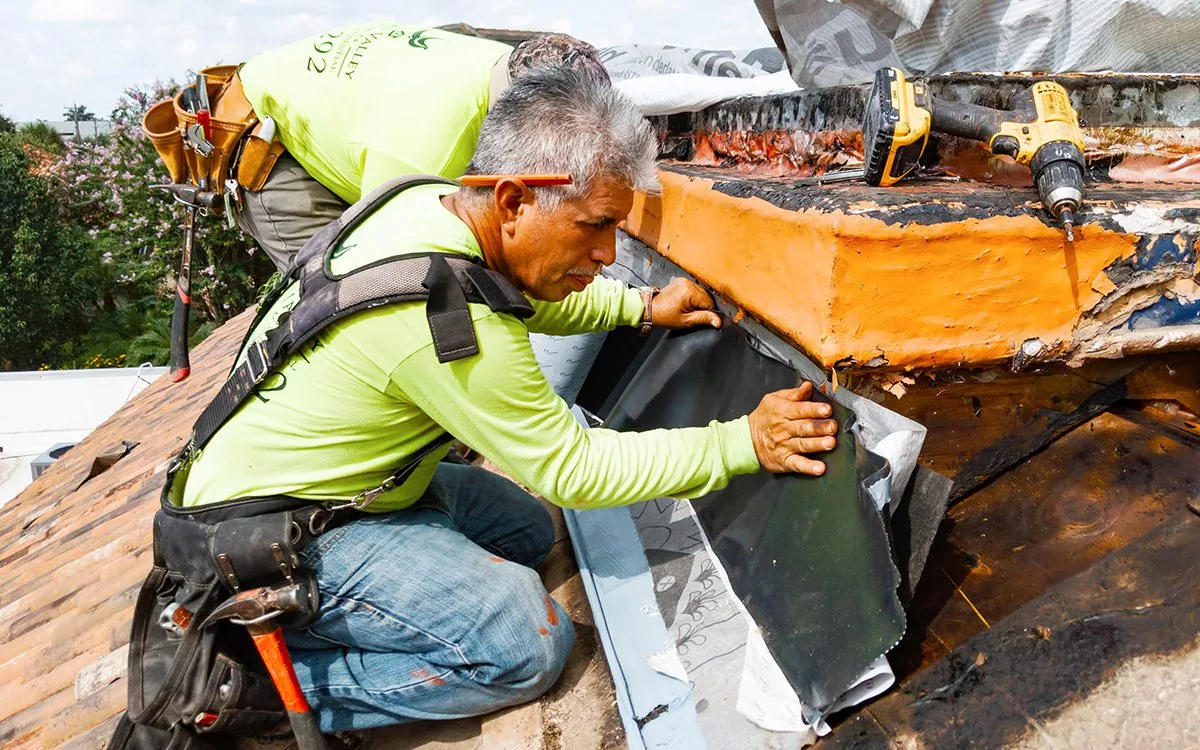
The permanent repair identifies the damaged detail, preparation, compatible materials, attachment or weld, and the boundary where sound roof begins. A lifted edge may require removal of loose components and renewed termination beyond the visible flap. A puncture near a curb can involve flashing as well as membrane. If wind-driven water reached insulation or the deck, we state what testing or opening is needed before that concealed area can be included. The owner receives a written scope and photographs that make the repair limit reviewable before work proceeds.
Cost and duration follow access, roof type, wet materials, metal fabrication, equipment clearance, protection below, and the length of edge or seam that needs correction. If the repair record shows failures in several zones, a broader condition report can help separate immediate work from planned capital decisions. A recover or replacement decision depends on layers, moisture, attachment, drainage, and design requirements, not a single gust report.
Closeout: give the next visit a reference
At closeout, we photograph the repaired detail, note materials and preparation, and identify roof areas not included in the approved work. The facility contact receives any monitoring instruction and the location to compare if water or movement returns. If another trade later crosses the repair zone, that work should be recorded so a future inspection can distinguish new contact from the original damage. A clear record helps the owner decide whether a second visit is a warranty question, a new opening, or a separate roof condition.
Our repair work covers commercial properties in Victorville and the Bear Valley Road and I-15 district. When the wind report accompanies a roof leak, we follow the water path as well as the edge. Call with the affected zone, activity below, and access contact. We can coordinate a safe assessment, temporary protection when appropriate, and a repair scope tied to the observed assembly.
Commercial Roofing Questions
Can wind lift a membrane without tearing it?
Yes. An edge, termination, or attachment can move while the sheet remains intact. We inspect the boundary and surrounding fasteners or welds, then document what is loose and what remains secure.
Does a wind design value show what happened to this roof?
No. Victorville's published values depend on occupancy and exposure and inform design review. We inspect the building's actual roof details and record current field evidence before setting a repair scope.
Should we cover a lifted area before the inspection?
Keep people away from unsafe edges and do not send staff onto the roof. Tell the facility contact what moved and where water appeared. We will determine whether temporary protection can be installed safely.
Can a wind repair include interior leak investigation?
Yes. We compare the interior report with the roof zone, seams, curbs, penetrations, and drain route. The scope can include the confirmed entry detail and identify any testing needed for concealed materials.
What records help with a wind-related claim?
Share the first report time, interior photographs, prior roof work, access notes, and any building incident record. We can provide a dated roof photo set and a repair description tied to visible conditions.