A service call near Palmdale Road and U.S. 395 starts with the roof, not the traffic map. We ask which room or work area reported water, what operation needs protection, and who can approve roof access. The first walk records the assembly we can identify, the nearby drains and penetrations, and the routes water may have followed. Those observations become a location-marked photo set and a repair choice tied to one roof zone, giving the facility contact a clear next step without assuming every parcel along the road shares the same condition.
Tie the report to one part of the roof
The city's planning map treats the Bear Valley Road and Interstate 15 commercial focus separately from the mixed-use area near Amethyst Road. A request near Palmdale Road has its own property boundary and roof access, regardless of those other districts. We ask the facility contact to point out the room, work area, or equipment affected, then follow the report upward through the accessible roof details. The inspection log keeps the reported operation beside what the crew can see, so the repair discussion rests on that building's assembly rather than a land-use label elsewhere in Victorville.
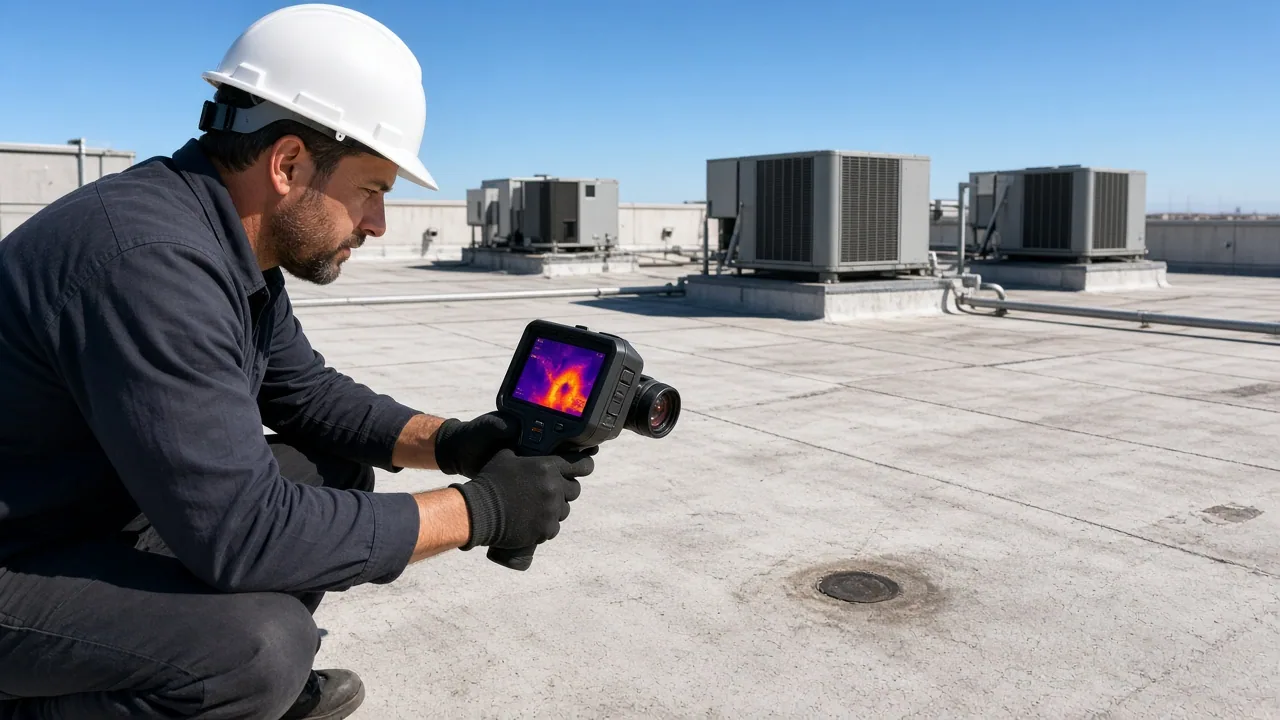
When the leak is intermittent, the visit time may not match the conditions that produced it. We record when the water was reported, ask whether equipment or contents were affected, and inspect the accessible details above and around that zone. A wet mark below a penetration is a lead, not proof that the flashing is the source. We trace the surface path, photograph the transition, and separate a confirmed opening from an area that needs a hose test, moisture survey, or follow-up after weather. A focused roof inspection helps establish that distinction.
Check transitions and drainage together
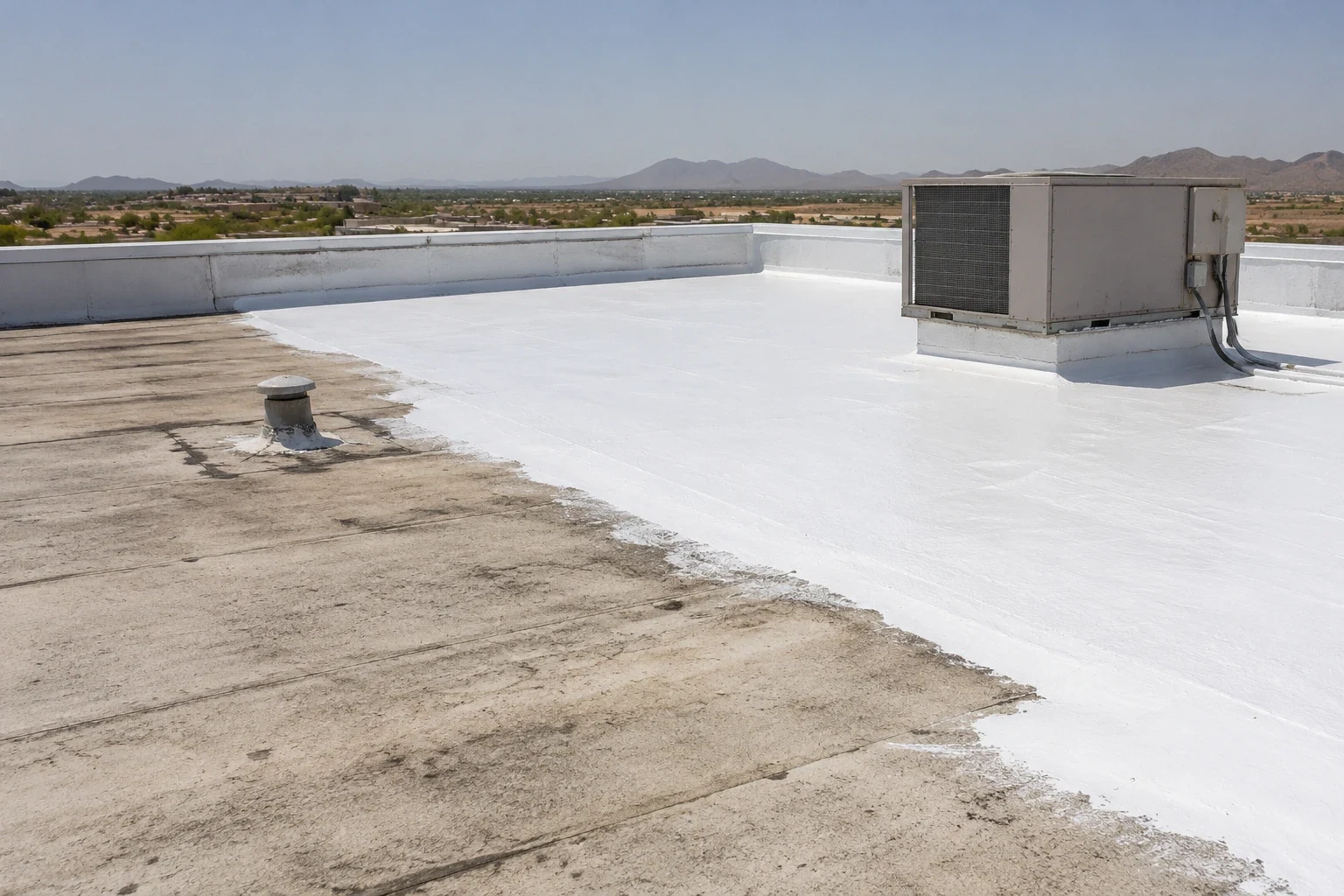
The inspection moves from the reported zone to the details that can collect or redirect water: seams, curb corners, wall terminations, drains, scuppers, and perimeter metal. We note repairs already present without assuming who installed them or whether they remain under warranty. If rooftop equipment blocks a view, the report identifies the obscured section rather than treating it as inspected. On a large roof, a simple zone map keeps separate bays from being merged into one broad statement about condition.
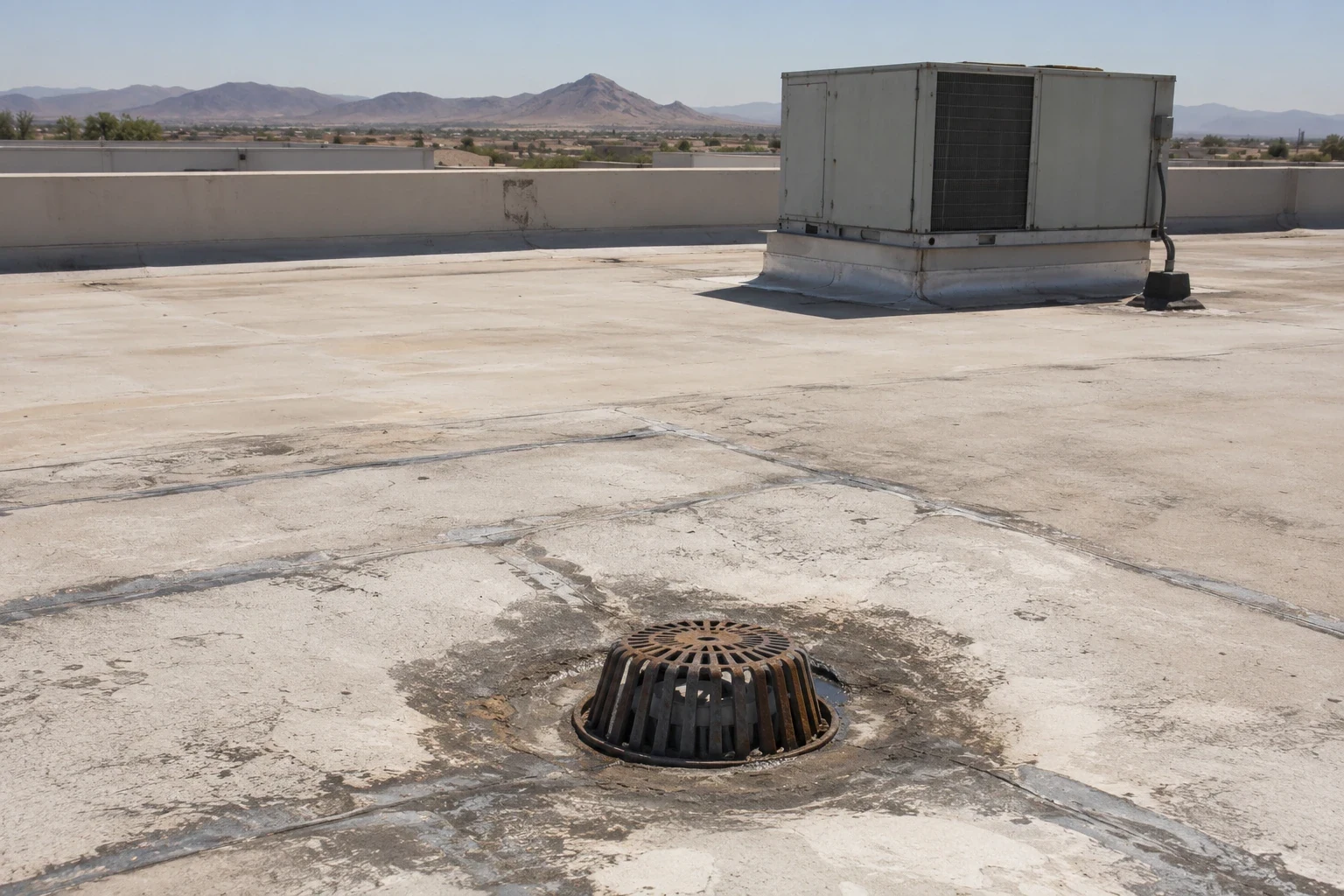
Victorville's building-code page lists a 2.5-inch-per-hour rate for roof-drain sizing. That is the city design reference; it does not establish the capacity, slope, or maintenance condition of an existing system. We look for accessible obstructions and signs that water is not moving toward the outlet, then distinguish a maintenance task from a repair to the drain body or surrounding membrane. Where this detail is part of the report, a drain and scupper assessment documents the observed route and the limits of the inspection. The owner can then decide whether a cleaning, repair, or plumbing review belongs in the next work order.
Set a boundary the crew can follow
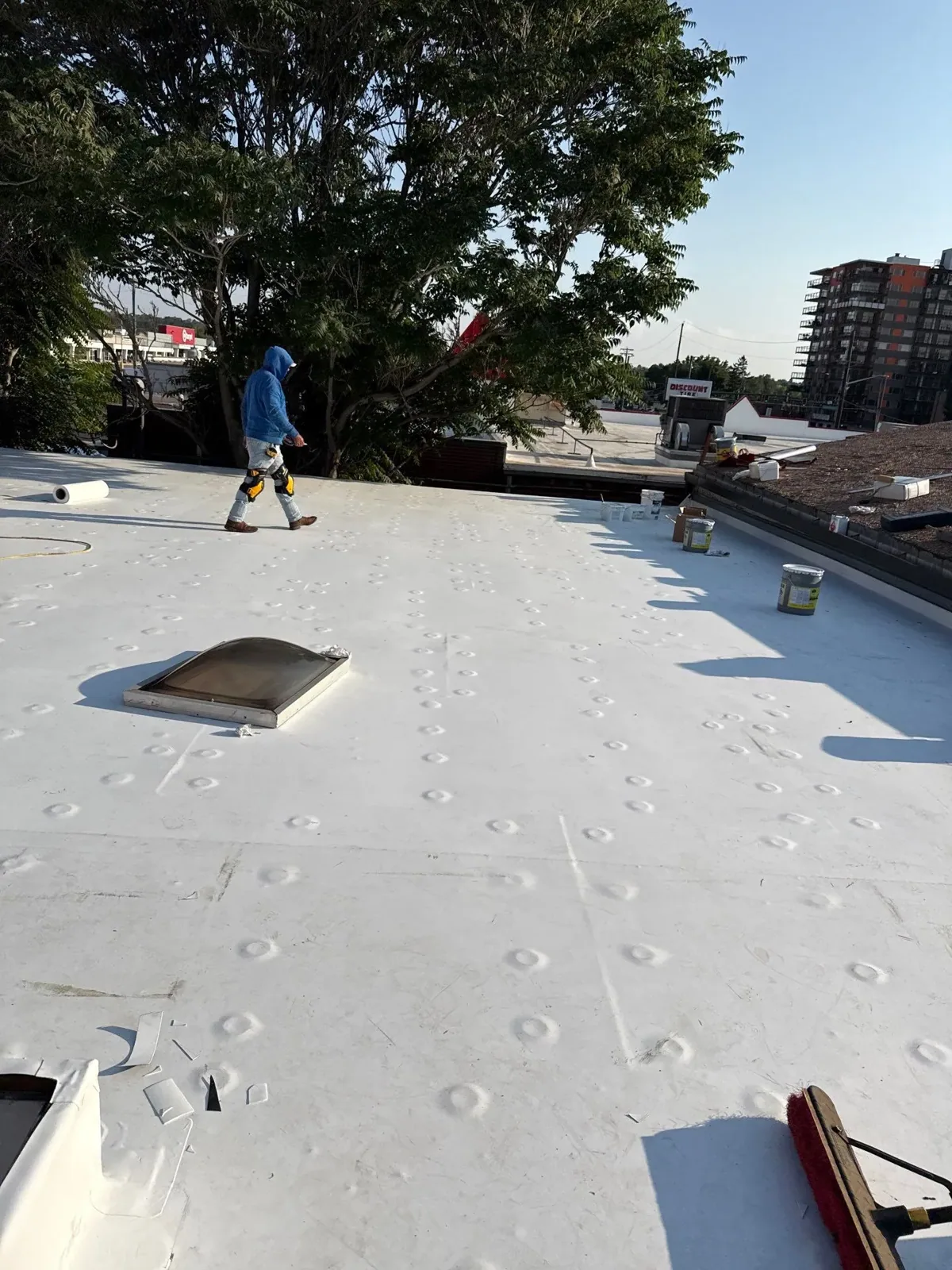
For a repair, the written scope should name the zone, preparation, materials, seam or flashing treatment, and edge of the work. We state whether temporary protection is included and when a permanent return is required. If the visible damage extends beyond the initial report, we photograph the added condition and obtain direction before changing the approved price. That keeps a service call near a busy road from turning into an undefined roof-wide allowance.
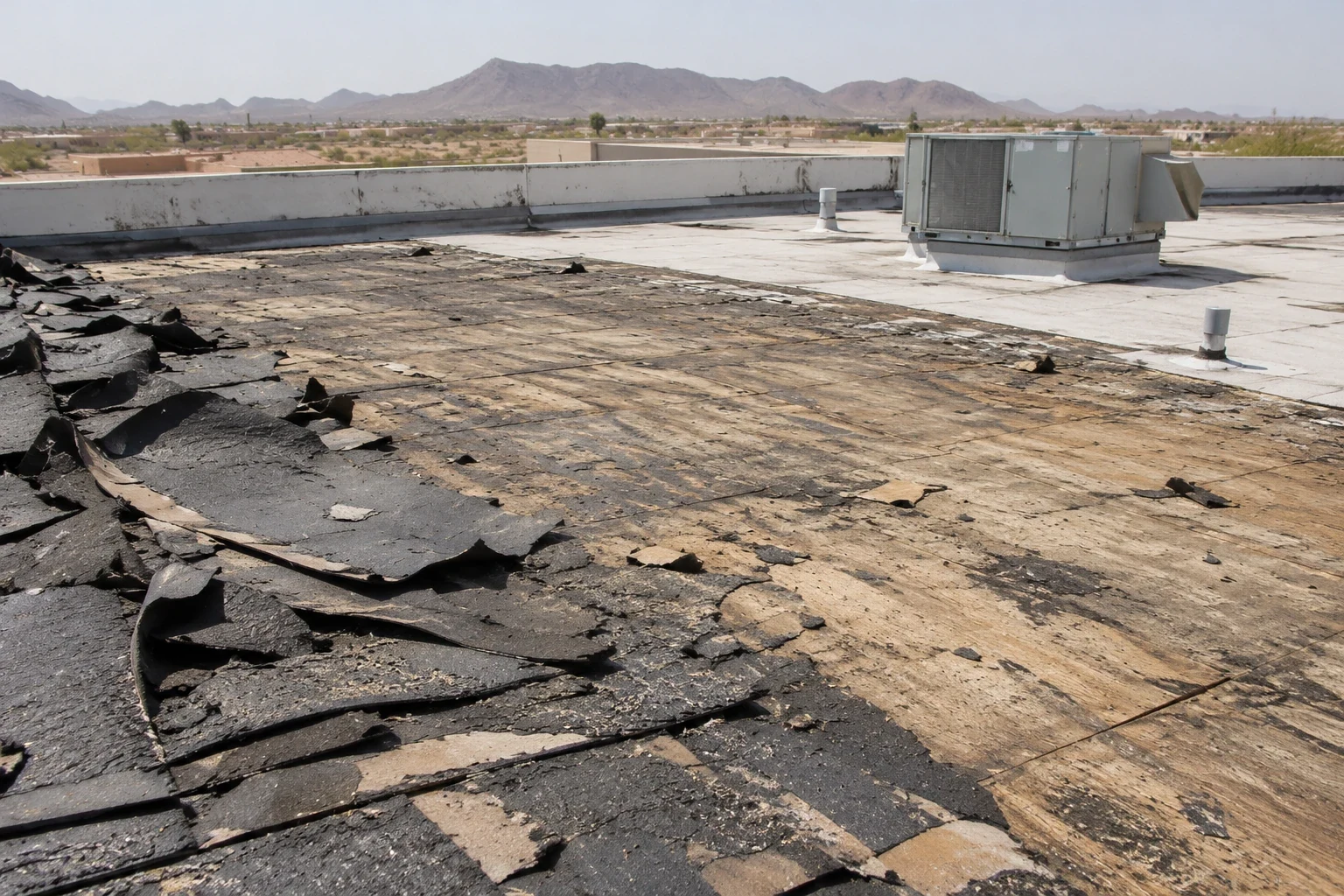
When a roof shows multiple conditions or the owner is planning beyond the immediate leak, we compare repair and replacement using the same observed details. A flashing repair scope may be appropriate at one curb while another zone needs separate evaluation. replacement planning includes assembly verification, insulation decisions, edge details, debris handling, and the sequence needed to protect areas below. A compatible coating restoration remains an option only when surface condition, drainage, and preparation support it; a coating cannot correct a failed substrate or a blocked drain.
Sequence access around the property
U.S. 395 is one of Victorville's regional connections, alongside Interstate 15 and State Route 18, but the property's own delivery route governs how a crew stages. We confirm gate procedures, roof access, fall-protection requirements, lift placement, and areas that must remain clear. For an occupied building, the contact identifies customer doors, receiving periods, equipment movement, and any tenant notice process. The plan names the roof section for each work period and how temporary protection will be checked before the crew leaves.
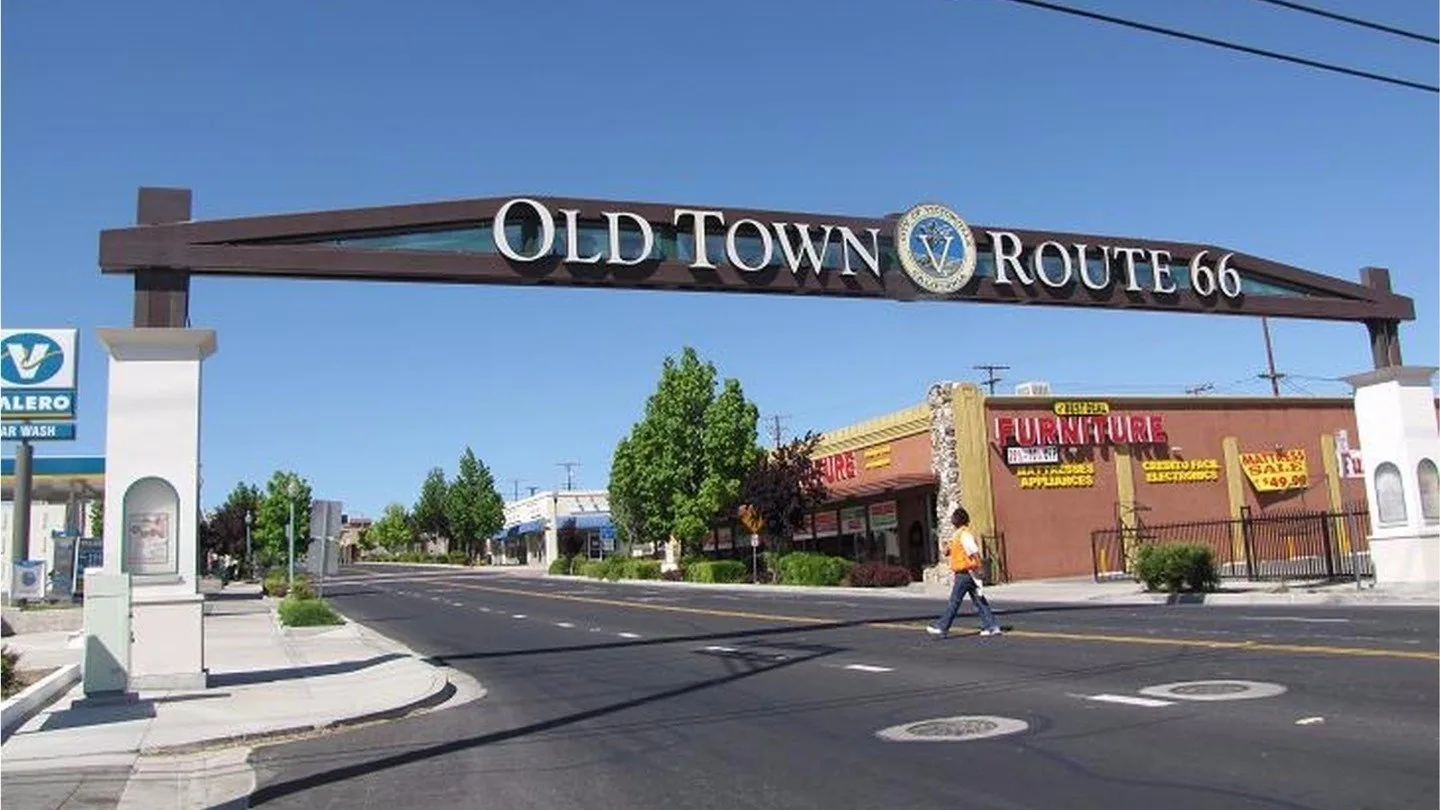
Old Town Victorville has a separate adopted plan area and Seventh Street improvement context, while Bear Valley Road and I-15 form a distinct commercial focus identified by the city's land-use plan. Those references help distinguish places in the market, but each roof assessment remains property-specific. The Old Town route and Bear Valley corridor page cover those separate settings. For repeat decisions, a condition report preserves the zone map, observations, access limits, and approved follow-up so another facility contact can pick up the record accurately.
Before a multi-day scope, we review how a change in weather or an access restriction affects the open work area. The contact knows which portion of the roof is in progress, what remains protected, and who will accept the daily closeout. Each shift ends with debris removed from agreed paths, temporary covers checked, and the next work boundary identified. If the owner asks for additional repairs after seeing a new condition, we document that finding and price the added work separately. This keeps the approval tied to a defined zone and avoids mixing an unreviewed item into the original authorization.
Review a roof concern near U.S. 395
Identify the affected roof zone, activity below, and access contact. We can document visible conditions and outline the repair, test, or replacement-planning decision that fits the property.
Commercial Roofing Questions
Does the road corridor identify the type of commercial roof?
No. The location describes where service is requested, not the roof assembly or its condition. We confirm visible materials and details on the building or review records supplied by the owner. If that evidence does not identify a system, the report says so before proposing a repair material or restoration method.
What if a drain looks clear but water remains after rain?
We document the outlet, nearby surface, and accessible flow path, then check for other constraints such as slope, a blocked downstream line, or a low area. A visual visit does not prove subsurface drainage capacity. The scope identifies the evidence gathered and whether a plumbing review, measurement, or further test is needed before assigning cause.
Can you separate an urgent repair from a larger project?
We mark the immediate roof zone, describe any make-safe measure, and show which surrounding conditions remain outside that work. The owner can authorize the bounded repair while reviewing a separate assessment for broader replacement. Keeping the scopes separate makes their prices, schedules, and operating impacts easier to compare.
How are deliveries and roof access coordinated?
The facility contact shares gate instructions, receiving hours, restricted areas, and any building operations that affect staging. We confirm the access path and equipment setup before work begins, then schedule the roof sequence to preserve the routes the property needs. If the planned setup cannot fit those limits, we revise it before mobilization. For a later return visit, the same contact can confirm which zone remains open, whether temporary protection has changed, and whether access can use the prior route. That update keeps the next scope aligned with current building operations rather than relying on an old assumption. The closeout also records the date, images, and action assigned to the next contact.