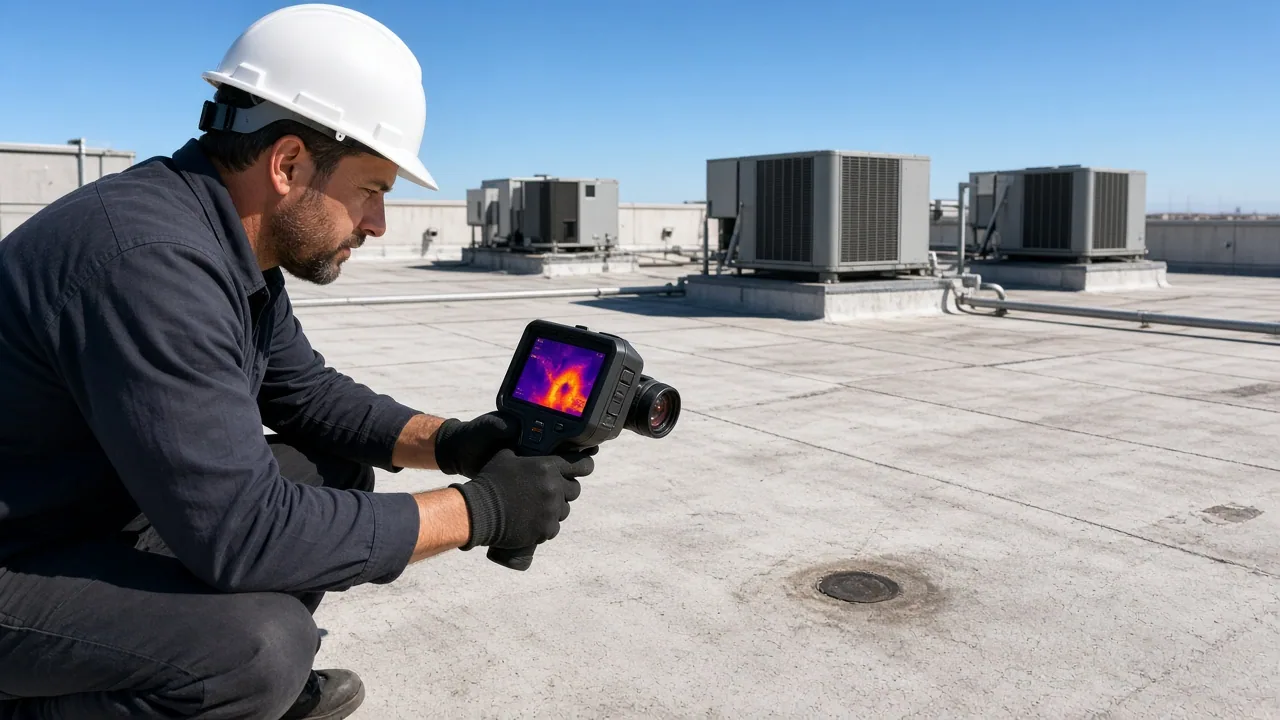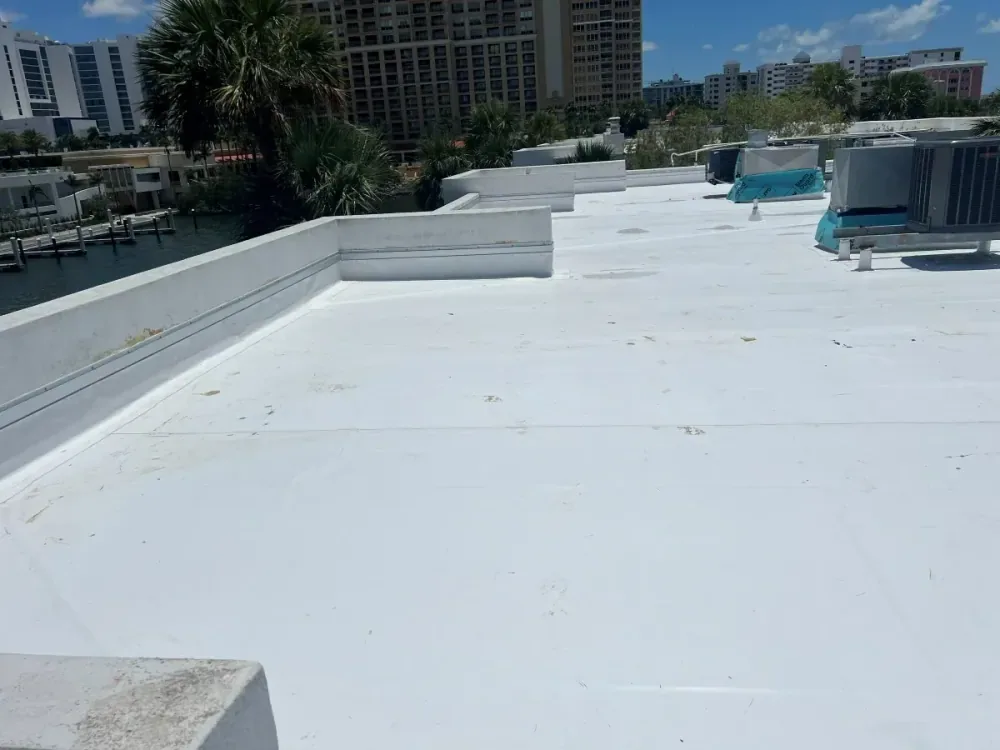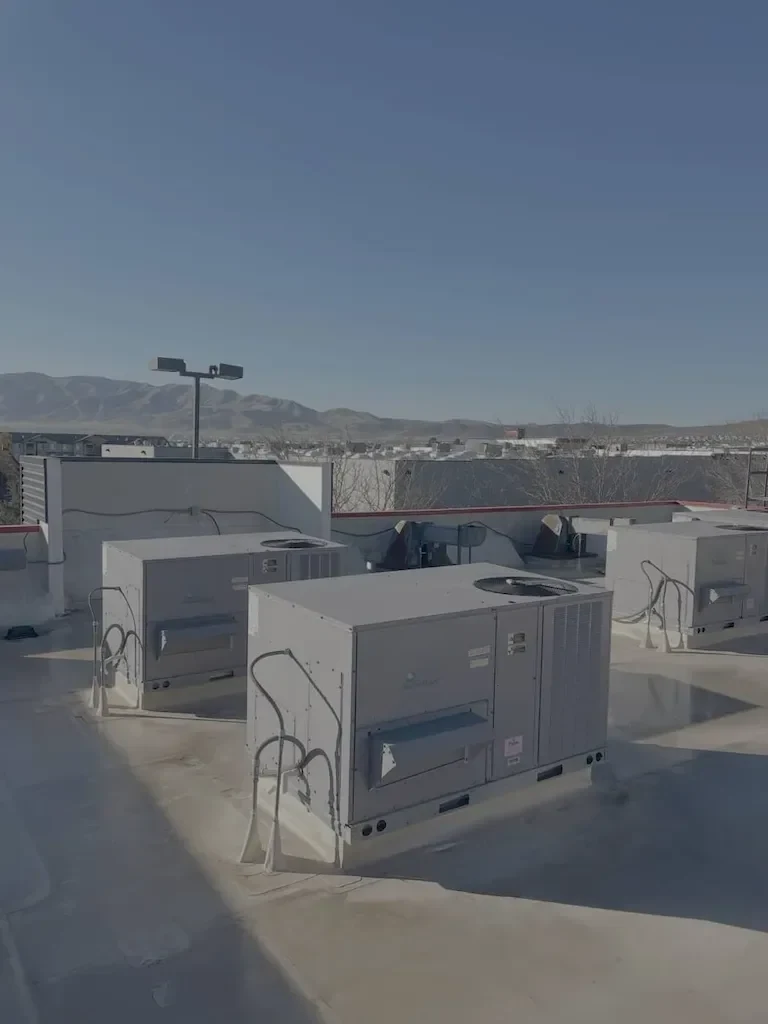
A PVC roof inspection follows the welds and transitions that keep the sheet assembly continuous. The facility contact names the roof zone, reported leak, and any rooftop process or service activity near the affected area. In Victorville, we record the PVC surface, seam condition, flashings, drains, and prior repairs before recommending a repair or larger assembly scope. The report distinguishes visible evidence from concealed material that needs testing or removal.
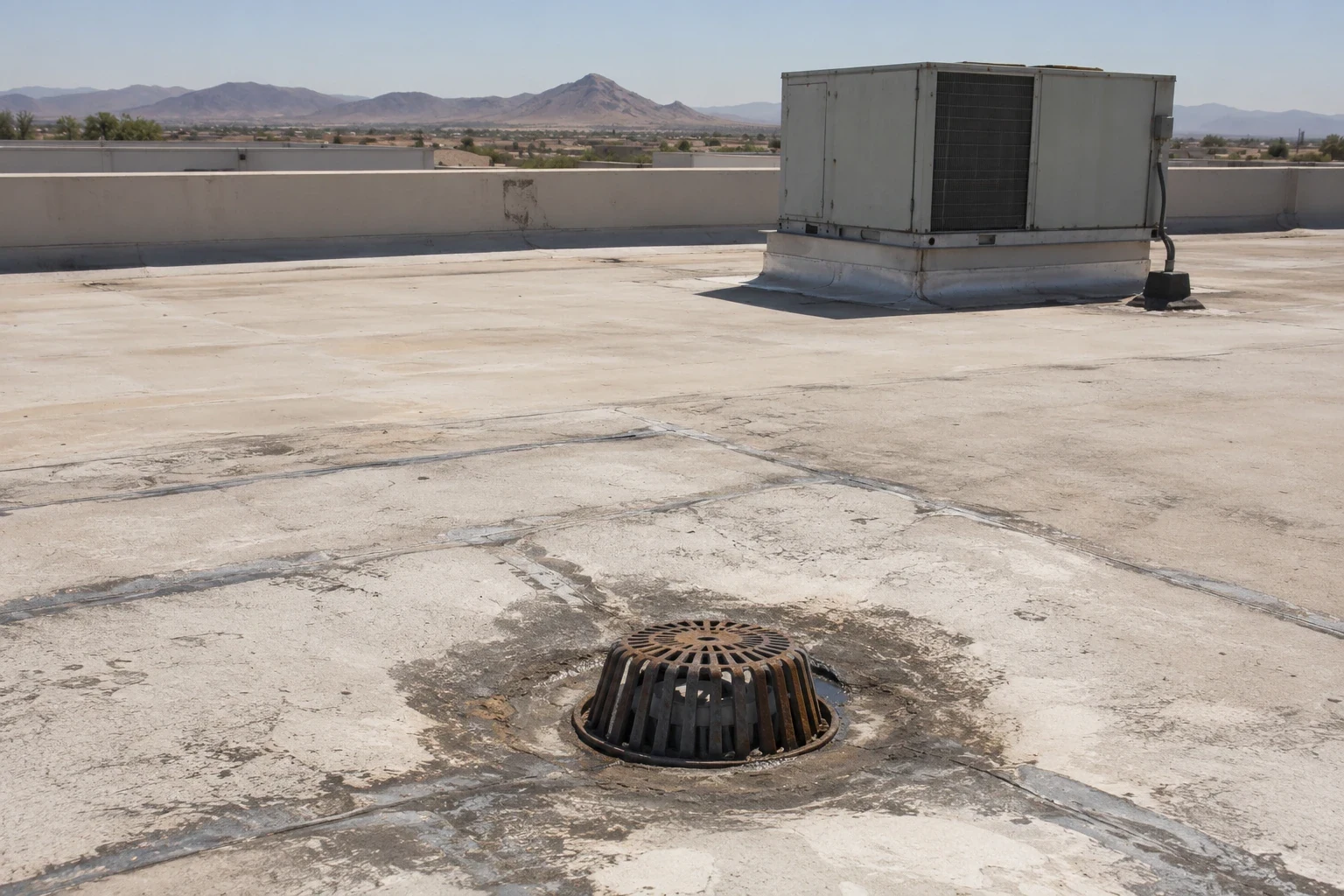
Victorville’s drain design table uses an hourly rainfall amount of 2.5 inches as its sizing basis. That is a design reference, not evidence that a particular outlet or PVC roof is working today. We trace the water route from field to drain and document the point where a leak was reported. A roof inspection establishes that baseline by roof zone.
Weld condition: inspect the joint itself
Heat-welded PVC seams can be affected by contamination, inadequate preparation, movement, or earlier repairs. We check accessible lap edges, corners, patches, and transitions for separation, fishmouths, wrinkles, and loss of bond. A probe test, when suitable, samples the seam; it does not prove every foot of a roof is sound. We note the location and result, then compare it with interior reports and the route toward nearby drains or penetrations.
A repair requires a clean compatible surface and a properly prepared weld or patch that extends beyond the damaged point onto serviceable membrane. If repeated seam failures appear in several roof zones, the owner needs a broader condition review rather than a collection of isolated patches. The seam-failure repair scope identifies the locations and work boundary. We also record areas that could not be checked because equipment or stored materials block access.
Chemical exposure: identify the actual source
PVC can suit some roof areas where grease, oils, or other substances may reach the membrane, but compatibility depends on the specific exposure and product system. We ask what is discharged, how often it reaches the roof, and whether the affected zone is near an exhaust, kitchen, service line, or equipment pad. The observation is not a chemical test. Where the exposure is uncertain, the facility team should identify the substance and confirm compatibility with the system manufacturer before repair or selection.
Victorville’s Bear Valley Road and I-15 commercial district includes retail and regional-serving uses in the city plan. That does not establish that any particular building has a kitchen exhaust or a PVC assembly. We inspect the actual roof and mark sources that may affect a membrane detail. A curb and support assessment can document penetrations or equipment bases near the reported exposure.
Attachment and drainage: connect the assembly details
PVC may be adhered or mechanically attached, and the installation records help explain how the sheet is held in place. We inspect visible perimeter terminations, corners, and penetrations for movement or separation, but a surface visit cannot confirm concealed fastener spacing. If the owner is considering an assembly change, a qualified designer reviews the project-specific attachment and code requirements. The roofer documents roof conditions and installs the approved details without turning a visual observation into a structural conclusion.
Victorville’s wind design table assigns ranges by occupancy and exposure. The figure does not confirm the existing attachment or drainage on a particular roof. We inspect outlets, overflow paths, and low spots near seams, then record where water appears to cross or remain. A drain and scupper review can resolve an outlet concern before membrane work. Old Town Victorville’s plan includes retail and service, light-industrial, residential, and open-space uses, but the roof itself decides the repair detail.
Repair versus replacement: compare the area affected
An isolated cut, open weld, or damaged flashing can support a limited repair when the adjacent sheet and insulation are serviceable. We define the boundary, prepare the PVC as required, install compatible material, and photograph the finished transition. If moisture extends below the sheet or deterioration repeats across the field, the repair scope needs to explain how far the review goes and what requires another approval. The owner can then weigh a focused fix against a larger project.
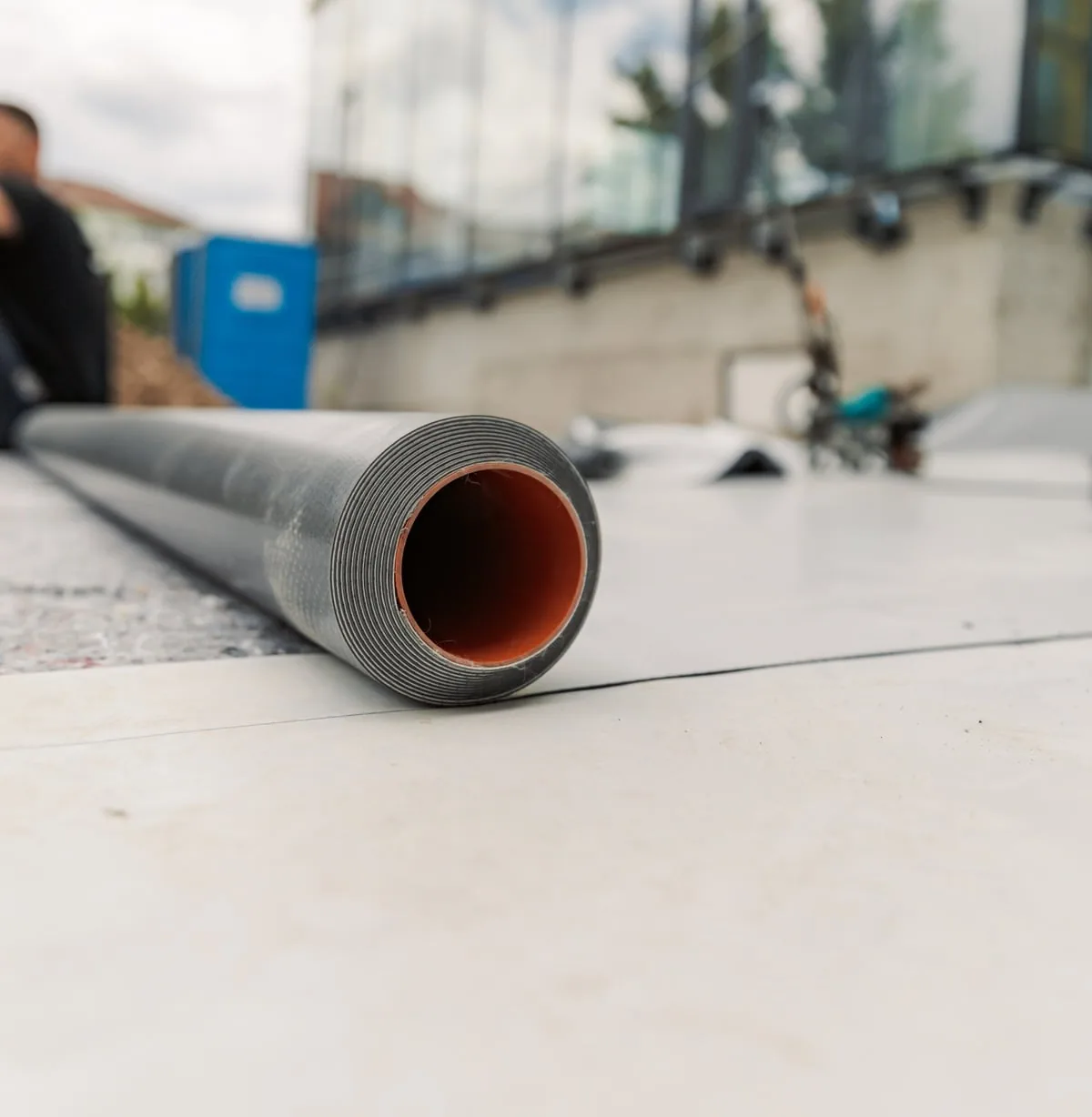
A recover may be considered only after checking existing layers, attachment, drainage, curb heights, and applicable requirements. If removal is needed, the work sequence should include temporary protection and interior coordination. A replacement review lays out that path, while an existing-surface restoration assessment is useful only when the PVC condition and selected product permit it. We do not recommend a coating merely to avoid investigating wet insulation or failed seams.
Work window: protect operations below
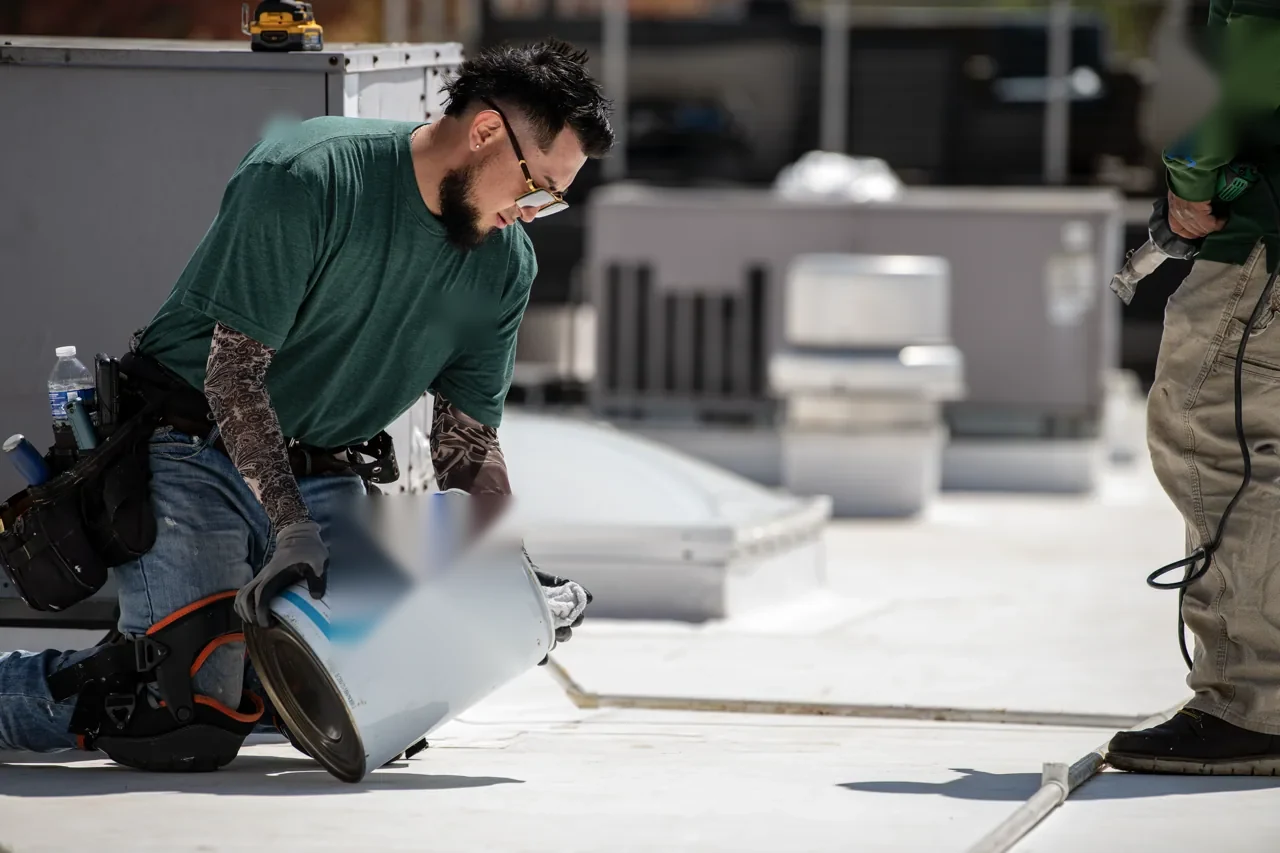
PVC repairs and replacement need a safe route to the roof, a place for materials, and a plan for exposed areas. The facility contact confirms hatches, loading routes, active units, and rooms below the work zone that require protection. If operations run in shifts, the foreman and building contact agree on access and noise periods before staging. The crew keeps drains clear, secures loose sheet, and documents temporary tie-ins before a weather change or shift handoff.
Old Town Victorville extends between Interstate 15 and the city’s eastern boundary, with Seventh Street identified in city revitalization work. These are planning references, not a site access map. Near Seventh Street or within industrial development east of U.S. 395, the actual gate, truck approach, and work window must be confirmed with the property representative. An occupied-building plan can lay out daily roof zones and tenant coordination.
Closeout: keep the PVC record usable
After the repair, the photo set should show the weld, nearby flashing, drain route, and roof-zone label. We note the material used, the exact work boundary, excluded areas, and any follow-up condition. If a roof section remains inaccessible or a leak route is unresolved, that limitation stays in the work record so the next visit can focus on it. The property team should retain the documents with prior repairs and equipment changes.
Victorville’s published economic context includes manufacturing, logistics, industrial users, and distribution; a specific property’s actual operation still comes from its facility contact. That distinction matters when scheduling inspections near mechanical activity or tenant work. A roof condition report can compare roof zones and support a repair-versus-replacement decision. If another membrane is being evaluated, TPO assembly review and KEE system considerations offer separate system comparisons. Call with the known PVC type, leak area, and access contact.
Commercial Roofing Questions
How do you locate a leak in a PVC roof?
We start with the interior report, then inspect the corresponding roof zone, seams, flashings, drains, and penetrations. The photo record traces visible evidence; concealed moisture or a distant water path may need additional testing.
Can PVC be installed near kitchen exhaust?
The actual discharge and product compatibility must be reviewed. We document the roof location and exposure described by the facility contact, then confirm the selected membrane and detail with the system requirements before specifying work.
Can you tell if PVC fasteners are secure from above?
A surface inspection can identify movement and visible edge conditions, but concealed fastening needs records or a design and investigative review. We state what was accessible and avoid treating a visual check as a fastening test.
When should an owner replace a PVC roof instead of patching it?
Repeated seam failure, widespread surface deterioration, wet insulation, and repair history all affect the scope. We document the extent and compare a local repair with recover or removal options using the same roof-zone findings.
Does the Victorville rainfall figure size my existing drains?
It is a local design reference, not a field confirmation of the installed drain system. We inspect accessible outlets and the roof water path, then identify any piping, slope, or design question that needs separate review.