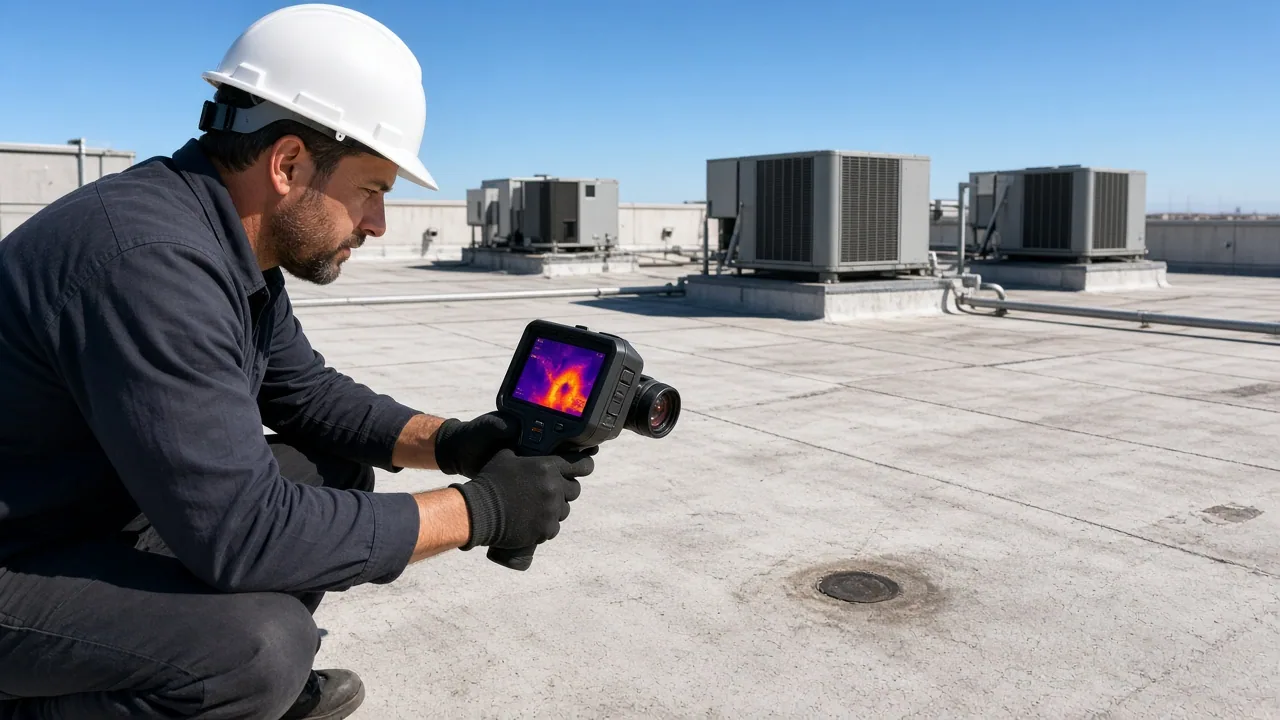
A TPO roof is judged at its seams, edges, drains, and penetrations, not by the membrane name on an old invoice. The facility contact points to the affected roof zone and shares any repair or equipment history. In Victorville, our inspection identifies the membrane condition, attachment clues, flashing details, and water route before we recommend a patch, recover, or replacement. The work starts with the assembly present and the building activity below it.
The National Weather Service’s historic George AFB/Victorville record reports high summer mean maximum temperatures during its 1980 to 1990 observation period. That history gives useful context for heat exposure, but it does not determine the life of a particular TPO roof. We document seams, surface condition, repairs, and insulation concerns. A commercial roof inspection records the roof zone before a repair scope is selected.
Seam review: inspect the weld line
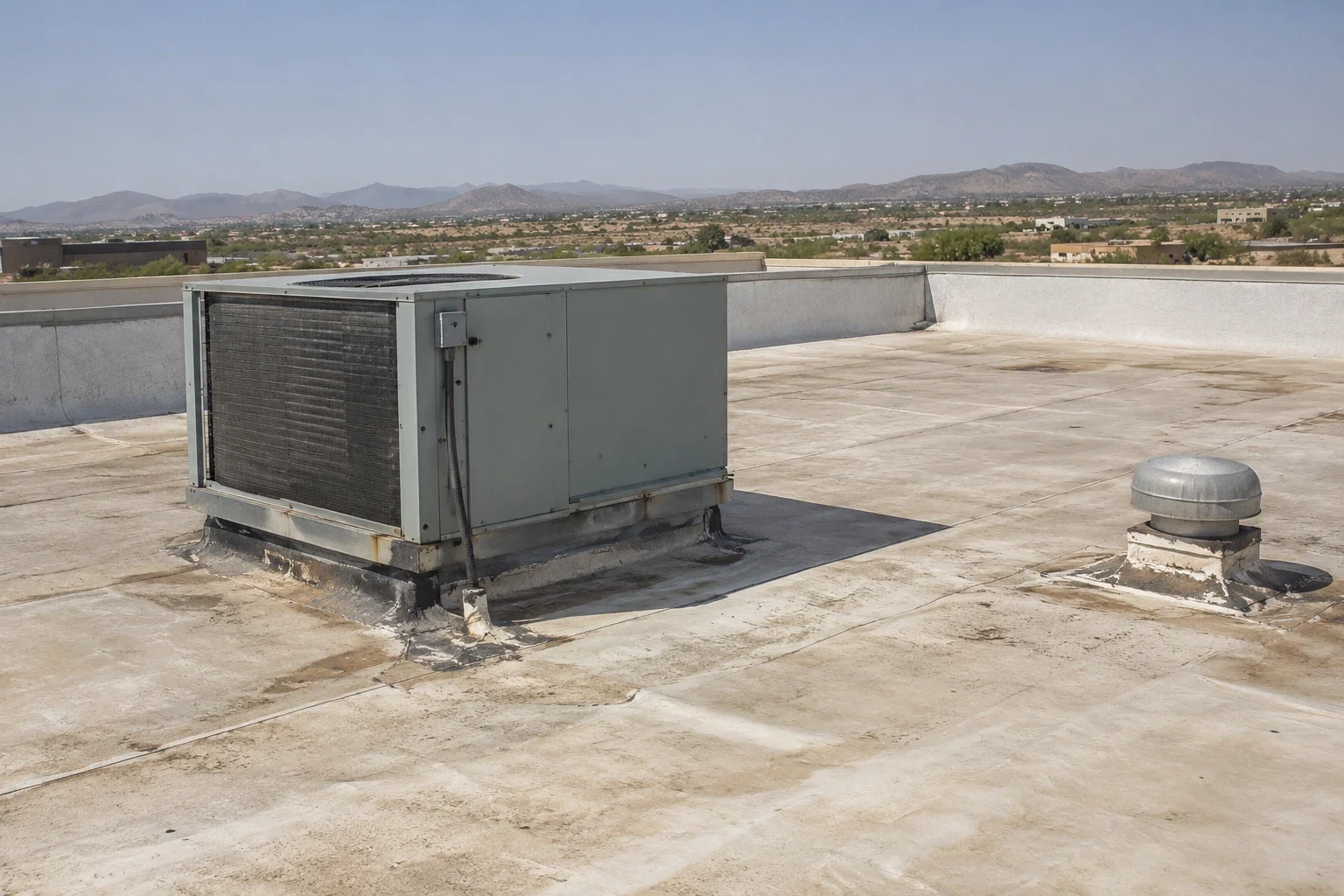
Field seams are heat-welded, and their condition can vary by location, repair history, and installation detail. We inspect seam edges for separation, contamination, wrinkles, fishmouths, patches, and movement at transitions. A probe check is limited to accessible areas and should be documented with the location and method. A weak or open seam can admit water, but the nearest interior stain may sit several roof zones away. We trace the path and compare the seam with drains, curbs, and adjacent sheet laps.
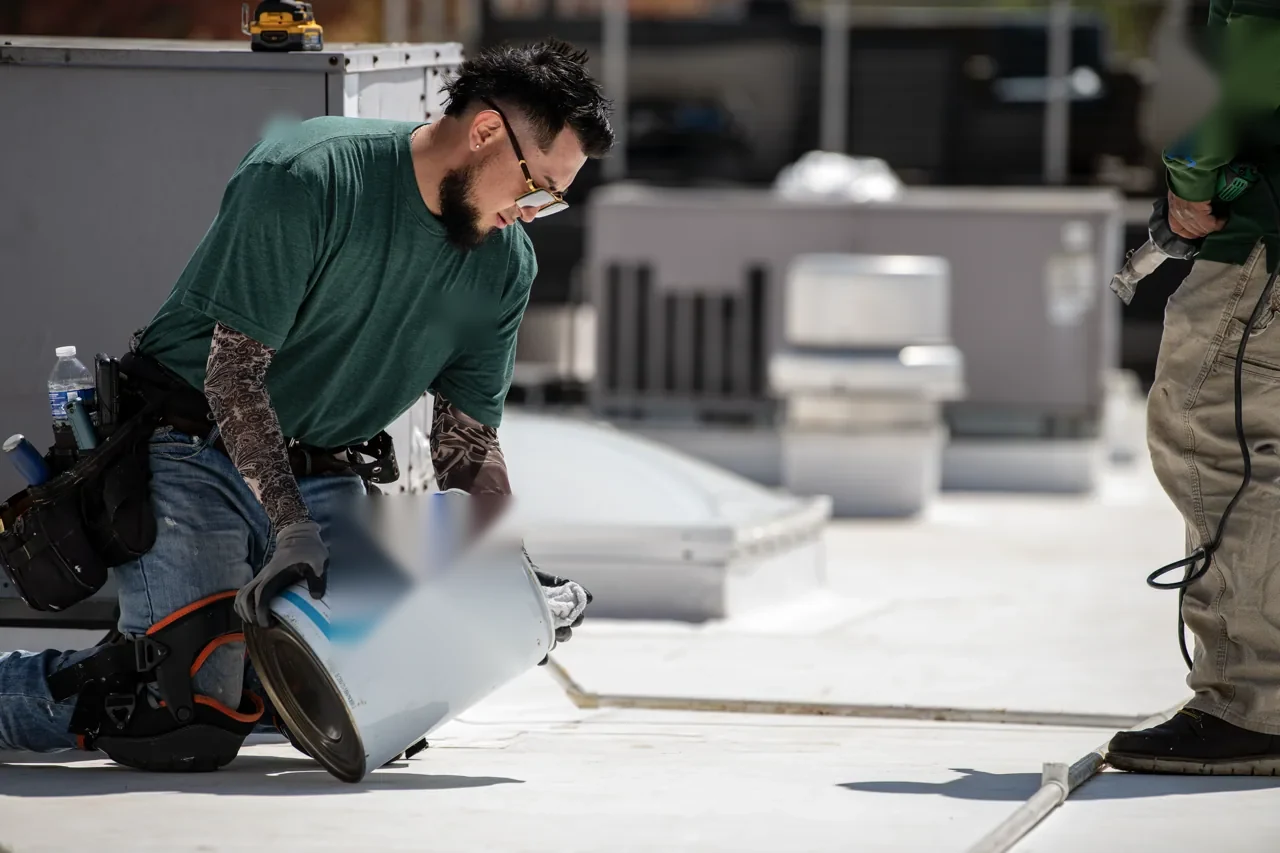
At a repair, preparation and material compatibility matter. The crew cleans and prepares the surface using the selected system requirements, then makes a patch large enough to extend onto sound material with properly welded edges. If the membrane is degraded, saturated insulation is present, or seams have widespread failure, a small patch does not resolve the larger condition. The owner can review a seam-failure repair scope alongside the documented extent.
Attachment: confirm edge and field conditions
TPO roofs may be mechanically attached, adhered, or installed as a ballasted assembly. The inspection looks for attachment clues at edges and penetrations, but concealed fastening cannot be confirmed from the surface alone. We note loose perimeter details, displaced sheets, open corners, and signs of movement, then compare those observations with plans or prior project records when available. Any design change to attachment, edge restraint, or roof assembly belongs with the qualified designer and applicable project documents.
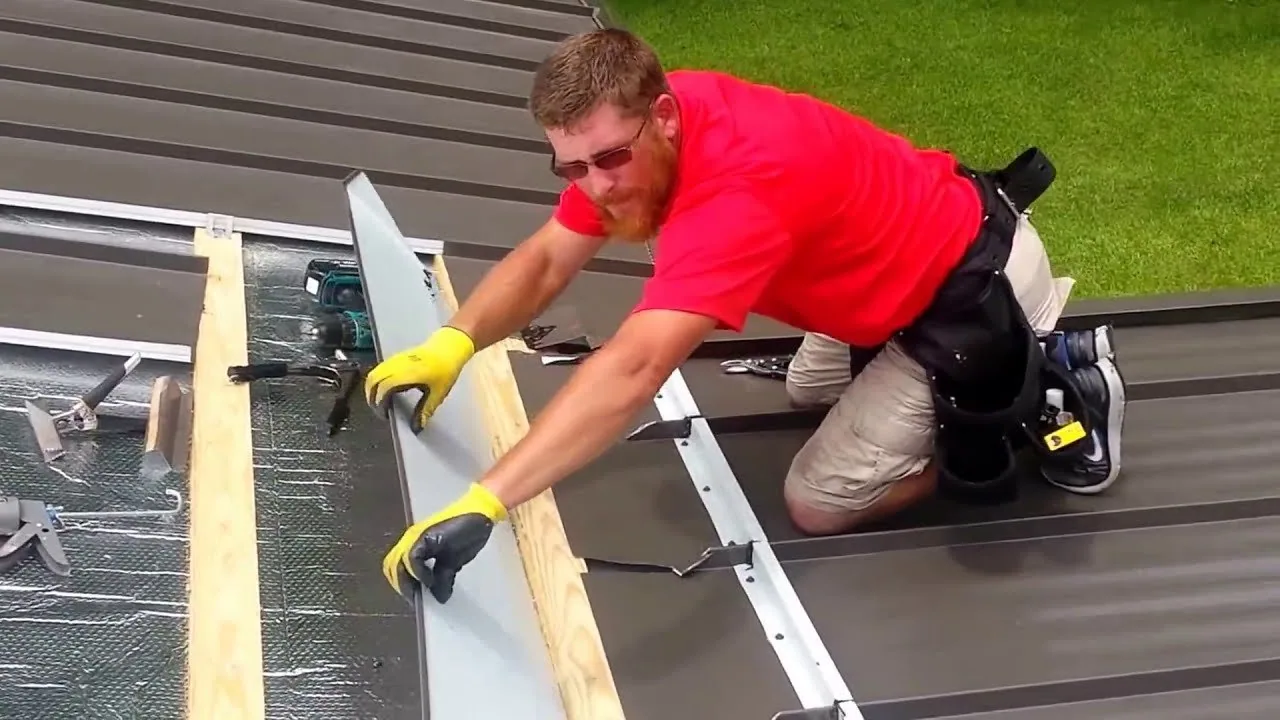
Victorville’s code page lists wind design values from 100 to 115 miles per hour depending on occupancy and exposure. Those are code design references, not a finding about existing TPO attachment or a retrofit requirement. At the Bear Valley Road and I-15 commercial focus area, the city identifies regional and local commercial uses; the roof details still need an individual inspection. A perimeter metal review can document the edge conditions that meet the membrane.
Heat and drainage: evaluate the full field
Repeated heat exposure can make surface condition, seam movement, and repair history important parts of a TPO review. Over the George AFB/Victorville station’s historical period, the tally averaged 23 calendar days annually reaching 100°F or hotter. We use that as climate context only. A weather record cannot describe a membrane’s installation, maintenance, or current serviceability. The field report describes what is visible and where more testing or removal would be needed.
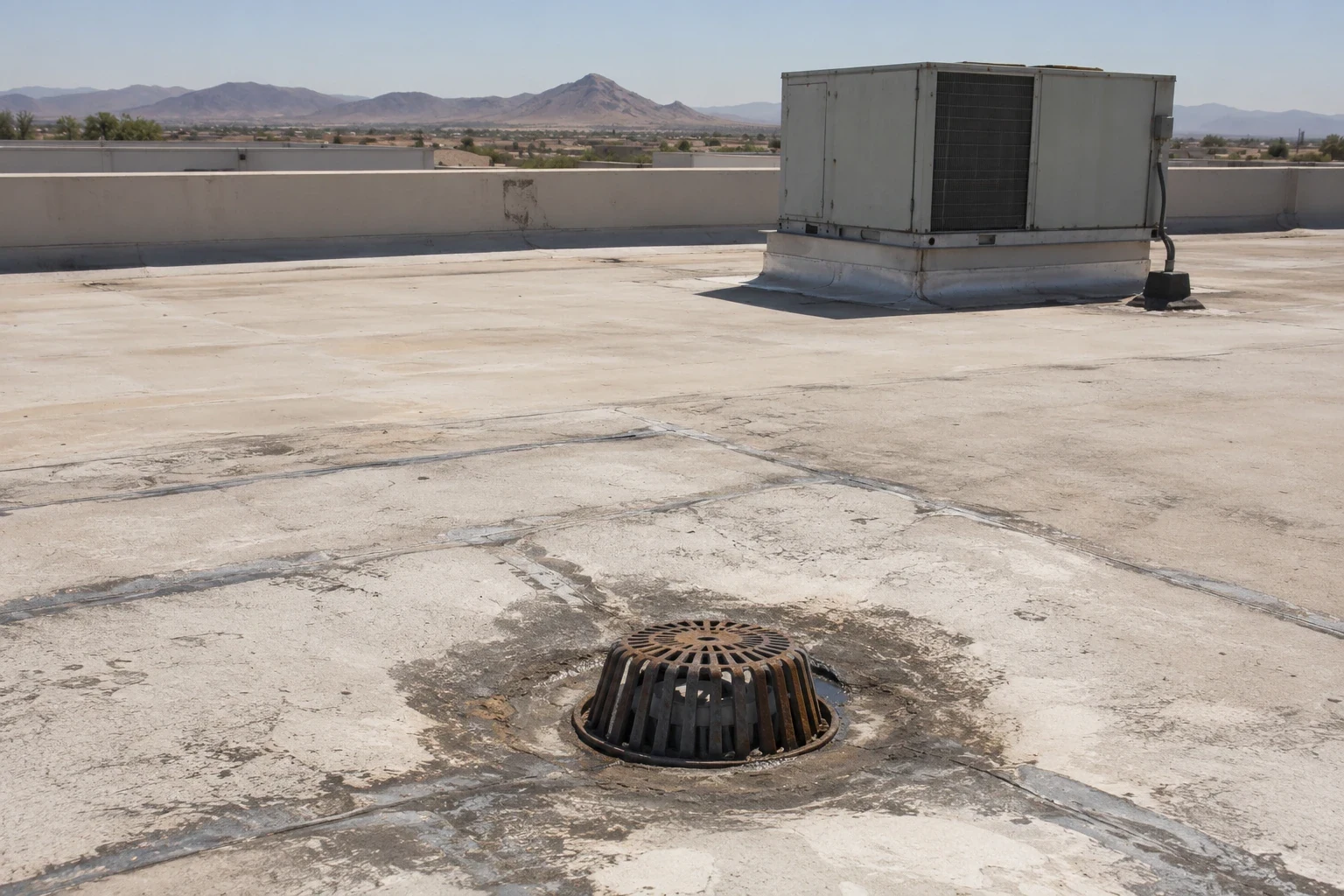
Drainage can reveal another part of the assembly’s condition. Victorville’s code schedule uses a rainfall input of 2.5 inches per hour when sizing roof drains, a design value rather than proof of existing performance. We check drain bowls, scuppers, overflow paths, and low areas that may hold water against seams or repairs. The drain and scupper service can address a separate outlet concern. Old Town Victorville’s plan combines retail and service designations with light-industrial, residential, and open-space categories; that mix is not evidence about an individual roof system.
Repair options: keep the scope tied to evidence
A localized puncture or isolated weld issue may be repairable when surrounding material is sound and dry. We mark the defect, inspect its perimeter, remove only what the approved scope requires, and document the patch after installation. If water has reached insulation or the deck, the repair boundary may need to widen. The proposal should state whether testing, removal, insulation replacement, or deck repair is included, and what concealed condition requires another approval.
When deterioration is widespread, recover or replacement may make more sense than repeating local patches. The decision depends on roof condition, existing layers, attachment, drainage, curb heights, and the operating schedule. A recover scope checks whether another roof layer is an eligible path, while replacement planning addresses removal and new assembly details. Neither option should be selected from a membrane label alone.
Work sequence: coordinate access and protection
Before TPO work, the facility contact confirms roof access, staging, active units, tenant areas, and any route that must remain clear. The crew protects drains and adjacent finished areas, prepares the repair zone, and keeps temporary weather protection available where membrane is removed. A roof with active operations may need a defined access window or a phased replacement, particularly when work passes over occupied suites or loading activity.
Victorville’s approved industrial plans include sites north of Mojave Drive and east of U.S. 395, but those approvals do not describe completed building inventory or a specific roof. The facility contact supplies delivery timing, gate rules, and staging instructions for the actual property. For occupied properties, the reroof sequence can set daily zones and closeout expectations. We record each completed weld area and note any restriction before the crew leaves.
Closeout: label each TPO repair
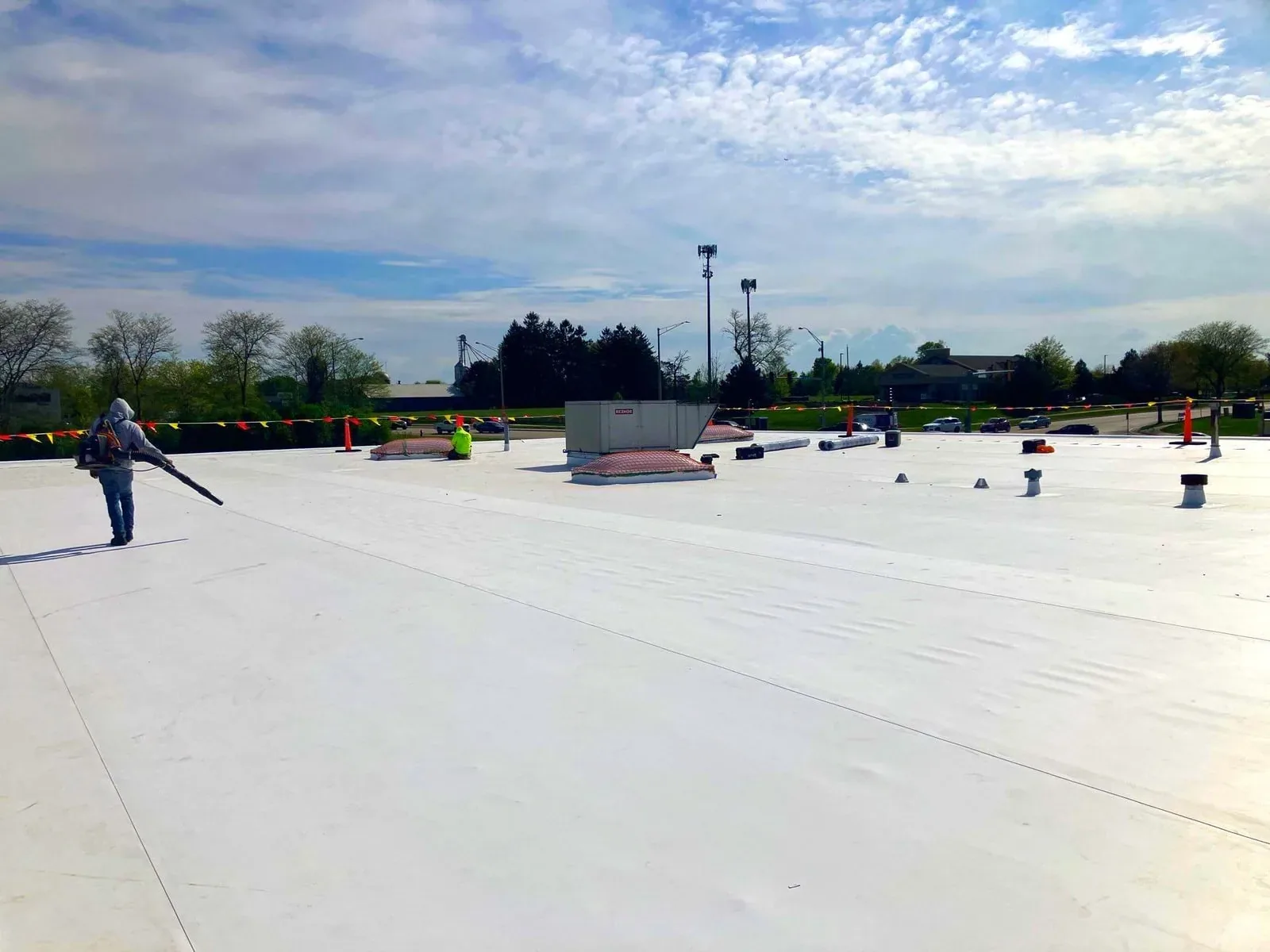
Closeout photographs show the repaired seam or penetration, adjacent membrane, roof-zone label, and nearby drainage path. The notes identify materials used, work included, excluded areas, and any follow-up item. If a leak remains unresolved because its source is concealed or outside the repair boundary, the report states that limit and proposes a next inspection step. This gives the facility contact a record for maintenance instead of an unlabeled patch image.
A planned review can compare the same seam, edge, and drain at a later visit. The city’s economic materials identify manufacturing and logistics among its development context, but the owner’s specific roof traffic, service schedule, and equipment changes govern maintenance. A roof condition report can support a repair-versus-replacement decision, while PVC roof assembly review and an EPDM system comparison can help when a different membrane is under consideration. Call with the roof age if known, leak location, and access contact.
Commercial Roofing Questions
Can a split TPO seam be repaired?
We inspect the seam and surrounding sheet, then check whether sound membrane remains for a compatible weld or patch. A repair is appropriate only when the substrate and nearby assembly support it; widespread deterioration may require a larger scope.
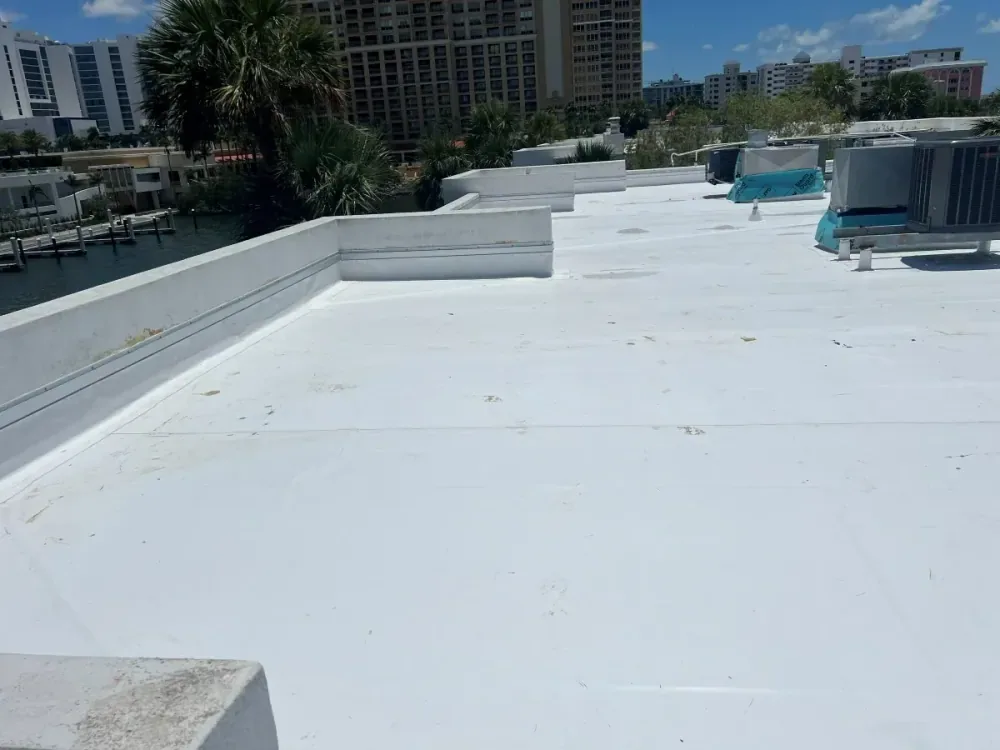
Does a white TPO surface prove the roof is in good condition?
No. Color does not show seam integrity, attachment, insulation moisture, flashing quality, or drainage. We review those details by roof zone and record areas that need testing or a separate design review.
Can you confirm concealed TPO fasteners?
A surface inspection can identify visible clues but cannot confirm concealed fastening. We compare accessible edge details with available records and state when removal or professional design review is needed.
When is replacement better than patching TPO?
The extent of seam failure, membrane condition, moisture, existing layers, and repair history guide that decision. We document the observed areas and compare a limited repair with recover or replacement options in separate scopes.
What records should we keep after a TPO repair?
Keep dated roof-zone photographs, the repair location, materials used, work boundary, access limits, and any remaining item. Those details help a later inspection compare the same seam and surrounding assembly.