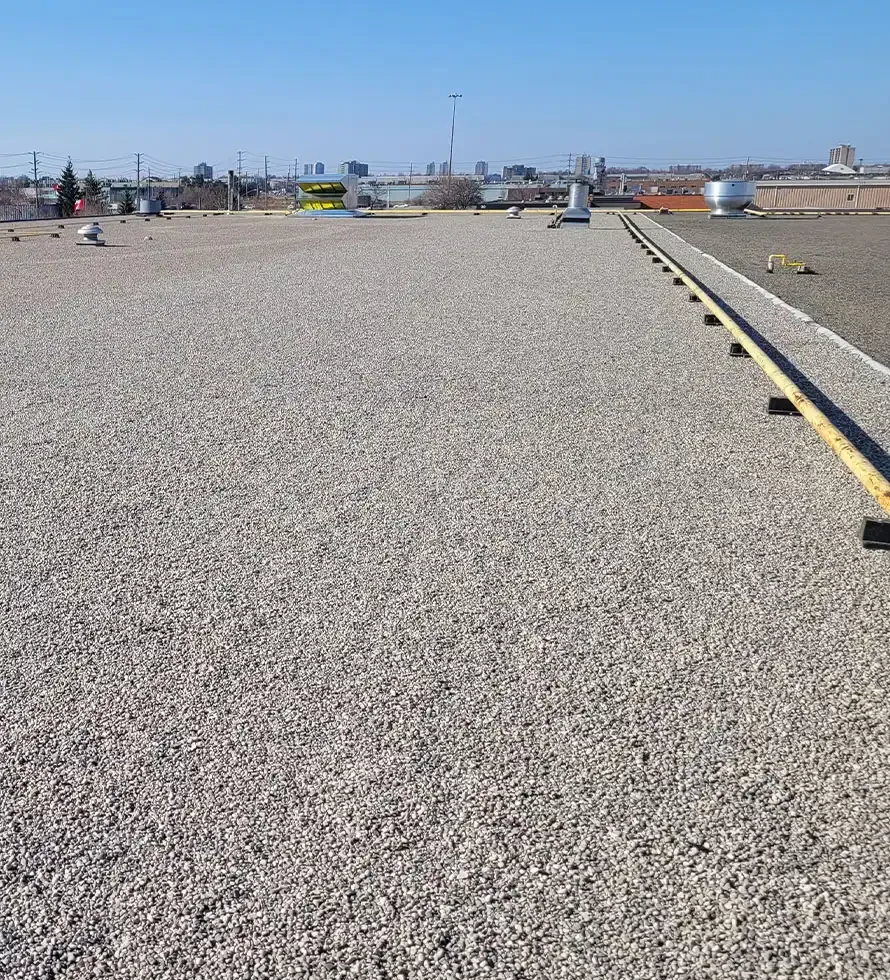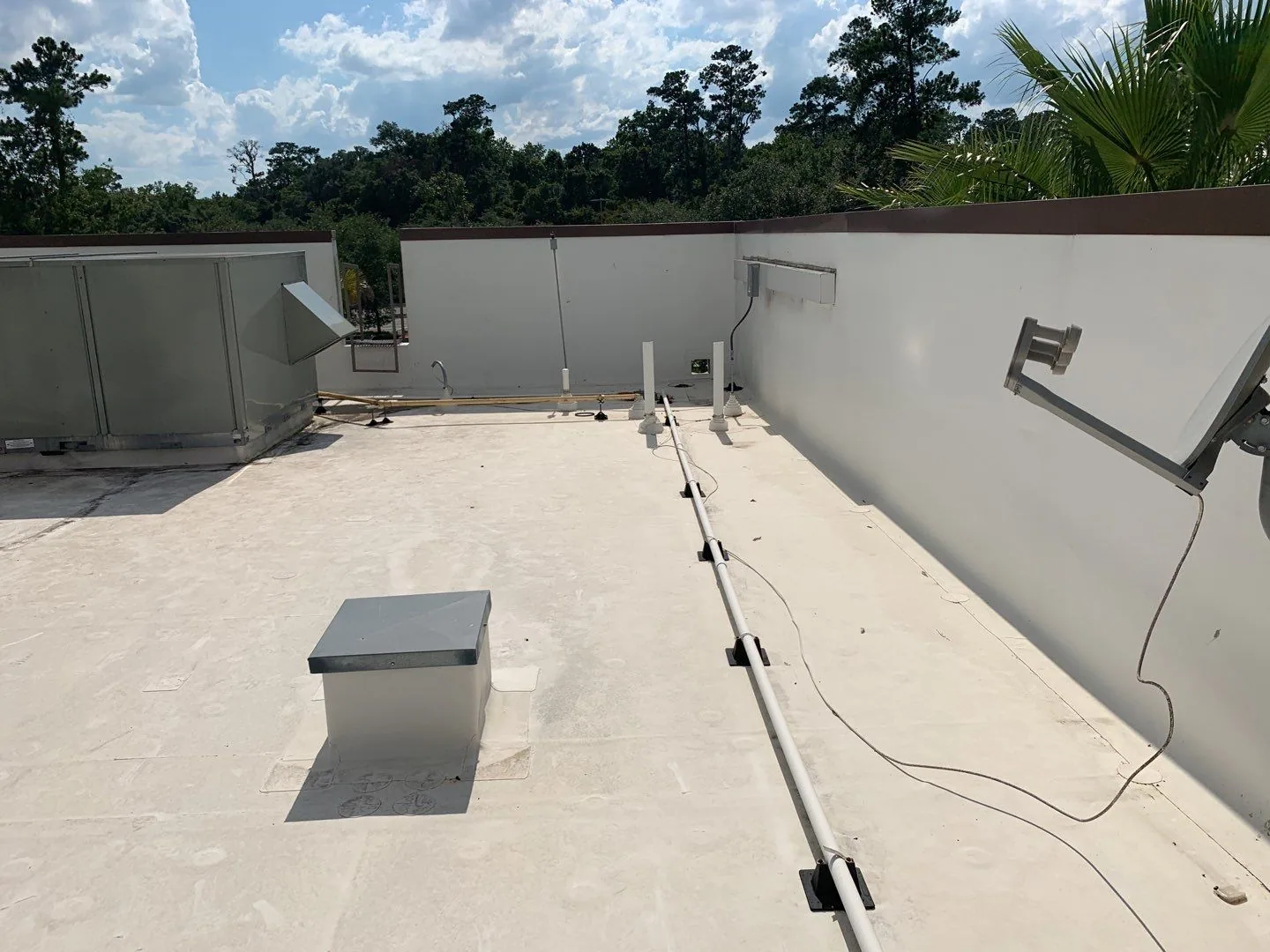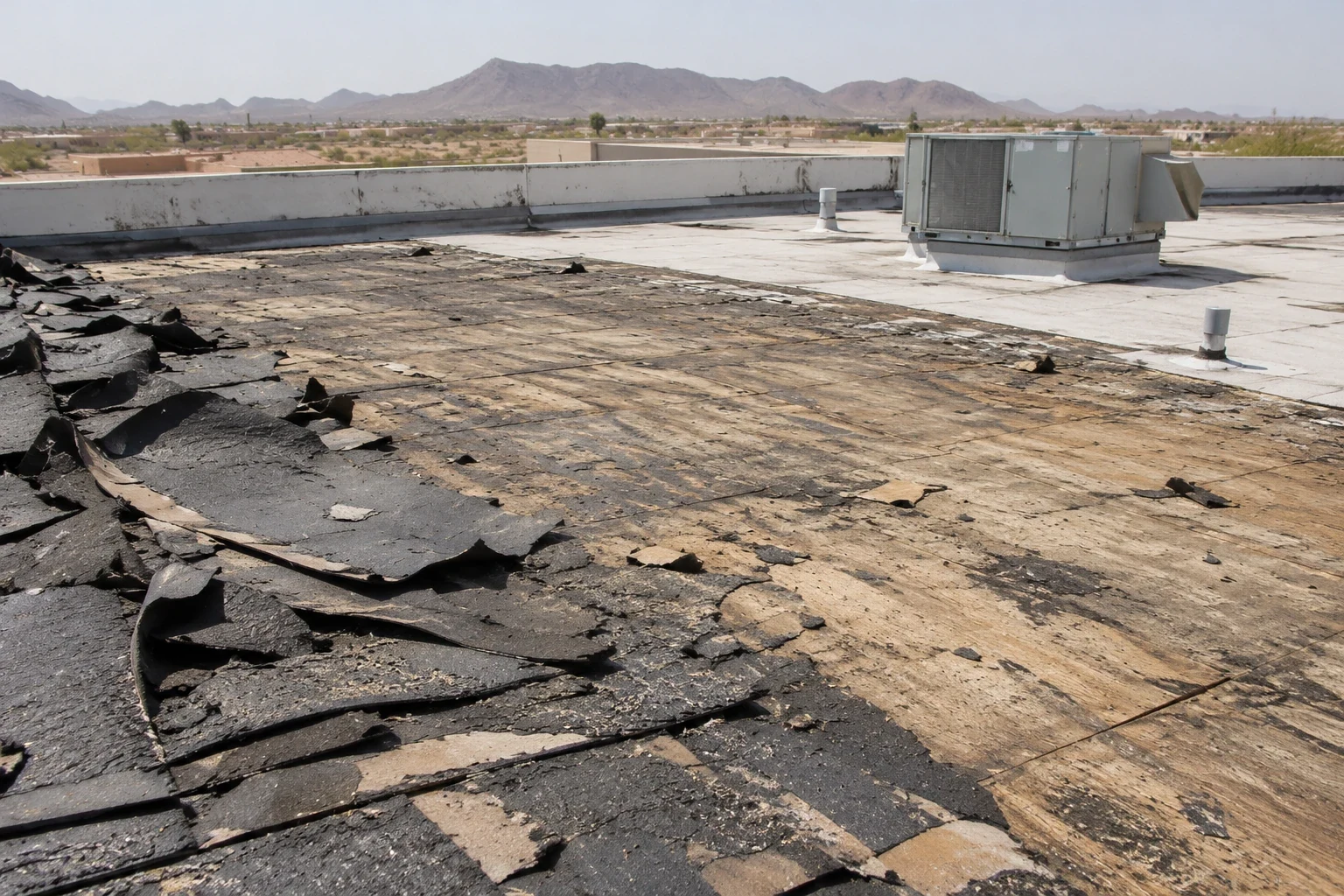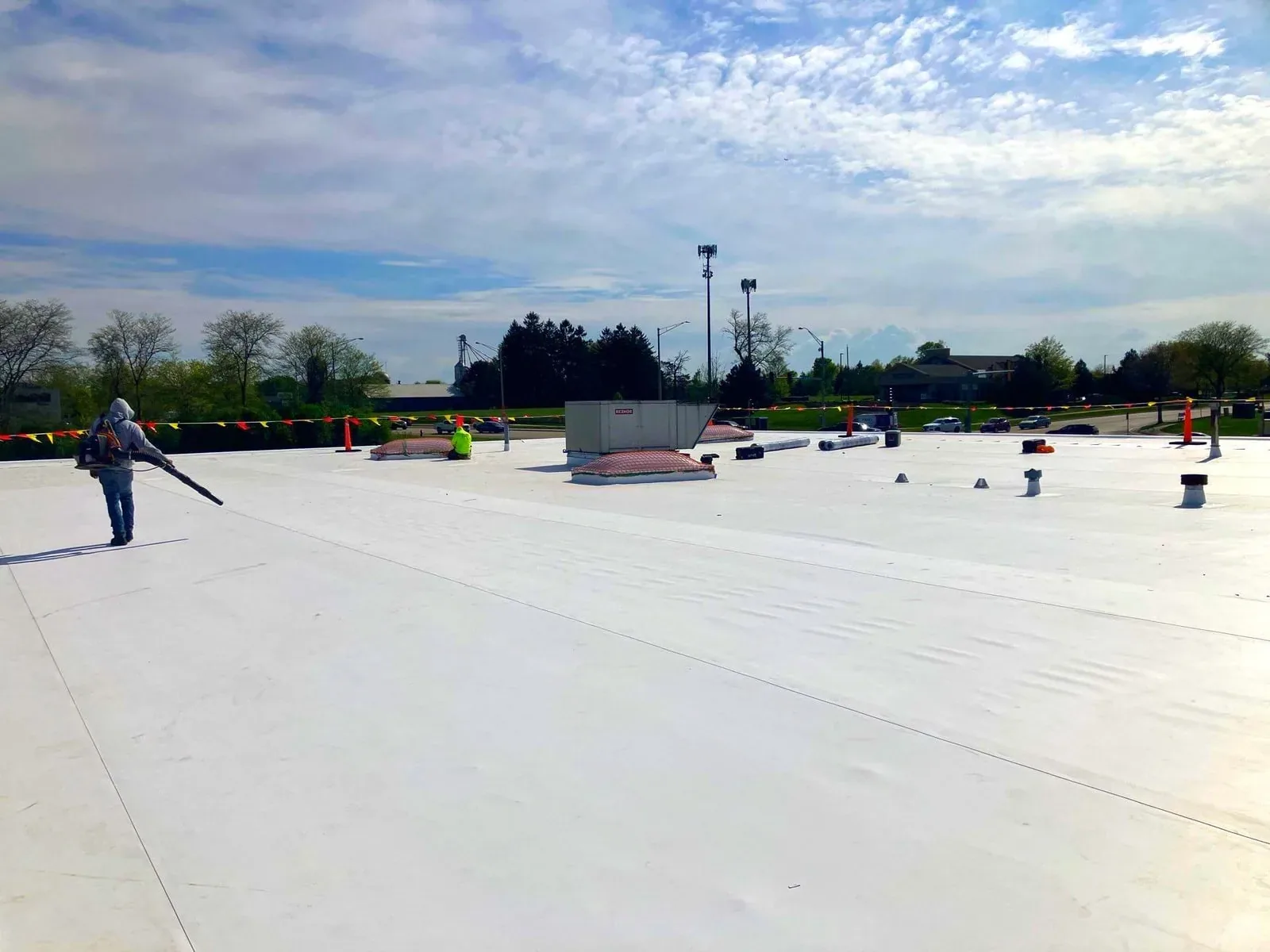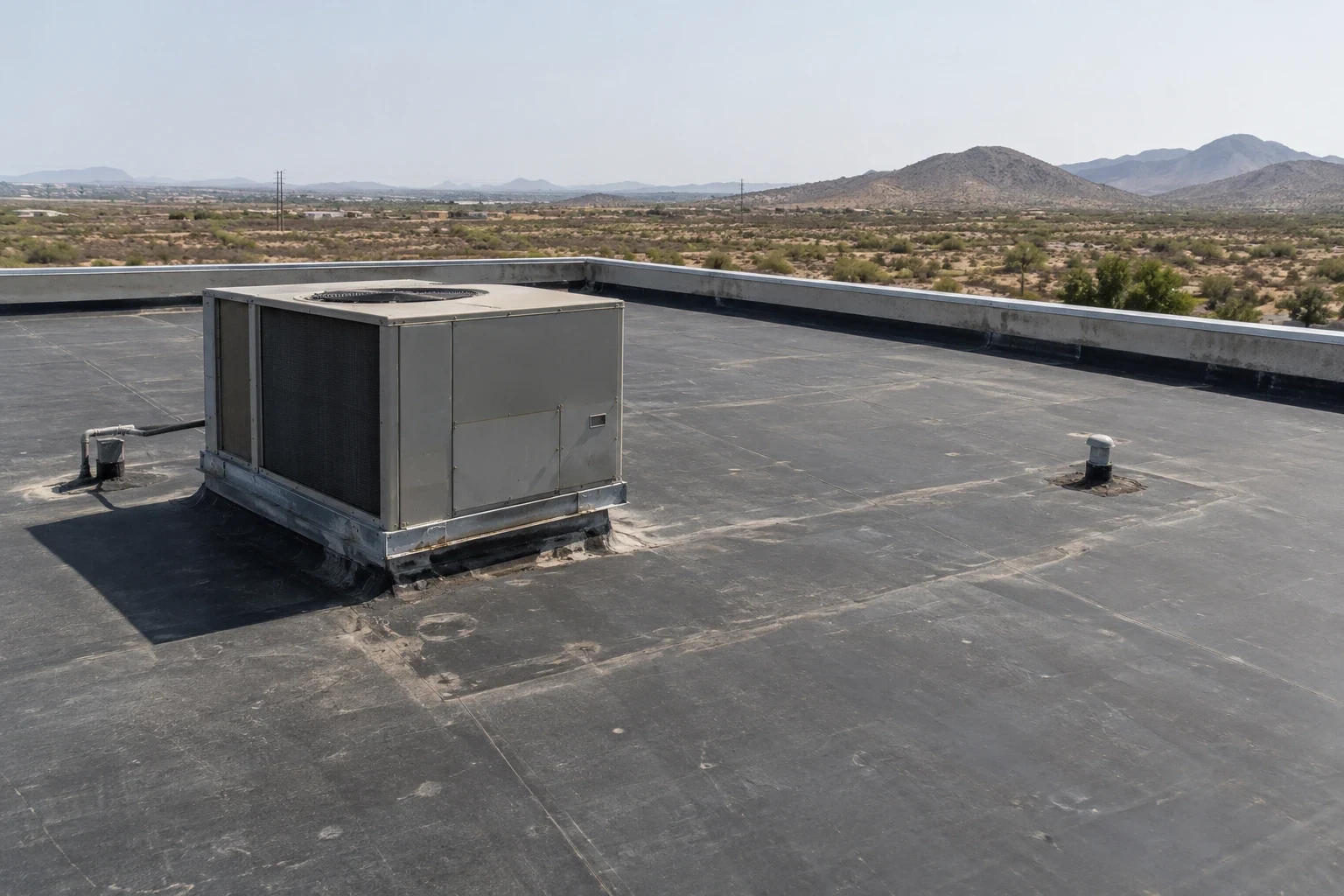
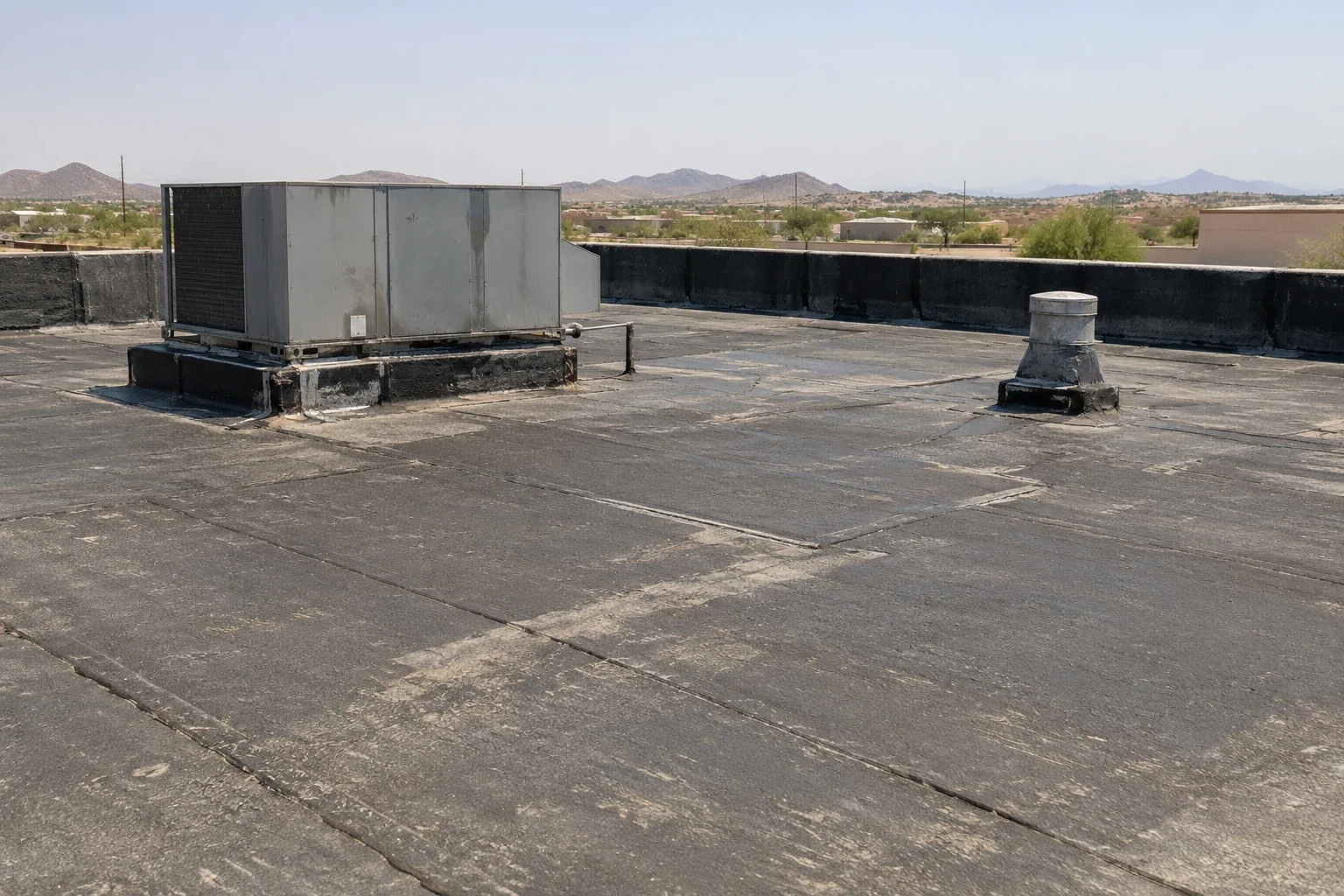
A blister beside a rooftop unit can make a modified bitumen roof look like one repair, but the first call starts with the roof zone and the water path. In Victorville, the facility contact can identify where the stain appeared, what runs below it, and when the roof can be accessed. We inspect the cap sheet, lap, curb flashing, and nearest drain, then photograph both the detail and its location in the roof plan. The scope can separate an isolated opening from a seam or substrate condition that changes the repair boundary. If water is active, we first plan temporary protection, then return to permanent work after the affected layers are understood.
Modified bitumen is a reinforced asphalt membrane supplied in rolls, often used as a multi-ply assembly. Application may use heat, cold adhesive, or another specified method, with fire and site controls set before work begins. Existing plies, insulation, deck, penetrations, and drainage determine whether repair, recover, or removal fits. A built-up roof comparison helps when an older assembly has several plies and the owner is considering a different restoration path.
Read the seam before choosing a repair
A lifted lap needs a different correction from a field crack or a puncture made during equipment service. We check whether the surface is dry enough to inspect, whether surfacing has moved, and whether the seam has opened beyond the visible point. The repair record names the roof zone, nearby details, and the boundary that can be closed that shift. That boundary matters because an unfinished end-of-day tie-in can admit water even after the damaged spot itself has been patched.
A cap-sheet defect may sit above wet insulation or a failed base ply. Infrared or other moisture surveying can guide selective openings, but the material at the opening is verified rather than treating a scan as a final diagnosis. Photos tie each observation to a roof zone. If damage is isolated, a commercial roof repair scope can define the patch and follow-up. If several areas show moisture, compare selective repair with a replacement plan that states removal depth and deck review.
Layers, deck, and edge conditions
Modified bitumen may be built as multiple reinforcing plies or as a cap sheet over compatible base layers. At a curb, the upturn, corner reinforcement, termination, and counterflashing work together. At a drain, the membrane needs a secure connection to the outlet. We inspect each transition separately and record which layer is exposed before selecting the repair method. A coating or patch that looks continuous from the roof entrance may still leave a weak termination at the parapet.
Victorville code information includes climate zone 14 and local references for wind, snow, and drain sizing. These are design inputs, not findings about an individual roof. For replacement, project review establishes the applicable criteria. Existing edge metal, parapets, and deck attachment also shape the work. Where repeated leaks occur at several details, compare TPO membrane roofing and EPDM roofing with compatibility, drainage, and future access in view.
Set an occupied-building sequence
Before removal begins, the crew and facility contact agree on a roof zone, access window, staging area, and interior-protection contact. Hot work, adhesives, odors, noise, and equipment lifts need to fit the building use and specified application method. We identify ignition controls when required, note who can approve concealed-deck repairs, and show how each day's work will tie into the remaining roof. A phased reroof plan can keep unrelated zones closed while tenants and operations continue below.
A recover is considered only when existing layers are dry, secure, compatible, and allowed by project requirements. Extra height can change edge metal, curb flashing, and drainage. If openings find saturated insulation or a weak deck, leaving those layers in place can carry the problem forward. We state what has been verified and identify conditions that could change quantities. The owner then compares a defined repair, a limited recover, and selective or full removal instead of approving a surface-only fix.
Heat and logistics affect timing
The historical Victorville weather-station record shows high summer mean maxima during its observation period. That is climate context, not a forecast for a work date. Surface temperature, crew exposure, and product limits still control the application window. We protect rolls and adhesives, check current conditions, and size each open work zone so a tie-in can be completed safely. If heat changes the schedule, the facility contact receives a revised access window and a clear note about which area can be closed that shift.
Industrial development is planned at Foxborough Industrial Park and on land east of U.S. 395 north of Mojave Drive; Bear Valley Road and I-15 also serve commercial uses. Those settings can affect deliveries and site access, but they do not tell us any building's assembly. We confirm the loading route and staging rules. A Victorville commercial roof review starts with the leak history, prior repairs, and access contact; those details let the crew set a workable inspection route.
Keep the scope tied to what was opened
A useful modified bitumen scope identifies the roof zone, removal depth, deck findings, replacement plies, flashing transitions, surfacing, drain work, and temporary tie-in. It separates base work from concealed-deck allowances so a director can approve a change when removal exposes deterioration. The record should show a close view of each seam and a wider photo that locates it in the roof plan. Warranty terms belong to the selected product and project documents, not a promise made from a surface inspection.
When roof areas have different ages or repair histories, one all-or-nothing recommendation may obscure where water enters and which work can wait. We mark active leaks separately from items to monitor. A roof condition report can connect photos, repairs, and next actions for budgeting. If asphalt plies are not a fit, compare PVC membrane options alongside drain, edge, and equipment details before setting the replacement scope.
Tie the test opening to the repair plan
During the survey, we record each test opening with the material found, moisture condition, and nearby roof detail. The photo set should include the opening before repair, the surrounding lap or flashing, and a wider view that fixes the location. That lets the owner compare a small patch with the area where a broader replacement may be justified. If access is limited, the report names the zone not inspected rather than implying the unseen assembly is sound.
The Old Town Victorville plan separates mixed retail and service overlays from light-industrial parcels, residences, and open-space designations. Those uses sit within a changing city, but the roof still has to be checked at the property. A building near I-15 may have different access and staging constraints from a smaller service property, while both need a documented drain route. We carry those facts into the work sequence only after the facility contact confirms delivery, tenant, and roof-access conditions. The resulting scope separates an observed condition from an assumption, and gives the next visit a clear starting point.
Commercial Roofing Questions
Can modified bitumen be patched without replacing the whole roof?
Yes, when the defect is isolated, surrounding plies are sound and dry, and the patch can tie into compatible material. We inspect past the stain, check nearby laps and flashings, and record the repair boundary before pricing it.
How does summer heat affect this work in Victorville?
Heat affects crew exposure, surface condition, and application limits. We check current conditions, protect stored material, and set a daily roof zone that can be closed safely.
When could a recover make sense?
A recover may fit when the existing assembly is dry, secure, compatible, and allowed by project requirements. Added height and hidden moisture can change flashing and drainage, so inspection and design review guide the decision.
What belongs in a replacement scope?
State the removal depth, deck review, ply assembly, flashing, drains, surfacing, and temporary tie-in. Identify concealed-condition allowances and show each roof zone in the photo set.