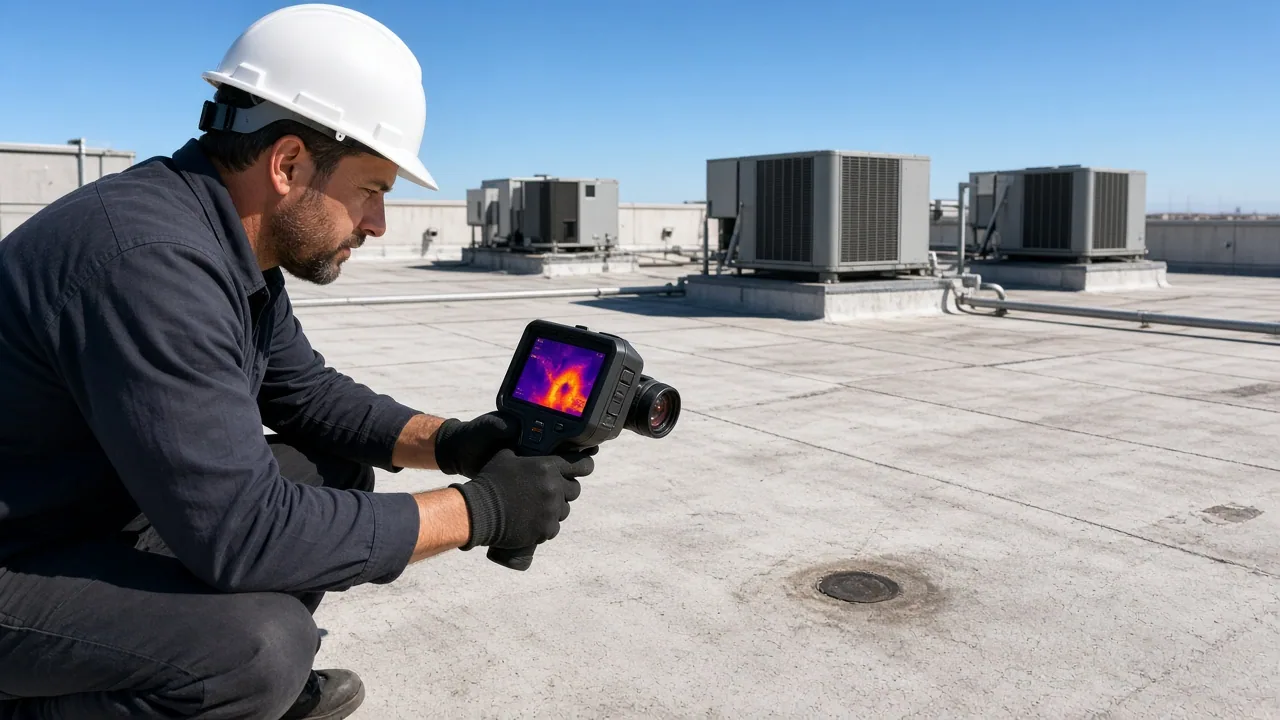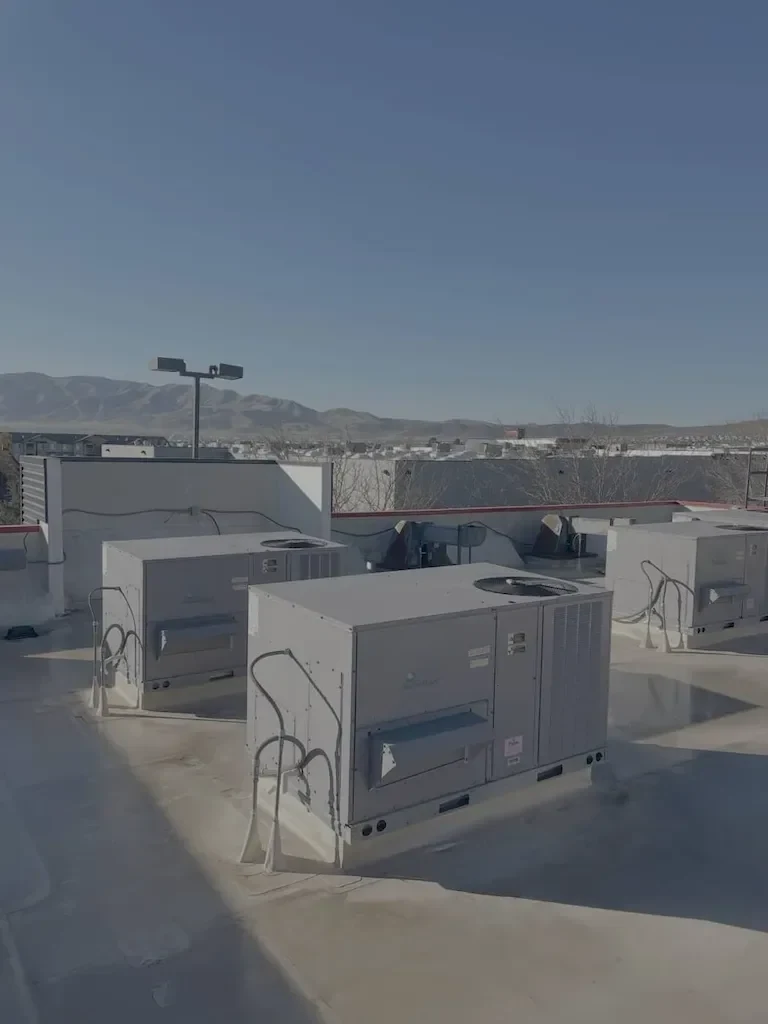
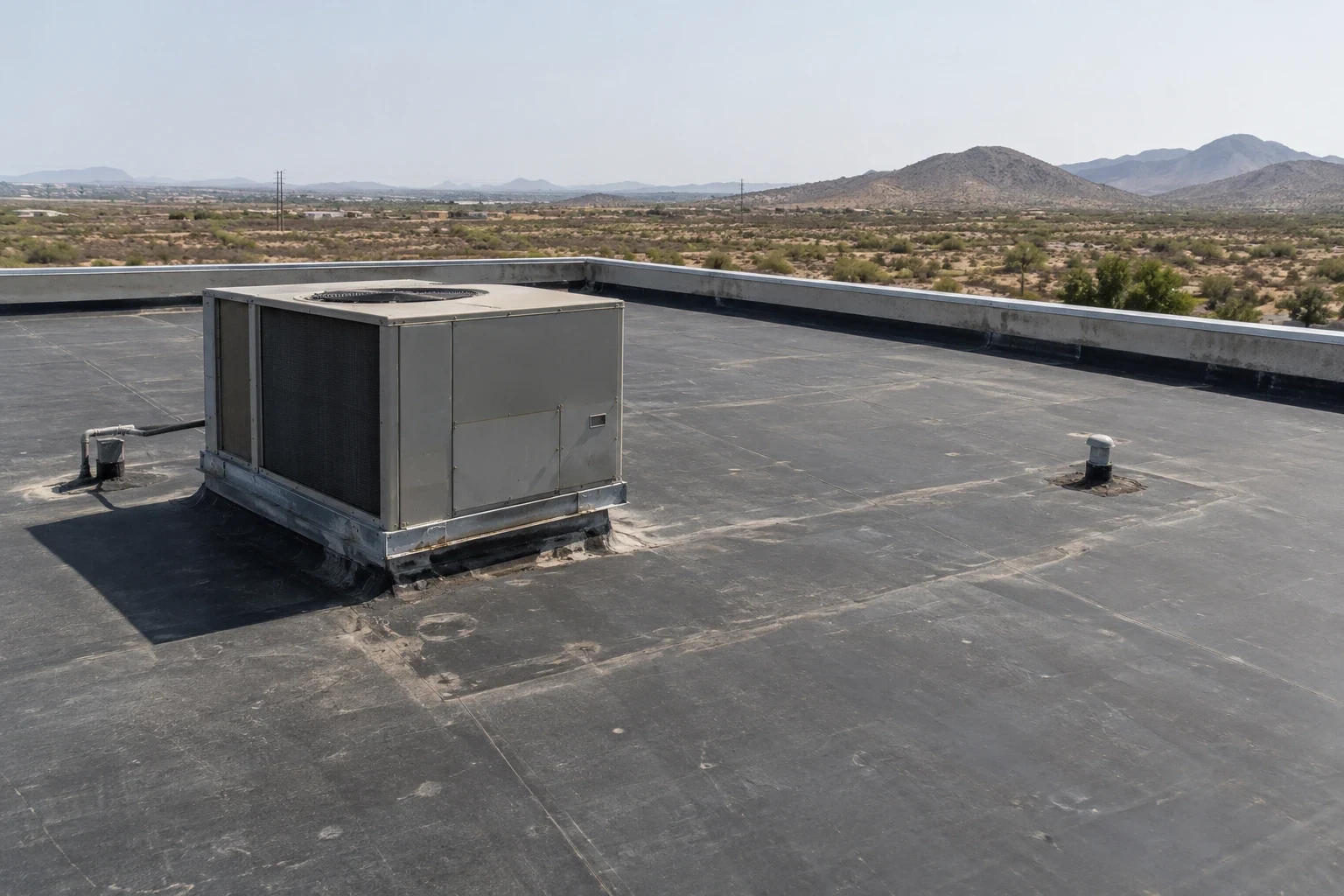
An EPDM roof can look uniform from the hatch while a repair edge or flashing has changed below a rooftop unit. The facility contact marks the reported roof zone and provides prior patch or maintenance notes. We inspect the sheet, seams, adhesive clues, edge restraint, and penetrations before describing a repair scope. In Victorville, a roof review also checks water movement and exposure around the details that see repeated heat and foot traffic.
Weather records for the George AFB/Victorville station average 23 days a year at 100°F or higher over the historical observation period. That is regional context, not a roof-condition verdict. A commercial roof inspection documents the actual EPDM assembly, repairs, and areas that need further investigation.
Sheet and seam: record the field condition
We look for open laps, wrinkles, punctures, fishmouths, surface wear, and repairs whose edges have started to lift. If the roof is ballasted, the inspection notes where material must be moved to expose a seam and who can authorize that handling. Adhesive attachment, mechanically fastened sheets, and protected systems leave different clues at transitions, but a visual visit cannot confirm every concealed detail. The field report identifies what was accessible and uses a marked photo to locate each observation.
EPDM seam repair depends on preparation and compatible materials. We clean the affected surface, remove loose or contaminated material as the selected repair system requires, and extend the patch onto sound membrane. The scope states whether a seam, puncture, or flashing transition is being repaired and where the work stops. A membrane puncture assessment may be appropriate when the opening is isolated; repeated lap separation calls for a wider review.
Edge and flashing: trace movement to the termination
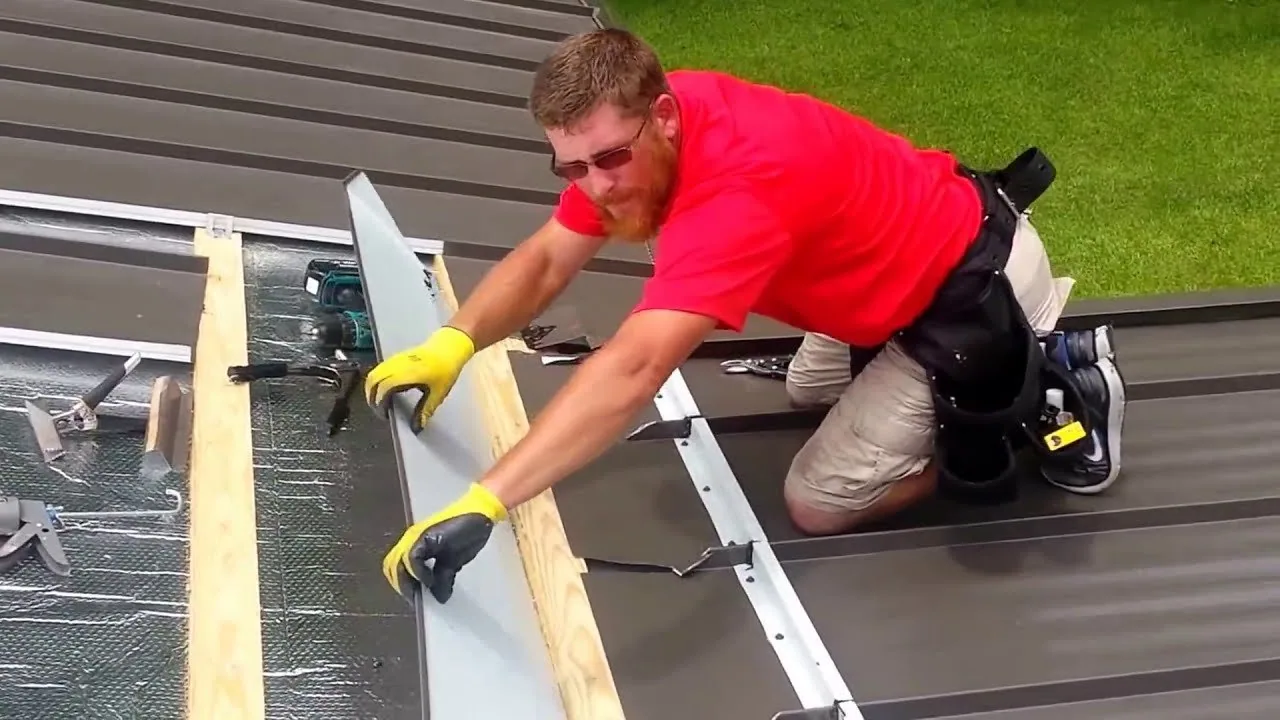
At a parapet, curb, pipe, skylight, or wall transition, we inspect the membrane turn-up, termination bar or metal, corner treatment, and exposed sealant. A failure at the termination can let water travel beneath the field sheet before it reaches the interior. The crew photographs each face and follows the probable path toward drains and adjacent seams. Where a metal edge has shifted or corroded, the roofer records that condition separately from membrane repair.
We compare loose edge conditions with available construction documents and identify whether a designer needs to review attachment or restraint. A visual inspection cannot answer a concealed fastening question. A coping and edge-metal review can document the termination, while curb flashing work addresses equipment bases that interrupt the EPDM field.
Drainage review: compare the seam with the water route
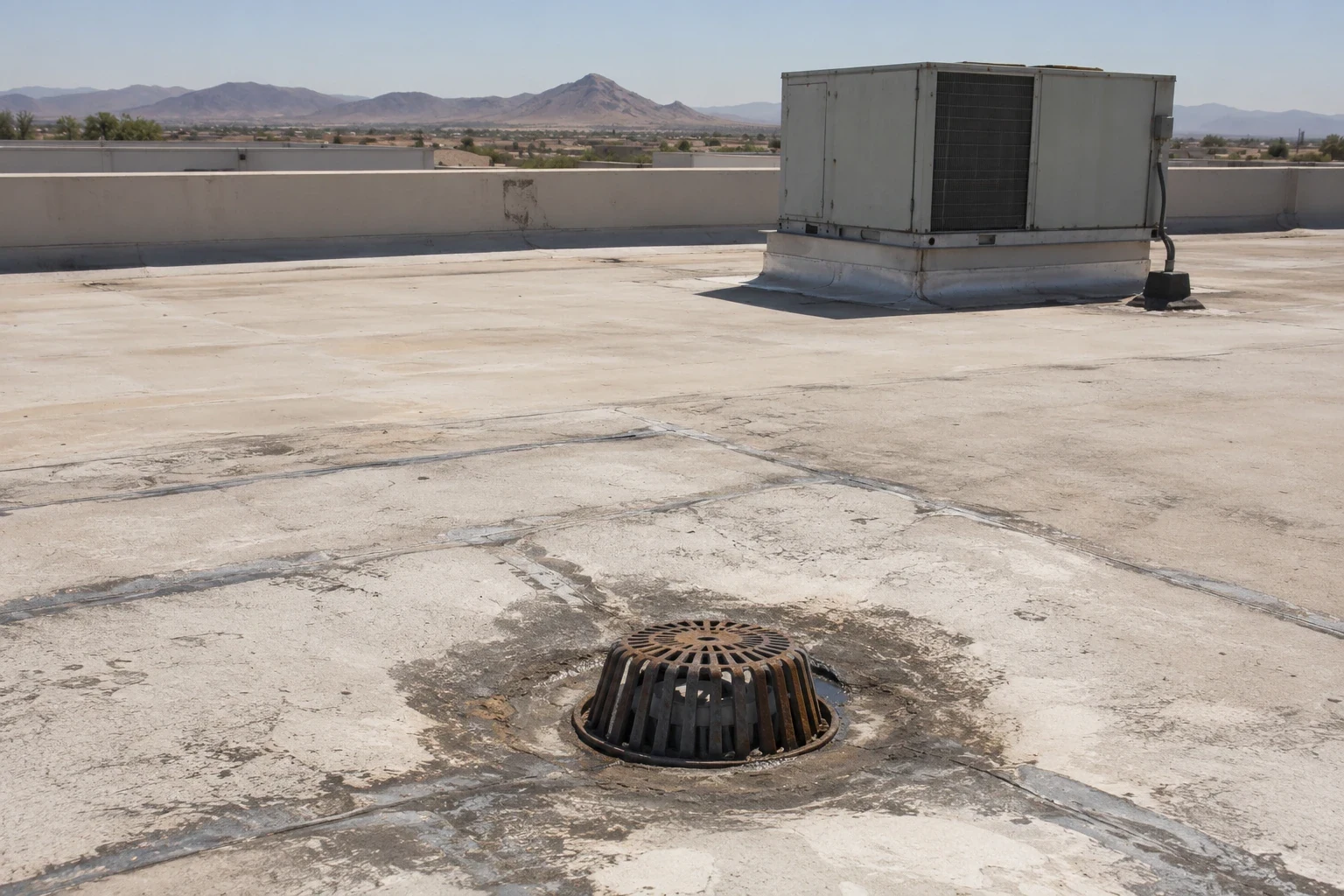
Where water collects, we record its visible limits, proximity to a drain, and relation to seams, patches, and penetrations. A roof can hold water because of debris, a low point, a blocked outlet, or a drainage design that needs a separate review. Victorville’s code material uses a 2.5-inch-per-hour rainfall input when sizing roof drains. That number does not measure the capacity of the EPDM system on site. We inspect accessible drain bowls and overflow paths before connecting a ponding observation to a repair.
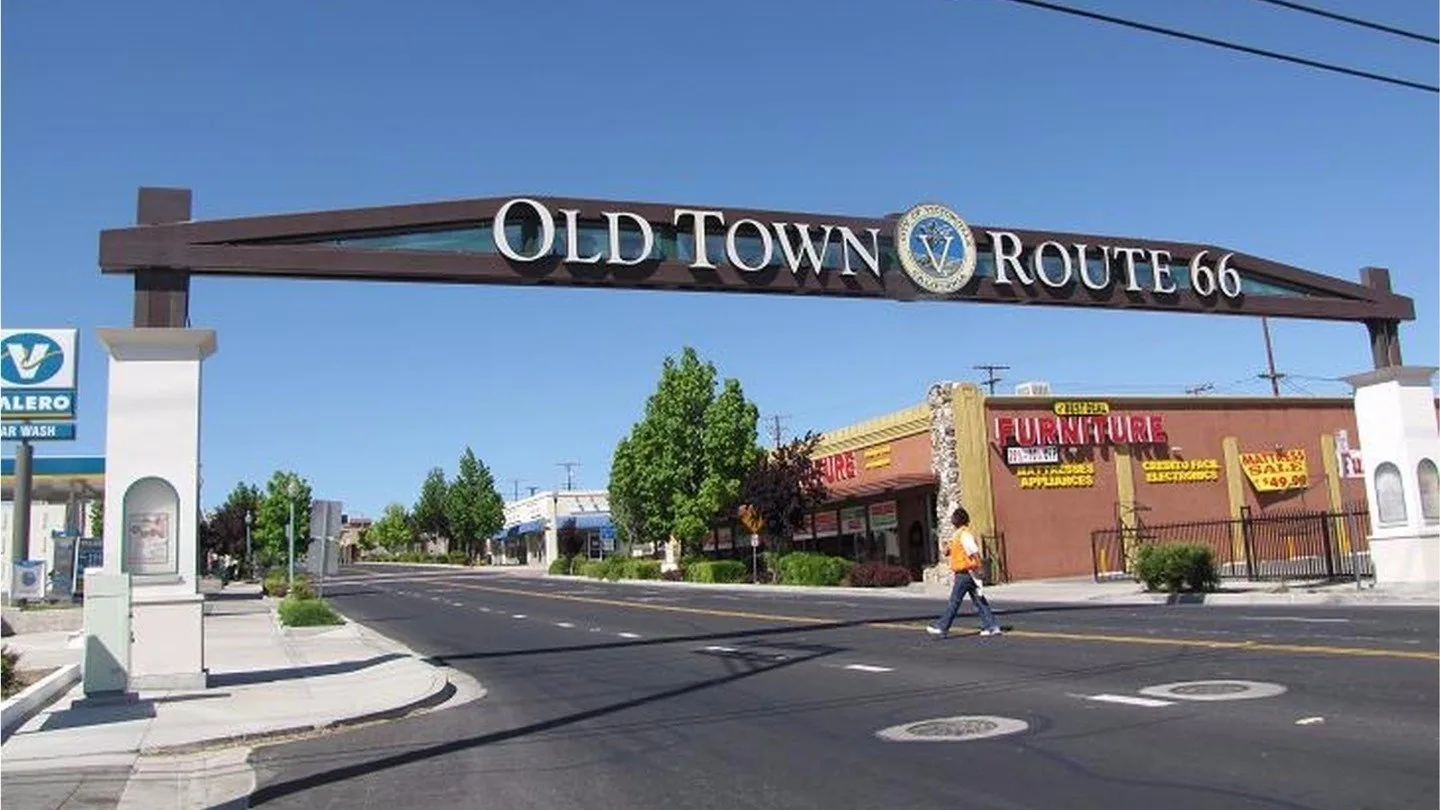
Old Town Victorville’s land-use plan pairs retail and service uses with light-industrial, residential, and open-space areas. That classification does not tell us a particular roof’s age or construction. We base the report on its visible seams and drainage path. The roof-drain review can clarify an outlet condition and be coordinated around the building’s own access route.
Insulation and options: set a repair boundary
A small leak may have spread below the membrane. We compare interior reports with roof-zone photos, check whether insulation feels or appears affected where access permits, and identify any testing needed before specifying removal. A surface patch over wet insulation can leave the cause unresolved. The written scope describes the opening, drying or replacement needs, cover board, and temporary protection so the property manager can approve the boundary before work begins. Where a test cut is proposed, the report marks the opening location, restoration detail, and the person who approves it.
If the EPDM field is broadly aged or repair history is extensive, the owner can compare recover and replacement options. That decision considers existing layers, attachment, drainage, curb height, and occupancy. A cover-board scope separates material replacement from membrane work. For a new assembly, replacement planning maps removal, deck review, and flashing sequencing rather than assuming one repair can serve every roof zone.
Service window: plan around the operation
The facility contact confirms the roof hatch, site escort, staging space, active units, and work hours before materials arrive. If the building has loading, shift change, or tenant activity, the crew sequences the roof zone to keep the agreed route clear. Work that removes ballast or exposes membrane needs a defined boundary and temporary protection for the rest of the shift. A changed forecast or access restriction can require a smaller area, so the closeout plan should account for the decision point.
Regional truck access and delivery timing need confirmation at the property gate. Bear Valley Road and I-15 contain commercial and regional-serving uses in the city land-use plan. At an operating property there, the actual site schedule determines how roof work is phased. An occupied-building sequence can coordinate tenant notices and daily tie-ins.
Closeout: preserve the EPDM repair record
Closeout includes dated photographs, the seam or flashing treated, materials used, work boundary, and any condition that remains unresolved. We identify inaccessible roof areas and note when another test, mechanical trade, or designer must answer the next question. The facility contact can compare later observations with the same roof-zone location. If the leak returns, the record helps focus the inspection on the repair edge, nearby penetrations, and the water route.
The City identifies industrial and logistics activity in Victorville’s economic-development context, but that does not say how any one building operates. The site team provides the schedule and access rules. A roof condition report can track repeat findings, while TPO roofing review and PVC system evaluation can help when an owner is comparing a replacement assembly. Keep the drain route and service access clear during future equipment visits. Call with the known EPDM type, repair history, and roof access contact.
The photo set should stay with the roof plan, warranty documents, and later mechanical work records for comparison.
Commercial Roofing Questions
Can an EPDM seam be patched?
We inspect the lap, adjacent sheet, and substrate condition, then select compatible preparation and repair materials. A patch may work when the surrounding membrane is sound; recurring separation or moisture below the sheet can require a wider scope.
How do you check for water below EPDM?
We compare interior reports with roof-zone observations and inspect accessible areas for signs of wet or displaced insulation. A surface review has limits, so testing or a controlled opening may be needed before removal is specified.
Does EPDM need ballast removed for inspection?
Some seam and attachment details may be concealed. We identify what must be moved to inspect the requested zone and coordinate authorization, handling, and replacement of ballast with the facility contact.
Can a coating restore an EPDM roof?
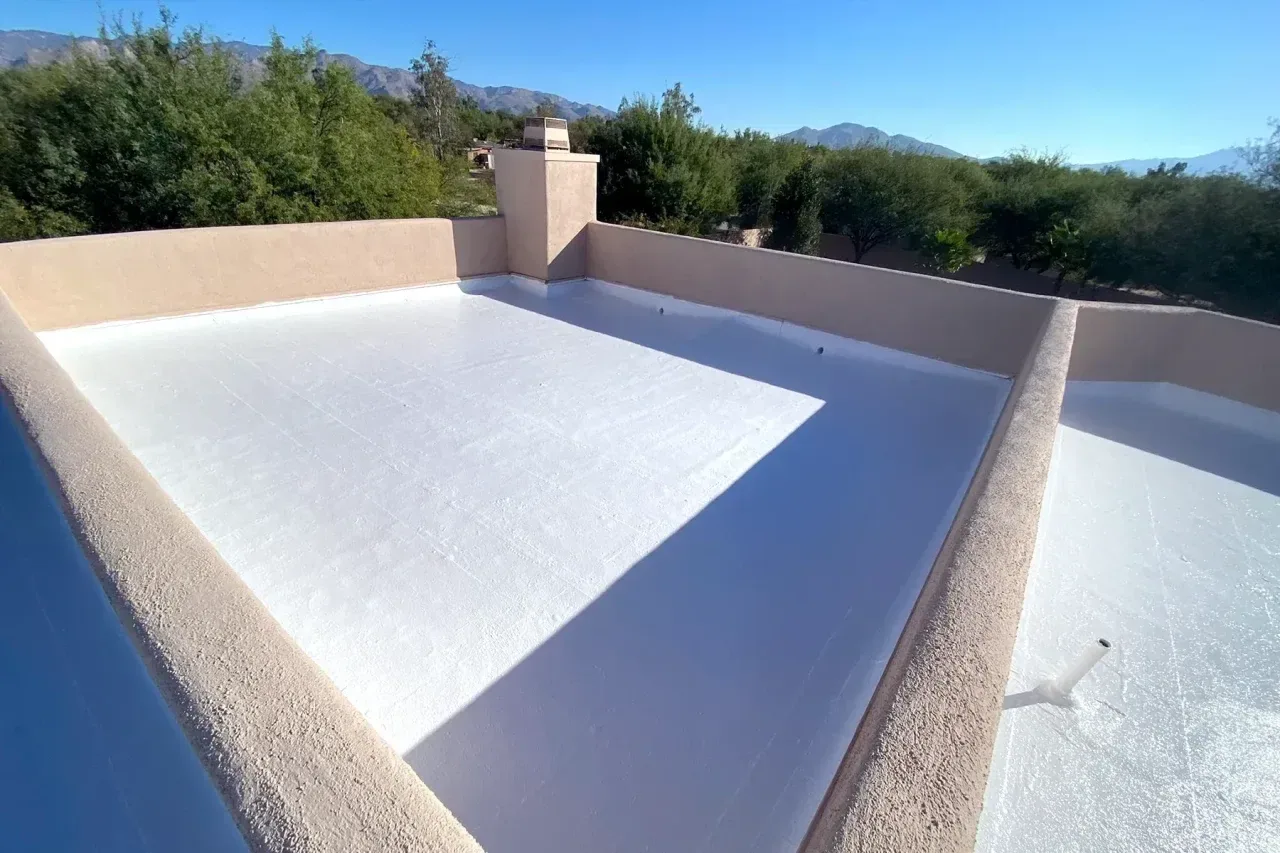
A coating is considered only when the membrane, repairs, and surface meet the selected system requirements. We inspect the substrate first and compare restoration with repair, recover, or replacement if seams or insulation have broader problems.
What does the city drain figure tell us about this roof?
It is a code design input, not a field test of existing drain capacity. We inspect the outlet and roof path, then flag any piping, slope, or design issue that requires separate confirmation.