A puncture beside an equipment route can be small at the surface and still admit water into a larger roof zone. We ask where the interior report appeared, what trade last crossed the area, and who can arrange access. In Victorville, the inspection marks the opening, nearby seams, penetrations, and the path people or equipment use across the roof. We do not widen the repair until the membrane and substrate indicate where sound material begins. The facility contact receives a photo set and a clear next step.
The city's economic-development materials identify manufacturing, logistics, industrial users, and distribution in Victorville's business mix. That context makes rooftop service paths worth confirming, but it does not prove traffic caused this puncture. We document the actual surface and activity at the property. A roof inspection can map adjacent damage when the opening is one part of a broader report.
Surface check: inspect more than the opening
We inspect the puncture edge, surrounding sheet, seams, repair patches, walk pads, curb bases, and any route to rooftop equipment. A sharp cut, crushed area, abrasion, or dropped tool can leave different edges. We photograph the defect with a scale and zone reference, then look for displaced material or scuffing that could point to a recent event. Nearby penetrations and metal transitions matter because water can enter at another detail and appear close to the puncture. The report separates what the surface shows from what needs an opening or test.
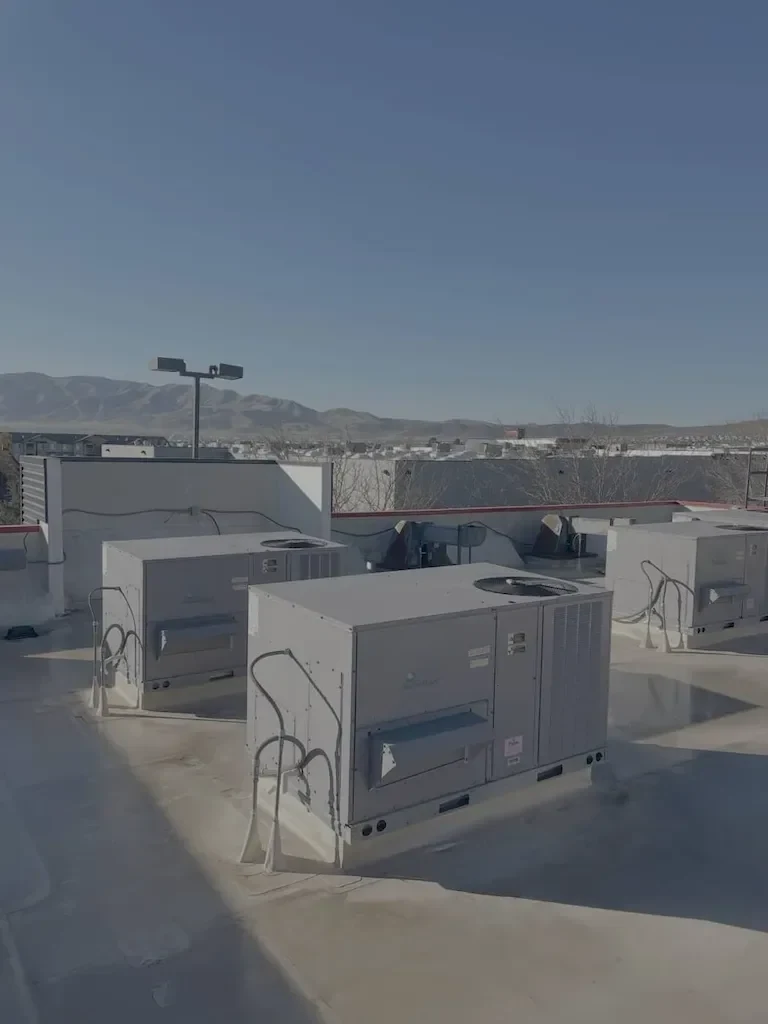
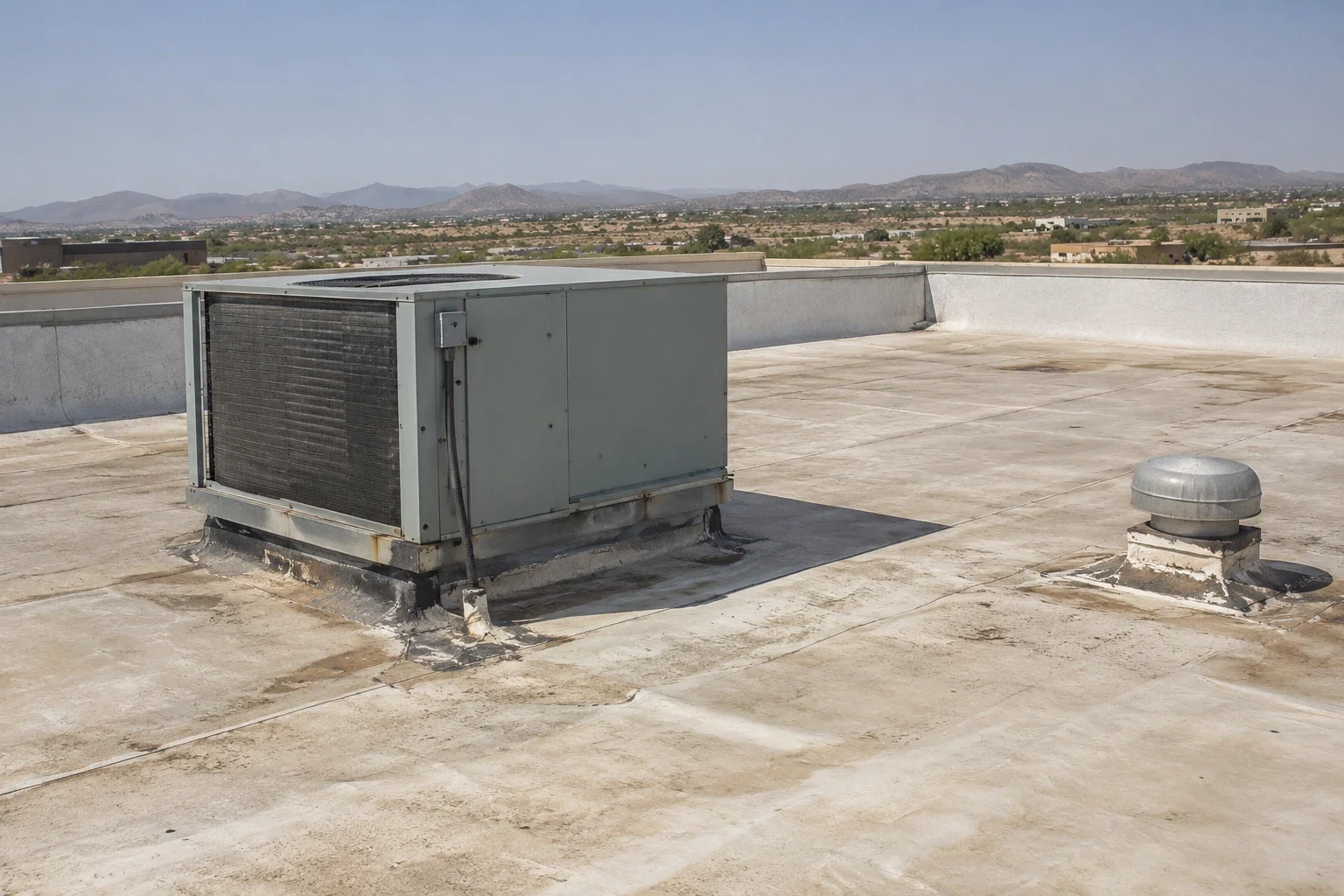
Victorville's U.S. 395 and Mojave Drive planning area includes approved industrial development, while the Bear Valley Road and I-15 focus area is identified for commercial and regional-serving uses. Neither plan tells us how often a particular building receives roof traffic. We ask the site contact where vendors travel and whether route markings or protection changed. A curb and equipment review can identify the route around units and supports.
Water route: check the material below the sheet
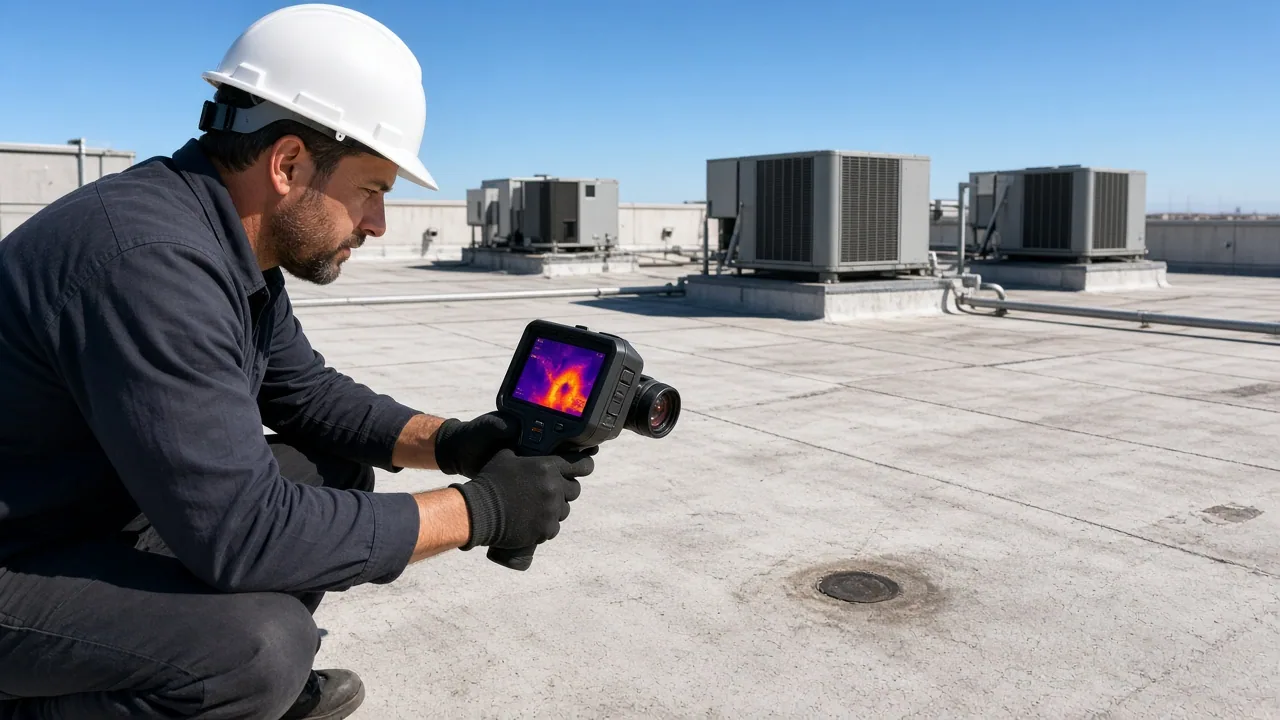
After locating the puncture, we follow the roof assembly to drains, seams, curbs, and the reported interior area. Water may move laterally along insulation or a deck before it becomes visible. The surface opening is documented, but a repair boundary depends on whether adjacent material remains dry and bonded. Infrared scanning, moisture testing, or a limited opening may help answer a concealed-condition question. The scope states the method and area; it does not treat a single surface photograph as proof of what lies beneath.
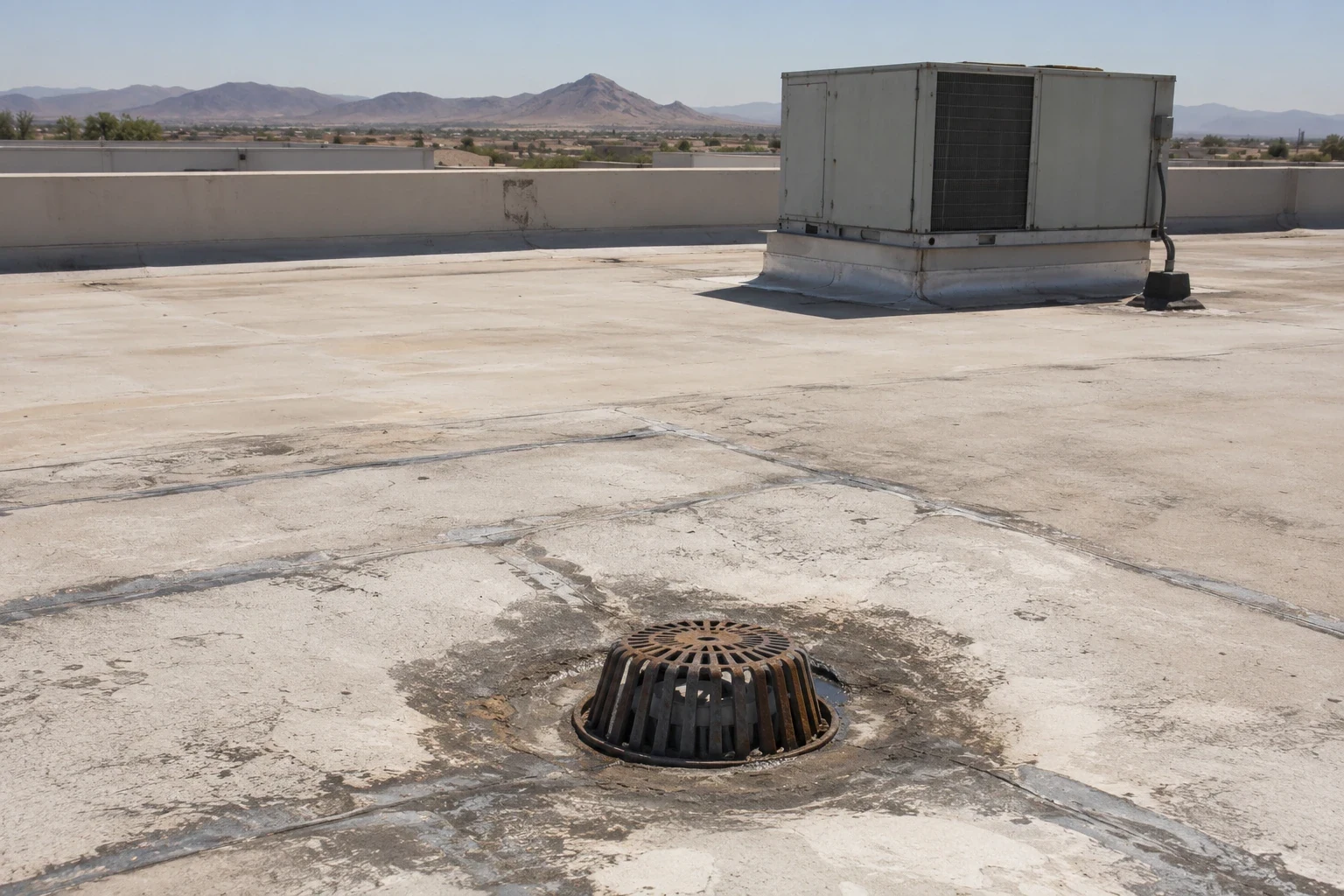
Victorville publishes a rainfall basis for roof-outlet design. That plan input is not a field record of water at this building, so we inspect the installed drain and its route. If an outlet or low spot is involved, drain work may be separate from the membrane patch. Testing can locate areas for further review when water entry is not confined to one visible point.
Material fit: match the patch to the roof
A repair has to bond to the existing membrane and the preparation has to suit that material. Thermoplastic systems use heat-welded patches, while EPDM repairs rely on compatible cleaning, primer, and splice materials. Modified bitumen and built-up roofing require separate reinforcement and surface preparation. We identify the sheet through records and field details where possible. If an unknown coating or old patch covers the area, we test or remove it as needed before installing a repair that can tie into sound roof.
The National Weather Service record at the George AFB/Victorville station lists an elevation of 2,873 feet. That station detail is not a roof measurement, but it reinforces why observations should be tied to the actual property rather than a regional assumption. We inspect membrane condition, attachment, and adjacent transitions. The selected repair has to suit the installed sheet; an unverified material name does not guide the scope.
Repair scope: close the hole and correct the route
For an isolated puncture, the work may include cleaning, cutting away loose material, drying the substrate, and extending a compatible patch beyond the damaged edge. If foot traffic caused repeated abrasion, the scope can add a walk pad or change the service route after the repair. Where insulation or deck material is wet, we document removal and replacement boundaries separately. We do not cover a soft or contaminated area and describe it as a complete repair. Each included task appears in the written scope with a location and photo reference.
Cost and timing depend on the membrane, patch size, access, moisture, roof traffic, equipment clearances, and protection for the occupied space. When there are several openings, a condition report can separate active defects from maintenance items. If damage extends across a roof zone, we document the limits and compare repair with a broader capital scope after field review.
Work window: protect occupants and equipment
We coordinate roof access with the facility contact, confirm the area below, and keep vendors away from an open or curing repair. Adhesives, heat, or material removal may require ventilation, a fire watch, equipment shutdown, or an alternate time. If the roof remains active, the route is marked and work is divided so a service team can reach equipment without crossing an unfinished tie-in. We leave a secure temporary condition if the repair cannot be closed before the shift ends.
Old Town Victorville's plan includes retail and service overlays, light-industrial parcels, residences, and open space. That variety does not define a particular property's hours. We confirm deliveries and suite activity with the building contact, then set the access window around the actual operation. If a repair is near an active tenant area, the facility contact can coordinate a safe release and communicate when the zone is ready for service traffic.
Closeout: keep the service route from reopening the defect
We photograph the finished patch, the membrane around it, and any route protection added to reduce repeat contact. The report records material, preparation, repair dimensions, and any condition left for monitoring or another trade. If equipment vendors need rooftop access, the facility contact should receive the updated path and identify who maintains protective pads. A future inspection can compare the puncture zone with the closeout image and determine whether abrasion or another opening has developed.
For commercial properties in Victorville and the northeast Victorville development area, each repair remains tied to a roof zone and real building access plan. If the opening began at a lap, seam repair may define adjacent work; flashing repair covers a different transition. Call with the puncture location, roof traffic details, and activity below. We can inspect the membrane, establish whether moisture needs review, and document a repair that accounts for the next service visit.
Commercial Roofing Questions
Can you patch a puncture made by a service trade?
Yes, if the surrounding membrane is sound and the selected patch can tie in correctly. We record the opening and adjacent conditions, then identify any insulation or deck work needed before closing the surface.
Do small holes always mean insulation is wet?
No. The surface opening confirms an entry point, not the condition below. We inspect the water route and use testing or a controlled opening when the repair decision depends on concealed moisture.
Can a walk pad prevent another puncture?
A properly selected path can reduce abrasion and concentrate foot traffic away from vulnerable sheet. We consider equipment access, drainage, membrane compatibility, and the actual service route before specifying protection.
How do you identify the existing membrane?
We review roof records, labels, seams, and accessible assembly details. If those clues do not establish the material, we state what remains unknown and test or open the area before choosing repair products.
What information should we share before the visit?
Identify the roof zone, interior area affected, recent vendor work, and access contact. A roof plan or service log can show which routes people use and help us coordinate a safe inspection.