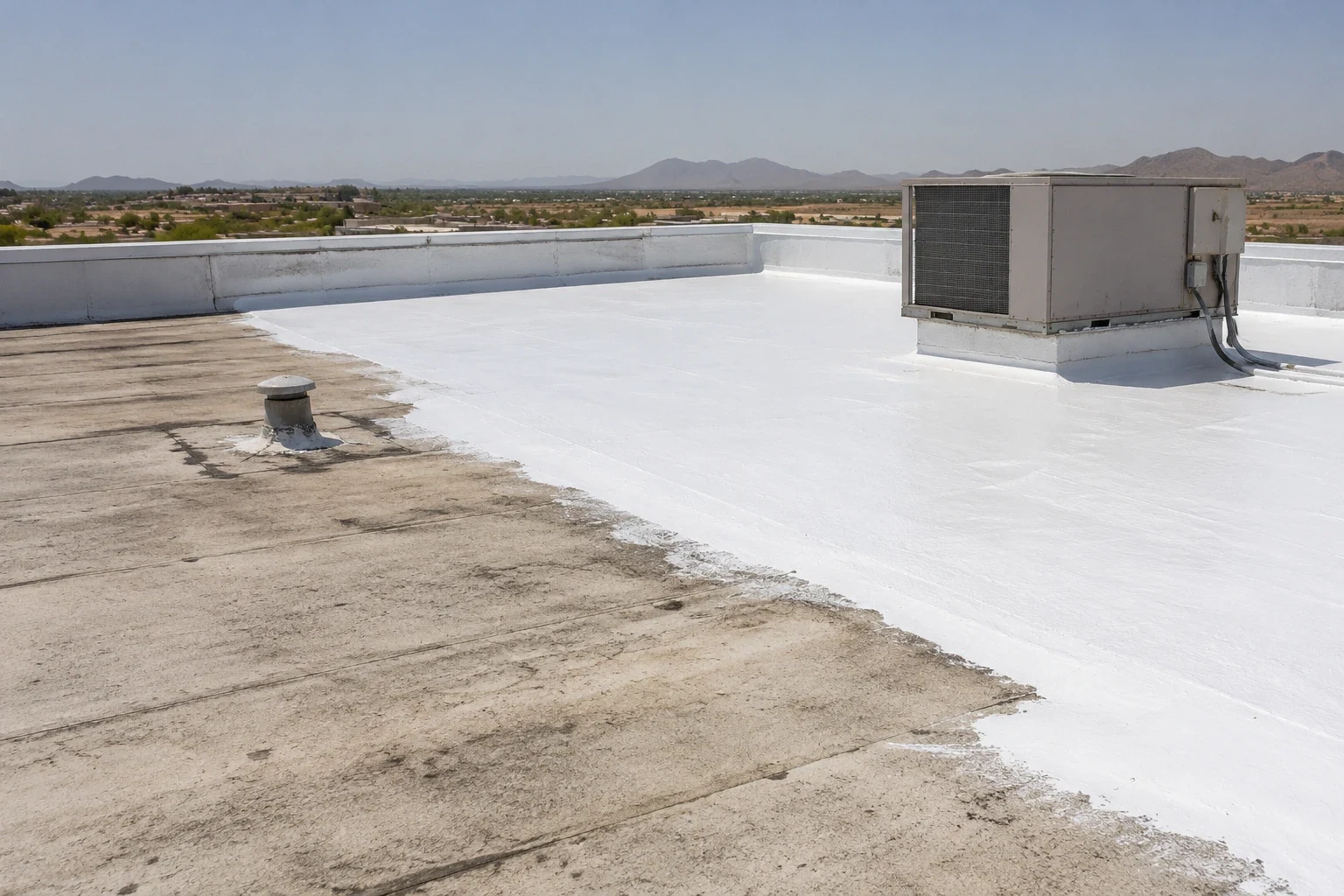
A membrane that has changed color, surface texture, or flexibility needs to be compared with the roof record before anyone calls it heat damage. We ask where the change is, what space lies below, and who can arrange access. Victorville's summer conditions make exposure a useful inspection topic, yet a surface appearance alone does not tell us whether the sheet, insulation, or attachment has failed. We map the affected roof zone, check seams and flashings, then separate routine aging from a repair that needs work now.
Historical observations at the George AFB/Victorville station show a July mean maximum temperature of 97 degrees Fahrenheit over June 1980 to May 1990. That period is context for the market, not a temperature history for this building. We inspect current conditions and may pair the record with a commercial roof inspection.
Surface condition: identify what has changed
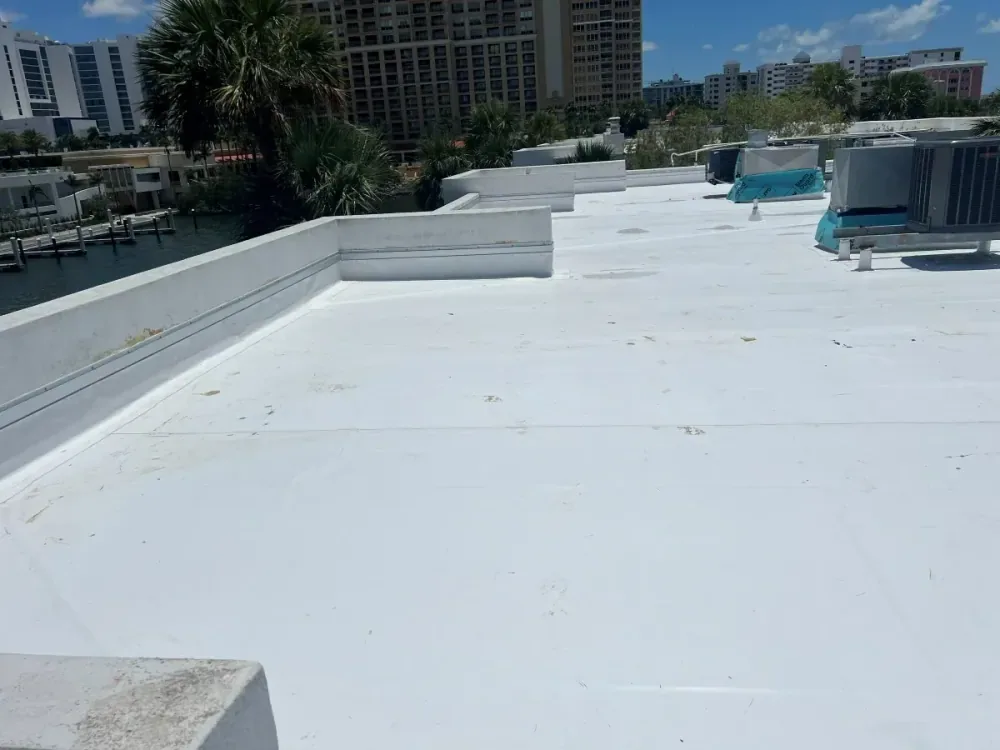
We compare the reported area with adjacent sheet, seams, repair patches, curb flashing, and exposed metal. UV exposure can affect surface coatings and some polymers, while heat movement can stress attachments and transitions. Those mechanisms do not make every color change a failure. We record brittleness, cracking, open laps, surface loss, and prior repair edges, then note where the roof remains sound. If the membrane type is unclear, we review records and details before choosing a cleaning, patch, or coating method. At repair planning, we distinguish a weathered surface from an open seam, record the boundary with close and wide photographs, and note whether a dry-weather test is needed before materials are selected.
Within that station record, readings topped the 100-degree mark on an average of 23 days per year during the observation period. A facility director can use that historical exposure as context when reviewing maintenance timing, not as proof of damage on a specific date. City approval records also list proposals in the Foxborough area; those plans do not establish completed buildings or the roofs on them. We inspect the property itself and map the observed surface condition.
Seams and details: look for movement at transitions
Thermal cycling can move a roof assembly at seams, curb bases, pipe flashings, perimeter metal, and changes in plane. We inspect the detail that changed and nearby connections for separation, wrinkles, loose sealant, and movement marks. A coating over an open lap will not recreate the seam bond. Likewise, tightening a metal edge without checking the underlying attachment can leave the actual failure untouched. We identify the detail and extend the repair only to material that can support a reliable tie-in.
Victorville's adopted code changes wind criteria with occupancy and exposure. That table informs a design review, not a diagnosis of the installed edge or attachment. The seam repair scope can address a split lap, while flashing work covers a curb or wall transition when field evidence points there.
Moisture check: separate surface wear from trapped water
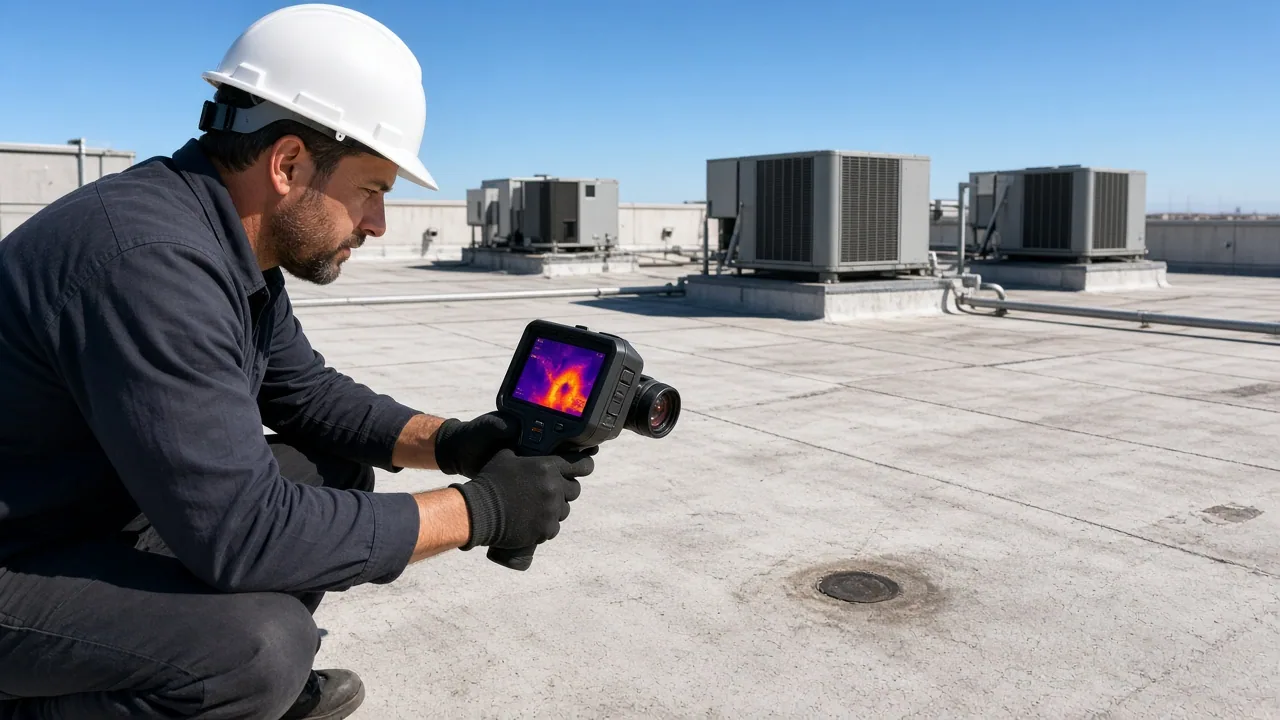
A roof can show sun exposure and still have moisture below, or it can look worn while the insulation remains dry. We inspect drains, low areas, prior patches, and interior reports, then decide whether infrared review or a targeted opening would change the scope. A warm surface image alone does not confirm a leak. The report states where readings were collected and what they can support. When water remains at a drain or seam, we review the drainage path separately from the membrane's surface condition.
Victorville's drain-design guidance uses an hourly rainfall assumption of 2.5 inches. That design input does not diagnose a roof after a long dry period or a current storm. A moisture survey can help locate possible wet areas for further review. If water holds on the surface, a ponding-water assessment maps the plane, outlet, and nearby detail.
Repair options: choose a compatible system
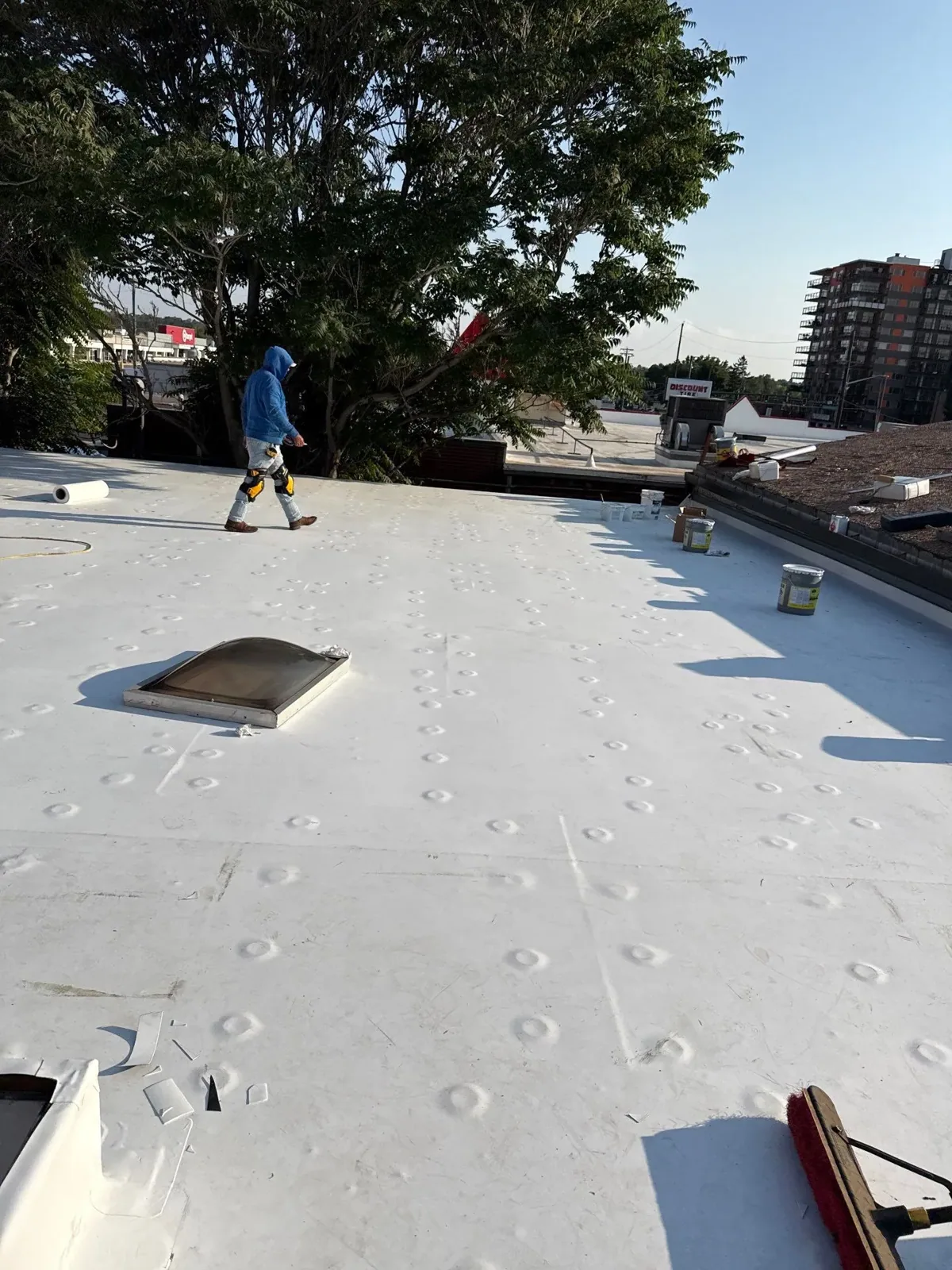
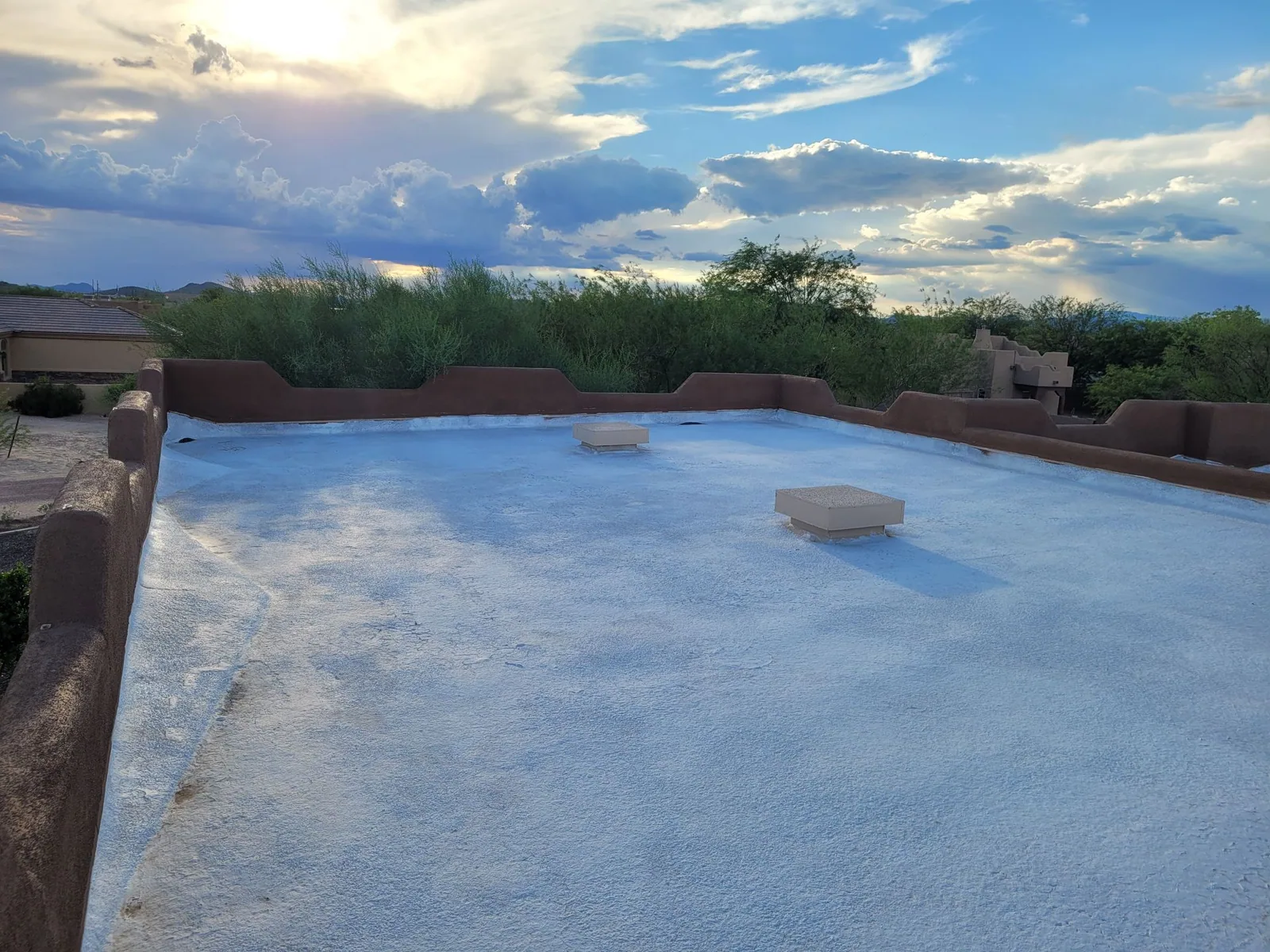
Repairs may include cleaning and welding a thermoplastic seam, replacing a failed flashing, restoring a compatible coating, or removing damaged membrane and wet material. A coating is a system with surface preparation, application limits, and detail work, not a generic layer over an aged roof. We verify adhesion, substrate, drainage, and existing product before recommending it. Where deterioration crosses multiple zones, replacement may offer a clearer boundary than repeated localized patches, but that decision follows the assembly review.
Cost and timing depend on membrane identification, preparation, access, moisture, edge and curb count, equipment, and required weather conditions. A coating restoration may fit a sound substrate; a replacement review considers layers and deck. If heat-related distress is concentrated around equipment, a curb and support inspection can define those details before the repair is priced.
Work sequence: protect the operation while surfaces are prepared
Surface preparation can create odor, noise, heat, or restricted access, depending on the repair system. We coordinate the roof zone, area below, equipment shutdowns, ventilation needs, material staging, and the work window with the facility contact. If operations continue, the crew works in controlled sections and leaves a secure tie-in at shift change. We record which areas are finished and which remain open so the next visit does not begin from an uncertain boundary.
The Eastern Bear Valley Road Corridor forms part of the commercial focus area described around Bear Valley Road and I-15. Old Town Victorville's Seventh Street corridor is a different local setting; neither plan identifies a building's operating hours or roof assembly. We confirm the actual operating schedule and access path. A staged occupied-building scope can coordinate work zones, while a maintenance plan can track follow-up observations after the repair.
Closeout: keep the exposure record useful
Closeout photographs show the treated surface, repaired seams and flashings, and any area excluded from the scope. We note materials, preparation, roof zone, and the next observation point, so a later inspection can distinguish a changed condition from the earlier exposure report. If an equipment contractor returns to the roof, the facility contact should record the route and any new penetration. That record helps preserve the membrane and gives the owner a practical comparison for future maintenance. We include the preparation and adjacent details so the next review can separate recent work from older surface wear.
We inspect commercial roofs in Victorville and broad areas such as the Seventh Street corridor. A roof condition report can tie observations and photographs to the repair plan. Call with the affected surface, what is happening below, and the access contact. We can review the membrane, explain whether the issue is isolated or wider, and document the next work decision.
Commercial Roofing Questions
Does a faded membrane need replacement?
Not by color alone. We inspect flexibility, seams, flashing, repair history, moisture, and the roof's service requirements. The report separates cosmetic change from a defect that needs correction.
Can a roof coating fix UV damage?
Only when the existing surface, adhesion, moisture condition, and details support the selected coating system. We test and prepare the substrate, then state which repairs must happen before application.
Do the Victorville temperature records prove our roof overheated?
No. They describe a historical weather station, not an individual building. We use the records as climate context and inspect the roof's current membrane, seams, flashings, and attachment.
Why inspect seams if the membrane surface looks intact?
Movement may open a lap or transition before broad surface wear appears. We check seam bonds, curb bases, perimeter details, and prior patches that could admit water under changing conditions.
When does localized repair stop making sense?
Repeated failures across several zones, wet insulation, or a substrate that cannot accept another patch may call for a broader replacement review. We document those findings and compare the scope options.