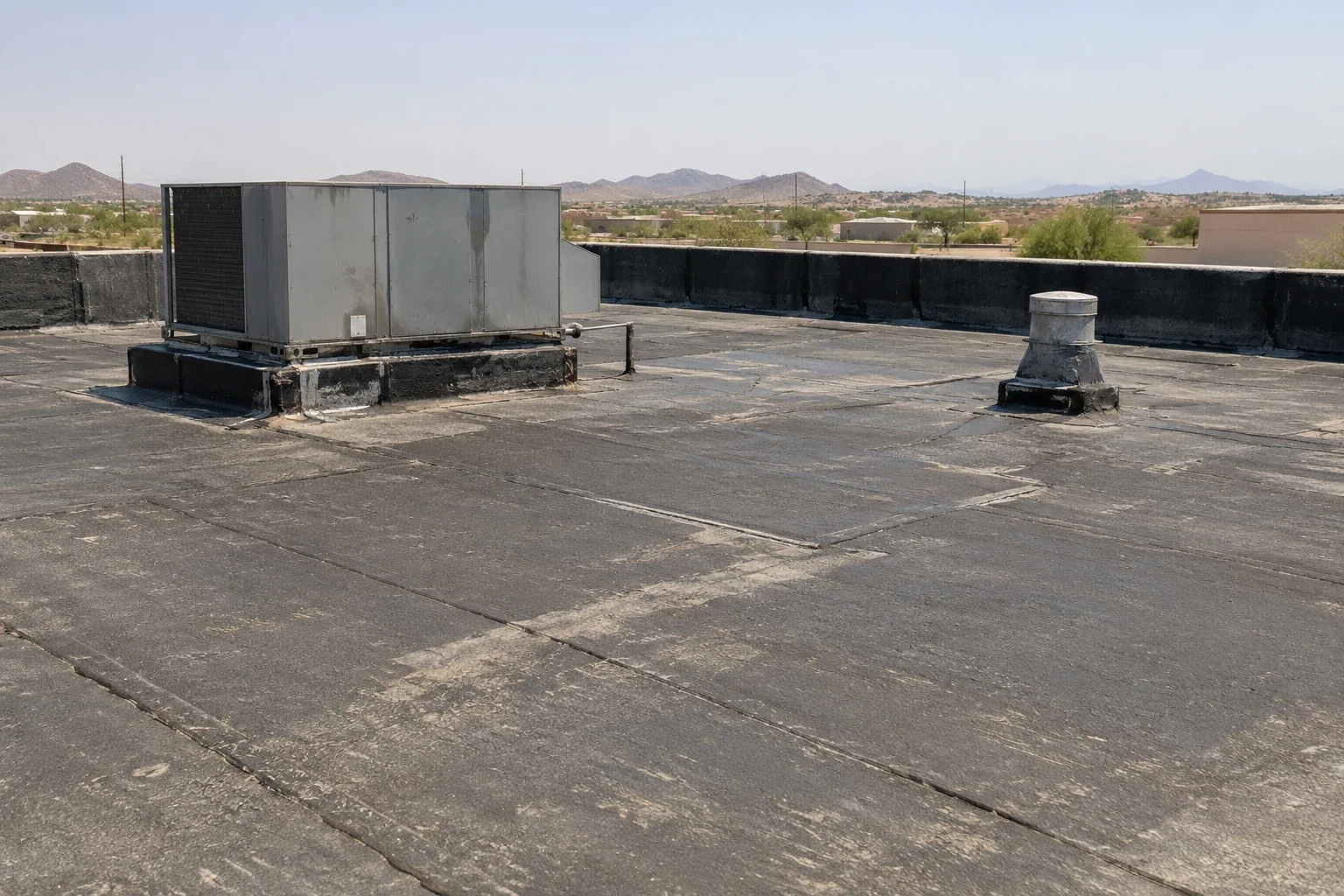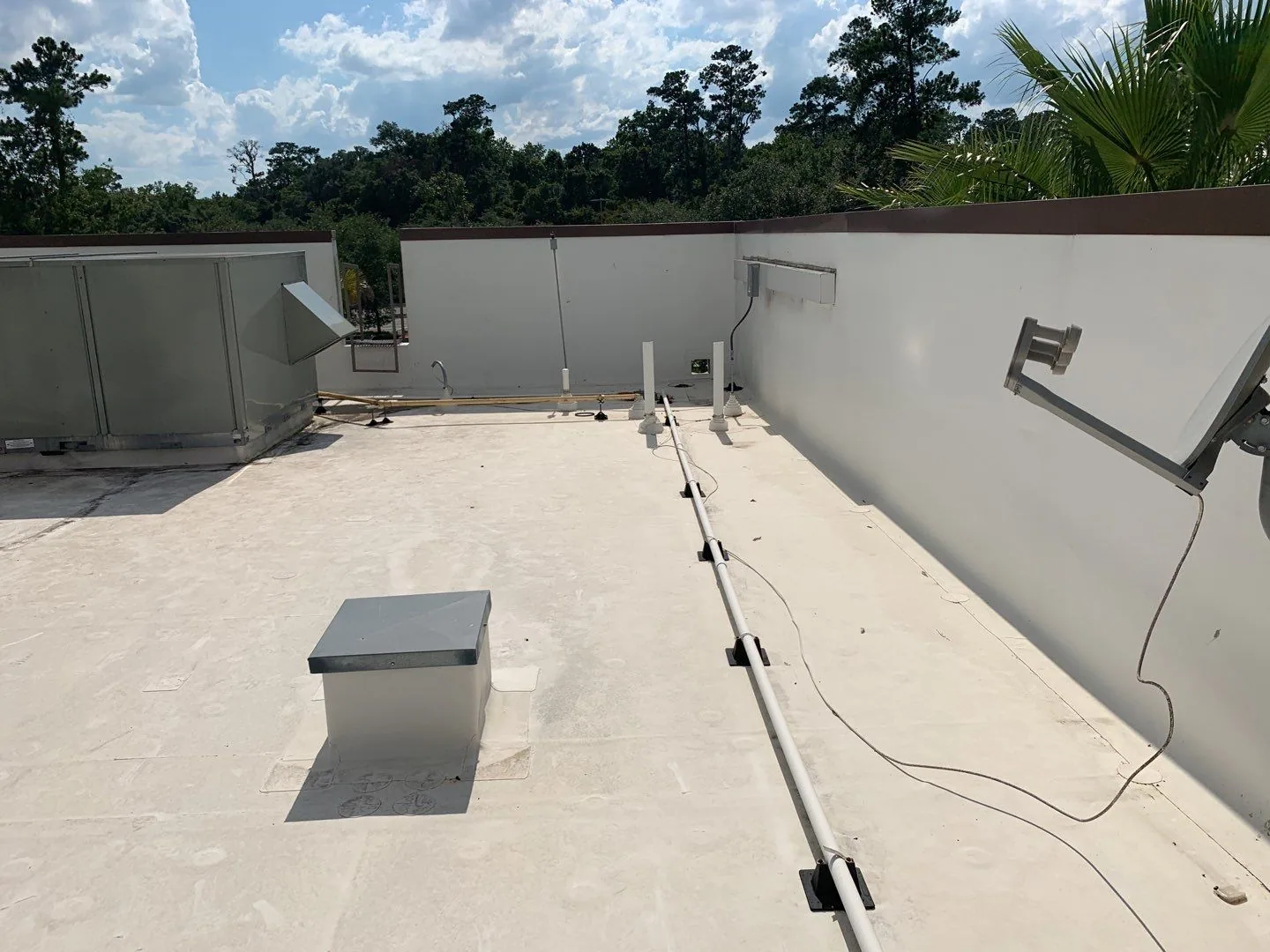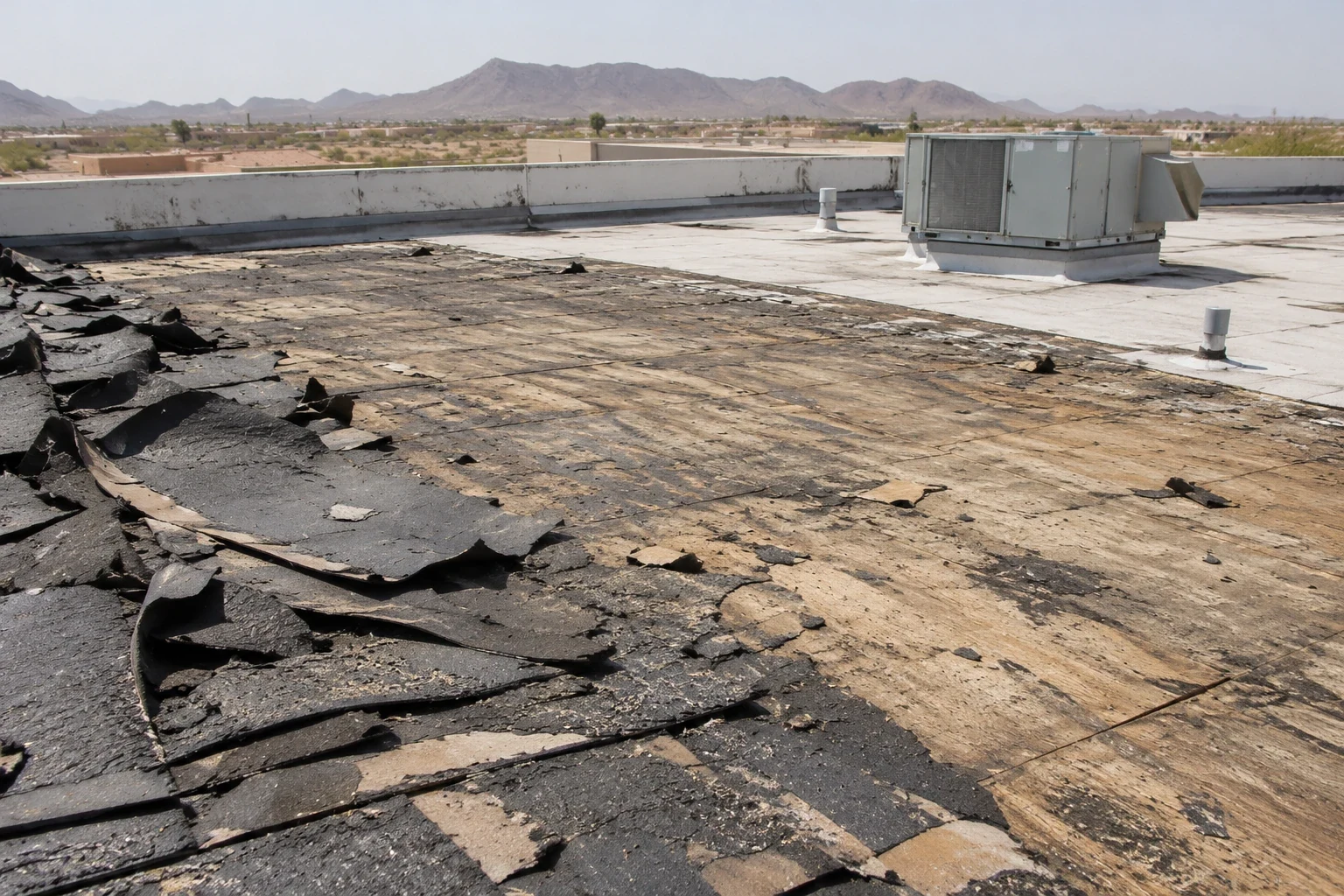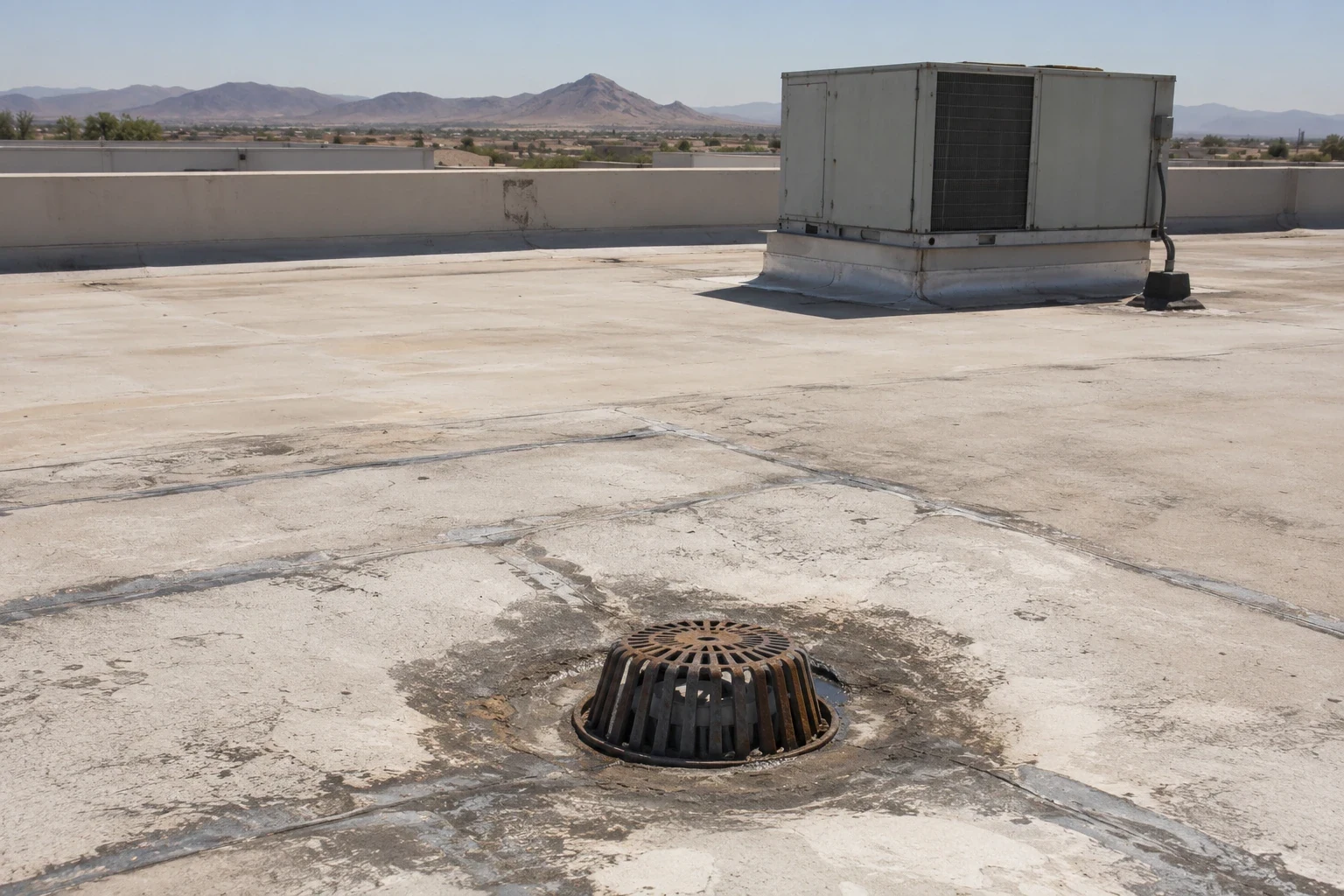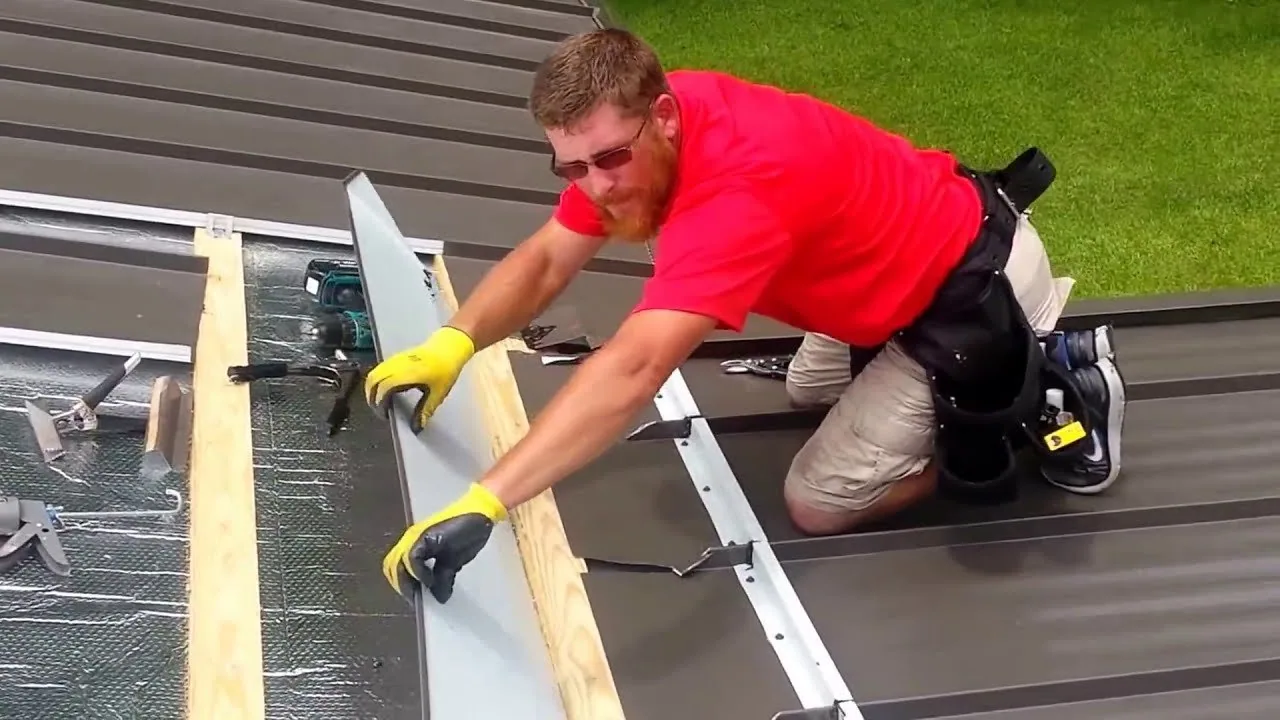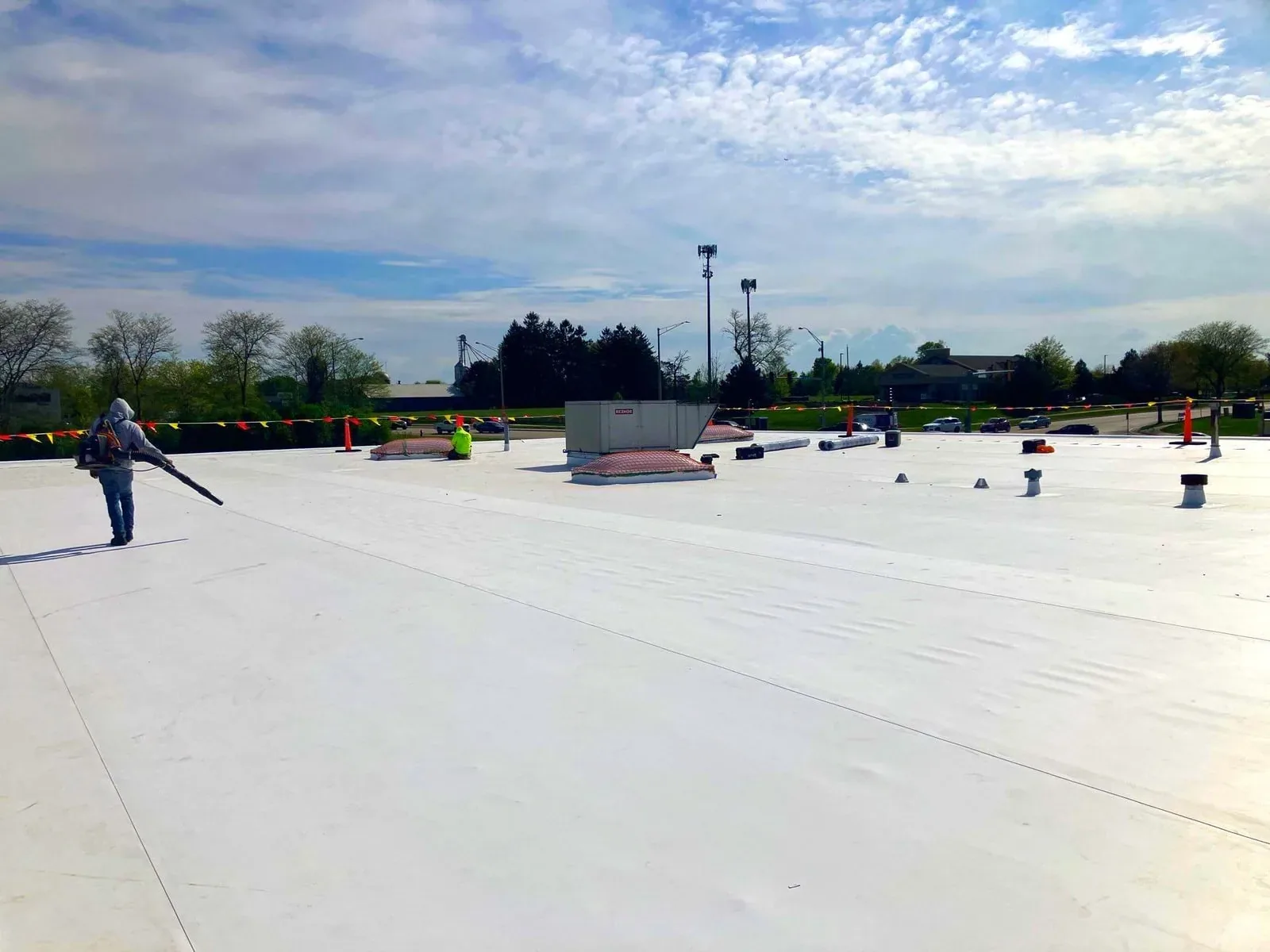
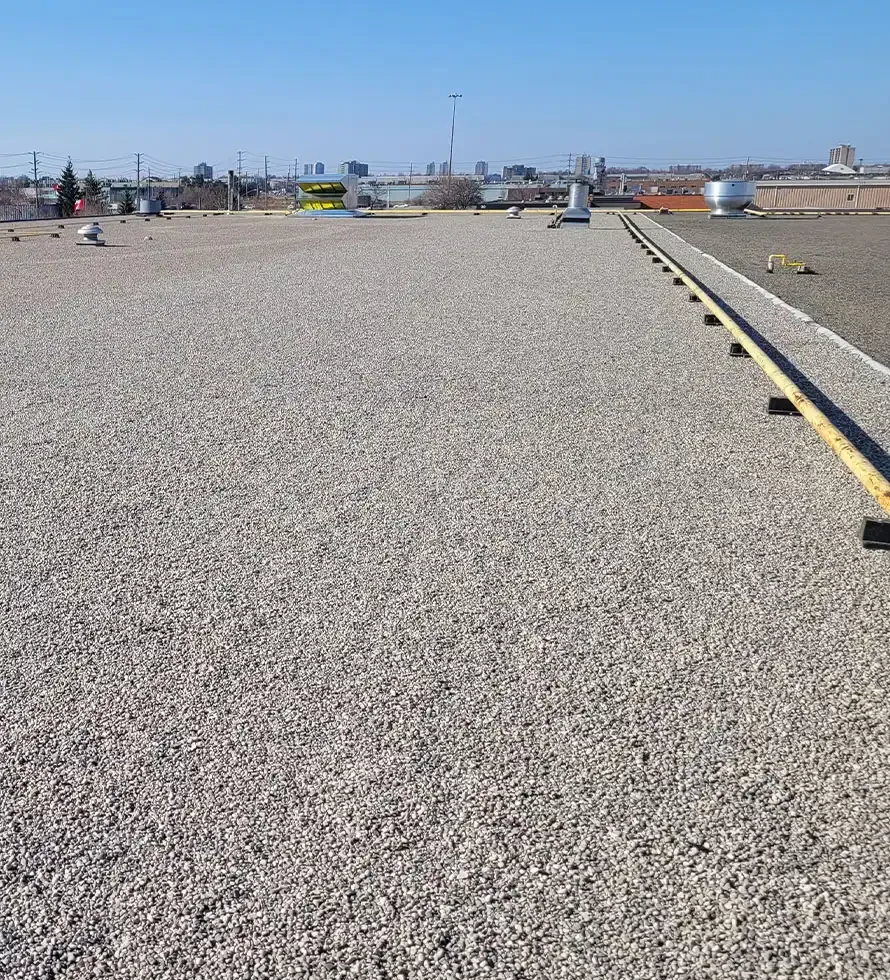
A patch that keeps returning along the same drain route calls for a look at the layers below it. In Victorville, we start with the roof zone, the activity below, and the facility contact who can authorize access. A built-up roof may contain several asphalt-saturated plies under a cap sheet, coating, or aggregate. Its repair depends on which layer has split, whether water reached the insulation, and how adjoining flashing ties into the field. Our photo set records the visible boundary and any test opening so the owner can decide whether to repair one area or investigate a larger assembly.
Built-up roofing, or BUR, uses reinforcing felts embedded in bitumen to create a multi-ply membrane. The finished surface may have mineral surfacing, coating, or gravel, depending on its design. Those layers affect traffic, weight, edge height, and drain details. We distinguish the assembly that exists from the system being considered. If a roof has a modified bitumen cap over older plies, compare modified bitumen construction before pricing a recover.
Open the roof history one layer at a time
At a repair location, we check the surface, seams, penetrations, and prior patches that may interrupt water flow. If the defect is not clear from above, a test cut can show whether bitumen and reinforcement remain bonded and whether insulation is wet. The opening is protected and photographed, then its result is tied to the roof plan. A sound surface around one opening does not establish that every roof zone is dry; the history and visible conditions help choose any additional test locations.
BUR can fail at splits, blisters, punctures, open flashing, or a drain that no longer holds the membrane securely. Water can travel between plies before reaching a ceiling, so the stain is an imperfect map. We follow the route toward nearby seams and slope changes. A repair assessment should identify removed plies, retained layers, and the tie-in method. If several zones show wet insulation, compare selective tear-off with a full replacement scope.
Weight, drains, and roof edges
Every added layer has consequences at roof edges and penetrations. Aggregate can move toward an outlet; debris may collect at a sump; a recover can raise the finished plane above existing counterflashing. We inspect whether the new work can reach a sound termination without leaving the edge too short. At a drain, plies must meet the clamping assembly without loose corners or a bridged water path. At a parapet, termination height and metal condition shape the flashing scope.
Victorville lists a roof-drain sizing rainfall reference, but a published design value does not describe how one roof performs today. We examine slope, outlet condition, ponding, and maintenance access. The city designates Bear Valley Road and I-15 as a Development Focus Area with commercial uses; that context says nothing about a specific roof. A drain and scupper review can document each outlet, while perimeter detail inspection checks the edge transitions and loose metal.
Compare repair, recover, and removal
Repair is the narrowest choice when damage is localized and the surrounding BUR remains bonded. A recover can be considered only after moisture, attachment, compatibility, drainage, and code review. If insulation is wet across multiple roof zones or the deck is deteriorated, covering those layers may add weight without correcting the cause. We identify assumptions behind each choice and separate verified work from concealed conditions that could alter cost or schedule.
Replacement decisions include deck attachment, insulation, cover board, membrane or plies, and perimeter and penetration details. A facility can compare a new multi-ply assembly with TPO roofing, EPDM membrane, or a PVC assembly. Each option is reviewed for building use, drainage, fire requirements, traffic, and future equipment work. Material names do not replace a detail schedule; curbs, drains, edges, and tie-ins determine whether the system can be installed as intended.
Plan a clean work zone
Removing aggregate or multiple plies changes debris handling and staging. We set a daily boundary, protect drains from loose material, and coordinate loading with the facility contact. Work above an occupied suite may require notice when noise, odors, or access restrictions affect activity below. If another trade needs roof access, its penetrations and equipment moves are scheduled before the new membrane closes the zone. At shift end, the exposed edge is secured so the next phase starts from a protected condition.
Victorville's approvals describe planned projects at Foxborough Industrial Park and near U.S. 395 and Mojave Drive, not completed building inventory. In logistics-oriented areas, truck routes and roof access can influence staging. We confirm actual site conditions. A warehouse roof plan can account for dock activity; a Victorville roof inspection documents the existing plies and drainage before replacement pricing.
Leave the next inspection a usable record
A BUR closeout should include test locations, layers found, moisture observations, repair limits, drain and edge photographs, and any area that was not opened. For replacement, list removal depth, insulation, cover board, membrane or ply configuration, flashing, surfacing, and daily tie-in. That lets an asset manager compare alternatives without treating different assemblies as identical. If a leak returns, the roof-zone record gives the contact a starting point before water spreads across the deck.
Maintenance visits still matter after replacement. Drains, pitch pockets, supports, and metal edges need attention because debris, vibration, and service traffic can disturb the finished surface. A condition report can group repairs with longer-term planning. If the roof condition is not a fit for another asphalt ply, review metal retrofit options only where the roof structure and slope support that route. The first call can begin with the latest photo, reported room, and access contact.
Make the test cut useful to budgeting
A small test opening can answer several questions at once when its location is chosen well. We record the surfacing, ply count, bitumen, insulation condition, and deck visible at that point, then photograph how each layer is returned or repaired. When two roof zones differ in age or repair history, a second opening may be more useful than assuming one sample represents the whole building. The report states where each observation applies and where access was not available.
The Old Town Victorville plan assigns separate designations to mixed retail and services, light industry, housing, and open space. That mixture provides context for the city, not a prediction of roof construction. I-15 is another useful location marker when planning access and material movement, while the property controls its gate, loading route, and debris staging. These details shape a reroof sequence after inspection; they do not replace opening the assembly. We can then compare likely tear-off quantities with the actual layers found and leave an allowance for areas that remain concealed.
Commercial Roofing Questions
How can I tell whether a roof is built-up?
Surface appearance helps, but a test opening is more reliable when layers are unclear. We document surfacing, reinforcing plies, bitumen, insulation, and deck at the test location before recommending repair or recover.
Can another roof layer go over BUR?
Sometimes, after moisture, attachment, compatibility, added weight, drainage, and code limits are reviewed. A recover is not appropriate when wet insulation or unstable plies would remain beneath the new surface.
Why do built-up roofs leak near drains?
Debris, ponding, a failed clamping detail, split plies, or an earlier patch can interrupt the water route. We inspect the drain and adjacent field rather than seal only the visible opening.
What should a replacement bid show?
List removal depth, deck review, insulation, cover board, membrane or plies, surfacing, flashing, drain work, and temporary tie-ins. Test results and concealed-condition allowances should be clear.