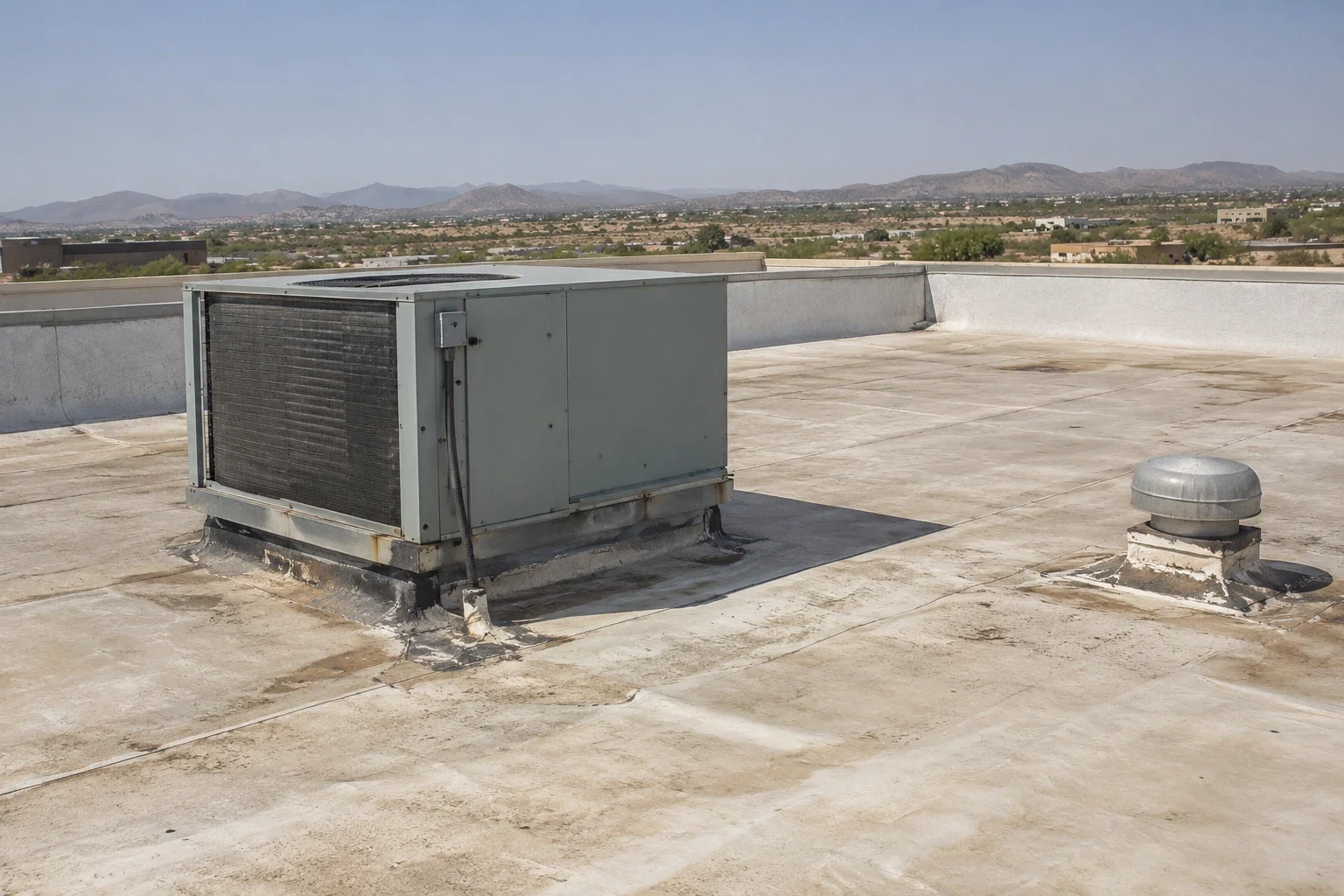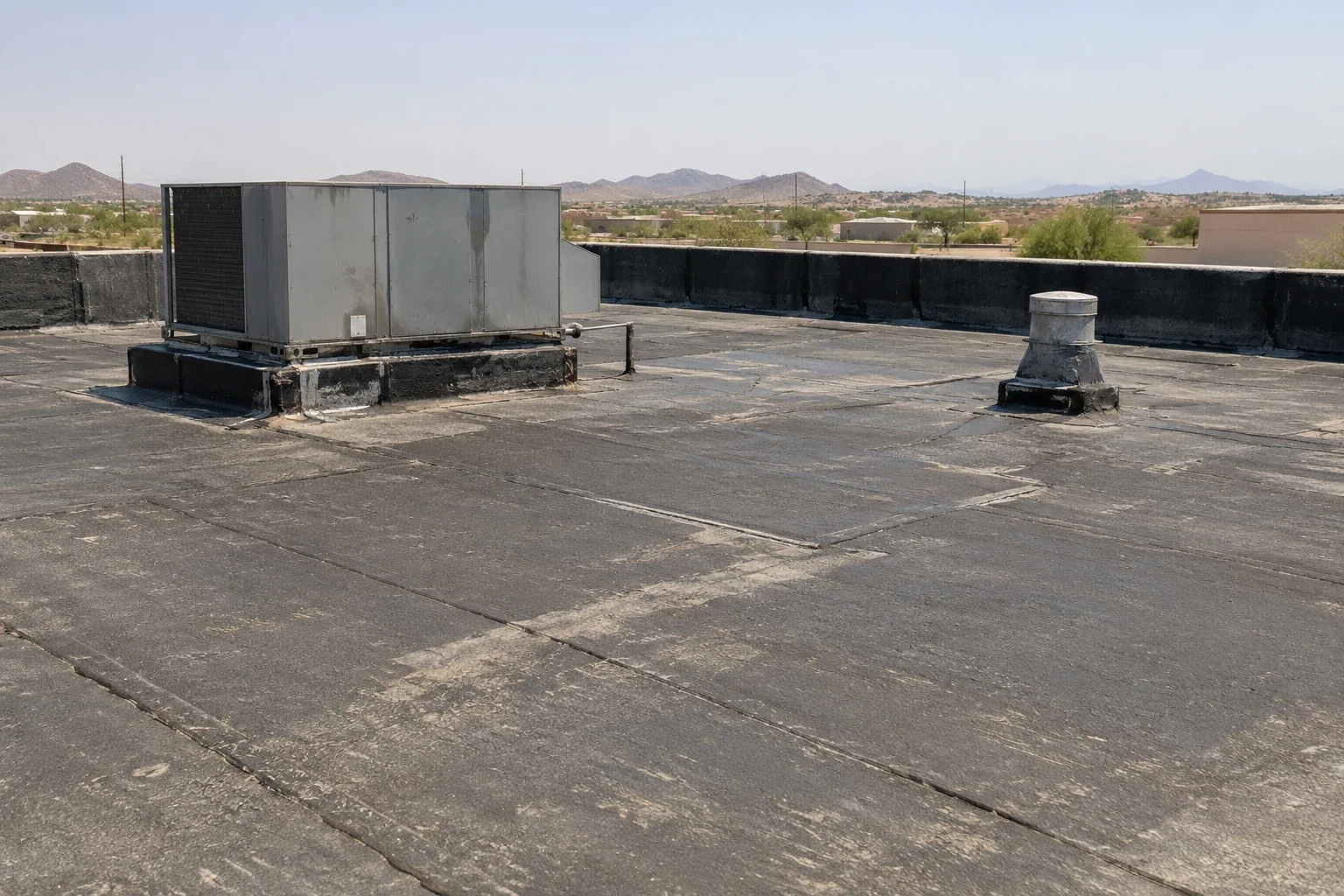
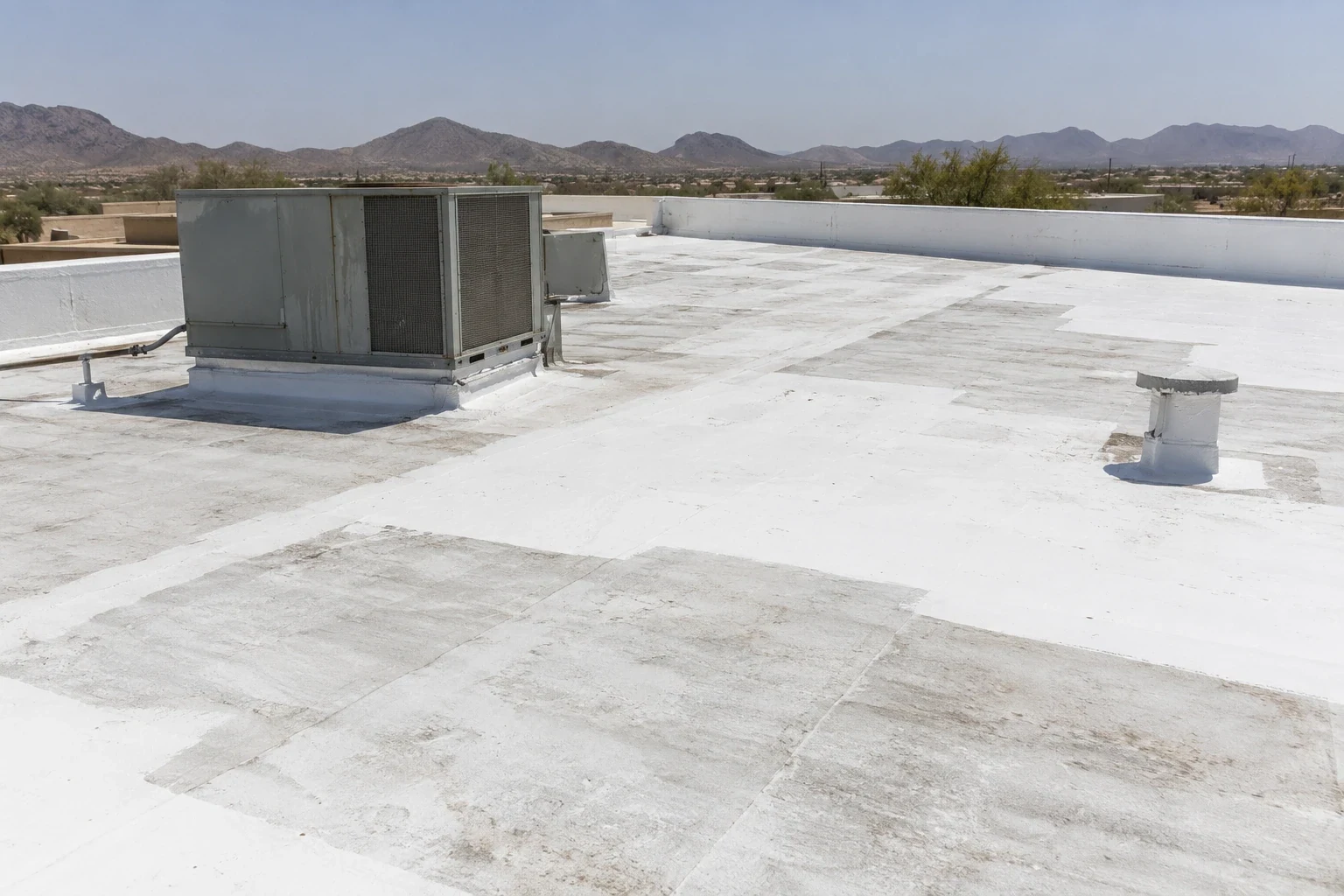
A coating proposal should begin with the roof beneath it, not the finish color. For a Victorville building, the first report identifies the leak zone, the activity below, and who can provide access. We check whether the membrane is dry and bonded, whether seams or curbs are open, and where water moves. The photo set shows the eligible surface and repairs that come first. That helps a facility director decide whether restoration is appropriate or a replacement scope is clearer.
Acrylic roof coatings are water-based liquid-applied materials used on compatible surfaces. They can add a reflective finish and renew a weathered field when preparation and detail work are sound. They are not a universal cover for standing water or a wet assembly. Suitability depends on membrane chemistry, slope, adhesion, exposure, drainage, and product requirements. We test the surface where needed. For prolonged ponding, compare silicone systems only after a drainage review rather than assume the two finishes behave alike.
Do not coat a moving or wet layer
Preparation may require cleaning, drying, seam repair, removal of loose coating, and primer. We look for chalking, blisters, open laps, incompatible sealants, and moisture below the membrane. Adhesion testing helps confirm whether a selected coating can bond. If the test fails, the scope may need a different primer, removal of a weak layer, or replacement of an affected zone. The report lists test locations and separates the field from reinforced detail work.
Victorville's historical summer temperatures give a reason to check current surface conditions and application limits before mobilization. Product instructions govern; a forecast alone does not describe roof temperature. We sequence each zone so material can dry and cure, and protect exposed areas if weather changes. When the existing assembly has a split, seam repair should be resolved first. An open equipment curb calls for a penetration-detail scope before coating over that area.
Follow the route toward the drain
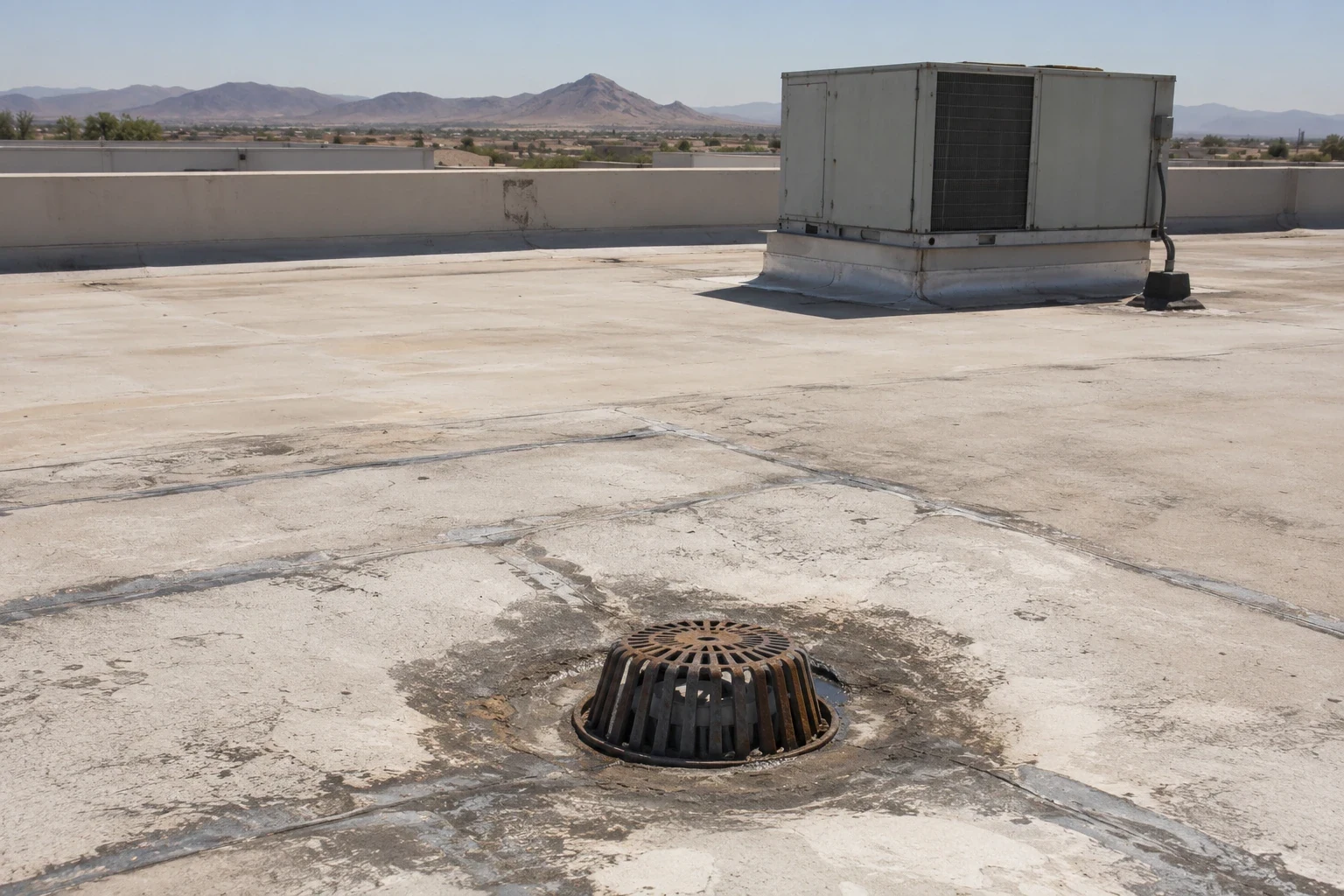
Water that remains on the roof can stress seams and slow surface drying. We inspect low spots, debris, blocked outlets, and coating that bridges a depression without correcting slope. A coating follows the existing shape. If the project needs tapered insulation, a sump, or deck work, that belongs in a designed drainage scope. At walls and outlets, reinforcement must join a stable substrate and continue without a thin or open edge.
The City gives a roof-drain sizing rainfall reference, but it is not a measured flow rate for this property. We inspect visible slope, outlet condition, and maintenance access. Bear Valley Road and I-15 are a commercial focus area, yet land-use context does not determine an individual roof's drainage. A drain inspection can record outlets, while a condition report connects that finding to the restoration choice.
Check chemistry and roof traffic
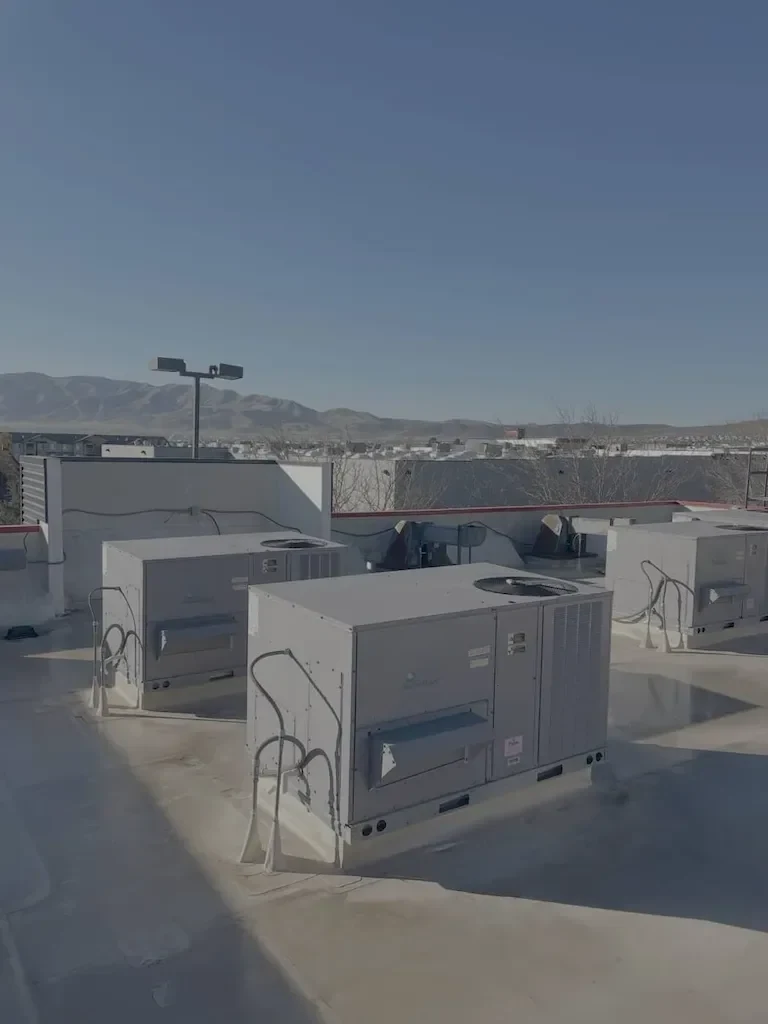
Acrylic selection depends on existing roof chemistry and building use. Metal, modified bitumen, SPF, and single-ply systems can require different preparation or restrict direct application. We identify each surface and test uncertain layers, then specify compatible primer and reinforcement. Traffic matters too: technicians reaching HVAC units can wear the coating unless the route is protected. A new finish does not substitute for a walkway, curb extension, or repaired edge metal.
Victorville's approvals describe planned industrial development at Foxborough and near U.S. 395 north of Mojave Drive, not the roof systems on existing properties. We verify each surface. Compare acrylic work with modified bitumen repair or a new TPO membrane where the current coating is not compatible. For a sound foam assembly, a foam roof review can show whether only its protective coating has weathered.
Set the work zone before the lift
Application planning covers overspray, HVAC intakes, parking, pedestrian access, equipment paths, and material handling. We agree on the roof zone and who can authorize access. If occupants remain inside, the contact receives the planned sequence and notice of noise or odor. Wind and cure time may change the daily boundary, so completed areas are protected before the crew stops. Drains stay open and material remains clear of egress routes.
Victorville connects regional travel through I-15, U.S. 395, and State Route 18, but those routes do not establish delivery access at one property. We confirm gates and staging with the site. A warehouse work plan can cover dock areas, while a Victorville roof assessment records existing conditions. Occupied-building sequencing keeps interior operations in view.
Use the record to plan the next visit
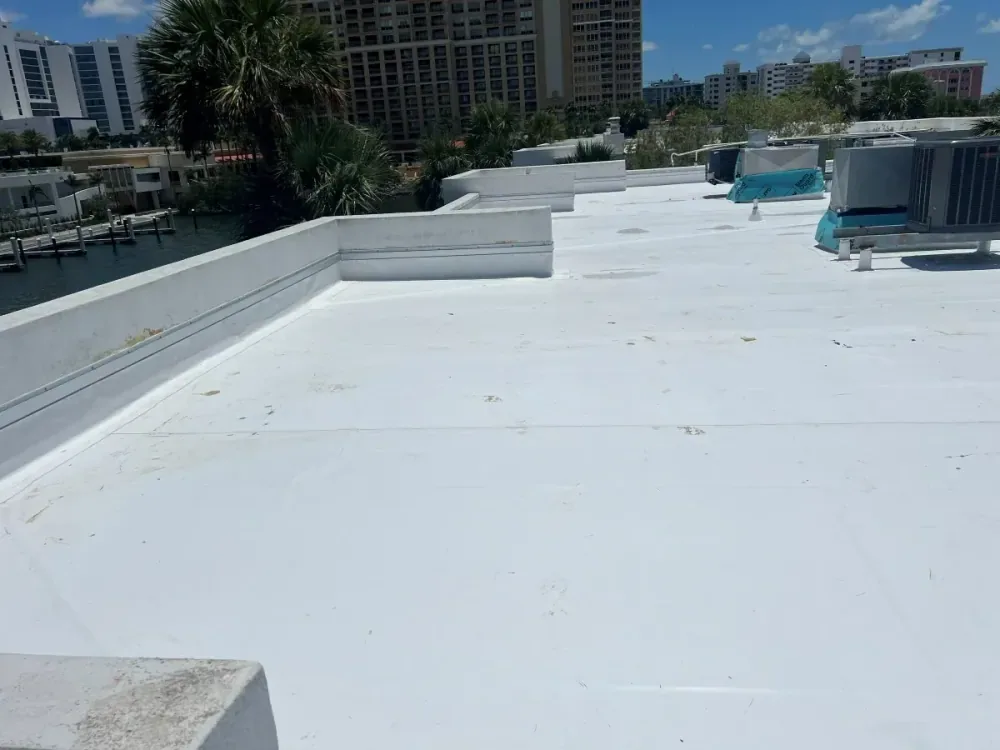
Closeout identifies preparation, adhesion tests, seam and flashing repairs, coating system, application zones, and photos. It notes uncoated areas and why they remain open. The record can map walk pads, equipment routes, drains, and conditions to monitor. If a new penetration is added later, its detail should be repaired and documented before the roof returns to service. That avoids treating a patch around one curb as proof that an entire zone was recoated.
We inspect for impact, peeling, thin areas, debris, and open flashing rather than assume the reflective finish is continuous. Where wet insulation, recurring leaks, or poor adhesion span multiple zones, a replacement assessment may be more useful than another coating layer. A restoration scope can identify which zones remain eligible. The first call starts with the roof plan, leak reports, and the facility contact.
Control drying time and recoat boundaries
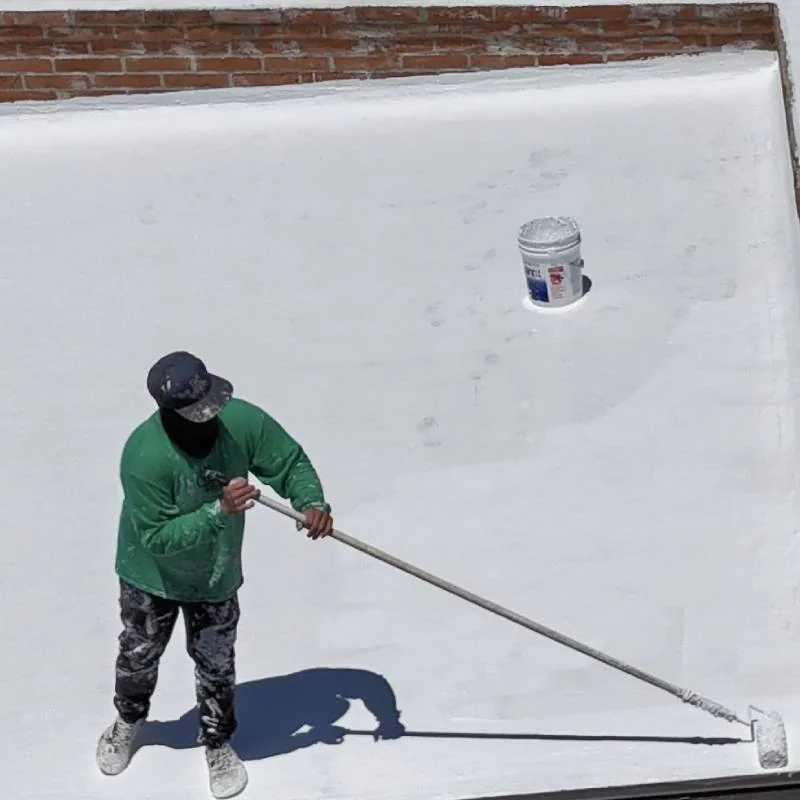
Acrylic application planning accounts for substrate moisture, air movement, shade, roof temperature, and the chance of dew or rain before the finish dries. We inspect the surface near drains and shaded curbs as well as the open field because those areas may dry at different rates. The day's work zone should be small enough to complete within product limits. If conditions change, the crew stops at a documented boundary and protects the edge for the next visit.
Old Town Victorville's land-use plan identifies retail and service overlays, light-industrial areas, residential uses, and open space. The city also describes planned industrial development near U.S. 395 and Mojave Drive. These local facts help frame property use, but the facility contact confirms the actual air intakes, loading route, and people below the work. I-15 connects the city to regional movement; it does not establish delivery windows for a particular roof. We agree on those practical controls before setting pails or lifts, then record the completed area and any surface condition that kept coating work from proceeding.
At completion, the report should identify the last recoat edge and the condition of adjoining areas that were not treated. If a follow-up is required, the facility contact can direct the inspector to the same seam or curb instead of searching by interior stain. Photos should show preparation, repaired details, and the final field. A simple roof-zone map also helps maintenance staff protect the application from foot traffic while coating is curing and after the surface returns to service.
Commercial Roofing Questions
Can acrylic coating be applied over an existing membrane?
Acrylic may bond with some membranes, but chemistry and condition set the limits. We inspect and test adhesion, then specify preparation, primer, repairs, and reinforced details.
Is acrylic a fit for ponding water?
Persistent ponding calls for an outlet and slope review before coating is considered. We map the low areas and drainage route during inspection.
How does acrylic differ from silicone?
The materials differ in chemistry and water exposure behavior. We compare the existing surface, drainage, traffic, and maintenance plan before selecting either.
What if adhesion tests fail?
The scope changes. The roof may need another primer, removal of a weak coating, localized repair, or replacement rather than application over an unstable surface.