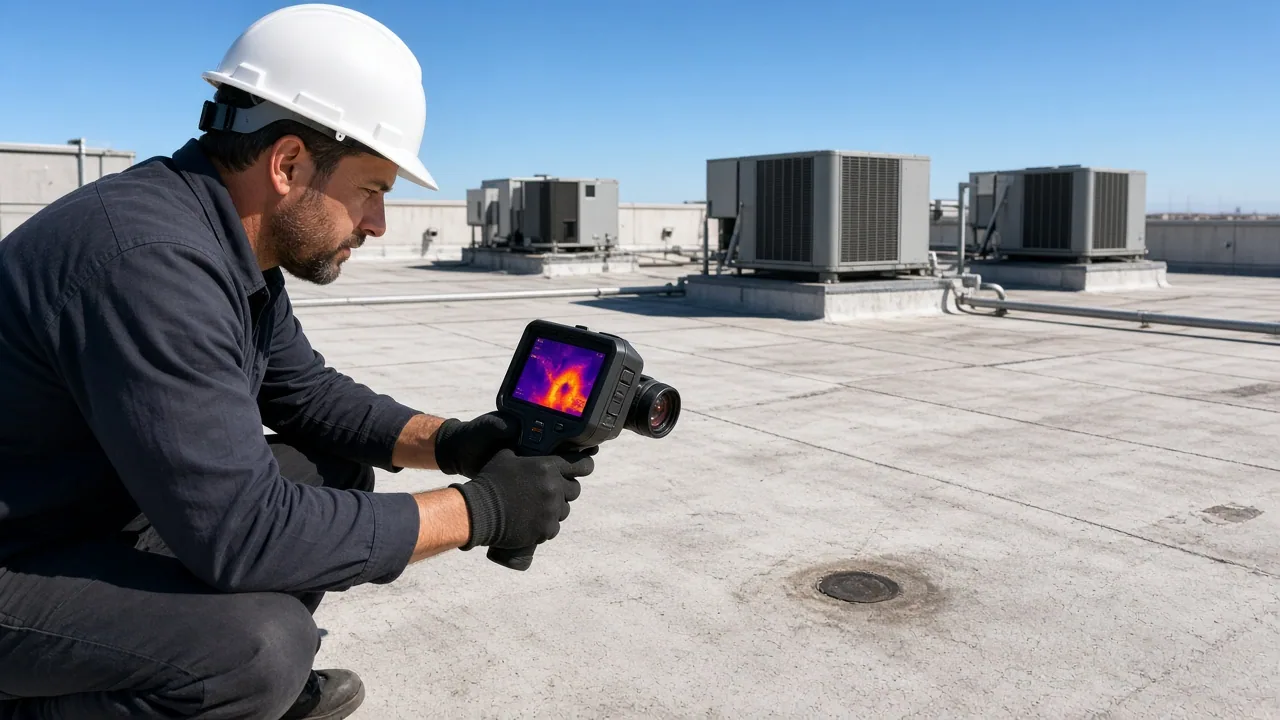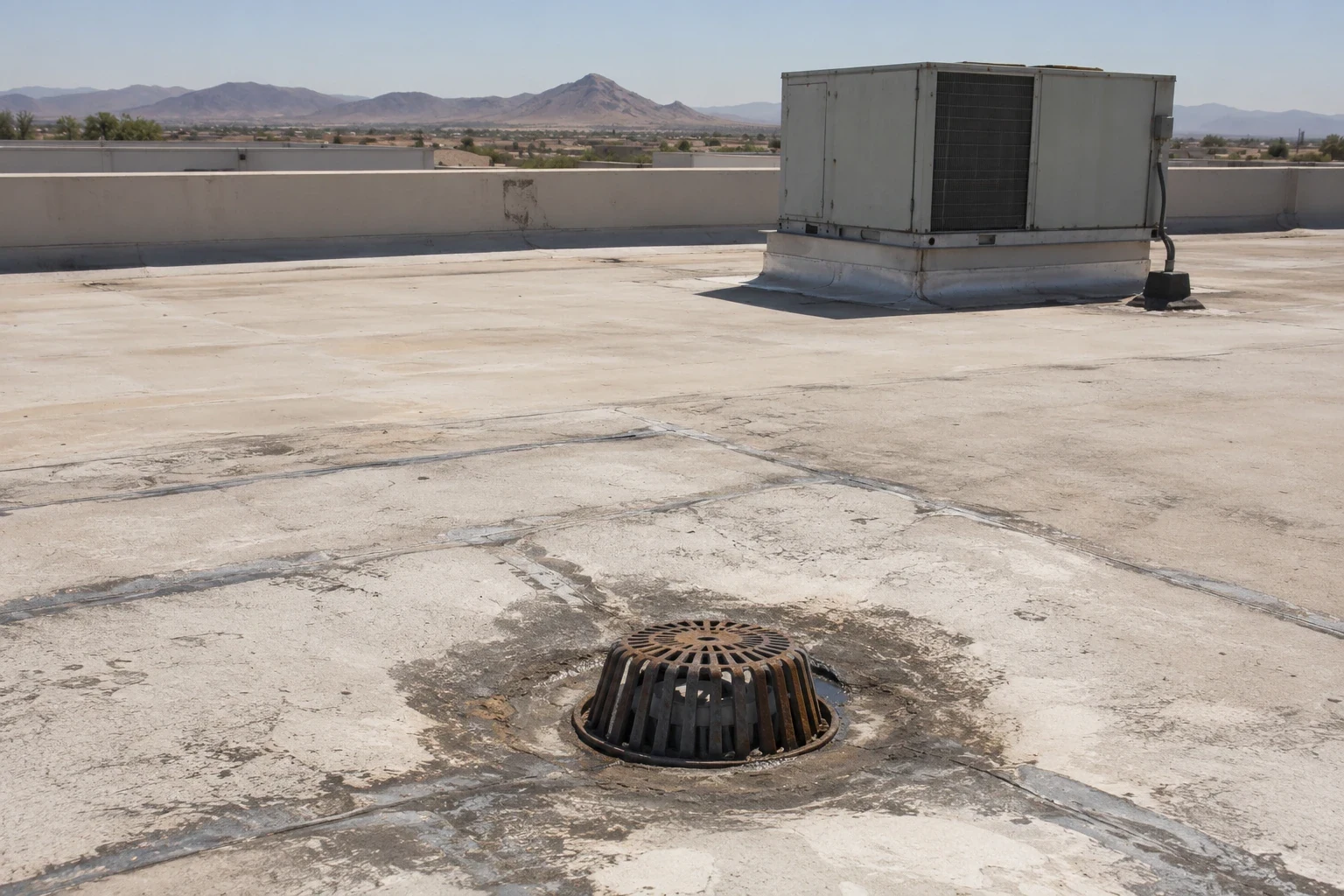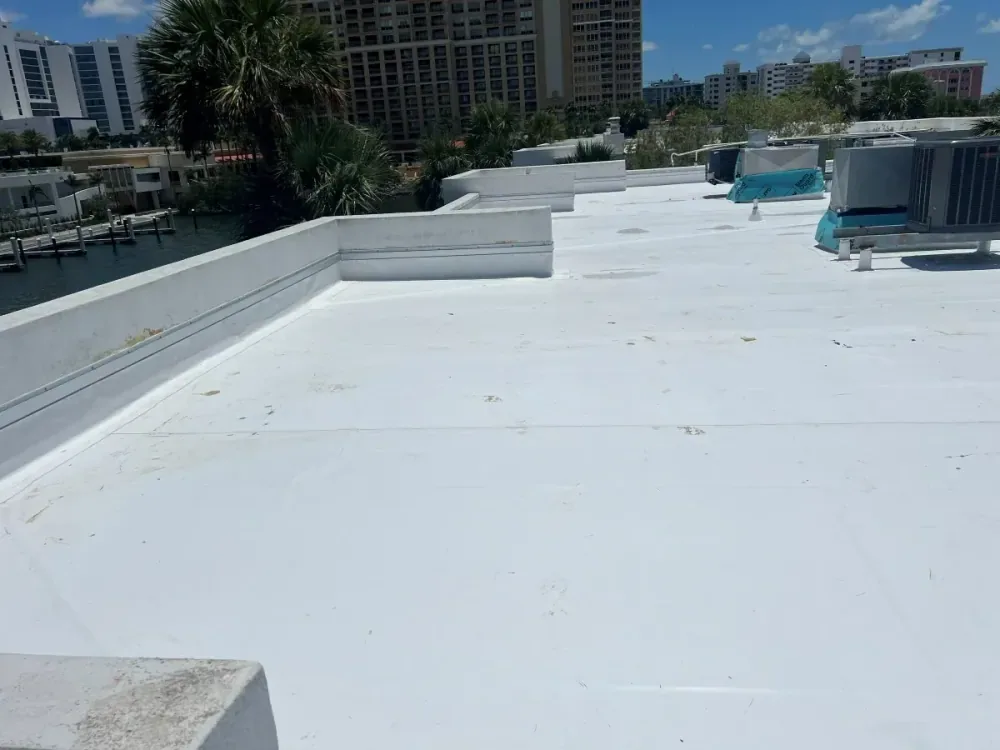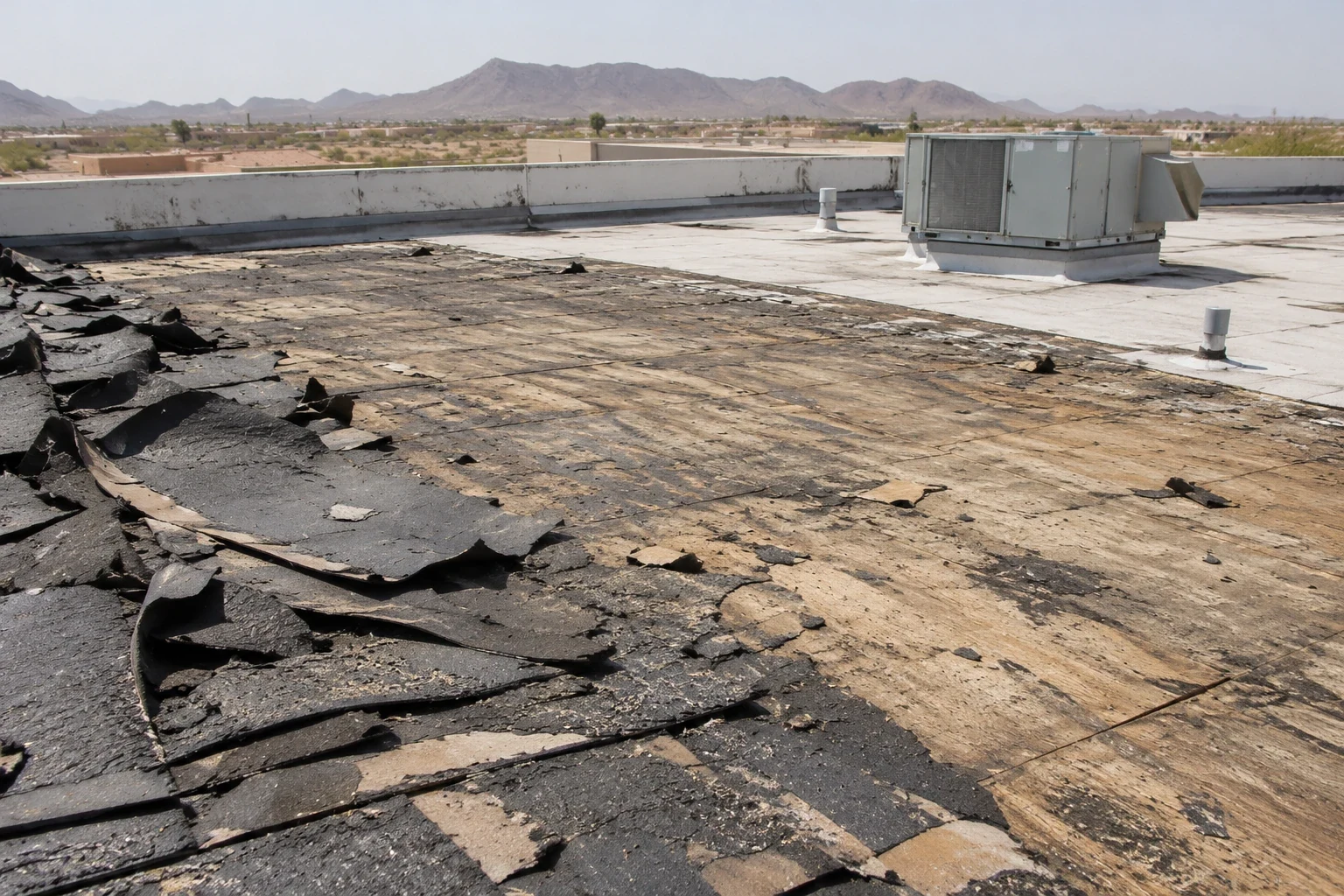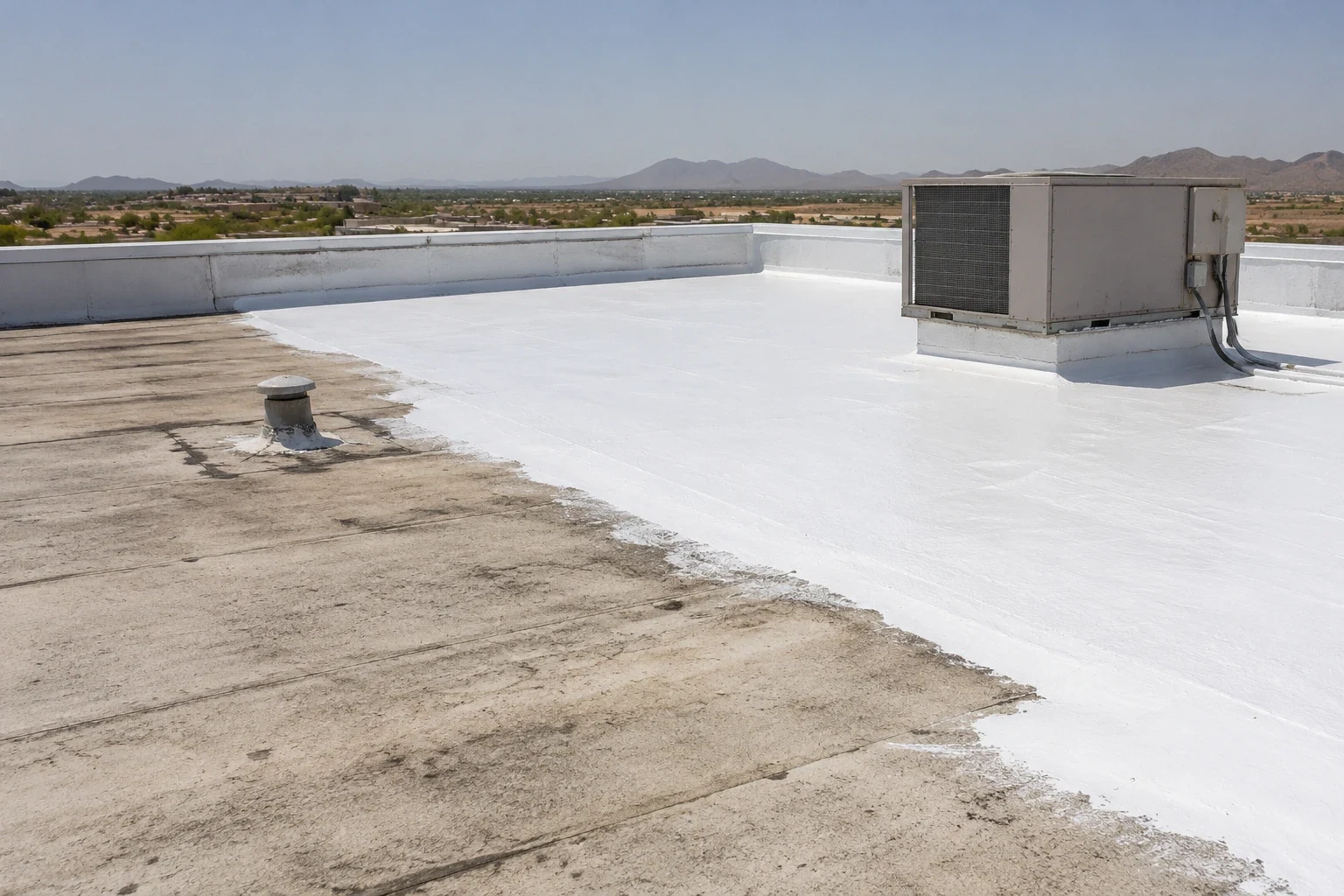
A leak above a retail bay or restaurant work area on eastern Bear Valley Road needs a precise roof-zone check before a crew can price the fix. We ask where the interior condition appeared, what activity sits below, and who can arrange access. The walk follows visible seams, drains, equipment curbs, and perimeter details connected to that report. Photos identify the area inspected and anything still hidden. That gives the owner a bounded repair or test decision without treating every parcel in Victorville's commercial focus area as one roof or one scope.
Read the adopted focus area accurately
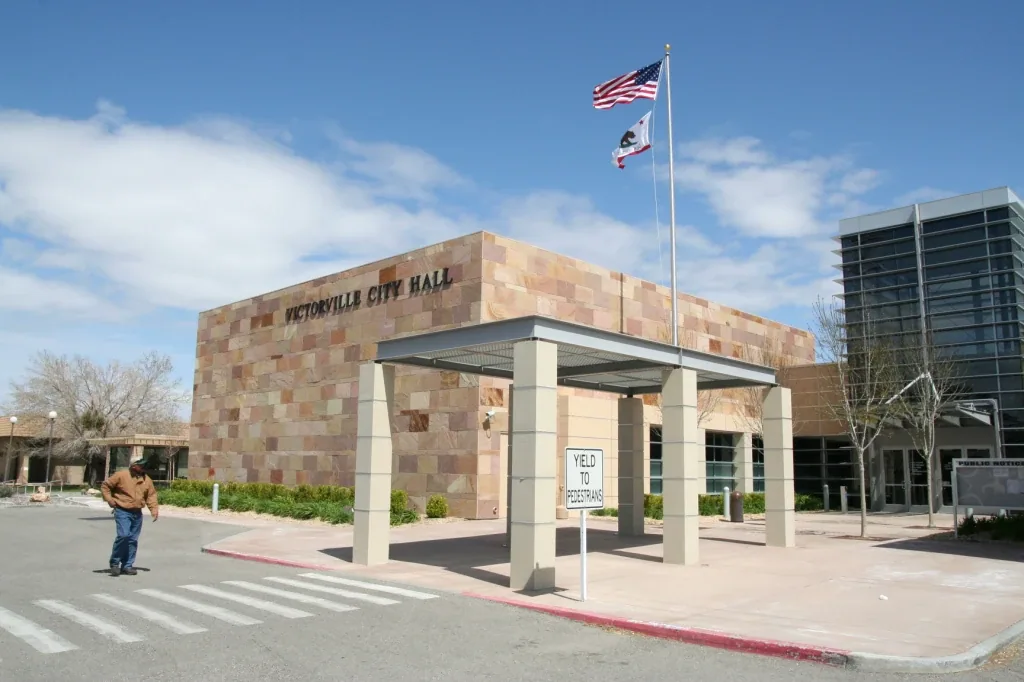
Victorville's Land Use Element defines a Development Focus Area around the Bear Valley Road and Interstate 15 intersection. The plan describes big-box and national retailers, regional and local commercial businesses, and chain restaurants, with the area's draw tied to its commercial concentration and freeway proximity. It also notes that I-15 divides the focus area and that vacant land and development flexibility factor into future growth. These are planning observations, not a survey of current tenants or a list of roof systems.
For an active property, the first useful distinction is between the room that reported a symptom and the roof section above it. A drip at a sales floor, stock room, kitchen, or service bay can have different access and protection needs even before the leak source is known. We mark the interior reference, record the property contact, and ask about customer flow, deliveries, refrigeration or other equipment, and areas that cannot be closed. A commercial inspection then checks the corresponding roof details rather than relying on a street view or nearby parcel.
Trace drainage before selecting a repair
Retail and food-service operations can have long hours, equipment penetrations, and customer routes that constrain inspection and repair. The crew maps drains, scuppers, curb corners, wall transitions, membrane seams, and edge metal within the accessible area. A surface mark is recorded as evidence, not automatically labeled as the source of water below. If a sign, unit, or access restriction hides the relevant detail, we state what could not be inspected and whether another method is needed. The photo sequence keeps each observation tied to its zone.
Victorville uses a 2.5-inch-per-hour rainfall input in roof-drain sizing guidance. Our corridor visit records a different set of details: whether the inlet is visible, where staining begins, how the surface falls toward the outlet, and whether overflow metal is accessible. A sign, rooftop unit, or tenant restriction can hide part of that route, so the photo notes identify the limit rather than imply the whole drain was checked. If debris is the only confirmed obstruction, cleaning stays distinct from a membrane repair. A drain assessment can define work at the bowl and surrounding sheet, while a seam review addresses a separate opening only when the roof evidence points there.
Match the scope to the occupied use
A small repair may require a short work window over a customer space, while a larger section can call for temporary protection, material staging, and a return visit. We name the roof area, preparation, repair method, included transitions, and exclusions. When inspection shows more than one possible water path, the estimate marks which finding is confirmed and which remains under review. This lets a manager authorize the known work without converting every stain or open question into a roof-wide allowance.
Where multiple deficiencies or aging materials make replacement worth pricing, we map the proposed limits, insulation and cover-board decisions, edge details, and disposal sequence. A replacement assessment also considers how the building can remain protected between work periods. If the existing surface may be a candidate for restoration, a coating evaluation checks compatibility and preparation rather than assuming a coating will cover every defect. Routine service can be scheduled separately through preventive maintenance, with drain clearing and documented follow-up assigned to specific zones.
Coordinate entries and work windows
The commercial focus area's freeway access does not determine a property's delivery or customer schedule. Before mobilization, the facility contact confirms roof access, sign-in, fall-protection rules, receiving hours, open entrances, and the place materials can be staged. If work is above a kitchen, sales floor, or active loading area, we agree on temporary protection and any short closure before opening the roof. The crew records its end-of-day condition and the next boundary so the building contact knows what remains protected.
Old Town Victorville is a separate adopted planning area with mixed-use and light-industrial classifications; it is not an extension of the Bear Valley focus area. An owner comparing both sites can review the Old Town service area and this city-wide roofing assessment while keeping field records property-specific. A roof condition report captures photos, access limits, observed repair needs, and items awaiting testing. The next facility director can use that record to authorize a return scope without relying on memory from the first call.
For a chain or property manager with several nearby roofs, the record should still preserve each address as its own asset. The city's planning document describes a commercial focus area, not identical roof conditions or common ownership. We record each building's system, work date, photographs, repairs, and items not verified, then keep the next inspection tied to its history. If a manager requests a comparison, the report can place two scopes side by side without blending their defects. That makes a portfolio decision easier to audit and helps the person responsible for maintenance explain why one roof needs a near-term repair while another remains in routine review.
Set a corridor property assessment
Share the affected business area, the activity below it, and the person who can arrange access. We will inspect the roof zone and explain the repair, test, or broader planning step supported by what we find.
Commercial Roofing Questions
Does the city plan list the businesses currently at Bear Valley Road and I-15?
The Land Use Element describes types of commercial uses and future flexibility in the focus area; it is not a current tenant directory. We use it only to explain the broad planning context. For service, the property contact identifies the actual business operation, roof access point, and work restrictions for that site.
What makes a retail roof repair different from a replacement?
A repair targets a verified condition within a defined zone, while replacement addresses a larger area and requires decisions about removal, insulation, edges, equipment, and daily dry-in. We inspect the existing assembly and record its limits before presenting either path. The owner can then compare scope, operating impact, and price on the same evidence.
Will a clear drain prove that ponding is not a roof issue?
A clear inlet is one observation, not a full drainage diagnosis. We inspect the surrounding surface, accessible flow route, outlet condition, and visible signs of retained water. Slope or concealed piping may require another trade or further testing. The report separates maintenance that can be completed now from questions that remain open.
Can you schedule work outside customer hours?
The facility contact shares operating hours, delivery windows, security rules, and any restrictions on noisy work or closures. We coordinate an access plan that fits those constraints and state the sequence before mobilization. Availability depends on scope and site access; we confirm the proposed window with the property rather than promise an unverified start time. We also confirm who receives the daily closeout and can approve a revised boundary if a concealed condition appears. New photographs and notes stay with the roof-zone reference in the original report. This keeps revisions tied to the approved work limit and access plan.