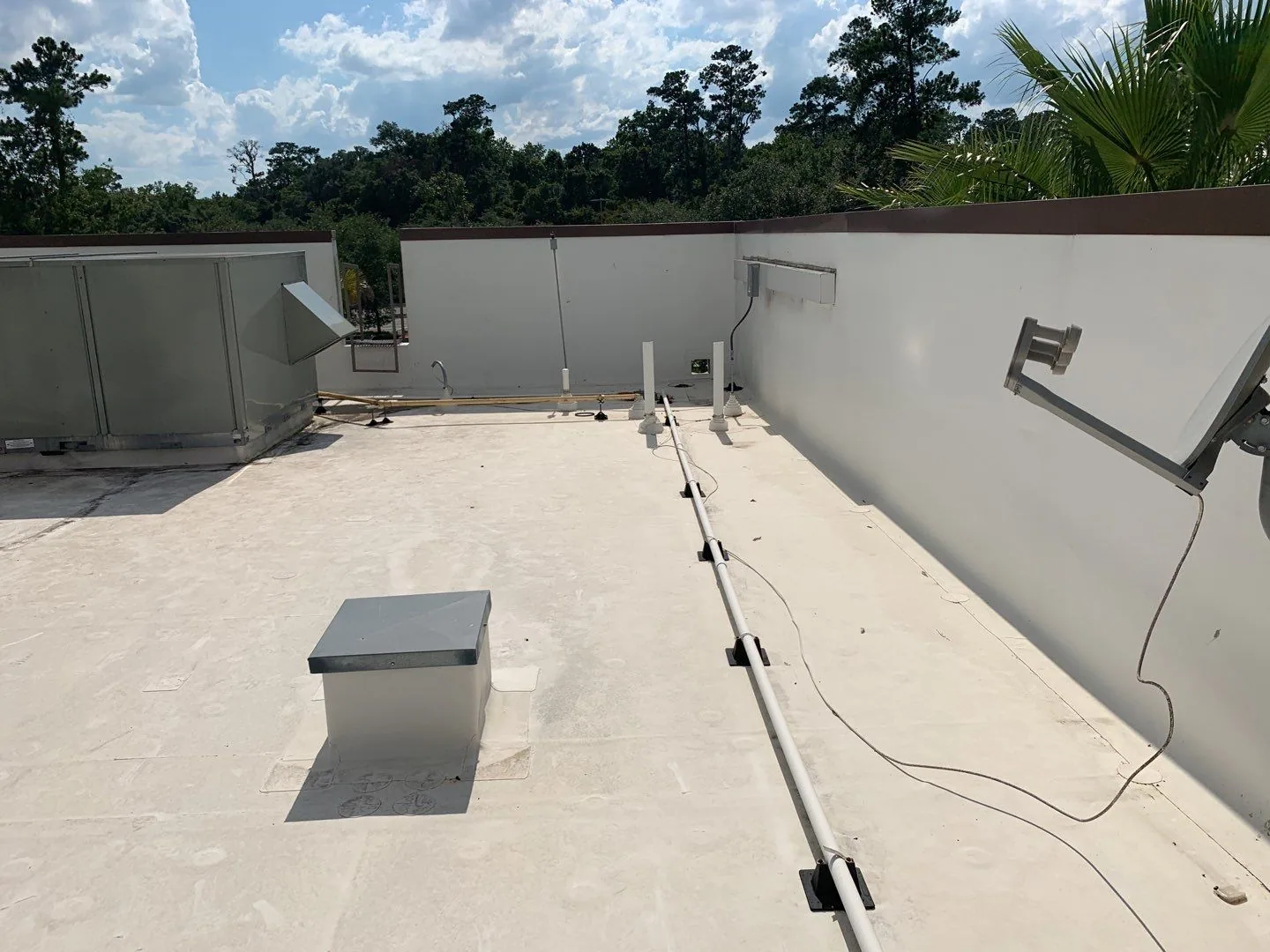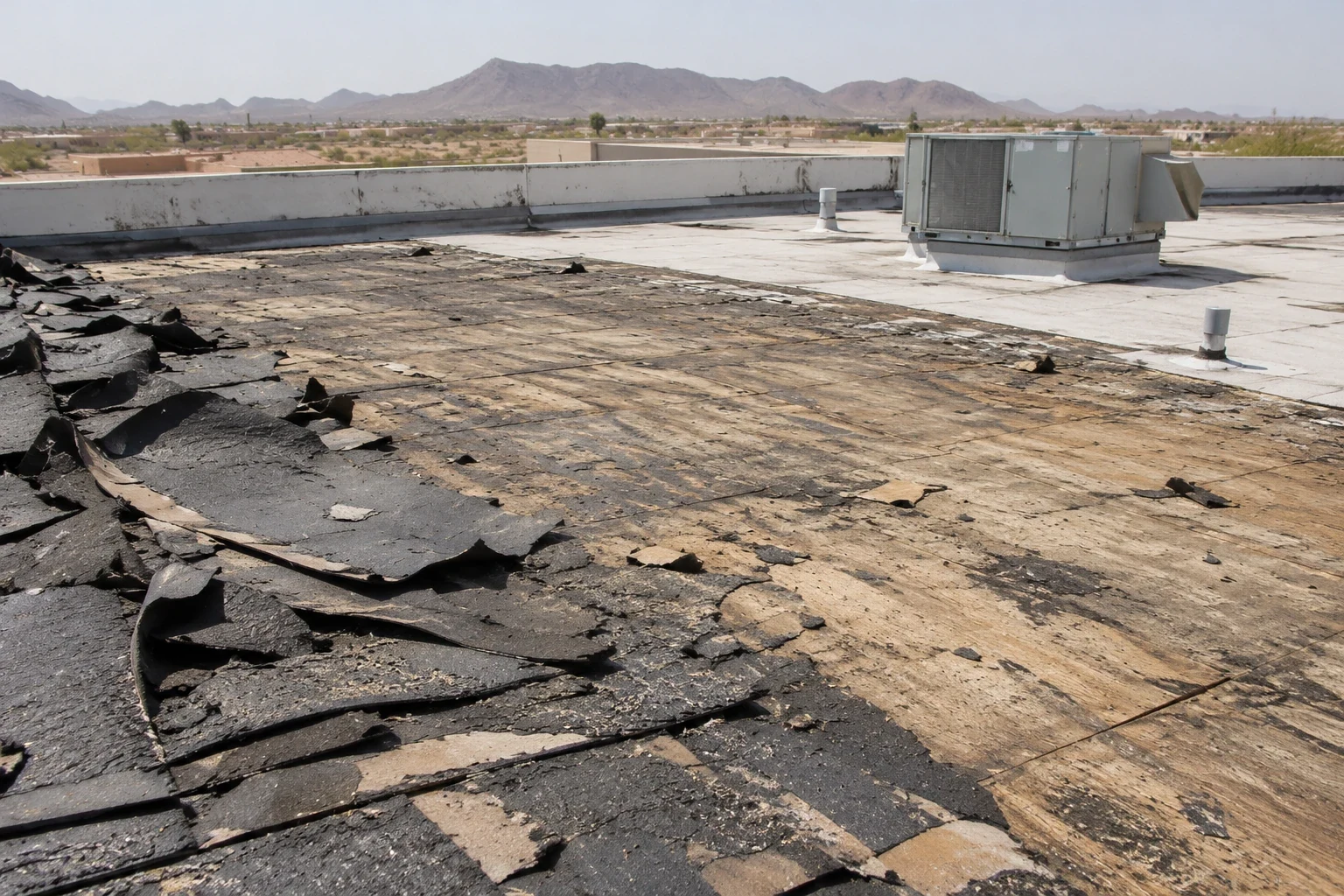
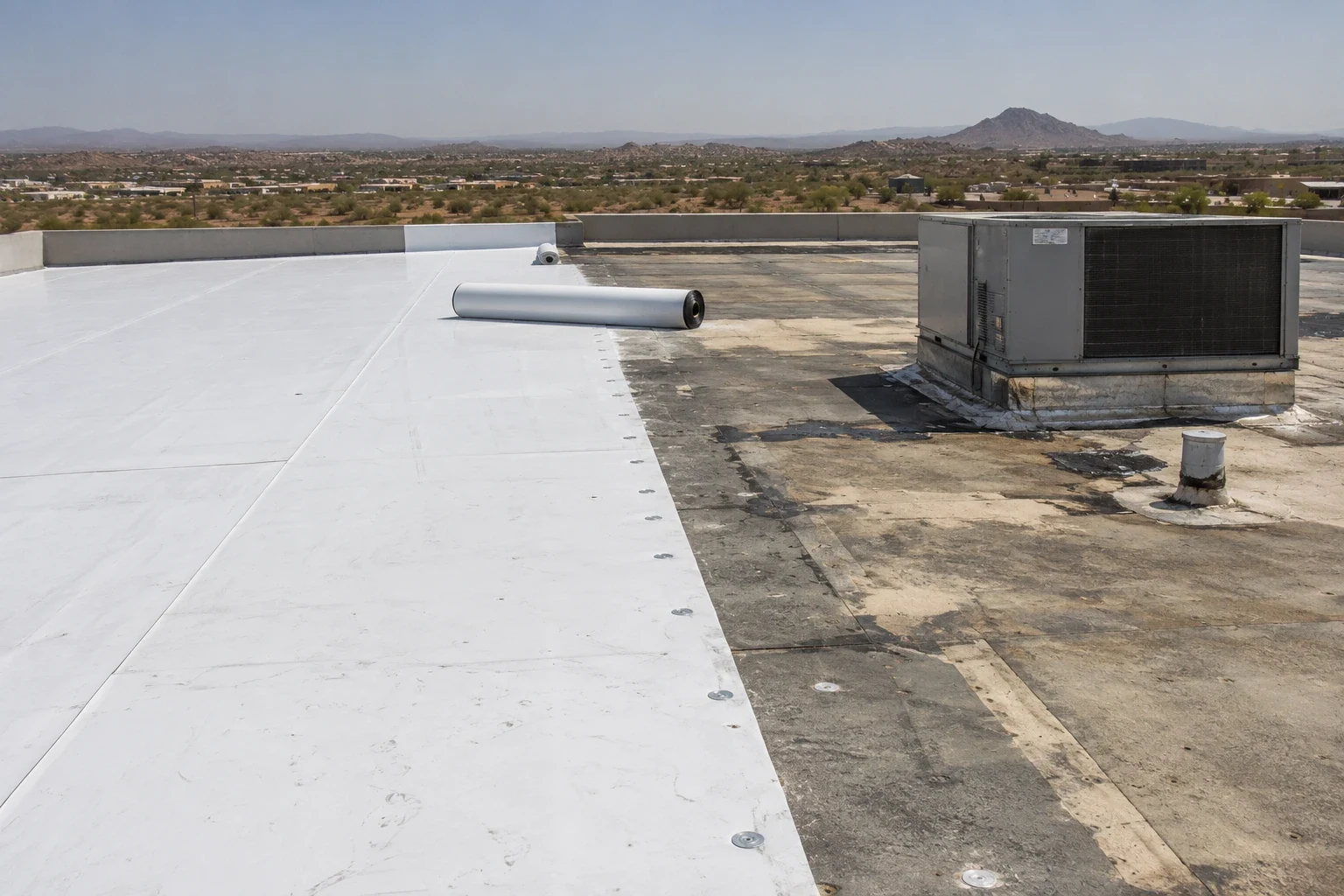
A recover starts with a question the roof cannot answer from its surface: what remains below the existing membrane? In Victorville, an owner may want to avoid opening an occupied warehouse or retail building, but a new layer only works when the roof below can support it. We ask where water has appeared, which areas have been repaired, who controls access, and whether insulation or the deck has been tested. The first step is a zone-by-zone review that separates a viable recover from a roof that needs selective or full removal before another assembly is installed.
Count layers before choosing a path
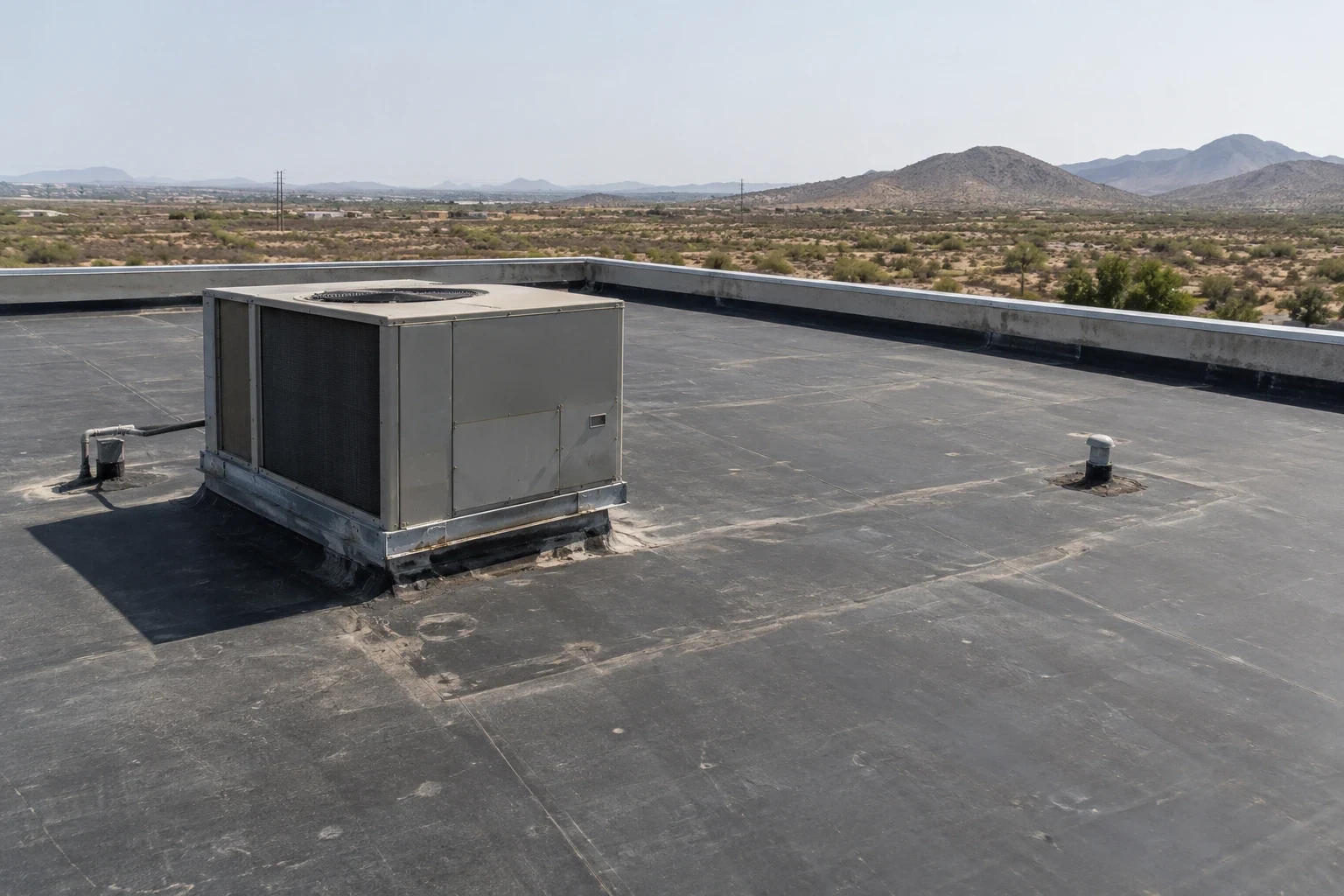
We confirm the existing roof's layer count, type, attachment, transitions, and visible condition, then compare those observations with repair records and available roof plans. Building codes limit the assemblies that can remain under a recover, and the deck must carry the added load. A roof with incompatible materials, unstable areas, or several unrecorded repairs may need test cuts before a scope can be set. The result is not an automatic yes or no: it is a clear account of the conditions that permit a recover, require more testing, or make removal the safer route.
Victorville's code information lists the 2025 California Building Code and state modifications. We use the applicable requirements during project review, rather than assuming a previous roof assembly remains eligible. The city's design references include a 5-pound ground snow load and wind values that vary by occupancy and exposure. Those values inform attachment and structural review; they do not replace evaluation of the roof deck, existing fasteners, or building-specific design.
Find what the membrane hides
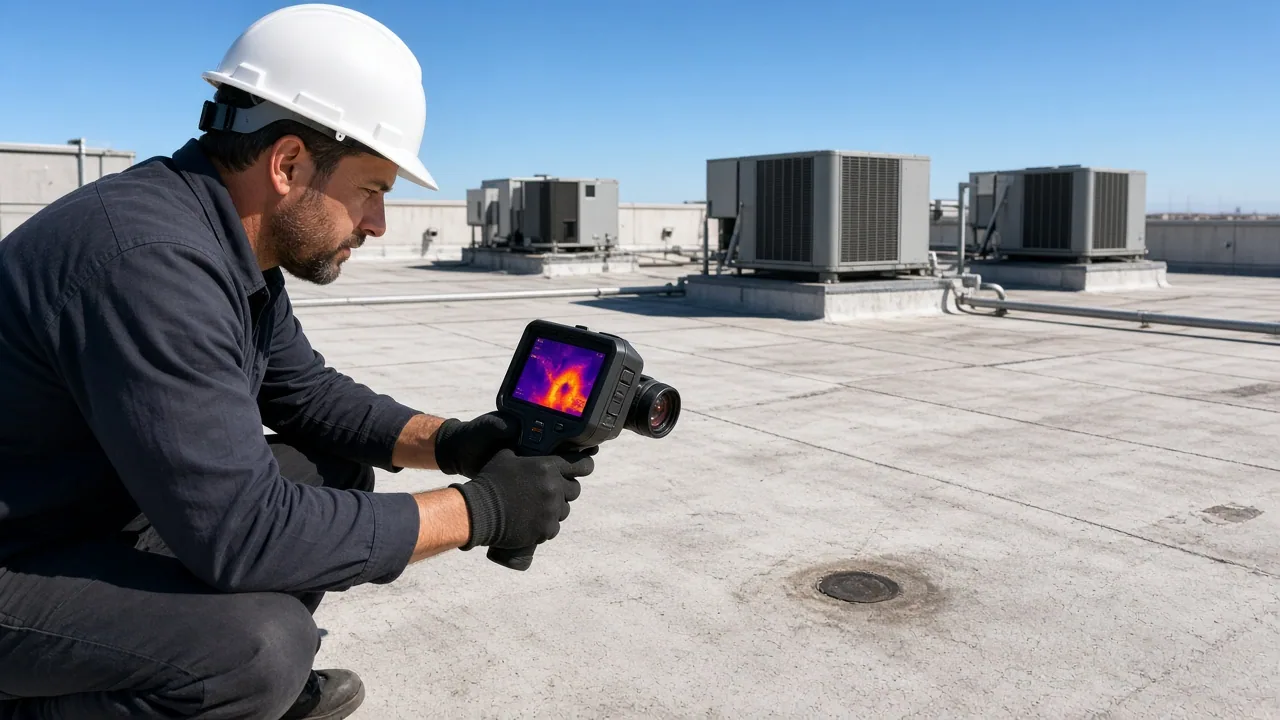
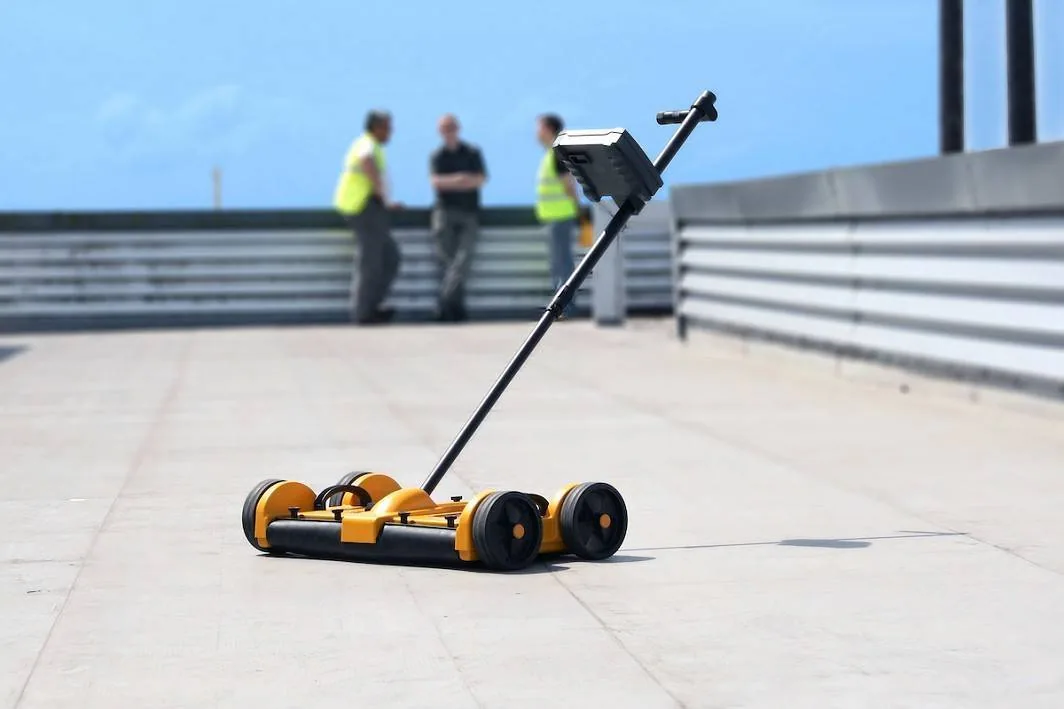
Water can travel laterally above a deck, so a ceiling stain rarely outlines the full wet area. We trace the path from the reported point to seams, curbs, walls, drains, and prior repairs. Infrared imaging can identify temperature patterns that deserve investigation, but it does not prove moisture by itself. Where the result affects the recover decision, we use test cuts or other direct checks to confirm insulation and deck conditions. A marked roof plan and photographs show where the assembly is sound, where material may need removal, and where another check is needed.
Victorville has high summer temperatures, and the city's roof-drain sizing reference is 2.5 inches of rainfall per hour. Heat can affect surface and seam movement; concentrated rain tests the path to outlets. We connect those stresses to observed details rather than assuming one roof matches another. If water has left wet insulation, a commercial roof inspection or infrared moisture survey can help define the next test.
Match the new layer to the roof below
The proposed membrane has to work with the substrate, attachment method, perimeter conditions, penetrations, and drainage plan. A recover may use a mechanically attached, adhered, or other approved assembly, depending on the deck and project requirements. We review fastener pullout, existing membrane adhesion, wind exposure, and transitions at walls and curbs before choosing a method. If insulation is added, its thickness changes curb heights, drain bowls, edge metal, and rooftop equipment clearances. The design must address those intersections together rather than treating insulation as a separate material choice.
Owners can compare the field and seam needs of TPO roofing and EPDM roofing against the existing system. We review a replacement scope if removal becomes necessary. The suitable path depends on tested conditions, not on a preference for keeping old layers in place.
Do not raise a problem into the next layer
Adding insulation or cover board can change the way water reaches a drain. We measure low areas, confirm the direction of flow, check scuppers and drain bowls, and review curb, skylight, and wall heights before setting the finished roof elevation. If an outlet is blocked or too low, a new membrane will not correct the underlying design. We include drain modifications, tapered sections, and metal transitions in the recover plan when they are needed. Victorville's rainfall sizing reference informs review, while the actual roof geometry determines the field work.
Edge securement and flashing also have to connect to the new layer. We identify where an existing termination can be reused, where metal needs replacement, and how a new membrane will turn up at a penetration or parapet. These details matter at a distribution building as much as across an office roof. The city's approved industrial development areas near Foxborough and east of U.S. 395 and north of Mojave Drive establish local planning context, not facts about any individual facility's roof.
Protect the occupied space
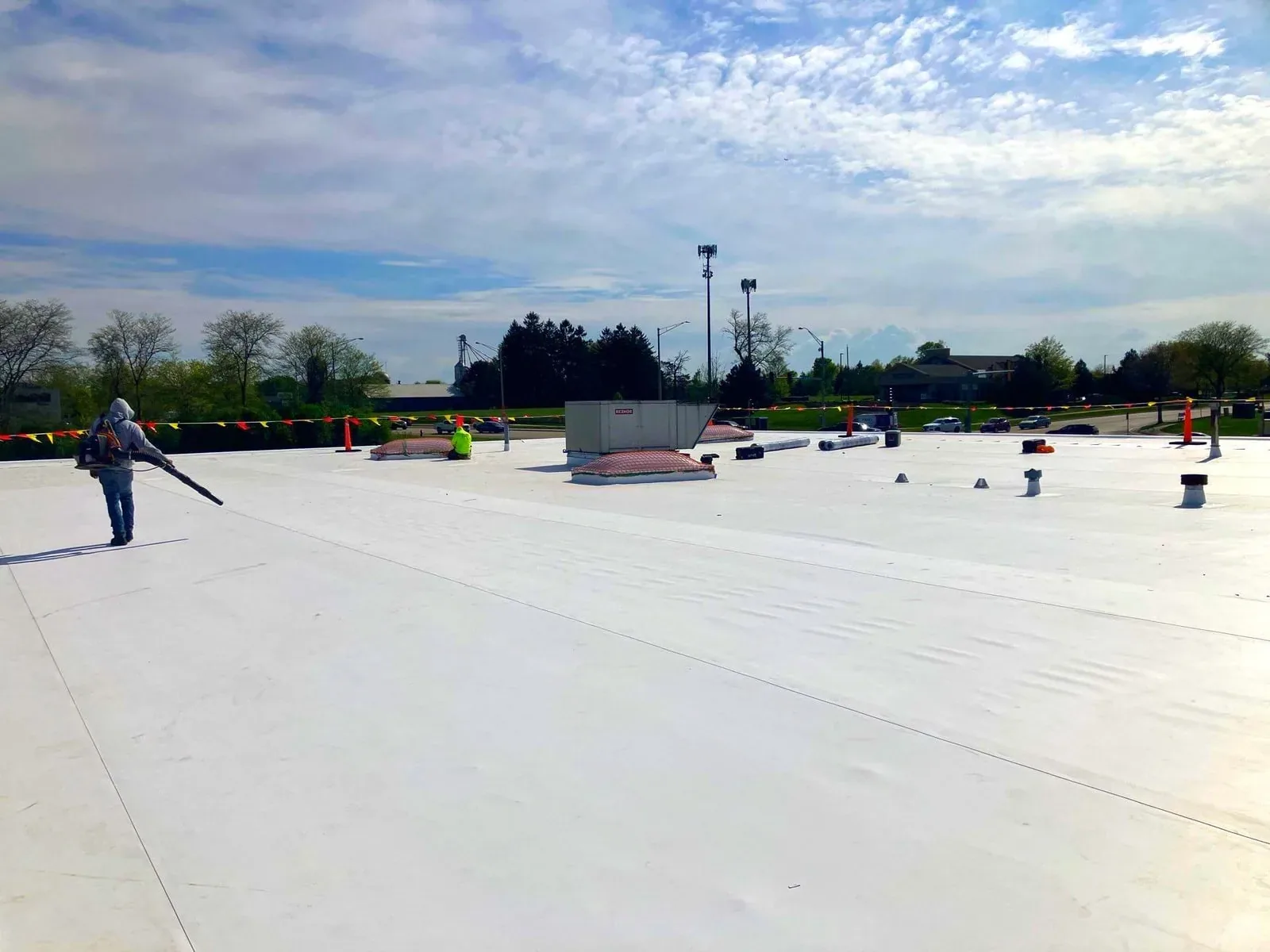
A recover can reduce tear-off activity, but it still requires a safe work sequence. We coordinate access, staging, material delivery, rooftop equipment use, occupied suites, and the areas that need protection below. When a test cut or selective removal is needed, the opening is controlled and closed before the crew leaves. A facility contact helps identify sensitive equipment, tenant schedules, loading windows, and roof areas that cannot be blocked. That information lets us plan transitions and temporary protection around actual operations.
Victorville's regional activity includes distribution, manufacturing, logistics, and industrial users. A building's schedule may follow a shift pattern or truck cycle, though the city's industry profile does not establish how any one property operates. We confirm those constraints with the facility director. The same planning applies to nearby Hesperia and Apple Valley: each building has its own roof history, access contact, and operational limits. A written sequence gives the owner the work zones and decisions needed before mobilization.
Leave a usable recover decision
The assessment should make the next choice understandable. We document the layers we can confirm, locations of tested moisture, deck observations, attachment concerns, drainage, and the details that need replacement. If a recover remains eligible, the scope states its preparation, insulation, attachment, membrane, perimeter, and closeout work. If it does not, we explain what must be removed and why. A roof condition report can support review by an asset manager, insurer, or project team without turning an incomplete test into a final conclusion.
For a roof that needs a second look, compare a targeted repair with a replacement scope, or review a roof condition report before capital approval. We can also plan an assessment for commercial properties in Victorville and the Eastern Bear Valley Road Corridor. Call with the affected roof zone, the work below, and the access contact. We will coordinate the next inspection and explain what the roof supports.
Commercial Roofing Questions
What must be checked before installing another roof layer?
Layer count, moisture, deck condition, attachment, compatibility, drainage, roof height, and code limits all need review. If a visual inspection cannot answer those questions, test cuts or another direct check may be needed. The written findings identify what supports a recover and what needs removal or further testing.
Can a recover go over wet insulation?
Wet insulation is generally removed or otherwise addressed because it can retain water and compromise the assembly. We verify affected areas before defining the recover boundary. Infrared patterns can guide testing, but direct confirmation determines what material stays.
Will a recover add enough height to affect drains or curbs?
Added insulation and cover board change elevations at drains, curbs, thresholds, wall edges, and equipment supports. We measure those transitions and include necessary modifications so the new surface has a workable drainage path and the details remain properly flashed.
How is attachment selected for a recover?
Deck condition, the existing assembly, wind exposure, and the proposed system all matter. We review substrate and fastening conditions, then specify an approved attachment approach for that roof. If existing layers cannot provide a sound base, we recommend removal rather than relying on an unsuitable surface.
Does a recover avoid disruption inside the building?
Roof work still brings staging, access, and protection needs, though a recover can reduce tear-off noise and debris. We coordinate zones and required test openings with the facility contact, then plan around occupied areas and operating windows.