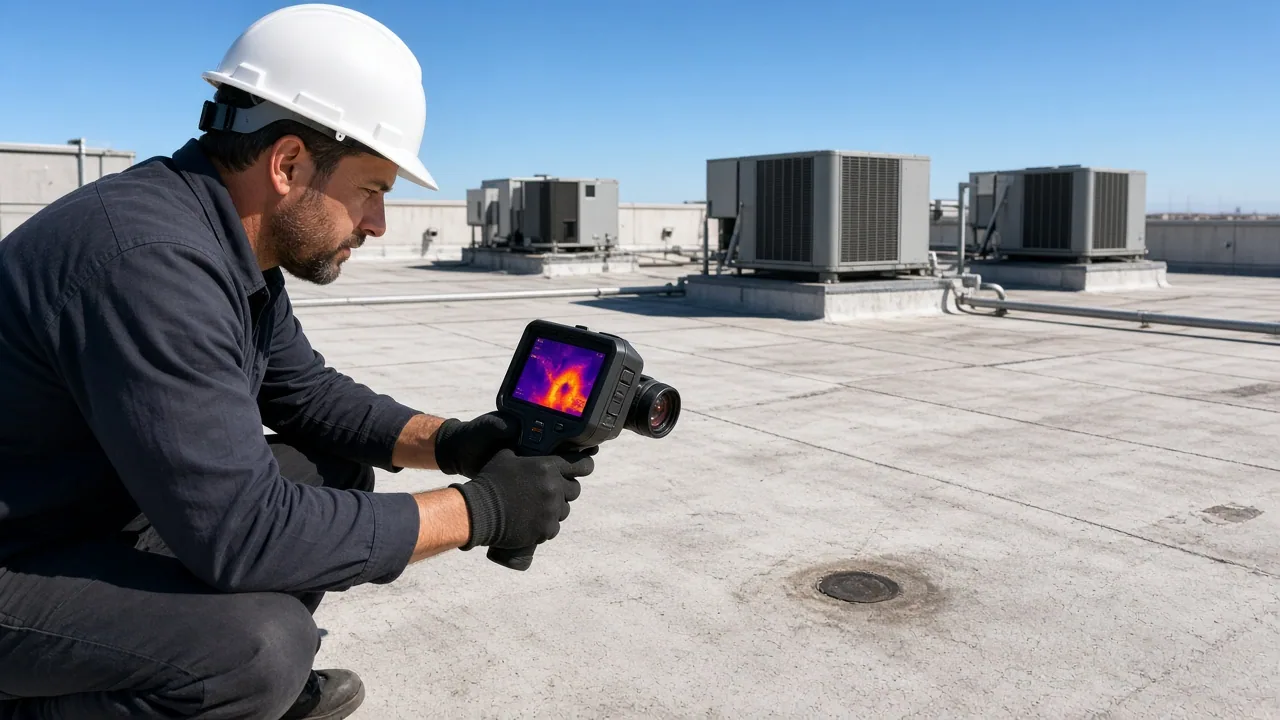
A call from a Hesperia commercial property begins with the room or operation affected, the roof zone above it, and the person who can arrange access. We ask whether water is active, whether equipment or inventory sits below, and what needs protection before anyone climbs. The first inspection follows the reported path through seams, drains, curb bases, and perimeter metal. A photo set identifies what was visible and what remained out of reach, giving the facility contact a choice between temporary protection, a defined repair, and a closer test.
Set the access boundary first
Hesperia sits directly south of Victorville, so property teams can coordinate between neighboring cities while keeping each roof's records separate. A tenant report does not establish who controls a roof hatch, alarm, or service gate. We confirm the site contact, sign-in steps, fall-protection rules, and the space below the reported zone before selecting an inspection path. If a ceiling panel, electrical room, or stock area is wet, that concern changes the protection sequence and may require a make-safe step before the permanent scope is ready.
At intake, we note when the condition appeared, what changed, and which suite or bay is affected. The contact shows the access route and any area that needs protection. We do not price a roof-wide repair from an interior stain alone. A commercial roof inspection compares the report with accessible seams, drains, and transitions, then leaves unresolved areas clearly marked.
Follow the water path
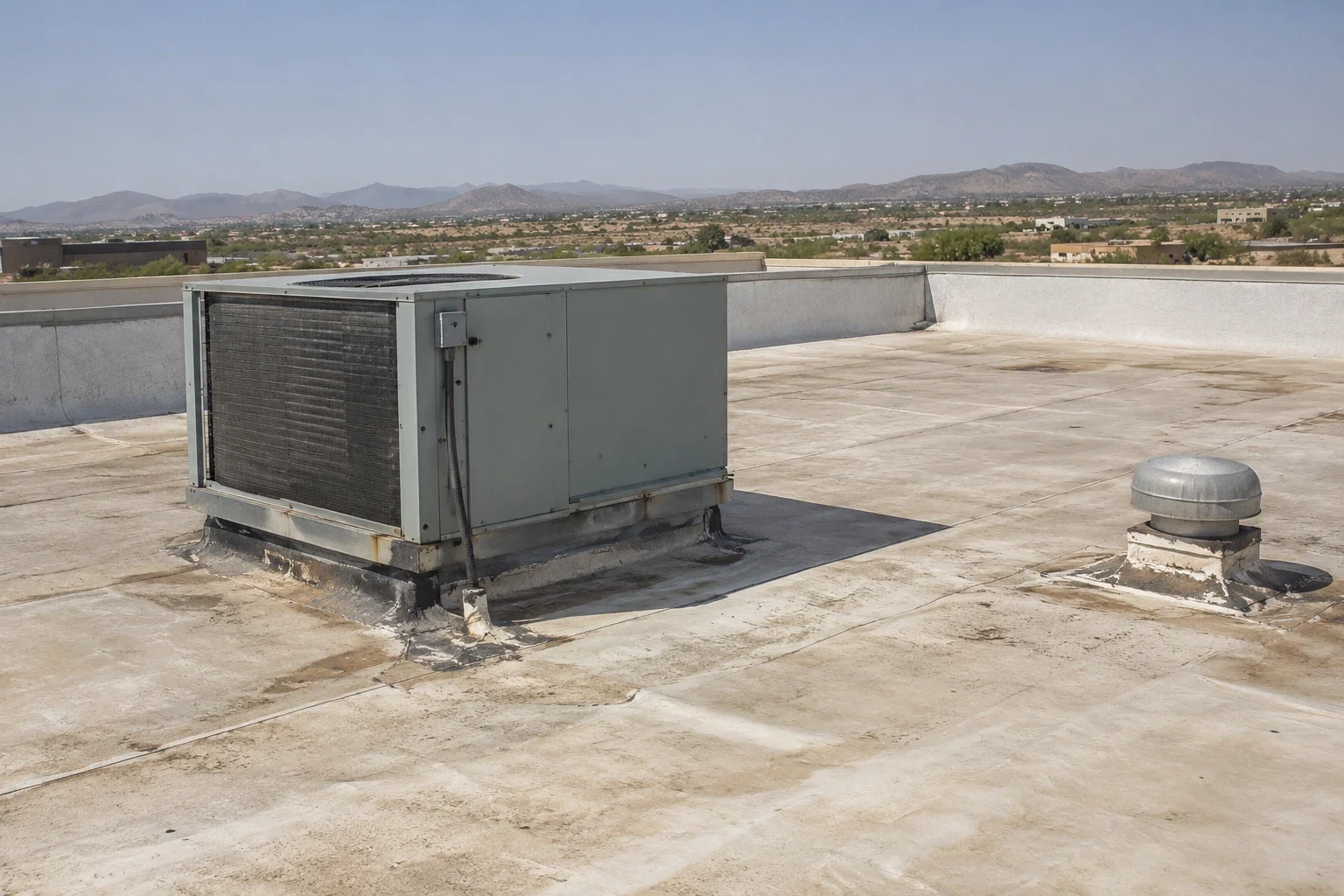
A roof walk starts above the interior location and moves outward through the details that can redirect water: field seams, curb corners, penetrations, wall turns, drains, and edge metal. We mark each observation on a simple zone map and pair close photographs with a wider orientation image. If an air-conditioning unit or restricted area blocks a view, the record says where the inspection stopped. That prevents an unseen section from being treated as sound or defective before access is arranged.
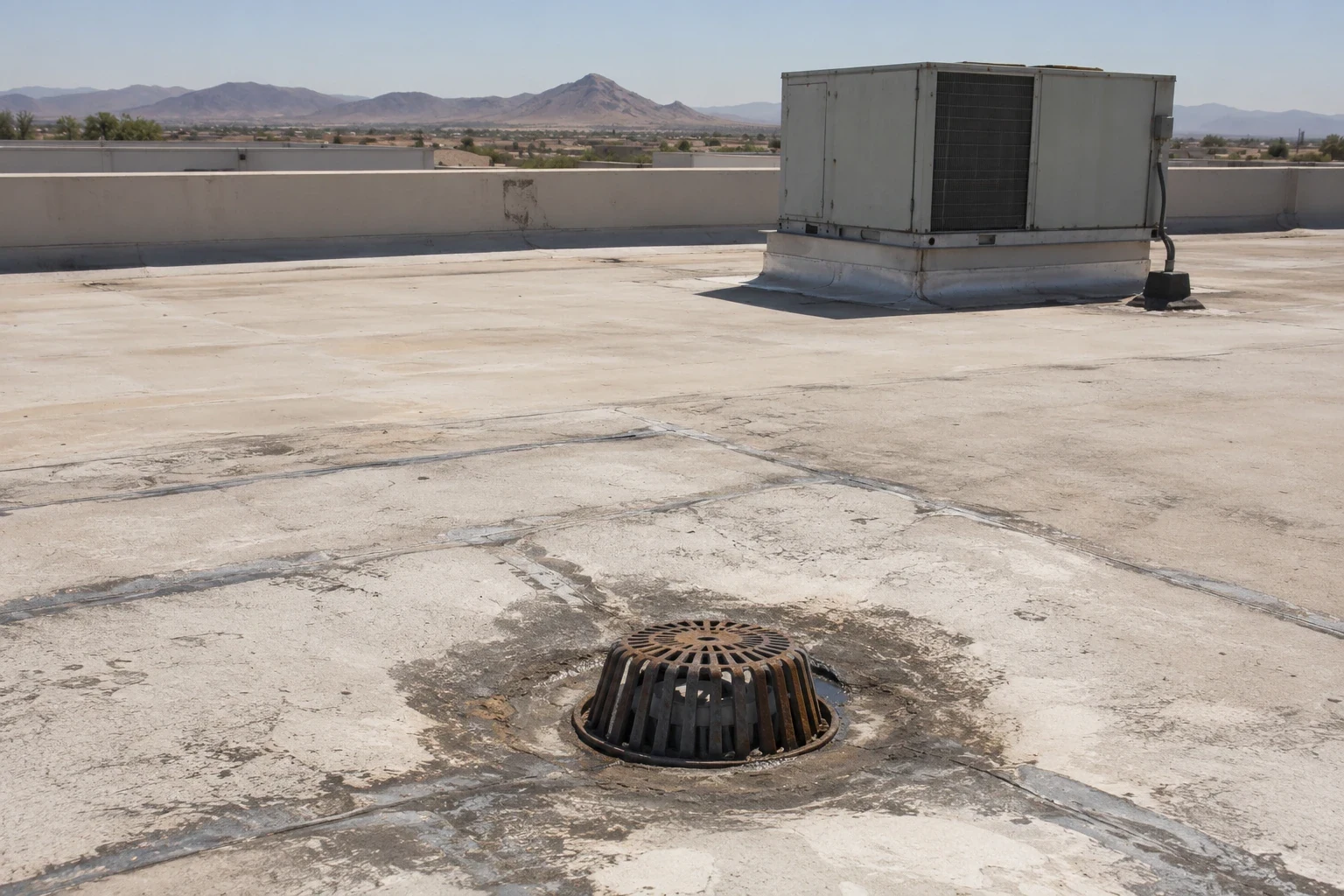
Drainage is read as a connected route, not as a single bowl. We look at the inlet, sump, visible slope, overflow, and nearby membrane, then note staining or retained water that helps explain the report. A clear grate cannot establish whether a hidden line flows freely, and a wet ceiling does not identify which transition opened. When an outlet or scupper is part of the condition, drain and scupper work can be scoped separately from a membrane patch. A flashing repair review is useful when a curb or wall transition shows a distinct gap, split, or loose termination.
Read the local operating mix
Hesperia's economic profile includes retail sales and transportation-and-warehousing receipts, two activity types with different access demands at a commercial property. A customer-facing space may need a clear entrance and quiet work window; a receiving operation may need its loading path open while roof materials are staged. We ask the facility contact which activity is affected, then carry that constraint into the work sequence. The roof is still inspected zone by zone, because local business activity does not tell us the membrane type or condition above any one suite.
Hesperia recorded 2022 retail sales of $1,251,868 thousand and transportation-and-warehousing receipts of $153,030 thousand. Those citywide totals provide context for different operations, not a measure of an individual building's size or roof. Before scheduling repair, we confirm which rooms and doors lie below the work zone, who receives deliveries, and whether protection can remain through a shift change. The contact can then compare a short access window with a phased sequence that keeps the affected operation usable.
Separate make-safe work from repair
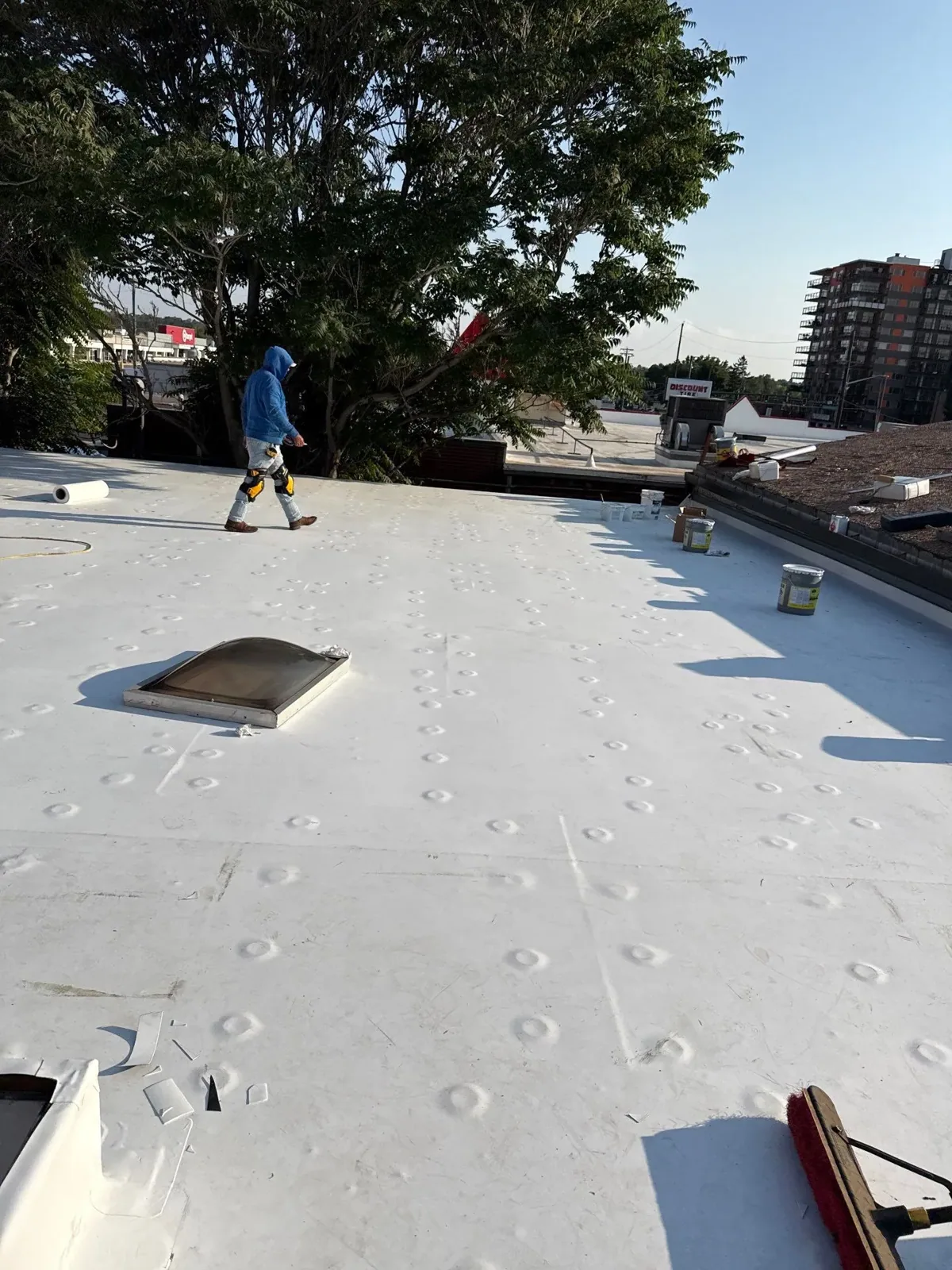
If the roof is open or water is moving, temporary protection can limit exposure while we trace the source. The work note states where that protection sits, what it covers, and what condition requires a permanent return. Once the assembly is identified, a sheet-membrane lap, metal panel, penetration flashing, or drain connection calls for a method compatible with the existing detail. We prepare the surface, describe the repair boundary, and identify transitions that remain outside the approved scope. That lets an owner compare a contained fix with broader work without confusing them.
Cost follows the conditions we can verify: roof access, staging distance, wet insulation, damaged deck, equipment congestion, and the length of sound material needed for a tie-in. We list concealed layers or inaccessible areas as open questions rather than bundling them into a guess. If several zones show deterioration, a photo-based roof condition report can show each area beside its repair status and next decision. A coating or replacement discussion belongs only after the existing surface, drainage, and substrate have been checked against that option.
Protect the space below
Roof work over an active building needs a contact who can release access and a sequence the people below can follow. Before mobilization, we confirm entry, roof hatch control, lift placement, staging, and any door or loading route that must remain open. For heat-welded materials, adhesives, or cutting work, the plan identifies affected rooms and the timing for temporary protection. If the building cannot pause an operation, we can assess whether a smaller zone or different window is workable, then put that limit in the scope.
At the end of each work period, the crew checks the day’s boundary, removes debris from agreed paths, and records what remains open or protected. The facility contact receives the next step and who needs to approve it. A return visit can follow the same access route while allowing for changed staffing, a new tenant, or a different operating shift. When several buildings share ownership, the record still keeps each address and roof-zone reference distinct so a finding from one site does not migrate to another.
Leave a record for the next decision
The closeout pairs photos with the affected room, roof-zone map, visible assembly, completed repair, and any area that stayed out of reach. It notes remaining protection and the decision that belongs to a return visit. Hesperia adjoins Victorville on the north, but a roof history remains attached to its own building and access contact.
Call with the affected operation, access contact, and any earlier repair record. We can inspect the accessible zone and prepare a bounded scope. The Victorville service area covers the neighboring city, while Old Town and the Bear Valley commercial corridor address separate Victorville locations. A building's roof record stays with the property even when its manager coordinates work across city lines. For teams that manage buildings in both cities, the Palmdale Road and U.S. 395 corridor offers a separate Victorville location overview; each property's roof history and work plan remain distinct.
Commercial Roofing Questions
How do you decide what to protect inside a Hesperia building?
We start with the reported room, the activity underway, and any electrical, inventory, or equipment exposure below the roof zone. The facility contact helps mark a safe boundary before the crew opens the assembly.
Can one roof leak call be priced before you inspect?
A call sets the access and protection plan. A repair price needs the roof material, visible limits, and any test needed to trace water; temporary protection stays a separate line when conditions call for it.
What if a rooftop unit hides part of the suspected leak path?
The photo record marks the obscured zone and what would be needed to reach it. We can discuss another access method or return once the equipment area is available, without labeling the hidden section as inspected.
How do you handle deliveries during roof work?
The site contact shares receiving periods, vehicle paths, and entrances that must remain open. We plan staging around those limits and write down how the crew will secure the work area before the next shift.
What belongs in the closeout after a repair?
The report links photos to the roof zone, names the treatment and materials observed, and lists any concealed condition or return item still open. That record gives the next facility contact a clear point to review.