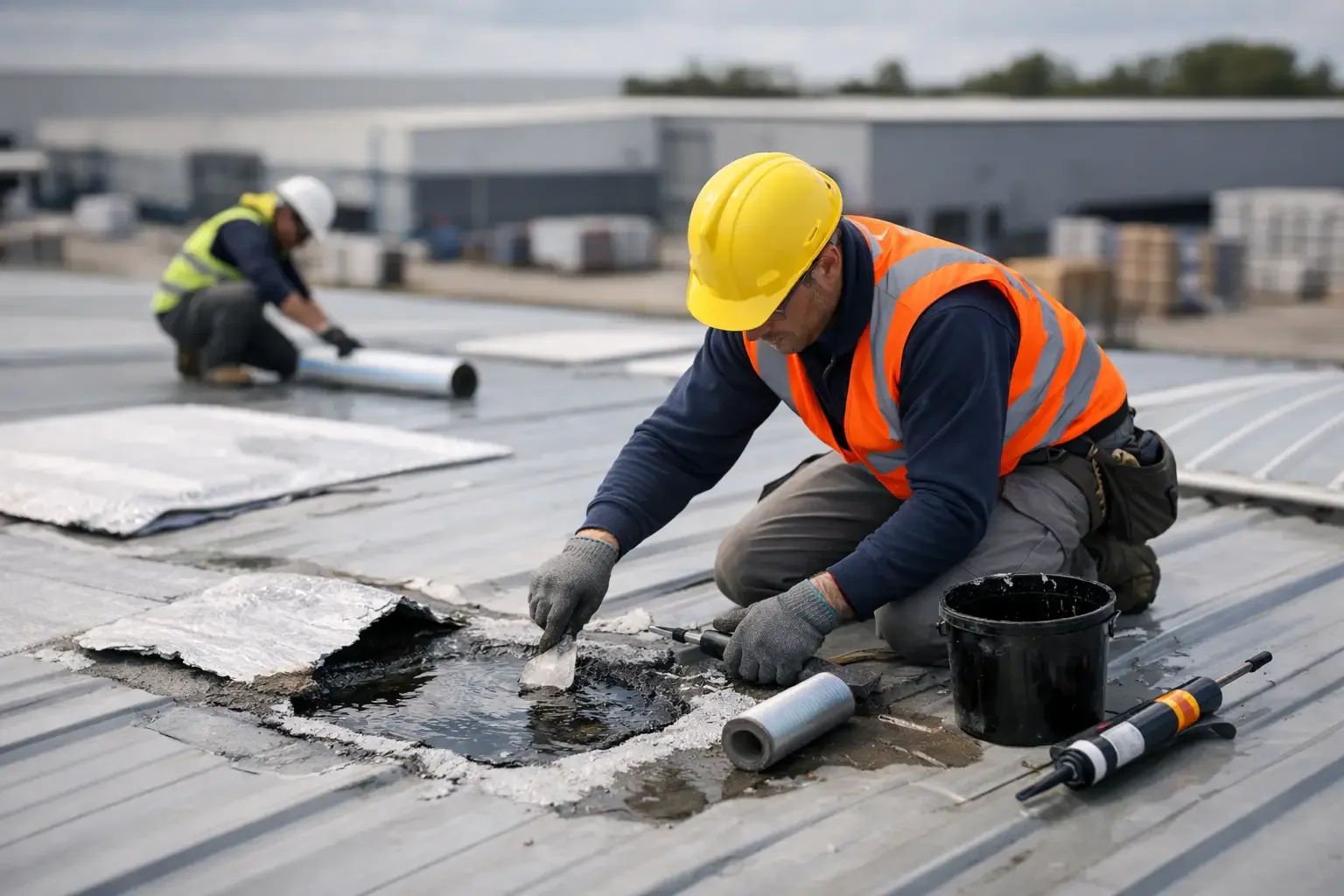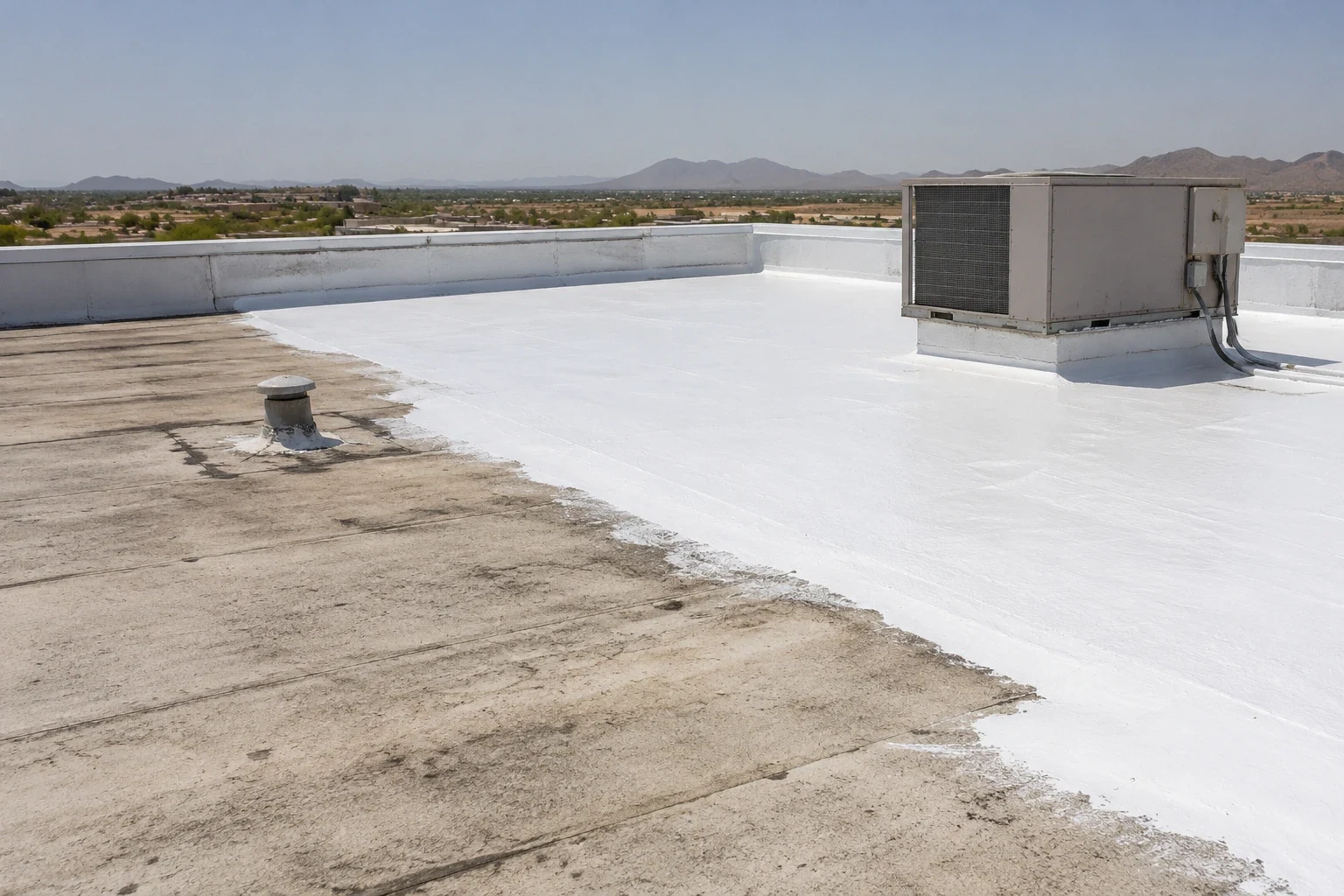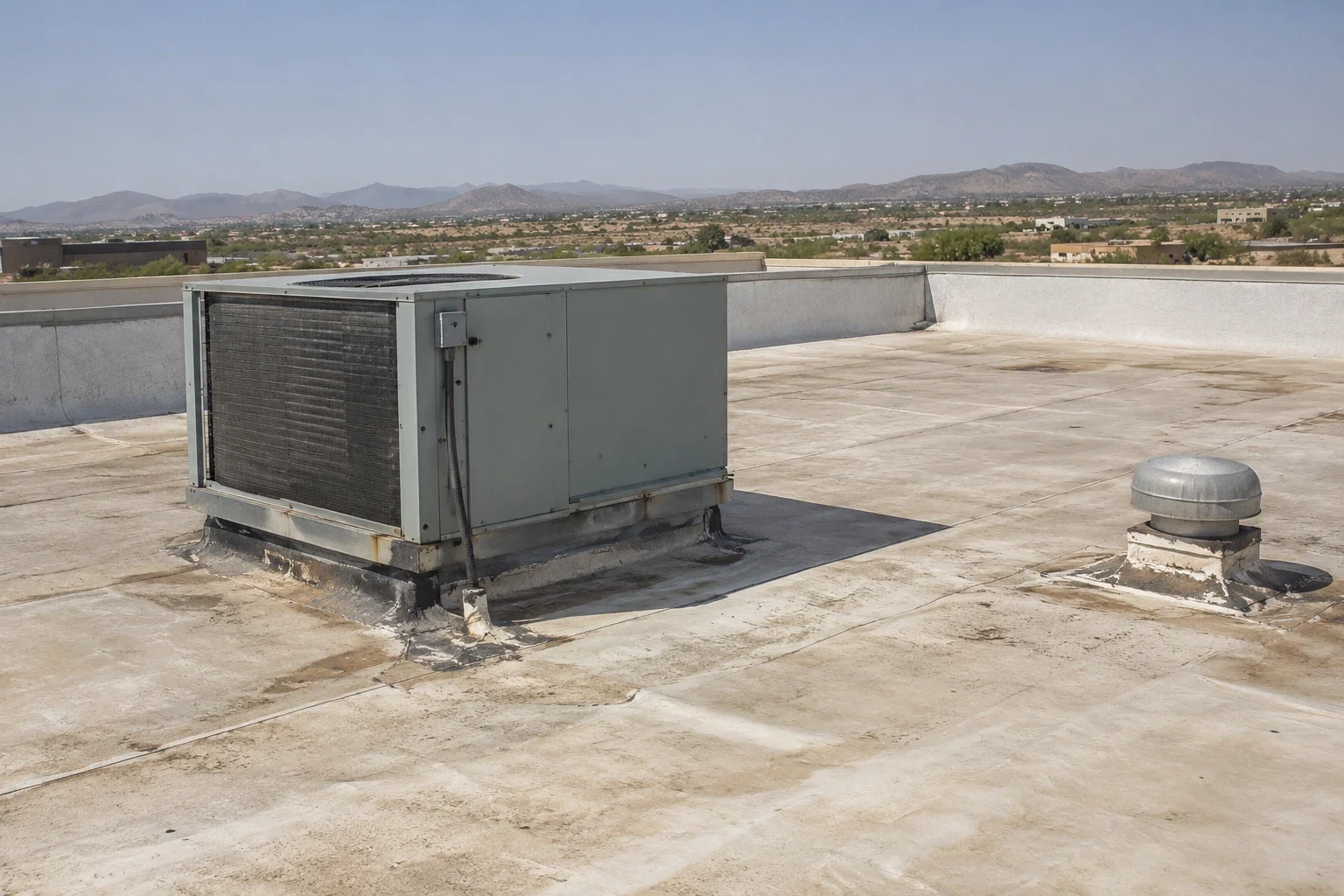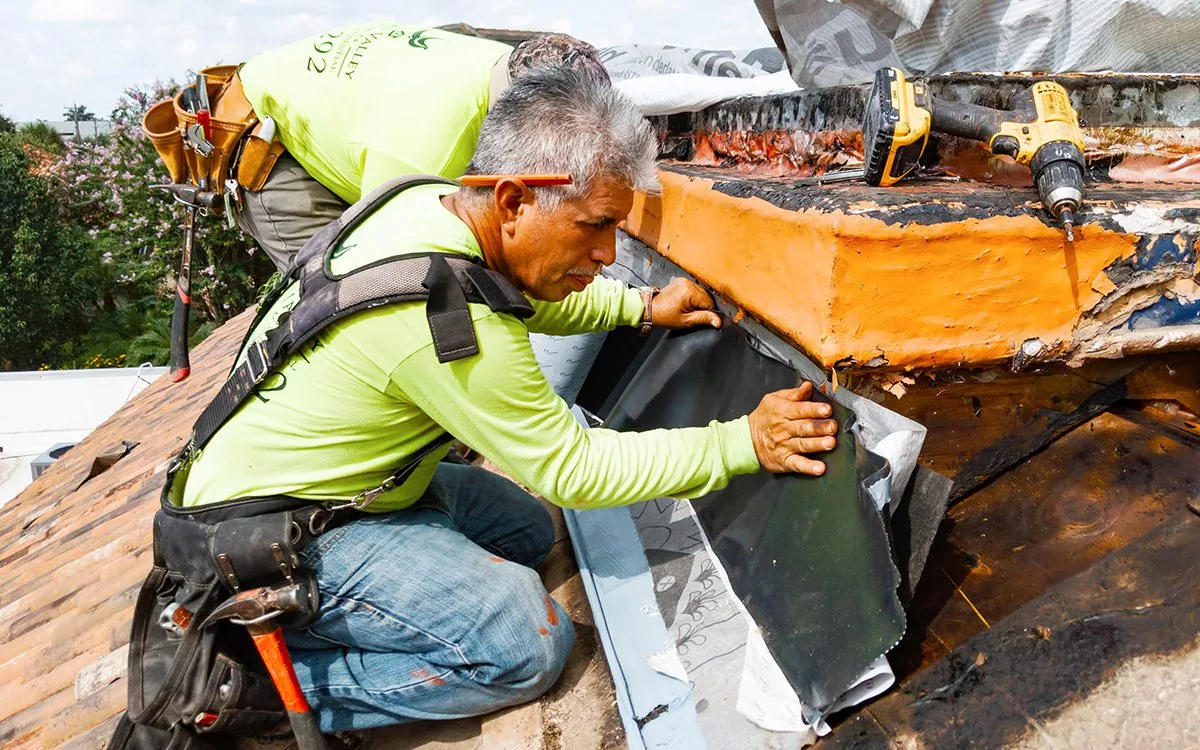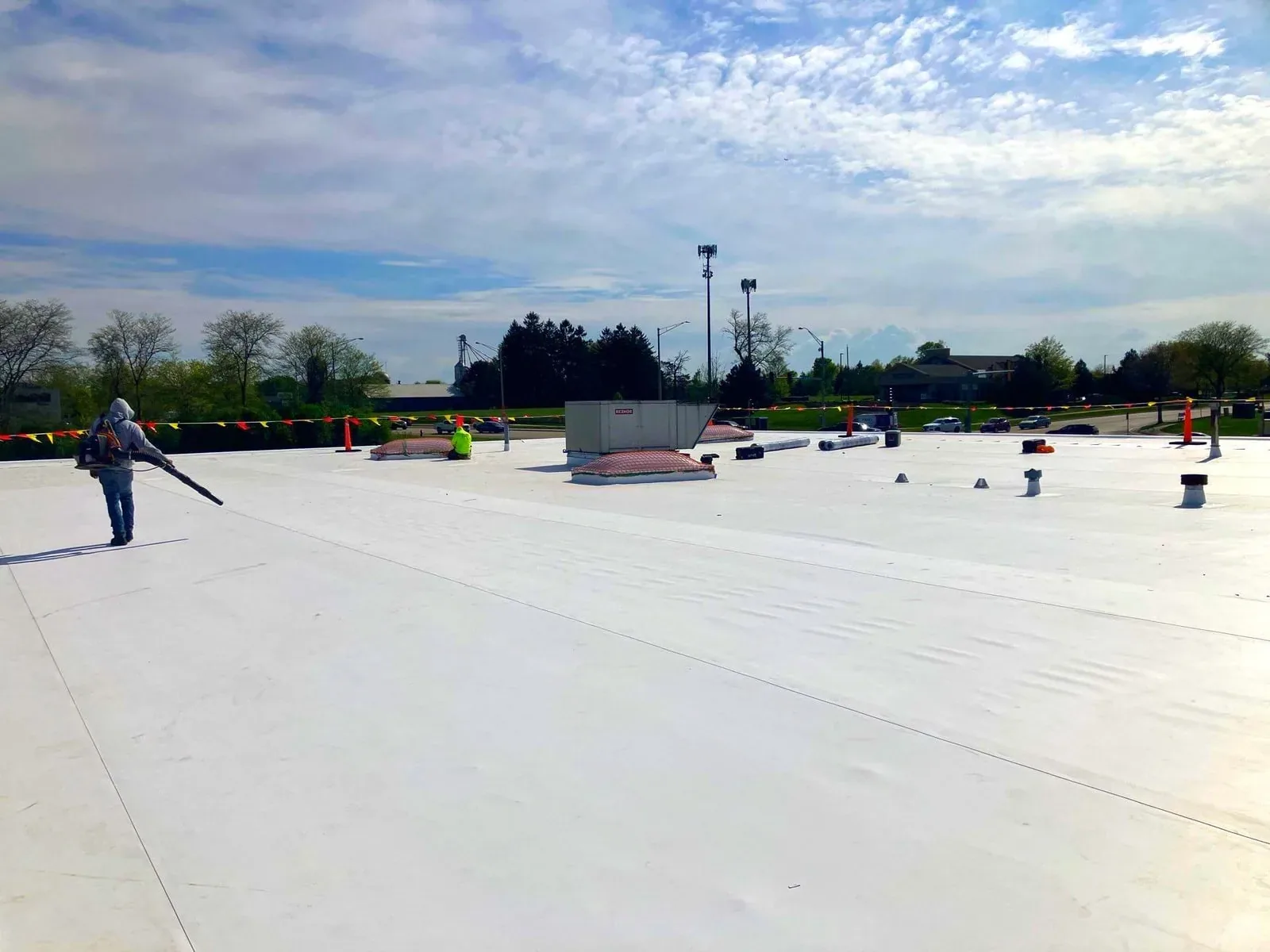
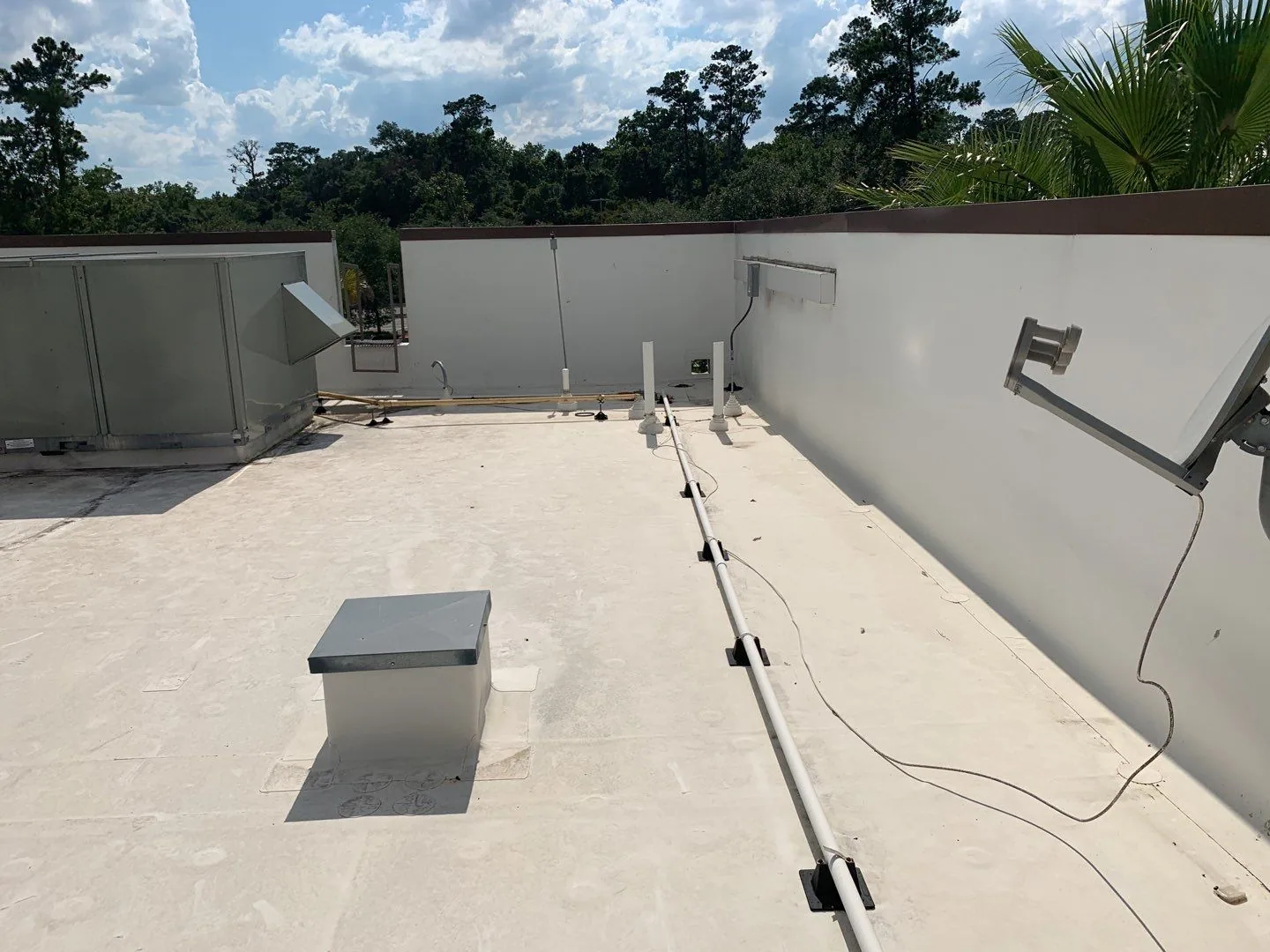
A repair request is most useful when it points to a roof zone, a recent change, and the space affected below. A loose edge at an Old Town Victorville retail building raises a different set of checks than a seam beside rooftop equipment on an industrial roof. We ask what the facility contact saw, whether the condition changed after recent work, and who can provide access. From there, we trace the defect through membrane, seams, flashing, penetrations, and drainage. The goal is a repair with a defined boundary, not a patch placed only where water became visible.
Mark the failure before opening it
We record the reported condition before moving material or applying temporary protection. A roof plan, photos, and notes identify the seam, penetration, edge, drain, or transition involved. We check the surrounding field for splits, punctures, adhesion loss, open laps, displaced metal, blocked outlets, and wet insulation. The defect may extend beyond the visible opening, or water may have traveled before reaching the ceiling. Tracking that route keeps the repair tied to a cause we can confirm.
Victorville's code page gives a roof-drain sizing rate of 2.5 inches per hour. We inspect how water reaches the outlet and whether debris or a low spot is holding it, rather than using that design reference as a diagnosis. Heat can affect membrane movement and sealant. If a roof includes older layers or many prior patches, we document those limits before recommending a broader opening or a condition survey.
Match the repair to the assembly
The repair material and preparation have to suit the existing roof. A thermoplastic membrane needs compatible sheet, cleaning, and welded seams; an EPDM repair uses materials and primers intended for that rubber system. Modified bitumen and built-up roofs need their own surface preparation, reinforcement, and tie-in. Coatings cannot replace structural repair or address a wet substrate. We identify the membrane where possible, test adhesion when useful, and explain when an unknown or incompatible patch must come out before permanent work begins.
We review whether the repair restores the full detail. A seam repair may extend to an end lap, nearby curb, or drain path. A puncture near a wall can involve flashing as well as field membrane. Where focused work fits, a documented commercial roof leak repair or roof coating restoration may suit the condition, but their preparation differs. We record the repair limits before closing the area.
Follow water to its entry point
Water often moves before it becomes visible indoors. We compare the ceiling location with roof seams, slope, drains, curbs, parapets, and previous repairs. A drain line can carry water across an interior area; a split at a curb may show only during wind-driven rain. The inspection checks for both active openings and vulnerable transitions that could admit water under the same condition. When the water path remains uncertain, we explain the next test instead of widening the repair without evidence.
Victorville's climate figures include high summer heat, while the building-code page lists snow and wind design values that vary by occupancy and exposure. These references help frame questions about movement, securement, and drainage. They do not establish the condition of a roof in Old Town Victorville, Hesperia, or another place. We use the observed assembly and the source facts for the place named. For a broader roof record, the condition report process ties photos and findings to a roof-zone map.
Control exposure while work is planned
If water is active or material has lifted, temporary protection may be needed before permanent repair. We identify the affected interior area, nearby equipment, safe roof access, and the condition to control first. Temporary coverings or localized make-safe measures suit the surface and weather, then are recorded as temporary work. They do not replace permanent work or prove concealed areas are dry. The facility contact knows what remains under observation and what check comes next.
For an occupied building, planning includes work hours, tenant activity, rooftop equipment, and safety controls below the defect. Victorville's economy includes logistics, manufacturing, industrial users, and distribution; those activities can make access windows relevant, but they do not set a particular building's schedule. We confirm it with the site contact. An urgent leak may call for a 24-hour emergency roof response with assessment and temporary protection before permanent repair.
Keep the scope measurable
Repair cost and duration depend on access, material type, opening size, wet insulation, deck condition, flashing, edge metal, equipment clearance, testing, and protection below. Removing incompatible material and rebuilding a transition can take more work than covering a visible tear. We identify preparation, tie-in method, repair limits, and conditions that may expand the scope after opening. If the defect reveals a larger damaged zone, we document it and agree on the added work before proceeding.
Work orders, roof diagrams, photos, and leak reports help show whether a zone failed before. Records do not prove water still enters through the old repair, so we compare them with current observations. Owners can review the repair boundary alongside a TPO membrane repair plan or consider replacement if focused work no longer fits. The written findings make that choice easier to discuss.
Confirm what changed
After the repair, we photograph the completed area, note the materials and tie-in details, and identify any adjacent condition that still needs attention. When a controlled water test is appropriate and safe, we define the area tested and the observation period. A dry interior immediately after a repair does not show every hidden condition, so we do not treat a single check as proof about the full roof. The closeout record gives the owner a baseline for the next inspection and a clear reference if another leak is reported.
For roofs near the Eastern Bear Valley Road Corridor, we keep the location target at the broad district level. We can inspect a roof in Victorville, compare a related recover option, and provide a roof inspection when the owner needs a wider condition review. Call with the affected zone, what is happening below, and the access contact. We will explain the repair path and record what remains to be checked.
Commercial Roofing Questions
Can you patch a roof when the membrane type is unknown?
We first inspect the assembly and look for product markings, edge details, records, and other clues. If the material remains uncertain, we explain the test or opening needed before selecting repair products. A mismatched patch can fail at the bond or seam, so material identification is part of the repair scope.
Why does a leak appear far from the roof opening?
Water can travel along a deck, insulation, framing, or a drain route before reaching a ceiling. We trace from the reported interior point toward the roof details that could admit water, then document what supports the path. If more than one entry point remains possible, we identify the next check instead of guessing.
Will you repair flashing as well as the membrane?
The scope includes the flashing when the failure involves a curb, wall, penetration, or edge transition. We record the existing detail, remove loose or incompatible material as needed, and tie the replacement flashing into the surrounding assembly. A field patch alone cannot restore a failed transition.
How do you handle repeat repairs in the same area?
We compare current conditions with available work orders and photos, then inspect the earlier repair and nearby water path. Repeated visits may point to a detail, drainage issue, or wet material that a surface patch did not address. The next scope explains what we found and how it differs from prior work.
What can we do before the repair visit?
Tell the facility contact where water appeared, when it changed, and what equipment or activity is below. Share roof plans and prior work records if available, and identify the person who can open the access point. Avoid unsafe roof access or work on electrical equipment; we will assess the roof conditions directly.