A useful inspection begins before anyone climbs a ladder. The facility contact identifies the access point, concern, and activity below. A stain in an Old Town Victorville suite, for example, may be separated from its entry point by insulation, deck, or a drain path. We record when the report began and compare it with roof conditions. This first-call detail keeps the visit focused on an actual question instead of a general walk across a large surface.
Commercial Roofing Victorville inspects occupied facilities, warehouses, offices, retail buildings, and other commercial properties across the city. We organize findings by roof zone, photograph visible conditions, and identify areas that need a closer test. A commercial roof condition report can help a manager distinguish a current repair from a capital-planning item. Our goal is a usable record of what was seen, what could not be confirmed, and which decision should come next.
Start with the report
Before the roof review, we ask where water appeared, when it was noticed, whether it returned, and which rooms or operations are affected. A mark near a ceiling grid, equipment room, or merchandise area deserves a precise location and a note about any active electrical or access concern. We also ask what changed recently: a service visit, equipment work, a storm, or a repair. Those details do not prove a roof defect, but they narrow the first area to inspect.
Victorville's summer heat is relevant to a roof review, but a climate reference is not a diagnosis of a particular assembly. Historical National Weather Service observations for the George AFB/Victorville station show mean maximum temperatures of 97 degrees in July and 95 degrees in August during the 1980-1990 observation period. We use that context to ask how exposed seams, sealants, and rooftop transitions have been maintained, then rely on field evidence to assess condition. If the report suggests a leak, the commercial roof leak repair process can continue from the same mapped zone.
Walk the roof by zone
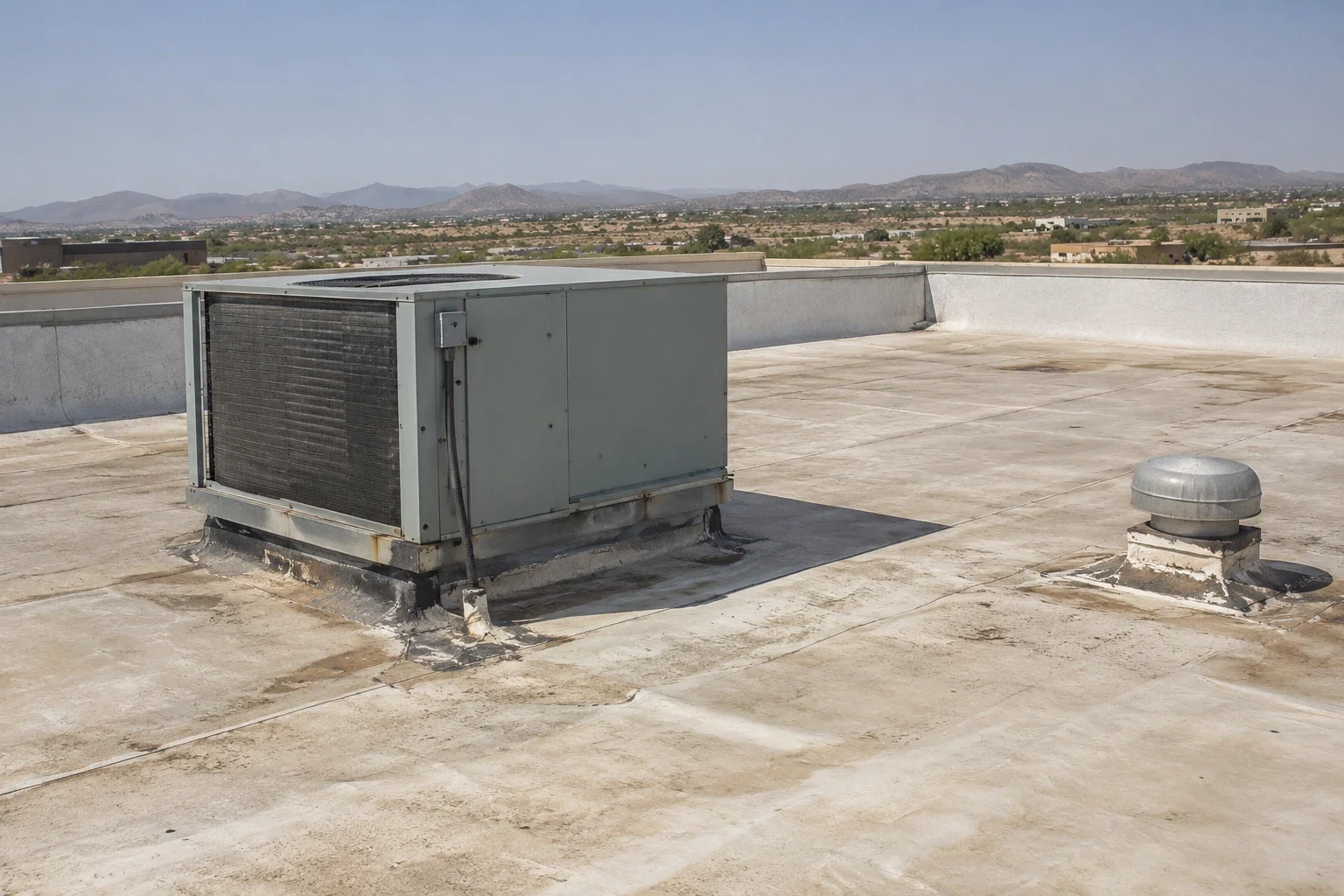
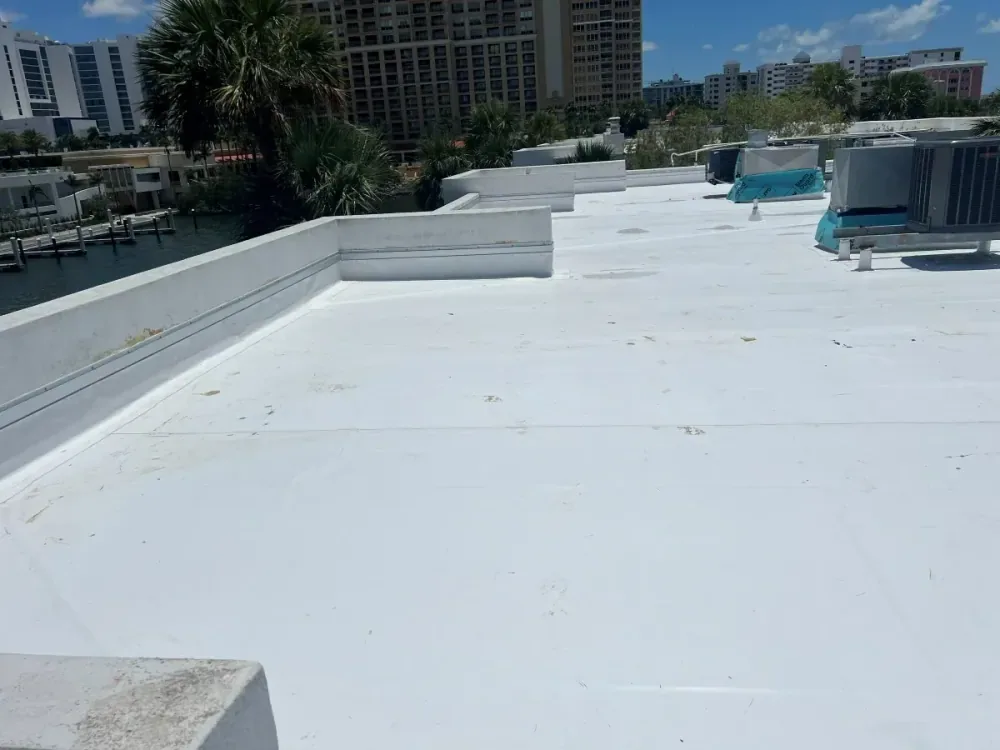
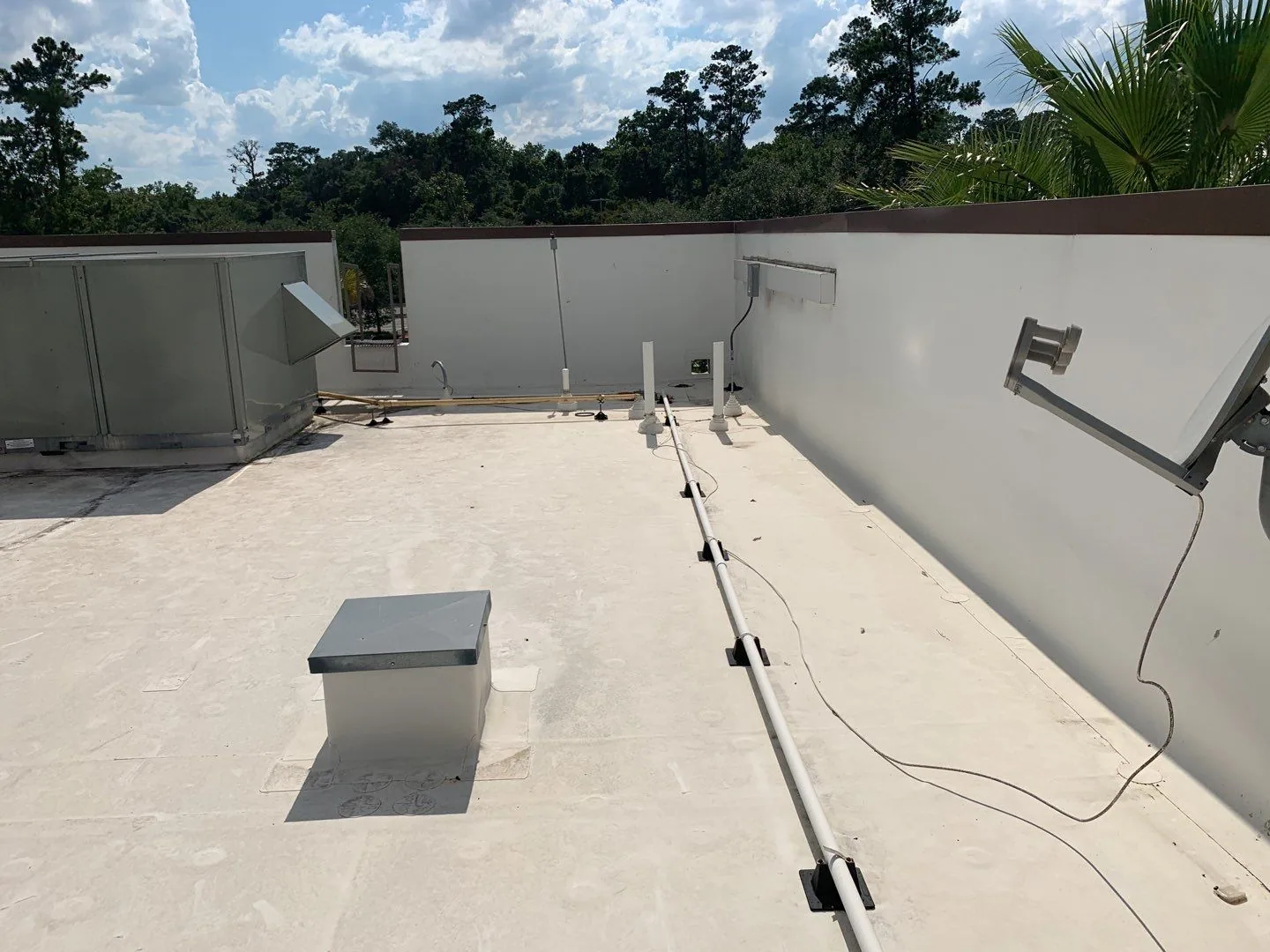
We divide the roof into practical zones, such as a drain field, equipment area, or perimeter. The crew checks the walking route and surface conditions before moving equipment, then follows visible clues from the reported point toward seams, laps, penetrations, curbs, walls, drains, and edge metal. Context and detail photographs show where each observation sits, rather than presenting an isolated image as a complete finding.
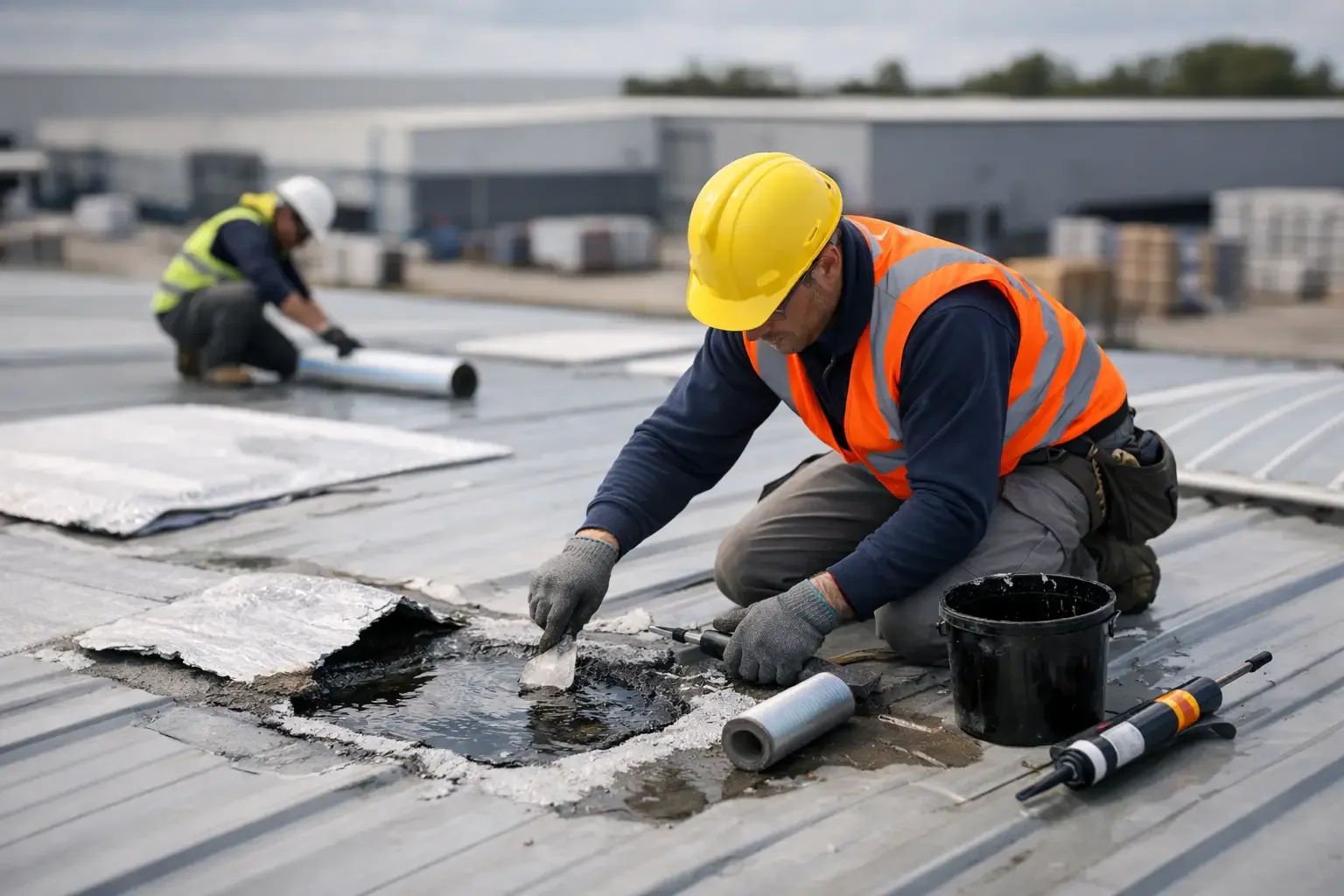
The review can include membrane condition, open or stressed seams, punctures, patch history, loose flashing, deteriorated sealant, displaced ballast, and signs of standing water. We note whether a condition is visible, measured, or still uncertain. On a roof with multiple systems or additions, we map transitions and changes in elevation before suggesting a repair. A focused seam failure repair review may be appropriate when the inspection confirms a localized opening; a broader concern can be compared with the commercial roof repair scope.
Trace water to a route
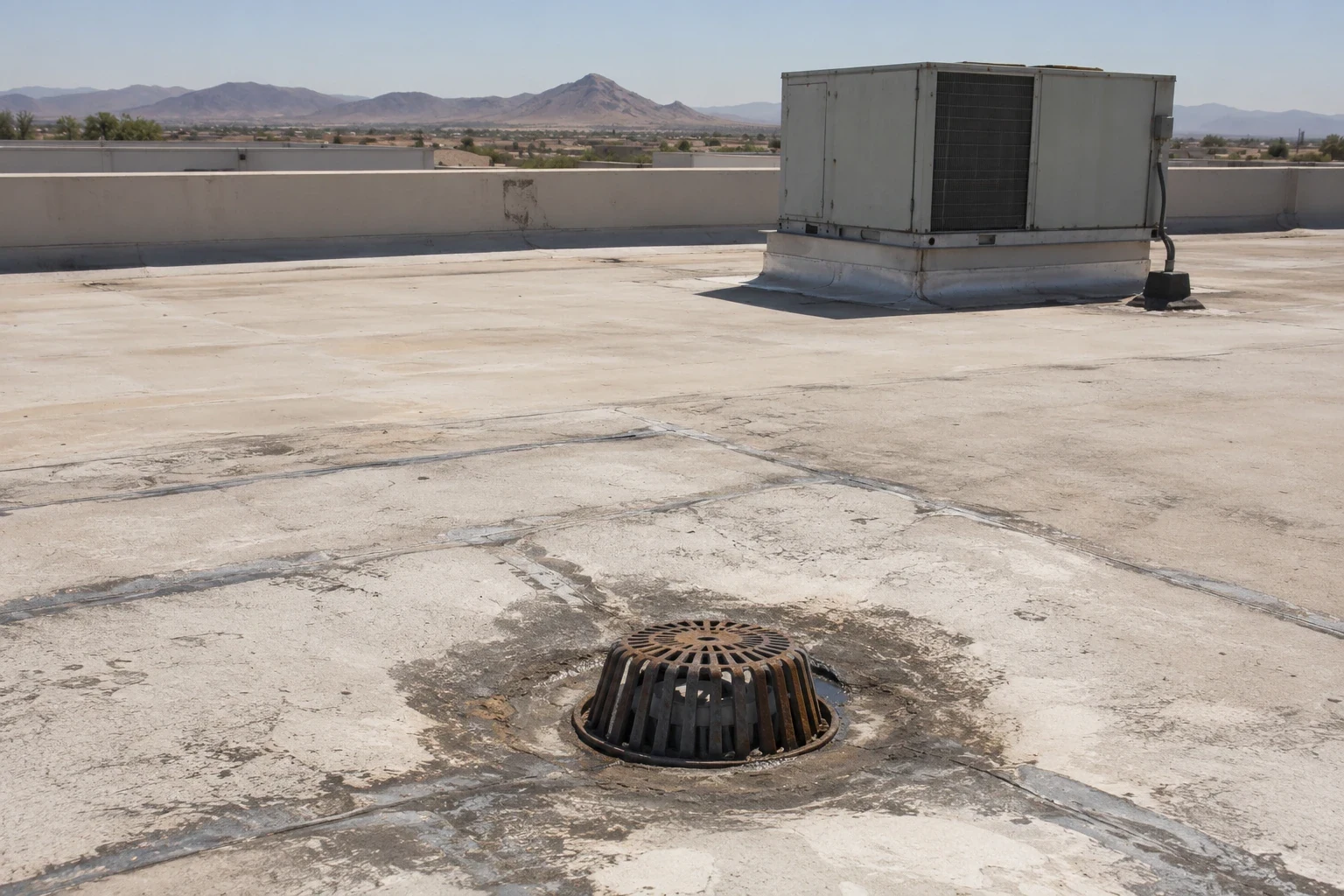
Drainage is reviewed as a connected path, not as a single drain opening. We look for debris, a blocked bowl, a raised strainer, damaged flashing, low areas, and evidence that water has moved across a roof zone. Victorville's code page gives roof drainage a design rainfall benchmark of 2.5 inches in an hour. That municipal reference can frame a design discussion, but it does not establish whether an existing roof is draining properly. Roof slopes, outlet elevations, debris, and observed flow remain field questions.
At each penetration or wall transition, the inspector checks how the membrane meets the curb or flashing, whether movement has opened a gap, and if previous patches appear bonded and stable. Rooftop equipment work may have disturbed a nearby surface, so we ask who controls access and whether other trades have been scheduled. At a commercial building in Old Town Victorville, we document the exact roof zone and building; planning maps do not identify a particular tenant or roof condition. If the review points to drains or scuppers, see commercial roof drain and scupper work.
Separate observation from testing
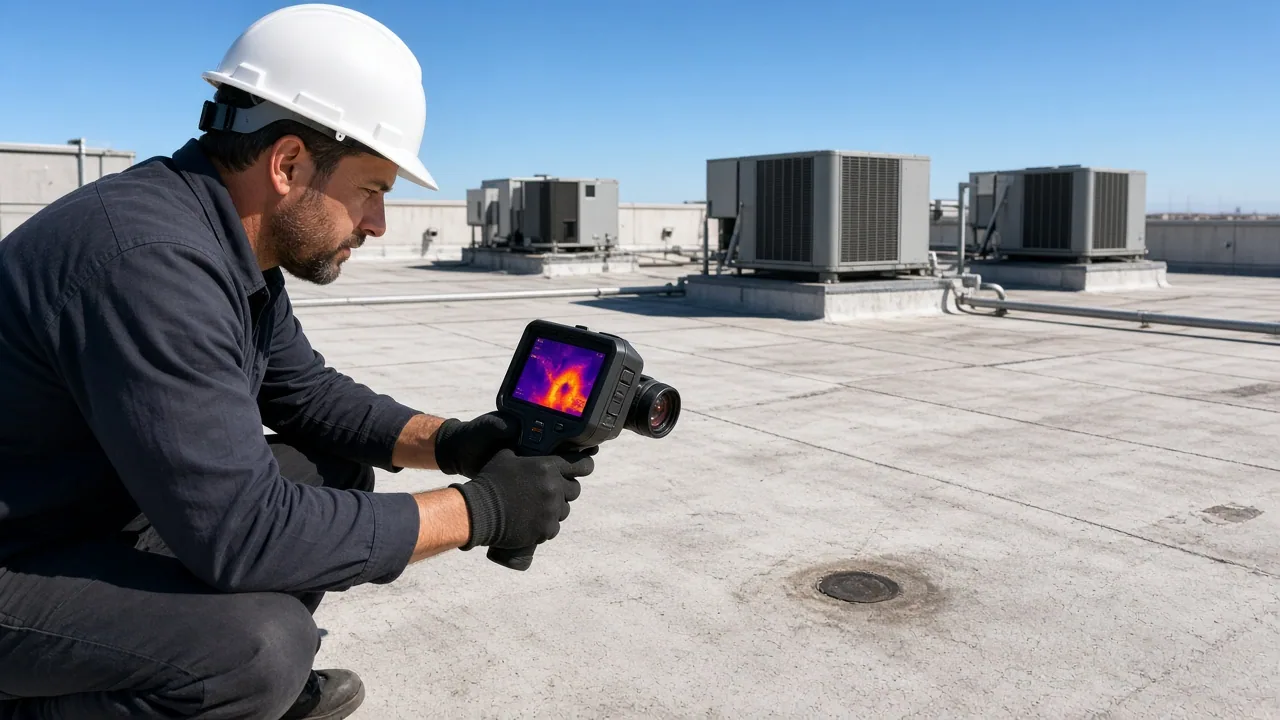
A visual inspection can identify accessible conditions, but it cannot show every layer below a membrane. If moisture is suspected, we explain whether a targeted test cut, meter reading, or infrared survey is appropriate and what access or owner approval it requires. A test has a defined location and purpose. We do not infer that the entire roof is wet from one reading, and we do not describe an untested area as sound. The report labels what was observed and what remains unconfirmed.
Infrared imaging can help identify temperature patterns that warrant follow-up, but it is not a standalone determination of trapped moisture. Weather, assembly, time of day, and roof construction affect interpretation. Where a closer review is useful, the infrared moisture survey can be paired with selective verification. If replacement is being considered, inspection findings can help compare repair and commercial roof replacement options. A recover also requires its own layer-count, attachment, moisture, and code checks rather than an assumption based on appearance.
Plan around building use
The roof is part of an operating facility, so inspection access needs a named contact and a safe route. We coordinate roof keys, ladders or hatches, escorts, restricted areas, and any lift or fall-protection requirements before the visit. Inside, the facility contact can identify rooms where a leak or ceiling condition affects people, equipment, inventory, or production. We keep the visit within agreed boundaries and ask before moving items or entering controlled spaces.
Where buildings are active near Seventh Street or within the Old Town plan area, access and occupant schedules may differ from those at an industrial property east of U.S. 395. The Old Town plan includes mixed-use, retail, service, light-industrial, residential, and open-space classifications; that mix is a planning context, not a description of any particular roof. We shape the inspection around the actual site. If a repair crew needs a separate work window, the inspection report can identify the access conditions and affected zones for a later occupied-building roofing sequence.
Leave a decision-ready record
The report groups observations by location and condition, attaches a labeled photo set, and separates immediate concerns from monitoring or planning items. Each item states what was observed, why it may matter, and what confirmation or repair is recommended. If a visible condition does not explain the interior report, we say so and identify the next investigative step. This prevents a manager from treating a possible cause as a confirmed source.
For a property team with several buildings, the same zone labels can support a repeat visit and a consistent maintenance history. A roof asset management record can track open issues across locations and help separate near-term work from longer-term budgeting. Victorville serves commercial users connected by Interstate 15, U.S. 395, and State Route 18, but each assessment is based on the property actually inspected. We do not infer condition from its address, industry, or neighboring development.
Commercial Roofing Questions
What should we prepare before an inspection?
Identify the roof access contact, affected room or roof zone, and any operating or safety limits. Recent repair notes, roof plans, leak dates, and photographs are useful when available, but we can begin by mapping the reported condition.
Does an inspection include moisture testing?
A visual inspection and moisture test answer different questions. We recommend a meter, infrared review, or test cut only when the observed conditions justify it, then identify the location, purpose, and limits of that test.
Can you inspect an occupied commercial building?
Yes, when safe roof access and a facility contact are arranged. We coordinate the route, escorts, restricted areas, and interior observations around the building's actual operations and approved access window.
Will the report tell us whether to repair or replace?
It documents the conditions that support a decision and identifies what still needs confirmation. Localized defects may support repair; widespread deterioration, wet insulation, or deck concerns can justify a separate replacement evaluation.
How do we request an inspection in Victorville?
Call with the property location, the area of concern, and the person who can coordinate access. We will discuss the assessment scope and the information needed for a safe first visit.