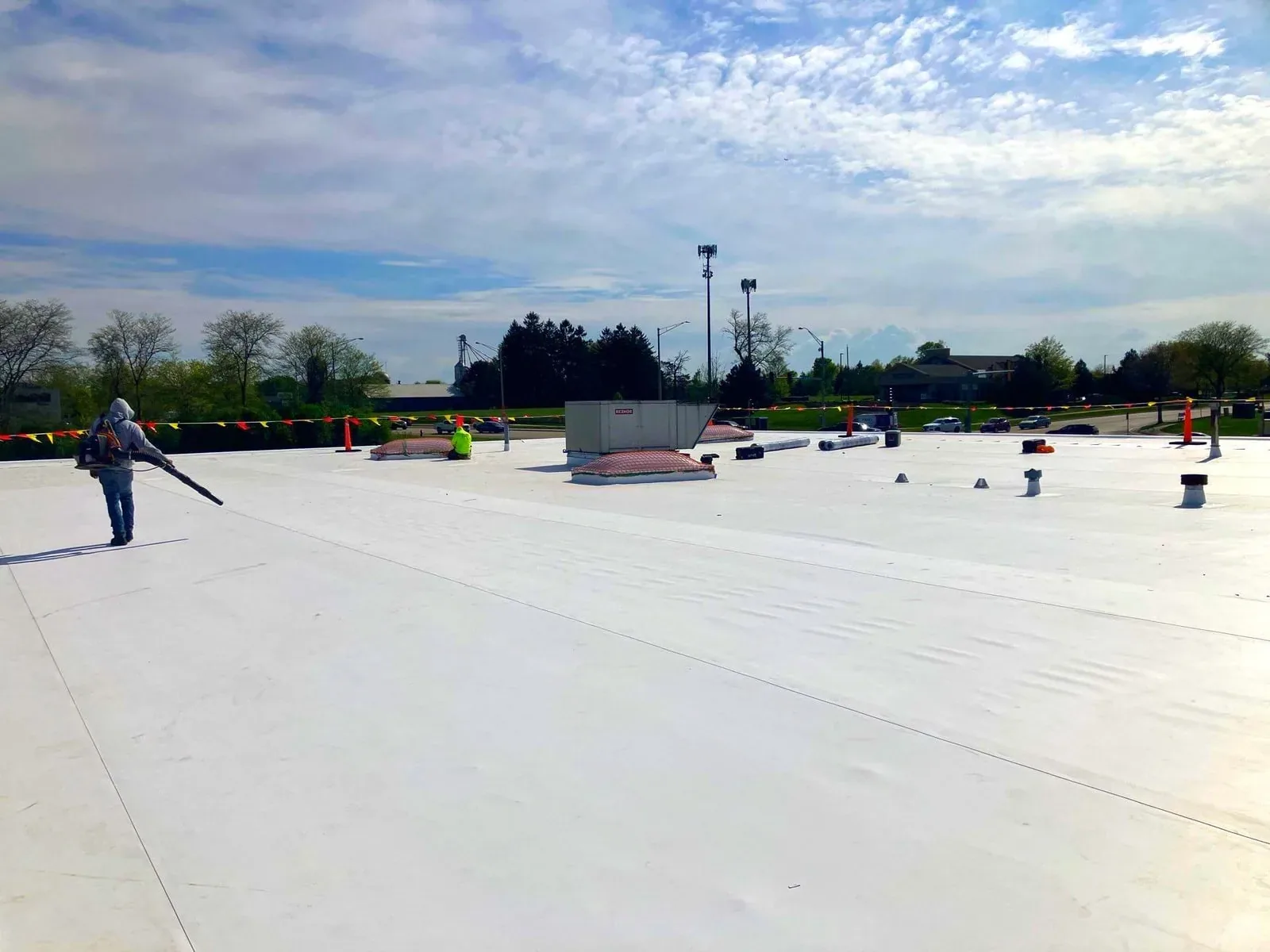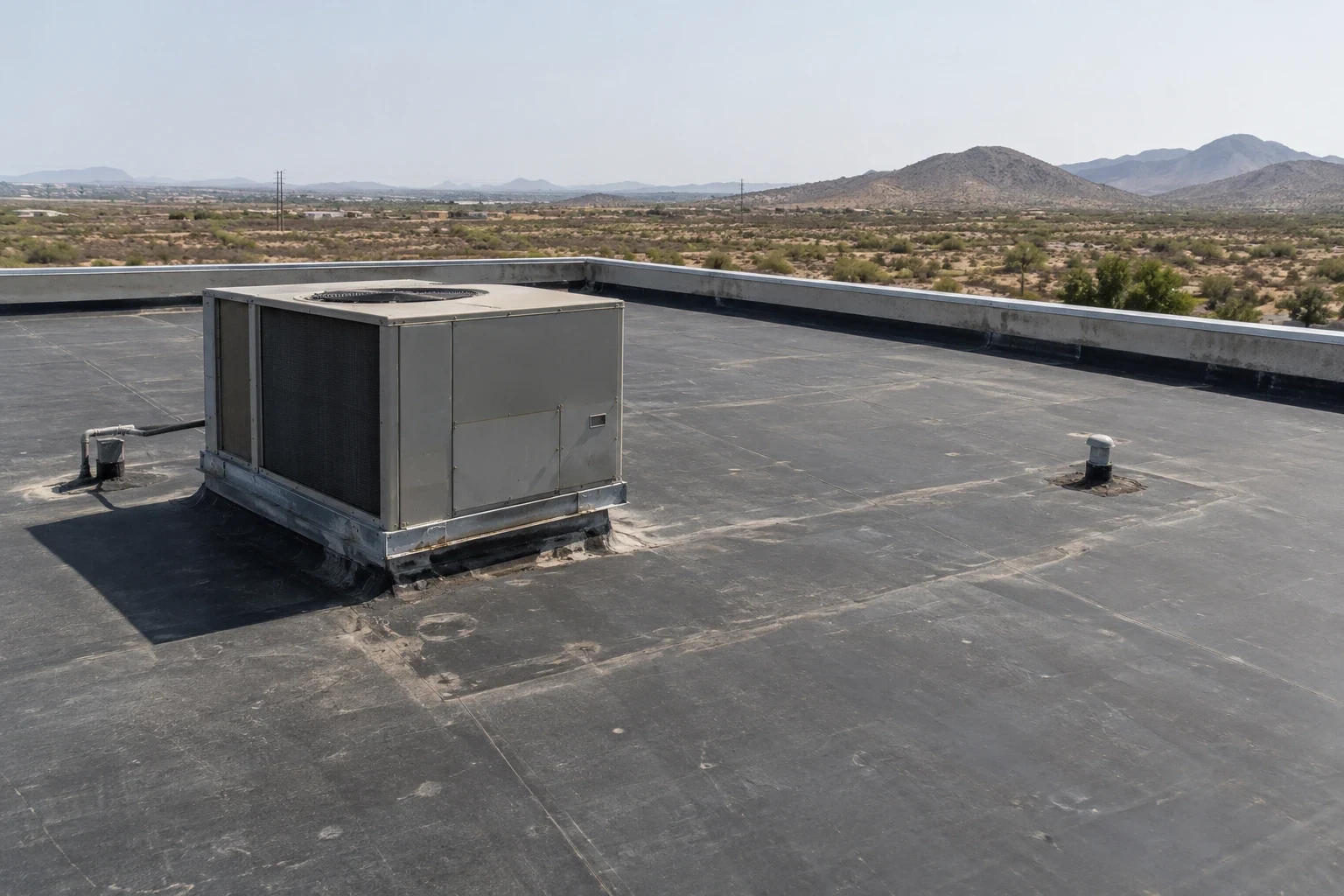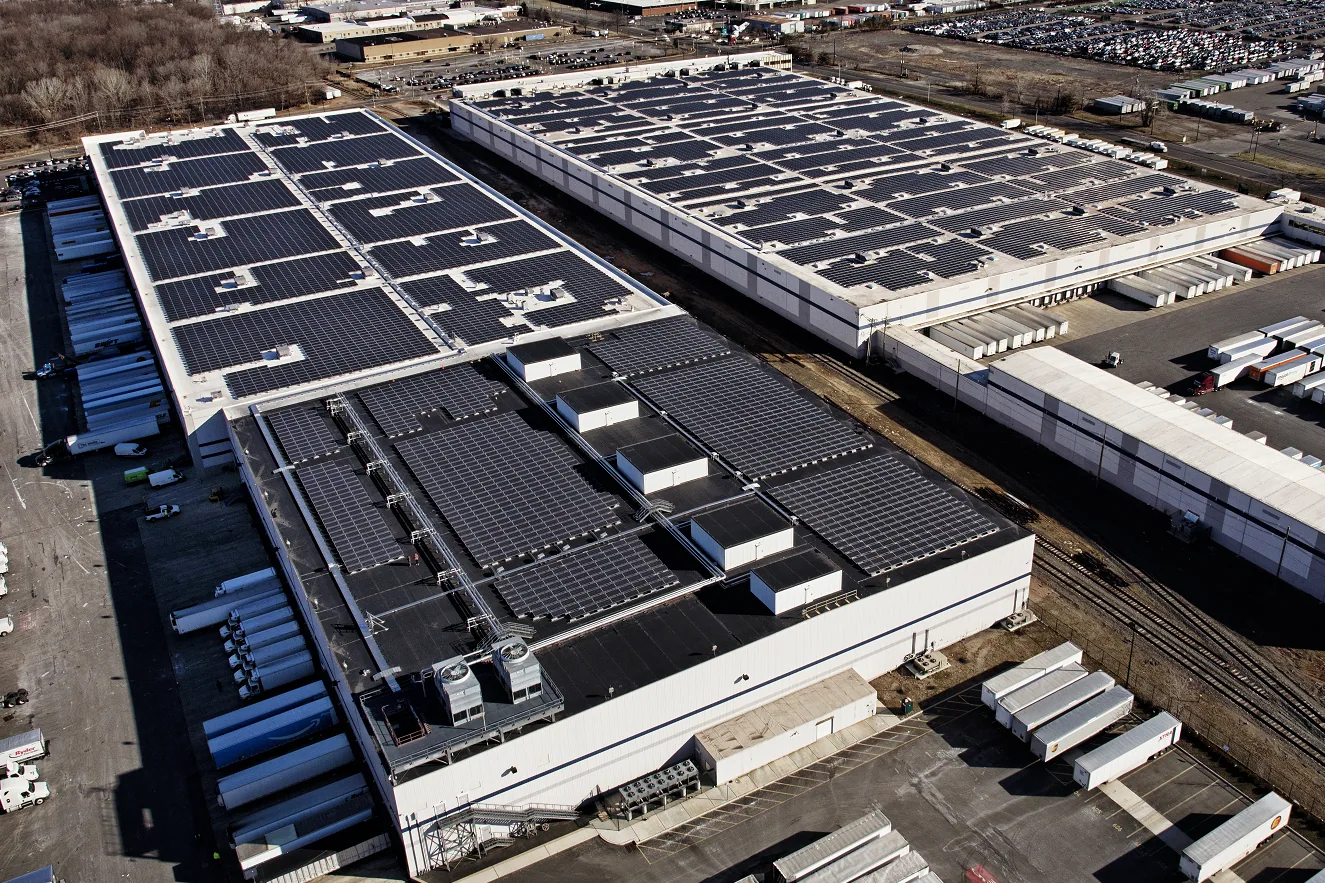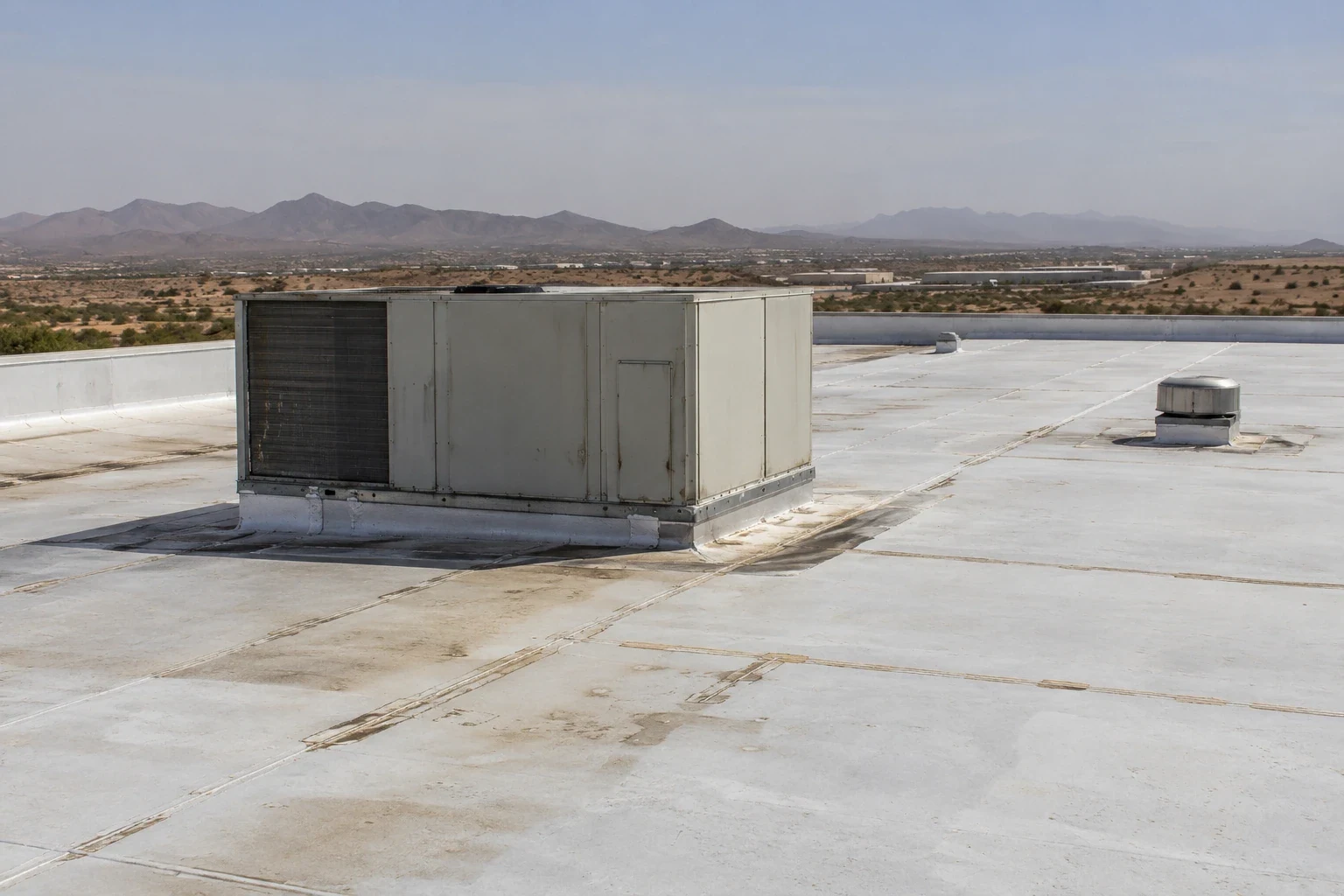
A distribution center report usually starts with a dock, storage bay, or office where water disrupted a shift. The contact identifies the zone, activity below, and roof-access authority. In Victorville, high summer heat and concentrated rain make it useful to connect the interior report with seams, drains, penetrations, and prior repairs before changing the assembly. We record what is wet, what remains sound, and whether temporary protection should come first. That evidence lets the owner choose a repair scope, a recover review, or replacement planning without interrupting more of the building than the work requires.
City materials identify logistics and distribution as local activity, with planned industrial development near Foxborough and east of U.S. 395 north of Mojave Drive. Old Town Victorville's plan groups mixed-use retail and service with light-industrial, residential, and open-space areas, a separate land-use setting. We inspect each roof and build a sequence with operations, maintenance, and access contacts.
First call: mark the affected bay
We begin by locating the interior effect on a plan or a simple roof-zone sketch. A stain near a dock door, a wet ceiling over packaging, and water beside an electrical room require different protection decisions, even when they share a roof. The facility contact tells us when the condition appeared, whether it changed after rain or equipment service, and which activity must keep moving. We note those details before anyone assumes the closest roof opening is the source.
At a distribution property, roof access may cross loading areas, vehicle lanes, or secured operating space. We coordinate the access window with the facility contact and identify safe staging before bringing tools or materials onto the roof. If water is reaching an active suite, temporary protection and interior safety come before a long-term assembly decision. A written first-call record gives the next inspection a location, an operating constraint, and a clear question to answer.
Inspection sequence: follow the water path
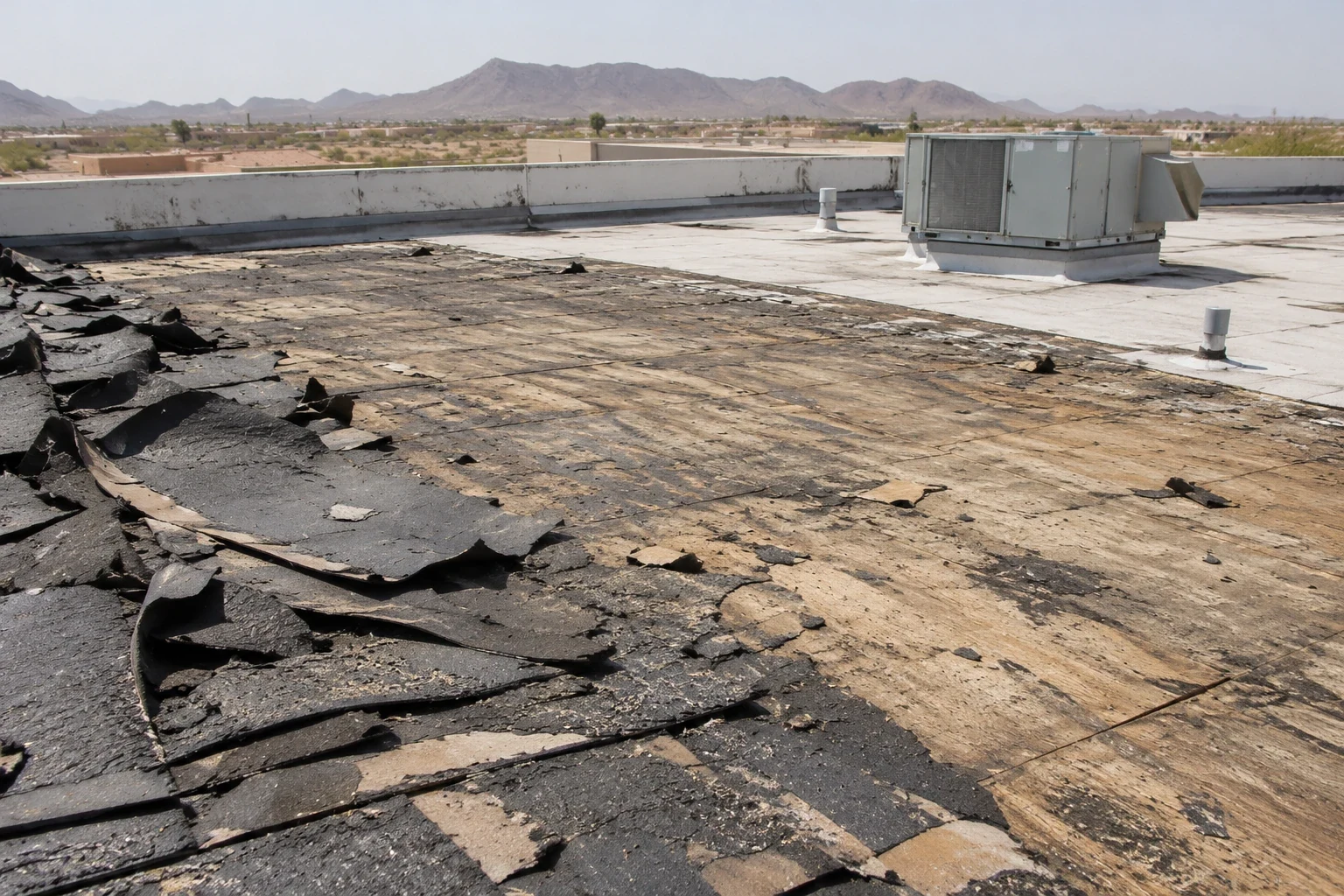
Our inspection starts at the reported zone and moves outward through the roof field, seams, penetrations, drains, edge metal, and transitions. We look for open laps, punctures, displaced flashings, prior patches, surface wear, and low areas that may keep water near a detail. Where readings or visible conditions suggest wet insulation, we map the area and identify whether a test cut or other confirmation is warranted. Photographs carry a roof-zone label so the owner can compare each observation with the interior report instead of receiving a stack of unlocated images.
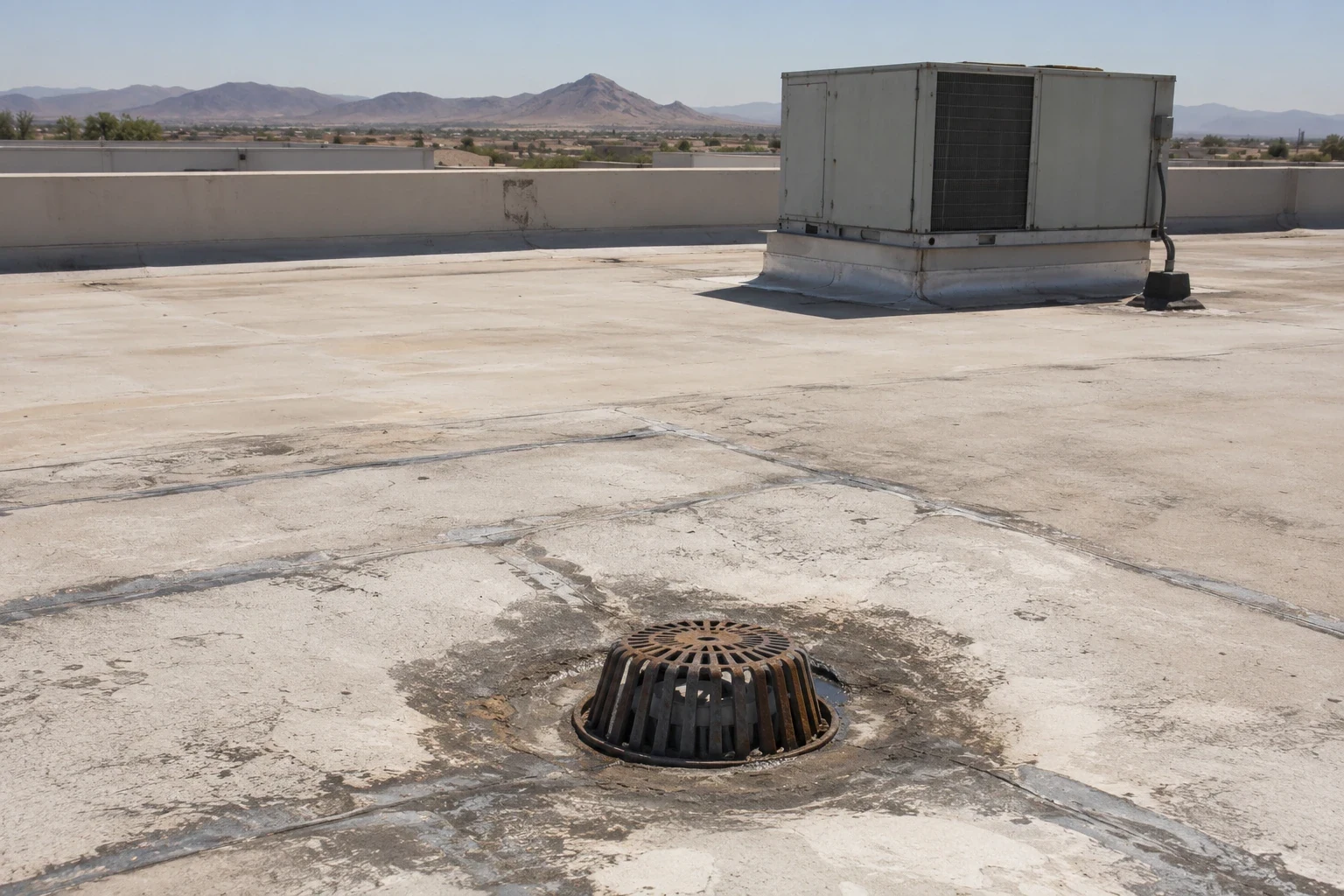
Victorville's code page uses a 2.5-inch-per-hour rainfall input for roof-drain sizing. That figure is a design reference, not a measurement of the existing roof or evidence that a particular drain is undersized. We inspect actual slopes, drain bowls, scuppers, overflow paths, and debris conditions. The plan near Bear Valley Road and I-15 identifies local and regional commercial uses, but the roof's elevations and outlets determine its own water route. We document what is visible and call out any concealed condition that needs another step.
Operations: fit the work to the shift
A repair or reroof plan must account for how product arrives, where lifts can set up, and which dock or drive aisle must remain open. We ask about shift changes, delivery peaks, refrigeration or process equipment, tenant boundaries, and any area that cannot be closed without notice. Those details shape staging and daily work limits. When the roof is divided into practical zones, crews can protect each opening before leaving it and the facility contact can see which area is active that day.
Not every distribution building runs the same schedule. We confirm conditions with the people who control the property instead of inferring them from Victorville's logistics profile. Before work begins, the written sequence identifies access, protection below, material movement, temporary tie-ins, and the contact who can approve a change if removal exposes wet insulation or damaged deck. That approval path helps keep an unexpected condition from becoming an unreviewed expansion of scope.
Assembly options: separate patch from renewal
A localized puncture or failed flashing can support a defined repair when adjacent membrane and insulation are sound. Repeated seam defects or moisture across connected roof zones may call for a wider review. A recover is considered only after layer count, deck condition, moisture, attachment, curb height, and applicable code limits are checked. When those conditions do not support another layer, removal can expose the deck and create a more reliable base for replacement. We explain which finding drives each option and what remains unknown until an opening is made.
The choice of assembly follows the existing roof and the building's needs. A mechanically attached or adhered TPO roof system may be evaluated alongside an EPDM membrane assembly or another compatible design. Roof traffic around equipment and regular service access affect protection and detailing. A warehouse roof condition review can share useful inspection considerations, while a cold-storage roof assessment must account for its own interior conditions.
Repair scope: define what is included
Before a crew starts, the scope identifies roof zones, preparation, materials, seam or flashing work, insulation removal if approved, and protection for active operations. It also states where work stops and what concealed finding would require an owner decision. Cost and duration can move with deck condition, wet insulation, access, staging, material handling, roof height, equipment clearances, weather, and the number of transitions. A written boundary gives the facility contact a basis to approve the work and compare a focused repair with a larger commercial roof replacement plan.
Records help when they are tied to current observations. We review available plans, prior repair orders, warranty documents, leak logs, and photographs, then confirm what still matches the roof. A drain and scupper inspection may be included when ponding or overflow concerns are present. If several buildings are involved, each receives its own roof-zone record rather than a shared assumption. The owner can track the next action through a roof condition report that separates completed repair, deferred item, and follow-up test.
Closeout: leave a usable roof record
At closeout, we photograph completed seams, penetrations, drains, and transition details with their roof-zone locations. The notes identify the work performed, materials used, limits, and any adjacent condition that remains open. If a controlled water test is appropriate and safe, we define the tested area and observation period. A dry ceiling immediately after work does not prove that every concealed path is resolved, so the report states what was checked and what needs another visit.
The same record helps maintenance compare a future report with today's condition. For a building serving loading and storage operations, roof access, equipment changes, and repeated service traffic can affect which zones need attention first. We can review a roof in Victorville or the Bear Valley Road and I-15 commercial district while keeping each property assessment specific to its own assembly. Call with the reported bay, activity below, and access contact. We will coordinate an assessment and explain the next scope without promising a start date before conditions are known.
Commercial Roofing Questions
Can roof repairs happen while the distribution center stays open?
We plan around the actual shift schedule, access rules, loading lanes, and work zone. The sequence identifies which area is active and how each opening will be protected before the crew leaves. The facility contact approves any restriction that affects operations.
Does a leak over the dock mean the roof opening is directly above it?
Not necessarily. Water can travel through insulation, deck joints, or a drain path before it reaches the interior. We compare the reported bay with roof details and document the evidence that supports the likely path.
When should a distribution roof be replaced instead of patched?
We look at the number and spread of failures, moisture, deck condition, repair history, and whether details can be restored. The written findings separate isolated repair from conditions that justify recover or replacement review.
Will rooftop equipment affect the repair plan?
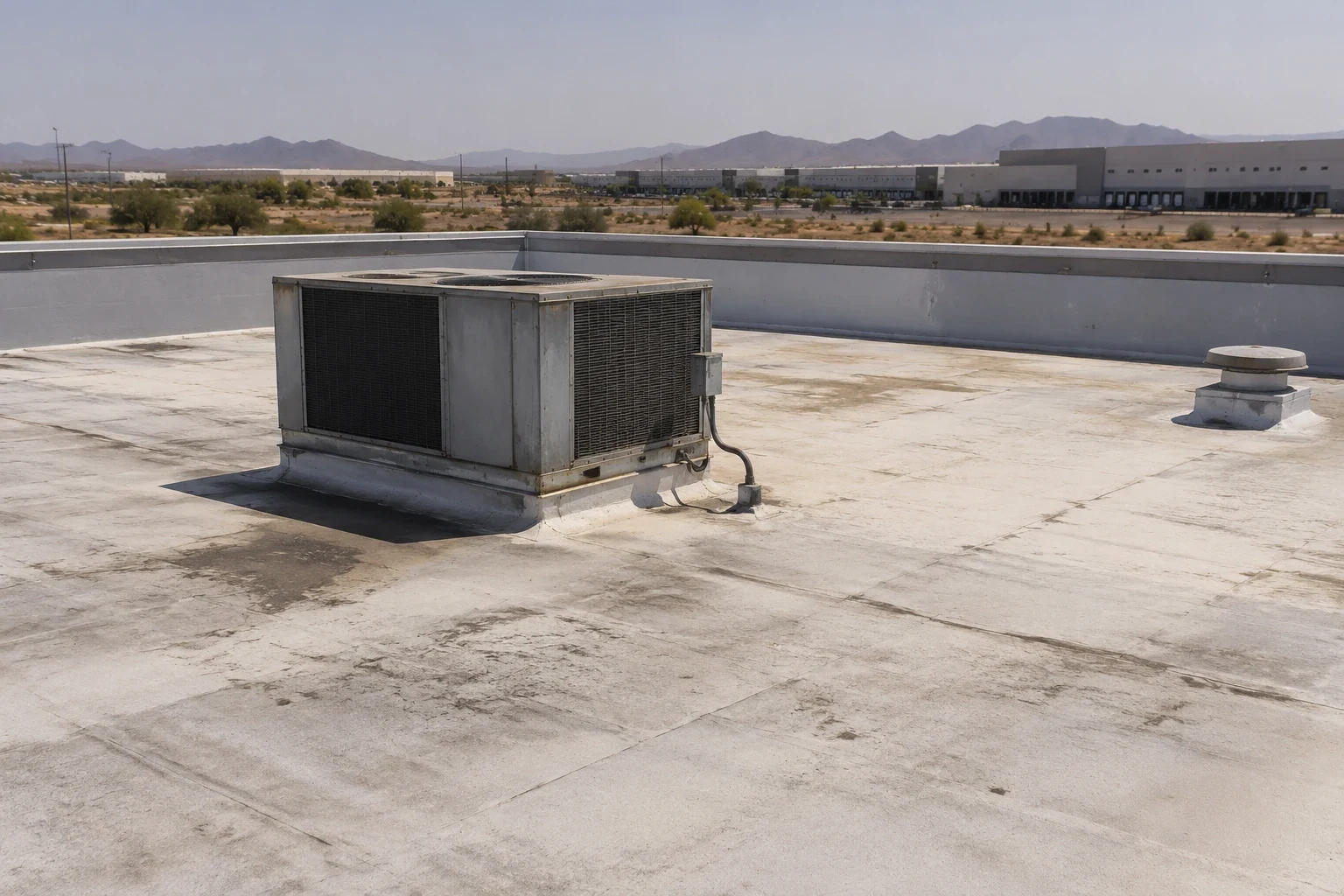
Equipment bases, service clearances, conduit, and access routes can change flashing work and staging. We record those interfaces and coordinate with the facility contact before moving or covering an item.
What information helps with the first inspection?
Share the affected bay, when water appeared, recent roof work, available roof plans, and the person who can authorize access. Note any operation below that needs protection so the first visit addresses the right zone.