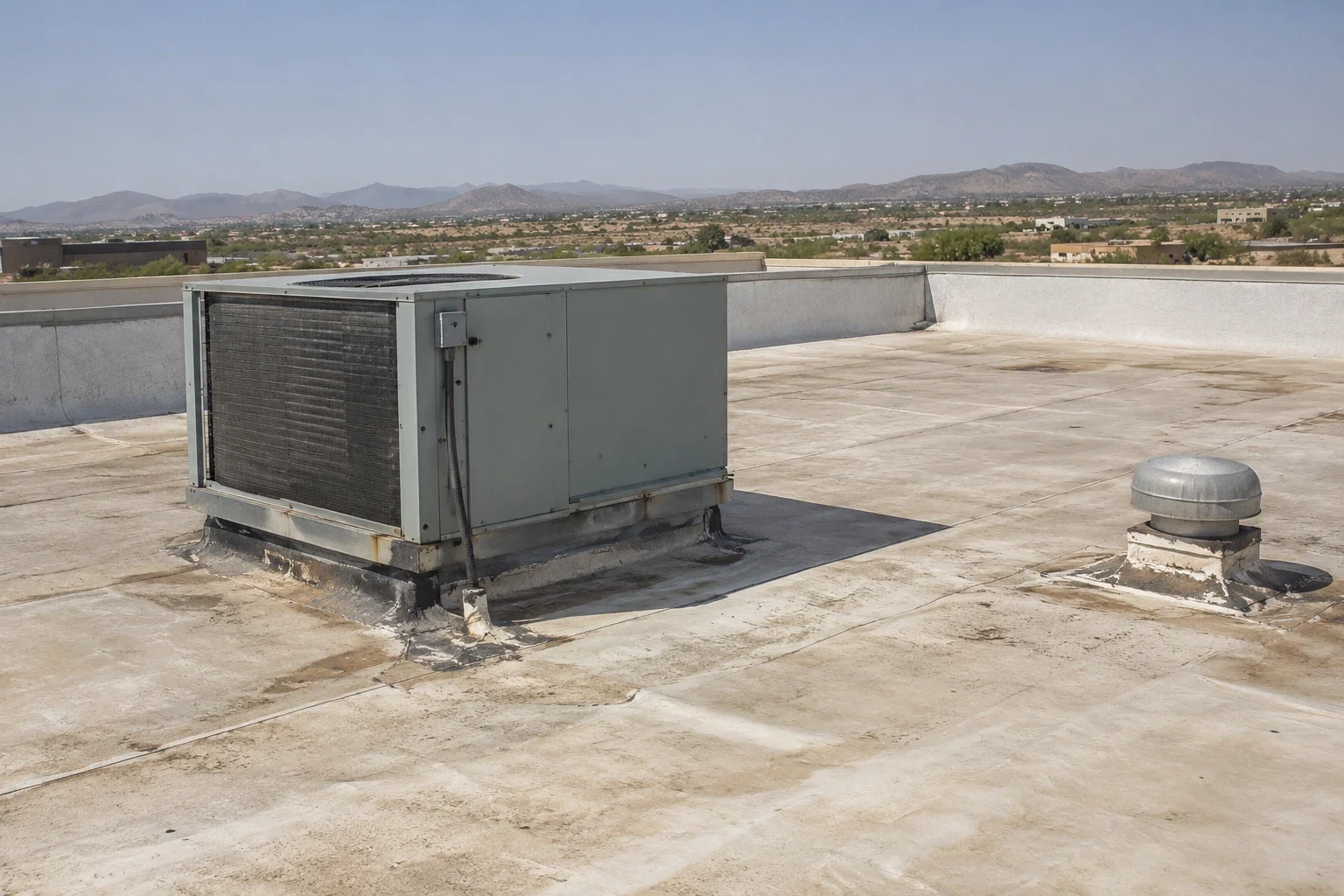
A drip near a refrigerated case or receiving area needs two tracks of attention: protect the operation below and locate the roof condition above. The store contact identifies the aisle or work area, any product or equipment concern, and the person who can release roof access. We document the reported location, then inspect nearby penetrations, curbs, seams, drains, and transitions. That record separates the interior symptom from the roof detail that supports a repair. The department lead can pair roof condition documentation with the aisle report. Drain observations can be checked with drain and scupper service during the roof walk.
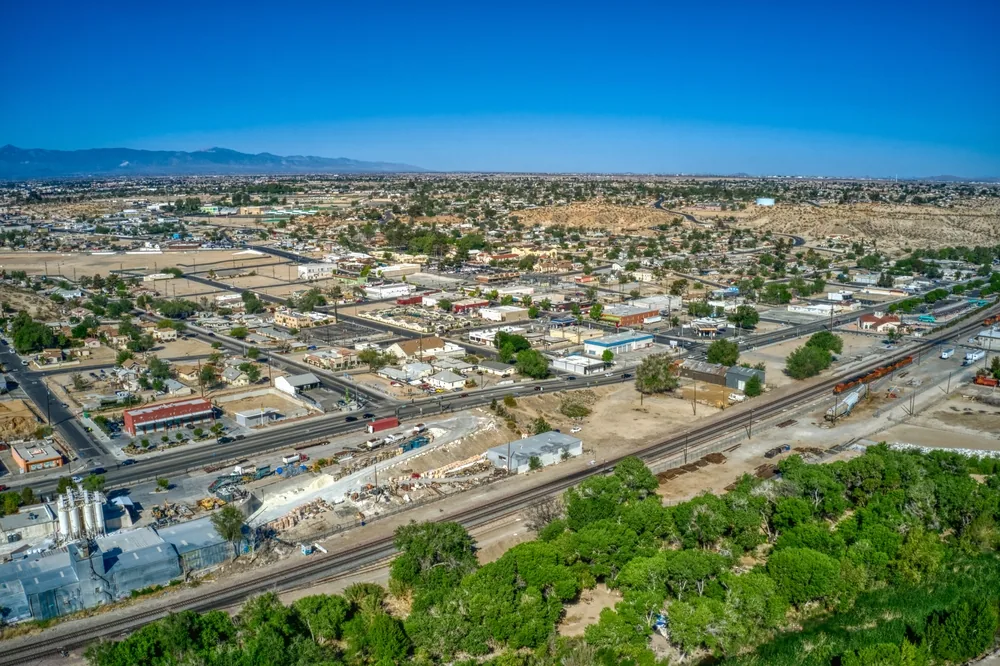
Victorville’s land-use element describes chain restaurants and retail uses among the commercial activity near Bear Valley Road and I-15. It does not identify any grocery operator, refrigeration layout, or roof assembly. We confirm those details on site. Old Town Victorville, including the Seventh Street public-setting corridor, has its own planned mix of retail and service overlays, light-industrial, residential, and open-space classifications. A roof condition record keeps each observation attached to the actual property.
Locate the department and receiving zone
Before an inspection, we ask whether the report is near a refrigerated case, prep area, receiving door, pharmacy counter, or electrical room. The store decides whether product should move and who can authorize an interior boundary. Roofing personnel do not evaluate food safety or electrical hazards; the property team directs those controls. We capture the leak timing, recent work, and ceiling symptoms, then note that water may travel before appearing below the roof entry. The facility scheduler can use occupied-roof sequencing to describe equipment access. For a localized opening, review targeted commercial repair with the repair history.
The visit plan also confirms delivery windows, roof hatch or ladder access, refrigeration equipment clearances, lift restrictions, and any area that cannot be interrupted. If equipment must continue operating, the contact identifies required service clearances before materials are staged. The daily briefing records who can pause work if a route or condition changes. That care matters whether the store is in the Bear Valley Road/I-15 commercial area, Old Town, or another Victorville location; the operational facts belong to the individual site.
Trace water near equipment and drains
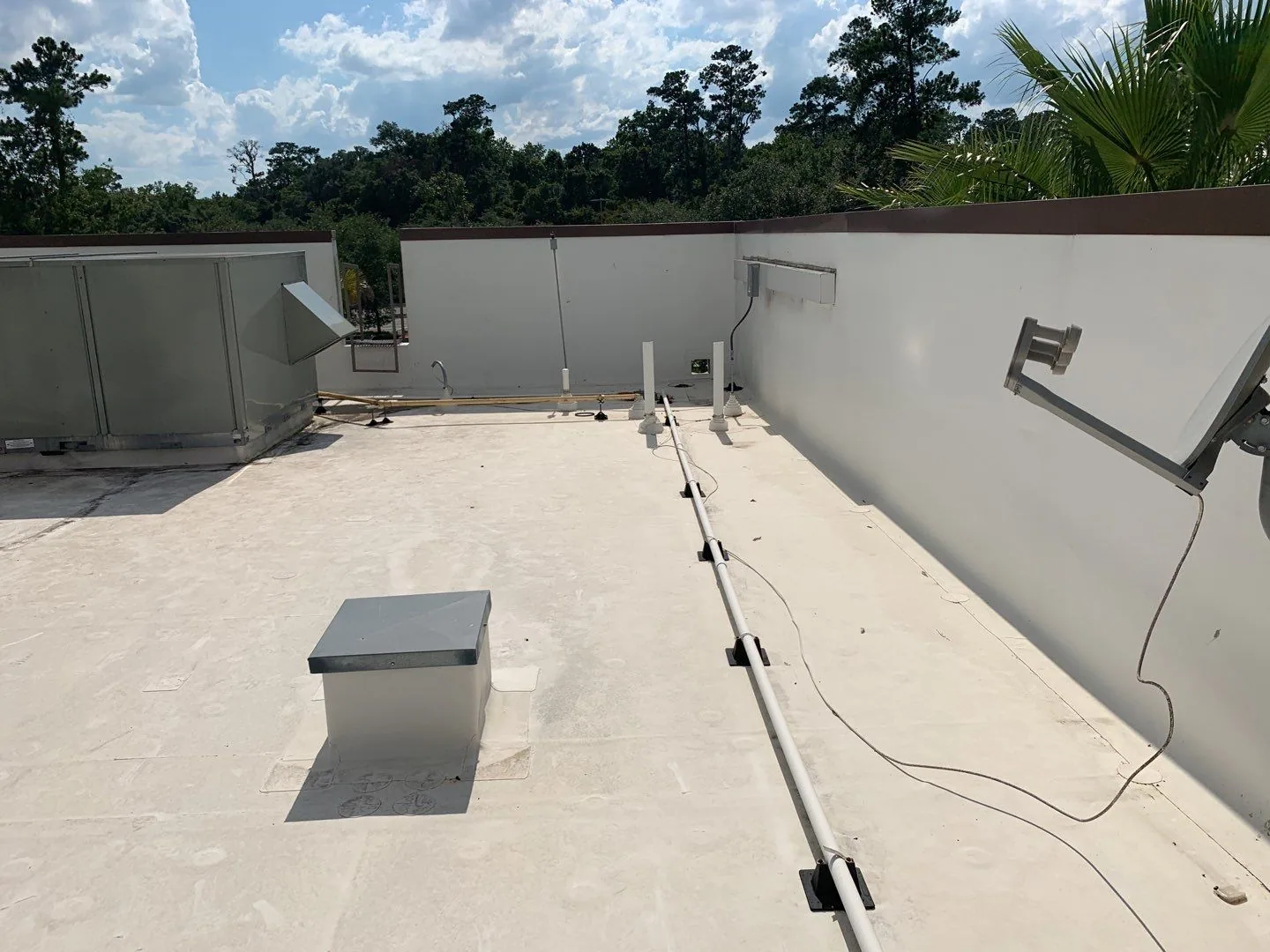
Roof review follows the store’s actual assembly. We inspect membrane seams, patches, penetrations, curbs, pipe supports, edge metal, transitions, and visible drainage conditions. When the leak is near refrigeration equipment, we look at equipment supports and associated flashings without assuming the unit caused the opening. Each image is labeled with a roof zone and direction so a facilities manager can compare it with equipment and interior plans. Concealed materials remain unverified unless an approved test opening exposes them. If several zones are affected, compare options through roof replacement planning. A Victorville request can cite Victorville service area and the delivery interval.
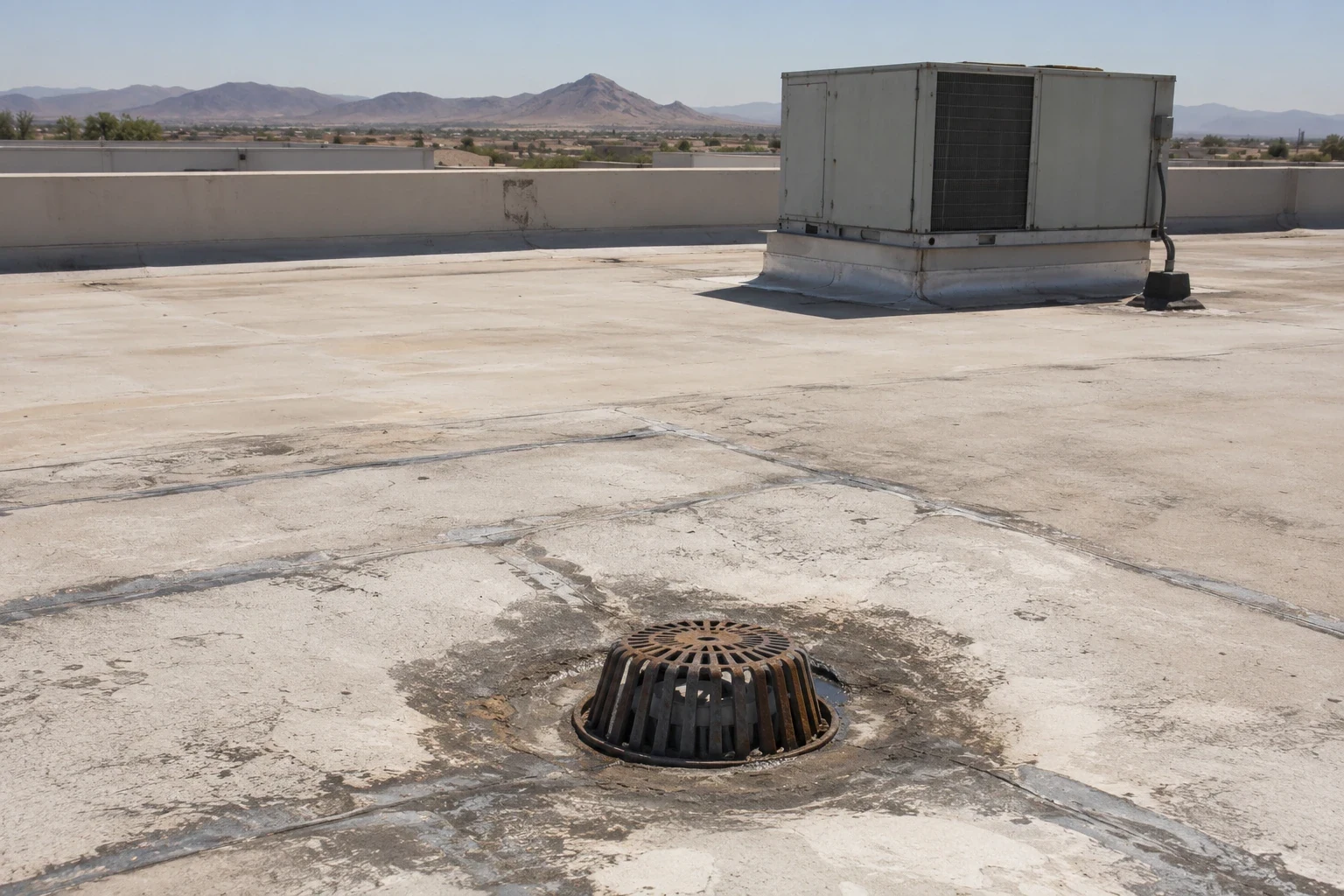
Drainage can affect several tenant areas at once. The city building-code page lists 2.5 inches per hour as a roof-drain sizing rate; that design input is not proof of the present flow or condition of any grocery roof. We inspect slope, strainers, drain bowls, overflow routes, and discharge. A drain or scupper repair may be scoped separately from a membrane defect. The estimate names each observed condition and the action needed to confirm any concealed concern.
Coordinate delivery and mechanical contacts
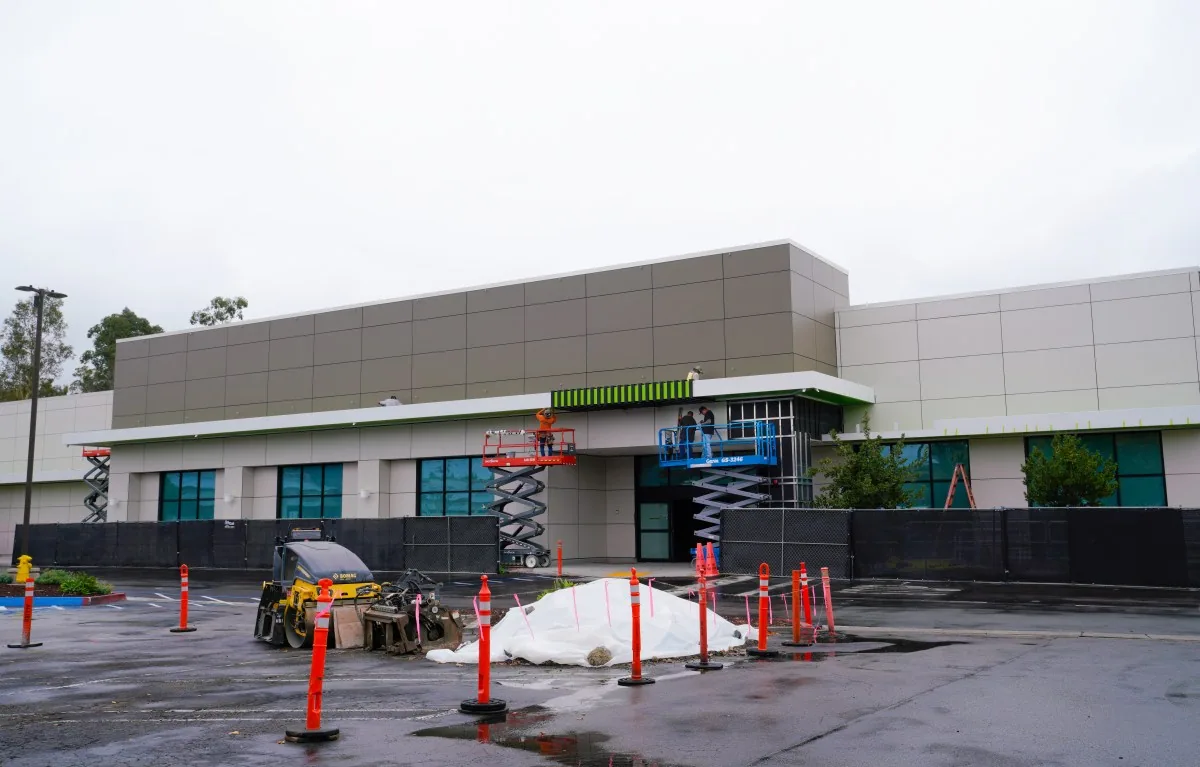
Work above a grocery store calls for clear coordination with the manager and any facilities contact responsible for refrigeration or electrical equipment. We define where the crew will access the roof, which interior aisle or loading lane is protected, and where materials can be staged. Noise, debris, overhead work, and short access interruptions are reviewed with the store before scheduling. We do not promise that every department can remain unaffected; the plan states the boundaries the owner approves and the conditions that could require a pause. For a large retail roof, compare big-box retail roofing with the actual store layout.
Victorville’s commercial focus area near Bear Valley Road and I-15 has retail and restaurant uses in the planning record. The Old Town plan area includes its own mix and identifies Seventh Street for public-setting improvements. These broad facts help describe city context but do not establish an individual grocery store’s opening schedule or receiving pattern. A phased occupied-building sequence records how the approved work zone changes during the project and who releases it each day.
Match repair limits to confirmed findings
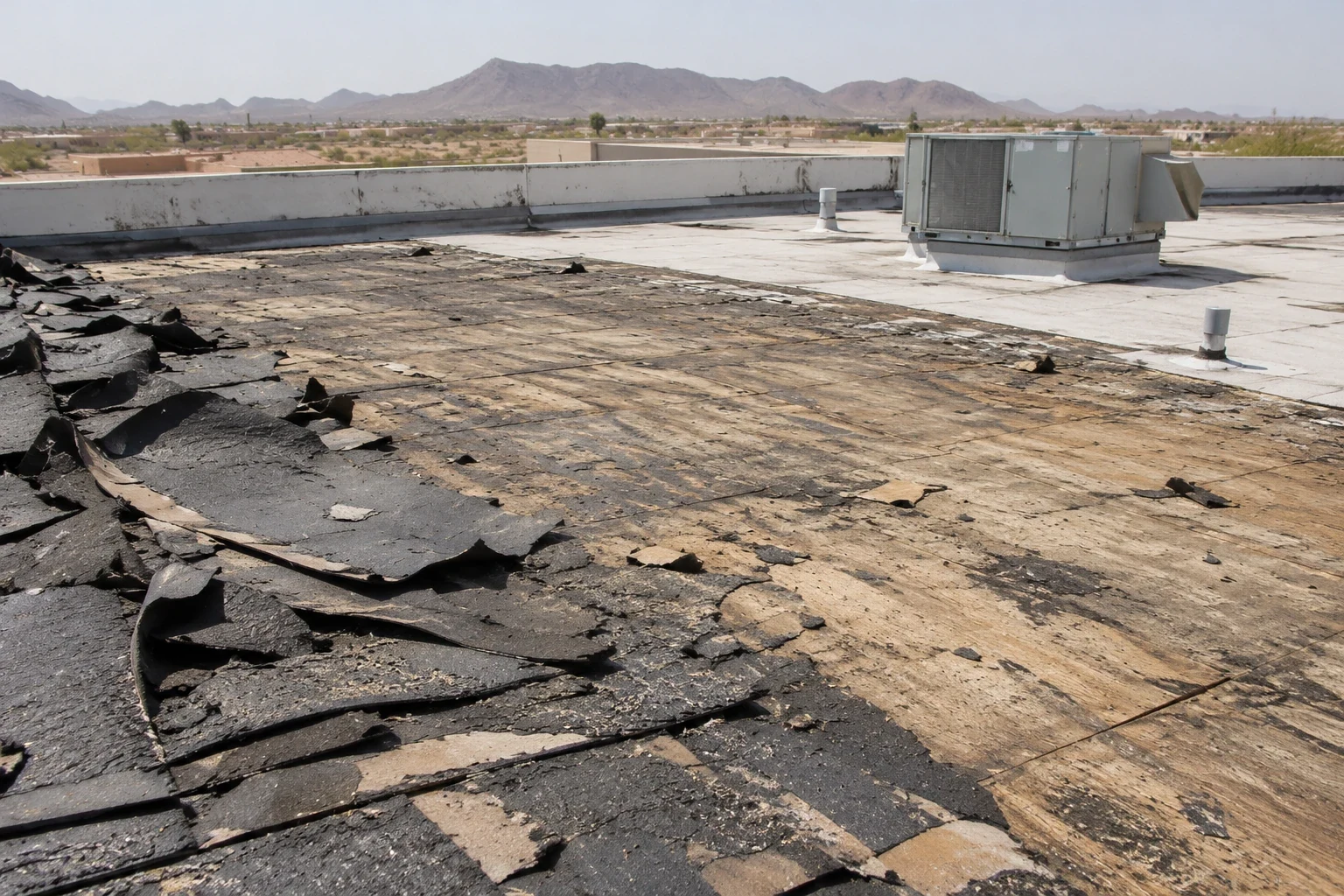
A localized puncture or open lap may call for a different repair than wet insulation or a compromised deck. We review the leak history, roof-zone observations, membrane condition, attachment, insulation, and prior patches. If testing could alter the recommendation, we show its location, purpose, and approval point. A targeted repair scope describes preparation, material compatibility, tie-in, and the area that will be protected. It should not imply a wider roof has been renewed when the crew repaired only one section. A shopping property may offer a related operating context in shopping center roof repair.
Replacement planning compares the existing assembly with the work needed to meet the project’s code and operating requirements. We identify layer count, deck condition, drainage, equipment supports, edge and curb details, staging, dry-in, and handling for concealed conditions. Victorville lists climate zone 14; its code table uses a five-pound-per-square-foot ground snow load and wind inputs from 100 to 115 mph based on occupancy and exposure. Those references require project-specific review. A commercial roof replacement estimate explains the basis for the selected assembly and any allowance that still needs confirmation.
Leave a shift-ready facilities record
Closeout can be useful to the facilities and store teams when it identifies the roof zone, protected areas, photographs, materials installed, work date, and remaining follow-up. If refrigeration equipment or a drain limited inspection access, the record states that boundary. We list items that require monitoring without presenting them as repaired. A named contact and a sensible follow-up interval help a later shift tell whether a new report concerns the same location or a different roof detail. For membrane-specific checks, review TPO roofing review after the inspection.Use the Eastern Bear Valley Road Corridor only for orientation; Old Town Victorville separately identifies Seventh Street for public-space improvements. The receiving lead and department manager can identify restricted windows, while facilities controls equipment access and the approved work boundary.
The city’s code information lists a roof-drain sizing rainfall rate, wind design range, snow load, and climate zone. These are not warranties about a particular assembly. The owner confirms which requirements apply to the scope and whether permits or engineering review are needed. For a Victorville visit, share the affected aisle or work area, receiving schedule, refrigeration equipment access rules, and prior repair notes. The service-area team can then focus the inspection and return a record that distinguishes confirmed conditions from the next question.
Commercial Roofing Questions
Can roof repairs be coordinated with grocery deliveries?
Yes, when the property contact confirms receiving hours, roof access, staging, and any dock or aisle restrictions. We use those limits to set a workable daily boundary.
What if a leak is near refrigeration equipment?
The store identifies equipment and operating concerns. We inspect nearby roof details, supports, and penetrations while the appropriate facility staff controls equipment access and product protection.
Does a roof inspection include food-safety decisions?
No. The store or its qualified food-safety staff directs product handling and department controls. Our roofing scope documents roof conditions and coordinates the work boundary.
Can one roof drain cause multiple ceiling reports?
Water can move across roof or deck layers before entering a room. We inspect the actual drainage path and nearby transitions rather than assuming each interior mark has a separate source.
What makes a replacement estimate reliable?
It distinguishes verified conditions from allowances and identifies assembly, phasing, drainage, equipment clearances, dry-in, and approval points for concealed deck or insulation conditions.