A facility director calling about a roof has a specific zone, an operation below it, and a person who can control access. We begin there. The report may involve active water, loose edge material, an aging assembly, or a capital question that has not yet become urgent. We ask what changed, which rooms or equipment may be affected, and what access the building can release. We then record conditions and explain what can be decided from the visit. Commercial Roofing Victorville works with owners and property teams on assessments, repairs, maintenance, and replacement planning in Victorville, California. The commercial roofing service overview outlines the work paths, while a roof systems review starts the assembly discussion.
The first report:
A useful report identifies the interior location, whether water is still entering, and when the issue appeared. Staff should follow facility procedures around sagging ceilings, electrical exposure, or loose materials and avoid unsafe roof access. The site contact tells us which hatch or ladder is approved, whether an escort is needed, and what operating limits apply. A map pin helps locate the property; it cannot answer those questions.
In the Bear Valley Road and I-15 focus area, city materials identify regional-serving commercial activity. Old Town planning includes retail and service overlays, light-industrial land, residences, and open space. Those broader facts orient coordination but do not establish the use or roof history of one building. The owner or manager supplies that context.
The assessment sequence:
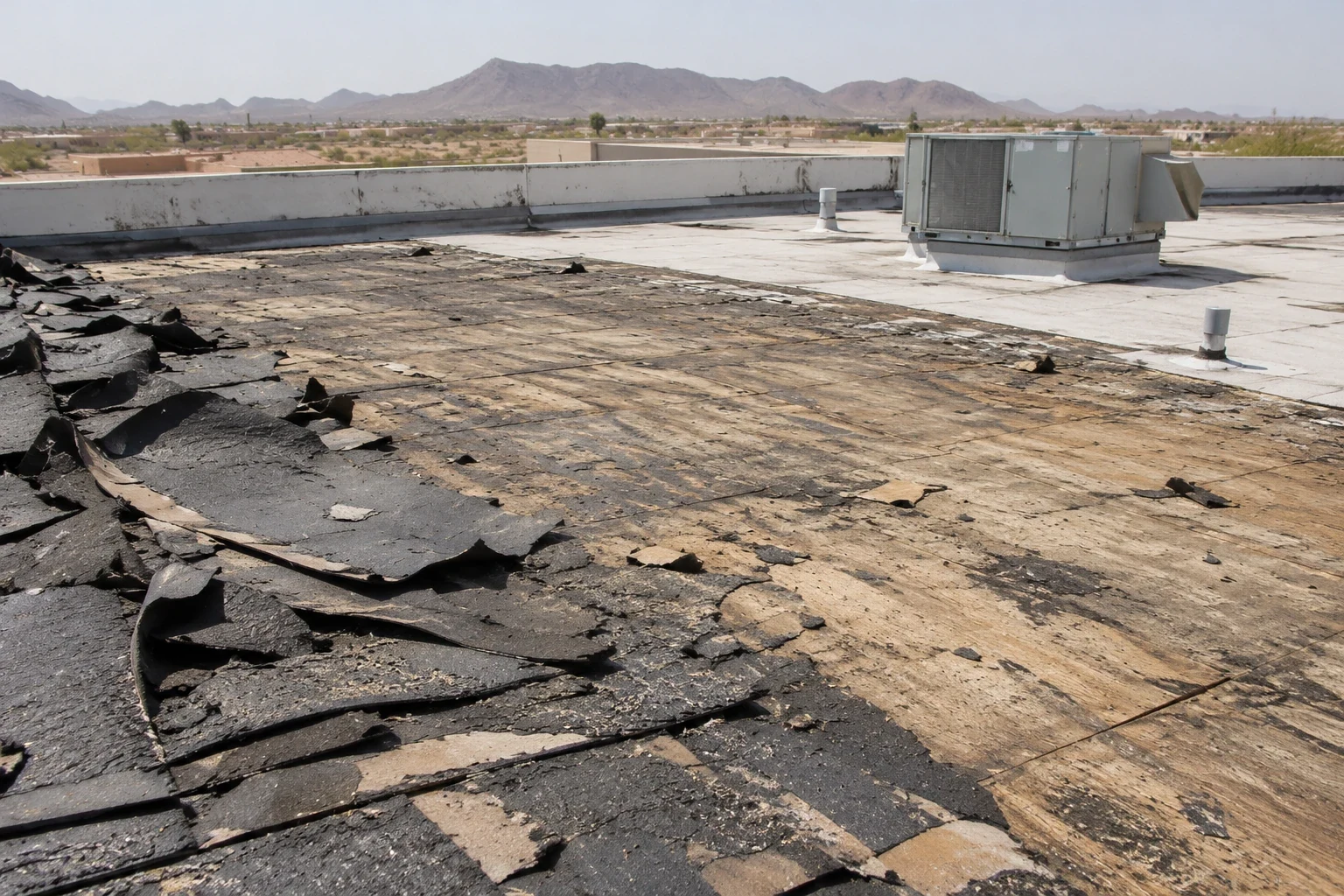
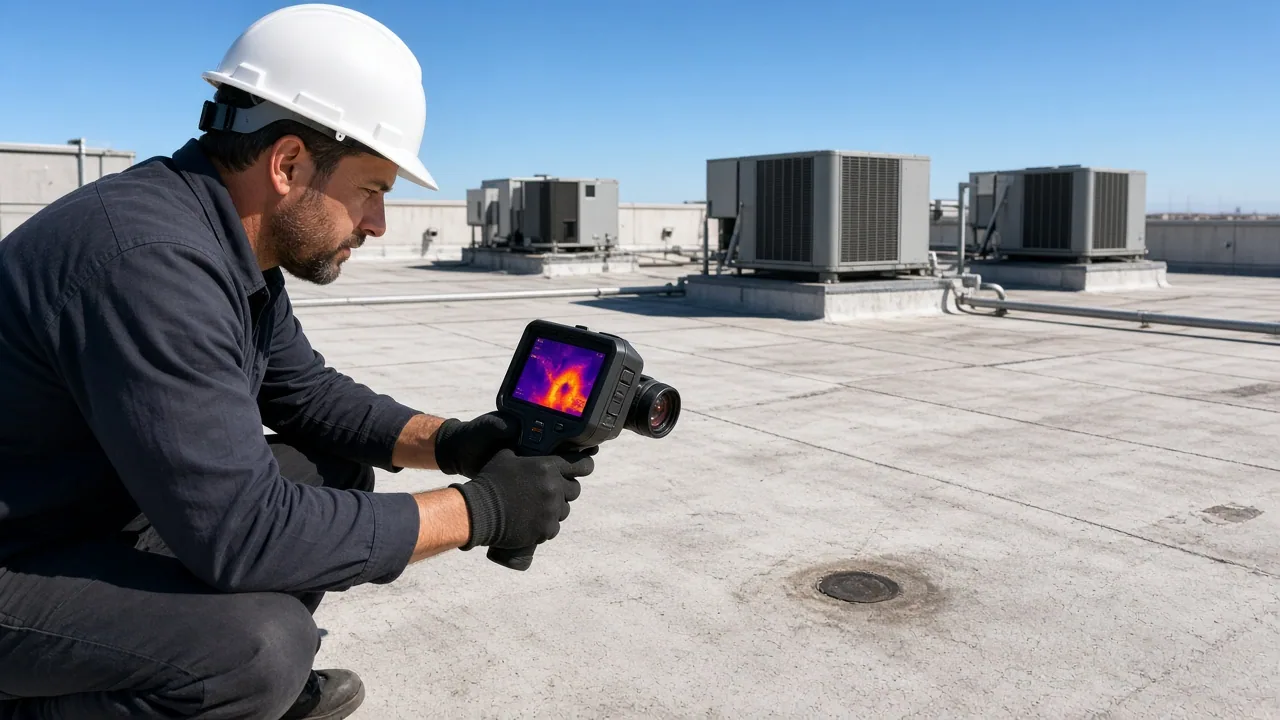
We compare the report with accessible roof observations. Photographs can identify a zone, nearby seam or curb, drain route, and the interior report. We note what is wet, open, displaced, patched, and sound, along with any access limits. If visible evidence does not establish cause, the record says so and names the additional access or testing that could help.
Victorville's building-code information lists climate zone 14, snow and wind design references, and a roof drainage sizing rate. Those are public design references, not a field inspection or a determination for one roof. A design professional applies current requirements to the building. Our record describes observed conditions and coordinates the roofing scope.
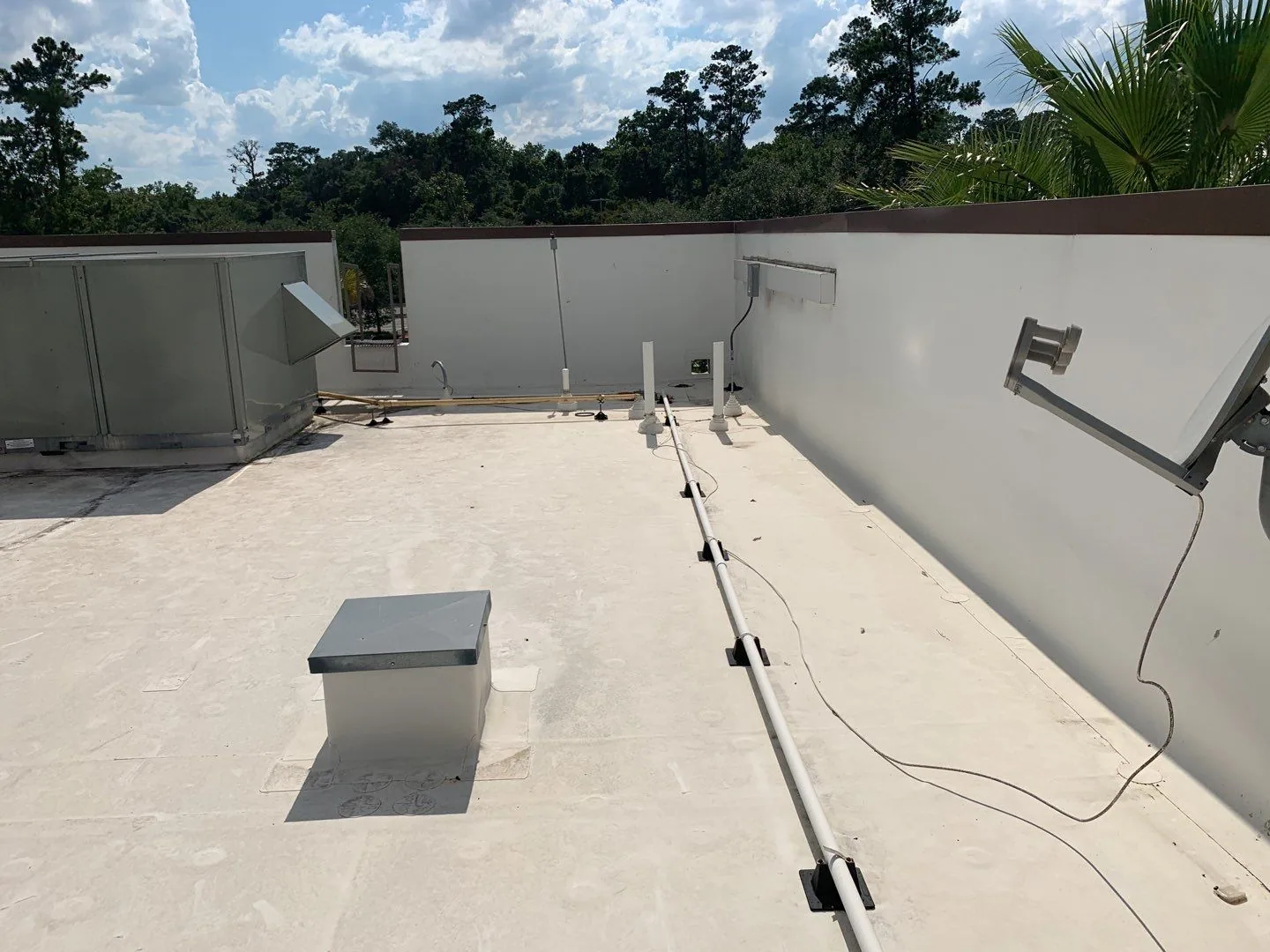
A commercial roof inspection can identify accessible conditions and map the work area. For a leak report, a focused leak assessment follows the reported water path. The facility contact helps separate roof evidence from interior symptoms and shares prior repair records where available.
When a condition needs more investigation, we identify the unknown and explain what access, testing, or design review could answer it. A roof condition report records those limits and the next decision. It should be clear which findings are observed, which explanations remain under review, and who will authorize further work.
We also ask whether earlier work changed roof elevations, drainage routes, or transitions between additions. A small repair can affect later access, so the new record should identify what was opened, what was left in place, and which photos belong to the work. That history gives the next facility contact a starting point without implying that a past repair solved every condition.
Repair and planned work:
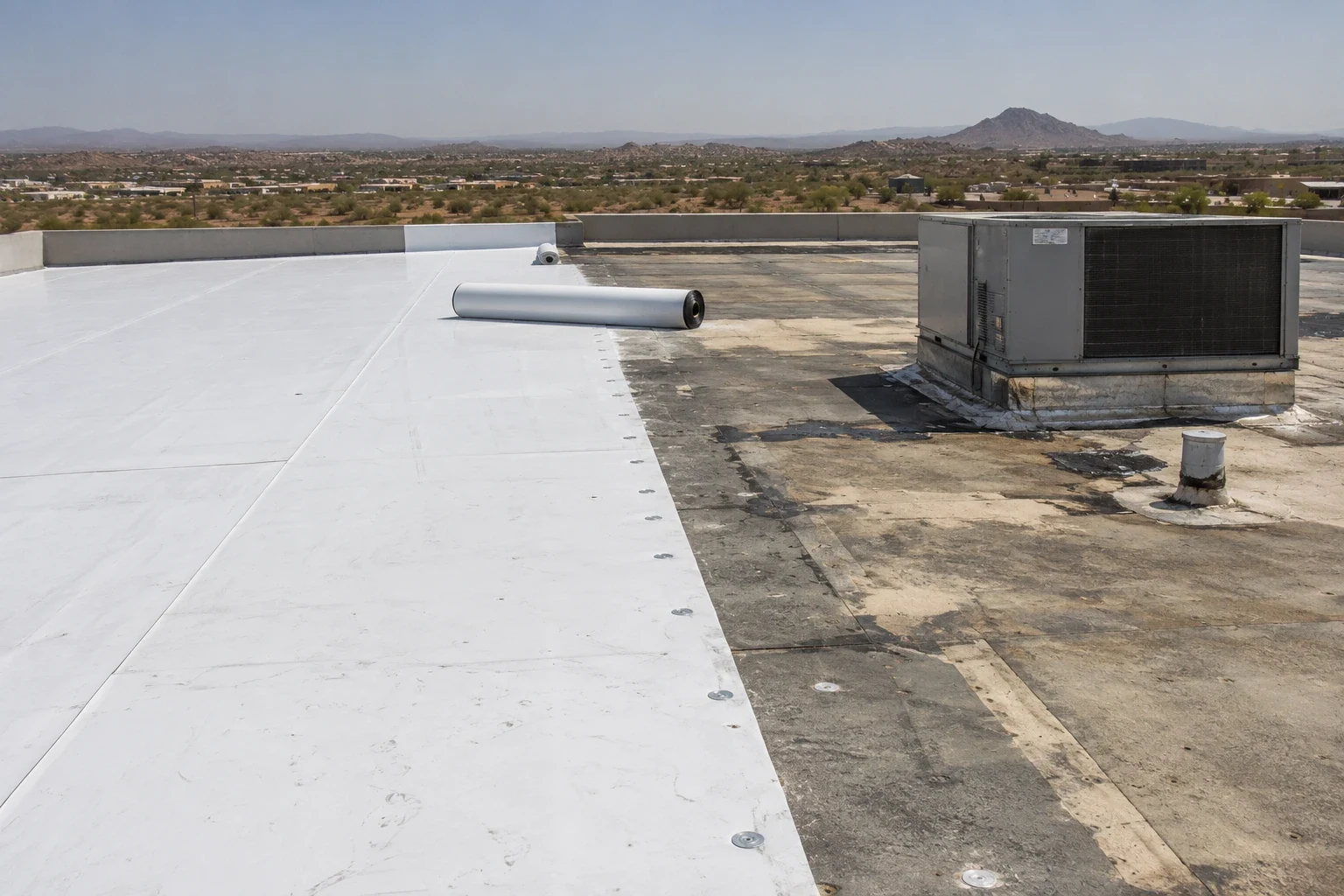
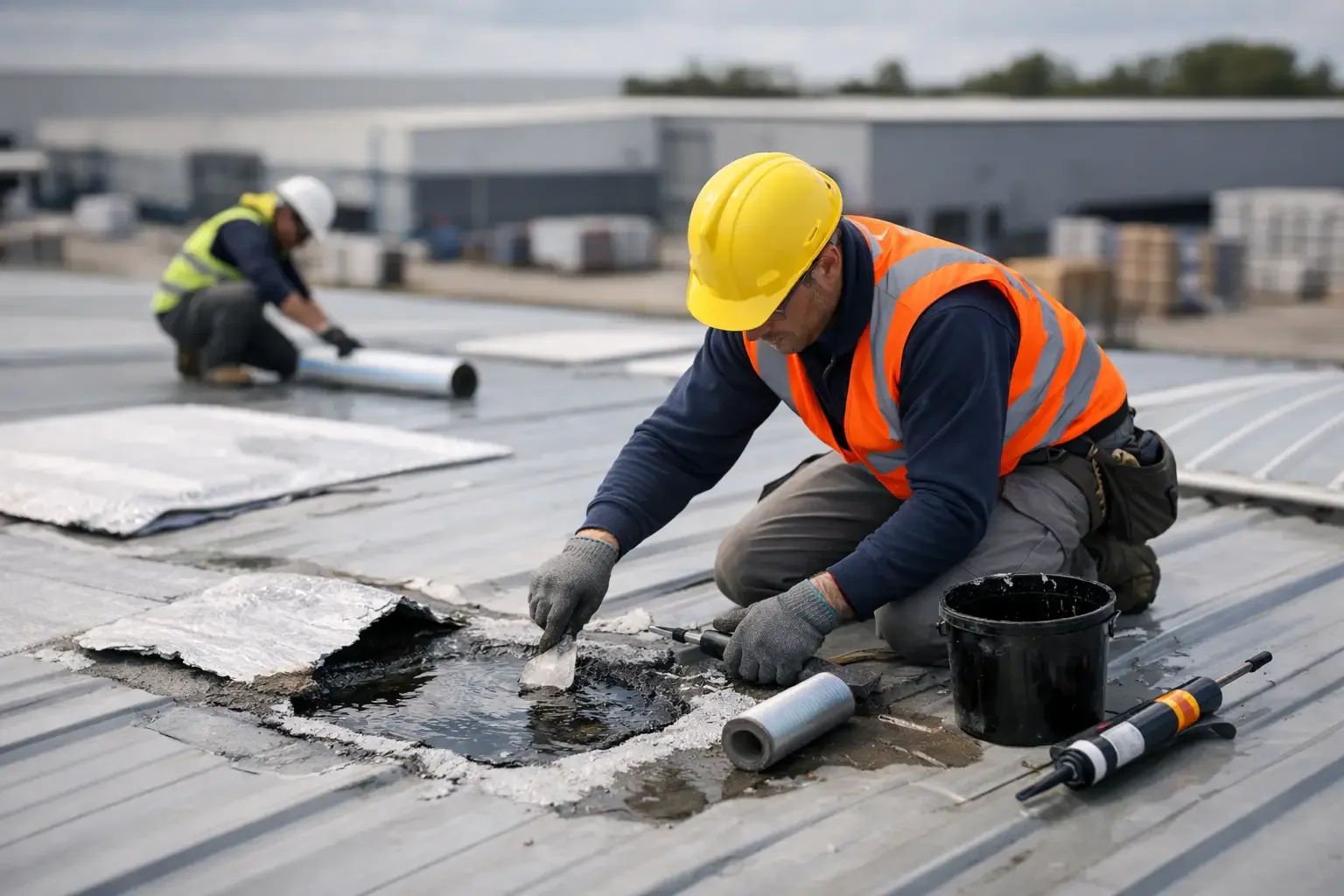
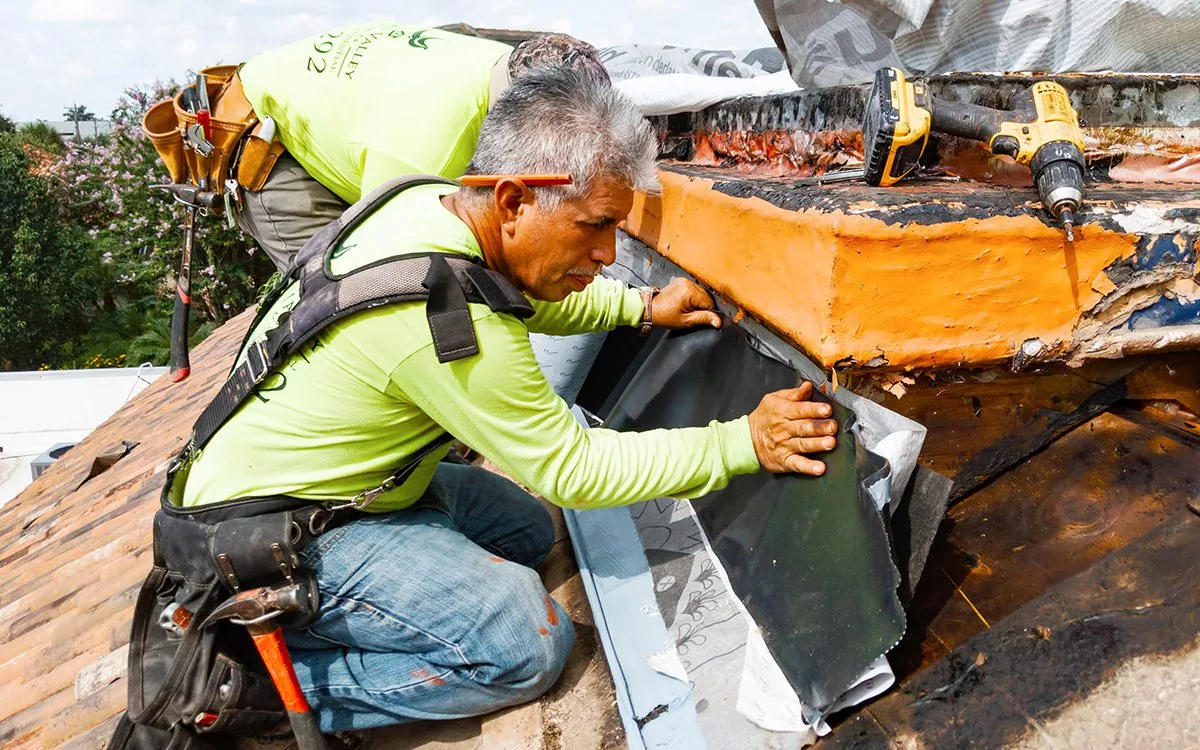
If an opening can be reached safely, we discuss temporary protection while permanent work is prepared. The repair scope names materials, limits, details, and any inspection point. A maintenance visit can record drains, penetrations, edges, and patches for later comparison. For a wider assembly question, replacement planning considers condition, moisture evidence, drainage, repair history, priorities, and the work sequence needed to keep the property operating.
Victorville has approved more than six million square feet of planned industrial development across several locations, including Foxborough and land east of U.S. 395 north of Mojave Drive. That source describes planned development, not completed inventory. We do not infer roof conditions from projections; each property needs its own history, inspection, and scope.
Some conditions can be addressed with a localized repair; other findings call for a broader replacement assessment. We compare the documented assembly and condition before proposing either scope. Owners can review warehouse roof planning when loading and storage affect access, or consider property management coordination for portfolio records.
Occupied-building coordination:
Before mobilization, the facility contact and contractor align roof zones, access windows, staging, debris handling, equipment clearance, and protection beneath the work. A shift change or delivery period can determine when a section is available. If several buildings are involved, each receives its own access plan and condition record. Common fields improve comparison without making distinct roofs interchangeable.
When concealed conditions appear, the crew records them and pauses at the agreed decision point. The owner receives the finding and options for direction. Keeping temporary protection, approved permanent work, and future recommendations distinct helps operations staff understand what is complete and what remains open.
The work sequence can define which roof areas release first, where materials can be staged, and when the facility contact needs a progress update. For an occupied project, the occupied-building work plan should relate roof activity to the space below. Owners with multiple sites may use multi-site program reporting to compare status while keeping each roof's decisions separate.
Records and next decisions:
At the end of a visit, the owner should be able to trace findings to zones and photographs, review work performed or proposed, and see what needs another visit. We preserve assumptions and limitations rather than treat an observation as a promise of future performance. Warranty documents, submittals, maintenance notes, and repair details can be attached to the property record.
For a commercial property in Victorville, the next step is a conversation about the affected area, the operation below it, and roof access. A repair assessment can address a specific condition, while a capital review helps ownership consider longer-range work. The two decisions use different time frames and should be supported by the right record. We coordinate an assessment and describe a repair or planning scope based on the conditions observed. The facility contact remains part of the process from the first report through review of findings and next actions.
After a visit, ownership can decide whether to approve the proposed repair, request another inspection, or set a capital review. The Victorville service area describes city context; site access and conditions are confirmed with the facility contact. No citywide statistic substitutes for a property record, and no planned project list says whether a specific roof is built or occupied.
Commercial Roofing Questions
What information should I bring to the first call?
Identify the property, roof zone if known, interior area affected, timing, and whether water is active. Include the access contact and any operating restriction.
Do you promise a repair result before inspection?
No. The first discussion identifies the report and access needs. A repair recommendation follows inspection of accessible conditions and scope confirmation.
Can a crew enter an occupied facility?
Access follows the owner’s rules and approved work plan. The site contact coordinates entry, escort, protected areas, and operating windows.
How will our team know what remains?
The record separates findings, work performed, temporary measures, open questions, and proposed next steps. Photos and zone labels support that handoff.
Can you plan work for several sites?
Shared reporting fields help comparison, while each site keeps its own conditions, access plan, repair scope, and history.