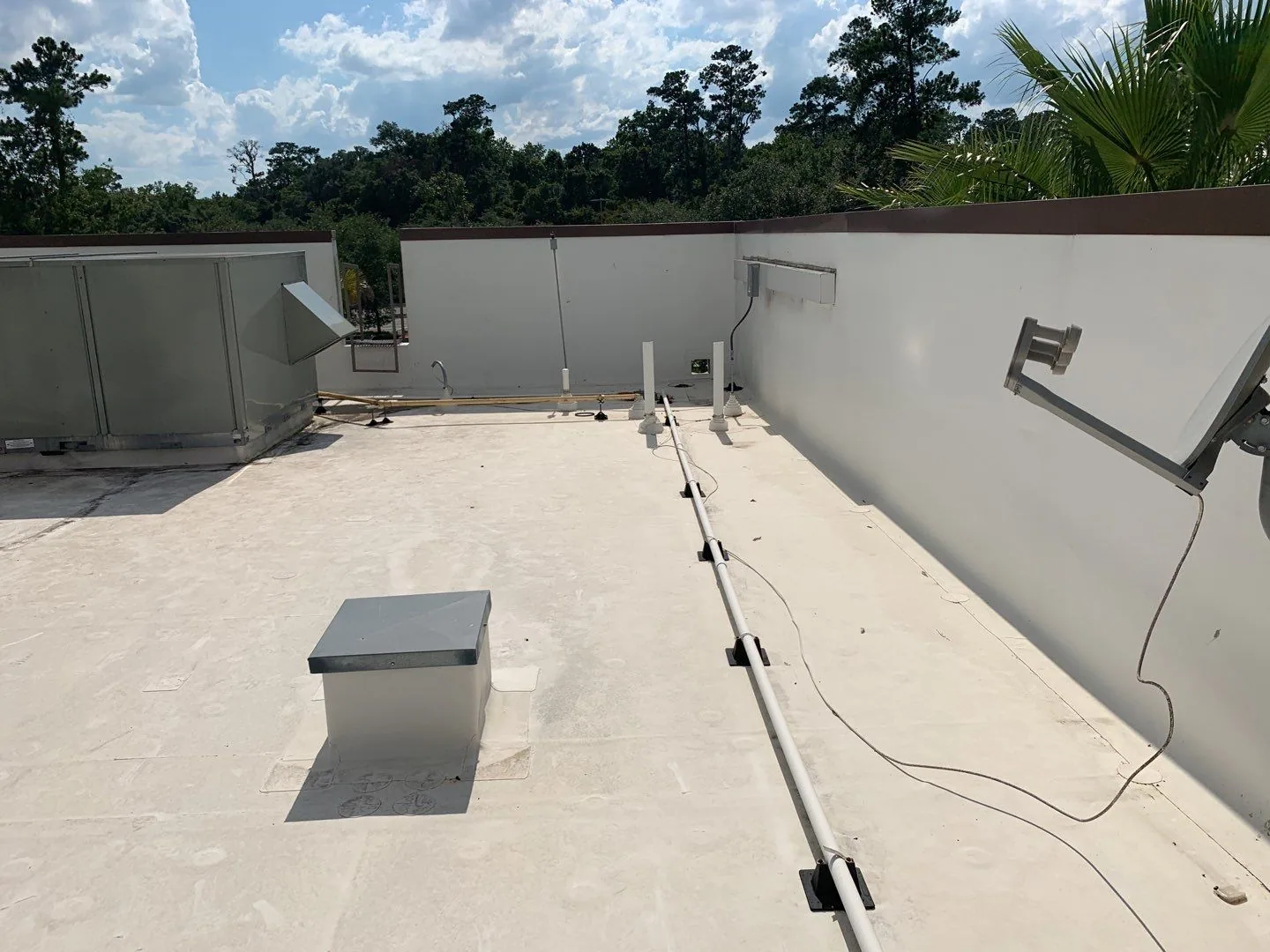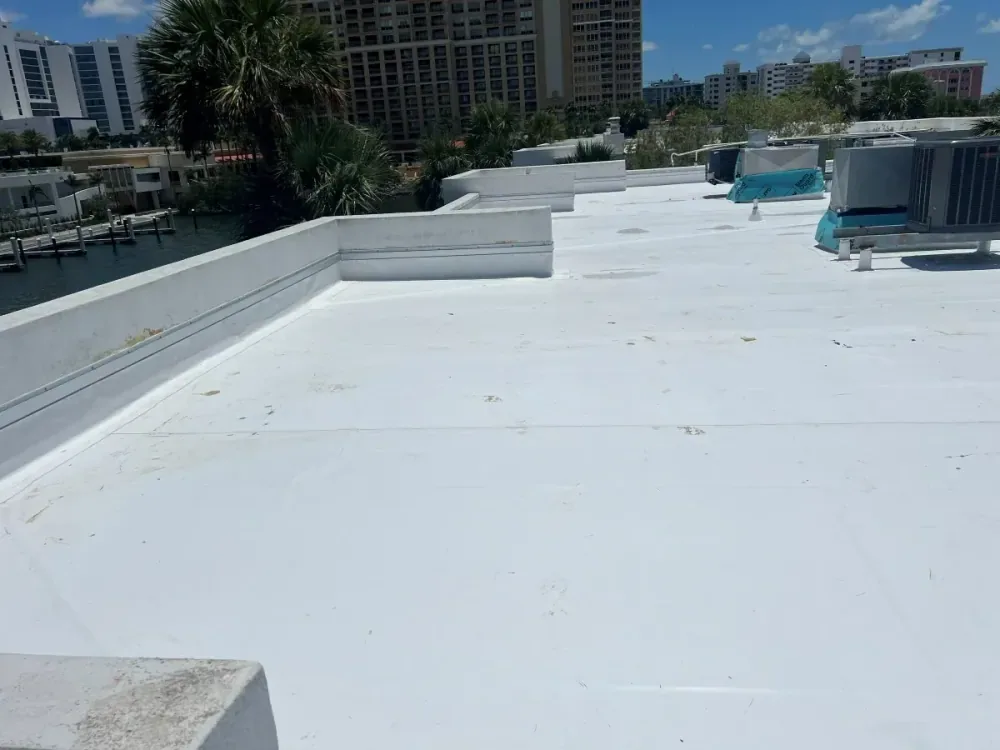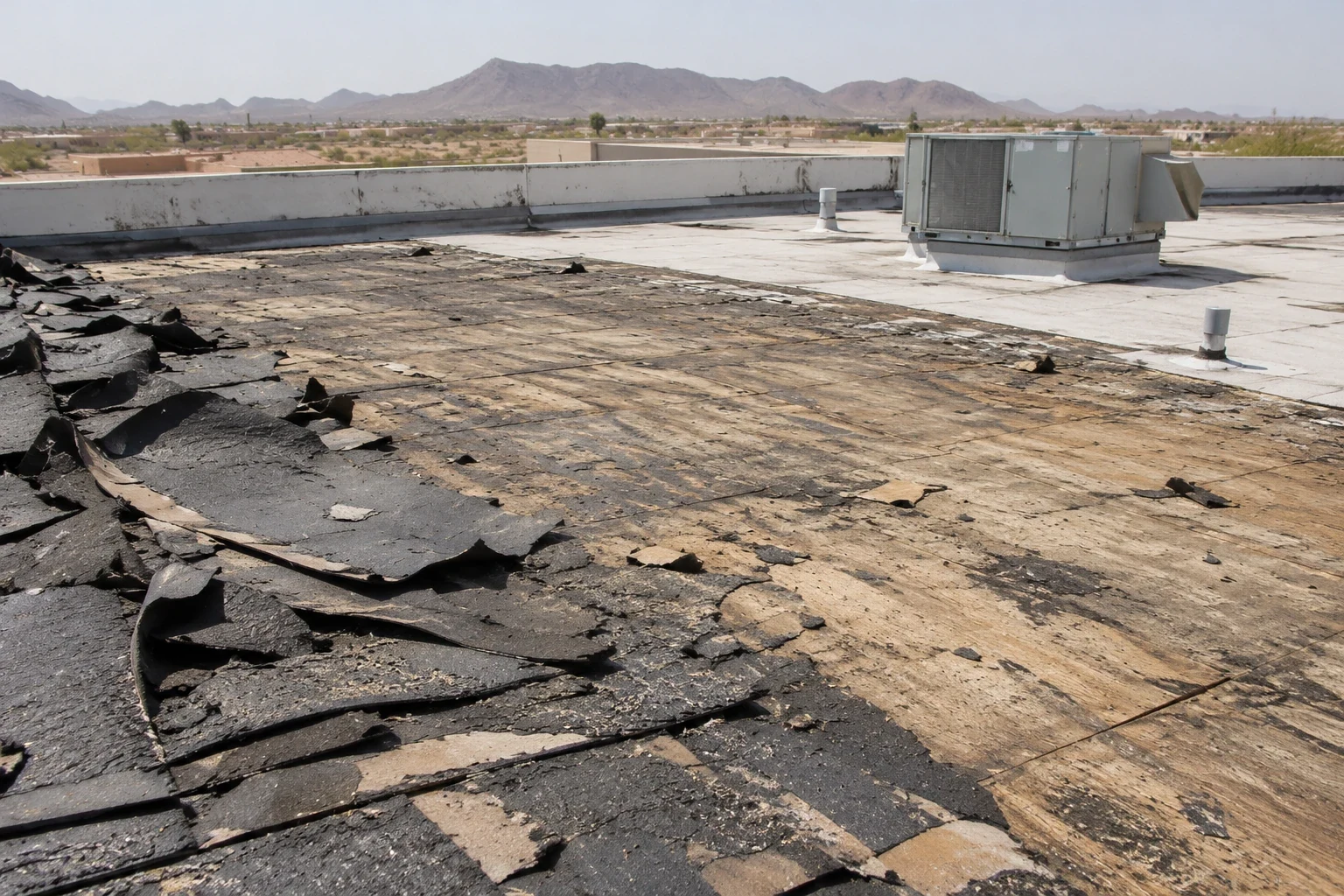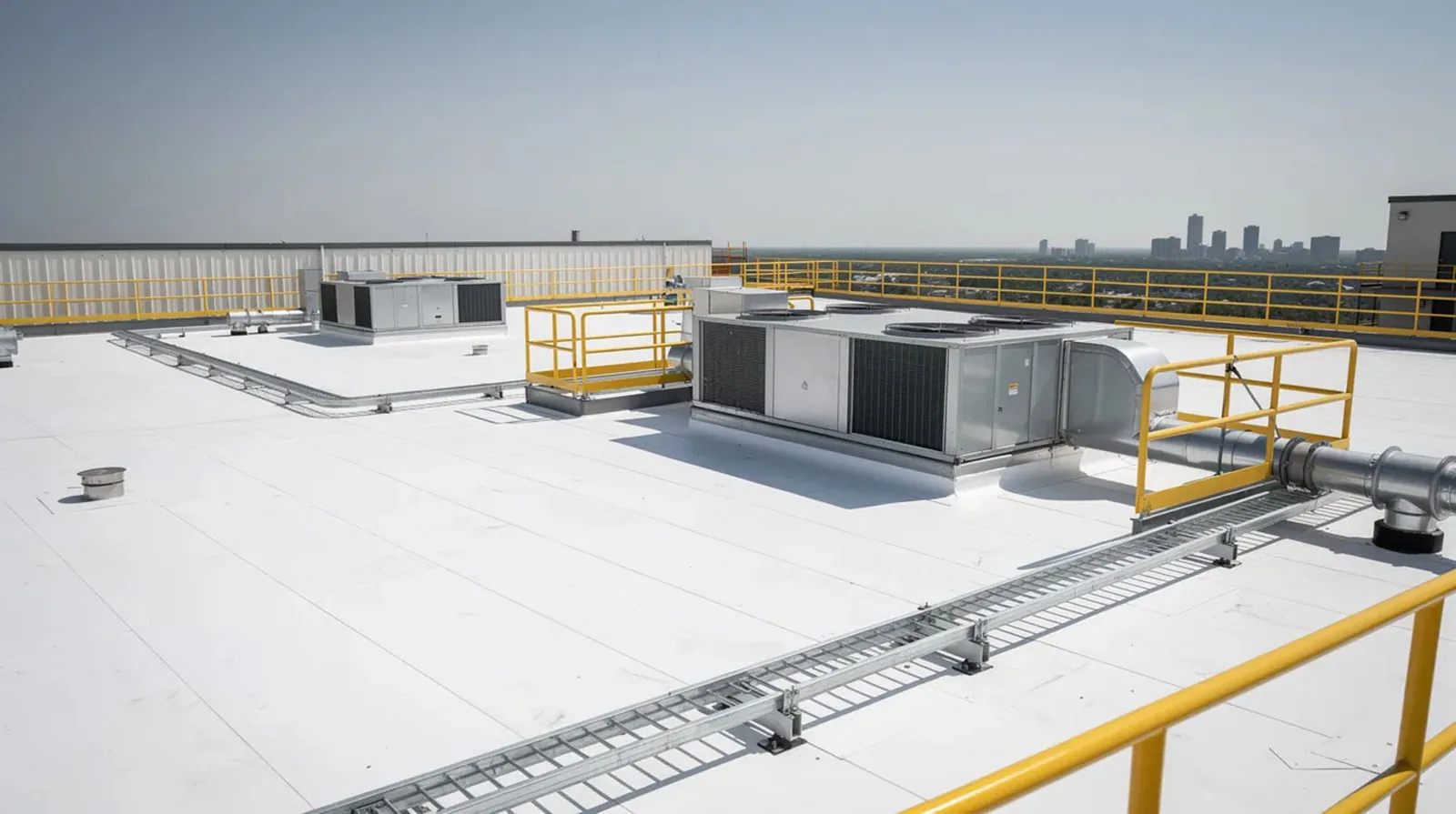
A report from a warehouse, retail space, or occupied office in Victorville needs a roof-zone reference before anyone can decide what to move or protect. We start by confirming the affected room, the operation below it, and the person who can arrange roof access. The first walk follows the reported water path toward seams, drains, curbs, penetrations, and edge metal. A mapped photo set then separates observed conditions from areas that still need testing. That sequence gives a facility contact a usable choice between temporary protection, a defined commercial roof repair, and a broader investigation.
Start with the building impact
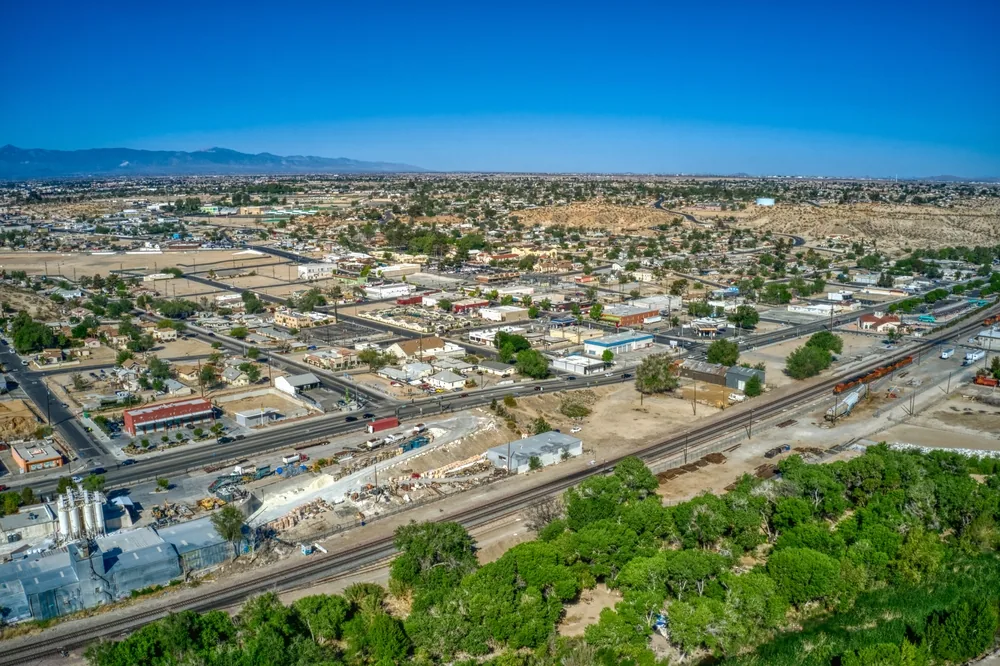
Victorville's economic-development materials identify manufacturing, logistics, industrial users, and distribution as part of the city's business context. That does not establish what any one roof contains, so our first-call questions stay tied to the specific property: which bay, suite, or work area is affected; what equipment or inventory sits below; and whether production, receiving, or customer access is active. The answer guides safe staging and lets us plan around an access window instead of treating every leak report as the same repair.
A second report can be more specific without assuming the cause. Water near a ceiling grid may have traveled from a higher seam; a drip beside rooftop equipment may trace to a curb or flashing transition. We mark the point where water appeared, inspect the roof above it, and follow likely paths without calling a suspected opening a confirmed defect. Where a temporary make-safe visit is appropriate, the facility contact receives the limits of that protection and the follow-up inspection still needed.
Read the roof zone in sequence
From June 1980 through May 1990, the George AFB/Victorville station logged an average of 23 days per year reaching at least 100 degrees Fahrenheit. That decade of observations gives the team a reason to inspect sun-exposed laps, old patch edges, and sealant at metal changes closely. It cannot tell us whether a current membrane has failed. We compare each reported interior condition with the actual sheet, curb, parapet, or drain above it, then record what the photo set confirms and which area still needs access or testing.
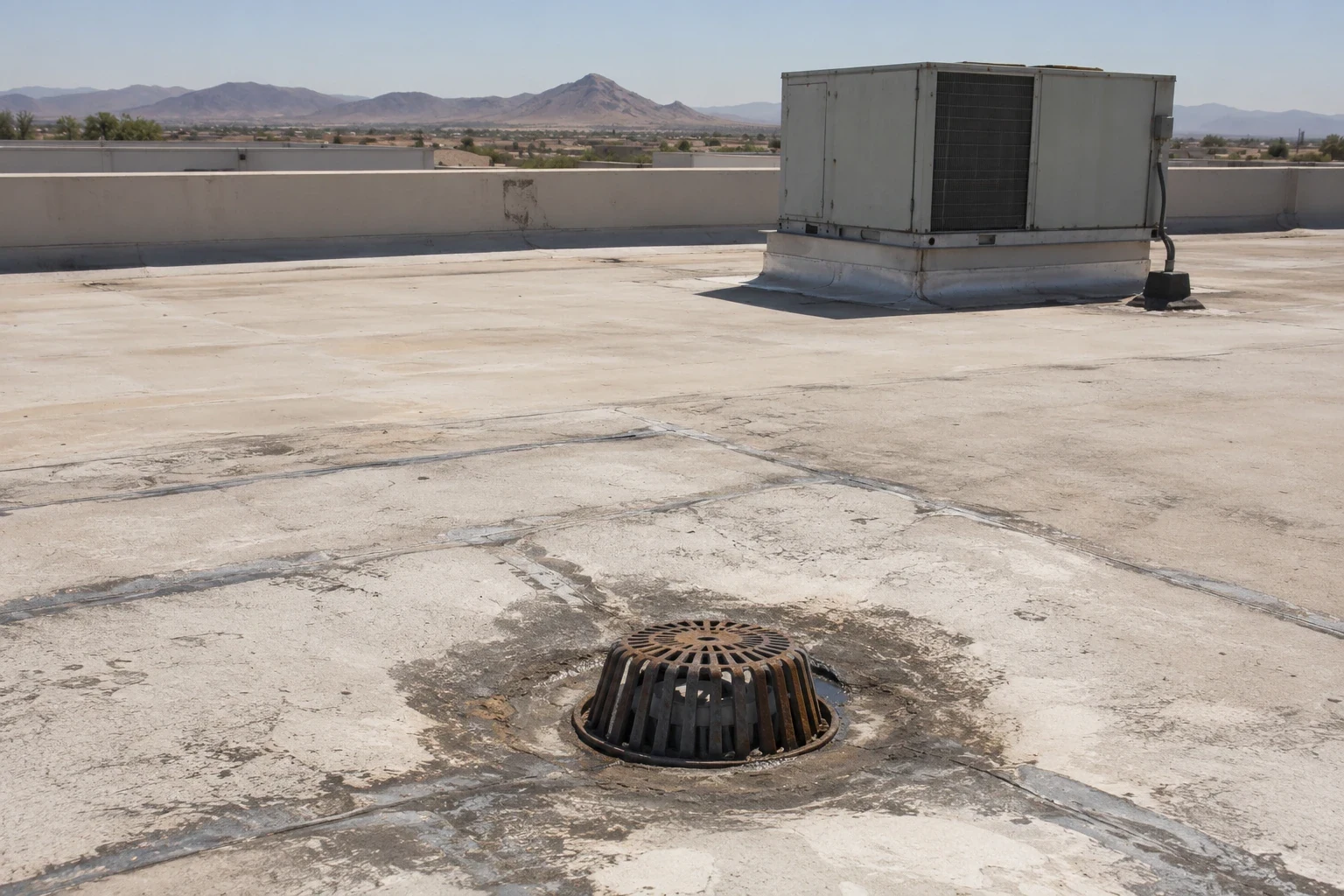
Victorville's adopted drain calculations use 2.5 inches per hour as the rainfall design input. During a roof visit, we check the existing outlet by looking at its visible bowl, overflow path, nearby slope, and signs of retained water. A code value cannot show whether leaves, a damaged flange, a low seam, or concealed piping is affecting one property now. A drain and scupper review can isolate an accessible cleaning item from membrane work, while the photo set shows the detail that supports each recommendation. If the line beyond the outlet remains hidden, we list that as a separate question for the next scope.
Separate repair from replacement
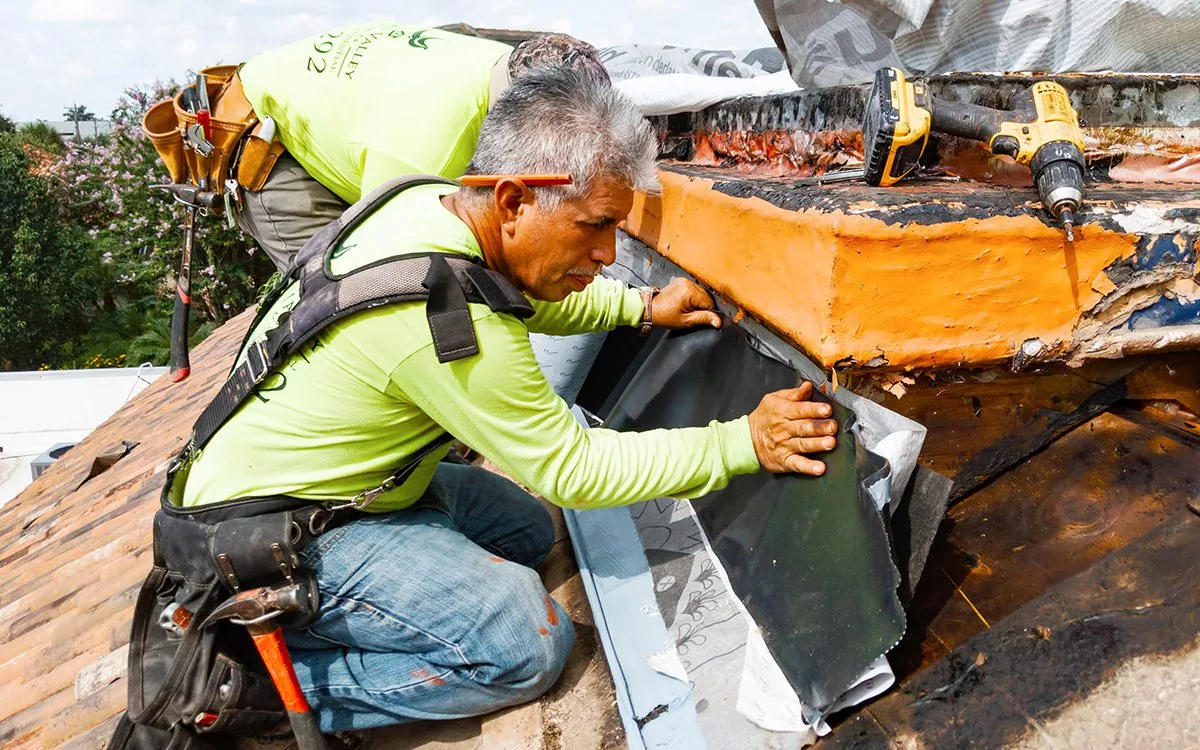
A useful scope links each action to a marked roof zone, a visible condition, and an operating concern below. If a seam has a localized separation, we identify the section to prepare and repair, then note whether adjacent material appears serviceable. If the assembly cannot be confirmed from the surface, the report says what inspection or test is needed before a permanent repair is priced. The owner can compare a contained seam-failure repair with a larger area of work using the same map and photo references.
Replacement enters the conversation when repair limits, widespread conditions, prior work, or the owner's planning horizon support it. We document the visible roof zones, penetrations, edge transitions, drainage details, and access constraints before discussing an overlay or tear-off. A replacement assessment should make insulation, cover-board, edge, and disposal decisions explicit, along with the work sequence around occupied areas. No page or climate table can determine an individual roof's condition; the assembly and the evidence on site do.
Keep the work usable below
Victorville is served by Interstate 15, U.S. 395, and State Route 18, but route access does not settle the building's delivery schedule or roof-access rules. Before mobilization, we confirm check-in, fall-protection requirements, staging limits, a facility contact, and any areas that cannot be blocked. If work passes over an occupied suite or active loading zone, the sequence identifies where temporary protection goes, when a section can be opened, and how the crew will leave it at the end of the access window. The same coordination applies to an inspection that may uncover conditions requiring a return visit.
Our written notes keep a facility director's decisions in view: authorize an immediate protective step, approve a repair scope, request a test, or place a larger project into capital planning. The record can include a zone map, date-stamped photos, access limits, materials observed, and the items not verified. For a multi-building portfolio, roof asset records can preserve that history by building and zone. A separate Old Town assessment follows the same evidence standard while responding to that district's mixed-use plan context. The city's Bear Valley Road and I-15 planning focus offers another local frame for commercial roof work: a corridor-specific assessment can discuss access and drainage without treating every parcel as alike. For any property, we verify roof conditions rather than assuming its assembly from its address or neighboring businesses. Records should name each inspected zone and distinguish a confirmed defect from an area that could not be reached. That precision helps an owner compare repair choices, plan a return visit, and explain a work window to the people using the building. A citywide service call also needs practical boundaries: the property contact approves roof access, the crew stays within the agreed work area, and any added inspection proceeds only after the next scope is reviewed together.
Set up the first assessment
Share the affected roof zone, the activity below it, and the contact who can arrange access. We will review the reported condition, document what can be seen, and outline the next repair or investigation decision for the property.
Commercial Roofing Questions
What should our facility contact have ready for a first visit?
A roof plan or prior photo set helps when available, but the first useful items are the reported interior location, the time the condition appeared, the affected operation, and the name of the person controlling access. We can use those details to choose a safe route, protect the area below, and keep the inspection focused on the roof zones tied to the report.
Can you price a permanent repair from the first leak call?
A call can establish the concern and coordinate a visit, while a permanent price needs the roof assembly, accessible conditions, repair limits, and any required testing. We document those items before defining labor and material. If an immediate protective measure is warranted, its duration and limitations stay separate from the permanent repair scope.
How do you handle a wet area over an active work bay?
We begin below the roof by identifying equipment, inventory, electrical concerns, and the operation that needs protection. The facility contact and crew then agree on an access and work sequence. Temporary protection may reduce exposure while the source is examined, but it does not substitute for tracing the water path or confirming what materials are affected.
When does a roof coating belong in the options?
A coating is considered only after the existing surface, seams, drainage, penetrations, and substrate are evaluated for compatibility and condition. The assessment also checks whether preparation and repairs can support the proposed system. We explain the areas that qualify, the work required first, and what a coating will not correct, so the owner can compare restoration with repair or replacement.