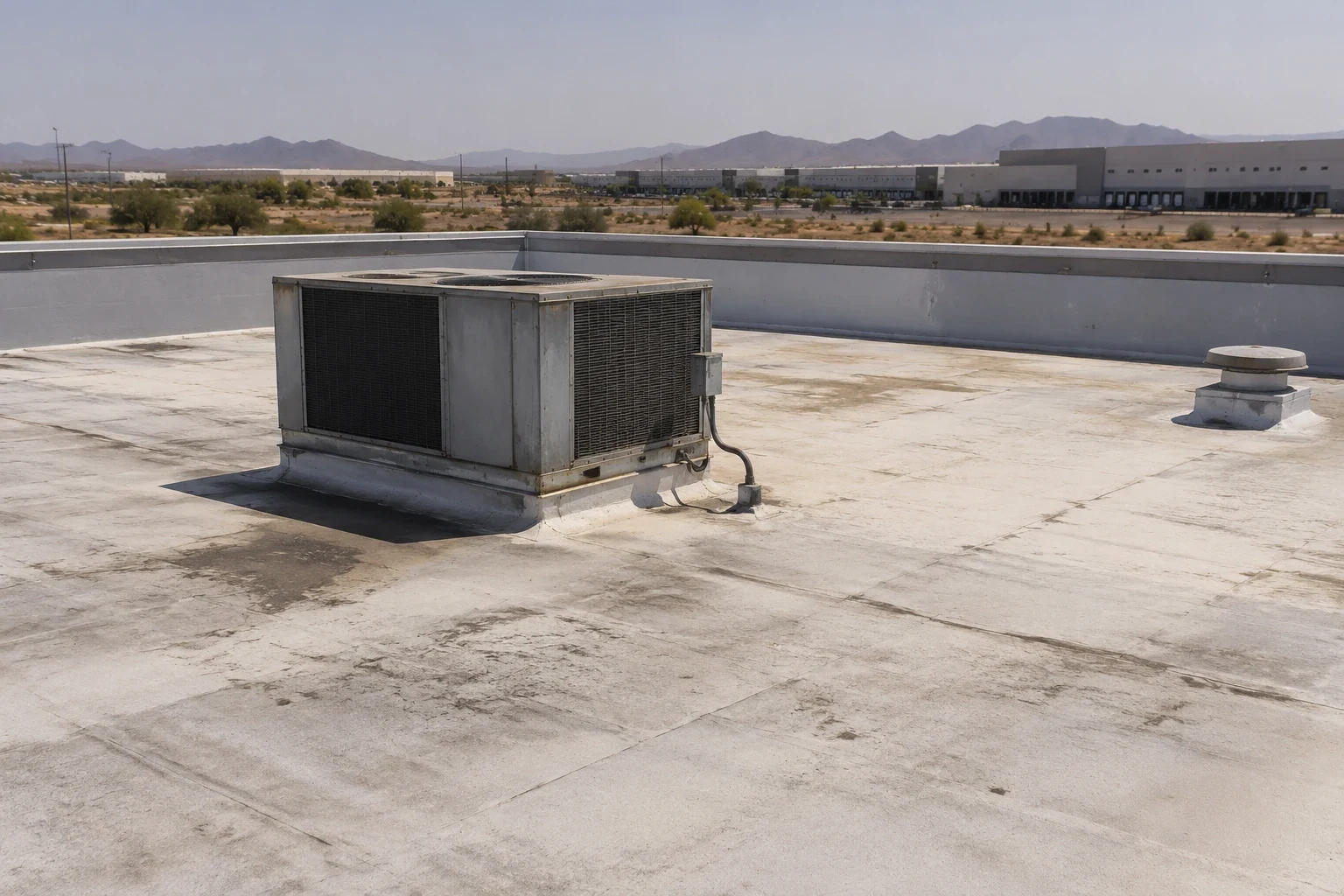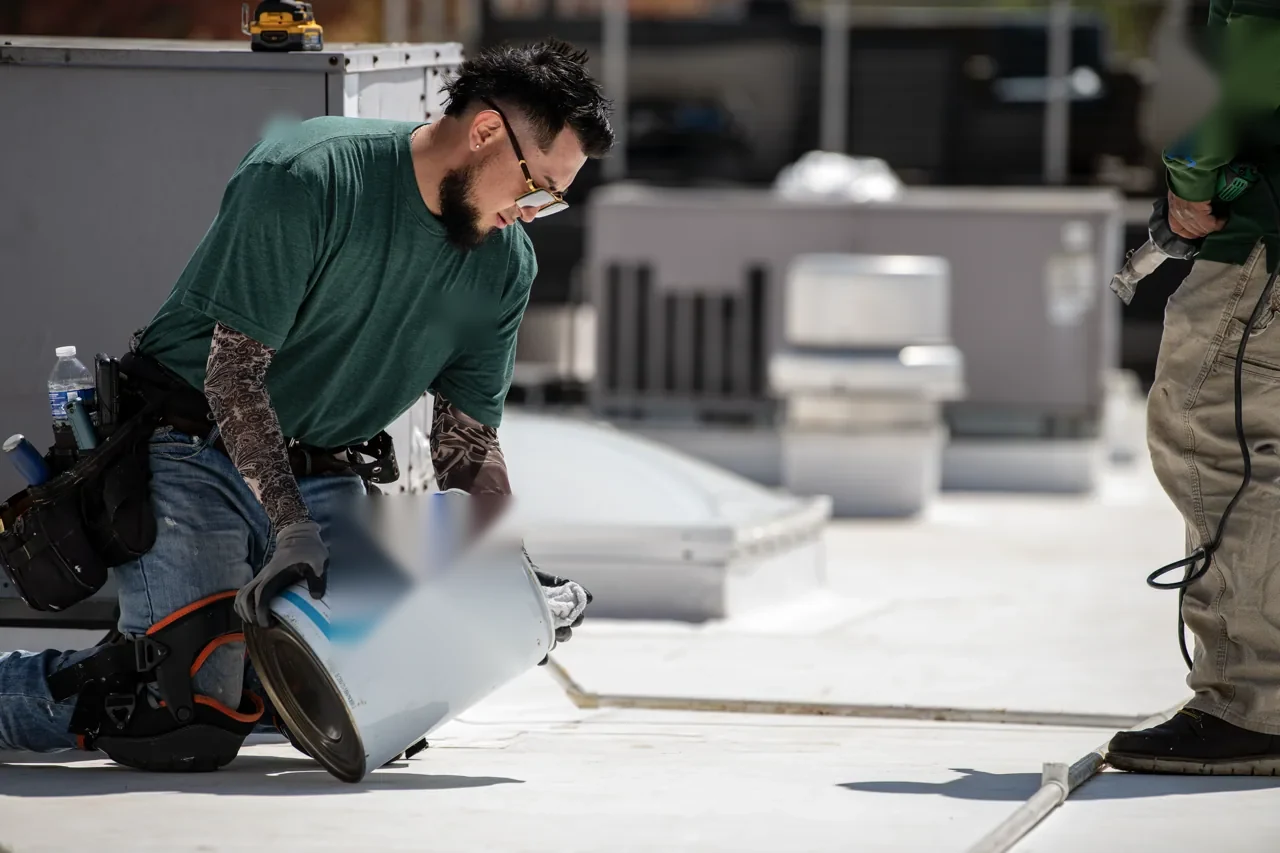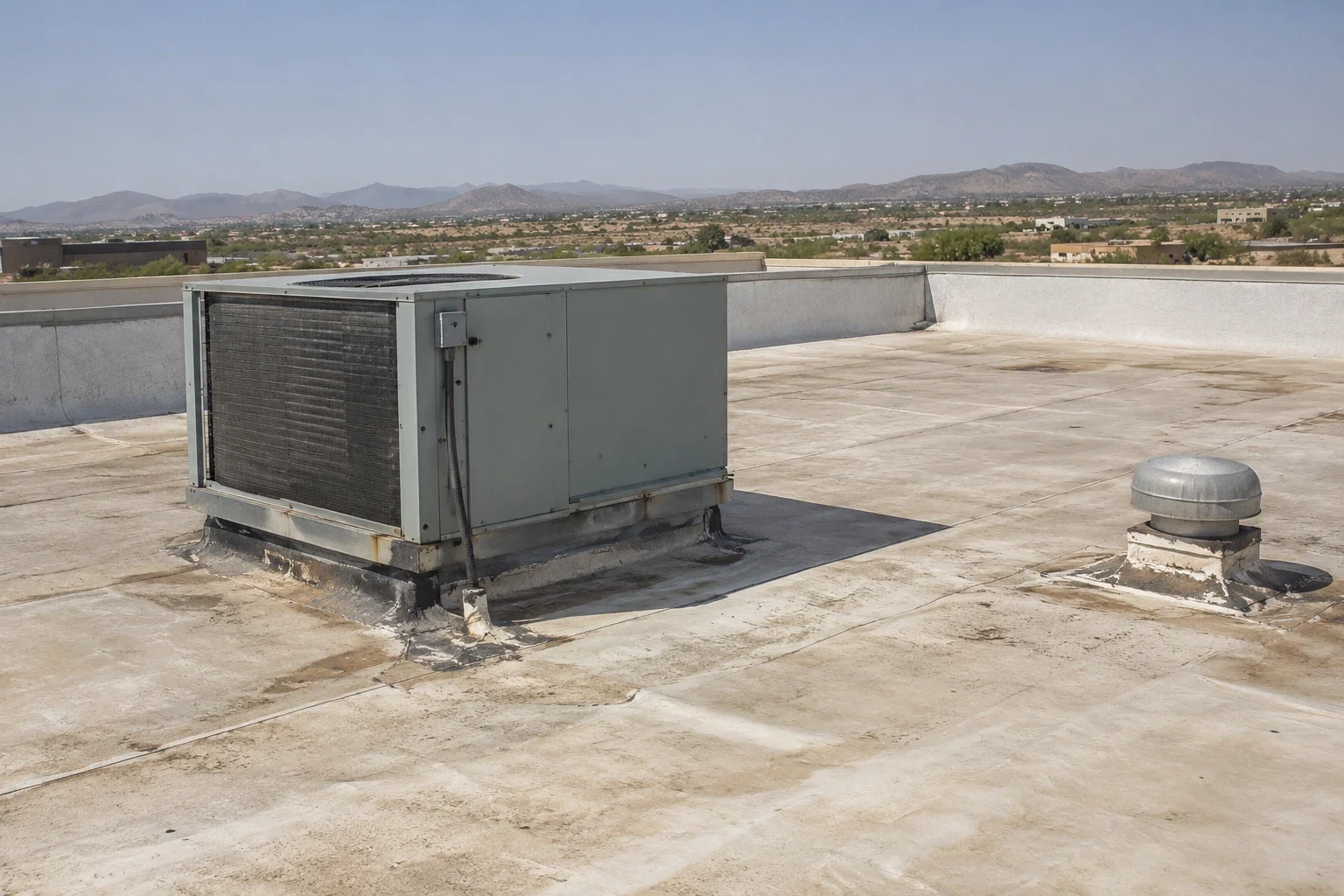
A roof leak over a pick lane, packing area, or dock needs a location the operations lead can protect while the roof is checked. We ask where water appeared, what outbound activity runs below, and which contact controls roof access. Victorville planning documents describe proposed industrial development at Foxborough Industrial Park and on land east of Highway 395 north of Mojave Drive. Those approvals do not establish an operating site or roof assembly. They do point to practical questions about shift changes, lift routes, and trailer movement that we confirm with each facility contact before setting a work sequence.
Our inspection ties the interior report to roof seams, curbs, penetrations, drains, and perimeter details. We photograph the zone and distinguish temporary protection from permanent repair. A distribution center assessment can consider dock and conveyor activity, while manufacturing roof planning helps when a logistics campus also supports a production process.
Keep loading routes clear
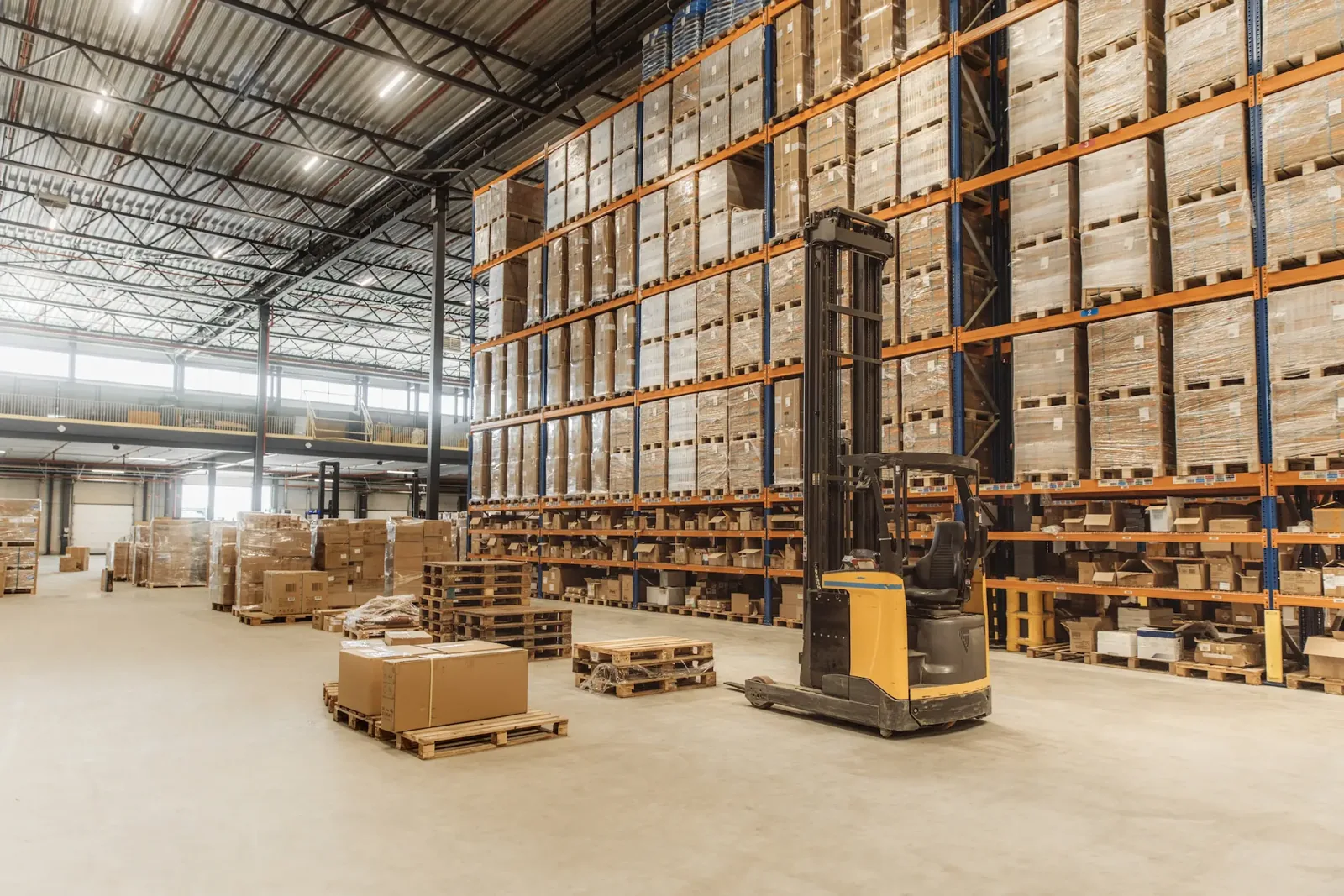
The facility contact identifies dock doors, trailer lanes, employee routes, staging areas, and hours when roof access can occur. A lift or material pallet should not obstruct the route that keeps a shift moving. We confirm where a crew can stage and how the roof can be reached without crossing an active loading area. If a leak affects inventory, the team below follows its own safety and product-handling rules while we determine whether temporary protection can reduce exposure from above.
The first assessment records which dock or work zone is affected and how the roof area aligns with it. Water may enter at a curb or seam and travel before reaching the floor. We inspect the slope, drain path, prior patch, and nearby penetrations rather than assuming the roof point sits directly over the stain. The record gives an operations manager a location to monitor, plus a clear access need if testing or a return visit is required.
Trace the roof path above the work
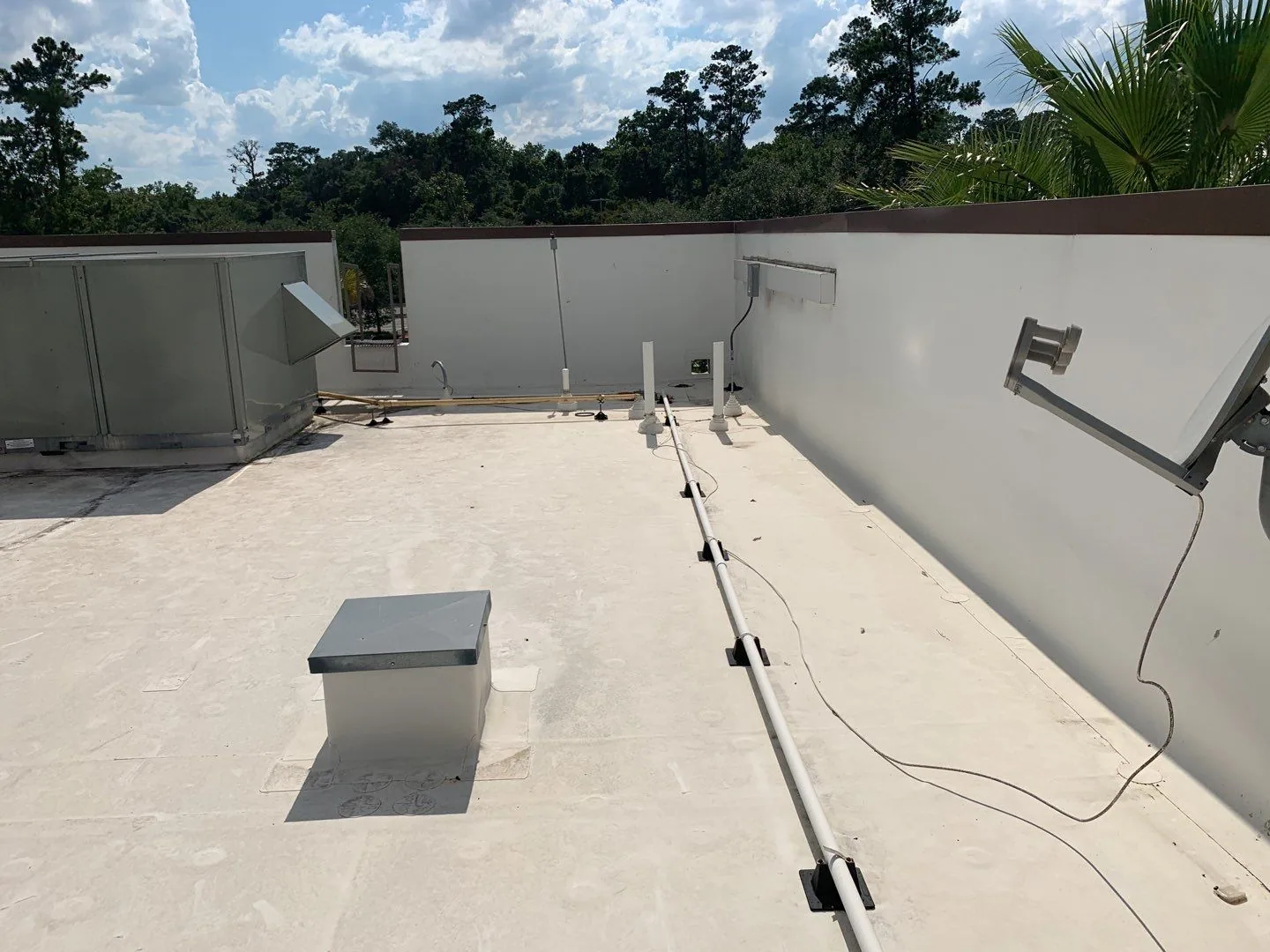
On the roof, we check membrane seams, metal edges, flashing at equipment bases, drains, scuppers, and any repaired area connected to the report. A distribution building may have long roof runs and several drain zones, but actual dimensions and assembly come from the site, not the building label. We mark each observation against a plan or identifiable reference. If wet insulation is suspected, infrared review or a test opening can answer a specific boundary question before replacement quantities are priced.
A drainage design figure published by the city is 2.5 inches in one hour; roof inspection must determine the condition of the actual outlets and flow path. That figure is a design benchmark, not a statement about storm intensity at a warehouse. We inspect the real drain route and outlet after an interior report. A drainage assessment can review confirmed blockage or flashing, and a moisture survey can map areas where the membrane looks intact but insulation may be affected.
Schedule roof work for safe conditions
Roof work has to fit weather, material limits, and the operation below. The crew agrees on a roof zone for each shift, protects exposed edges at breaks, and completes a watertight tie-in before leaving. If a lift blocks a dock approach, the contact can set an alternate staging period. If a conveyor or ventilation system must be isolated, the plant or warehouse team controls that equipment and confirms when it can return to service. We document completed work and any area still awaiting a separate access window.
Across the station's 1980 to 1990 record window, Victorville's July mean daily maximum was 97°F; today's forecast and roof surface control the work plan. That historical context is not a daily forecast. We check current temperature and wind, protect materials, and plan application around the selected roofing system's instructions. A phased replacement plan can protect inventory and preserve loading operations as one roof section is opened and closed at a time.
Choose repair, recover, or replacement from findings
A repair scope identifies the failed lap, flashing, puncture, drain, or edge and includes the preparation and tie-in needed to restore it. If several zones show similar wear, the report separates those observations rather than pricing a patch from one visible symptom. A recover may reduce removal, but only when the deck, existing layers, attachment, moisture condition, and code permit it. A replacement scope identifies removal, insulation, cover board, drainage, perimeter detailing, penetrations, and allowances for conditions concealed until work begins.
Victorville code information lists wind design values that vary by occupancy and exposure. We do not treat that table as proof of how a particular roof was attached; project documents and engineering review set the criteria. For broad condition review, use a roof condition report, then compare a targeted repair with a recover evaluation when the field evidence supports both.
Keep service history usable across locations
A 3PL operator may coordinate roof work for buildings under different ownership or lease arrangements. The file should show who approved access, where the finding sits, who pays for the repair, and which party controls work below. We document each asset separately and can prepare a portfolio summary of open conditions, completed repairs, and additional tests. That record helps operations and facilities share the same status without treating multiple roofs as one assembly or assigning liability from a photo.
Bear Valley Road and I-15 are identified in Victorville planning as a commercial focus area, and U.S. Highway 395 serves the city. These routes can frame a delivery discussion, but a site's gate, dock, and permitted work hours determine the actual sequence. A multi-site roof program can track follow-up across buildings. For a broader owner review, property management reporting can keep roof observations linked to the correct facility contact and operating schedule.
Hand the next shift a clear roof status
Before closeout, we check the tie-in, remove loose material, confirm drainage is clear, and review the work boundary with the facility contact. The report lists the roof zone addressed, photos, materials used, protection left in place, and any item that still needs inspection. The operations lead can then tell the next shift which interior area is safe to use and whom to contact if water returns. If a future visit needs an escort or equipment shutdown, that requirement belongs in the record.
Share the affected aisle, dock, or work area, what is running below, and who can arrange access. Our crew documents the affected area, installs practical temporary protection when the condition permits, and lays out a repair or capital scope for review. A Victorville commercial roof assessment starts with the building and its loading plan, then ties each recommendation to conditions found on that roof.
Commercial Roofing Questions
What should operations report after water reaches inventory?
Identify the aisle or dock, the product or equipment at risk, whether water is active, and the roof access contact. We use those details to set the first safe inspection route.
Can a warehouse stay open during roof repair?
Work can often be sequenced by roof zone, but interior protection, lifts, weather, and the repair method set the workable window. We coordinate that plan with the facility contact.
How do you keep trailer movement clear?
We confirm the permitted staging and lift route before materials arrive. The site contact identifies dock peaks, restricted lanes, and any period when deliveries cannot be interrupted.
When is moisture testing useful on a large roof?
Testing helps map a suspected wet boundary when visual inspection cannot show how far it extends. We note the method and surveyed area before setting replacement quantities.
What does a 3PL operator need in the closeout file?
The file should identify the building, repaired zone, access contact, tenant or owner approvals, photographs, and unresolved conditions. We keep that record separate by asset.