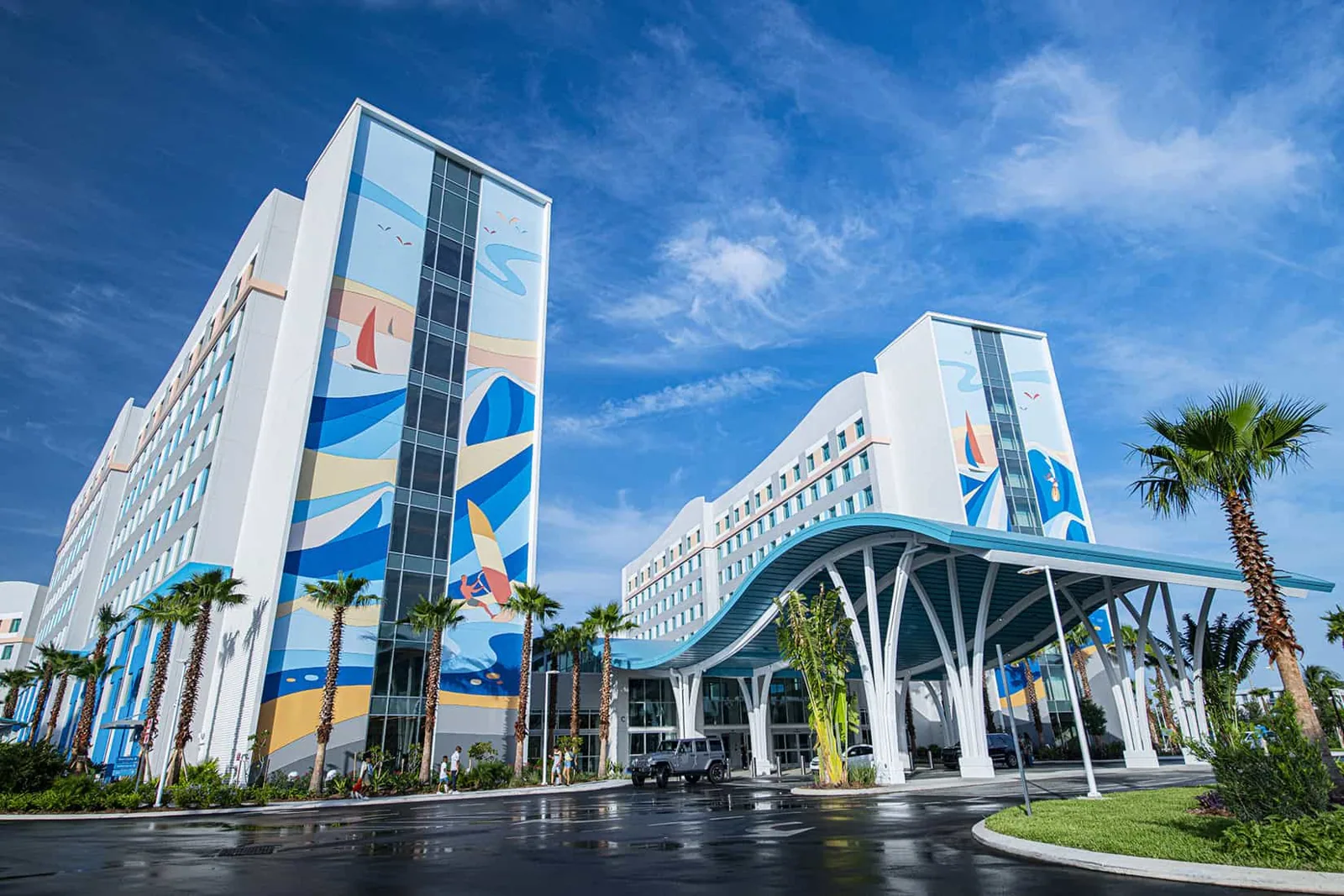
A water report in a guest room or service corridor needs a clear boundary between the occupied area and the roof detail under review. We ask which room or operation is affected, whether the condition is active, and who can arrange roof access. Victorville's planning documents describe commercial uses near Bear Valley Road and I-15, while Old Town Victorville includes mixed retail and service overlays. Those areas frame local access questions, not the condition or type of a hotel roof. We inspect the actual property, trace the water path, and coordinate protection so the hospitality team can make a practical room and work-zone decision.
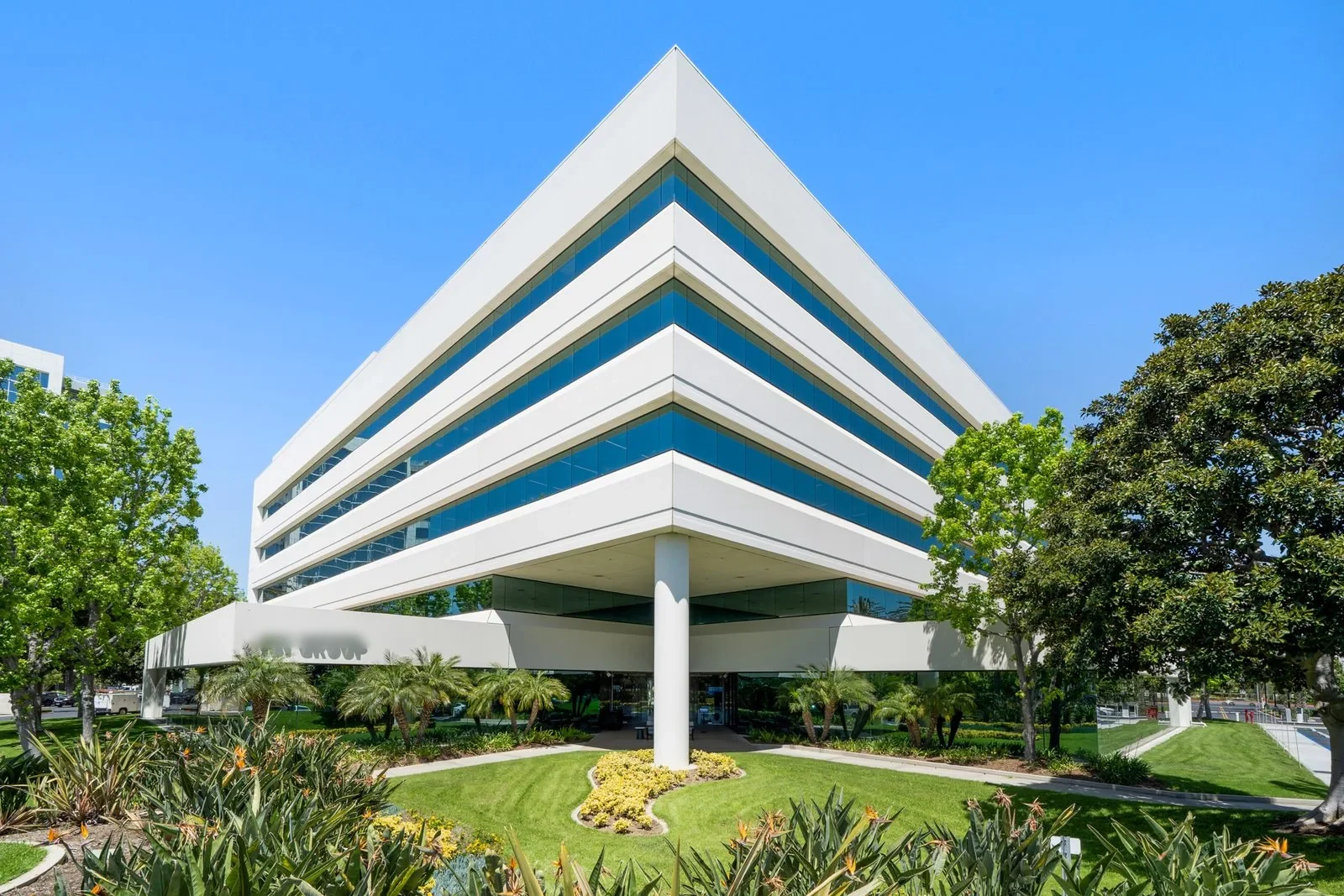
For a group with several properties, each roof gets its own photos, assembly notes, and return needs. A portfolio summary can track status without carrying one building's defect to another. hotel roof assessment can include rooftop mechanical areas and guest-space protection, while owner reporting requirements may guide how findings move into a capital review.
Locate the occupied space below
The first report should name the guest room, meeting area, kitchen, laundry, service hall, or public entry involved. If a ceiling is sagging or water reaches electrical equipment, staff follow property safety procedures and keep guests clear. We do not ask hotel employees to access the roof. Instead, the facility contact identifies the approved hatch or ladder, any escort requirement, and the operating areas where a lift or material cannot be staged. That gives the crew a safe inspection path and gives the operator a defined area to monitor while the source is traced.
A room move or temporary closure is a hotel operations decision. We provide the roof evidence and likely work boundary so the manager can make it with the right information. When protection is needed below an opening, the crew agrees on the barrier, covering, and daily closeout before work starts. If a guest or service area must reopen at a set time, the access window goes into the sequence. The work remains limited to the zones and conditions documented on site.
Keep service routes open
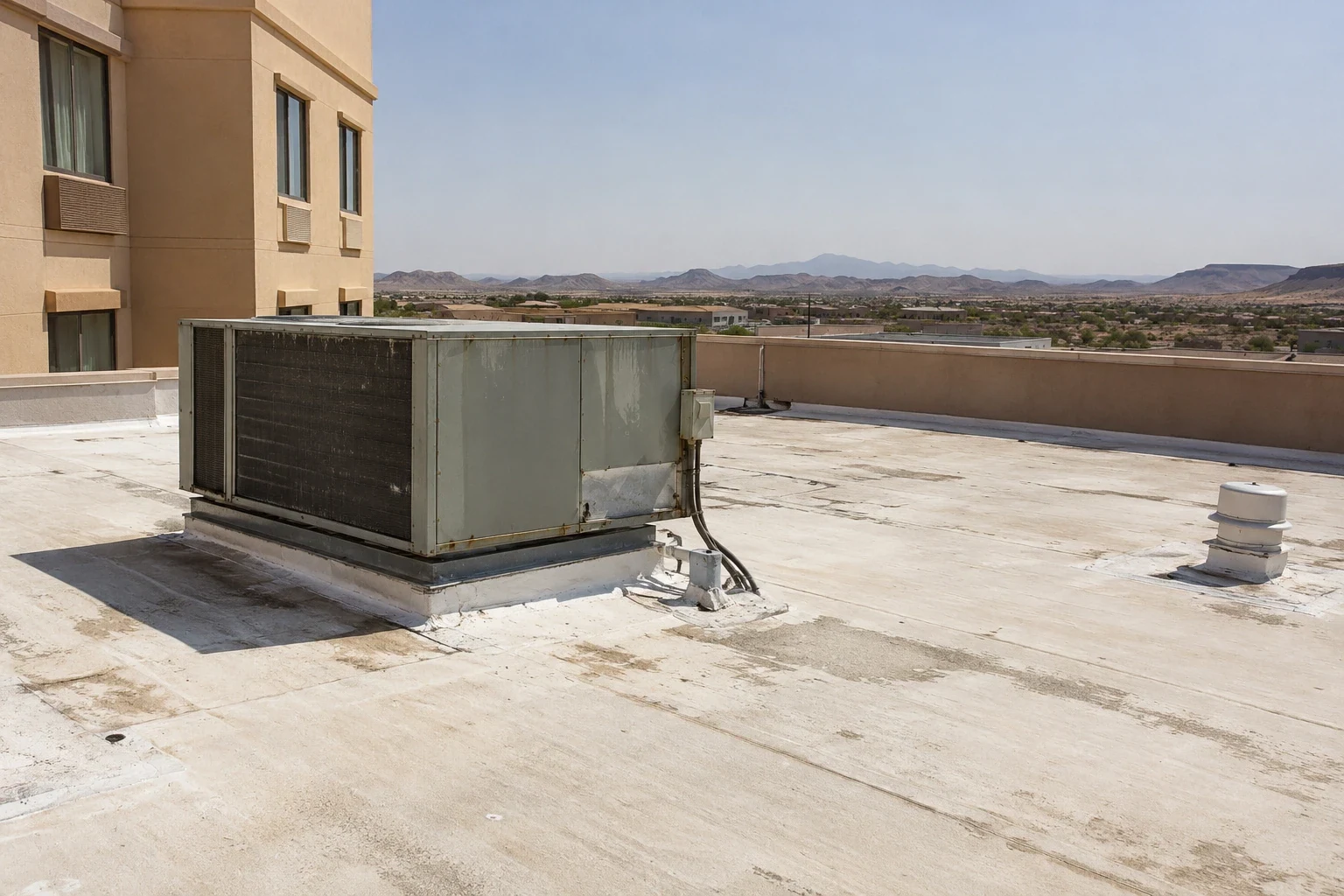
Hotels have deliveries, housekeeping carts, maintenance calls, and emergency egress moving through the property. We confirm where a lift can stage, which service entrance is approved, and whether loading hours or guest events change roof access. Materials stay clear of drains and roof edges, and the day's work area is checked before the crew leaves. If a mechanical contractor also needs the roof, we coordinate the curb or penetration detail so a new service opening does not cut through an incomplete flashing transition.
City land-use documents describe a retail and restaurant concentration beside the Bear Valley Road/I-15 interchange. Separately, the Old Town revitalization program names Seventh Street for public-space improvements. Those local references can frame questions about access and arrival routes, but a property contact confirms its actual gate, guest entrance, and service schedule. An occupied-property work sequence can separate roof zones so guest circulation and service routes remain managed during the project.
Check drains, curbs, and roof transitions
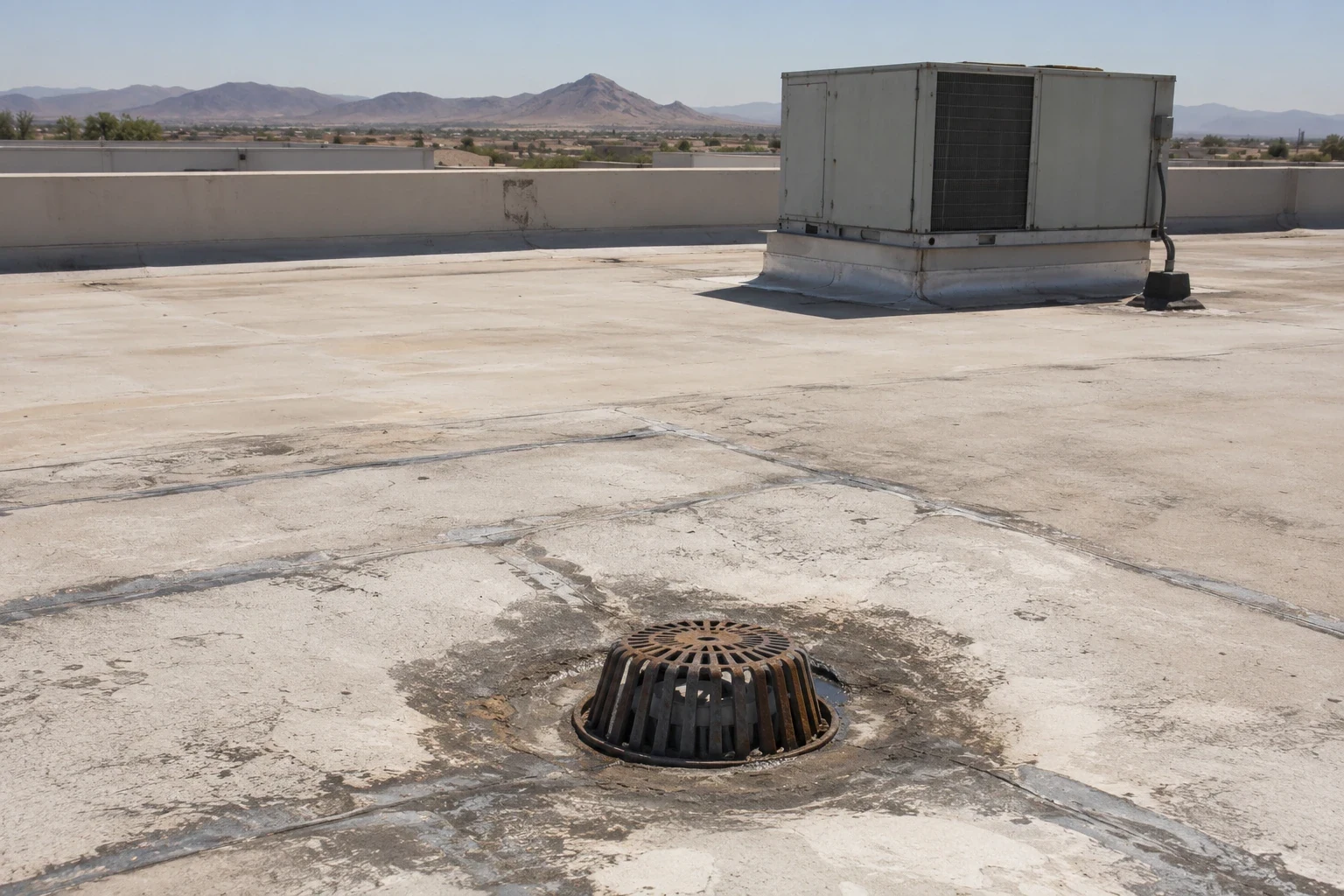
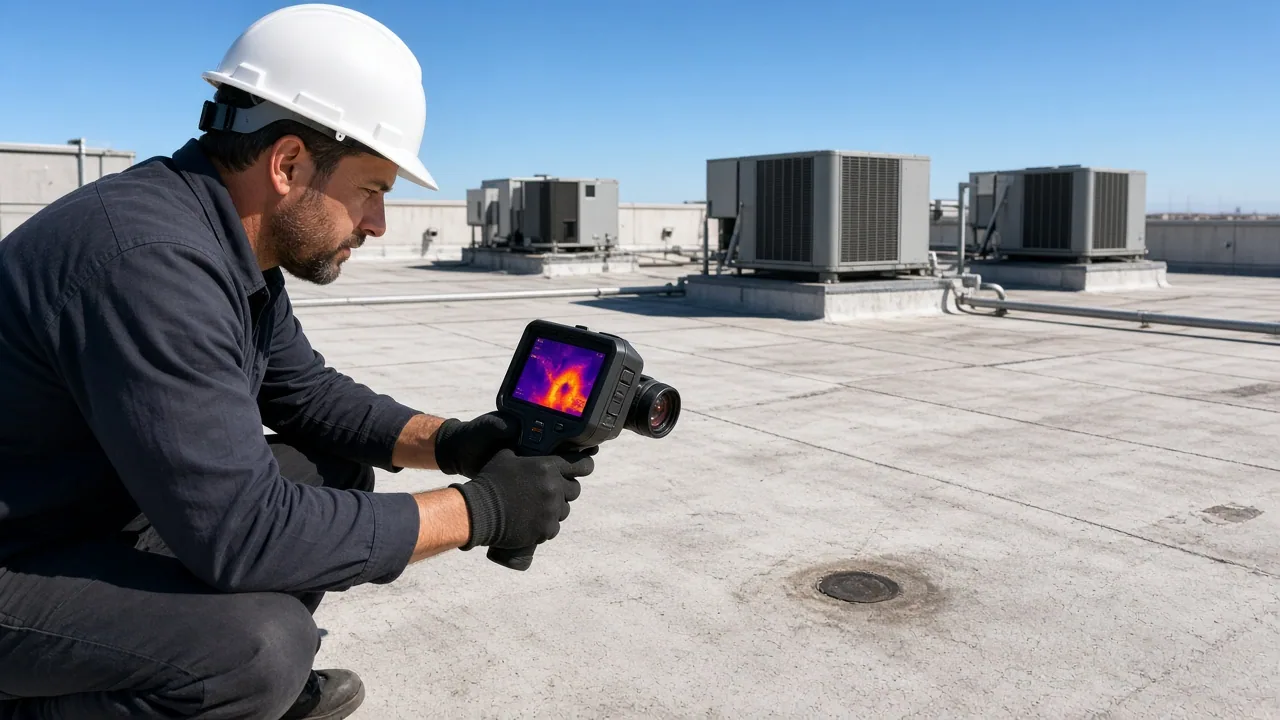
We inspect membrane seams, flashing at walls and curbs, drain bowls, scuppers, rooftop equipment, and previous repair boundaries. A leak in a guest room can be several feet away from the point where water entered. We compare the interior report with roof slopes and likely routes, recording what is wet, what appears sound, and what needs testing. If the roof contains more than one assembly, we identify the materials before choosing a repair. The report should not treat a coating, membrane, and metal edge as interchangeable.
A 2.5-inch-per-hour drainage basis appears in Victorville's roof design table. We treat that as a code criterion, then check the property's drains and overflow route directly. We inspect whether actual outlets are clear and how water moves across the roof. A drainage inspection addresses confirmed outlet issues, while equipment transitions remain part of the review that may affect the water path.
Plan material work for current conditions
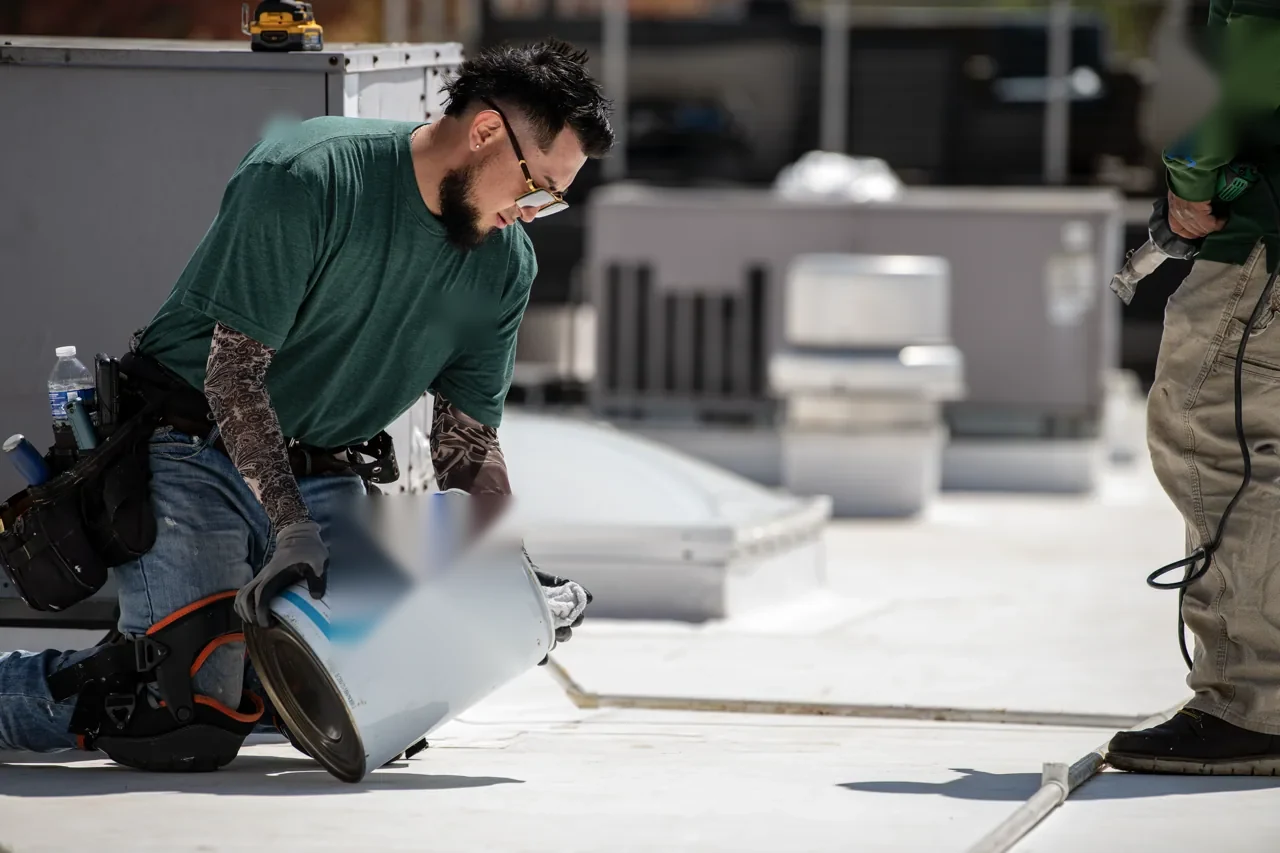
Heat can change the safe application window for adhesives, coatings, and sealants, and it affects how long a roof zone can remain open. For July in the 1980 to 1990 sample, the Victorville weather station's average daily maximum was 97°F. This historical figure is not a forecast for the work date. We follow current conditions and the chosen system's installation requirements, protect materials, and set a work area that can be closed before operations resume. If weather changes the day's sequence, the facility contact receives a clear update on the roof zone and temporary protection.
City approvals refer to planned industrial projects near Foxborough, the airport logistics area, and an east-side parcel group north of Mojave Drive. They do not identify current hotels or their loading entrances; the property contact supplies that information. A commercial roof inspection can document the current assembly and repairs; where multiple guest wings need work, a multi-building roof program can coordinate schedules without combining individual findings.
Keep repair and capital scopes separate
A leak repair should identify the failed seam, flashing, penetration, or drain, along with preparation, compatible material, tie-in, and interior protection. If an opening shows wet insulation or deck deterioration, we record the extent and seek approval before expanding the work. A recover evaluation checks moisture, existing layers, attachment, drainage, and code before another assembly is considered. Replacement planning adds removal depth, edge details, equipment curbs, and the operating sequence required to protect guest areas. Each option carries its own assumptions and boundary.
For a property group, a condition report can tie photos to a planned repair or budget. A hotel with an active interior report may need a defined leak repair first, then a wider scope after testing. We identify which portions can be completed during one access window and which require a return visit, leaving room operations with a schedule grounded in the actual roof work.
Return guest and service areas with a roof status
At the end of a visit, we check the tie-in, clear loose debris, confirm drains are open, and review the protected or repaired area with the facility contact. The photo set records the roof zone and any interior area that remains under observation. We note what was completed and what still needs a test, shutdown, or separate approval. The hotel team can then share a concise update with front desk, housekeeping, engineering, and any vendor who needs access to the same roof detail. Groups that also operate food service can compare retail and restaurant access planning with their guest-property work windows.
Share the affected room or service area, the activity below, and the access contact. Our team can inspect, make safe where conditions allow, and define a repair or replacement scope. From the Bear Valley Road commercial area to Seventh Street in Old Town Victorville, the sequence follows each property's real entrance and operating needs. A Victorville roof assessment gives the group a documented next step for that location.
Commercial Roofing Questions
What should a hotel report with a guest-room leak?
Identify the room, ceiling condition, what is operating below, and whether water is active. We also need the roof access contact and any area that must stay clear.
Can repairs continue while guests are on site?
The work can often be divided into roof zones, but access, noise, staging, weather, and interior protection set the sequence. We coordinate the window with the facility contact.
How do you protect food or laundry areas below?
We review the room with facilities before a roof opening, arrange interior protection, and agree on the work boundary. The operator controls its own food handling and occupancy procedures.
Will one inspection cover every property in a hotel group?
A program may coordinate visits, but every roof needs its own inspection and record. Different repairs, materials, and access rules are kept with each property.
What happens if a leak returns after a patch?
We compare the new report with the original photos and repair boundary, then inspect the tie-in and nearby water path. If more testing is needed, we define that scope before proceeding.