A guest reports a ceiling stain while another room remains occupied. In Victorville, CA, our first call identifies the room, activity below it, and person who can provide roof access. We record the report, then check drains, seams, equipment curbs, and perimeter details along a possible water path. Photos distinguish wet areas from surfaces that appear unaffected. Hotel access near the Eastern Bear Valley Road Corridor differs from that in Old Town Victorville, so we confirm each property's delivery and guest routines. We coordinate with the facility contact, then explain whether the need is temporary protection, local repair, or a wider assembly review.
Guest operations: protect the occupied area
The room below a roof matters as much as the surface above it. A report in a corridor, kitchen, meeting room, or guest suite calls for specific interior protection and access coordination. We ask who can authorize entry, whether the area should be cleared, and which hotel functions must remain open. Our commercial emergency response is available at any hour, weekends and holidays included. We confirm the affected zone, who directs the work, and how the roof can be reached. Those details give the next shift a practical handoff without treating a ceiling mark as the exact entry point.
Hotel teams may coordinate several shifts, so the roof contact can differ from the employee who received the report. We keep location, access instructions, and the person directing the assessment together. Service entrances, kitchen hours, and guest circulation affect staging. The work plan identifies the area to inspect, where temporary protection may be needed, and what information remains open. That sequence helps a manager communicate a clear next step while a room or service area is affected.
Water path: compare the report with roof details
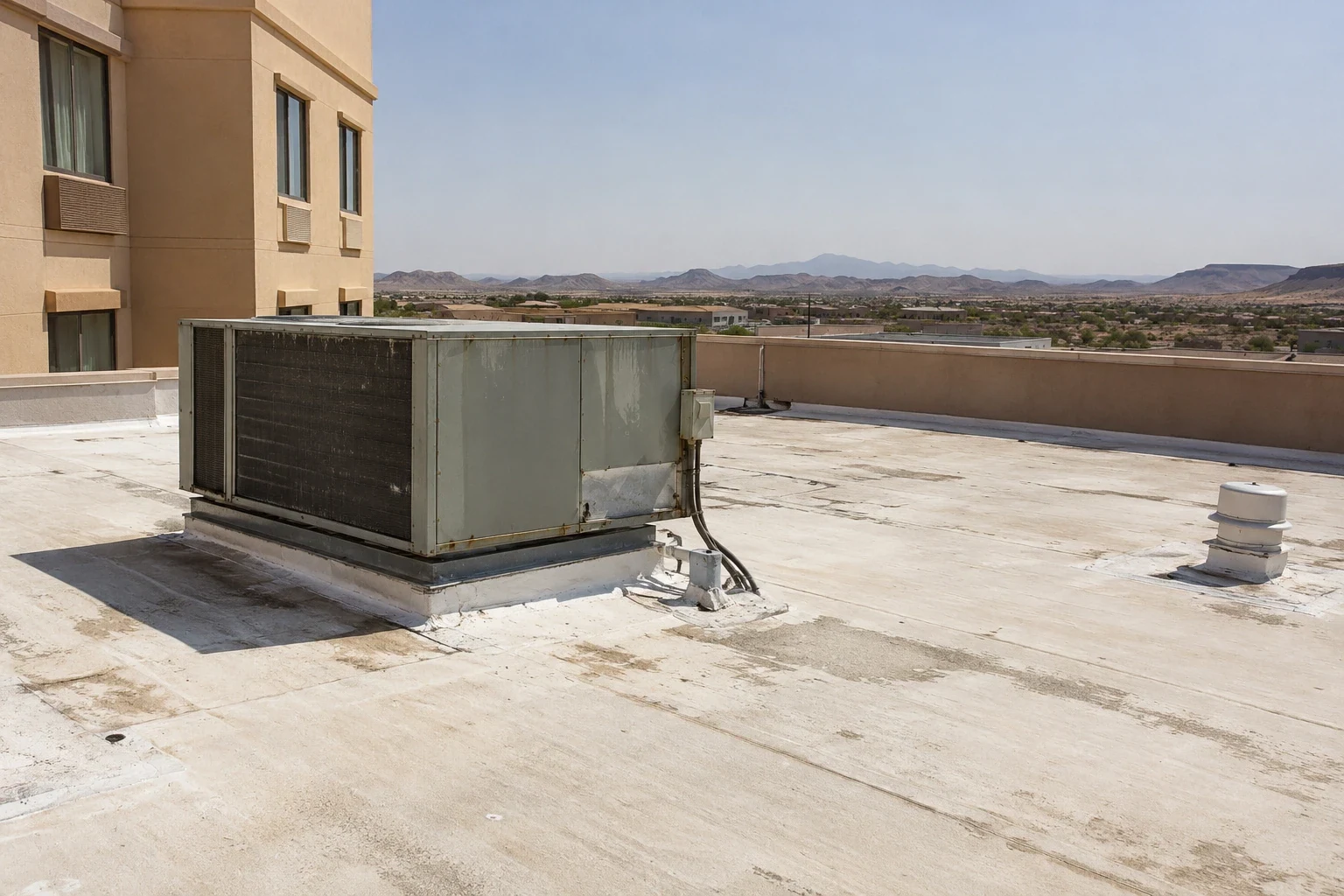
Water can travel beneath a membrane before appearing indoors, so the nearest seam is not automatically the source. We compare the room report with drains, flashing, penetrations, laps, and equipment curbs. For roof-drain design, city criteria use a 2.5-inch depth over one hour. That sizing basis says nothing about an outlet's present condition at a hotel. We inspect the bowl, strainer, overflow route, and low area, then record what is wet and what needs another check. A drainage and standing-water review belongs in the scope when observations support it.
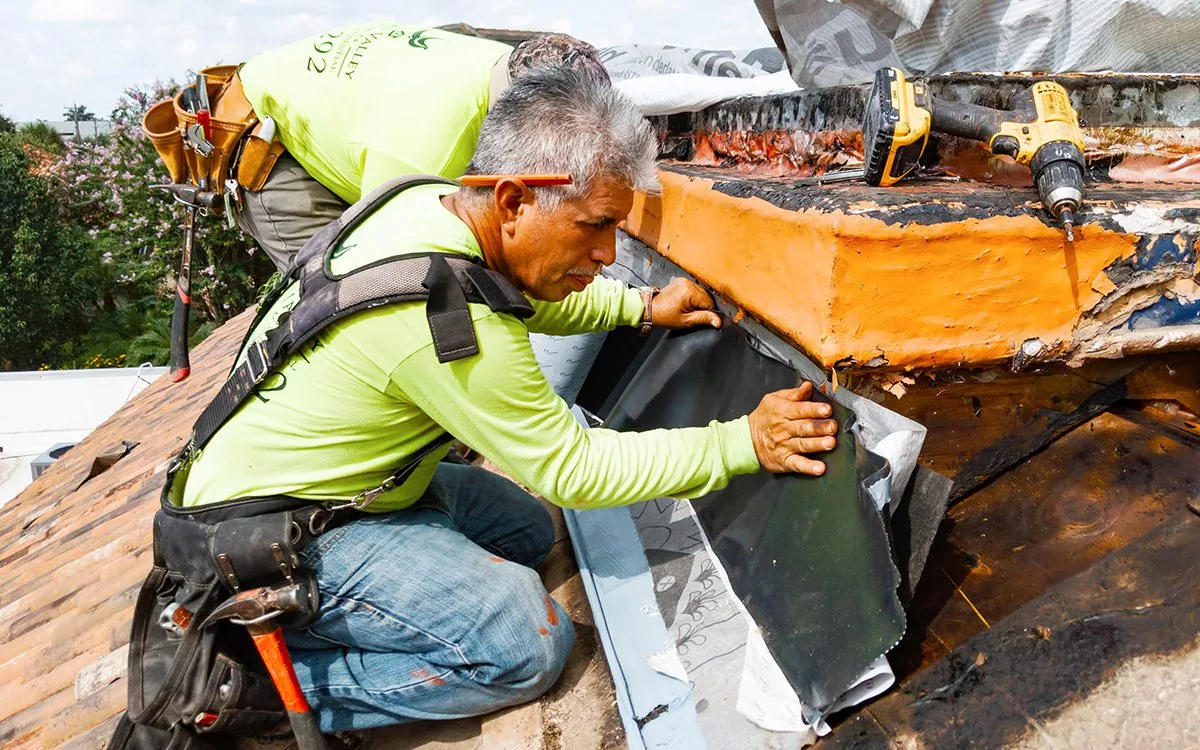
Temporary protection may be needed while the route is traced. If confirmation requires opening the roof, we state that limit instead of inferring concealed conditions from a stain. A photo set connects the reported room with roof-zone observations so the next facility contact can follow why a detail was repaired or left for review. That record also helps distinguish a new leak from an earlier repair location.
Inspection sequence: record what the roof shows
We confirm access and prior leak records, then inspect the visible system, seams, edges, drains, skylights, penetrations, and equipment curbs. Open laps, punctures, displaced flashing, or blocked drains may connect roof conditions to an indoor report. A commercial roof inspection gives the hotel operator photos and written observations. Historical George AFB/Victorville readings include high summer maximums in the late 1980s. They do not measure a hotel roof, but they make exposed laps and equipment transitions worth examining. City wind design values vary by occupancy and exposure, so we check actual perimeter and attachment conditions.
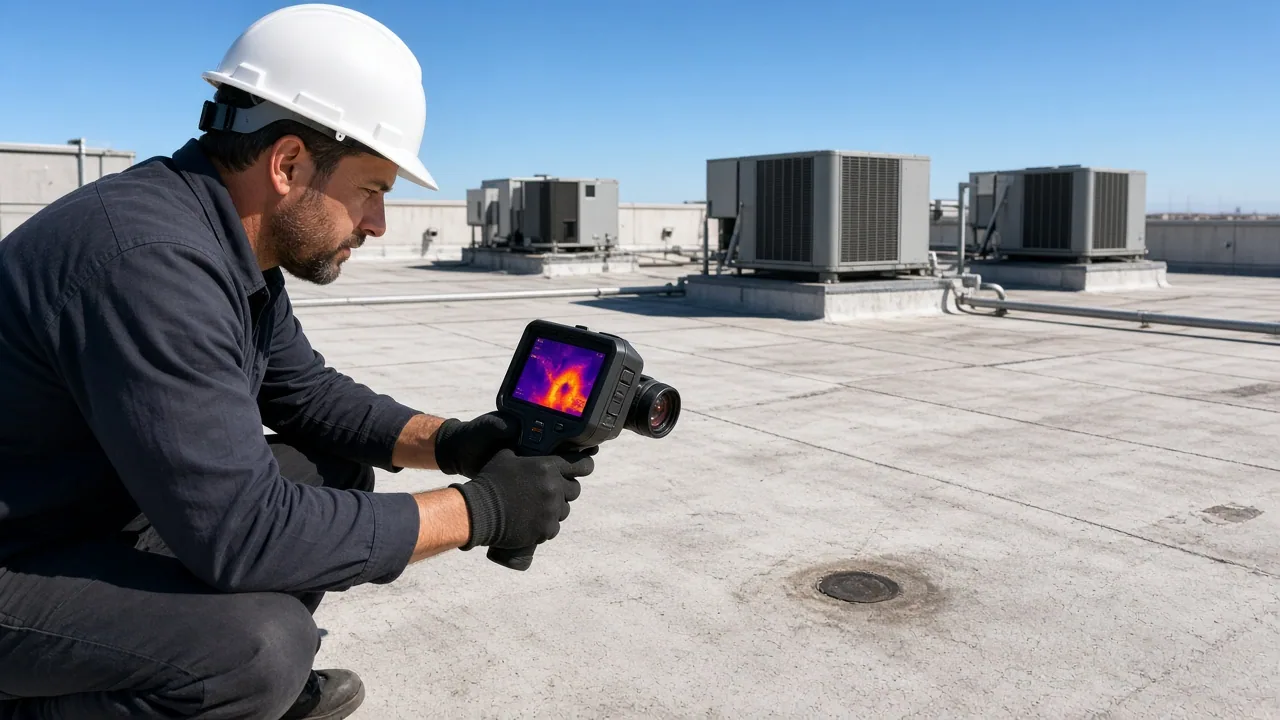
If drone imagery or infrared readings help identify an area, we explain what they show and what needs hands-on confirmation. The report separates visible findings from questions requiring access below the membrane. We label each observation by zone so the manager can coordinate with the right department and compare it with earlier photos instead of relying on an informal note.
Repair choice: keep urgent scope separate
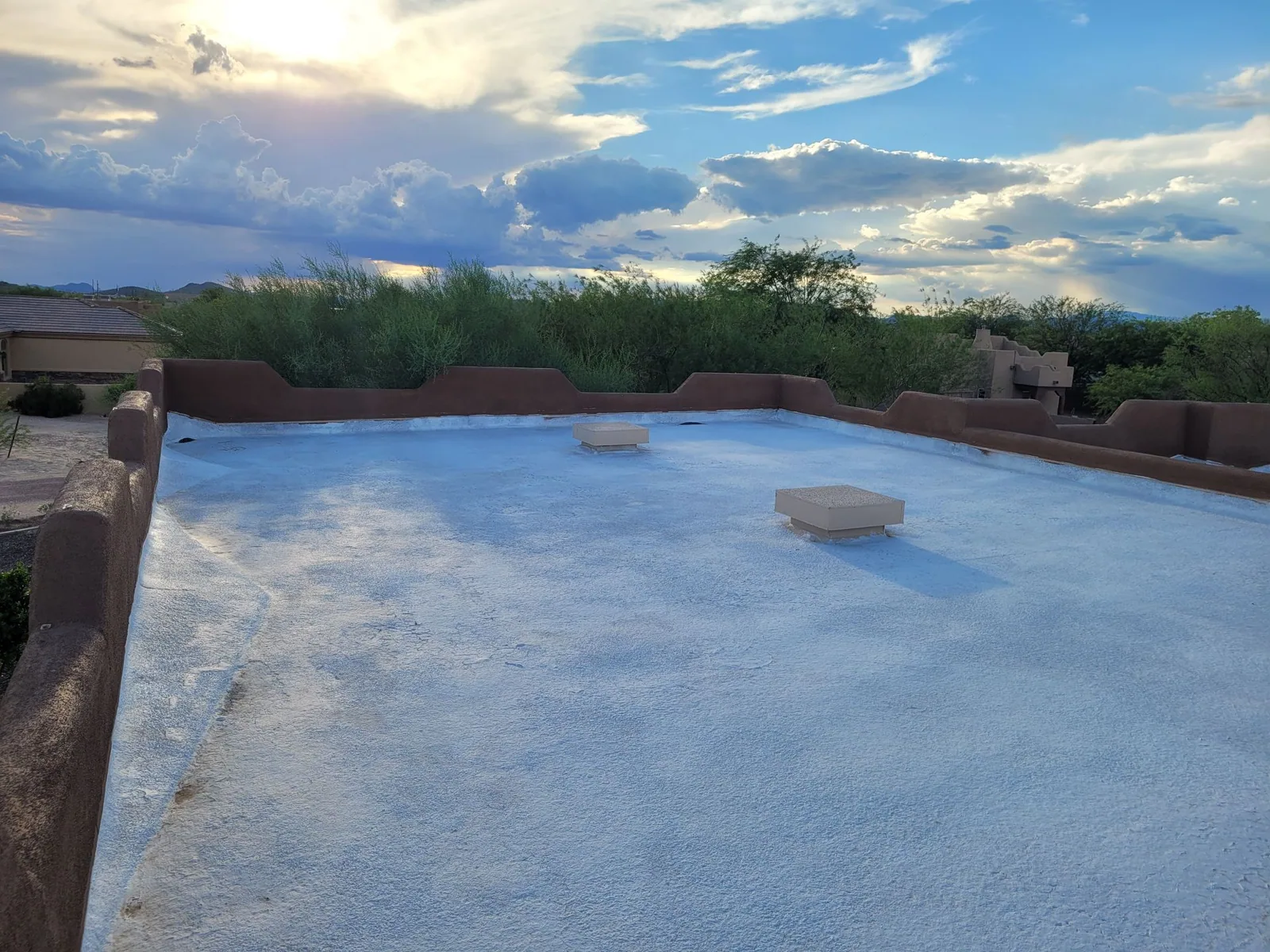
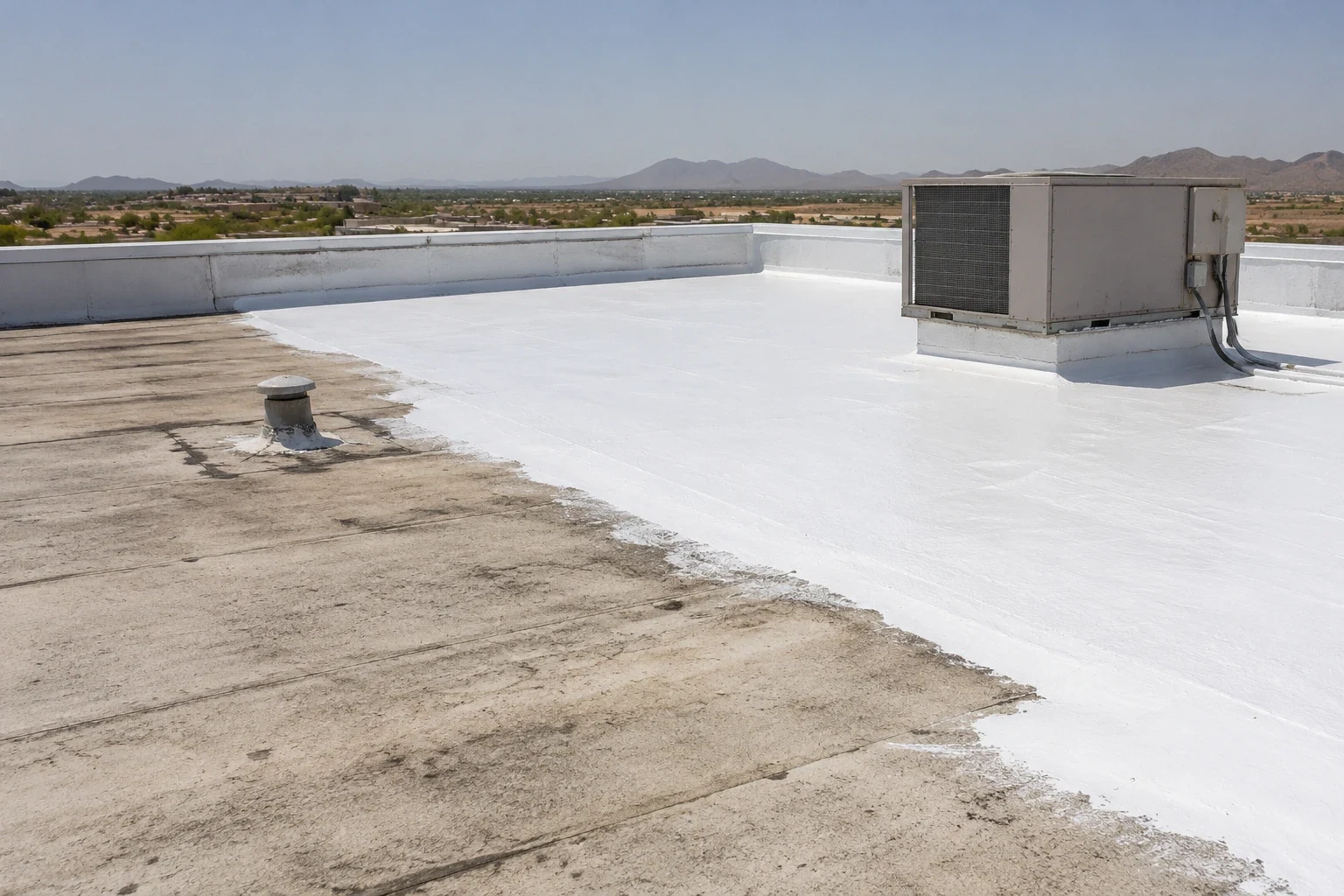
A detail repair fits when nearby membrane and substrate remain serviceable. Broader moisture or recurring failures may call for investigation before surface work is selected. Each recommendation names the observed condition, the area included, and the work that remains outside the quoted scope. A scheduled maintenance visit tracks drains and repaired details after urgent work. A coating or restoration review starts with moisture, adhesion, drainage, and compatibility. Timing reflects roof access, materials, weather, and hotel operations. If interior entry is required, we coordinate with the room or department contact before work begins.
If a concealed condition changes the repair, the facility contact receives the observation and next step before the scope expands. Temporary protection and permanent work remain separate decisions. Replacement or wider restoration belongs in discussion when roof evidence supports it, not simply because a guest room was affected. We identify the staging point and contact for updates, then provide the agreed repair scope in a form the property manager can review with the owner.
Victorville properties: match timing to the building
The Bear Valley Road and I-15 focus area is designated for commercial and regional-serving uses. That planning designation helps frame access context, not a hotel's building-specific roof needs. Neither description establishes a particular hotel's roof type. A roadside property may coordinate loading and guest circulation differently from a building in Old Town. We identify the actual roof entry and work limits, then select a scope from observed conditions. A manager with a nearby industrial asset can request a separate warehouse roof inspection; its record remains distinct. An apartment roof review also needs its own record.
Victorville economic materials identify manufacturing, logistics, industrial users, and distribution as local activity. The hotel operator sets guest, delivery, and shift schedules. We ask which hours protect those activities, then plan staging and interior checks around facility instructions. A restaurant service area, meeting room, or guest corridor can require another access window. The work sequence follows hotel operations rather than assumptions drawn from nearby land use.
Closeout: leave the next contact a usable record
After the visit, the manager can identify the inspected zone, condition, and open action. We provide photos and a written scope, then record any area needing another check. A commercial roof condition report helps a new facilities contact connect a later guest report with repair history. For a group with several Victorville locations, each building retains its own observations and assembly details. The commercial roofing team serving Victorville can coordinate the assessment around access and guest operations.
Commercial Roofing Questions
What should hotel staff report while a roof leak is assessed?
Tell the facility contact which room or service area is affected, what is operating below it, and whether electrical equipment is nearby. We use that report to arrange roof access and follow the likely water path. Interior protection can proceed while the roof source is inspected.
Can roof repairs be planned around guest traffic?
We coordinate the access window, staging point, and interior entry with the hotel contact. The work sequence can account for guest circulation, deliveries, and shift changes, while weather and roof conditions still govern when repair materials can be installed safely.
Does a stain in one room mean the full roof needs replacement?
No. The stain identifies an interior report, not the extent of roof deterioration. We inspect the related zone, nearby seams and flashing, and drainage or equipment details that could carry water. Replacement follows only when observed conditions support a broader scope.
What should we provide before the roof visit?
Share roof-entry instructions, a facility contact, the reported room, recent leak history, and operating restrictions. Prior repair photos or invoices can help locate the area, but we record current conditions before choosing the work.
Can the repair record be shared with a hotel owner?
We provide observations and photos tied to the agreed roof zones, with repair work and follow-up items stated separately. The record can be shared with an owner or asset manager without claiming concealed materials or conditions that were not observed.