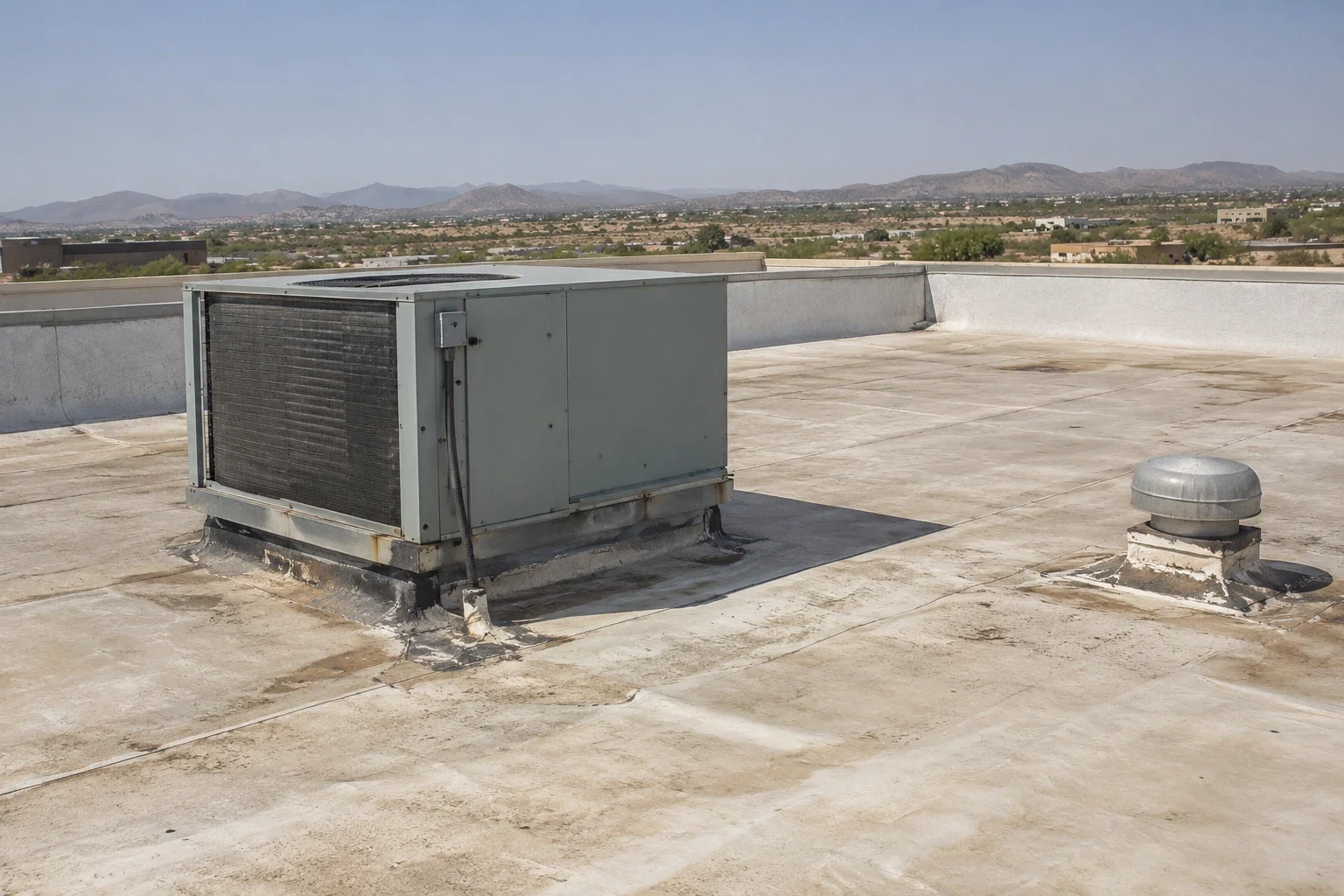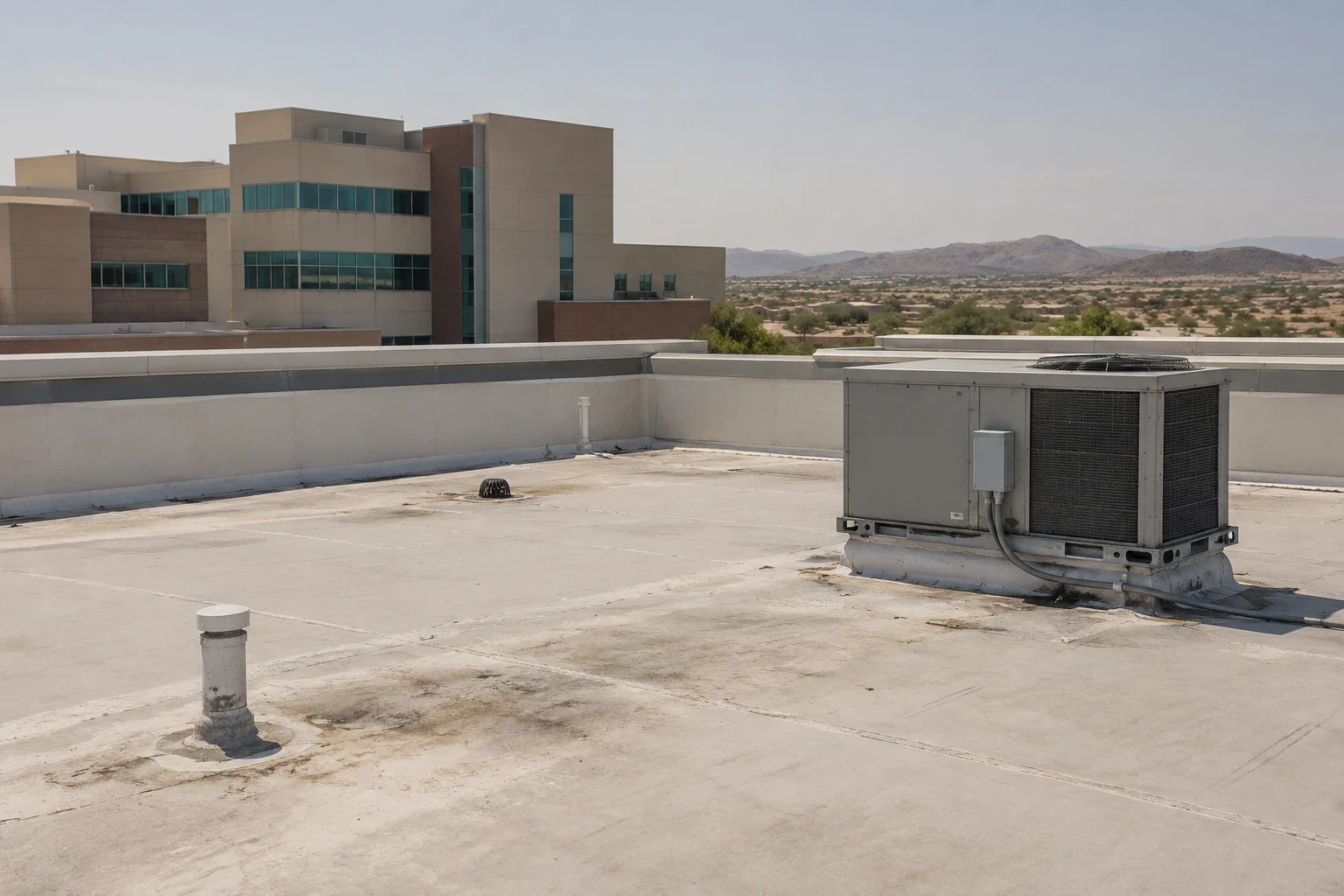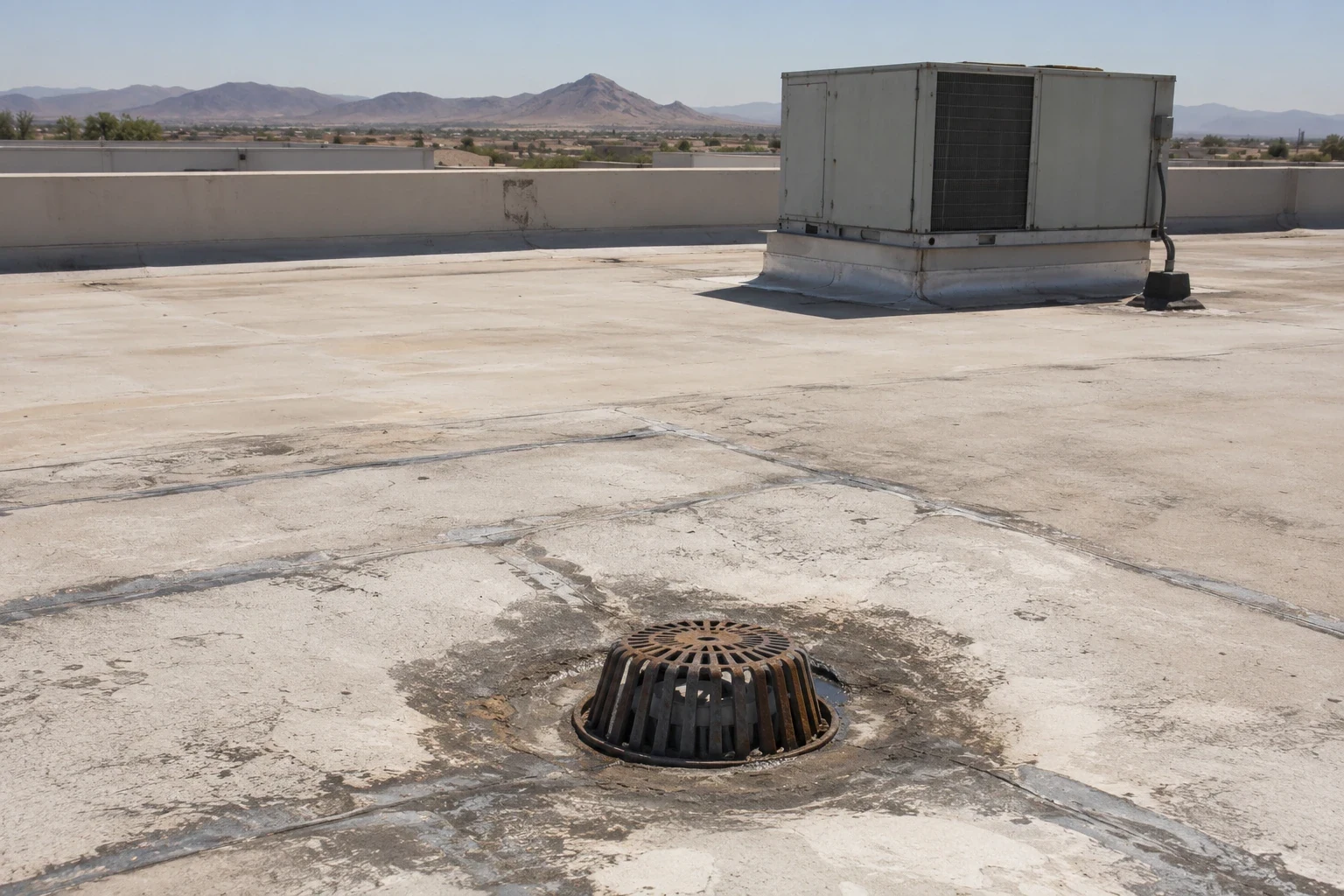
A damp ceiling above an active classroom changes the first call. The school contact identifies the room, the activity below it, and the person who can open roof access. We mark that location before inspecting nearby seams, drains, curbs, and wall transitions. If water reaches lights, learning materials, or an occupied route, temporary protection comes first. Photographs tied to a roof zone let a facilities director separate an immediate safeguard from the permanent repair decision.
Victorville properties sit under long summer heat and concentrated rain events, but a city weather record does not diagnose a particular school roof. We inspect its membrane, insulation, deck, drainage, and prior repairs. City planners designate the junction of Bear Valley Road and I-15 as a Development Focus Area; that designation does not describe a school roof system. Old Town Victorville has its own land-use classifications. Those city settings do not establish a school's construction or roof type. A zone-labeled condition report starts with what the inspection actually finds.
Protect the room before tracing the roof path
We ask whether the room below can be cleared, which schedules cannot move, and who has authority to restrict access. A leak near a classroom door, a corridor junction, or a mechanical closet calls for different interior controls. We record the point of entry reported by staff, then look above and outward for a route along a seam, deck joint, curb, or drain. The visible ceiling mark can be separated from the opening that needs repair, so the notes keep the reported symptom and the inspected roof detail distinct.
School staff should not be asked to diagnose the roof from inside. We coordinate a safe boundary below, inspect from approved roof access, and photograph the affected assembly. If a test opening is needed, the owner sees where it will occur and what the result can establish before work begins. The record can also help compare an institutional roof review with a healthcare building inspection, while keeping this school's access plan specific to its own rooms and operating hours.
Check drainage at the roof, not from the stain
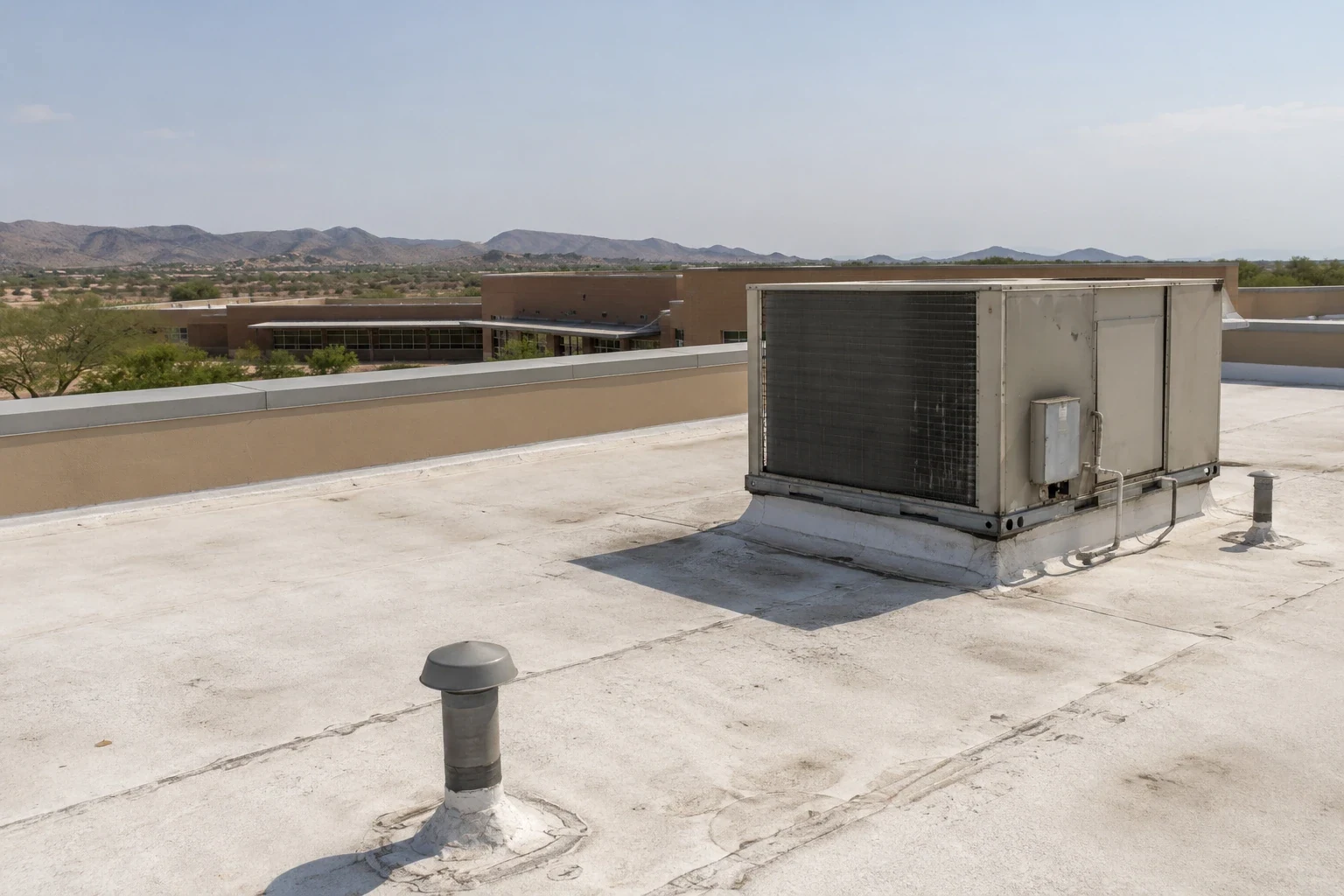
Victorville's code page uses 2.5 inches per hour as a roof-drain sizing rainfall input. That is a design reference, not proof that an existing outlet is clear or that a school roof drains at the stated rate. We walk the actual slope, drain bowls, scuppers, overflow route, and low areas, then mark debris or damaged transitions. A concentrated rain event can expose an opening at a drain, parapet, or curb that stayed quiet during dry weather. The repair scope follows the observed detail and its surrounding material.
We also distinguish a blocked outlet from a membrane failure. A drain and scupper service can address a connection or discharge condition, while TPO roof work uses different seam and flashing checks. Where a local tear or failed weld is isolated, a focused repair may preserve sound areas. Moisture across several roof zones calls for a broader review before the school approves another patch.
Fit the work window to the school calendar
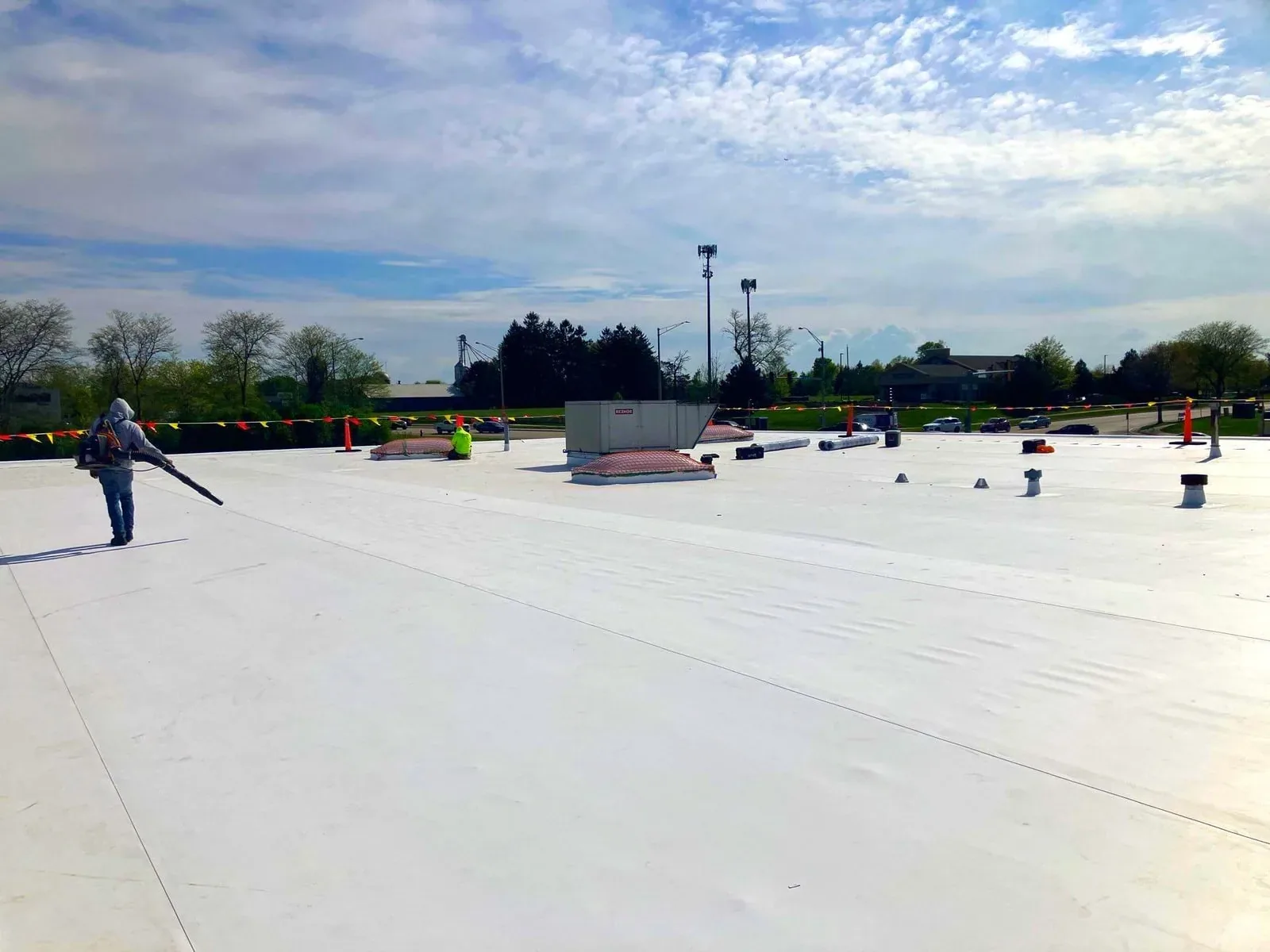
Roof work above an occupied school needs a release plan that states which entrance, classroom wing, service lane, and roof zone remain active. We coordinate lifts, material staging, noise, debris handling, and daily closure with the facility contact. Summer recess can create more access, but it does not remove staff, maintenance, or equipment schedules. During the term, a smaller daily work boundary may better protect rooms below and keep the next shift informed.
Old Town Victorville has mixed-use retail and service overlays; the city separately identifies a Development Focus Area at Bear Valley Road and I-15. Those locations help explain Victorville's varied property settings, not the use or schedule of an individual school. We ask the school contact for bell periods, testing dates, events, kitchen service, and any room that cannot be interrupted. If those restrictions change the roof sequence, the proposal shows the working boundary and the weather-ready close before the next activity begins. A phased occupied-building sequence can set those limits in writing.
Separate an isolated repair from a roof renewal
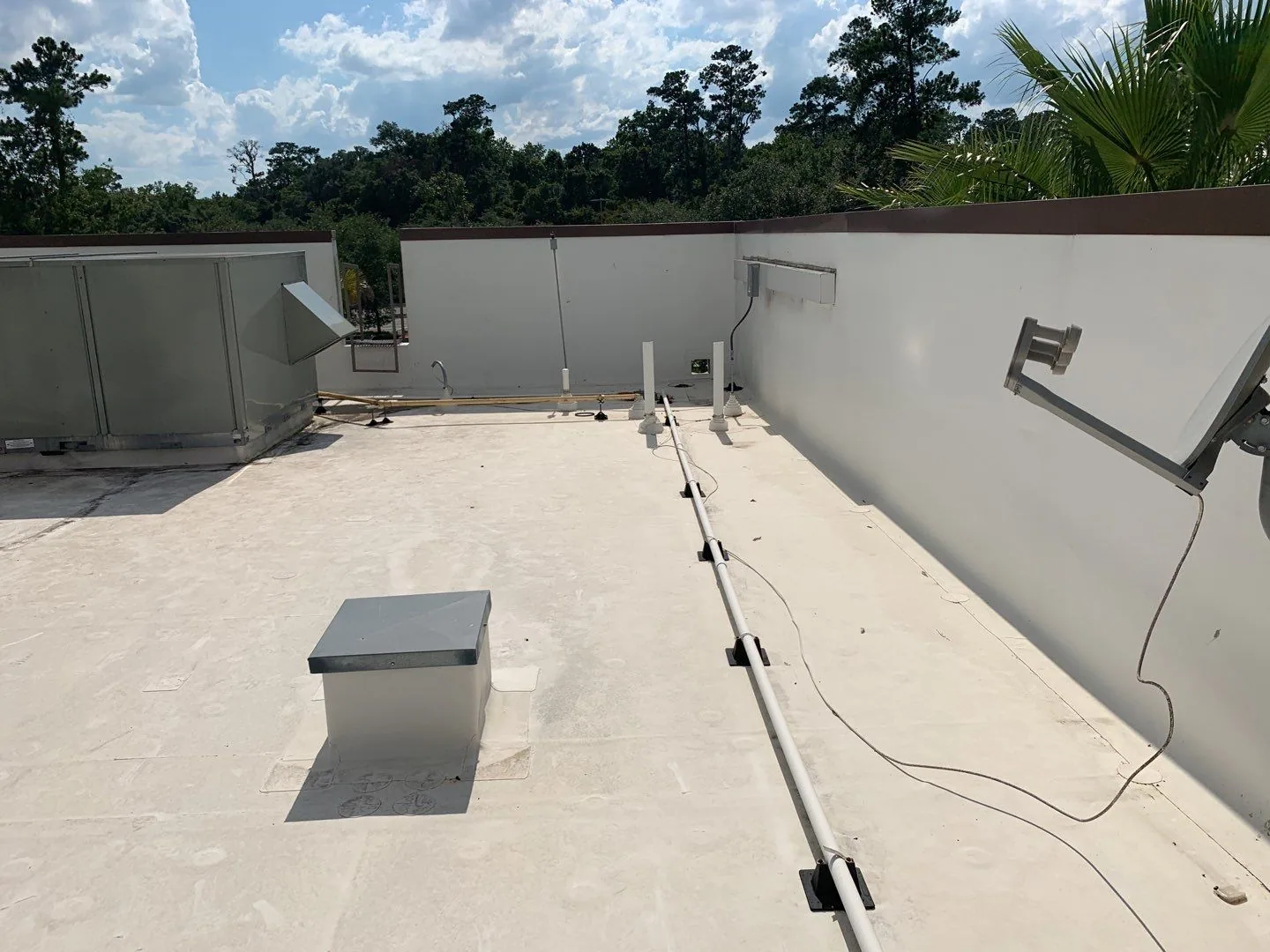
A puncture at one penetration and widespread wet insulation are different scopes. We examine membrane condition, attachment, insulation, cover board, deck, curb height, drainage, and the history of prior repairs. Test openings are placed where the findings can change the decision, not simply to create more measurements. The report marks the material that can remain, the area that needs removal, and the concealed condition that requires owner approval before quantity or timing changes.
If the assembly is sound around a localized defect, a measured repair may be the practical next step. Repeated separation across roof zones can justify comparing recover and replacement after layer count, substrate, and applicable code limits are confirmed. A warehouse assessment may use the same roof-zone method, while school replacement planning must also account for room use and calendar. The scope identifies preparation, flashing, insulation or deck allowance, protection below, and the point where the owner makes the next decision.
Leave a record the next facilities shift can use
A useful closeout file identifies the roof zones inspected, the room or route protected, photographs of completed details, materials installed, and any remaining item. We note whether the repair was visually checked or received another approved test. The record does not imply a hidden section was opened when it was not. That distinction gives facilities staff a reliable way to compare a later report with today's repair without relying on memory or a ceiling stain alone.
In its building-code reference, Victorville gives zone 14 for climate, a 5 psf ground-snow basis, and wind criteria chosen for occupancy and exposure. Design references belong in a code review, not as a conclusion about a school's existing roof. The same discipline applies near the Seventh Street improvements in Old Town or commercial sites by the Bear Valley Road and I-15 area: location gives context, while the roof inspection supplies the condition. Call with the affected room, school access contact, and next available work window. We will coordinate the assessment and explain the scope supported by the findings. A Victorville school roof assessment records its own access route and affected zone. Staff can send prior leak dates and repair notes before the visit, then compare them with labeled photographs afterward. That sequence keeps each follow-up tied to a location, an observed detail, and the next action authorized by the school.
Commercial Roofing Questions
Can roof repairs take place during the school term?
We set a roof-zone boundary with the facility contact, then plan access, noise, staging, and protection below around the school's actual schedule. The daily closeout states which rooms or routes remain affected.
Does a ceiling stain identify the roof opening?
Water can travel along insulation or a deck joint before reaching a room. We compare the report with the roof details and mark the evidence supporting the repair location.
What changes a school roof repair into replacement work?
The number of affected zones, moisture extent, deck condition, attachment, and repair history shape that decision. We show which materials can remain and what removal or test would change the scope.
What should staff do before the first visit?
Identify the affected room, any active safety concern, a contact who can provide roof access, and the school activity that cannot pause. We use those details to set the first inspection boundary.
Will a roof project require every classroom to close?
The answer follows the work zone, interior protection, access route, and activity below. We coordinate restrictions with the school and define the daily opening and weather-ready close before the crew starts.