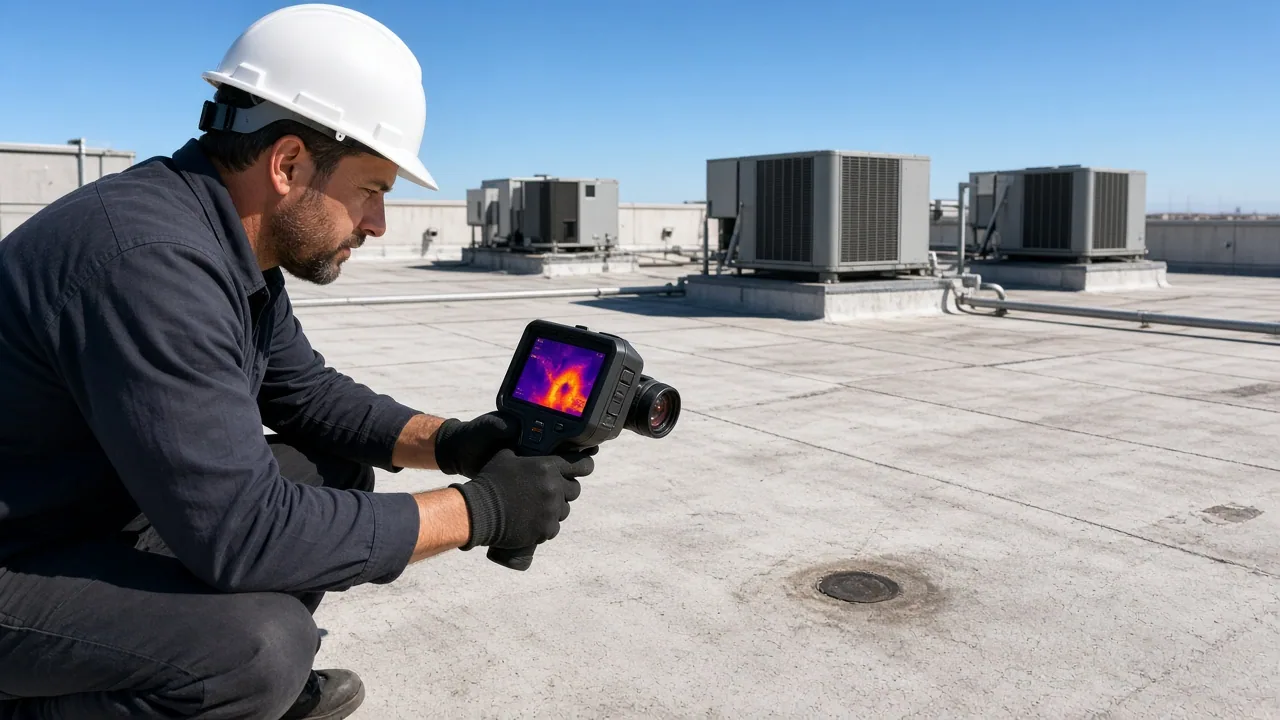
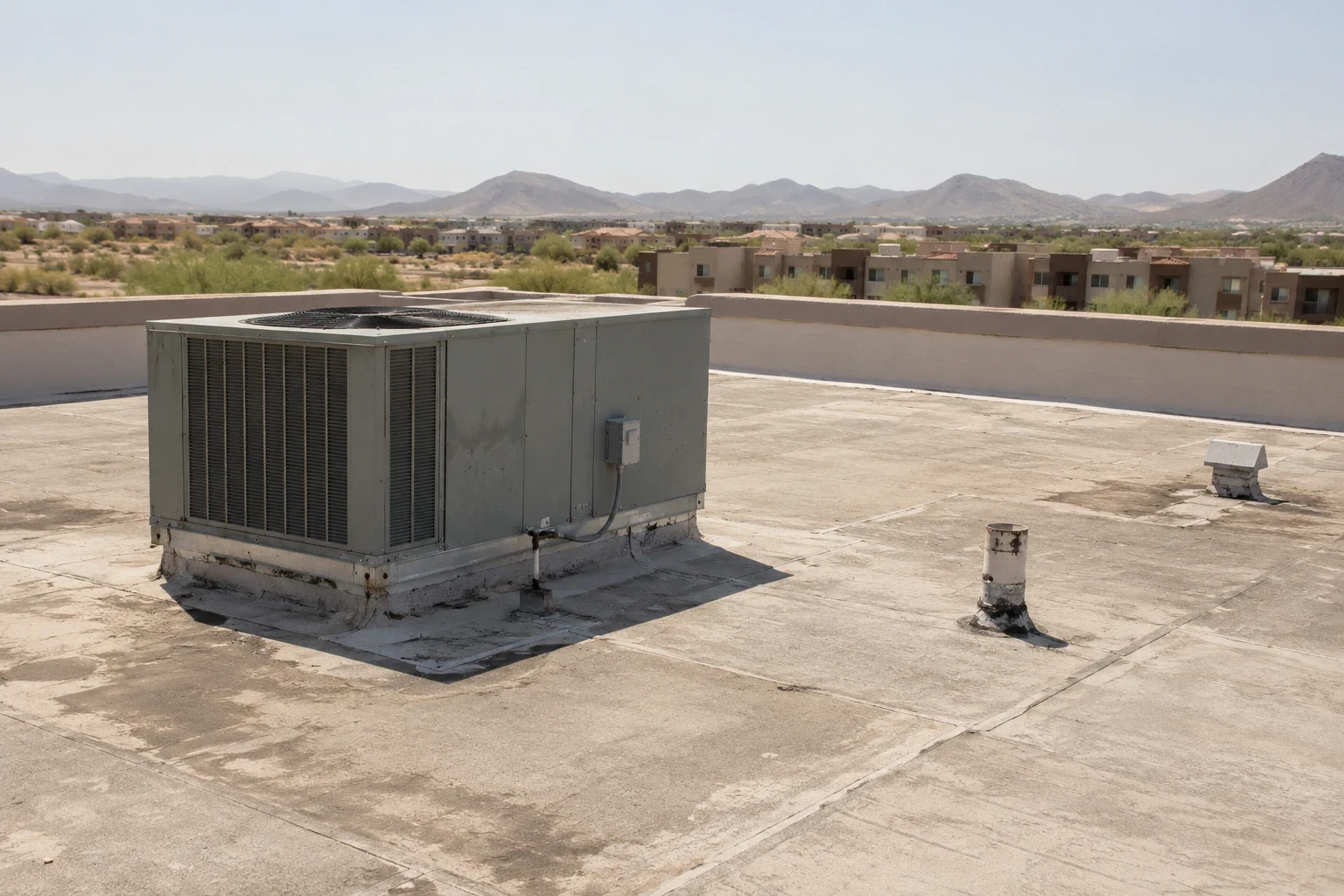
A resident calls about water near a window, but the roof contact is still coordinating entry to the upper floor. In Victorville, CA, our first questions identify the unit, activity below the reported area, and person who can arrange roof access. We record the interior location, then trace a possible path toward roof edges, drains, penetrations, and equipment curbs. That sequence keeps a ceiling mark from becoming an unsupported diagnosis. For apartments near the Eastern Bear Valley Road Corridor or within Old Town Victorville, the property manager can coordinate roof access and resident communication as separate steps while we document the conditions that support a repair.
Resident access: identify who can open each area
Apartment work can require different contacts for the roof, an affected unit, and common areas. We confirm who can authorize entry and whether a resident, maintenance technician, or property manager needs to meet the crew. If water is active, interior protection may start before the roof source is confirmed. Our emergency roof response runs outside ordinary business hours, so a facility contact can coordinate an assessment when a leak interrupts occupied space. The report notes where entry was possible and which rooms remain uninspected.
Drainage layout: check low points and overflow paths
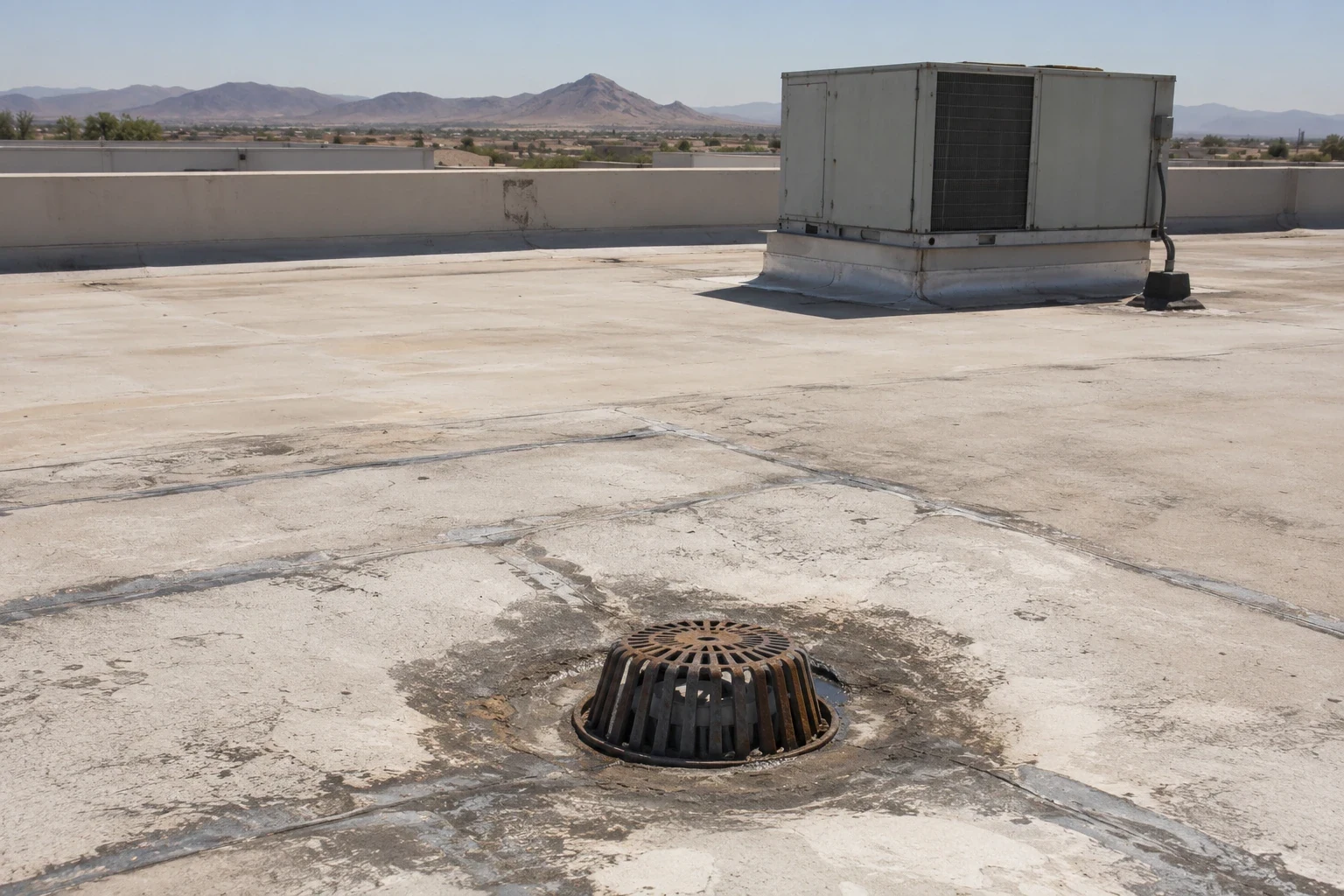
Water staining below a roof drain can result from a blocked opening, a failed drain flashing, a seam, or water moving through another part of the assembly. We inspect drain bowls, strainers, overflow routes, nearby low areas, and the membrane around each penetration. A city sizing table uses 2.5 inches in an hour for drain design. It cannot show whether a particular apartment building's outlets are clear. That design reference does not confirm how a particular apartment roof drains today; field conditions and the roof layout decide the next step. A drain and scupper inspection can identify whether maintenance, repair, or further investigation is warranted.
Where several buildings share a parcel, we keep drain observations attached to the right roof plan or photo location. Water found near one building cannot be assigned to a neighboring roof by similarity alone. If a second low point shows standing water, we document its extent and drainage route separately. This gives the owner a clear comparison for maintenance or capital review without assuming that a broad roof area has the same condition as the original leak zone.
Roof envelope: inspect seams, edges, and penetrations
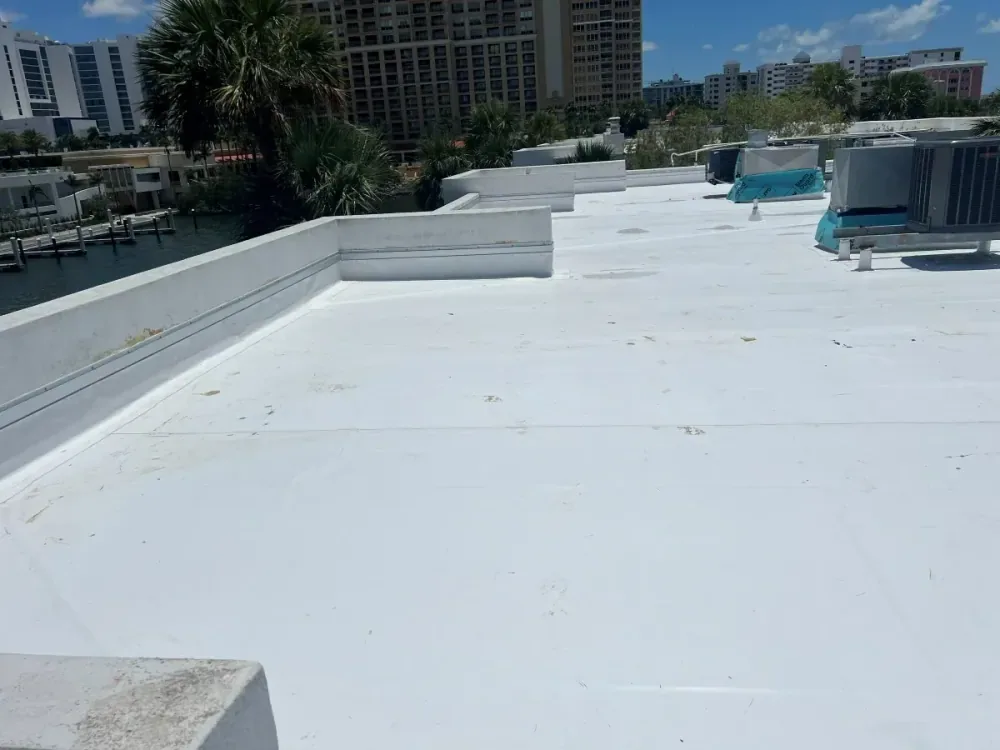
Apartment roofs may include membrane fields, parapet transitions, mechanical curbs, pipes, and other details that see different movement and exposure. We note the visible assembly and check laps, flashing adhesion, edge metal, penetrations, and repairs from earlier visits. Historical George AFB/Victorville station observations show July and August mean maximum temperatures in the upper nineties during the 1980 to 1990 record period. Those historical readings do not describe a current apartment roof. Inspectors record the observed condition of exposed seams and flashing instead of inferring it from ambient climate; where deterioration appears, an assessment of heat and ultraviolet effects can investigate further.
Victorville code materials also give wind design values that vary by occupancy and exposure. Those figures guide project design, not an assumption that wind damaged an apartment roof. We examine actual perimeter attachment, loose metal, lifted flashing, and membrane condition. Where a report involves the top floor, we compare the roof detail with the interior observation while noting any assembly area that remains concealed. The written record distinguishes a visible defect from a question that would require opening the roof.
Repair options: separate unit response from capital work
A localized repair may address a failed flashing or open seam when the surrounding roof can accept the repair. If moisture extends through the assembly, a broader investigation may be needed before selecting a patch, recover, coating, or replacement. We explain which condition supports each option and what access or tenant coordination it requires. A maintenance visit for apartment roofs can track drains, penetrations, and repaired zones between major decisions. For a roof with recurring water entry, a commercial inspection can map the affected areas and document what still needs confirmation.
Scope timing depends on access, weather, material compatibility, wet insulation, and the property’s operating calendar. If equipment must be shut down or a common area protected, we coordinate that point with the manager before work begins. A repair scope states where the crew will work, what protection will be used, and what follow-up is recommended. If hidden damage changes the repair, the manager receives the observation and a proposed next step before the scope expands. That lets the owner review unit-level response separately from a portfolio capital request.
Building coordination: plan around occupied homes
In an occupied apartment property, roof work can affect residents outside the original leak report. Staging, noise, parking, and unit entry benefit from a named contact and defined work area. We coordinate with the property manager, keep each roof zone attached to its building record, and state when resident entry is needed. For multi-building operators, reroofing while apartments remain occupied calls for a sequence that protects access and common areas.
Victorville planning describes retail, service, light-industrial, residential, and open-space uses in the Old Town plan area. That context does not establish an apartment property's layout. We use the manager's instructions and observed roof condition to plan the work. A hotel roof assessment receives a separate operating plan because guest circulation and resident notice are different. Owners of senior communities can also request a senior living roof review with that facility's own access record.
Closeout record: connect the repair with the next review
After the work, we identify the roof zone, condition addressed, materials used for the approved repair, and any return check discussed. A photo record helps a new manager compare a later report with the repaired detail instead of relying on a tenant description alone. The Victorville commercial roofing team can coordinate an assessment around the building’s roof entry and resident schedule.
If inspection findings point toward wider restoration or replacement, we state that separately from an urgent unit response. The owner can review what was observed, which buildings or areas need more attention, and what information is not yet available. A clear record helps the property manager pass the decision to an asset contact, lender, or incoming operator without presenting a visual check as proof of concealed conditions. The next step remains tied to roof evidence and available access.
Commercial Roofing Questions
What details help trace a leak in an apartment building?
Share the unit or common area, when water appeared, activity below the roof, and any access limits. We compare the report with nearby drains, roof edges, seams, and penetrations. A ceiling mark can sit downslope from the opening; the inspection follows the likely path and records which details support that connection.
Can work proceed while residents are home?
We plan staging, noise, roof entry, and any interior visit with the property manager. Some repairs need no unit entry, while others require access or temporary protection. The manager can identify notice procedures and the contact who will coordinate changes during the work window.
Will you inspect every building in a multi-building property?
We inspect the buildings included in the agreed scope and label each record separately. Similar roof layouts do not establish identical condition. If an access restriction leaves an area unchecked, the report names that limitation and identifies the access needed for a later visit.
When should an owner consider more than a localized patch?
Repeated failures, wet insulation, widespread seam separation, or deterioration beyond one detail can support a broader review. We document the conditions observed and explain whether more testing, restoration planning, or replacement evaluation fits the evidence. One unit report alone does not decide the roof’s remaining scope.
How should the owner compare repair work across properties?
Keep each building’s roof zones, photos, access contacts, and repair records distinct. A shared summary can help set priorities, but the roof type and observed condition remain property-specific. We can organize the agreed records so the owner can review urgent items and planned work separately.