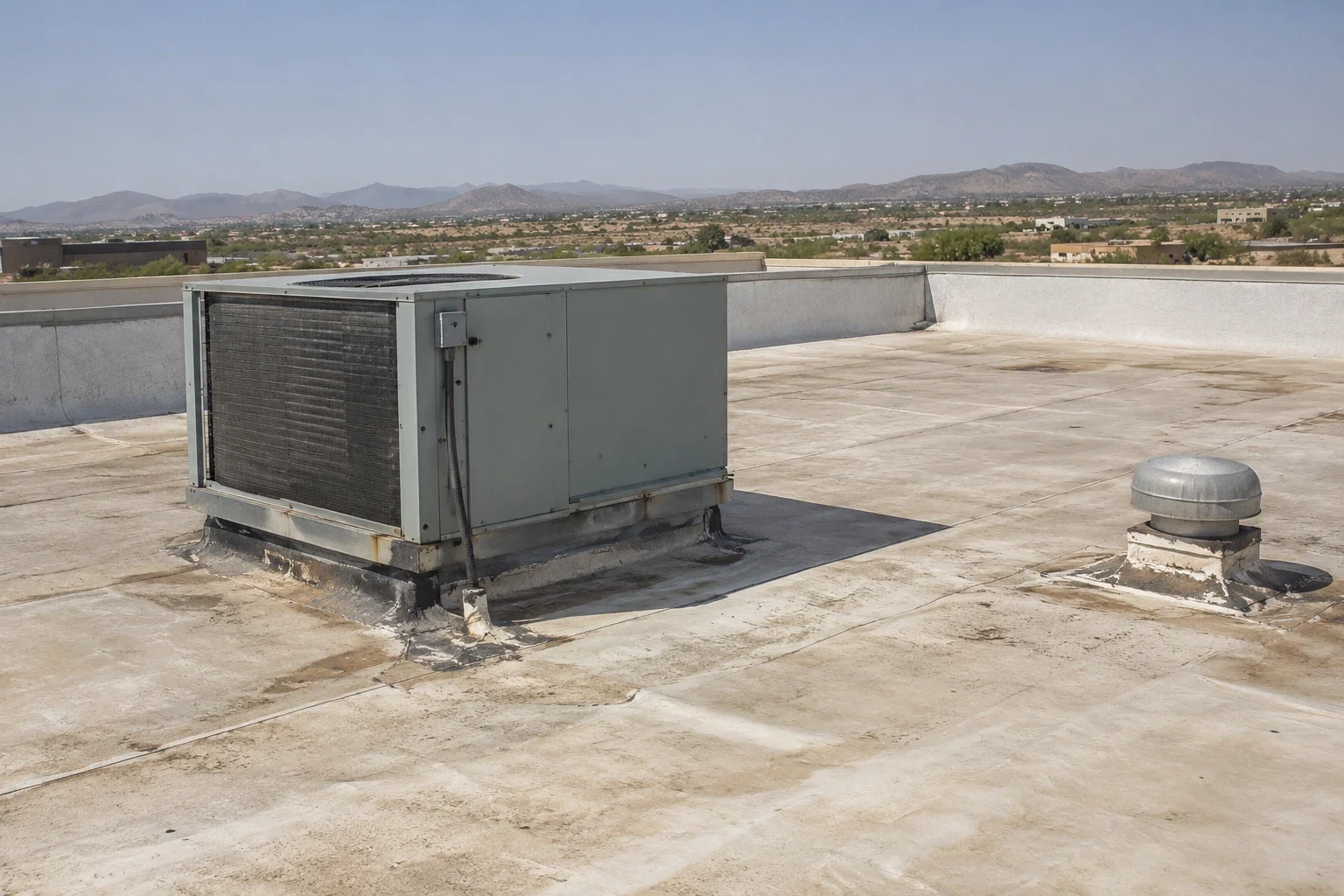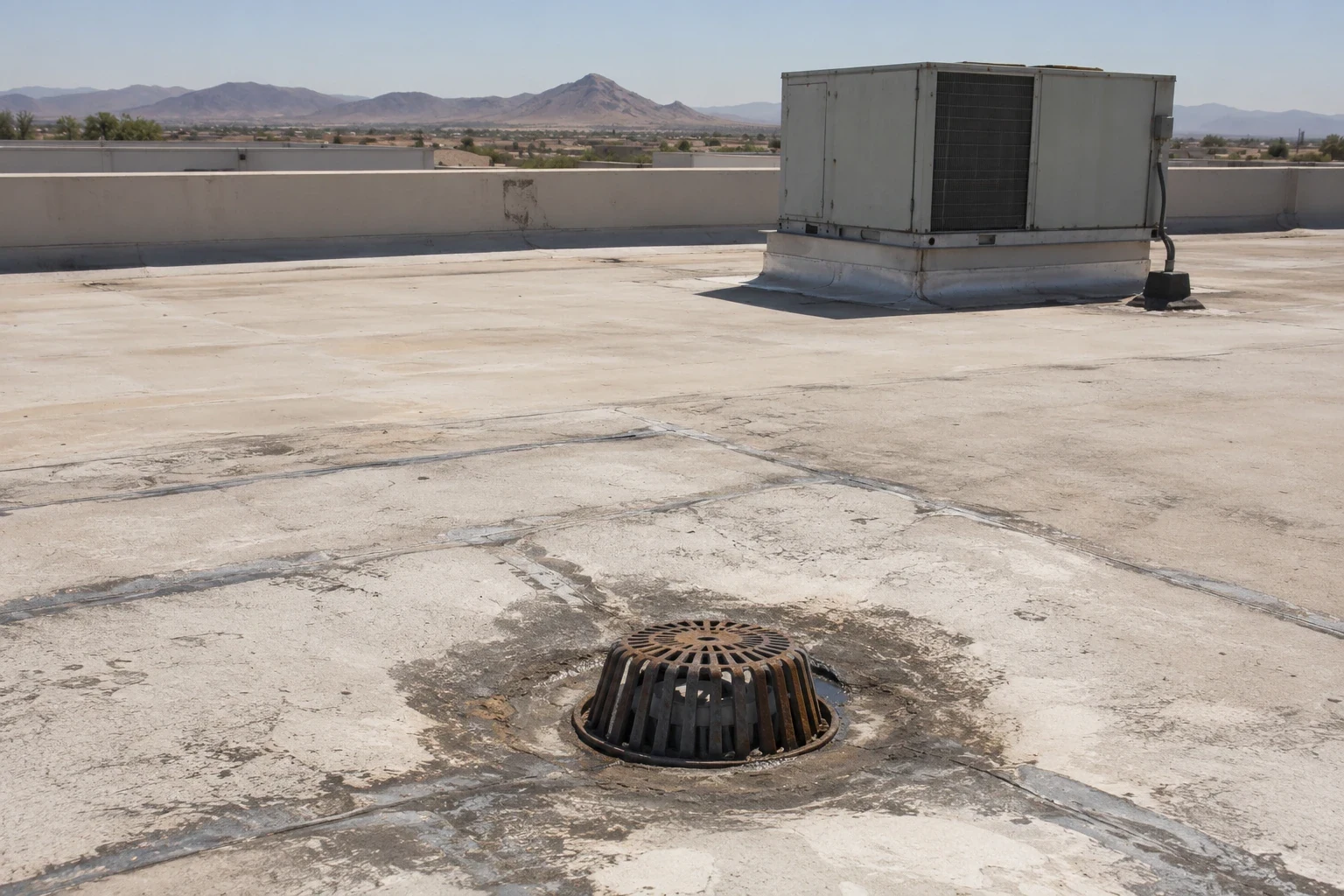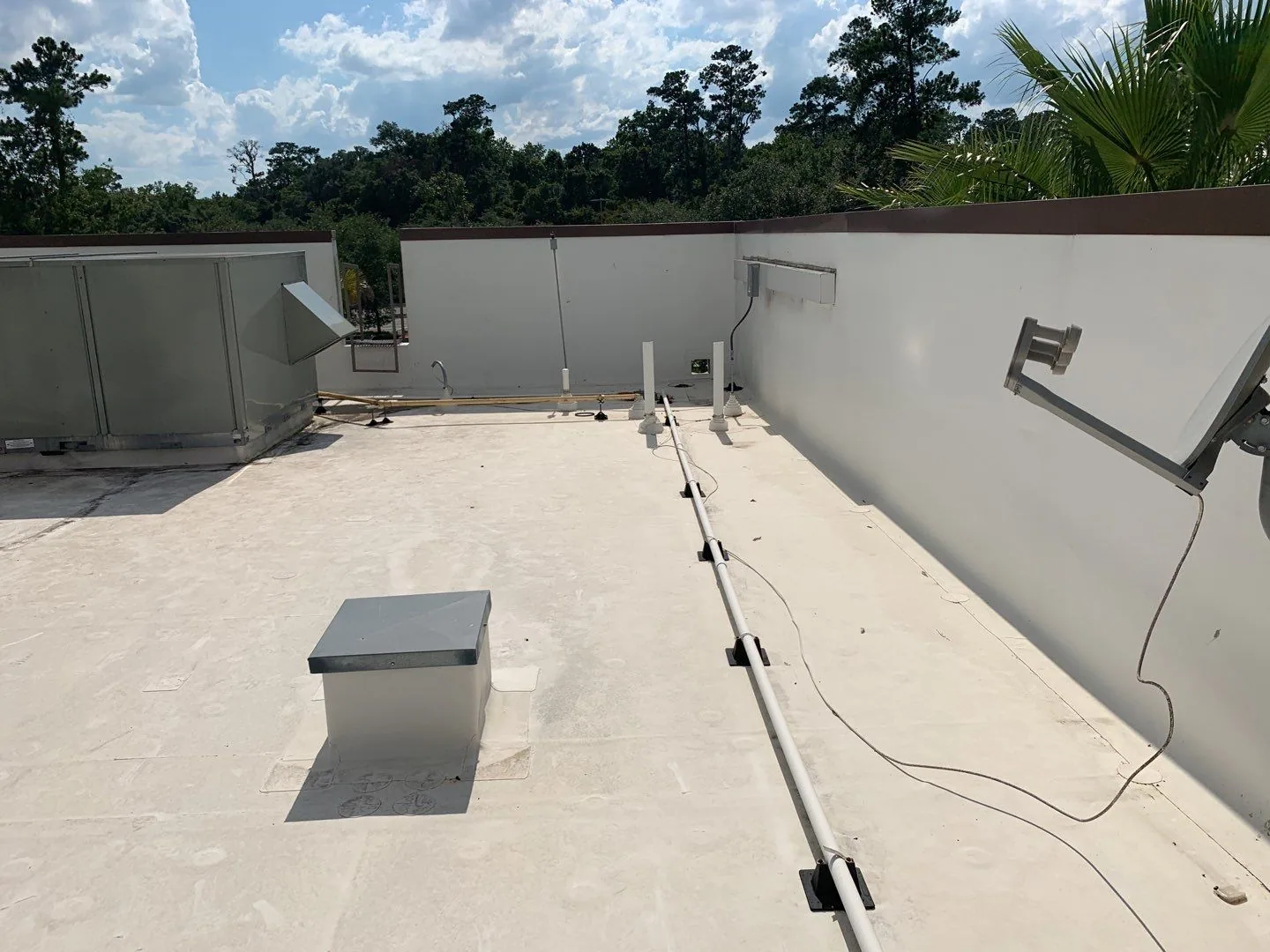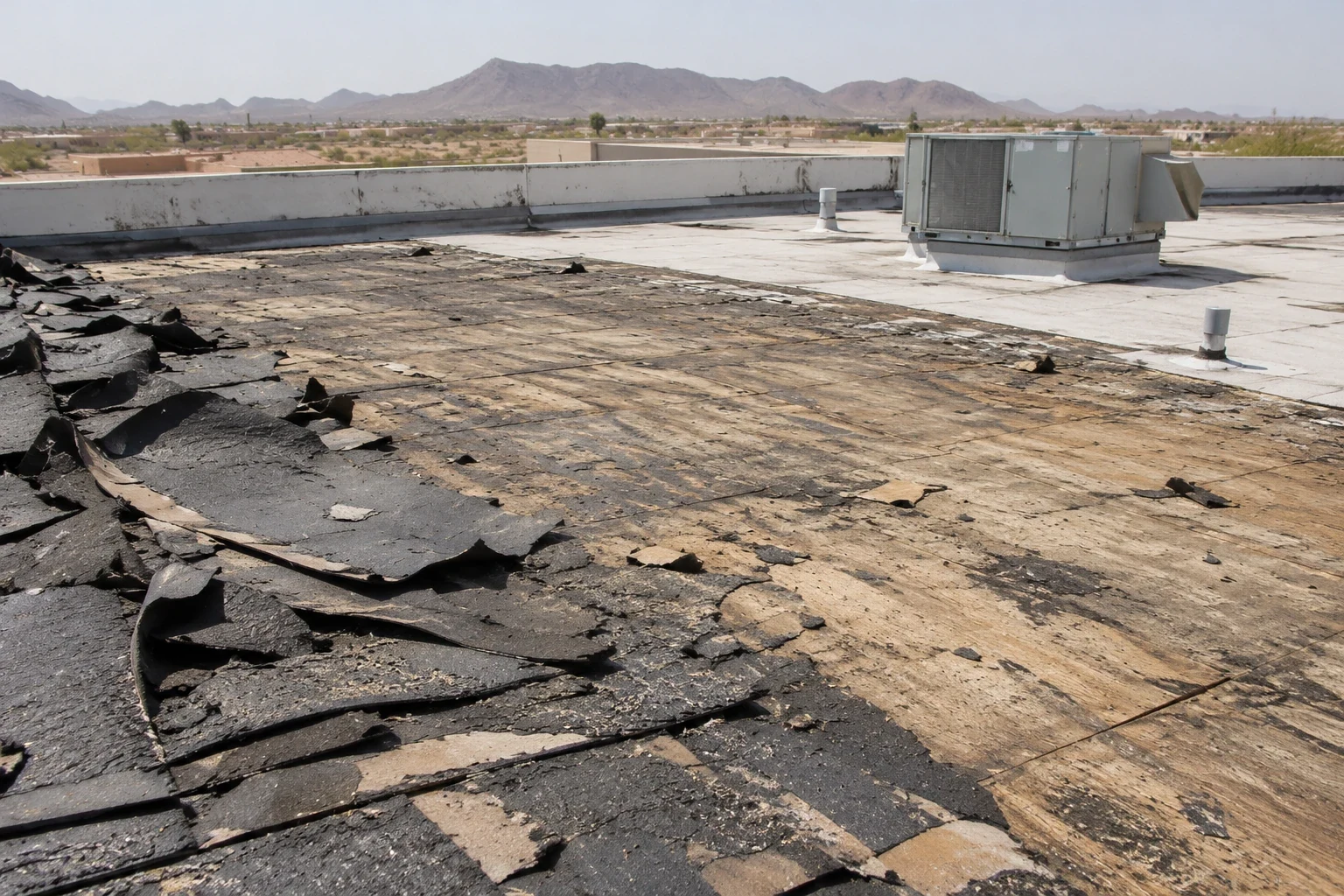
A leak above a tenant bay can interrupt a sale, a food-service shift, or a delivery even when the visible ceiling mark is small. The property manager gives us the affected suite, the best access contact, and any customer or loading route that cannot be blocked. We mark the reported zone, then inspect the roof above it for seams, penetrations, drains, curbs, and wall transitions. Photographs connect the observed detail to the interior report instead of treating every stain as the same repair. The property manager can pair condition report with the tenant map. A drain observation can be checked through drain and scupper repair before pricing.
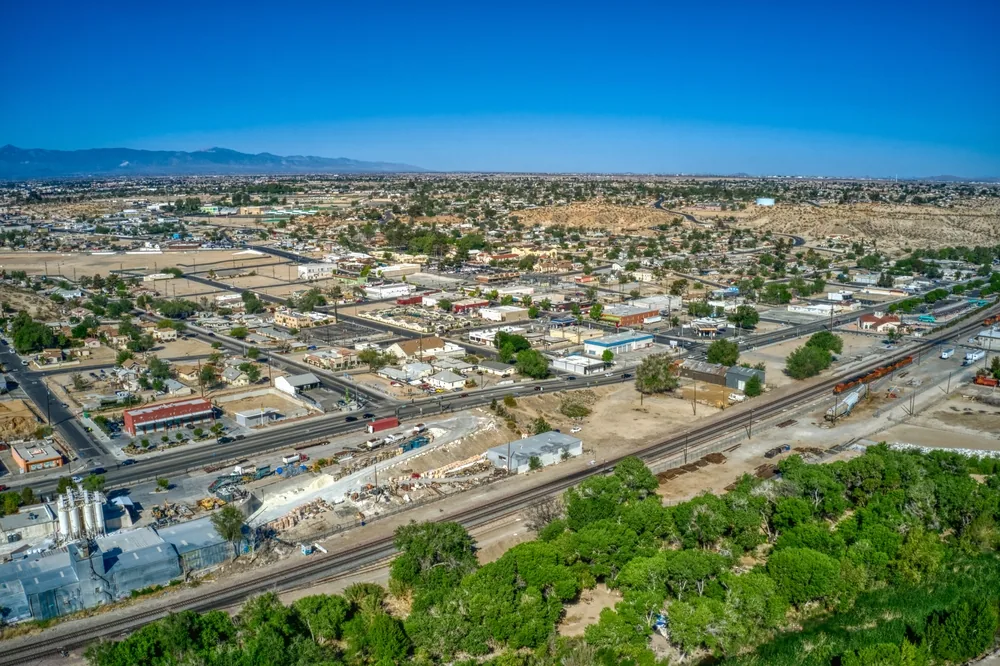
Victorville’s Bear Valley Road and I-15 focus area is identified in Victorville planning materials as a concentration of big-box and national retailers alongside regional and local businesses. That is district context, not proof about one center’s tenant mix or construction. Old Town Victorville has a different mix of planned land-use classifications, and Seventh Street is identified for public-setting improvements. We inspect the actual assembly and use those distinctions only to frame coordination. A roof condition report starts with the property’s own evidence.
Identify tenant suite and public path
Before climbing, we ask which entrance serves the affected tenant, where deliveries queue, and who can authorize roof access. A shopping center may have several managers, maintenance vendors, and tenant contacts, so one named decision-maker must own the daily release. We record where water appeared, when it was first reported, and whether equipment, stock, or a public path needs protection. The first plan sets a safe boundary without promising that an interior symptom identifies the roof opening. Use occupied-building sequence when communicating a revised access window. For an isolated seam, compare findings with targeted commercial roof repair.
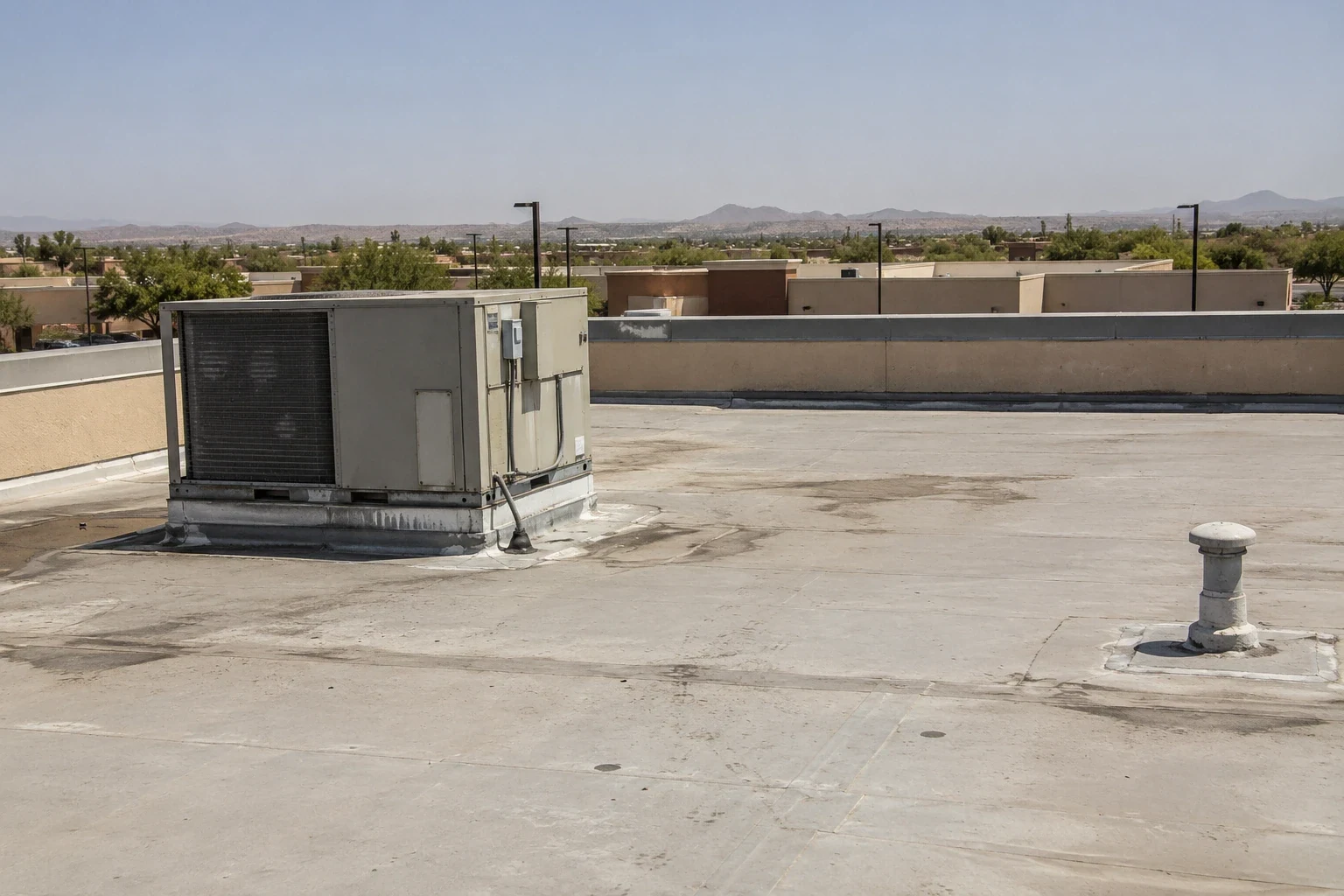
At roof level, the crew follows the likely drainage path and checks nearby transitions. A failed curb detail can send water away from its entry point; a blocked or damaged outlet has a different remedy from a split membrane seam. We photograph each finding with a location label and note whether the condition was directly visible or concealed. If further testing would change the quantity or repair choice, the owner receives the proposed opening location and approval point before work advances.
Separate roof observations across additions
Center roofs can join multiple additions, parapets, and tenant-specific penetrations. We divide the survey into roof zones and keep each observation tied to a drawing or marked photograph. The record distinguishes membrane wear, open laps, loose edge metal, damaged counterflashing, ponding evidence, and moisture found through approved testing. Similar-looking defects can require different preparation, so the scope identifies the surface condition and the material that must be removed before a durable repair can be selected. A multi-zone proposal can refer to replacement scope for scope structure. The Victorville visit request can include Victorville roofing service area and the receiving schedule.
Drainage deserves its own walk. For roof-drain sizing, Victorville’s code uses an hourly rainfall design input of 2.5 inches; field inspection still determines the condition of each outlet. We inspect actual slopes, strainers, bowls, scuppers, and overflow paths. Where the detail involves an outlet, drain and scupper repair may be relevant. The proposal separates debris removal or connection work from membrane repair so approval follows what the inspection confirms.
Schedule around deliveries and storefront access
An occupied retail property needs a daily boundary that is understandable to tenants and the public. We coordinate ladders, lifts, staging, hot-work restrictions if applicable, falling-object controls, and any temporary route change with the manager. The crew identifies which roof section is open, which area is protected, and when the work zone can be released. If a storefront entrance or loading approach must stay clear, that condition is written into the sequence rather than left to a morning conversation. A related retail format can be reviewed through big-box retail roof planning.
The Bear Valley Road/I-15 commercial focus area and Old Town are both part of Victorville’s documented planning context, but they are not interchangeable project descriptions. Old Town’s approximately 428-acre plan area includes retail and service overlays along with industrial, residential, and open-space classifications. A center near Seventh Street or on the east side of the city still needs its actual access route and tenant schedule confirmed. A phased occupied-building plan can record those project-specific limits.
Price the confirmed repair boundary
A leak call does not automatically mean recover or replacement. We compare the number of affected zones, moisture extent, deck condition, attachment, insulation, cover board, and prior repair history. If the observed defect is isolated and surrounding materials are sound, a focused roof repair may be appropriate. Broader removal becomes a discussion when investigation shows repeated failures or concealed conditions that compromise the assembly. The estimate identifies assumptions separately from confirmed quantities so the owner can see what would change the recommendation. Restaurant access has its own sequence; see restaurant roof access.
When a larger project is under consideration, we check layer count, substrate condition, edge and curb details, drainage, code implications, and the attachment strategy before comparing options. A replacement scope should say how work is divided by zone, what protection remains in place overnight, and how unexpected deck conditions are handled. For centers with varied roof areas, sequencing may make a different assembly practical on one section than another. No system choice is made from a property label alone.
Give management a zone-based closeout
Closeout should help the next property manager answer a specific question: which area was inspected, what was repaired, and what remains unverified? We provide labeled photographs, a description of preparation and materials, completed detail images, and any follow-up recommendation. The record distinguishes a visual review from a test or opening that the owner approved. That difference is useful when another tenant reports a ceiling stain months later or when facilities compares repair history across adjoining roof zones. For membrane seam context, consult TPO roof seam review after inspection.The shopping parcel near the Eastern Bear Valley Road Corridor needs its own tenant route; Old Town Victorville separately identifies the Seventh Street streetscape corridor. A tenant contact can confirm a quiet interval, but management also checks public access and deliveries before the crew stages tools or materials.
Wind criteria in Victorville’s code schedule range from 100 to 115 mph by occupancy and exposure. Its remaining published references identify climate zone 14 and ground snow at 5 psf. Those figures belong in a project’s code review; they do not certify an existing center’s roof or design. The municipal drain-sizing table uses a rainfall design input of 2.5 inches in an hour. We use applicable requirements only after the building, exposure, and permit scope are confirmed. Ask the manager to share the reported suite, service access, and delivery window before the visit.
Commercial Roofing Questions
Can roof repairs happen while shopping center tenants are open?
Often the roof work can be divided into controlled zones, but the manager must confirm access, customer routes, deliveries, and any restrictions below. The daily plan states the work boundary and closeout condition.
Does a ceiling stain show exactly where the roof is leaking?
Not by itself. Water can travel along a deck, insulation, or framing before appearing indoors. We compare the reported location with nearby roof details and document the evidence supporting a repair point.
What information helps schedule a shopping center inspection?
Share the affected tenant bay, property contact, roof-access method, delivery periods, and any public route that must remain open. Those details let us plan the first safe inspection zone.
How do you decide between a repair and replacement?
The decision uses observed membrane condition, moisture extent, deck and attachment findings, repair history, and code considerations. We identify what is confirmed and which test or opening could change scope.
What will the closeout record include?
It identifies inspected zones, completed work, labeled photographs, materials used, any limitations, and the follow-up item. It will not describe concealed areas as verified unless they were examined.