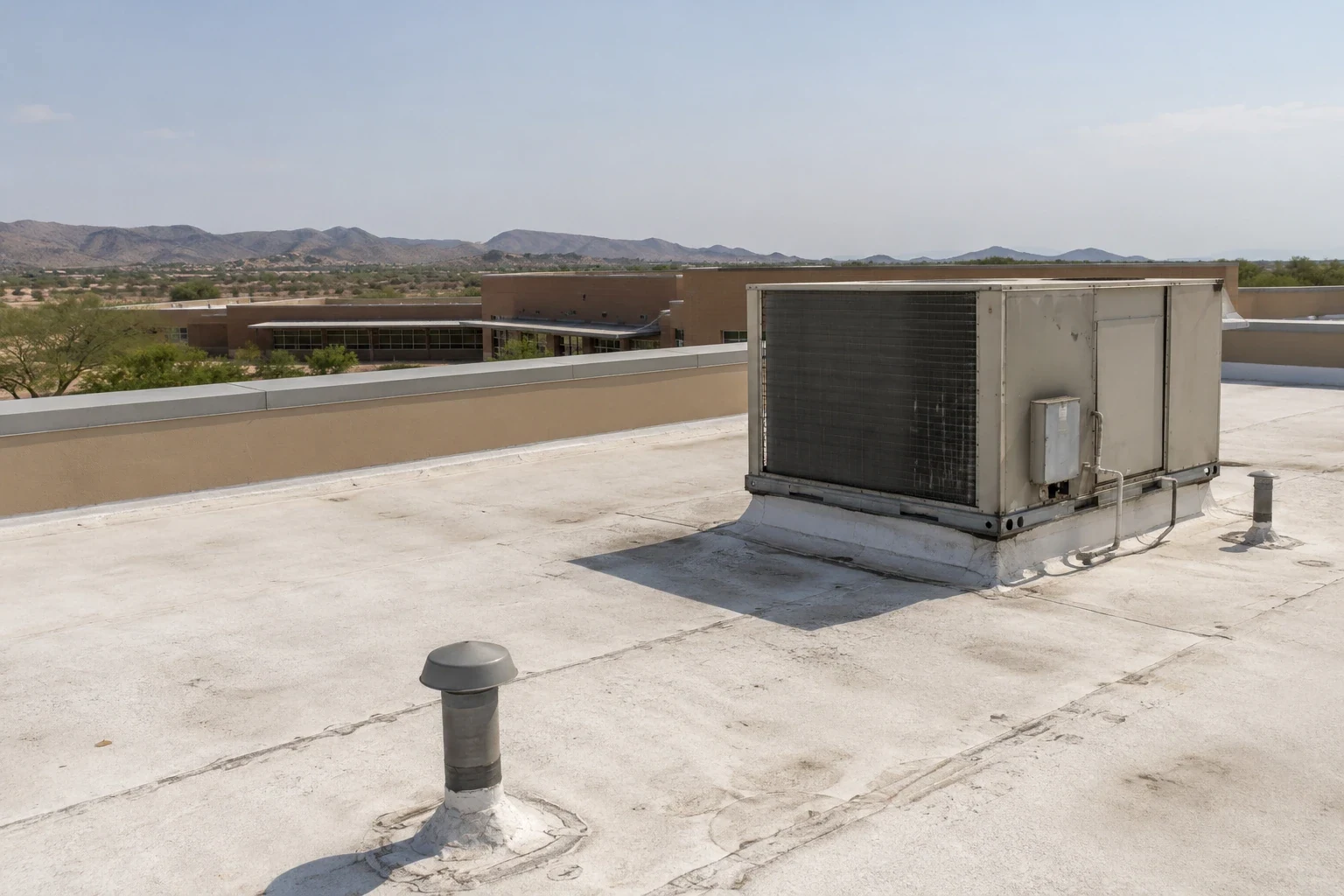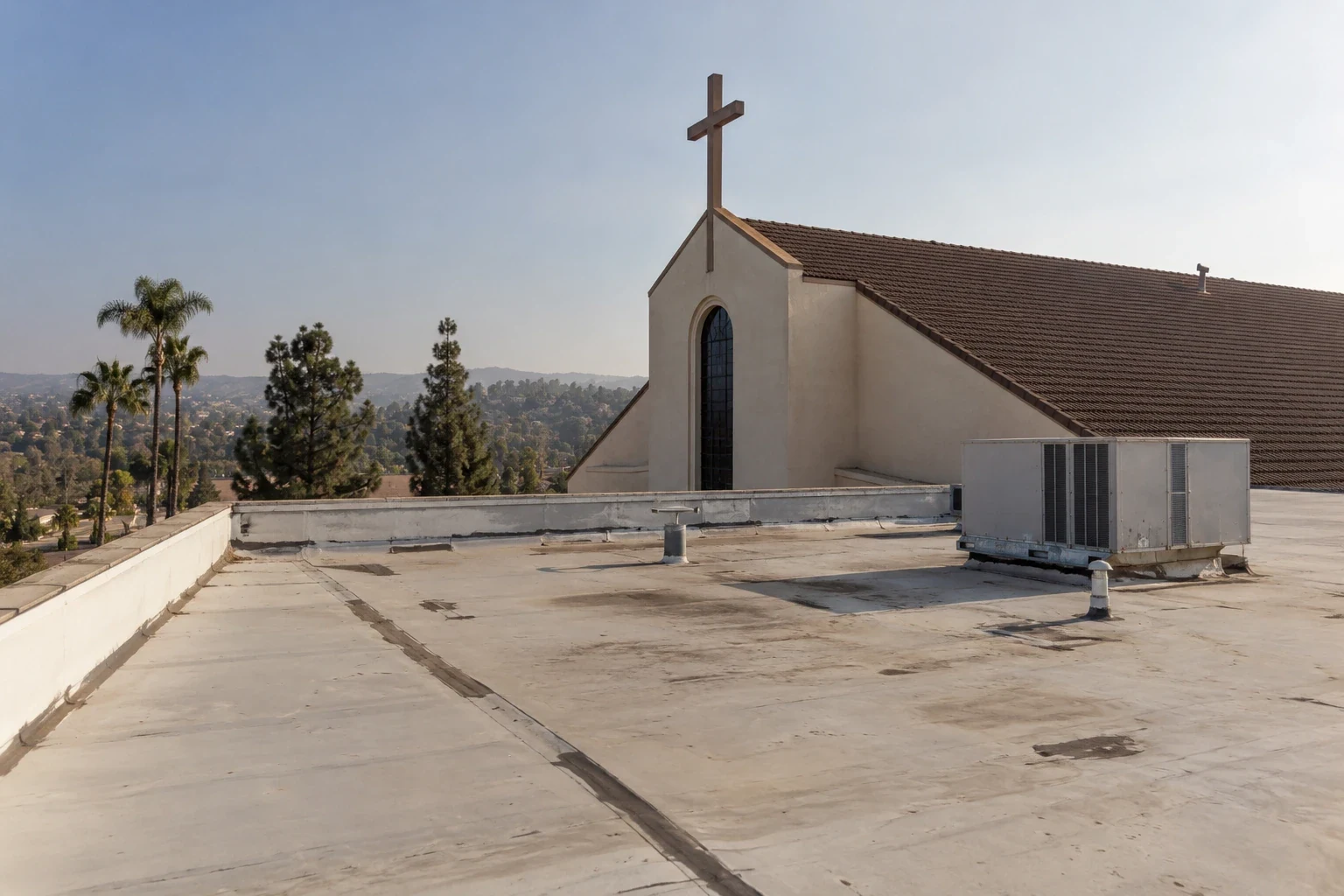
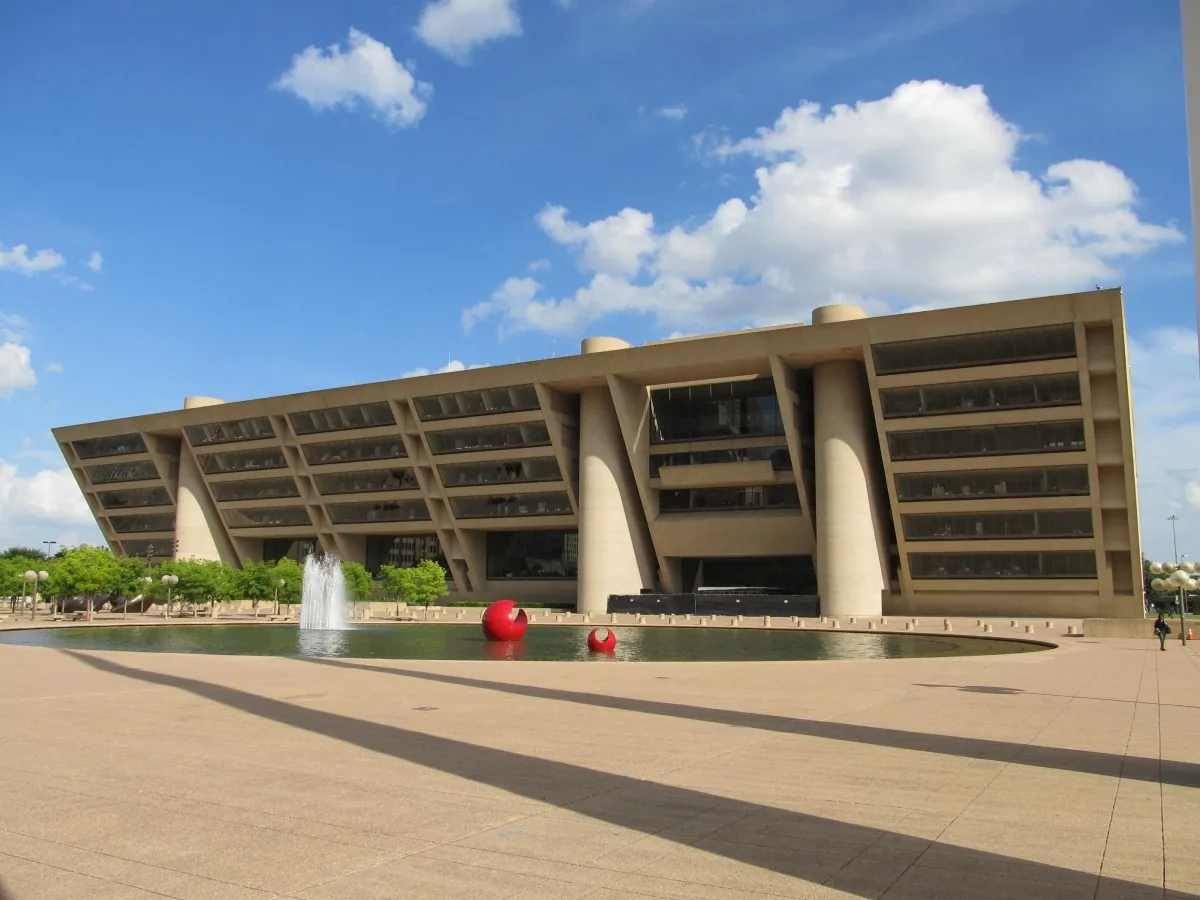
A water report reaches the facilities desk while the public counter is open and staff need the affected room to remain usable. In Victorville, CA, our first call identifies the roof zone, what is operating below it, and the contact who can arrange safe access. We note the report, then examine drains, seams, penetrations, curbs, and perimeter details along a possible water path. Photos and written observations let a department separate temporary protection from permanent work. At the Eastern Bear Valley Road Corridor and in Old Town Victorville, public buildings sit within different land-use settings, but each roof decision still begins with the specific assembly and operating requirements of the facility being assessed.
Public access: protect the function below the roof
A government building may have service counters, meeting rooms, offices, storage, or community-use space. The facility contact identifies what must stay open and who can approve roof entry or interior access. We set the work area and temporary protection around those operating needs. If active water threatens records, equipment, or public circulation, the facility can address that exposure while we trace the roof route. Our emergency roof response is available day or night, weekends and holidays included, so the assessment can begin with a clear access contact and a defined affected zone.
Public entry and contractor staging use different routes. We confirm where materials can be brought in, which areas are restricted, and how staff will receive an update if conditions change. For a repair that needs interior inspection, the scope identifies the room and access window rather than asking the department to close a larger area by default. If only part of the building could be reached, that limit is recorded for the next appointment. A department can then coordinate staff and public communication from the actual work boundaries.
Drain check: compare design references with current conditions
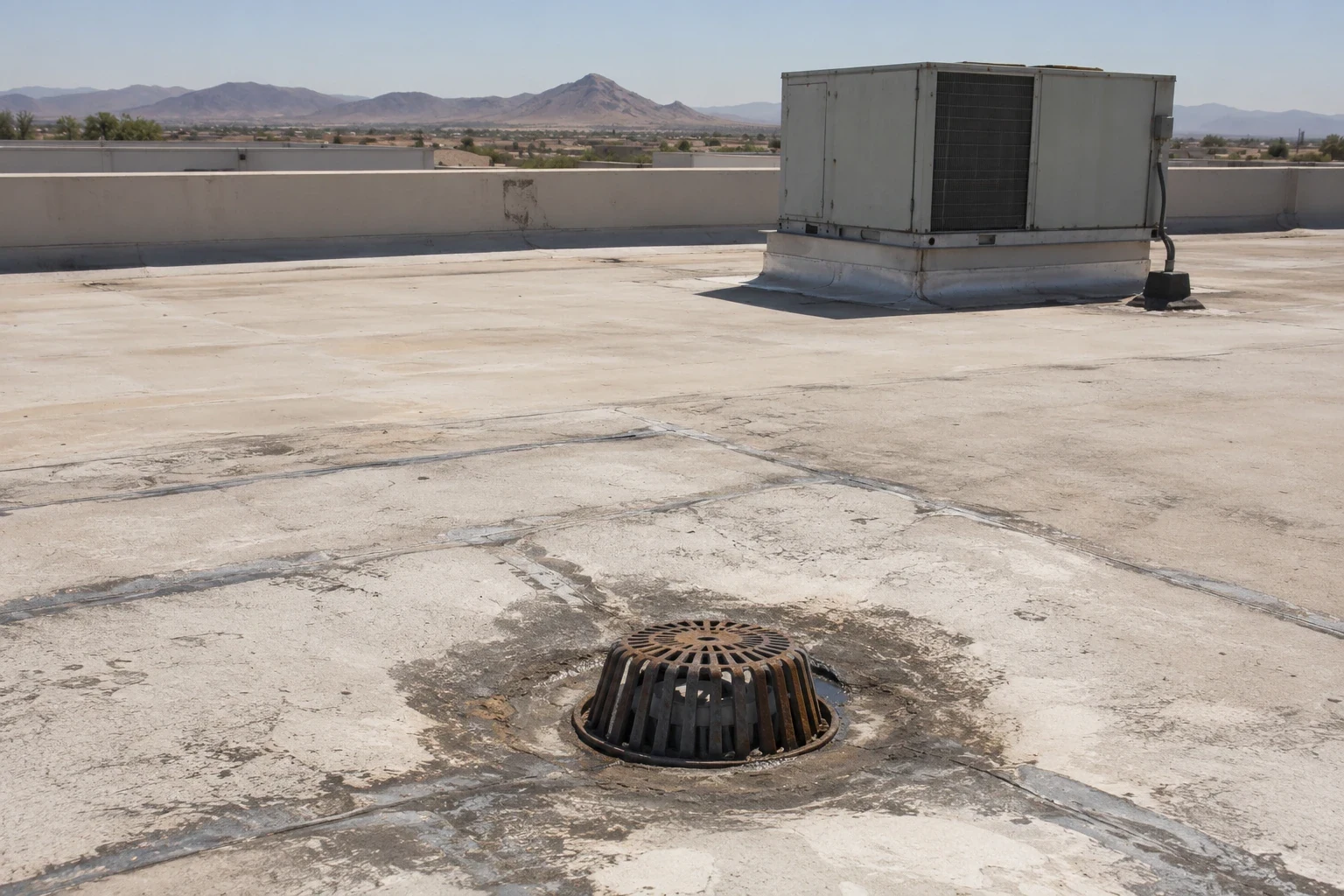
Water entering near a ceiling drain may come from a blocked opening, a failed drain flashing, or another roof detail carrying water toward the low point. We inspect bowls, strainers, overflow paths, low areas, and the membrane around the penetration. The city's adopted drain-sizing calculation uses a one-hour precipitation depth of 2.5 inches. We compare that parameter with records and observed discharge rather than treating it as proof that a public building's drain functions. A roof drain and scupper review records what we find and whether maintenance, localized repair, or further assessment is warranted.
A public agency may have several facilities with different roof systems and maintenance histories. We keep each drain, repair, and access note attached to its building. A condition reported at one department cannot be assigned to another roof because the buildings share an owner. The record identifies what was observed, which parts were not reached, and whether opening the assembly is needed to answer an outstanding question. That gives staff a specific basis to request the next action.
Code and roof: separate design criteria from field findings
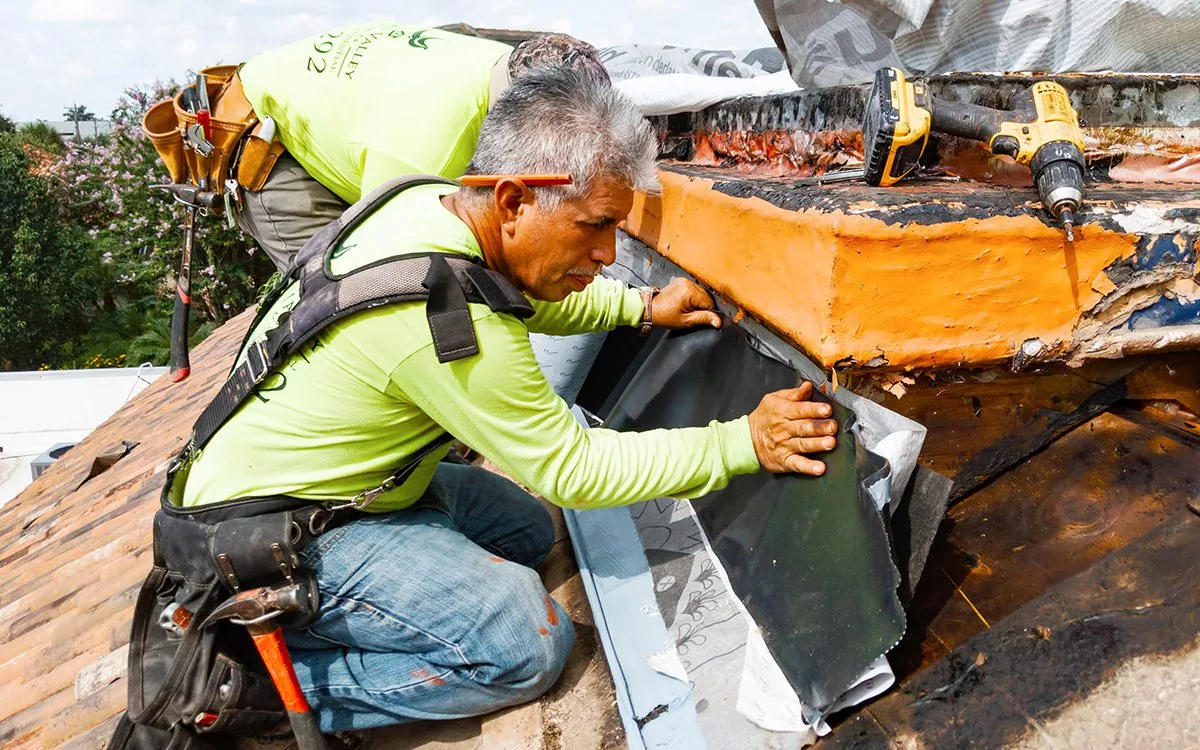
Victorville lists the 2025 California building and related codes as adopted with state modifications, and its building-code page identifies climate zone 14, snow-load criteria, and wind values that vary with occupancy and exposure. These references may affect a design or replacement scope, but they do not describe the condition of an existing roof. We inspect visible attachment, edge metal, seams, flashing, penetrations, and prior repairs, then distinguish observed defects from questions that need design review. A commercial roof inspection gives the department photos and written condition notes before it chooses repair or renewal.
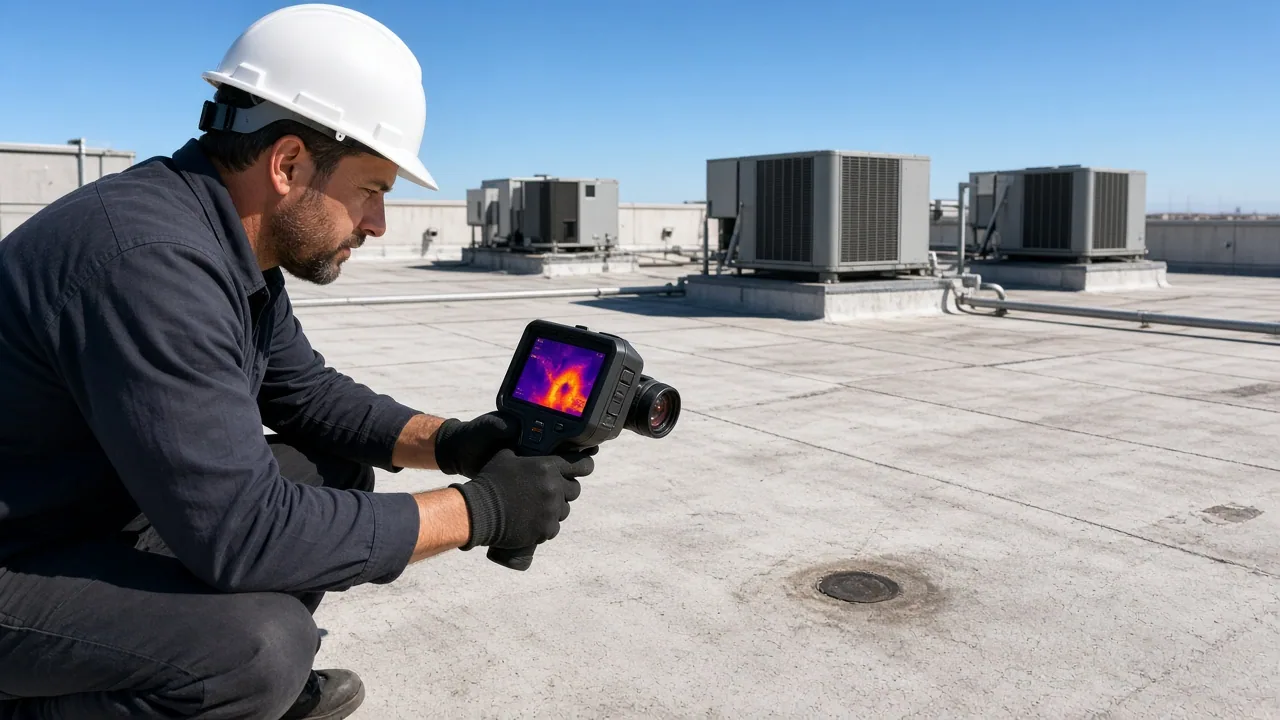
The same city information specifies a roof-drain rainfall design rate. We use that only as a project reference and still check the actual water path at drains and low areas. If an infrared or drone survey highlights a concern, the report states what it shows and where a hands-on check is needed. The facility can review the observation with its project requirements and determine whether additional investigation belongs in the procurement scope. A code reference never substitutes for a finding on the roof.
Scope and record: write work that can be reviewed
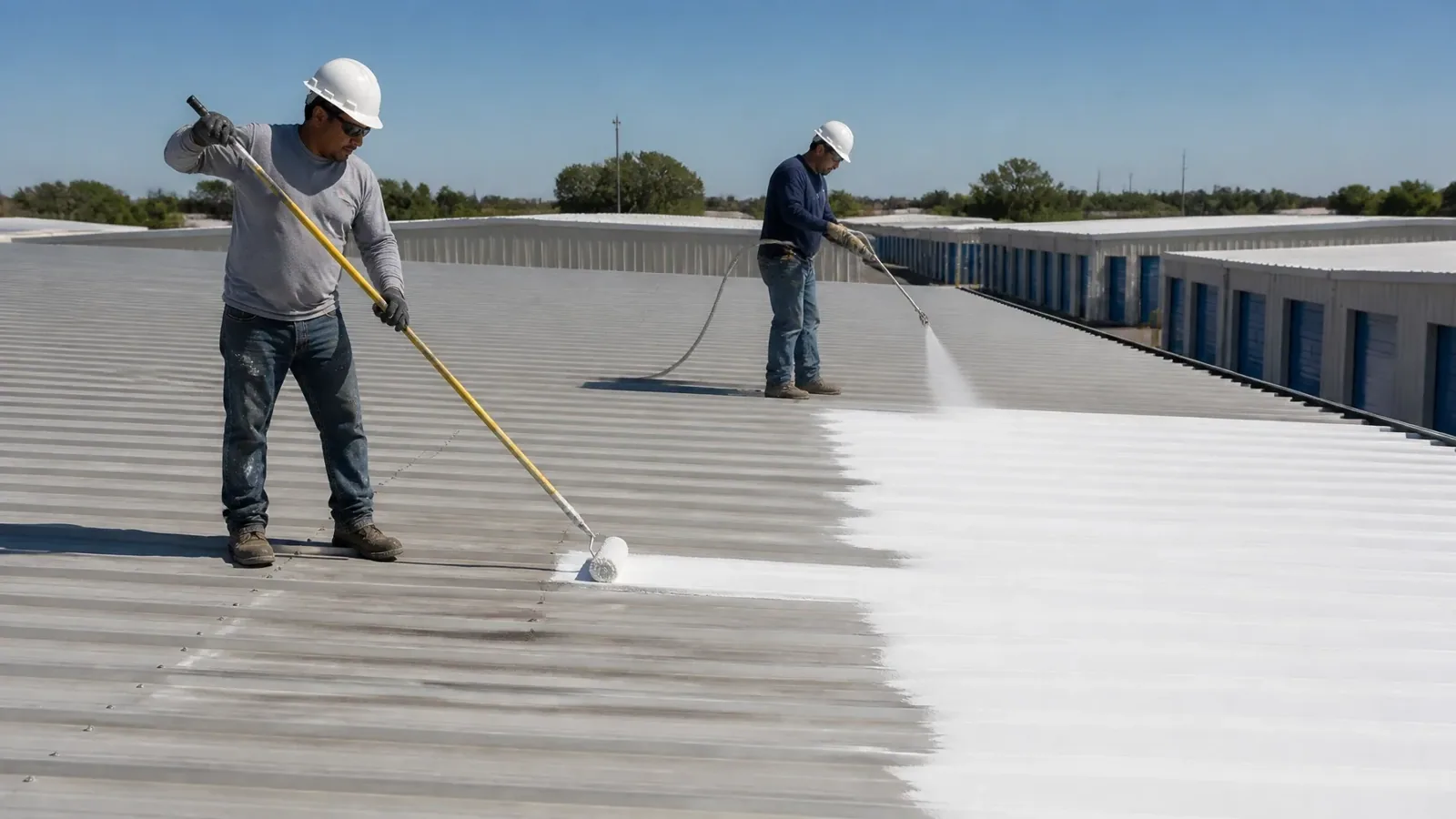
A public facilities team may need a defined repair scope for approval, scheduling, and file retention. We identify the roof zone, condition, proposed work, temporary protection, and any open access requirement. If the condition supports a localized patch, that line stays distinct from a broader coating, recover, or replacement option. The roof survey record can give a department a photo-supported view of assembly and condition for a project review. It does not assign a price or approval outcome before the work is scoped.
Timing depends on access, material compatibility, weather, procurement steps, and the building calendar. If a concealed condition changes the repair, we provide the observed evidence and requested decision before the scope expands. A project manager can then distinguish the make-safe response from permanent work and retain the relevant record for a later review. This keeps a temporary measure from being confused with final acceptance or a complete assessment of every concealed layer.
Victorville context: plan for the actual building use
The Eastern Bear Valley Road Corridor includes commercial and regional-serving uses, while Old Town Victorville has retail and service overlays alongside residential, light-industrial, and open-space classifications. These land-use descriptions do not establish what roof system a municipal facility has. They do show why access and traffic around properties may differ by location. We coordinate with the department contact on public entry, vehicle staging, and any meeting or service hours that affect work. A school roof inspection follows a separate calendar and authorization path from a civic office, even when both require occupied-building planning.
Victorville's city materials identify manufacturing, logistics, industrial users, and distribution as local economic activity. A public works yard, administrative office, or service building still needs a building-specific inspection. We ask which operation sits below the reported roof zone and how staff can give access. A church roof review may also need coordination around public gatherings, but its operating contact and approval process differ from a government department. We keep each scope tied to the facility’s own conditions.
Handoff: leave the department with a clear next action
The closeout identifies inspected zones, conditions, photos, completed repairs, and open items. If part of the roof could not be reached, the report notes the access or additional check required. A facilities director can review this record with department staff and project stakeholders. The commercial roof service team in Victorville can coordinate follow-up around access and the building’s public schedule.
If findings support wider renewal, we state it apart from urgent protection. Staff can assign an owner, arrange access, and schedule the next review.
Commercial Roofing Questions
What should a department include in its first leak report?
Identify the room or public area, activity below it, when water appeared, and the person who can arrange roof access. Mention any public function or equipment that needs protection. We use those details to trace the relevant roof zone and plan an inspection around facility rules.
Can the roof be inspected while public counters remain open?
We coordinate roof staging and any interior entry with the facilities contact. Some observations need no public-area entry; others may require a temporary boundary or a scheduled room visit. The department identifies access rules, and the scope names the work area so public operations can be planned around it.
Does the city code page determine what repair is needed?
Code information can inform a design or replacement scope, but it does not show an existing roof’s condition. We inspect the actual seams, drains, flashing, edges, and attachment details. The recommendation follows those observations and the project requirements the facility provides.
Can you separate an urgent patch from a larger capital item?
Yes. We state temporary protection and local repair separately from a broader restoration or replacement recommendation. If the assembly needs more investigation, the report identifies that access or test before adding it to the scope. The department can review immediate exposure and longer-term work as distinct decisions.
What helps retain the roof findings for procurement records?
A written scope, photos tied to roof zones, access notes, and a list of open items help staff retain the basis for a decision. We state what was observed and which areas were not reached. That record supports later review without representing concealed conditions as confirmed.