A report from a dealership begins with the room or bay affected, the active sales or service operation below, and the contact who can release roof access. A drip over a vehicle delivery lane, a wet ceiling beside a showroom, and water near a service-bay light require different protection below. We ask whether water is still entering and what equipment or customer activity sits under the roof zone. That first call helps us make the area safe before deciding how much roof needs repair.
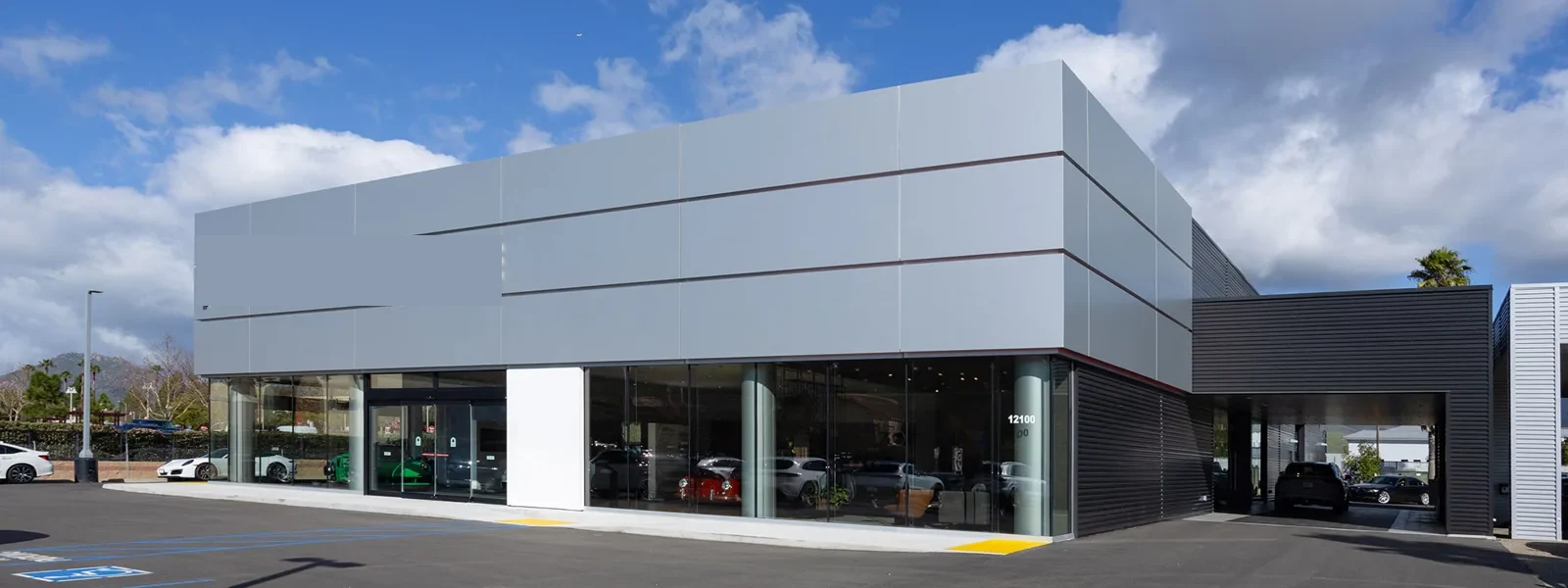
A commercial dealership may include a showroom, offices, parts storage, service bays, and covered customer areas, but the actual roof layout varies by property. We map the affected area to the roof above it and identify penetrations, drains, seams, and transitions that could share a water path. The manager can then decide whether to close one bay, move vehicles, protect inventory, or keep other parts of the operation open while the inspection continues.
Building zones: separate customer areas from shop work
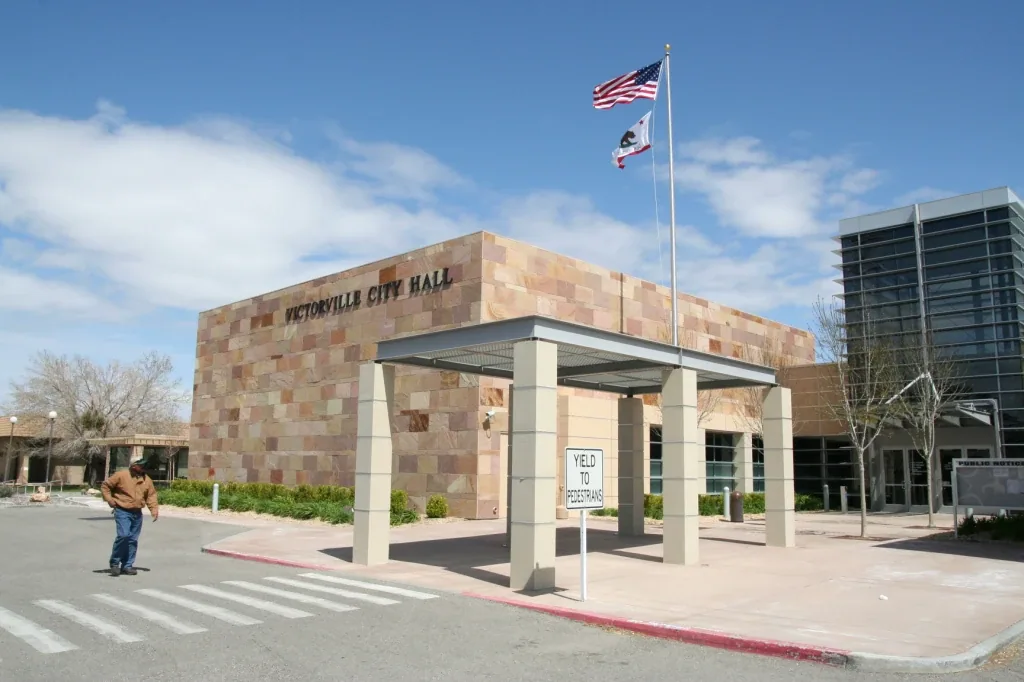
The retail and service band along Bear Valley Road includes businesses with different traffic patterns. At a dealership, the site contact identifies customer movement, service-bay activity, and roof access before the inspection begins. A photo-based roof condition report can tie each finding to its roof zone before anyone opens a ceiling based on a stain alone. Inside, the path from a roof opening to a ceiling mark may cross insulation, deck joints, or framing. We inspect directly above the report, then follow likely routes toward a drain, curb, wall, or field seam. A close detail and wider roof-zone image help keep those observations connected. When a stain appears beside a showroom wall, we do not conclude that its flashing failed until the connection is inspected and water is traced from the actual opening. A visit can also be oriented through the Eastern Bear Valley Road Corridor, while the property manager confirms the gate and entrance for this specific job.
Water path: start above the reported stain
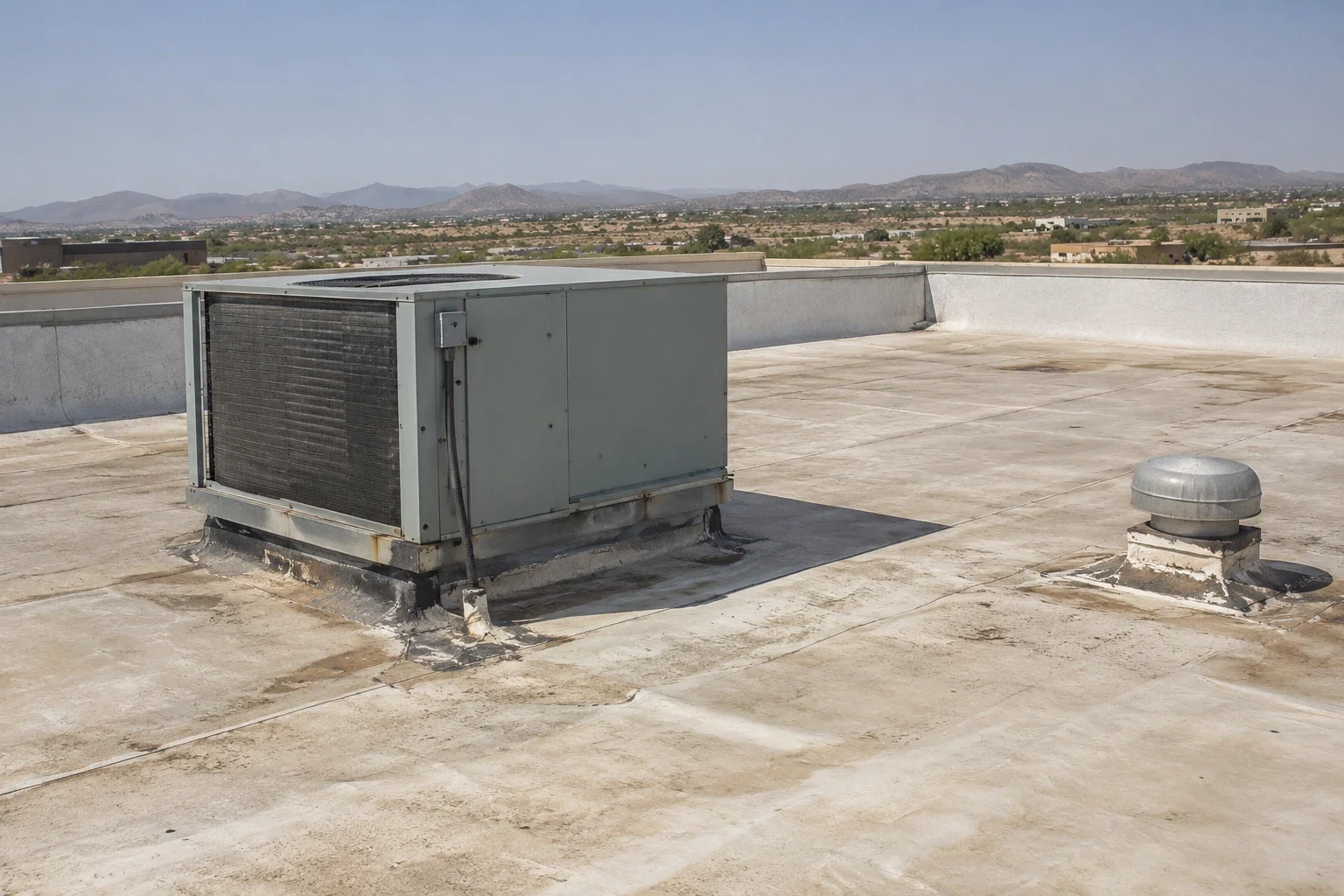
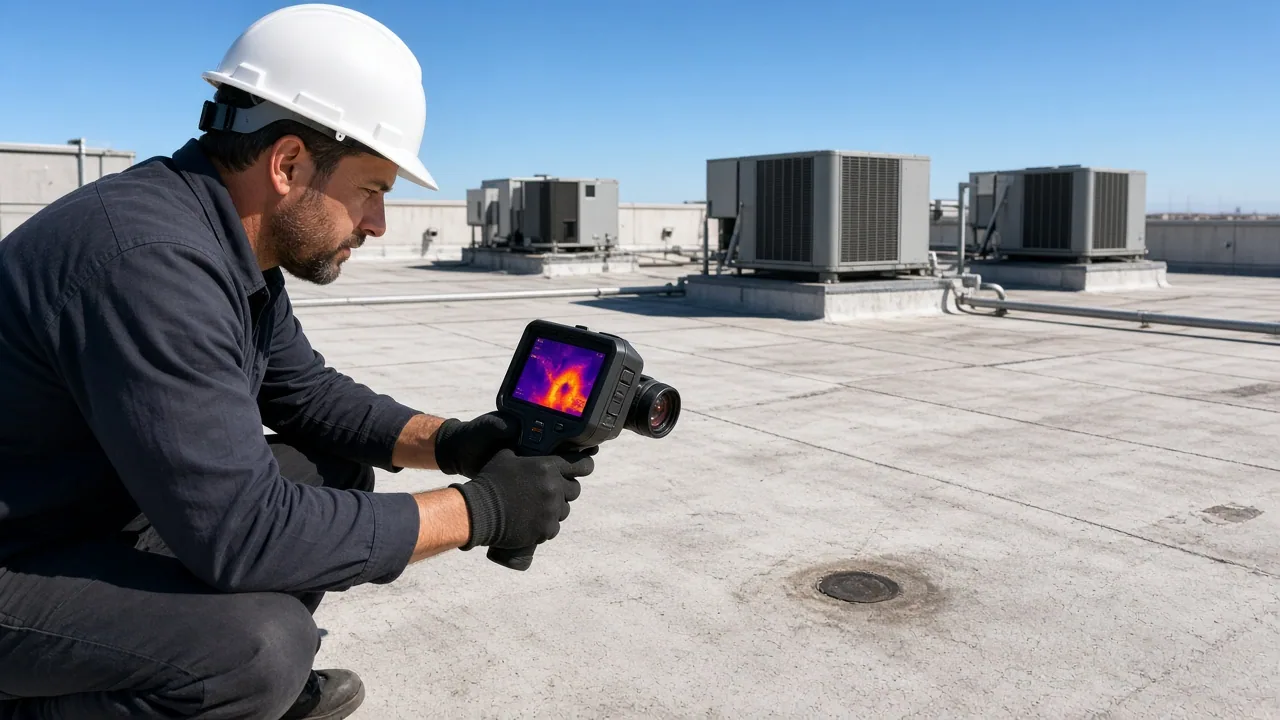
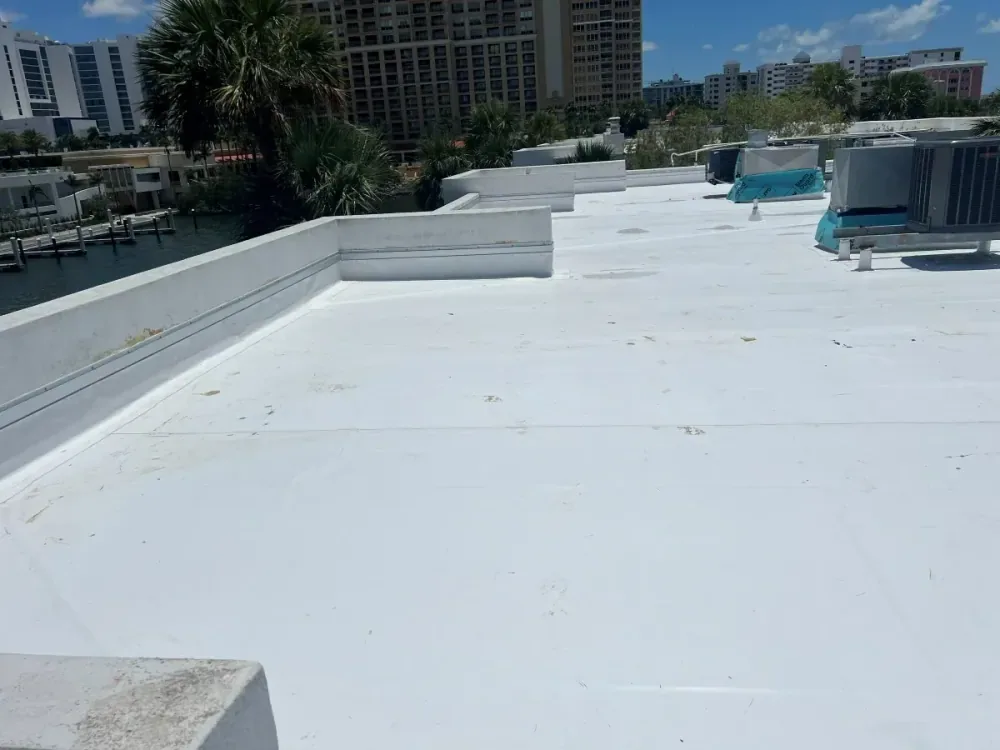
Roof-mounted HVAC and exhaust equipment can make an inspection more involved, especially where service work, electrical clearances, or customer access control the route. We record curb flashing, conduit penetrations, lines, and nearby seams, then note whether a trade recently disturbed the area. A commercial roof inspection checks the assembly without sending staff onto the roof. If an active leak sits above a service bay, we coordinate safe interior protection before testing the exterior detail.
Across the June 1980 to May 1990 observation period, the Victorville station averaged 23 days a year when temperatures reached 100°F or more. Repeated summer heat puts membrane seams, coatings, and sealants on the inspection list, but the roof itself shows whether material has changed. We compare the reported area with adjacent surfaces and previous repairs before assigning a cause.
Inspection sequence: check details and equipment
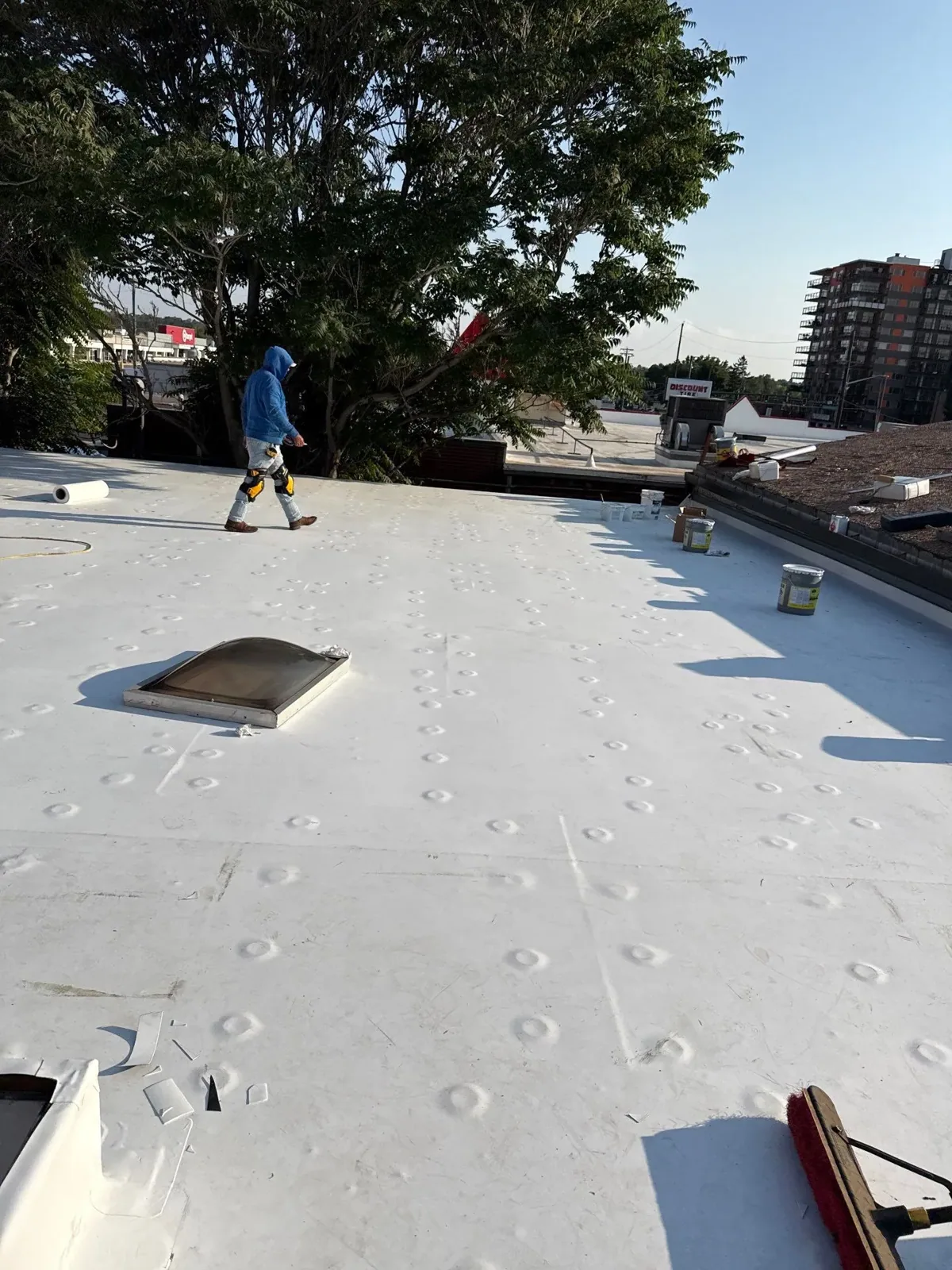
The repair path depends on whether the defect is localized, recurring, or connected to wet material. A sound thermoplastic sheet with one open weld may support a compatible patch after preparation and test welding. A damaged curb base needs a flashing repair, while widespread moisture or brittle material can change the replacement discussion. We separate confirmed work from concealed conditions that call for testing, then describe the roof zones and boundaries in a flashing repair scope. The city land-use element identifies commercial activity around Bear Valley Road and I-15 and future growth near Amethyst Road. That planning context says nothing about this dealership's daily operation. We confirm vehicle routes, service hours, equipment access, and roof zones with the facility contact before staging material. If a customer entrance or service drive shares the work side, the sequence states how foot and vehicle traffic will be kept apart and who can authorize a change.
Repair choice: compare patch, restoration, and replacement
Cost and timing depend on roof access, the number of penetrations, equipment clearances, wet insulation, edge metal, and the length of membrane or flashing that must be removed. A patch near one curb is different from a repair that requires shutting down several work areas or coordinating a crane. We give the owner distinct options when evidence supports them, including localized repair, restoration of a compatible system, or replacement when the underlying assembly no longer supports reliable tie-ins.
Scheduling must account for the dealership’s own rhythm. We ask which bays need to remain available, when vehicle deliveries arrive, whether technicians use the roof, and which doors customers should not cross. Heat welding, adhesives, coating preparation, or equipment shutdowns can affect nearby areas, so we define a work sequence with the facility contact. A seam repair can then focus on the planned access window, temporary protection, and separation between the repair zone and daily operation.
Work window: coordinate sales, service, and roof access
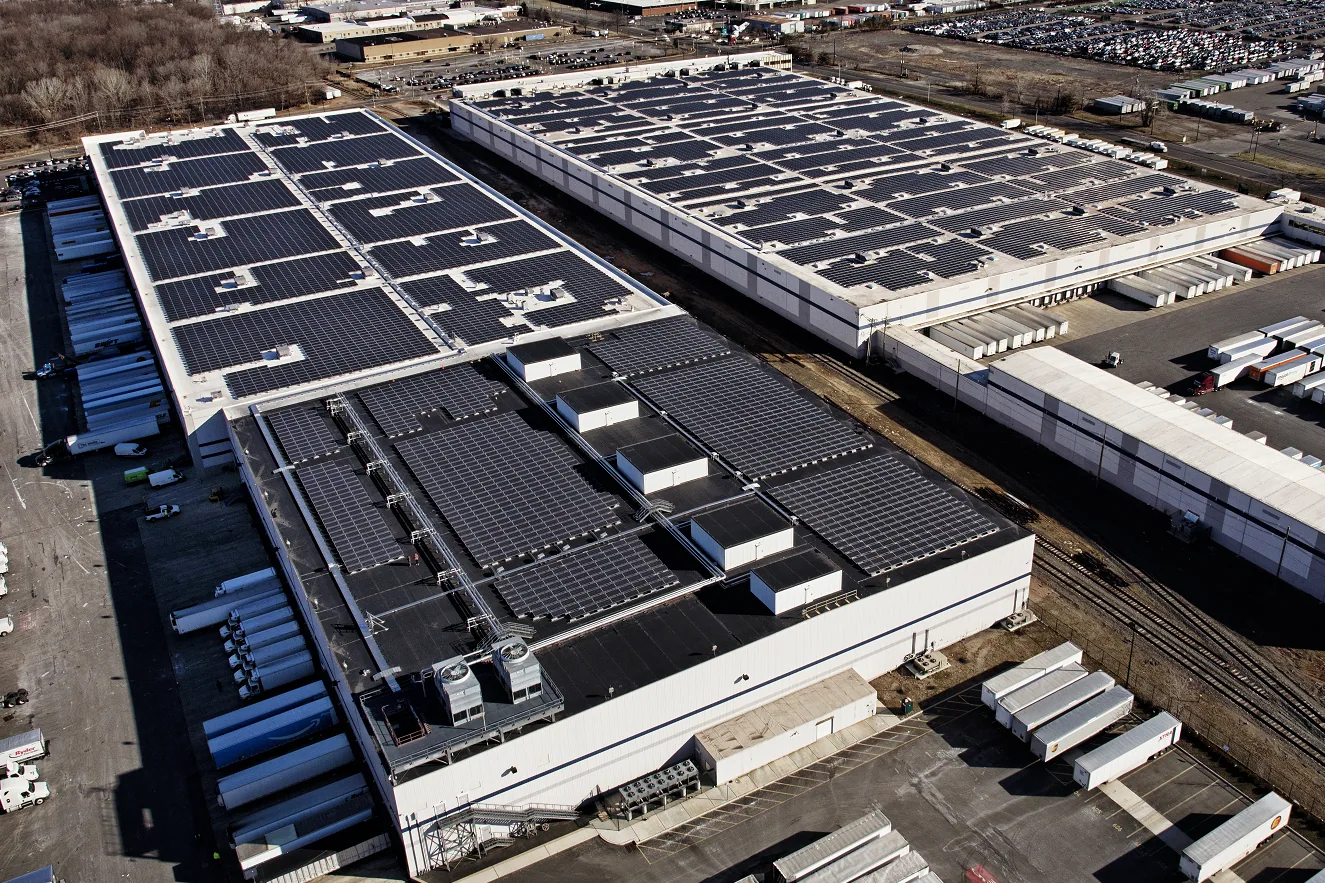
At an edge or curb, we inspect the actual fasteners, metal, and substrate before defining a repair. The code lists wind-design criteria that vary with occupancy and exposure; those values guide design review but cannot establish that a specific connection has failed. A big-box retail roof may have a similar perimeter detail, and a dealership can share low-slope construction with a warehouse roof, but the inspection maps the service-bay clearances and customer routes at this property. Old Town's plans identify retail and service overlays as well as light-industrial uses; Seventh Street has planned streetscape improvements. Neither description sets the dealership's hours. We confirm its own entrances, technician routes, and delivery windows before bringing material onto the roof. The repair schedule can then keep a service drive open where practical and identify any short interval that needs a temporary detour. The manager receives the affected area, access contact, and expected return time before the crew stages tools.
Closeout: keep the repair visible in the record
At closeout, we record the roof zone, material, preparation, and tie-in to sound surface. Interior images can show the protected bay or showroom area, while roof photos show the detail beside drains or seams. The record notes equipment clearance and any trade route that should remain unchanged, plus open questions about concealed layers. A future inspection can distinguish a new report from the same condition or another part of the assembly. Before a call, note the affected room or bay, activity below, and access contact. We can arrange a safe assessment, explain immediate protection when needed, and prepare repair scope around sales and service operations. For a property served from the Bear Valley business district, that broad location helps orient the visit; the manager still confirms the exact entrance, staging area, and roof-access rules. A short pre-work confirmation also lets the facility contact flag a delivery or customer event that would change the planned window. If a nearby roof type is useful for comparing access coordination, the self-storage roof inspection provides a separate occupancy example. The crew can also review TPO membrane details when that is the installed assembly.
Commercial Roofing Questions
Can roof work happen while service bays stay active?
It depends on the roof zone, fumes or heat from the repair method, and safe separation below. We map the work area with the site contact before scheduling.
Does a ceiling stain identify the failed roof detail?
No. Water can move along insulation or deck before it appears indoors. We inspect above the report and follow the path to the opening.
Can rooftop equipment cause a leak?
A curb, conduit, or service route can fail, but equipment nearby is not proof of cause. We inspect the flashing, membrane, and any signs of recent trade contact.
When should the owner consider replacement instead of another patch?
Repeated failures, wet layers, weak attachment, and poor tie-in material can make isolated work uneconomic. We document those conditions before comparing options.
What helps schedule a dealership repair?
Share bay assignments, customer routes, delivery times, roof access rules, and equipment shutdown requirements so the work window matches the operation.