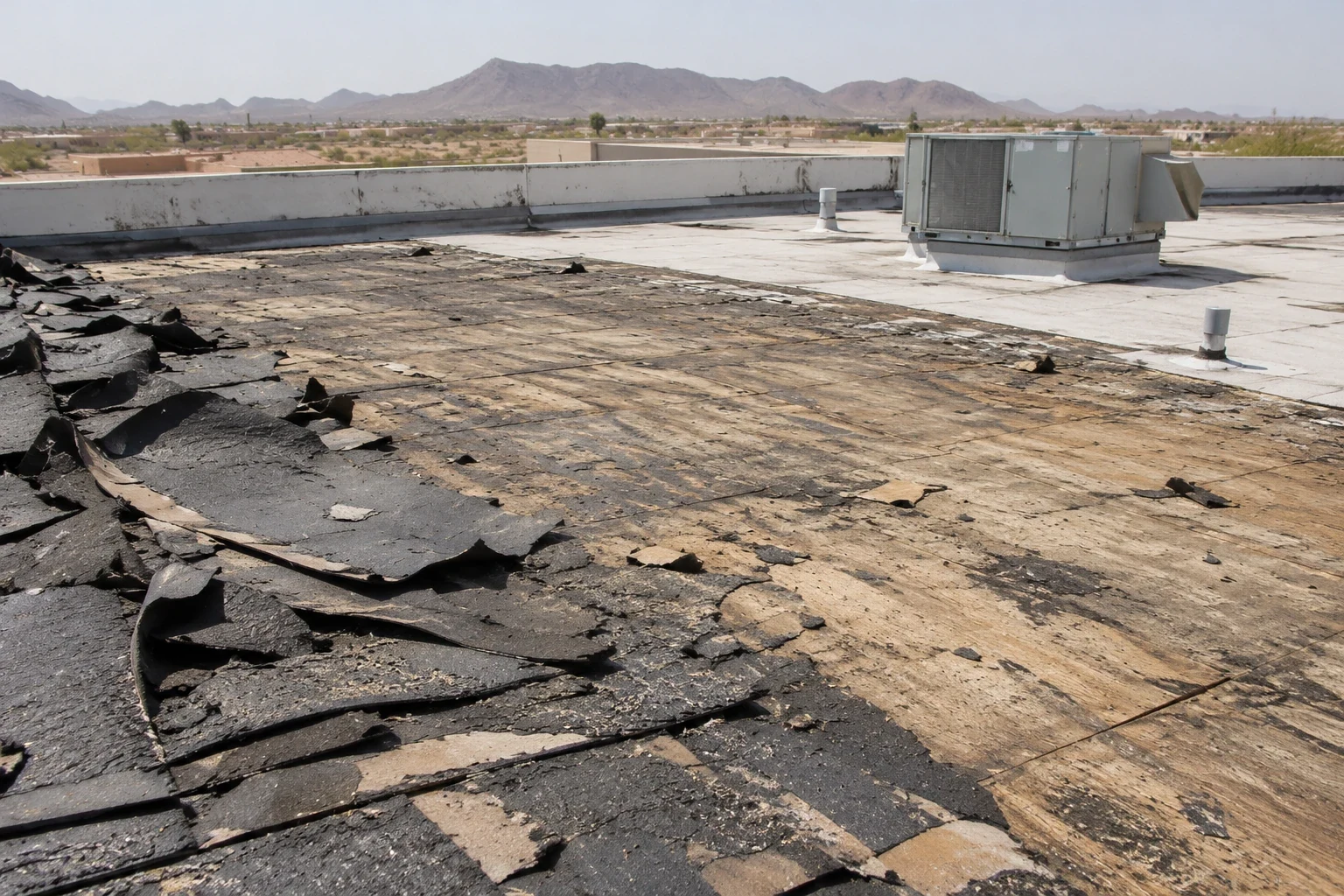
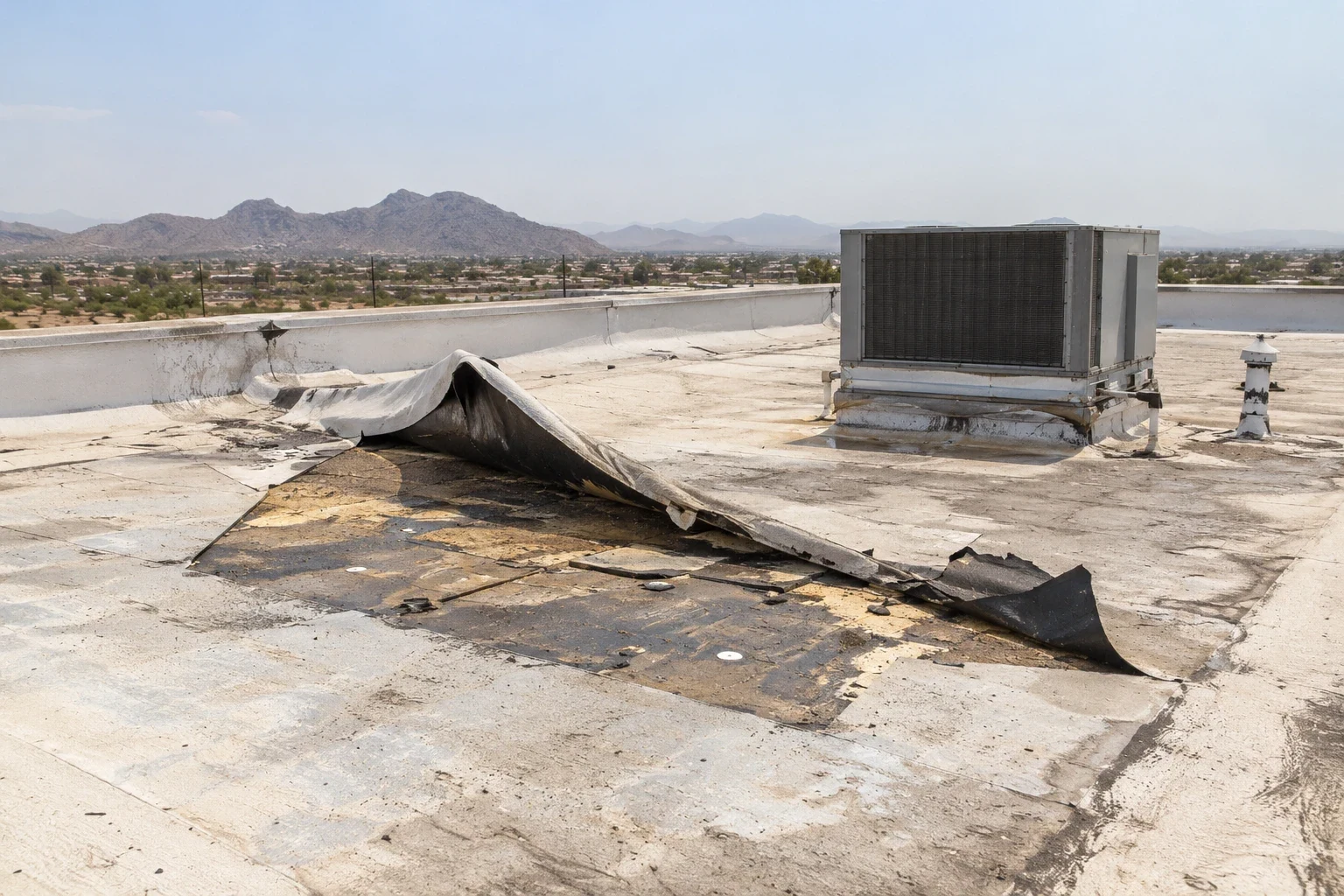
A claim file needs a roof location, a reported event, and photographs that show what was present when the inspection took place. We ask where water or loose material appeared, what operation sits below it, and who can provide safe access. Victorville's building-code references list wind values that vary by occupancy and exposure, while city planning describes commercial activity near Bear Valley Road and I-15. Neither source establishes damage at an individual property. We inspect the actual roof, record observed conditions, and separate temporary protection from permanent repair so the owner and restoration team can review a defined scope.
Our report can include a photo set, roof-zone references, test results, repairs performed, and areas not inspected. We document building conditions; the carrier decides coverage under its policy. For project handoff, a general contractor roof sequence can coordinate access and trades, while property manager records can connect the repair to tenant and facility contacts.
Separate the report from the roof finding
At intake, we note when the condition was reported, the interior location, whether it remains active, and any immediate safety concern. A stain does not identify the entry detail by itself. We ask for prior work records and photographs without treating them as proof of the current assembly. The person with roof access confirms the hatch, ladder, escort, and work restrictions. If the roof is wet or unsafe, no one should climb it to gather more pictures. The field visit begins when safe access and the affected area are clear.
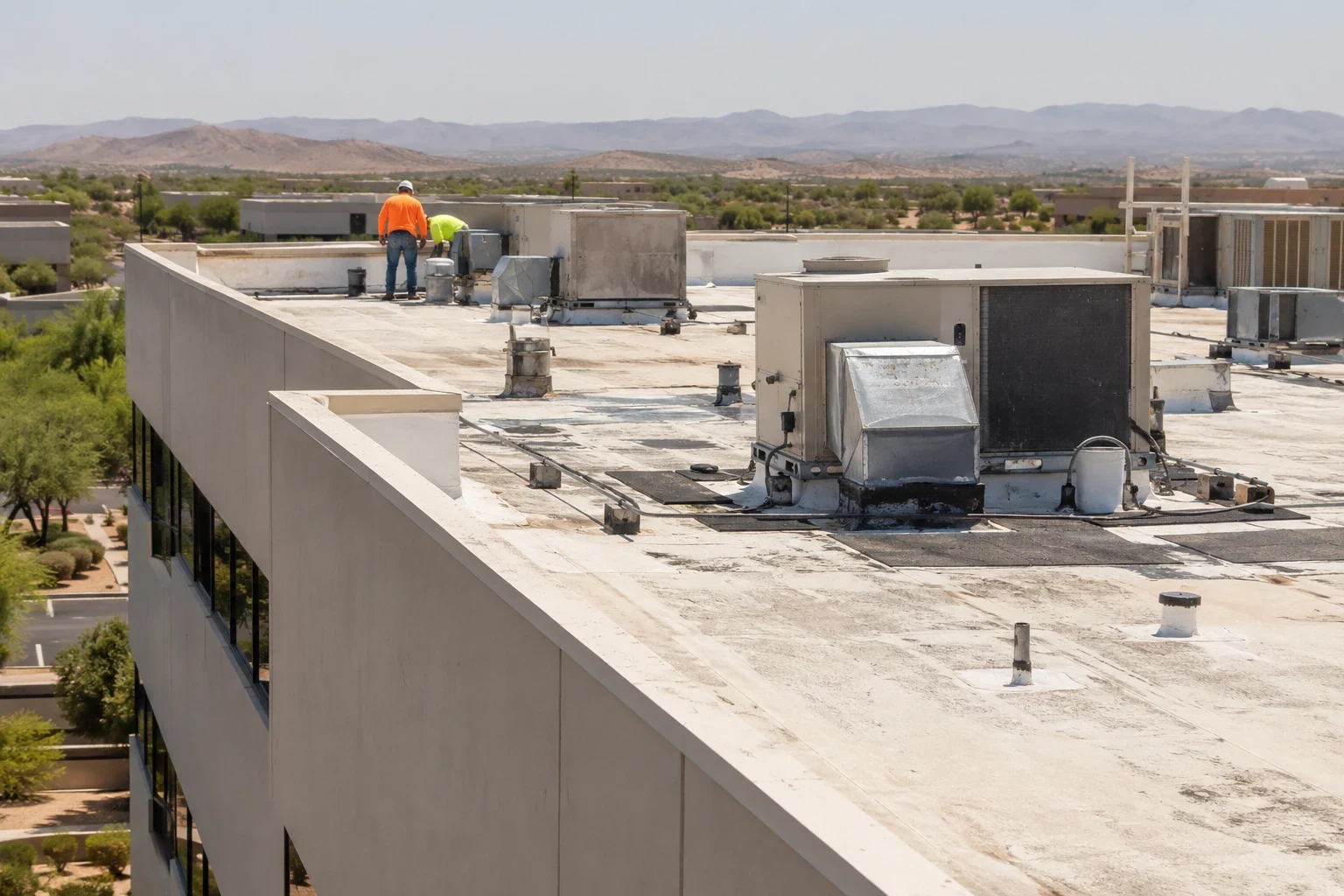
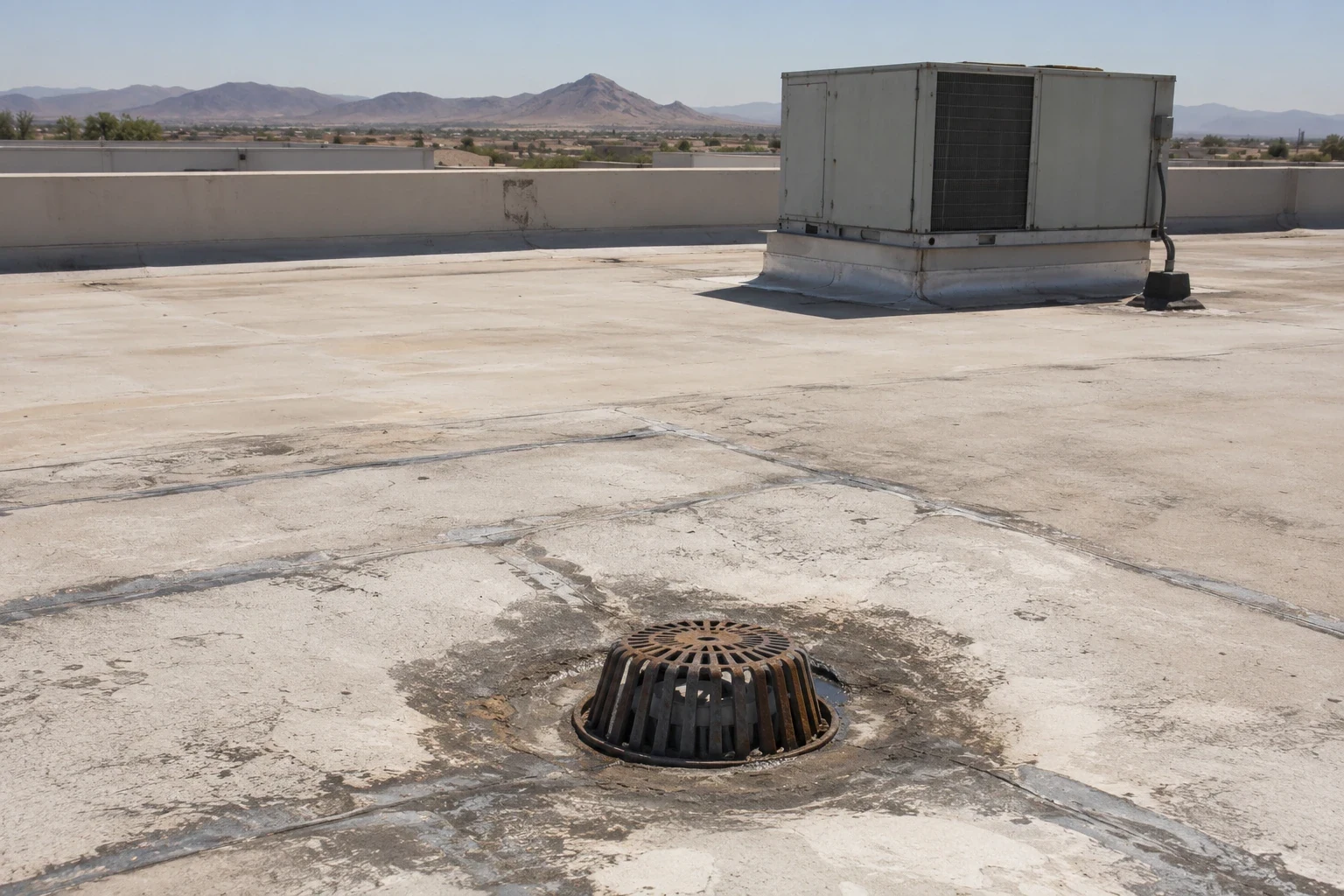
The inspection follows seams, flashings, drains, curbs, wall transitions, and edges that could connect to the interior path. We photograph both the reported area and the details that support or contradict a suspected entry. If temporary covering is needed, the record says which opening it protects, when it was placed, and what remains to be checked. That makes the claim file useful without overstating what a limited emergency visit can establish.
Build the record around roof zones
Each photograph should identify its building and roof area, with a close view of the condition and a wider reference that locates it. We note the assembly, visible damage, wet materials if opened, temporary work, and any nearby detail inspected. When infrared review or a test cut is used, the report states its method and surveyed boundary. A condition outside that boundary remains unverified. The owner can then compare the inspection with maintenance records and the event timeline without treating an unseen area as a finding.
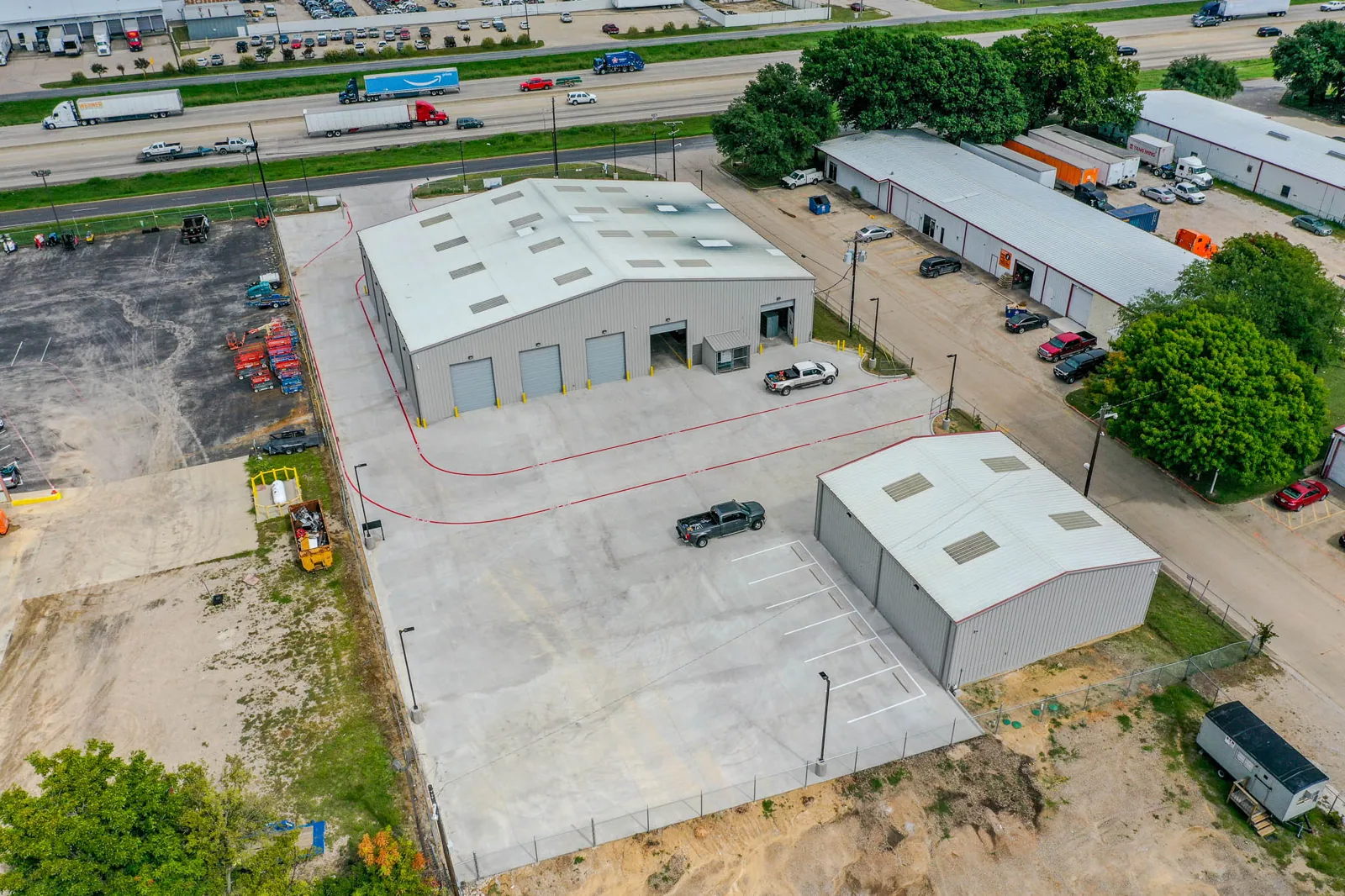
City files outline prospective industrial work near Foxborough and on eastern land beyond Highway 395; these plans do not confirm a completed structure or a claim site. Those approvals are not a statement about completed buildings or a loss location. For a property along the Bear Valley Road and I-15 commercial area, we still inspect its actual roof assembly and use. A roof report can organize evidence by zone, and a moisture survey can help map suspect insulation before a replacement quantity is considered.
Show what make-safe work did
Temporary protection reduces exposure while a permanent detail is planned or conditions do not permit a full repair. We describe the material and roof zone covered, identify the remaining water path, and note whether interior protection is still needed. A tarp or seal at one opening does not prove the surrounding assembly is dry. When the surface can be accessed safely, we document the opening, tie-in, nearby seams, and conditions that should be inspected on the return visit.
In the local code, roof drainage design uses an hourly rainfall criterion of 2.5 inches; that value cannot identify the storm intensity at the time of loss. That design reference does not establish the storm intensity at the time of loss. We inspect actual drains and scuppers, check ponding and overflow evidence, and photograph the route. For a confirmed drain condition, drain repair documentation can distinguish an outlet correction from membrane work. The owner's file can preserve those scopes as separate actions rather than one undifferentiated patch note.
Define repair quantities from observed conditions
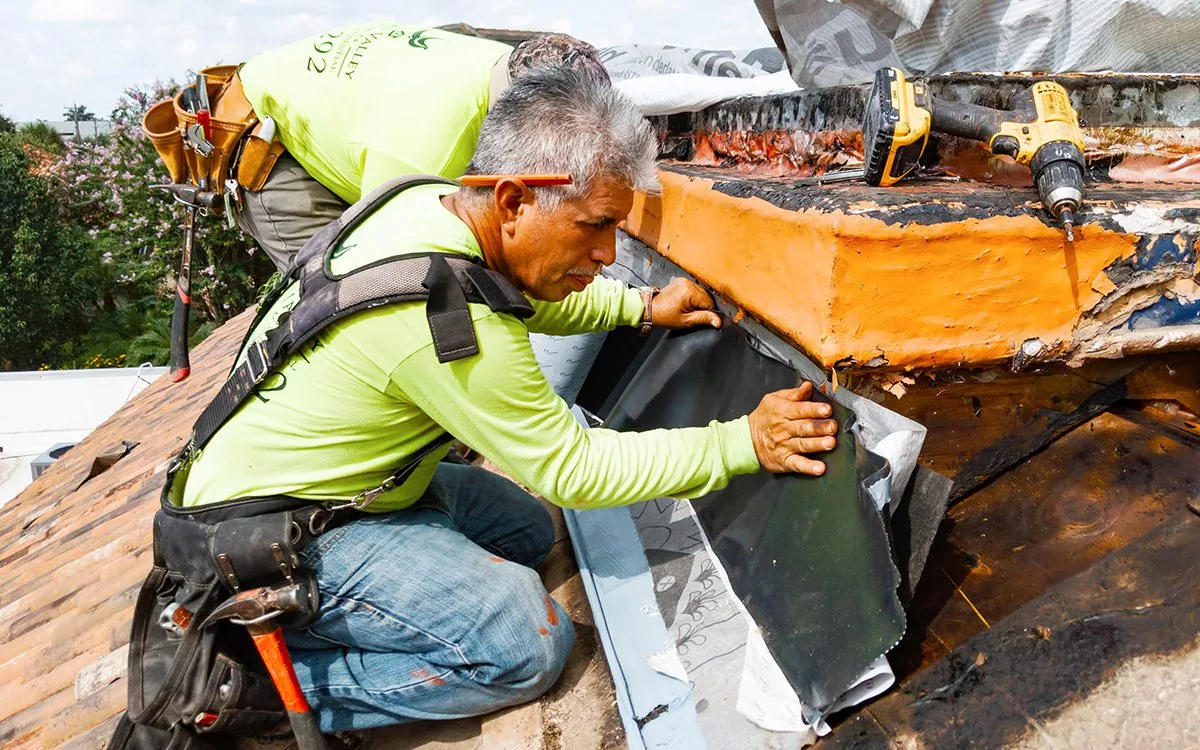
A permanent roof scope identifies preparation, compatible materials, seam or flashing tie-in, edge work, drainage, and protection below. When tear-off uncovers saturated board or compromised decking, the crew documents its location and requests written scope direction before adding removal or replacement. A replacement estimate states removal depth, proposed insulation or cover board, curb transitions, drains, and assumptions for concealed areas. These details support a repair review, but do not decide whether a policy covers the loss or which party is responsible.
A historical station summary for George AFB reports a 97°F mean July maximum during its Victorville record sample; use the present forecast to schedule restoration work. That past observation is not a work-date forecast. We follow current roof conditions and product requirements when selecting a repair window. For response planning, a commercial emergency repair can make a limited area safe; a replacement scope can follow if inspection supports broader work.
Coordinate restoration and roofing boundaries
Water mitigation, interior drying, electrical checks, and roof repair may proceed on different schedules. We identify the roof opening and the interior area that needs protection, then coordinate the access window with the restoration lead and facility contact. If an interior crew must enter a ceiling or mechanical space, roof work above it needs a clear shutdown and communication plan. We do not reopen a protected area without confirming the next trade's activity. The shared schedule should state who checks each roof tie-in before the building returns to normal use.
Old Town Victorville's plan includes retail, service, light-industrial, residential, and open-space classifications. Those uses do not predict a claim condition, but they reinforce the need to verify occupancy and access on the specific property. A phased roof work plan can coordinate occupied areas and track repairs outside the immediate event scope. For owners managing multiple properties, the asset review record can keep follow-up findings with the correct building.
Leave a file another reviewer can follow
The closeout lists the roof area inspected, what was protected or repaired, the materials used, and any further test or access needed. Photos show the completed tie-in and the wider roof-zone reference. We identify what was not inspected, whether water returned, and what condition would trigger a return visit. If the file supports a claim, we can provide dated observations and repair invoices. Coverage, reserves, and payment remain decisions for the insurer and policyholder.
Share the event date, reported interior location, roof access contact, and any temporary protection already placed. We can assess the assembly and document a repair boundary. A Victorville commercial roof inspection starts with the actual building and safe access, then gives the owner and restoration team a record for the next repair, test, or capital decision.
Commercial Roofing Questions
Does a roof inspection determine insurance coverage?
No. We document observed roof conditions, testing, and work performed. The insurer and policyholder review the evidence and policy terms for coverage decisions.
What should an adjuster receive from the roof visit?
Provide dated photos tied to roof zones, the inspection method, repair boundary, temporary protection, and areas not inspected. We can prepare that record from field observations.
Can temporary protection be listed as a permanent repair?
Only completed permanent work should be described that way. We state what the temporary measure protects, its limits, and the next inspection or repair needed.
How do you handle damage found during tear-off?
We stop at a safe boundary, photograph the exposed condition, and document the added quantity before requesting direction. The revised scope remains separate from the original work.
Can roofing proceed while interior restoration is active?
It can when the work zones, protection, shutdowns, and handoffs are coordinated. We confirm the next trade's route with the facility contact before opening the roof.