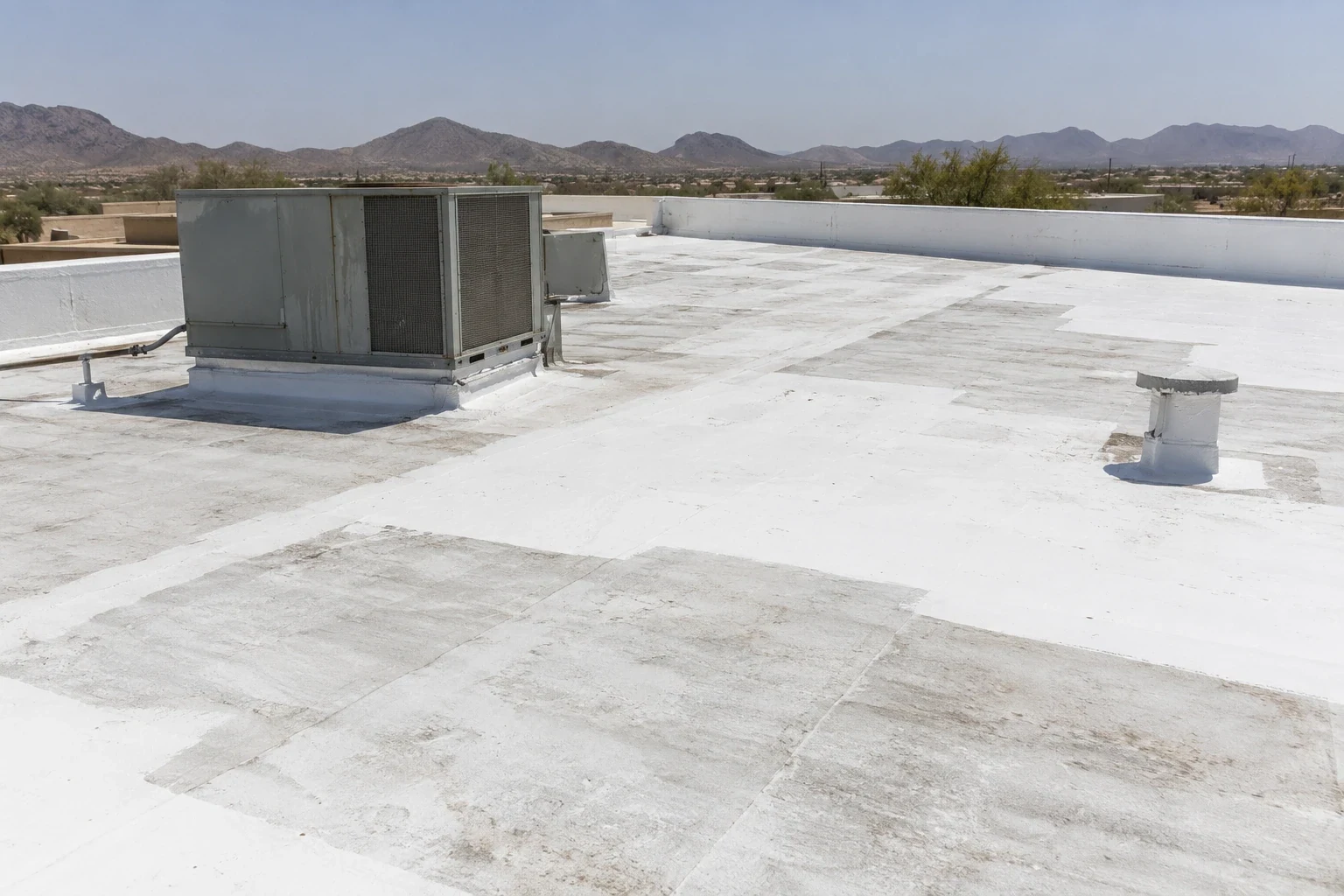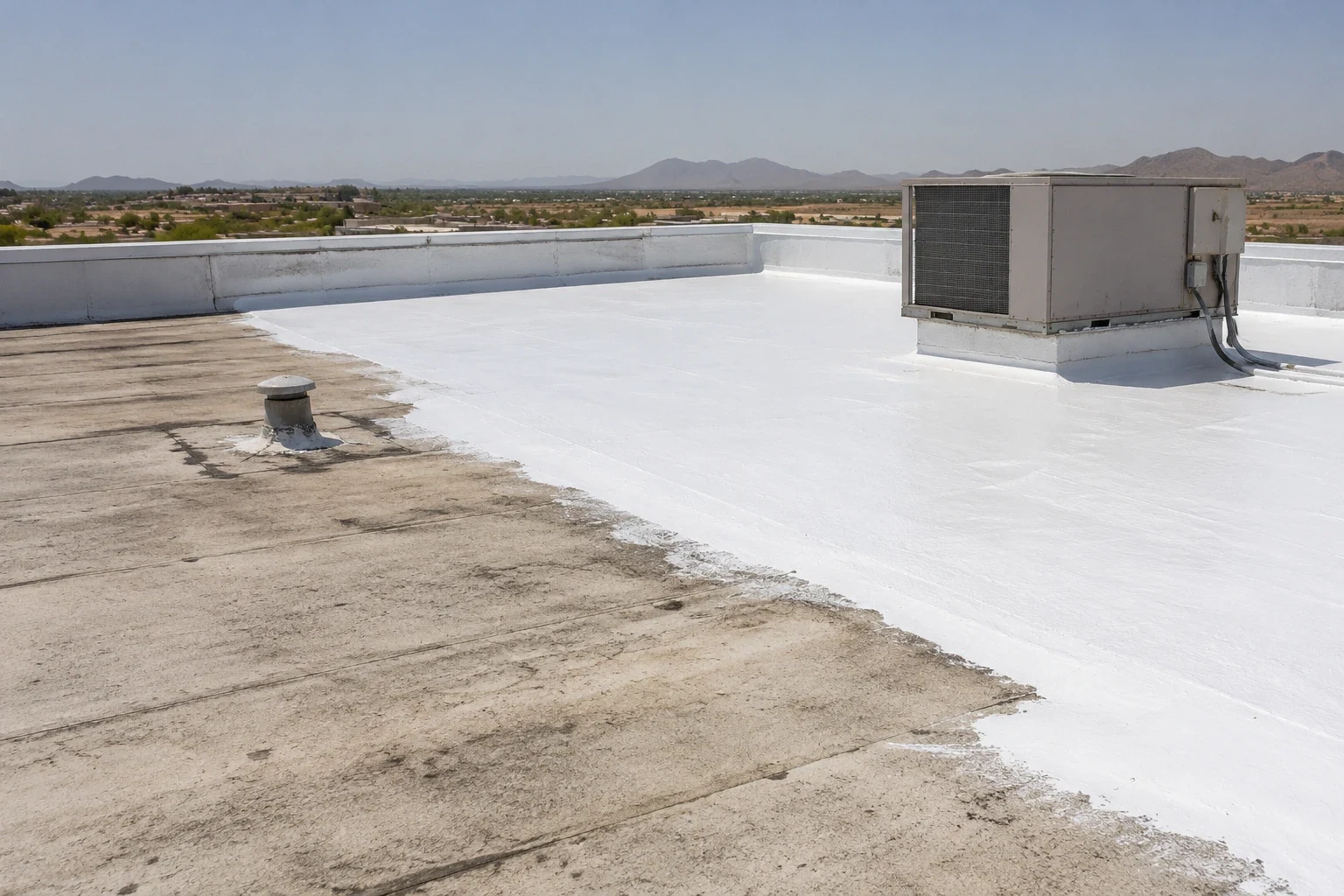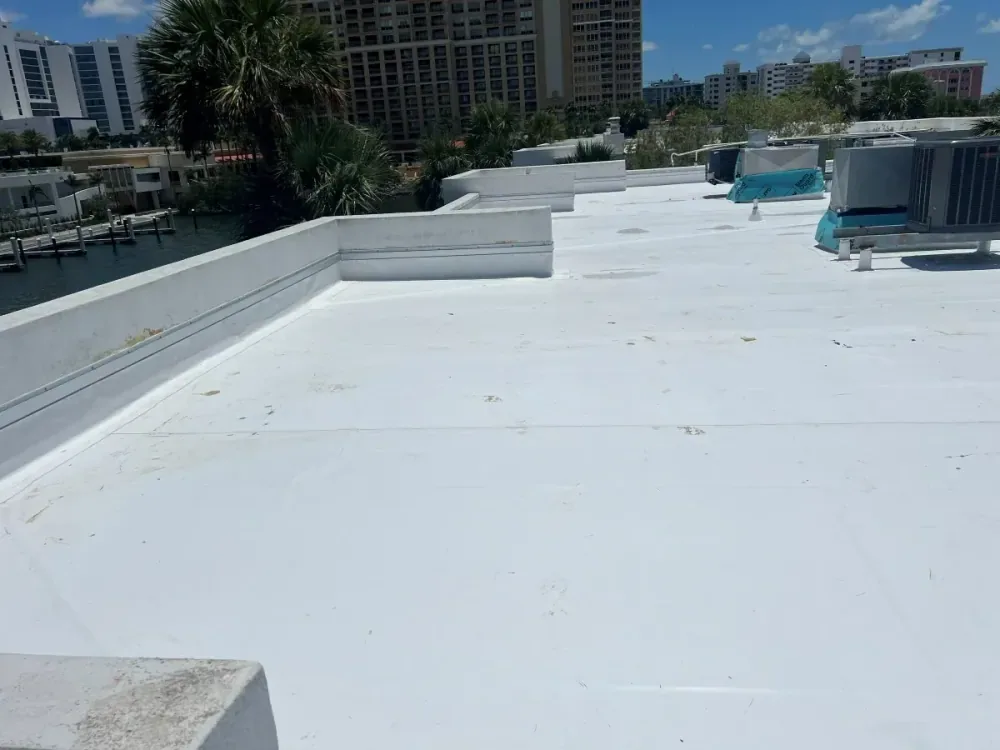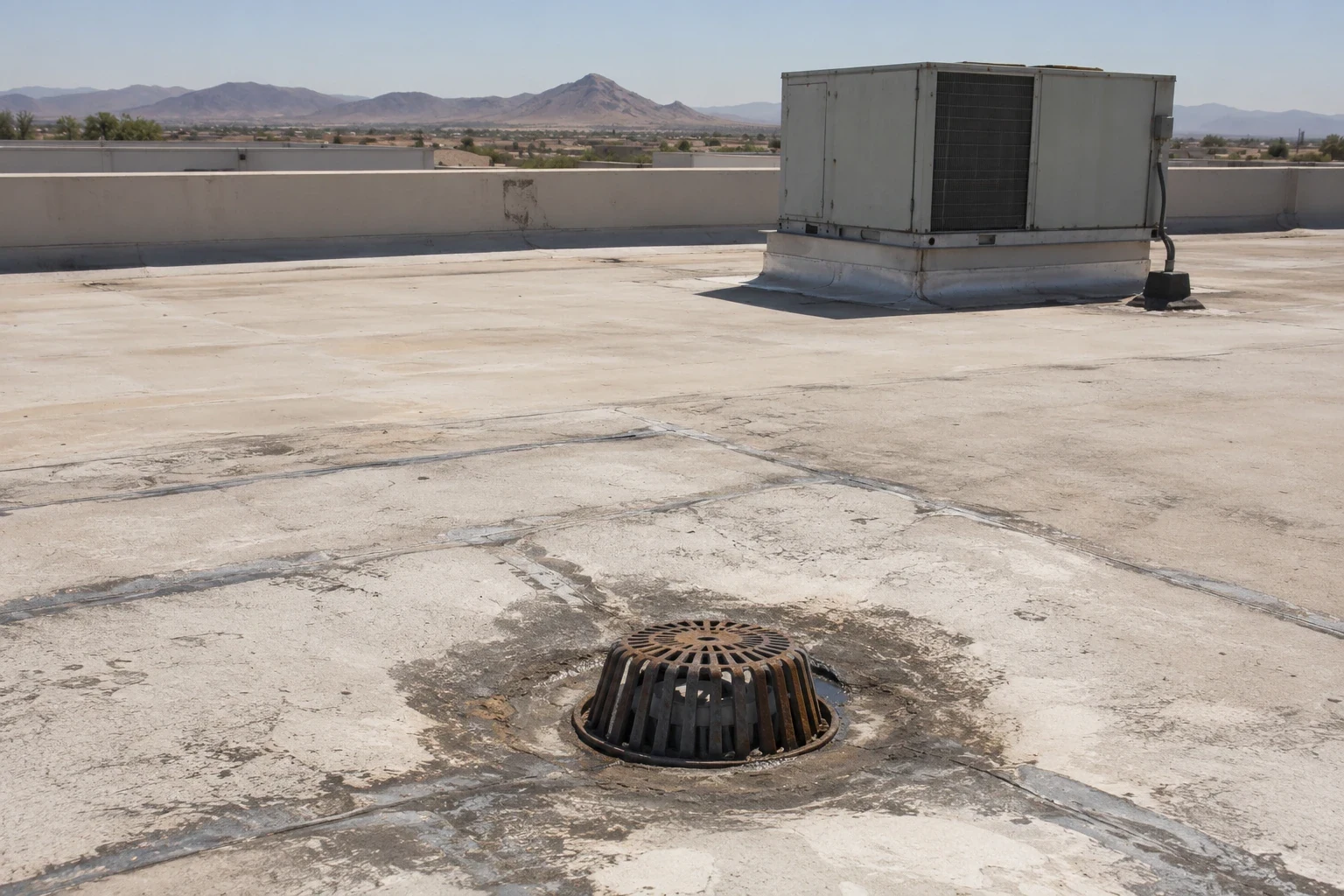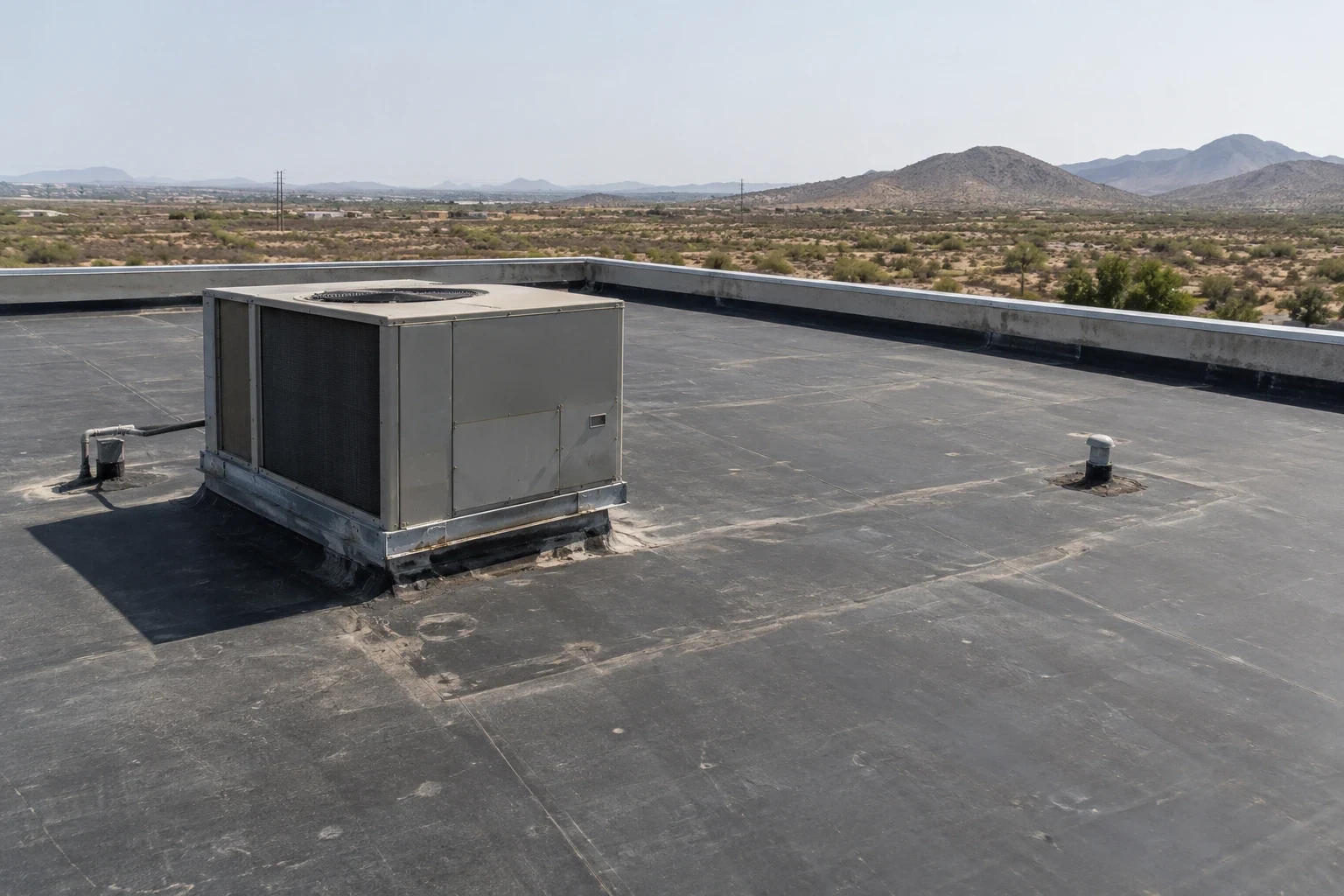

A coating can renew a surface, but it cannot dry wet insulation or secure a loose edge. In Victorville, the first call starts with the roof zone, activity below it, and the person who can arrange access. We inspect the existing membrane or coating, seams, penetrations, drains, and areas where water remains. Photos show the surface eligible for a new layer and any repair boundary that must be completed first. The facility director can then compare localized correction, coating restoration, and replacement from the same inspection record.
Silicone is a liquid-applied material used over compatible roof surfaces. Its performance depends on preparation, adhesion, application thickness, reinforcement, and drainage. It can tolerate extended water exposure better than some alternatives, but it is not a cure for failed flashing or saturated insulation. We identify the substrate and test adhesion where needed. If a different chemistry fits the roof, compare acrylic coating options against the actual exposure and use.
Start with the layer beneath
Before silicone is applied, the surface needs to be clean, stable, and compatible with the specified system. We look for loose coating, chalking, trapped moisture, open seams, failed mastics, and contamination from equipment service. Test patches can verify adhesion. If a test fails, preparation may require a different primer, removal of a weak layer, or repair of the affected zone. Coating quantities are set after these conditions are defined, not by tracing a roof outline alone.
Victorville's historical station record shows high summer mean maxima, which makes application planning important; actual roof temperature and product limits govern the work. We schedule zones that can dry and cure before moisture returns, and protect open areas if conditions change. A restoration scope can distinguish preparation from finish coating. If a seam is split, seam repair should precede the new surface; an open curb needs a penetration detail first.
Follow water toward the outlet
Silicone may suit certain water exposures, yet standing water still deserves a drainage review. We check outlets, low points, debris, and slope toward each drain. The coating follows the existing roof shape; it does not raise a low area unless the project includes designed correction. At a curb or wall, the coating has to meet a compatible flashing detail without a thin edge that lets water travel beneath it. The report records those transitions by zone.
Victorville code information gives a roof-drain sizing reference; it is not a measured flow rate at the property. We compare it with visible slope, outlet condition, and ponding. Bear Valley Road and I-15 are identified as a commercial focus area, but that land-use context does not tell us an individual roof's drainage. A drain and scupper inspection can map outlets before a coating area is priced. The owner can then decide whether surface restoration alone would leave a low spot unresolved.
Match coating to the existing membrane
Silicone does not bond equally to every coating, membrane, metal finish, or sealant. We identify the roof material, repair history, and any layer that may repel the new surface. A test patch answers that question better than the color on an old pail. At drains and penetrations, reinforcement and flashing must also be compatible. The specification should say how to prepare, prime, reinforce details, and inspect application coverage.
For an aged membrane, coating work is evaluated against the disruption of replacement. Sound substrate and isolated defects may support restoration. Widespread moisture or failing attachment points to a larger assembly decision. Compare EPDM roof options and TPO membrane roofing if the existing surface limits silicone. On metal, panel movement and finish need review before applying a liquid layer.
Protect the building during application
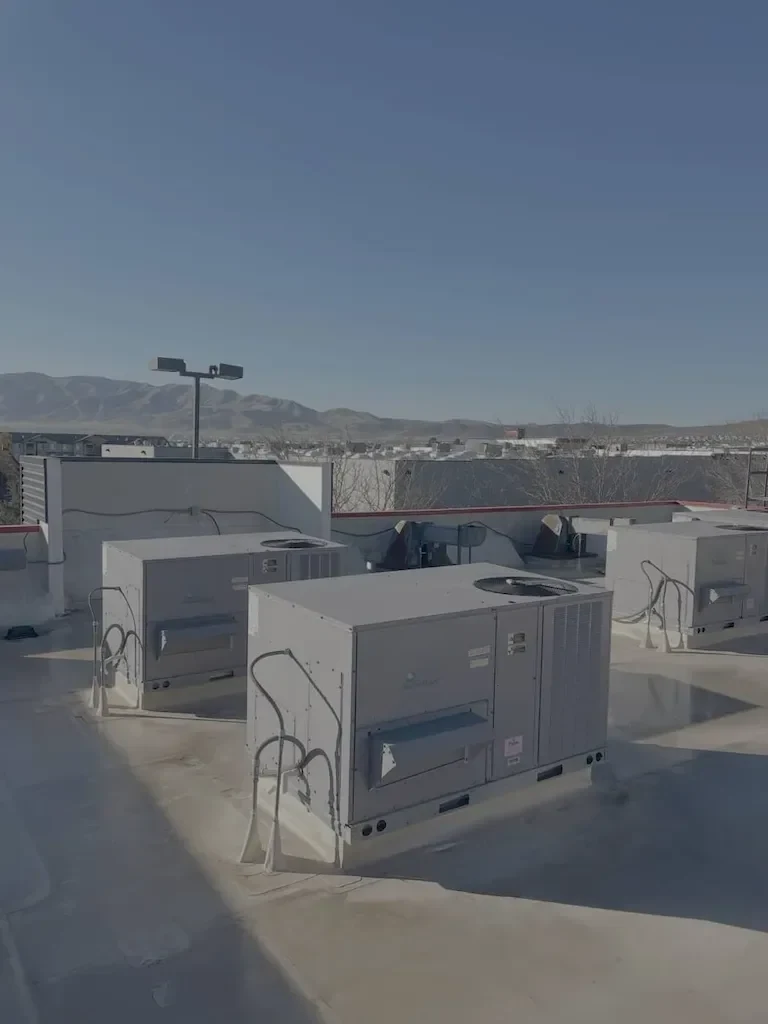
Liquid work needs controls for wind, overspray, air intakes, pedestrian areas, and vehicles below. We identify intake locations, protect adjacent surfaces, and agree on roof access with the facility contact. Deliveries stay clear of outlets and egress routes. If conditions interrupt an application, the crew documents the last completed zone and protects the transition for the next visit. The plan also tells tenants when noise, odors, or access limits may affect their space.
Victorville's planned industrial development at Foxborough and east of U.S. 395 north of Mojave Drive makes delivery routes a site question. It does not establish how a property operates. We confirm the gate and staging area with the actual facility. An operating warehouse roof plan can identify dock and intake protections, while a Victorville roof assessment provides the photos and coating boundary. If occupants remain inside, phased sequencing identifies affected zones.
Record the coating as installed
Closeout notes preparation, test-patch results, repaired substrate, coating system, application zones, and photographs. It distinguishes coated areas from portions left for later work. The record should map walk paths, equipment access, outlets, and any condition requiring another inspection. A future reviewer can compare wear and adhesion against a known starting point rather than presume every roof plane received the same treatment.
Maintenance focuses on punctures, flashing edges, service damage, debris, and changes in ponding. If coating separates at a seam or curb, the underlying connection should be repaired before another layer is added. A condition report can track open items and timing. Where test areas show poor adhesion or moisture across several zones, a replacement assessment may be more useful. The first call can start with the roof plan, leak timeline, and access contact.
Use the adhesion test to choose preparation
An adhesion test is useful only when it represents the surface that will receive the coating. We choose test areas on the field and, where needed, near repaired details. The record names the existing material, cleaning method, primer, cure conditions, and observed bond. If a test area releases or the surface shows moisture, the crew stops before treating a larger area as ready. That decision can change the quantity, preparation steps, or system selected.
Old Town Victorville's plan recognizes retail and service overlays, light-industrial land, residential neighborhoods, and open space. Bear Valley Road and I-15 serve a commercial focus area. Those locations are context for local work planning; we still verify a property's access, tenants, and drain layout directly. Surface temperatures can rise quickly in Victorville, so the actual roof condition and manufacturer's limits guide when silicone is applied. We divide the roof into areas that can be prepared and completed in the available window. The facility contact receives the zone boundary and knows which drains, entrances, and HVAC intakes need protection.
Each test patch should have a location, preparation description, and result attached to the roof-zone map. The test confirms a limited combination of substrate and coating, so a change in old material or prior repairs may require a second check. We identify any boundary where the coating stops at a curb, drain, or wall and show how that edge is protected. This makes the scope easier to inspect while work is underway and easier to compare against the finished photo set.
Commercial Roofing Questions
Can silicone coating stop an active leak?
It can be part of a repair after the entry point and wet layers are addressed. We inspect seams, flashing, drains, and penetrations, then set preparation and repair boundaries before coating.
Is silicone appropriate where water ponds?
It may fit some water exposures, but persistent ponding still warrants a drainage review. We map low points and outlets before specifying a coating.
Can silicone go over acrylic?
Only after compatibility and adhesion are checked. The existing layer may need cleaning, primer, removal, or a different repair approach.
What does a coating inspection include?
We review substrate, adhesion, seams, penetrations, drain routes, ponding, and access. The report separates surfaces ready for coating from repairs that must come first.