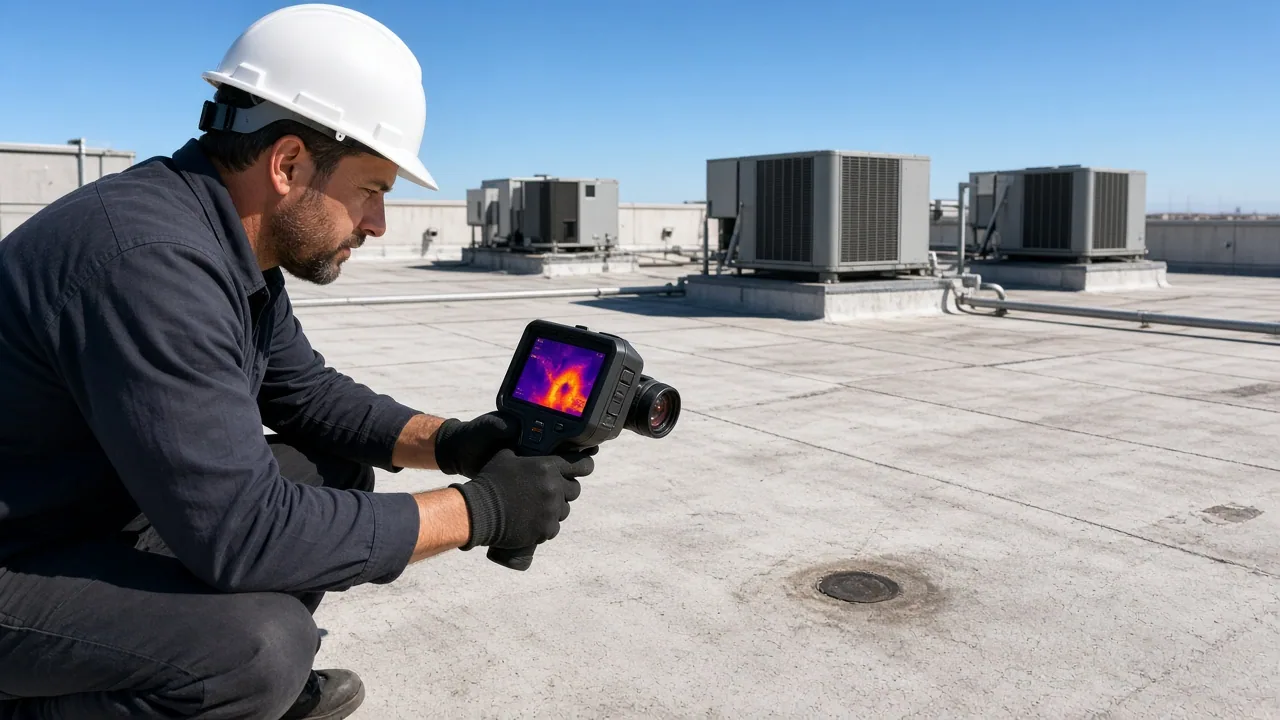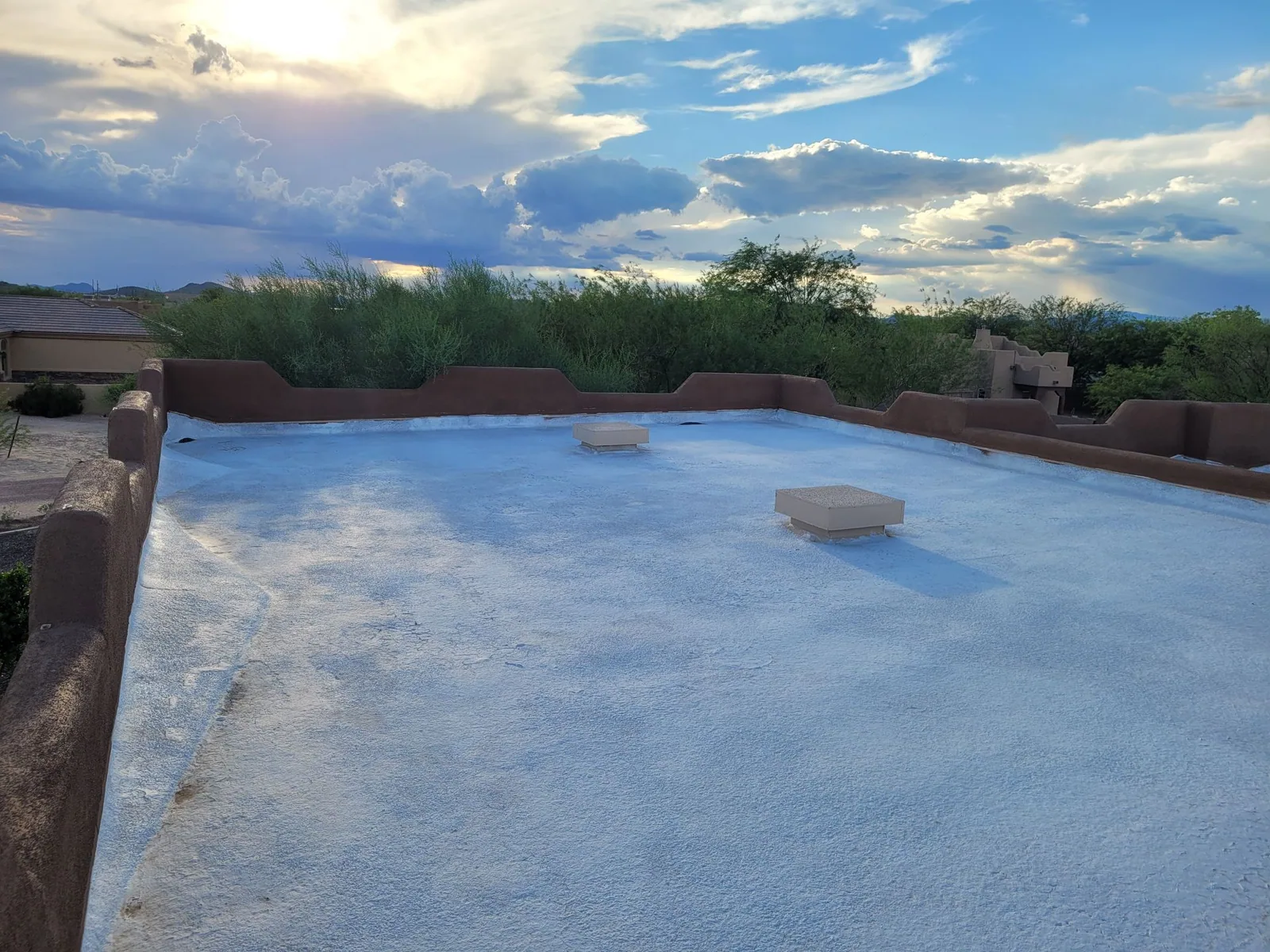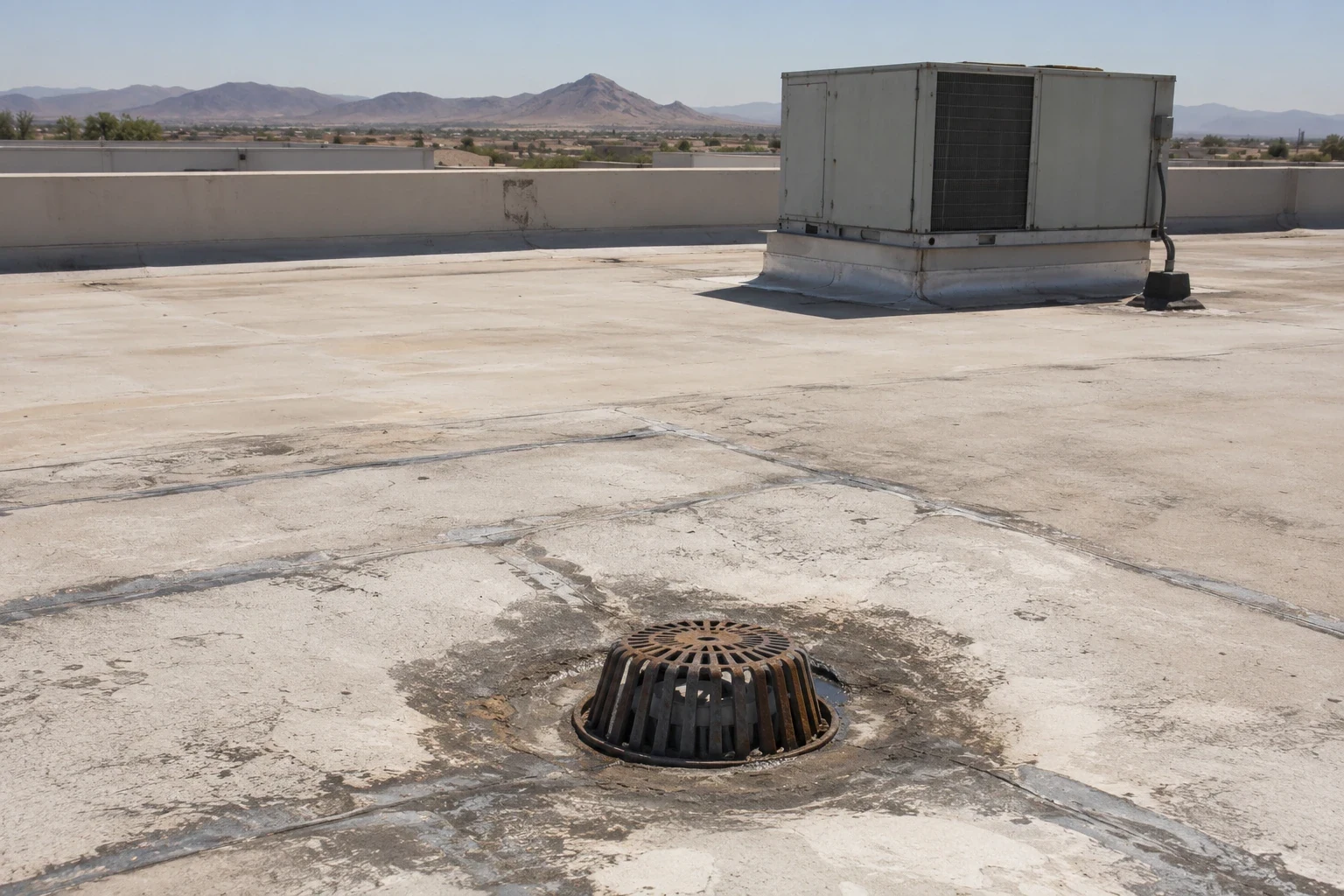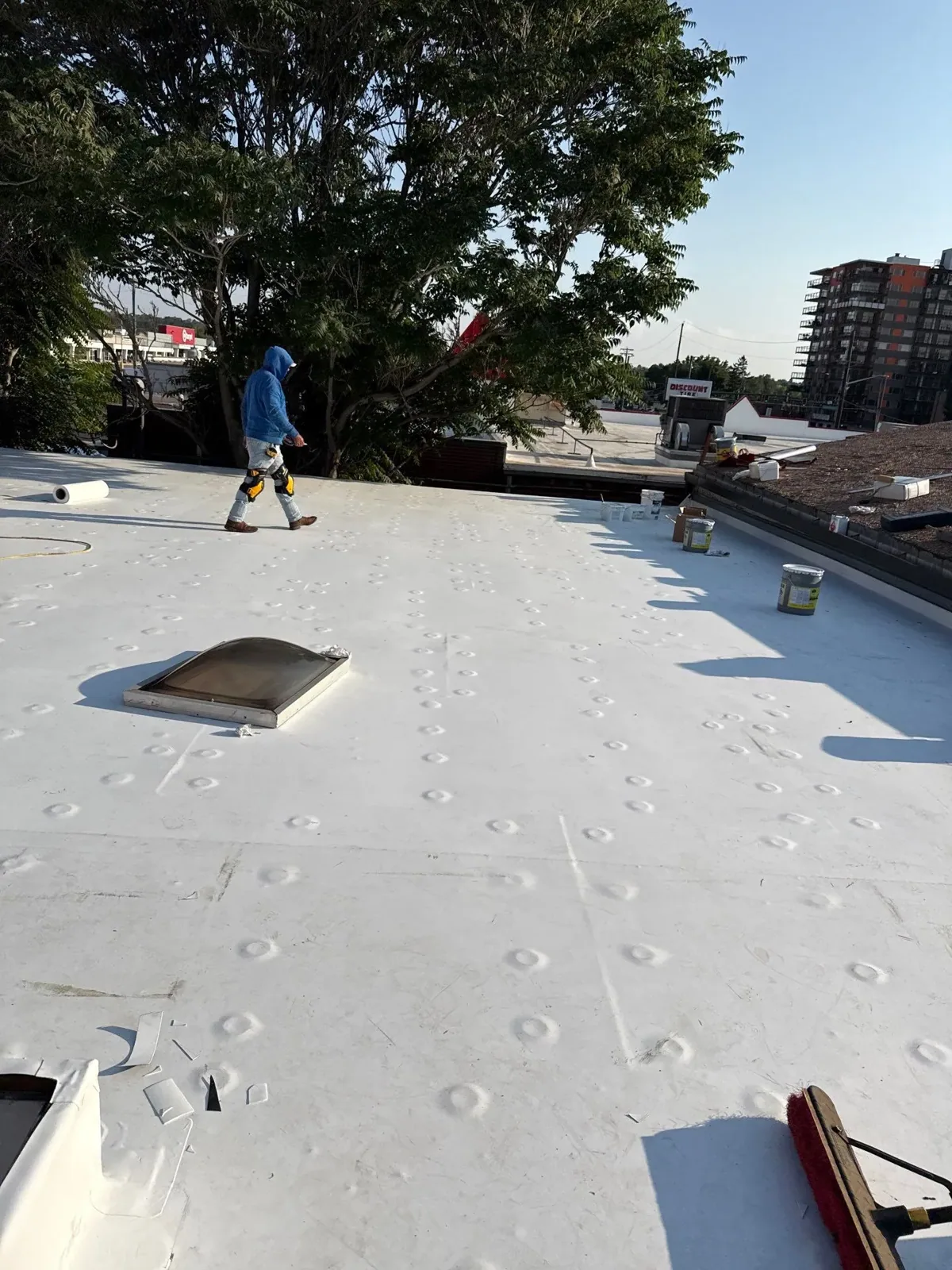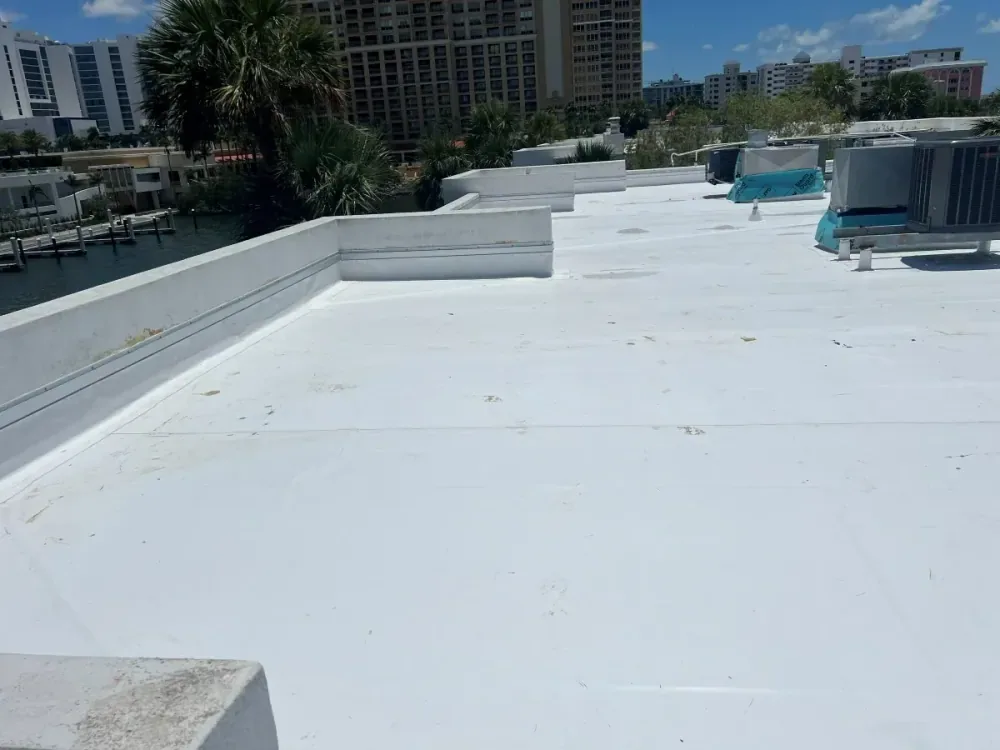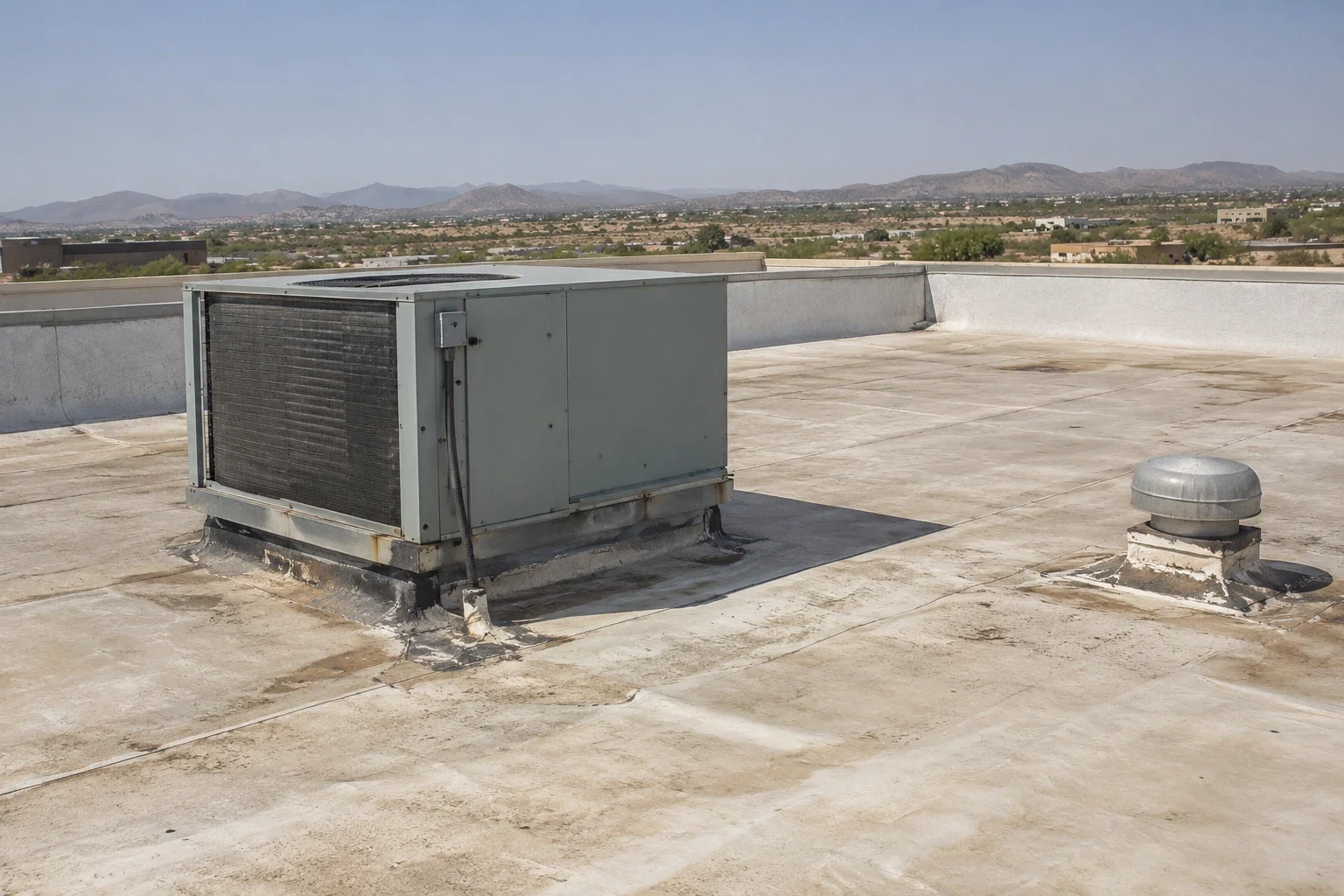
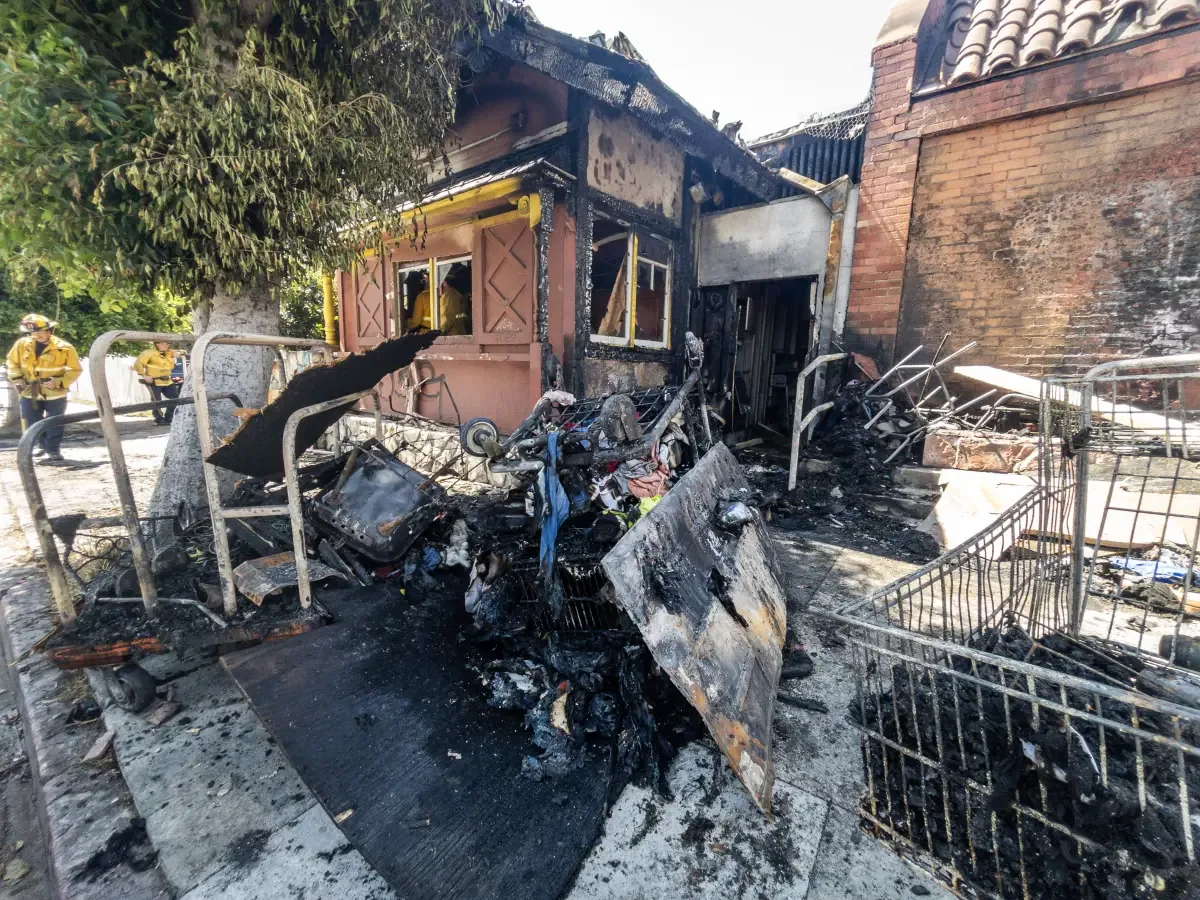
A wet ceiling after a cold-weather event can reflect a blocked drain, an opened flashing detail, or water moving as ice melts. We ask which room is affected, what equipment or activity is below, and who controls roof access. In Victorville, the inspection begins with safe access and a roof-zone map, not an assumption that snow or ice caused the leak. We check outlets, seams, edges, and interior reports, then explain what is visible and what requires a separate design or structural review.
The city lists a ground snow load of five pounds per square foot in its building-code guidance. That is a design input, not a statement of how much load an existing roof can carry. The inspection records the actual assembly and any visible deformation before repair decisions are made.
First report: protect the space below
Tell us when water appeared, whether it continued after temperatures changed, and the interior locations affected. A facility contact should identify ceiling or electrical concerns and keep people clear of any area that may be unsafe. Do not send staff onto a roof to clear ice or probe a drain. We coordinate approved access and note which roof zones can be inspected safely. If a ceiling, deck, or support may be compromised, a qualified structural professional must determine when access is allowed.
Old Town Victorville spans between Interstate 15 and the eastern city boundary. That district reference helps locate the property, but it does not establish snow depth or a roof's capacity. We ask for the site's own observations and records. A make-safe response can address an accessible opening after safe entry is confirmed. We note who released the area and which interior restrictions remain before selecting a work sequence.
Drainage: check outlets as meltwater moves
Ice or debris at a drain can slow meltwater and leave it against seams, curbs, and roof-to-wall transitions. We inspect accessible bowls, scuppers, overflow routes, and the visible slope leading to them. Clearing an outlet does not correct a low deck or restricted piping. The report describes whether water was standing, moving, or already gone at the time of inspection, so a dry surface is not described as proof of drainage performance during the event.
Victorville publishes a design rainfall basis for roof outlets. That input does not record event meltwater or test an installed drain, so we inspect the outlet and overflow path at the property. If water remained near an outlet, a ponding-water review can map the affected plane; an outlet inspection checks accessible drain components.
Edge check: inspect the transitions that hold water back
Freeze and thaw can expose an existing weakness at a parapet, coping joint, curb, penetration, or membrane lap. We look for open corners, separated sealant, movement at metal, and damage where water can collect. The nearby membrane and insulation matter because a failed flashing may allow water below the surface before it drains away. We photograph each detail and connect it to the reported room. A flashing repair may restore one transition, while a broad wet zone can require material testing.
The Eastern Bear Valley Road Corridor is a named commercial focus area in the city plan. That district helps locate a property, but only a roof visit confirms its drainage detail, access restrictions, and installed assembly. If water has separated a membrane lap, seam repair may be needed after the surface is dry enough for the selected method.
Load review: separate design figures from field condition
The five-pound-per-square-foot ground snow value published by Victorville belongs to design guidance. It does not convert directly into a roof rating, account for drifting, or establish the condition of the deck and supports. We look for visible sagging, distress at joints, displaced metal, and signs of water entry, then record whether an engineer must review the structure. Roof repair proceeds only within an approved safe scope. The owner receives the observation and the design question as separate items.
The city's wind values also vary by occupancy and exposure, and its code references climate zone 14. Those details matter when a designer reviews a roof assembly, but they do not diagnose cold-weather damage. The condition report can keep field photographs and unanswered load questions together. When an assembly has wet insulation or damaged decking, a roof insulation review defines the material scope after access is approved.
Repair sequence: dry, test, then close the detail
Permanent work begins after the roof surface and work area are suitable for the chosen method. We identify wet or loose material, remove what the approved scope requires, and tie new membrane or flashing into sound surfaces. Adhesives and welds need conditions that match the system's requirements; a repair made over ice, moisture, or contamination can fail at its bond. If the full boundary is hidden, we state the opening needed and protect the interior while the area is exposed.
Cost and timing follow roof access, moisture removal, assembly type, drain work, metal details, equipment, and weather conditions. A leak repair can handle a confirmed entry point, while a recover assessment depends on deck, insulation, existing layers, drainage, and code. The proposal lists what can be repaired now and what requires design direction before work proceeds.
Closeout: record the next cold-weather check
Closeout includes photographs of drains, edges, seams, and repaired locations, plus the date and roof zone. We note whether water was present during the inspection and whether a structural or drainage question remains open. The facility contact receives any interior monitoring point and the access note for a later visit. That record can be compared after another cold-weather period without assuming that a prior repair or a published design figure predicts a future condition. During another event, mark the same drain and membrane zones, note when meltwater begins, and compare dated photos before deciding whether the repair boundary changed.
Our commercial roofing work serves Victorville and broad locations such as the Old Town Victorville district. When an ice-related report includes wind-opened components, a wind damage assessment can document that separate condition. Call with the area affected, status of safe access, and the person who can coordinate the visit. We can inspect the roof and define repair steps after the building is cleared.
Commercial Roofing Questions
Does Victorville's ground snow value rate my existing roof?
No. The published figure is a ground-design input, not a roof capacity determination. A structural professional must review the actual assembly, supports, loading, and field condition when capacity is in question.
Can ice at a drain cause an interior leak?
A blocked or slowed outlet can hold water against seams or flashing as conditions change. We inspect accessible drainage details and compare them with the reported interior path before deciding whether the drain or membrane needs repair.
Should our staff remove snow or ice from the roof?
Do not send staff onto an unsafe roof or work around an edge or drain without an approved safety plan. Keep people clear of affected interior areas and contact the facility lead to arrange a safe professional assessment.
Can you repair a roof while ice remains?
The repair method needs a suitable surface and safe access. We can identify immediate risks and protection needs, then schedule permanent work when the membrane, flashing, or sealant can be prepared correctly.
What records help after a snow or ice event?
Share the time water appeared, interior photographs, roof plans, drain maintenance records, and any previous repair documents. We can connect those records to dated roof photos and the observed repair boundary.