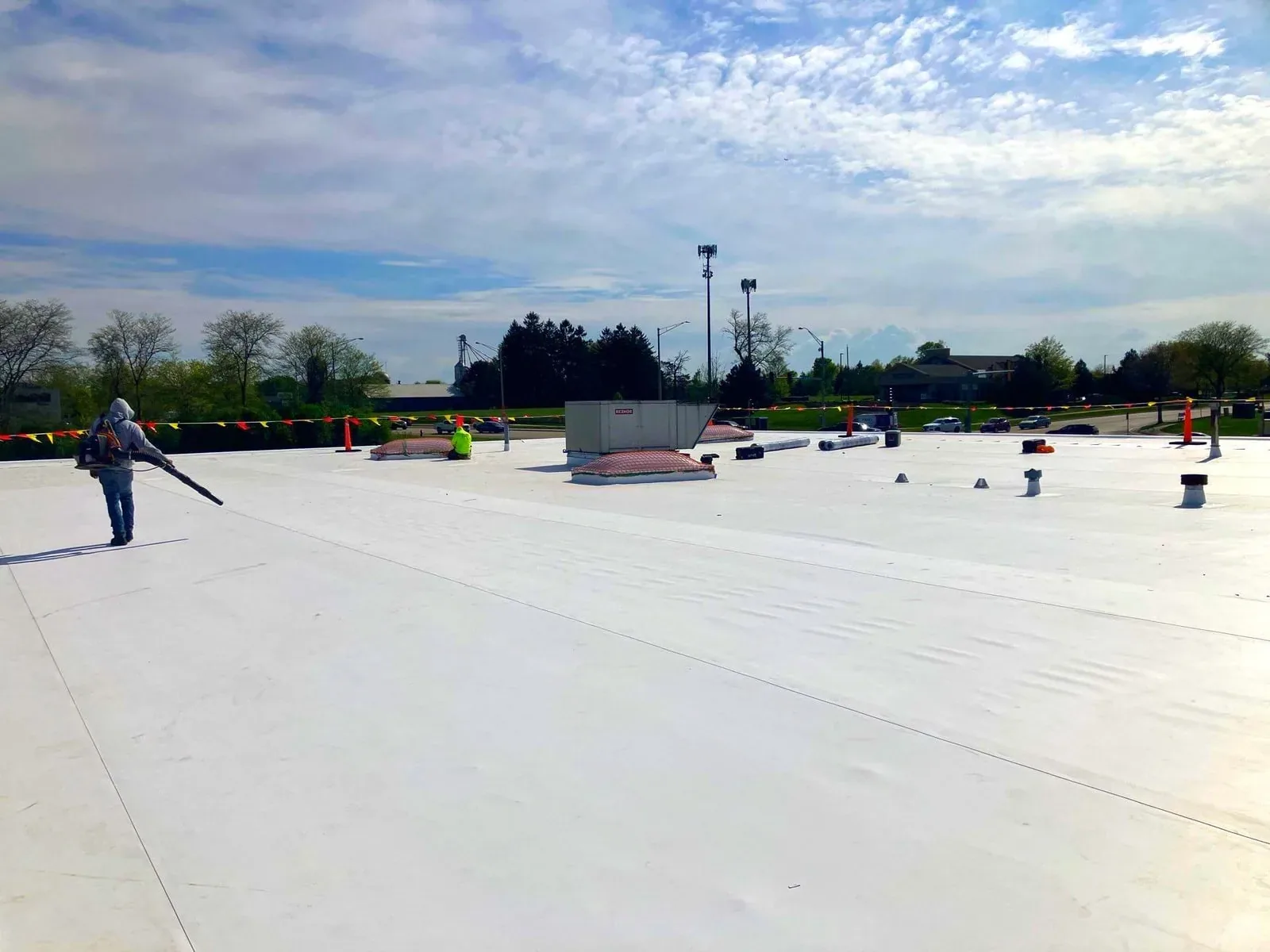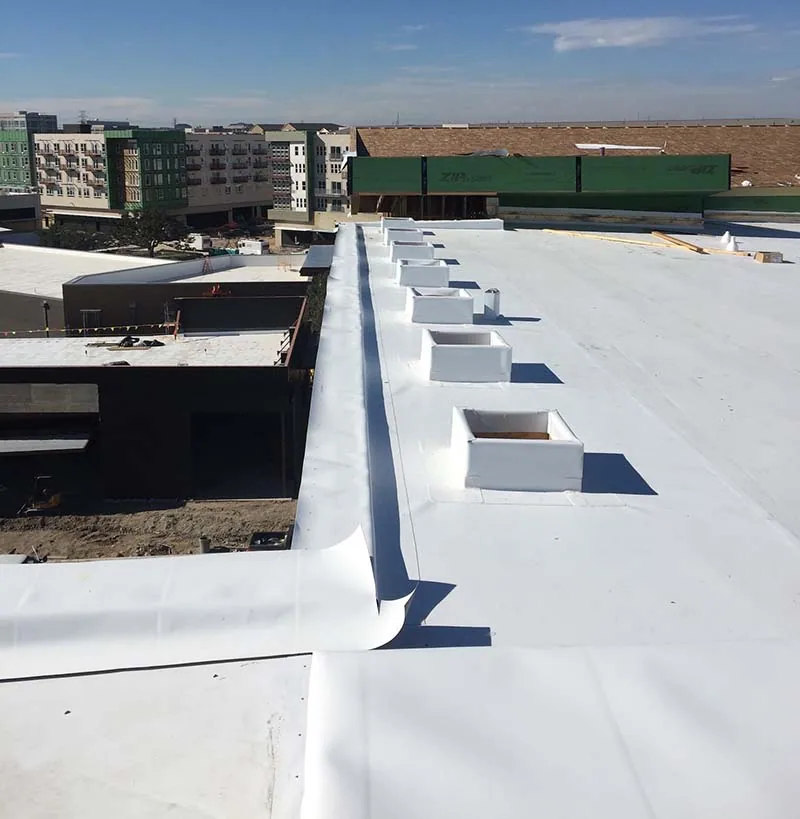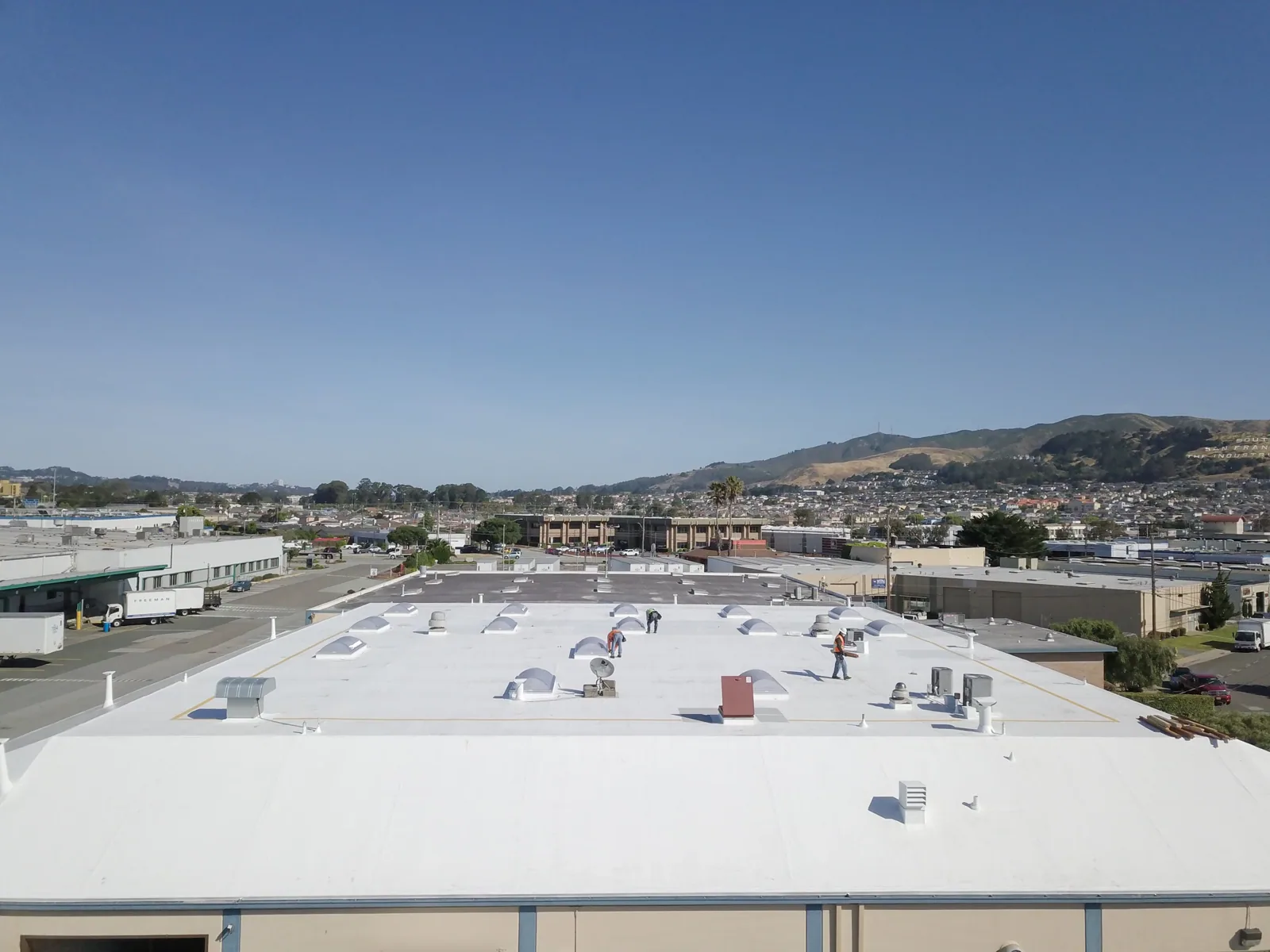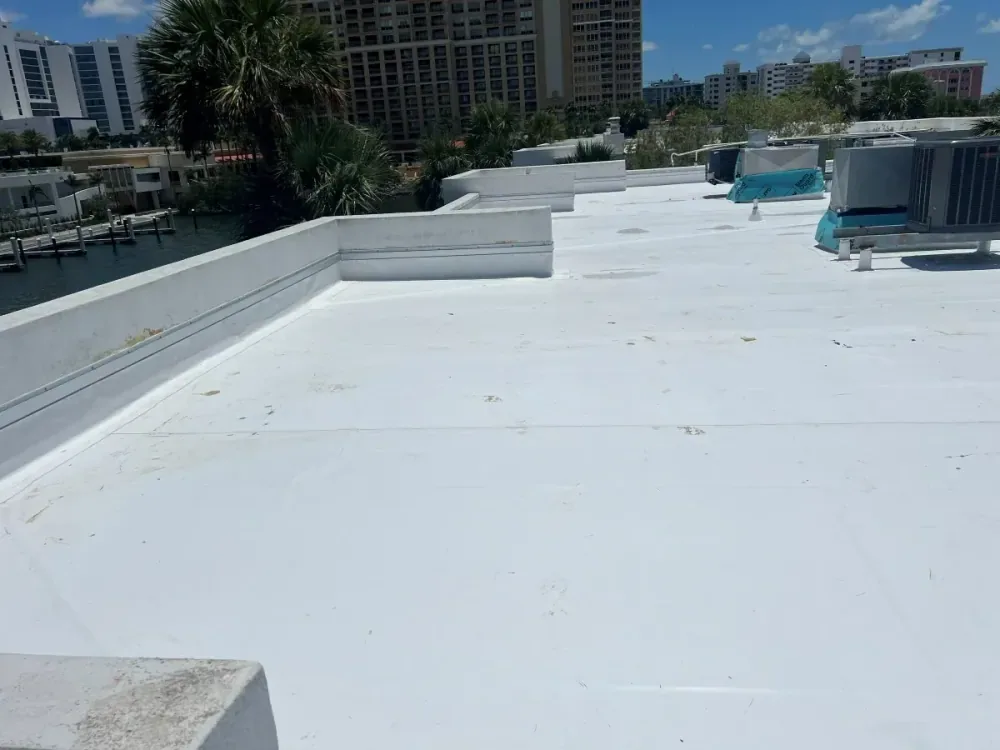
A Versico TPO request usually comes with a practical concern attached: a seam that needs review, a reroof being scoped, or a facility record naming a membrane. We first identify the roof zone, the water path, and who can open the access point. Then we compare the existing assembly with the proposed one, including deck, insulation, attachment, perimeter, and daily dry-in limits. Versico describes its TPO membrane as a heat-welded system with reflectivity and ultraviolet-resistance properties. Those characteristics inform product review, while the project documents and field conditions determine the right assembly and installation sequence.
Sheet and specification:
At the first walk, we mark where TPO is installed, what roof zones have been repaired, and where the reported water entered the occupied space. The inspection checks field seams, flashing, curbs, penetrations, edge metal, drains, and visible insulation conditions. A surface that appears intact can still cover moisture or a deck issue; testing is a separate step with defined locations and authorization. We keep observations distinct from conclusions so the facility contact can see which parts of the scope are confirmed.
The product submittal should identify membrane thickness, reinforcement, attachment method, insulation and cover board, accessories, and edge treatment. A TPO roofing system is not defined by the field sheet alone; plates, fasteners or adhesive, welds, penetrations, and perimeter details complete the assembly. If specifications compare another family, GAF commercial systems and Carlisle SynTec membranes are evaluated from their own documents. We do not translate one manufacturer’s detail into another system.
Weld check:
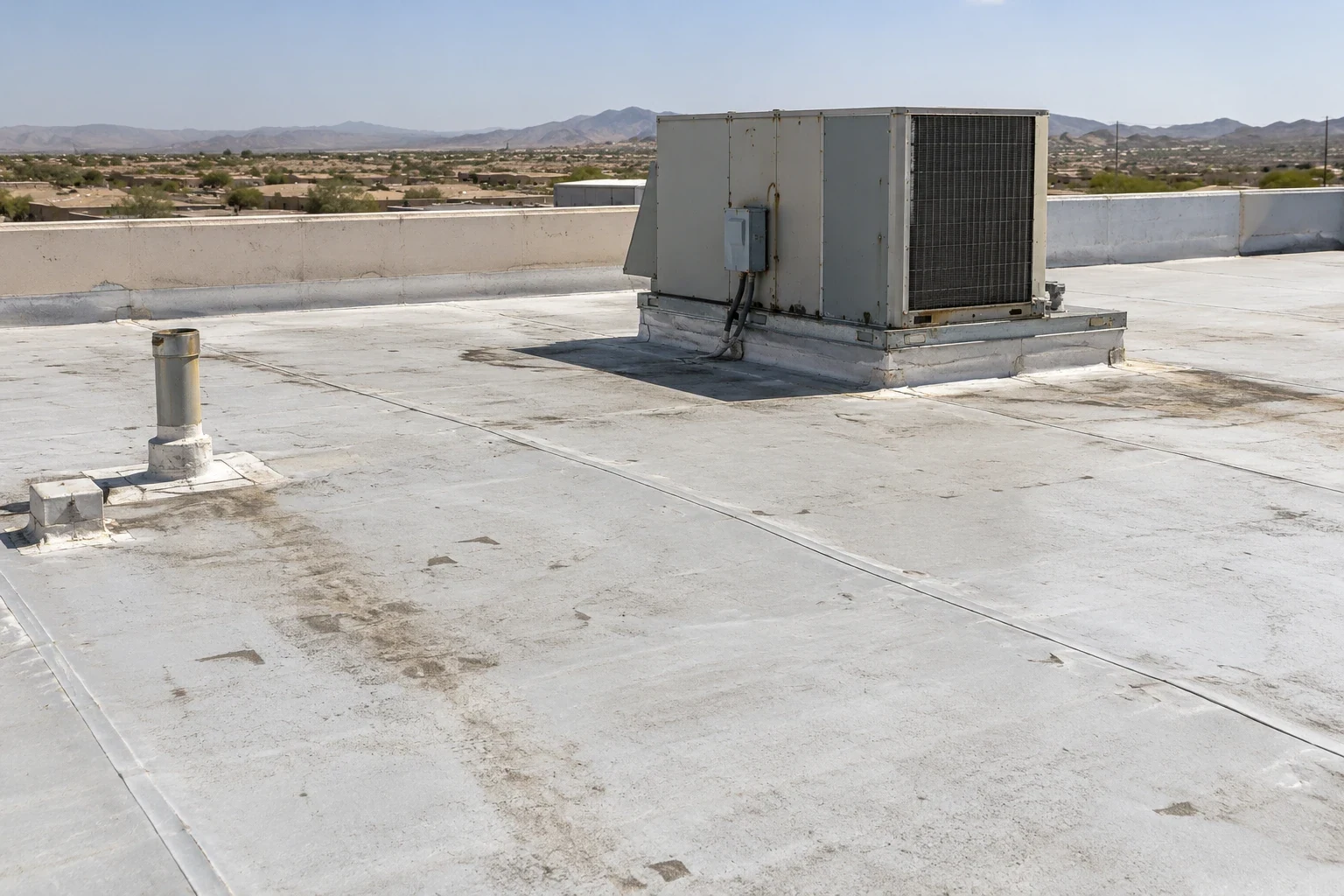
Heat-welded seams depend on preparation and controlled field practice. The installer checks that laps are clean and aligned, adjusts equipment to the conditions and instructions, and makes test welds where required. During production, the crew checks seams at intervals and reworks any open or inconsistent area before continuing. A final probe or other specified test follows the required method. The record should identify the tested zones and any repair, rather than imply that a glance across a long seam confirms every inch.
Sun exposure and surface temperature change over the day in Victorville. The work plan follows current Versico instructions for substrate and installation conditions, including pauses when the surface or weather no longer supports the procedure. Materials remain stored as directed and roof traffic stays on an agreed route. When welding stops for a shift, exposed edges are secured and the daily dry-in boundary is checked before the crew leaves.
A seam-failure repair begins by tracing where the bond separated and checking adjacent laps, transitions, and roof movement. The repair boundary is photographed and noted. If similar separation appears in multiple zones, the owner receives a broader assessment recommendation rather than a claim that one patch resolves all conditions.
Reflectivity and drainage:
Reflective surface properties can matter in a roof design, but the membrane alone does not determine a building’s energy use or indoor temperature. Insulation, air leakage, equipment, controls, roof color, and operating schedules all affect the result. We document the specified assembly and direct performance questions to the design information applicable to the project. In Victorville, where historical July mean maximum temperature at the George AFB/Victorville station was 97°F during its 1980 to 1990 observation period, heat exposure belongs in the planning conversation; that historical figure does not describe current weather or a specific rooftop.
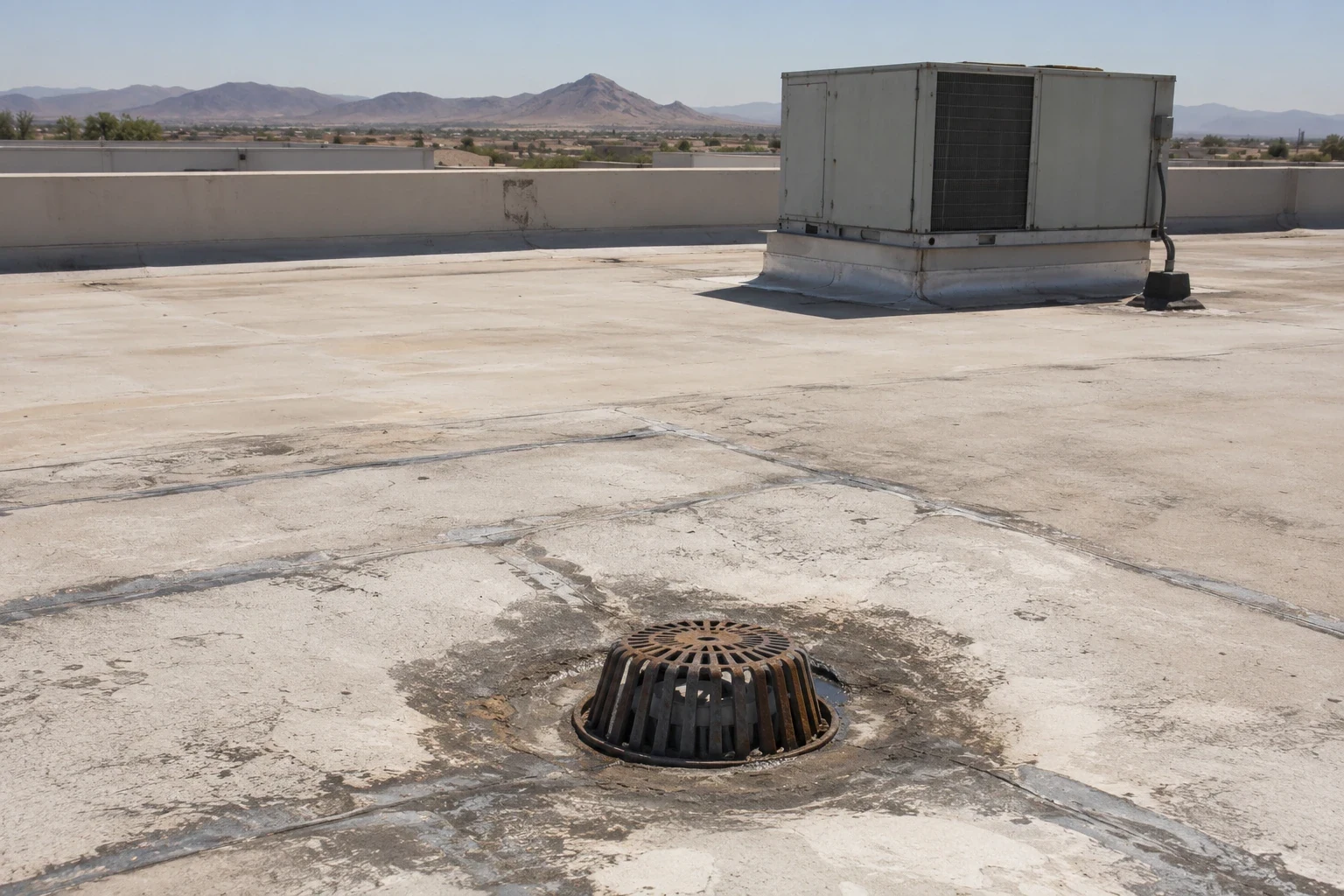
Water management is checked alongside the sheet. When reviewing drainage design, the municipality specifies 2.5 inches of rain per hour for sizing roof drains. We inspect drain bowls, overflows, scuppers, slopes, and discharge points, then compare them with the plans. That municipal reference is not proof of existing flow or compliance at a specific building. A drain and scupper review records restrictions or repair boundaries, with slope corrections handled as a separate scope when needed.
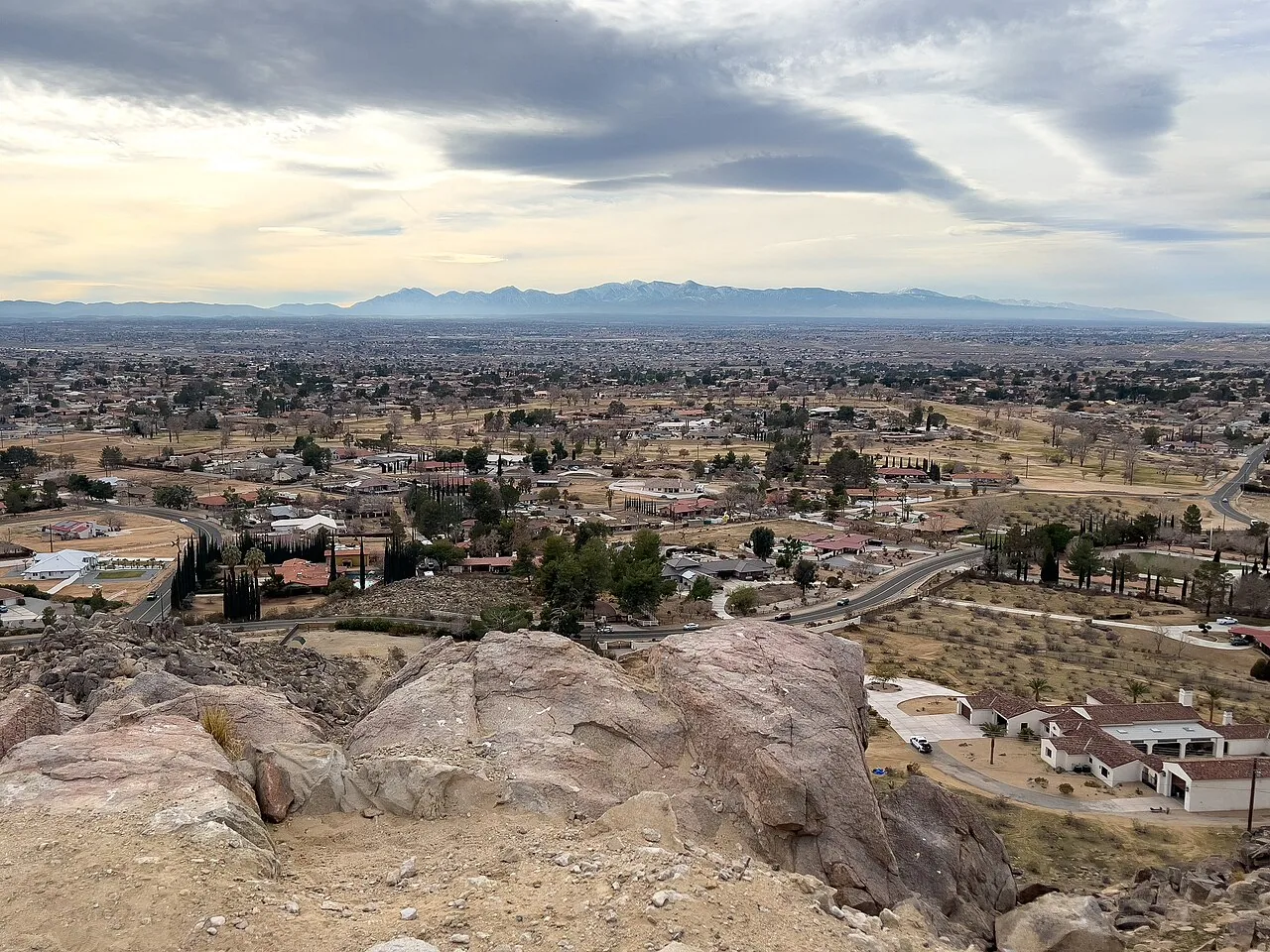
Near the Bear Valley Road and I-15 commercial focus area, property uses vary across a district described in city land-use plan maps. We still ask what the actual facility below the roof operates, and where access can occur without interrupting deliveries. Place context informs coordination, not a conclusion about that building’s roof.
Field sequence:
Before delivery, the facility contact confirms access control, staging, lift timing, occupied suites, and equipment that needs a clear service path. We protect drains and finished surfaces, then stage material in the approved location. The daily plan states which zone is open, how it will be dried in, and who checks temporary protection. If tear-off exposes wet insulation or an unsound deck, the crew pauses locally, takes photographs, and asks for authorization before extending the work into the next zone.
For an occupied-building reroof, the work sequence also covers noise-sensitive hours and communication to affected staff. The facility stays open only where the project conditions make that safe; the scope identifies any area that must be isolated. Old Town Victorville’s plan separates commercial overlay uses from parcels mapped for housing, industrial activity, or open space. Those mapped uses are no substitute for confirming this facility’s hours, access controls, and delivery route with its contact.
Any temporary protection is listed with its limits, inspection responsibility, and expected removal point. A report of water intrusion receives a separate response plan so the occupied area is protected while the crew traces the roof-side source. Permanent TPO repair follows the approved detail after the substrate and seam conditions are understood.
Handoff record:
Closeout records the installed Versico assembly, approved deviations, seam checks, flashing transitions, drains, edges, and roof zones completed. The photo set follows the work before concealment, and the maintenance handoff names points to observe after later trade visits. If a repair was outside the replacement boundary, it is stated as an open item. A future roof warranty review benefits from those records and the applicable written terms, not from an assumption that a product name itself promises a result.
We can also set a preventive maintenance visit to inspect accessible seams, drains, penetrations, and traffic routes at agreed intervals. The visit documents conditions found on that date and recommended work; it is not a promise against future leaks. For owners tracking several buildings, a multi-site roof program can keep photos, asset records, and planned capital decisions consistent while retaining each building’s own assembly information.
Send the affected roof zone, what operates below, and the access contact with the first call. If you have Versico submittals, prior repair notes, or photographs, we can incorporate them into a focused assessment around Victorville and the surrounding service area. The return scope will separate confirmed seam or drainage work from items needing further inspection.
Commercial Roofing Questions
What is Versico TPO roofing?
Versico describes its TPO membrane as a heat-welded system with reflectivity and ultraviolet-resistance properties. The full roof assembly also includes the specified attachment and compatible details.
How do you know whether a TPO seam needs repair?
We inspect the lap, trace the reported water path, check adjacent transitions, and document the repair boundary. Test methods follow the applicable product instructions and project requirements.
Will a reflective membrane lower energy costs?
No. Building energy use depends on the complete roof assembly and building operations. We can verify the specified membrane and insulation, while performance estimates require project-specific analysis.
Can the roof stay open during TPO installation?
The facility can remain in operation only where the approved work sequence, access controls, and protection plan allow. We coordinate each roof zone with the facility contact.
What belongs in a Versico roof closeout?
Keep the approved submittal, installed component record, seam checks, roof-zone photographs, field changes, and maintenance notes together. Those records help guide later inspection and warranty review.